
World
Out in the World: LGBTQ+ news from Europe & Asia
LGBTQ+ stories from around the globe including South Korea, Japan, Hungary, the Vatican & the United Kingdom, focusing on events that matter
SOUTH KOREA

SEOCHO-GU, Seoul, South Korea – This past week on Oct. 27, the second highest court in South Korea upheld an earlier ruling for the fourth time, the Military Criminal Act, that criminalizes same-sex relations in the military.
The Constitutional Court of South Korea, in a five-to-four vote, ruled that article 92-6 of the military criminal act was constitutional. Justices in their ruling stated that same-sex activities might undermine discipline and harm the combat capabilities of the military. Same-sex activities between civilians however, is not a crime.
Article 92-6 of the Military Criminal Act (“Article 92-6”) provides that a person who commits anal intercourse or any other indecent act with “a military person” shall be punished by imprisonment for not more than two years.
Human rights activists have noted that The Korean military has invoked Article 92-6 to punish sexual acts between male servicemen with sentences of up to two years in prison — regardless of whether the acts were consensual or whether they happened within or outside of military facilities.
Several of South Korea’s allies including the United States and the United Kingdom have repealed provisions similar to Article 92-6 of the Military Act of South Korea in order to align with international obligations to protect against the discrimination of LGBTQ+ people.
The Executive Director of the Center for Military Human Rights Korea, which provides legal assistance to soldiers including those accused of breaking the anti-sodomy law, Lim Tae-hoon said the decision was “absurd, illogical, regressive and driven by prejudice.
“While the world has been making progress in abolishing discrimination against minorities over the past 20 years, the minds of the judges have not advanced even a single step,” he added.
Lim Tae-hoon pointed out that: “this law can be abused at any time to harass many sexual minority soldiers due to their sexual orientation. In addition, among the constitutional appeal cases supported by the Military Sexual Violence Counseling Center affiliated with the Military Human Rights Center, there is one case in which the military prosecutors believed the words of the perpetrator of same-sex sexual violence and suspended indictment by claiming that the sexual intercourse was consensual with the victim.
“The perpetrator was sentenced to three years in prison by the final ruling of the Supreme Court and is currently serving his sentence. Constitutional Court judges argue that the law of indecent assault should remain in place to protect victims of same-sex sexual violence in the military, but in reality, it is being abused as a means of imprisoning and punishing victims. Without understanding how the world works or how the law operates, they were caught up in prejudice and stubbornness and made regressive decisions.”
JAPAN
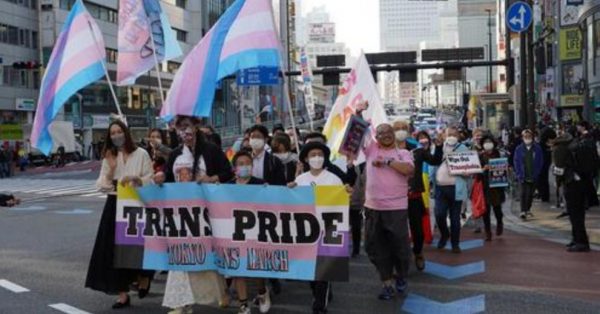
(Screenshot from video by Tsubasa Setoguchi)
HAYABUSACHO-CHIYODA, Japan – Last week on October 25, Japan’s highest court ruled in an unanimous decision that the country’s law mandating sterilization surgery for transgender people as a requirement for legal gender recognition was unconstitutional.
In the ruling, the 15 justices wrote: “Being forced to undergo sterilization surgery… constitutes a significant constraint on freedom from invasive procedures” in violation of the Japanese Constitution.
Kanae Doi, the Human Rights Watch Japanese Director noted that since 2004, transgender people in Japan who want to legally change their gender must appeal to a family court. Under the Gender Identity Disorder Special Cases Act, applicants must undergo a psychiatric evaluation, be surgically sterilized, and “have a physical form that is endowed with genitalia that closely resemble the physical form of an alternative gender.” They also must be single and without children who are younger than 18.
In May 2023, the Supreme Court ruled in favor of the right of a trans woman government employee to use the restrooms in accordance with her gender identity. In November 2022, the government in Japan’s Kanagawa prefecture awarded another transgender woman workplace compensation after recognizing her depression was the result of harassment she faced from her supervisor.
Earlier this month, a local family court ruled in favor of a transgender man – Gen Suzuki- who requested to have his gender legally changed without undergoing the surgery, the BBC reported.
The family court judge, Takehiro Sekiguchi, said the current law violated Article 13 of the Constitution that stipulates all people shall be respected as individuals.
According to the Japanese government’s statistics, the sexual minorities (LGBTQ+) make up for 3 to 8% of the population and that at most, the statistics estimate that around 0.7% of the population is transgender.
They are an overwhelming minority. The overwhelming majority of people do not know about trans people, and various prejudices are widespread.
The “LGBT Understanding Promotion Act,” which was passed by the Diet in June 2023, includes the sentence “We will take care to ensure that all citizens can live their lives with peace of mind,” but according to Japanese transgender activist Aya Nishida, the background to this is “If you say you are a woman at heart, you are a man. This is because some people have discriminatory views such as, “If transgender people’s human rights are recognized, women’s human rights will be threatened.”
Aya Nishida provides training on the human rights of transgender people to local governments, about issues surrounding transgender people.
While the Supreme Court has ruled against the sterilization requirement, it has asked a lower court to review the requirement to have “genitalia that closely resemble the physical form of an alternative gender.”
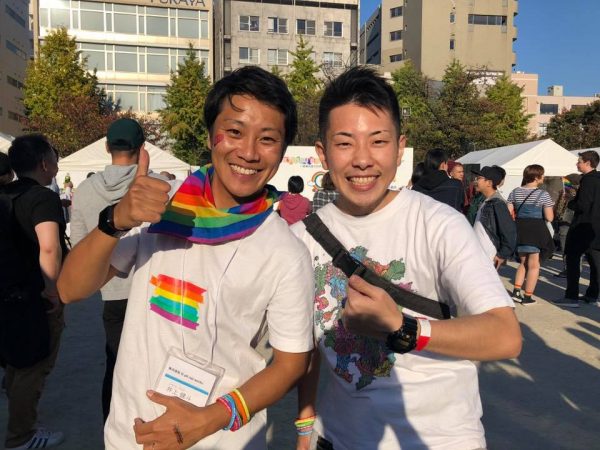
TOKYO, Japan – As of October 1, 26 local governments in at least 12 prefectures across the country have enacted ordinances that codifies the prohibition of “outing,” which is the act of disclosing a person’s sexual orientation or gender identity without their consent.
According to a study conducted by the Research Institute of Local Government in Tokyo, these efforts highlights that some municipalities have made to protect the human rights of LGBTQ+ people since passage of The Act to Promote Understanding of LGBT and Other Sexual Minorities by The National Diet of Japan [Parliament] this past June. That does not explicitly prohibit acts such as outing.
According to human rights groups and LGBTQ advocacy organizations, Outing constitutes a serious human rights violation, and it was was defined as a form of abuse of power in the guidelines for legislation.
The Kyodo News reported that in July this year, it was disclosed that a man had been deemed eligible for compensation from his employer by a Tokyo labor office last year after his boss revealed he was gay without his consent, but the current law is limited in scope to the workplace.
The harmful consequences of outing hit the national consciousness in 2015, when a graduate student of Hitotsubashi University in Tokyo died after plunging from a school building in an apparent suicide after being outed as homosexual.
In the wake of that incident, the city of Kunitachi, which hosts the university, became the first local government to enforce an ordinance banning the outing of LGBT individuals in April 2018.
In a statement to media outlets in Japan, Yuichi Kamiya, the Executive Director of the LGBT Law Federation said:
“Outing is considered harassment and must be prevented in the workplace, but there are no laws in place for other settings such as schools and medical care, so it is difficult to know what constitutes it and what specific details are required. There is still not widespread understanding of how to respond.
“It is important to clearly state the prohibition in ordinances, and it can also lead to public awareness, prevention, and relief in the event of damage. The more discriminatory the environment surrounding the person concerned, the greater the impact of outing. Further awareness is needed in each field to prevent further damage. When someone comes out, the first thing you should do is ask them who they can talk about and how much they can talk about. If you have any concerns, please consult with a specialist who respects confidentiality obligations.”
Currently, none of the ordinances passed across Japan have criminal law penalties.
HUNGARY

BUDAPEST, Hungary – The far-right anti-LGBTQ+ government of Hungarian Prime Minister Viktor Mihály Orbán has banned children under the age of 18 from visiting the World Press Photo exhibition Hungarian National Museum in the capital city, citing LGBTQ+ content in some of the photos.
Since taking power, Orbán and his ruling party have waged an unceasing campaign to restrict the rights of LGBTQ+ Hungarians. In July of 2021, the government passed a law that bans the promotion of homosexuality and sex-reassignment surgery to minors in the country.
This past summer Hungary’s second-largest bookstore chain was fined for violating the 2021 law that limits the access of minors to books, media content and advertisements that “promotes or portrays” the so-called “divergence from self-identity corresponding to sex at birth, sex change or homosexuality.”
The chain was fined for selling copies of British author Alice Oseman’s LGBTQ+ graphic novel series ‘Heartstopper,’ a global phenomena due to the runaway hit Netflix show based on her books in the series.
According to the interpretation of the Háttér Society, a Hungarian organization focused on LGBTQ+ rights, a parent could break the law solely by buying a child a young adult novel that features an LGBTQ+ character.
Reuters reported that this past Saturday, the museum stopped selling tickets for the photo exhibition for youngsters after the far-right Mi Hazank/Our Homeland party had initiated a government inquiry, the party said.
“Based on the initiative of Mi Hazank, youngsters under 18 cannot visit the exhibition at the National Museum as it violates the child protection law,” the far-right party told state news agency MTI. The new rule was posted on the museum’s website later on Saturday.
Neither the museum nor the Mi Hazank Party responded to requests for comment.
THE VATICAN
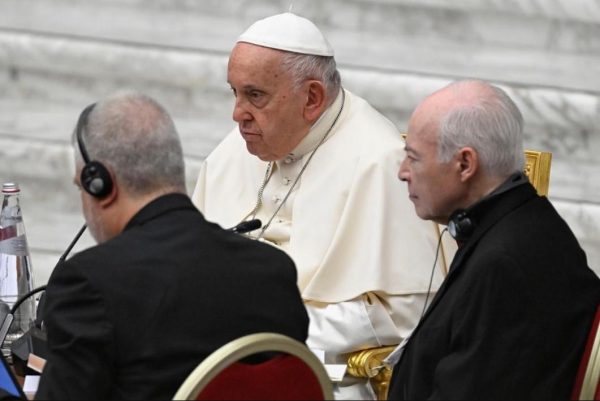
(Photo Credit: Holy See Press Office)
VATICAN CITY – The month long conference held in the Paul VI Hall at the Vatican regarding the future of the world-wide Roman Catholic Church ended on Saturday, without a clear course of action for the church on the issues of ordaining women as deacons or the treatment and care for its LGBTQ members.
The gathering, known as a Synod of Bishops, followed an unprecedented two-year canvassing of rank-and-file Catholics. The 365 synod participants included 300 bishops along with lay men and about 50 women who were mostly lay people, Reuters reported.
At the synod, the pope gave women and lay people a vote on Church affairs for the first time. The participants meet for a final session in a year, then the pope will write a document on issues facing the Church.
A 41-page report, approved and published Saturday at the close of the conference, called for the results of earlier papal and theological commissions on women deacons to be presented for further consideration at the next assembly of the Synod of Bishops, to be held in October 2024.
The report, titled “A synodal church in mission,” did not take a stand on LGBT issues despite discussion beforehand that the synod might call on the Church to be more welcoming to the LGBT community Reuters reported.
During a press briefing after the publication of the final report, Cardinal Mario Grech, who heads the Vatican’s synod office, on a question regarding LGBTQ Catholics, said that the assembly felt a need to “respect everyone’s pace.” He added: “It doesn’t mean if your voice is stronger it will prevail.”
Jesuit Fr. James Martin, a popular spiritual author and editor of the LGBTQ Catholic publication Outreach who took part in the synod as a voting member, told the National Catholic Reporter he was “disappointed but not surprised” by the result for LGBTQ Catholics.
“There were widely diverging views on the topic,” said Martin. “I wish, however, that some of those discussions, which were frank and open, had been captured in the final synthesis.”
UNITED KINGDOM
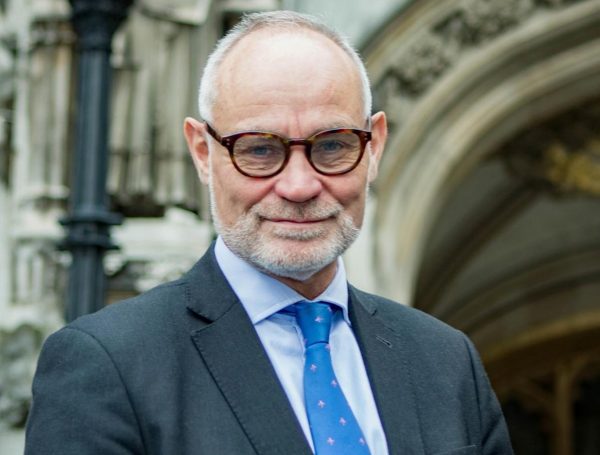
HORLEY, Surrey, England – Crispin Blunt, the openly gay Tory [Conservative] Member of Parliament for Reigate was arrested in connection with an allegation of rape and possession of a controlled substance earlier this month at his home in Horley by the Surrey Police.
Blunt, served for two years as a justice minister and two years as chair of the Foreign Affairs Committee in Commons, publicly came out as gay in 2010, announcing that he had separated from his wife and was “coming to terms with his homosexuality.”
British media outlet The Telegraph reported Blunt claimed in a statement that Surrey Police had begun an investigation three weeks ago when he reported “concerns over extortion”. The Conservative Party confirmed on Thursday night the 63-year-old has been stripped of the party designation, effectively meaning he has been expelled from the Conservative Party. He will now sit in the House of Commons in Parliament as an Independent member.
Former Conservative minister Crispin Blunt has confirmed he was the MP who was arrested by Surrey Police on suspicion of rape and the possession of controlled substances.
— BBC Breakfast (@BBCBreakfast) October 27, 2023
Political correspondent Ione Wells had more details on #BBCBreakfasthttps://t.co/sYvPTkW8eF pic.twitter.com/6W1Ia4eXT1
Taking to X, formerly Twitter, Blunt posted a statement saying, “The fact of the arrest requires a formal notification of the speaker and then my chief whip.
“I have now been interviewed twice in connection with this incident, the first time three weeks ago, when I initially reported my concern over extortion. The second time was earlier this morning under caution following arrest.
“The arrest was unnecessary as I remain ready to cooperate fully with the investigation that I am confident will end without charge,” Blunt continued. “I do not intend to say anything further on this matter until the police have completed their inquiries,” he added.

CARDIFF, Wales – The Welsh Government appears to be setting itself on a potential collision course with the UK Government of Prime Minister Rishi Sunak after the leak of a draft of the Welsh government’s Gender Quotas Bill Sunday evening, which would allow people to self-identify their gender when standing as candidates for the Senedd/Welsh Parliament.
The Telegraph reported that the bill proposes plans for a gender-balanced Senedd by having set equal quotas for male and female political candidates. Under this draft bill, the definition of a woman will be updated, so that the female quota of party candidates running for office may include transgender women.
The definition further stated that transgender meant “a person who is proposing to undergo, is undergoing or has undergone a process (or part of a process) for the purpose of reassigning [their] sex to female by changing physiological or other attributes of sex.”
Reaction from transphobic opponents included an outspoken Gender Critical leader, Cathy Larkman, from Women’s Rights Network Wales, who said in an emailed statement:
We know from bitter experience that Welsh Government is not listening to the concerns of women in Wales. We, along with other groups, have been shut out time and again. Unfortunately, the reasons for this are now apparent.
“The government is now intent on driving a highly contested ideological agenda and this is clearly their first step. It is astonishing that the government is spending public funds and using a Gender Quotas Bill to promote an agenda which undermines the rights of half the population of Wales.
“It is shameful that they are high-jacking legislation that should benefit women and increase female participation in political life, to embed a toxic and misogynistic ideology. We believe that the intention of the Welsh Government is to introduce gender self-identification and put it on a statutory footing.
“We believe this is the first step towards a full self-ID bill which would have serious implications for women and girls in particular as it would impact on single-sex services and spaces such as changing rooms, intimate care, hospital wards and domestic violence services.
“It is unforgivable that the First Minister and his Government, aided and abetted by Plaid Cymru, [political party] intend to betray the women of Wales in this underhand way.”
PinkNewsUK noted that this bill echoes a similar plan put forward by the Scottish government in January that would have made it easier for people to legally change their gender, which was sadly blocked by the UK government.
The leak has had a mixed response from the public. While the trans community and its advocates are pleased with the progressive step forward, anti-trans hate groups and so-called women’s rights groups are up in arms.
Commenting on the leaked bill, a spokesperson for the Welsh Government told The Telegraph that it did not represent the latest version of the Gender Quotas Bill, though they did not say whether that had to do with the redefinition of women.
“Our proposed model for quotas is designed to maximize the chances of achieving a Senedd comprised of at least 50 per cent women. Work is ongoing on the Bill,” said the spokesperson.
The first minister of Wales, Mark Drakeford has been a longtime defender of transgender rights, and has repeatedly shared his pro-trans beliefs in the Senedd PinkNewsUK also reported.
Additional reporting by The Kyodo News, The BBC, Reuters, Agence France-Presse, The Telegraph, and PinkNewsUK


Switzerland
Swiss government backs nationwide conversion therapy ban
Several cantons have already prohibited widely discredited practice
The Swiss government has said it supports a nationwide ban on so-called conversion therapy.
The Swiss Broadcasting Corporation on its website notes the government officially announced its position in a report it published on Wednesday.
Neuchâtel in 2023 became the first Swiss canton to ban conversion therapy.
Lawmakers in Valais and Vaud have also prohibited the widely discredited practice in their respective cantons. Bern and Geneva are among the other cantons in which lawmakers have considered similar prohibitions.
The European Commission earlier this year said all European Union countries should ban conversion therapy.
Switzerland is not a member of the EU, but lawmakers in neighboring Germany in 2020 passed a law that prohibits conversion therapy for minors and for adults who have not consented to undergoing the widely discredited practice.
Several EU countries — Belgium, Cyprus, France, Malta, Norway, Portugal, and Spain — have banned conversion therapy outright.
The Dutch Senate in June approved a bill that would ban conversion therapy in the Netherlands. The lower house of the country’s parliament approved the measure in September 2025.
Greece in 2022 banned conversion therapy for minors.
Bulgaria
Top Bulgarian court rules government must legally recognize trans people
Decision caps off decade-long legal fight
Bulgaria’s top court has ruled the country’s government must allow transgender people to legally change their name and gender on ID documents.
A trans woman from Bulgaria who moved to Italy, had tried to change her gender and name on her Bulgarian ID documents, but courts in the country denied her requests for nearly a decade.
The Bulgarian Supreme Court of Cassation in a 2023 ruling essentially banned trans people from legally changing their name and gender on ID documents.
The EU Court of Justice in Luxembourg, which is the European Union’s highest court, in March ruled in the “Shipova” case that member states must allow trans people to legally change their name and gender on ID documents. The lead plaintiff in the “Shipova” case is among the four litigants in the Bulgarian Supreme Court of Cassation case.
Two Bulgarian advocacy groups — Bilitis and Deystvie — along with TGEU – Trans Europe and Central Asia and ILGA-Europe in a joint statement they issued on Tuesday noted the Bulgarian Supreme Court of Cassation’s July 22 decision “aligns Bulgarian practice with the Court of Justice of the EU, enabling changes to gender markers, names, and personal identification numbers.”
“The judges also concluded that EU law requires Bulgaria to establish a legal procedure for legal gender recognition, which is necessary so that Bulgarian trans citizens can travel and reside freely inside the EU,” they added.
Bulgaria has been a member of the EU since 2007.
The country borders Romania, Serbia, North Macedonia, Greece, and Turkey.
“We are very glad to see that the judges of the Supreme Court clearly stated that it is actually a matter of rule of law for Bulgaria to respect the universal equality and the dignity of all human beings, including trans people for whom human rights-based legal gender recognition procedures are an indispensable element,” said Denitsa Lyubenova, co-chair of Deystvie who represented the four plaintiffs in the Bulgarian courts and the lead litigant in the “Shipova” case at the EU Court of Justice. “The government needs to act swiftly now to put in place an LGR procedure that is fully in line with European human rights case law, which means without any conditions requiring proof of medical, surgical or hormonal treatment.”
The groups also urged the Bulgarian government to codify the ruling into law.
“While lower courts are expected to follow this ruling directly, a court decision is not a substitute for law,” they said. “Bulgaria still needs a fast, transparent, and accessible legal gender recognition procedure written into legislation, not left to case-by-case court precedent. TGEU – Trans Europe and Central Asia, Bilitis, Deystvie, and ILGA-Europe call on the Bulgarian government to start that legislative process now, with meaningful involvement from civil society.”
France
Prominent French activist attacked outside Paris bar
Pierre Picavet hospitalized with internal bleeding, head injury
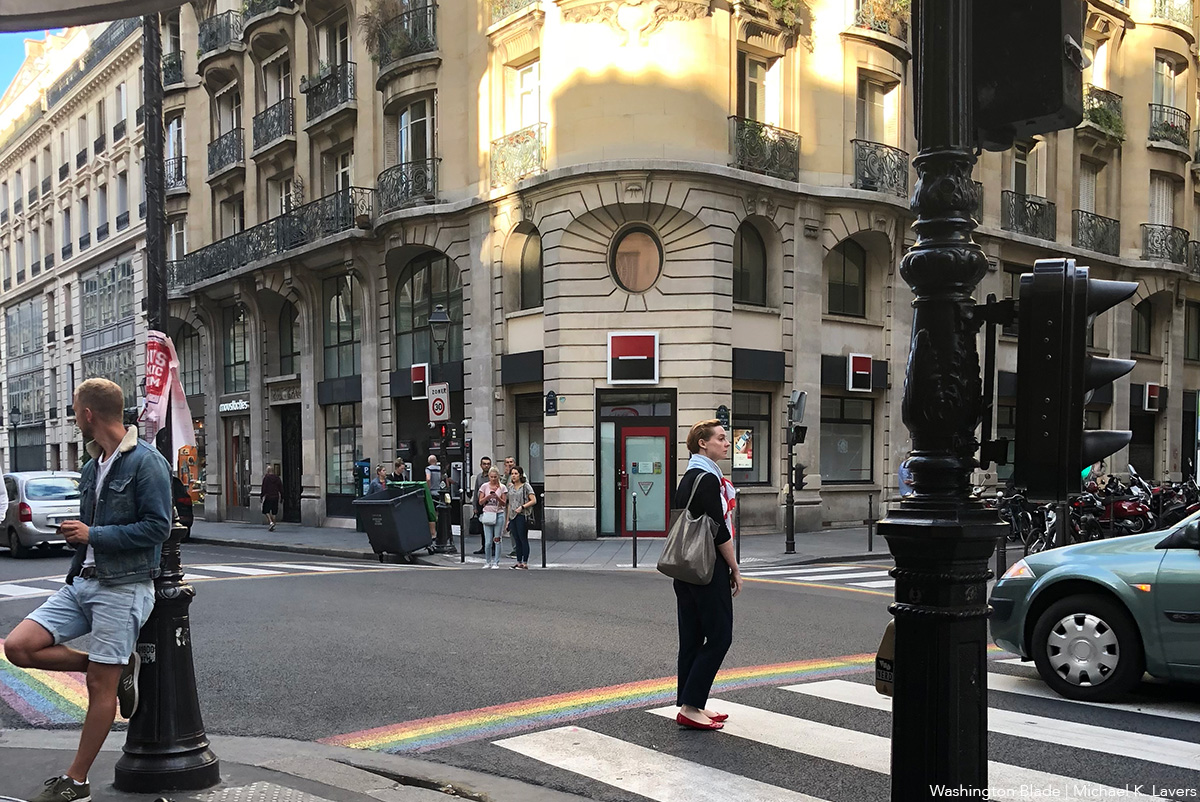
French prosecutors say a man shouted anti-gay slurs at a prominent activist before he attacked him in Paris on Saturday.
Media reports indicate Pierre Picavet, a police officer who is the president of FLAG!, a group within the French Justice and Interior Ministries that defends LGBTQ+ rights, was attacked as he left a bar in Paris’s Marais neighborhood.
The Marais since the 1980s has been center of the French capital’s LGBTQ+ community.
France 24 reported Picavet’s assailant struck him with a bottle. The attack left Picavet hospitalized with internal bleeding, a head wound, and other injuries.
“When I get better, when my wounds have healed, I will continue the fight,” Picavet told Radio France on Monday. “I am particularly shocked, but it tells me that there is still work to do.”
Paris Mayor Emmanuel Grégoire is among those who condemned the attack.
STOP Homophobia (STOP homophobie), a French group that fights against anti-LGBTQ+ violence, on its social media pages published a picture of Picavet in the hospital.
“As a long-standing partner of FLAG!, STOP Homophobia wishes to express its solidarity with Pierre Picavet, his loved ones, and the entire association,” said the group. “STOP Homophobia condemns this assault in the strongest possible terms and reiterates that anti-LGBT violence remains a reality — even in spaces where everyone should be able to move freely and live out their sexual orientation or gender identity without fear of attack.”
STOP Homophobia also praised a bystander who came to Picavet’s aid after the attack, and the first responders and law enforcement personnel who responded.
“STOP Homophobia extends its full support to Pierre, his family, his loved ones, and the entire FLAG! team, and wishes him a full recovery,” said the group.
Reports indicate the assailant, who was born in 2006, was scheduled to appear in a Paris court on Monday at 1:30 p.m. local time.
Poland
Poland begins to legally recognize same-sex marriages from other countries
‘This is an important milestone, but it should not be the final destination’

Poland has begun to recognize same-sex marriages legally performed outside the country.
TVP World, the country’s public broadcaster, reported civil registry offices began to “transcribe same-sex marriages legally” conducted outside of Poland on Aug. 22.
The EU Court of Justice in Luxembourg last November ruled in favor of a same-sex couple who challenged Poland’s refusal to recognize their German marriage. Poland’s Supreme Administrative Court in March reaffirmed the decision.
The couple, who lives in Poland, brought their case to Polish courts in 2019. The Supreme Administrative Court referred it to the EU Court of Justice.
The Polish government in May announced it will recognize same-sex marriages legally performed in other EU countries. Polish President Karol Nawrocki on July 17 vetoed bills that would have extended rights to same-sex couples.
Poland’s Constitutional Tribunal a few days later rejected the recognition of same-sex marriages legally performed in other EU countries. The Love Does Not Exclude Association, a Polish marriage equality advocacy group, in an Aug. 26 press release notes the ruling “does not prevent implementation of these new regulations” because the Constitutional Tribunal is “largely discredited” and the government considers it “to be improperly constituted.”
“This is an important milestone, but it should not be the final destination,” said Maja Heban of the Love Does Not Exclude Association. “No couple should have to cross a border to marry. Our goal is allowing loving, committed couples to marry in Poland in the first place. The law now increasingly recognizes these marriages once couples return to Poland in areas such as healthcare and social security, but significant gaps remain, mainly lack of recognition of same-sex parents which directly impacts security of their children.”
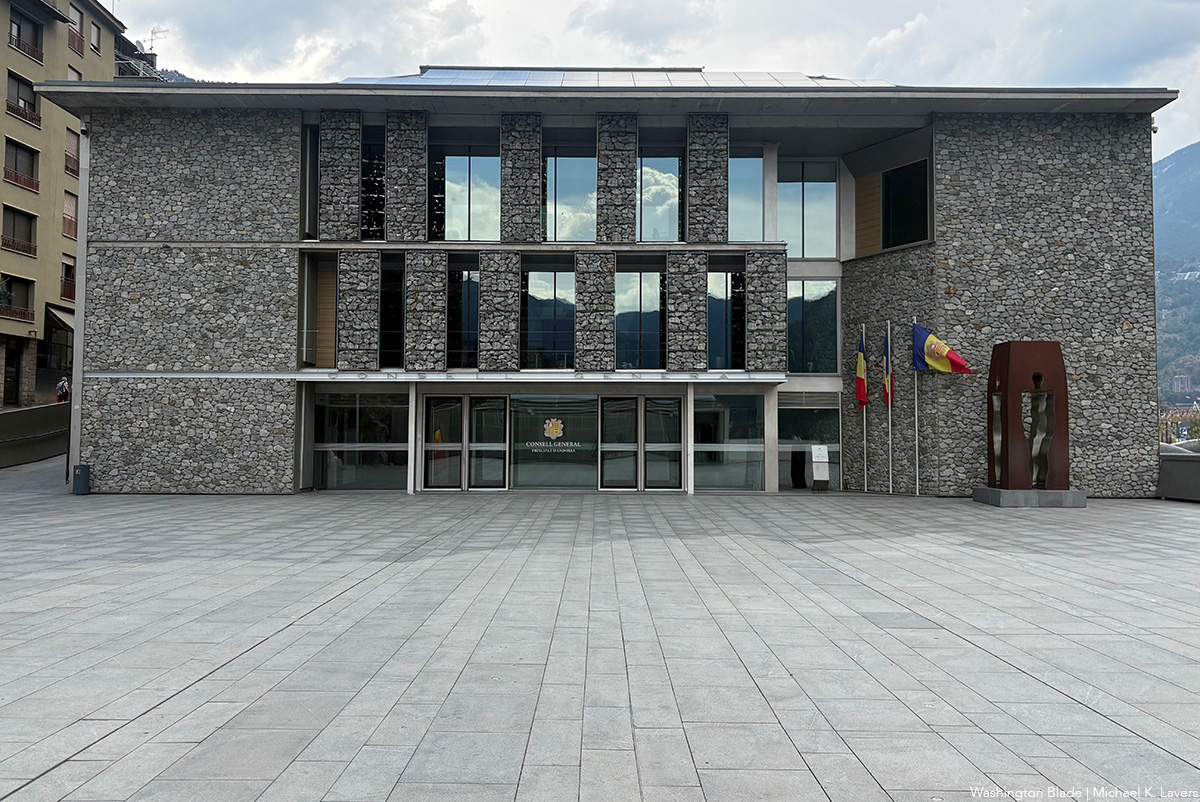
Germany, Belgium, France, Ireland, Spain, and Portugal are among the EU countries in which same-sex couples can legally marry. Andorra, whose prime minister, Xaviet Espot Zamora, is openly gay, and Switzerland are among the other European nations that have extended marriage rights to same-sex couples.
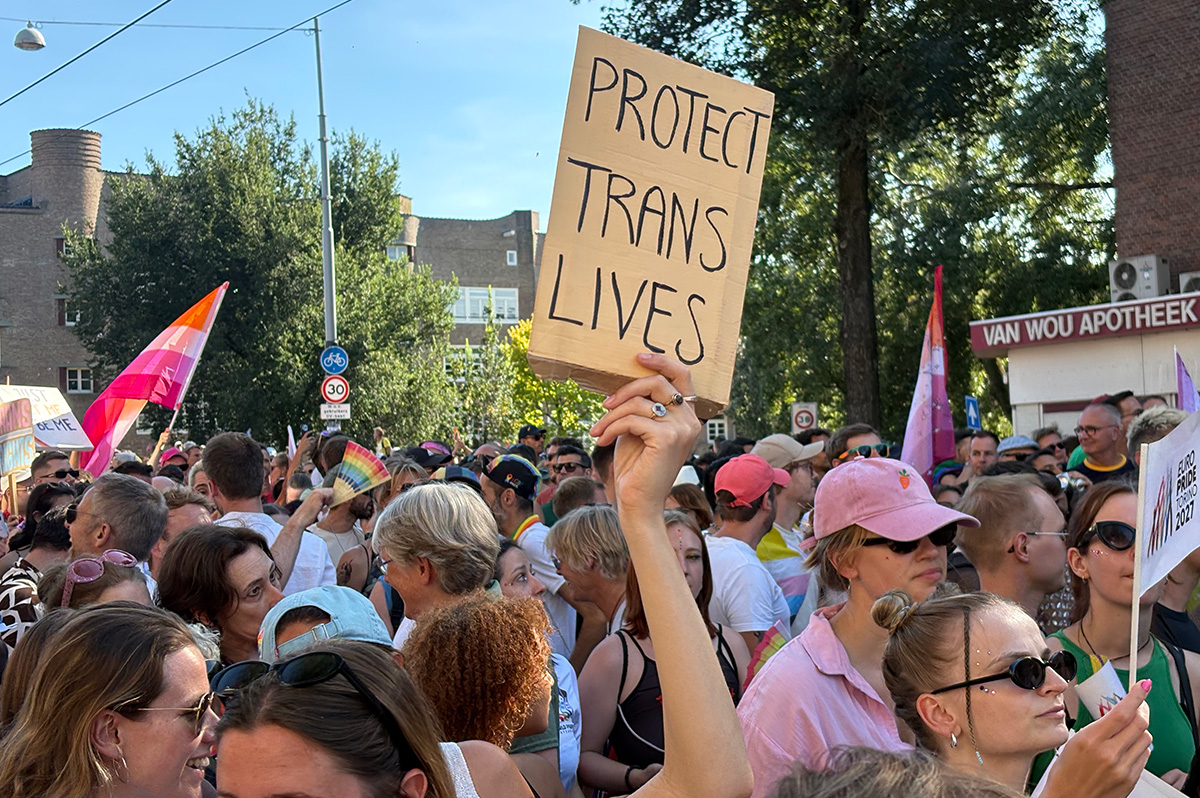
The Netherlands in 2001 became the first country in the world to extend marriage rights to same-sex couples. Activists who participated in this year’s World Pride that took place in Amsterdam earlier this summer marked this milestone.

Honduras
Realidad LGBTQ+ en Honduras: fuga o muerte
Observatorio KAI+: 35 asesinatos anti-LGBTQ+ en 2026
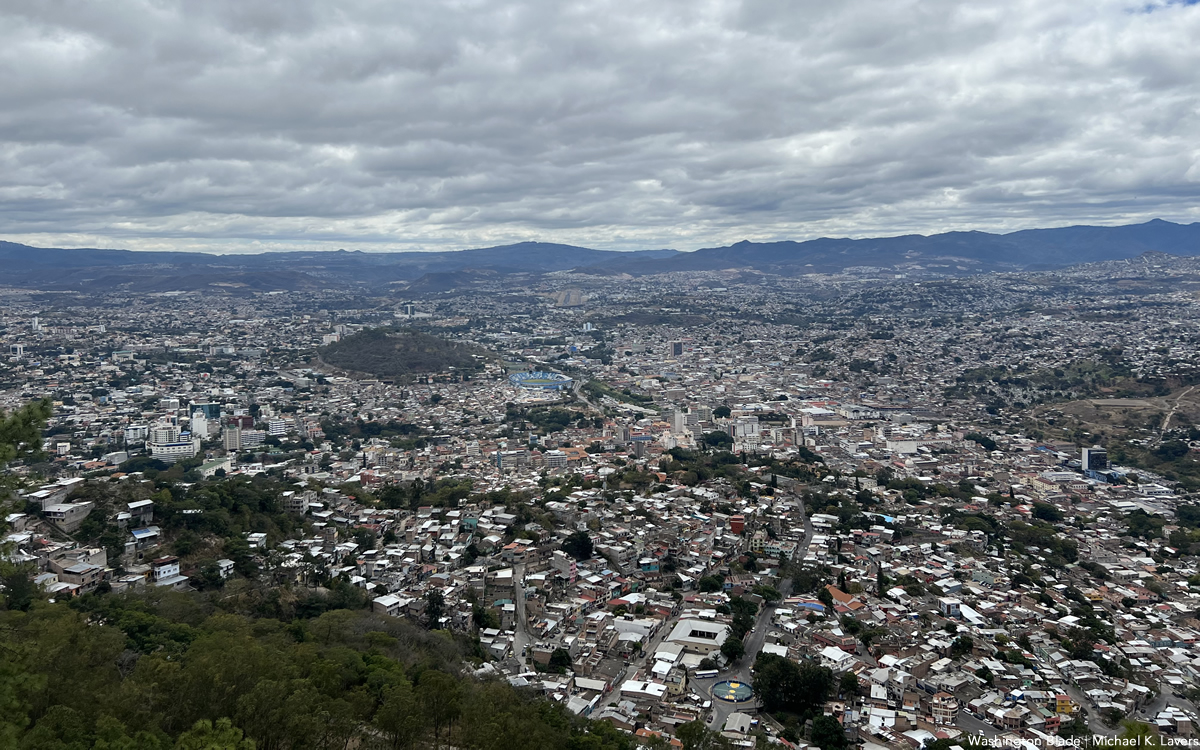
TEGUCIGALPA, Honduras — Las cifras encienden todas las alarmas: 35 muertes violentas de personas LGBTQ+, 195 casos de violencia generalizada y 11 personas asistidas para refugiarse en el extranjero. Las mujeres trans encabezan las víctimas mortales con 11 casos, seguidas de los hombres gay con 10.
Esa es la realidad de las poblaciones sexualmente diversas que pinta el boletín número 14 del Observatorio de Violencia hacia las Personas LGBTI+ de Honduras KAI+, correspondiente al período de enero al 8 de agosto de 2026.
Según el informe, los departamentos con mayor concentración de asesinatos son Francisco Morazán (12), Cortés (5) y Comayagua (4). Sin embargo, el dato más revelador de la impunidad es que los 35 casos permanecen en etapa de investigación preliminar, con apenas dos capturas reportadas.
«No queremos vivir con miedo»: defensores
Lucía Barrientos, de la Asociación Ixchel, resume el sentimiento colectivo. «Hoy las personas LGBTI en Honduras vivimos en estado de alerta. Muertes que, al hacer un análisis, tienen una conmoción de que muchas personas de nuestra población han sido torturadas, que han sido crímenes de odio», señala.
Barrientos subraya que en el país no hay una ley que tipifique el crimen de odio, lo que deja a la población en un limbo legal y expuesta a la violencia sin protección efectiva.
Entretanto, Jennifer Córdoba, de la Colectiva de Mujeres Trans Muñecas de Arcoíris, lamenta que las autoridades no estén haciendo nada para defender los derechos humanos.
«Ver ese tipo de violencias en el país que se incrementan, ver que las autoridades de nuestro país no están haciendo nada para la defensa de los derechos humanos, no crear una política pública que respete los derechos humanos de la población LGTBI», afirma Córdoba.
Violencia generalizada y discriminación sistemática
Los 195 casos de violencia generalizada incluyen amenazas (19), maltrato familiar (25), abuso de autoridad (14), discriminación por orientación sexual o identidad de género (14), lesiones (10) y agresiones sexuales. Las mujeres trans son nuevamente las más afectadas, con 32 casos registrados.
Dany Montesinos, de la Asociación LGBTI Kukulcán, advierte: «Esta es una violencia general, estructurada. No tenemos un patrón determinado. La alerta que estamos poniendo es que, en comparación con otros años, esto está siendo más creciente».
Un elemento crítico señalado por el boletín es que casi el 70 por ciento de los casos de violencia generalizada (137 de 195) carecen de categorización desagregada sobre la orientación sexual o identidad de género de la víctima, lo que evidencia la ausencia de protocolos adecuados por parte de las instituciones estatales y una invisibilización sistemática.
Migración forzada, huir para vivir
Entre los hallazgos más dolorosos está la asistencia a 11 personas LGBTQ+ que han buscado refugio en el extranjero. Ocho se han ido a Estados Unidos, dos a España y una al Reino Unido. Los motivos incluyen amenazas, discriminación, abuso de autoridad, agresiones sexuales y físicas.
Como señala un testimonio: «Tuvieron que irse, se vieron obligadas a huir por amenazas, por la discriminación, por el abuso de autoridad y agresiones sexuales. Estos datos nos muestran que la migración de las personas LGBTI no responde únicamente a razones económicas, sino a la necesidad urgente de proteger su vida y sus derechos».
Recomendaciones ante un Estado ausente
El boletín concluye con un llamado urgente al Estado hondureño. Exige fortalecer las investigaciones de muertes violentas e implementar políticas públicas de protección integral. Además, capacitar a funcionarios en diversidad sexual y derechos humanos y garantizar que los casos avancen más allá de la etapa preliminar.
Barrientos lo resume con claridad. «Exigimos al Estado respuestas inmediatas, justicia y protección real para nuestra población. No queremos retroceder, no queremos volver atrás, no queremos vivir con miedo, no queremos salir a la calle y saber que no puedo expresar mi amor hacia mi pareja o hacia otra persona porque puedo amar y ser muerta».
El Observatorio KAI+ recuerda que detrás de cada cifra hay seres humanos: madres, padres, hijos, hermanos y familias que dependen de ellos. La indiferencia institucional, advierten, no puede seguir siendo una puerta abierta a la impunidad.
Netherlands
Trans, nonbinary Americans find refuge in the Netherlands
DAFT visa offers fast-track to permanent residency, citizenship

Editor’s note: International News Editor Michael K. Lavers and Photo Editor Michael Key were on assignment in the Netherlands from July 28-Aug. 10.
AMSTERDAM — A transgender American couple who live in the Netherlands say President Donald Trump prompted them to leave the U.S.
Jack Reaves, who is a trans man, and his wife, Iskara McCoy, who is a trans woman of color, moved to the Netherlands from Reno, Nev., in 2024. The couple now lives outside Utrecht, a university city that is roughly 30 miles south-southeast of Amsterdam.
“We’d been keeping an eye on things during his (Trump’s) first term in 2016, which was pretty terrifying,” Reaves told the Los Angeles Blade on Aug. 24 during a WhatsApp interview with him and McCoy. “We knew that there was a lot of anti-trans legislation and just anti-trans feelings from the Republican/MAGA party at the time.”
The Biden-Harris administration took office on Jan. 20, 2021, two weeks after thousands of Trump supporters stormed the U.S. Capitol — the insurrection took place shortly after Congress began to certify the results of the 2020 presidential election that Joe Biden won.
“Joe Biden was elected, and we were like, okay, well maybe things will turn around,” said Reaves. “But it was very clear very early on in the Biden presidency that that wasn’t going to happen.”
“There weren’t any meaningful changes, and then with Trump getting ready to win the next election and MAGA really looking like they were going to continue to gain more power, we were like, well time to get out.”
Reaves and McCoy are two of the four trans and nonbinary Americans who have moved to the Netherlands with whom the Blade recently spoke. The interviews took place during World Pride, which took place in Amsterdam from July 25-Aug. 8, or in the days after the biennial event ended.
The Dutch American Friendship Treaty, or DAFT, allows American citizens to live and work in the Netherlands as self-employed entrepreneurs.
DAFT visa recipients must keep at least €4,500 ($5,244.19) in a Dutch business bank account and need to register their business with the Dutch Chamber of Commerce. DAFT visa recipients can apply for permanent residency in the Netherlands or the European Union seven years after they receive it.
Reaves and McCoy and the two other trans and nonbinary Americans with whom the Blade spoke for this story either received a DAFT visa or plan to apply for one.
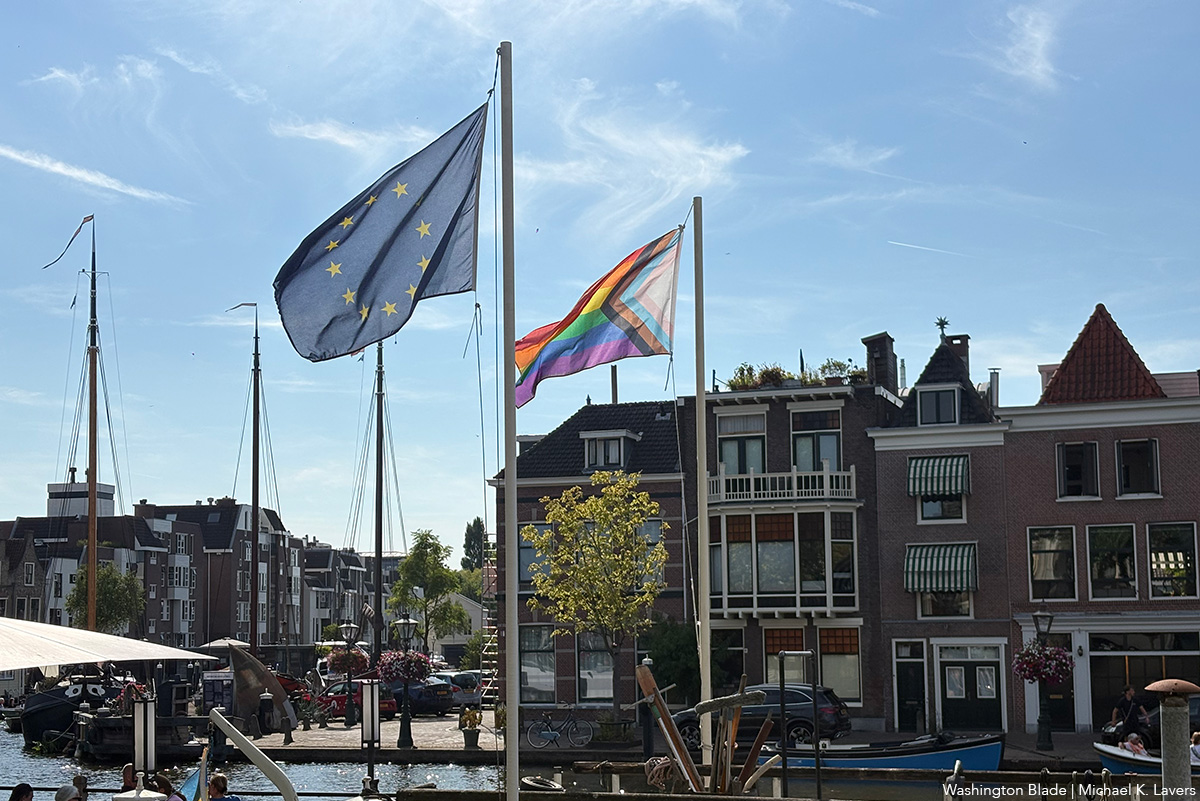
Kai, who is nonbinary, and their husband, who is a trans man, moved from New England to the Netherlands in August 2021. They now live in Haarlem, a small city that is roughly 12 miles west of Amsterdam.
Kai told the Blade on Aug. 20 during an interview from their home that friends moved to the Netherlands in 2017 after they received a DAFT visa.
“The prompt was the 2016 election for them,” said Kai.
Kai and their husband were living in a collective household in August 2020 when they “decided we wanted to have some kind of change.”
“We suspected that politics was going to get worse, even if it got better soon, that it would probably get worse again later, and that the country politically was going downhill,” they said.
Kai told the Blade a lack of promised disability payments and poor health in the U.S. were also factors.
“When I had been to visit the Netherlands to visit the friends that were living here, I found that my body was healthier, even though I was only here for one or two weeks at a time,” they said. “I was able to do more things, eat more things that I couldn’t go or eat while living in the U.S.”
The fourth American with whom the Blade spoke identifies as a “disabled transgender queer” person. He asked to remain anonymous.
He and his daughter, who is also trans, arrived in the Netherlands in July. He referred to the Holocaust and its impact in the Netherlands when the Blade interviewed him in Amsterdam on Aug. 6.
“I’m the trans parent of a trans adolescent who knows our family history, which includes genocide from the Holocaust,” he said, pointing out 85 percent of Dutch Jews died in the Holocaust. “(My daughter) said my grandparents came to New York right before the occupation, and so my daughter said from our history that targeted communities have to get out early, so this was last summer, so how will we know we need to leave and where will we go?”
“I started looking into that, and we started planning our move,” he added.
He pointed out the “murder of opposition politicians” — specifically former Minnesota House Speaker Melissa Hortman and her husband, Mark Hortman, who were shot to death inside their home in June 2025 — and “harassment and prosecution” of journalists in the U.S. — federal authorities in January arrested former CNN anchor Don Lemon less than two weeks after he entered a Minnesota church with a group of protesters who confronted its pastor who works with U.S. Immigration and Customs Enforcement — since the Trump-Vance administration took office as signs he and his daughter may need to leave the U.S.
Federal authorities charged Lemon, independent journalist Georgia Fort and two protesters with conspiracy and interfering with worshippers’ First Amendment rights during the protest.
An ICE agent on Jan. 7 shot and killed Renee Good, a 37-year-old Minneapolis woman who left behind her wife and three children. U.S. Customs and Border Protection agents on Jan. 24 shot and killed Alex Pretti, a 37-year-old nurse who worked for the U.S. Department of Veterans Affairs in Minneapolis.
Pretti and Good were American citizens.
The shootings took place after the Trump-Vance administration deployed thousands of federal immigration agents to Minnesota during “Operation Metro Surge.”
“We were thinking, depending on what happens with the midterms,” said the trans person in Amsterdam with whom the Blade spoke. “But then you’re like, you know what, every day more people are coming and we should just do this thing.”
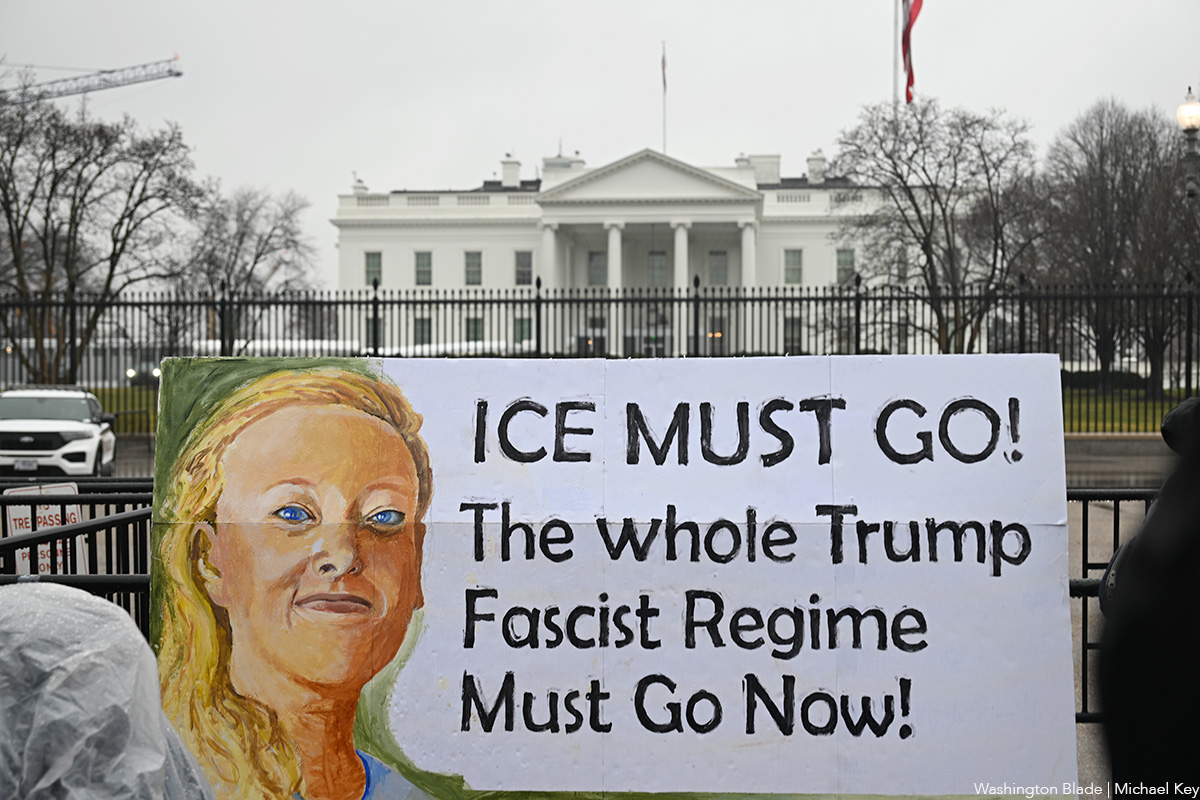
The Trump-Vance administration since it took office on Jan. 20, 2025, has implemented several anti-trans executive orders and policies.
Trump hours after his second inauguration signed the “Defending Women from Gender Ideology Extremism and Restoring Biological Truth to the Federal Government” that, among other things, declared the federal government will only recognize two genders: male and female. The directive also banned the State Department from issuing passports with “X” gender markers.
The Pentagon reinstated a ban on openly trans servicemembers. The Department of Education has rescinded agreements with school districts that were designed to protect trans students. The Trump-Vance administration’s anti-terrorism strategy specifically targets “radically pro-transgender” groups.
The U.S. Supreme Court earlier this summer upheld state laws banning athletes from school sports teams that correspond with their gender identity and block gender-affirming care for minors. The Trump-Vance administration since it took office has moved aggressively to curtail these treatments.
“On the one hand, it’s like as if people don’t recognize that that these things make it impossible to have a trans life,” said the trans person with whom the Blade spoke in Amsterdam. “But of course, that’s what Project 2025 is trying to do … make it be impossible to exist.”
McCoy said her and Reaves’s oldest child, who is also trans, has an “X” gender marker on their U.S. passport. McCoy’s grandmother with whom she was very close recently died, but her family attended her funeral virtually from the Netherlands “because we didn’t want to risk returning to the States at that point.”
Kai also noted trans and nonbinary Americans who are trying to leave the U.S., but don’t have passports and other documents with gender markers that match their gender identity.
“That’s terrifying, and it prevents you from doing things like leaving the country,” they said. “Even if it’s not a ban on leaving the country, it still prevents you from leaving the country if those things don’t match in the right way, depending on which immigrations person you get at the border.”
“On this end it wouldn’t matter as much,” added Kai. “But on the other end, it does matter and that is super frustrating and exhausting.”
Dutch ‘very into their bureaucracy’
Kai and the three other trans and nonbinary Americans with whom the Blade spoke said navigating the Dutch health care system upon their arrival in the Netherlands was one of their biggest challenges.
“They’re very into their bureaucracy and they’re very into following guidelines as if they’re laws, and they’re the only ways you do things,” said McCoy. “Once they start working for you. They work. Once you’re in the system, once you’re onboarded, once they’re caught up, then everything goes pretty smoothly.”
Reaves noted McCoy “had a little bit easier time as a trans woman who’s already passing.”
“They were just like, oh, well, it’s clear you’re a woman, so here’s your hormones, and here’s the fast path to diagnostics,” Reaves told the Blade.
Reaves, on the other hand, had been on testosterone for six years before he and McCoy moved to the Netherlands. Reaves said it took nearly a “full year of re-diagnostics before I could get back on testosterone and continue to determine care.”
“They were just like, ‘Well, you kind of look like a woman, so we’re gonna make you do the full diagnostic phase again,’” recalled Reaves.
Reaves told the Blade his doctor prescribed him the wrong type of testosterone. Health clinics that specifically treat trans and nonbinary people use what he described as “extremely outdated language,” but Reaves noted the facility’s doctor helped him get an appointment for his top surgery.
“Now that I’m fully onboarded, I think it’s actually been a little bit better than the U.S.,” he said, noting he receives testosterone blood tests at home. “The follow-ups are really easy.”
Kai also discussed the challenges navigating the Dutch health care system.
They said it would “have been a lot harder to receive care” if they had already undergone hormone replacement therapy, seen a psychiatrist, or had had surgeries. Kai told the Blade they “made the choice” to tell the clinic where they were receiving care that they were a man, as opposed to saying they are nonbinary.
“That’s not true, but I look enough like a man, and then I’m going to get the care that I need,” they said. “I’m sure it’s very different and difficult for folks, especially who are nonbinary, to say I am actually a woman, or I am actually a man, and to pretend that … and that’s still what the system says.”
“Just like with any system, if you want to get your needs met from the system, sometimes you have to meet the system where it’s at, and then once you get your needs met, then outside of the system you can be whoever you want,” Kai added.
Kai noted Dutch activists are “working to get some of those laws and some of those policies changed.” Their husband is working with one group “that is working to change things from if you don’t have a psychological diagnosis of being trans, then getting that care is going to be really hard.”
“What this group is working on is trying to get trans care to be — it’s what they use in the U.S., which is like informed consent, which is not what they use here,” said Kai. “But they’re working on putting together something to like push to governmental level to policy level to say that trans care should be informed consent, not the diagnosis.”
Gay PM: Netherlands needs to do more to defend trans people, rights
The Netherlands in 2001 became the first country in the world to extend marriage rights to same-sex couples.
The country’s nondiscrimination and hate crimes law include gender identity and expression. The Dutch government in 2021 formally apologized to trans and intersex people who were forced to become sterile in order to legally change their gender — The Gender Change Act, which was also known as the Transgender Act — was in place from 1985 until 2014.
Prime Minister Rob Jetten, who is the country’s first openly gay head of government, during a World Pride Human Rights Conference panel conceded the Netherlands needs to do more to defend trans people and their rights. Boris Dittrich, the Dutch Senate’s First Vice President and a member of Jetten’s D66 party who was previously global advocacy director for Human Rights Watch’s LGBTQ Rights Program, at the end of the panel asked about protecting intersex babies from what advocates maintain are unnecessary surgeries.
Reaves admitted he and his children are struggling to learn Dutch, but he added he and his family “appreciate” the Netherlands and “really enjoy living here.”
“I struggle in the Netherlands,” Reaves told the Blade. “I don’t speak the language
“It’s hard being away from home and your own culture and the things you grew up with,” he said. “But I’m safe here, and so that like gives it extra points.”
McCoy said their daughter has “experienced zero transphobia here so far.”
Kai told the Blade that their friends warned them that Dutch people would “call you out or they’ll stare at you or will be mean to you” if they “look nonbinary.”
“I had never had that experience,” they said.
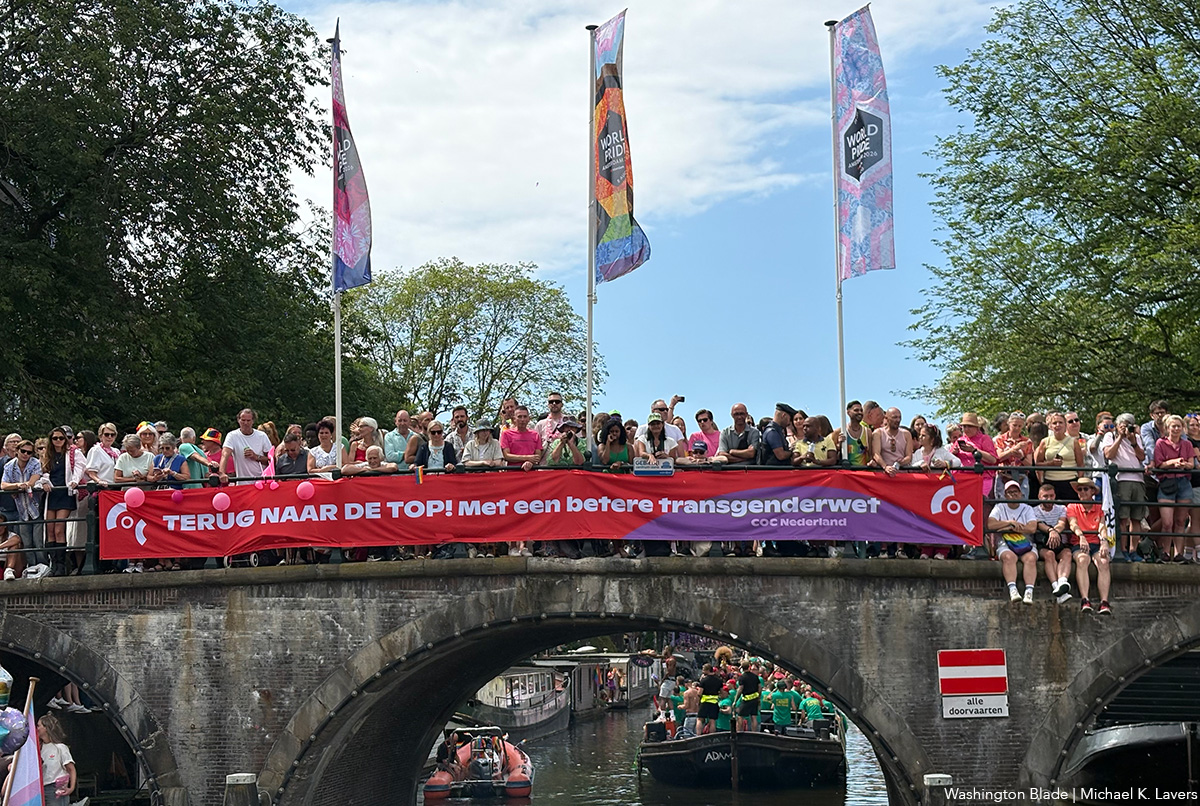
All four of the people with whom the Blade spoke said they plan to apply for their Dutch or EU citizenship once they are legally able to do so. They all expressed reservations about returning to the U.S., even once the Trump-Vance administration is no longer in office.
“I’m actually very nervous that even if things turn around in the U.S. as far as getting rid of Trump, that people are still going to be anti-trans,” said the trans person with whom the Blade spoke in Amsterdam. “The poison’s in the water.”
Reaves said the U.S. “doesn’t really feel like it’s a safe place for trans people to come to.” McCoy added she would consider visiting the U.S., but “I would not move back.”
“That’s too risky,” she said. “It can change anytime.”
“It would probably take like a decade of democratic legislative changes before I would feel safe coming back,” added Reaves.
Canada
Monument to LGBTQ+ Canadians officially unveiled
Thunderhead honors those who suffered government-sanctioned discrimination

A monument that pays tribute to LGBTQ+ Canadians who suffered government-sanctioned persecution and discrimination officially opened in Ottawa on Aug. 21.
Former Prime Minister Justin Trudeau, Governor General Louise Arbour, and Women and Gender Equality Minister Rechie Valdez are among those who attended the ceremony.
A Canadian government press release notes Thunderhead, which is located on Parliament Hill, “recognizes the historic discrimination faced by 2SLGBTQI+ (two-spirit, lesbian, gay, bisexual, trans, queer, intersex, plus) people in Canada, including during the LGBT (lesbiennes, gaies, bisexuelles, trans) Purge.”
(French and English are Canada’s official languages.)
Trudeau in 2017 formally apologized to Canadians who suffered persecution and discrimination under the country’s anti-LGBTQ+ laws — including those convicted of “gross indecency” before Canada decriminalized consensual same-sex sexual relations — and policies. Trudeau also formally apologized to those who were fired from the Royal Canadian Mounted Police and the country’s military and civil service from the 1950s to the mid-1990s because of their sexual orientation or gender identity.
The Canadian government later settled a class action lawsuit that LGBT Purge victims filed.
The settlement funded the monument.
The Canadian government’s press release notes an “all Canadian team” from Winnipeg, Manitoba, designed it. The monument is also located on the Anishinabe Algonquin Nation’s traditional territory.
“It celebrates the resilience and achievements of those who fought for equality, educates visitors, and inspires the change still needed so that everyone can openly love who they love and express and identify themselves as they choose,” reads the press release.
“Thunderhead stands as a tribute to the lives, stories, and contributions of 2SLGBTQI+ people across Canada,” said Prime Minister Mark Carney on Facebook. “It’s reminder of the discrimination too many endured — and honors those who fought to build a country where everyone can live freely, safely, and with dignity.”
India
Proposed Indian foreign funding law overhaul could further pressure LGBTQ+ groups
Measure introduced in Parliament earlier this year
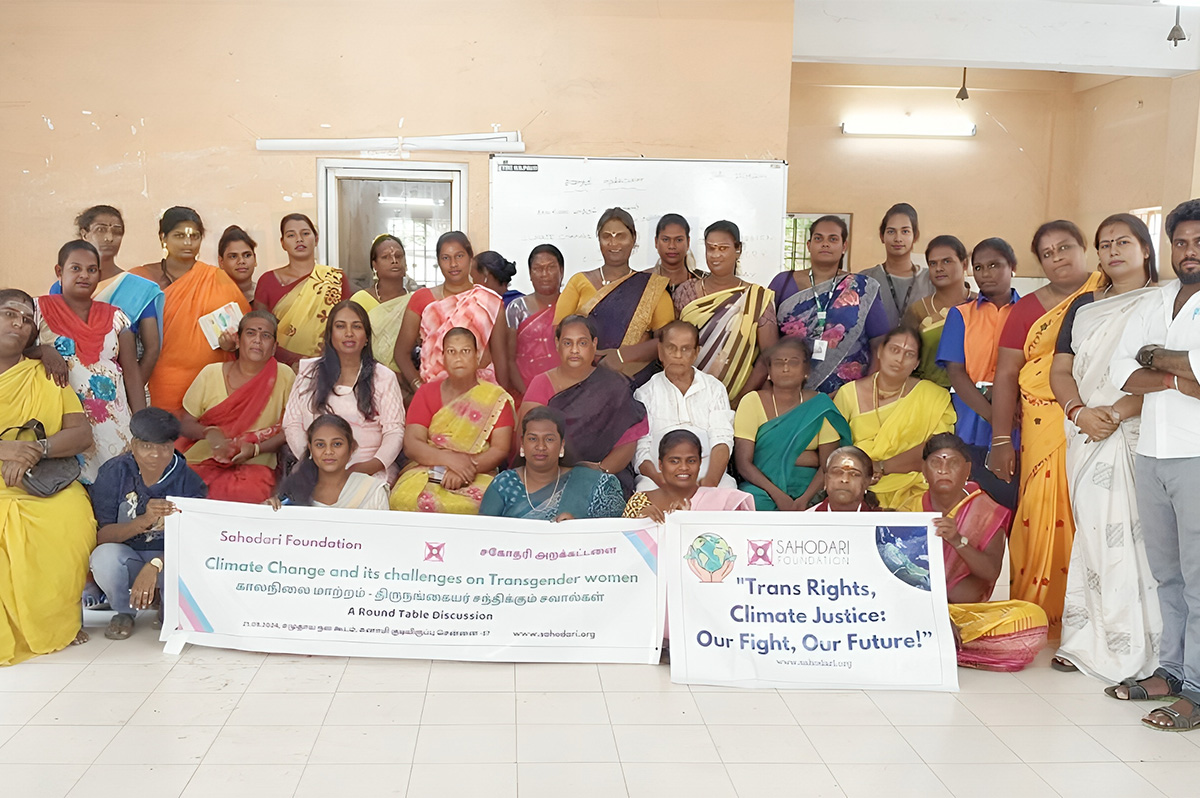
India’s proposed overhaul of its foreign funding law could put LGBTQ+ organizations that depend on overseas donations under new pressure.
Introduced in the Lok Sabha, the lower house of Parliament, on March 25, the Foreign Contribution (Regulation) Amendment Bill, 2026, or FCRA, would give a government-designated authority control over foreign funds, and assets when an organization loses or surrenders its registration.
The Foreign Contribution (Regulation) Amendment Bill returned to the spotlight this month as the Indian government prepared to seek its passage during Parliament’s Monsoon Session; drawing fierce opposition from political parties, civil society groups and religious organizations.
The government says the bill is intended to address gaps in the management of foreign funds and assets when an organization’s FCRA registration is cancelled, surrendered, or expires. The Foreign Contribution (Regulation) Amendment Bill, 2026, would create a Designated Authority to oversee the vesting, supervision, management, and disposal of foreign contributions and assets when an organization’s FCRA registration is cancelled, surrendered , or ceases. If a vested asset is a place of worship, the authority would be required to preserve its religious character. The FCRA would also reduce the maximum prison term for violating the law from five years to one year.
The changes could also make it difficult for organizations to leave the FCRA regime without surrendering assets created with foreign funds. Under the bill, an organization would have to keep renewing its FCRA certificate to retain those assets. FCRA rules also impose spending requirements on organizations seeking to maintain their certificates.
The bill may also create a distinction between assets created by organizations with FCRA registration and those created through the separate prior-permission route.
More significantly, neither the existing law nor the bill provides an appeal mechanism when the central government refuses to renew an FCRA certificate. They also do not expressly require the organization to be given an opportunity to be heard before renewal is denied. Under the proposed framework, such a denial could trigger the vesting of the organization’s foreign-funded assets in the Designated Authority.
The bill would also widen the circle of people who could face consequences for an organization’s FCRA violations.
Its definition of “key functionary” extends beyond directors and office bearers to trustees, governing-body members, managing-committee members and others responsible for an organization’s affairs. Those functionaries could be held liable for offenses committed by the organization, unless they can show that they were unaware of the violation or had exercised due diligence to prevent it. The FCRA bill would also impose restrictions on dealing with foreign-funded assets during a suspension and leave several important operational details — including timelines and procedures for managing and returning assets — to rules that have yet to be prescribed.
Parliament on Aug 12 moved to refer the FCRA bill to a parliamentary committee for further scrutiny and wider consultations.
Minister of State for Home Nityanand Rai moved the motion in the Lok Sabha, to refer the bill to a committee comprising 21 members of the lower house and 10 members of the Rajya Sabha, Parliament’s upper house.
The Rajya Sabha subsequently approved the nomination of its 10 members to the committee. The panel is expected to submit its report by the last day of the first week of Parliament’s Winter Session.
The proposed changes could have significant implications for LGBTQ+ organizations that rely on the FCRA framework to receive foreign contributions. (The global LGBTQ+ and intersex rights movement since the Trump-Vance administration took office in 2025 has lost nearly $50 million in U.S. funding because of foreign aid cuts. One source with whom the Los Angeles Blade spoke described the funding loss as a “catastrophe” for the global movement.)
While the government does not appear to have published an easily accessible, consolidated list of LGBTQ+ organizations receiving such funding, FCRA registration records and organizations’ financial disclosures indicate that foreign contributions have supported LGBTQ+ rights, healthcare, and community services in India.
K.C. Venugopal, general secretary of the opposition Indian National Congress, told reporters his party and other opposition parties would strongly protest the legislation if it were introduced in Parliament. He said the bill was aimed at targeting minorities and NGOs and vowed that the opposition would oppose its passage.
Venugopal called the proposed legislation “unconstitutional and anti-people.”
“If the Central Government thinks they can cook up and introduce the Foreign Contribution (Regulation) Amendment Bill within these two or three days, they should keep that wish to themselves,” he told reporters in Alappuzha, Kerala, on Aug. 9.
“Three provisions worry LGBTQ+ organizations like ours most directly,” said Souvik Saha, founder of People for Change and Jamshedpur Queer Circle. “First, the 2026 bill would let a government-appointed ‘Designated Authority’ take control of an organization’s foreign-funded assets— bank balances, equipments, sometimes even property— the moment its FCRA registration is cancelled, surrendered, or simply not renewed, and this happens through an administrative process, without prior judicial adjudication. For a small community organization, that means losing everything we have built — case files, shelter infrastructure, helpline equipment — almost overnight, with no court hearing first.”
Saha told the Blade the revised FCRA Rules announced in June introduced a minimum spending threshold: organizations must spend at least $10,449 in foreign contributions over two financial years or risk cancellation and non-renewal of their registration.
“This specifically penalizes small and grassroots groups that deliberately keep their foreign funding modest — which describes most LGBTQ organizations in India, including ours,” said Saha. “We are not running core-scale budgets; we are running helplines, safe spaces, and district-level outreach on modest grants.”
Saha told the Blade that the ban on sub-granting, carried over from the 2020 amendment, means larger, well-established rights organizations cannot pass foreign funds to smaller, unregistered LGBTQ+ collectives that could not obtain FCRA registration themselves. He said rights groups have long described the restriction as a near “death knell” for hundreds of small nongovernmental organizations that work collaboratively with larger organizations, adding that LGBTQ+ groups outside major metropolitan areas depend heavily on such funding arrangements.
“Domestic funding for LGBTQ work in India is still thin, CSR (Corporate Social Responsibility) money avoids us because we are seen as ‘controversial,’ and most Indian foundations would not touch gender-identity programming,” Saha said. “So foreign funding is not a convenience for organizations working with the transgender and LGBTQ community, it is often always funding.”
Netherlands
Thailand’s first openly gay senator attends World Pride in Amsterdam
Blade sat down with Pornchai Witayalerdpan on Aug. 7
Editor’s note: International News Editor Michael K. Lavers and Photo Editor Michael Key were on assignment in the Netherlands from July 28-Aug. 10.
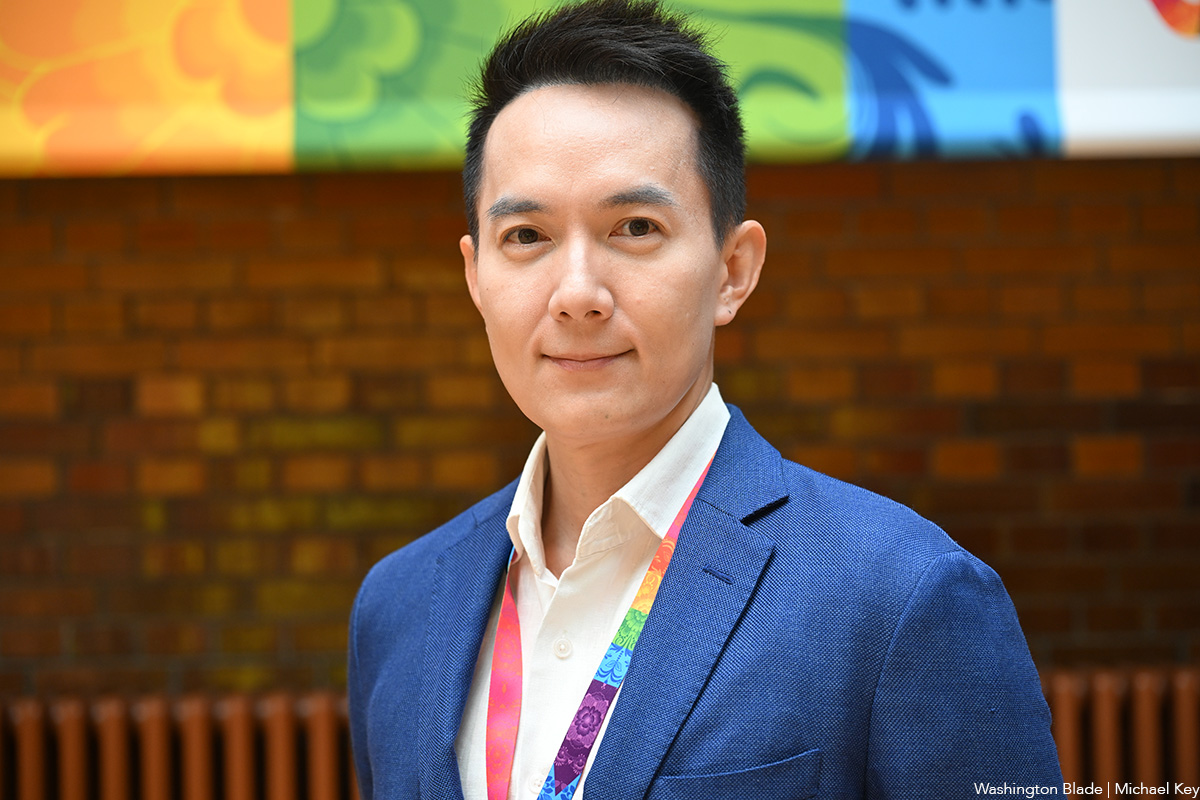
AMSTERDAM — The first openly gay man elected to the Thai Senate says the law that extended marriage rights to same-sex couples in Thailand has positively impacted his country’s global image.
“It totally changed how the world perceived Thailand,” Sen. Pornchai Witayalerdpan told the Los Angeles Blade on Aug. 7 during an interview at the World Pride Human Rights Conference in Amsterdam.
Thailand on Jan. 23, 2025, became the first country in Southeast Asia to allow same-sex couples to legally marry.
The marriage equality bill received final legislative approval in June 2024 when the Senate approved it by a 152-130 vote margin. King Maha Vajiralongkorn signed it a few months later. Then-Prime Minister Prime Minister Paetongtarn Shinawatra is among those who supported the law.
Witayalerdpan was a freelance interpreter before he took office in July 2024.
The independent senator noted Thailand’s marriage equality movement began to gain traction with a lawsuit that the Foundation for Sexual Orientation and Gender Identity Rights and Justice, a Thai advocacy group, filed.
The Constitutional Court in 2021 upheld a law that defined marriage as between a man and a woman. MP Tunyawaj Kamolwongwat of the Move Forward Party later introduced the marriage equality bill that became law.
“It was a coalition of efforts between the civil society organizations, the LGBTQ organizations, and also the Pride movement in Thailand,” Witayalerdpan told the Blade.
Taiwan in 2019 became the first country in Asia to extend marriage rights to same-sex couples.
The Nepalese Supreme Court in June issued a landmark ruling that ordered the country’s government to guarantee full marriage rights to same-sex couples.
The Japanese Supreme Court in March said it will consider six marriage equality lawsuits that have been filed in the country. The Indian Supreme Court in 2023 ruled against marriage rights for same-sex couples. South Korea is among the other Asian countries in which marriage equality efforts are gaining momentum.
Witayalerdpan said Thailand’s marriage equality law could have a direct impact in Japan, which is the only G7 country that does not legally recognize same-sex couples.
“It’s been nothing but a positive effect (in Thailand) after the same-sex marriage law (took effect),” he said.
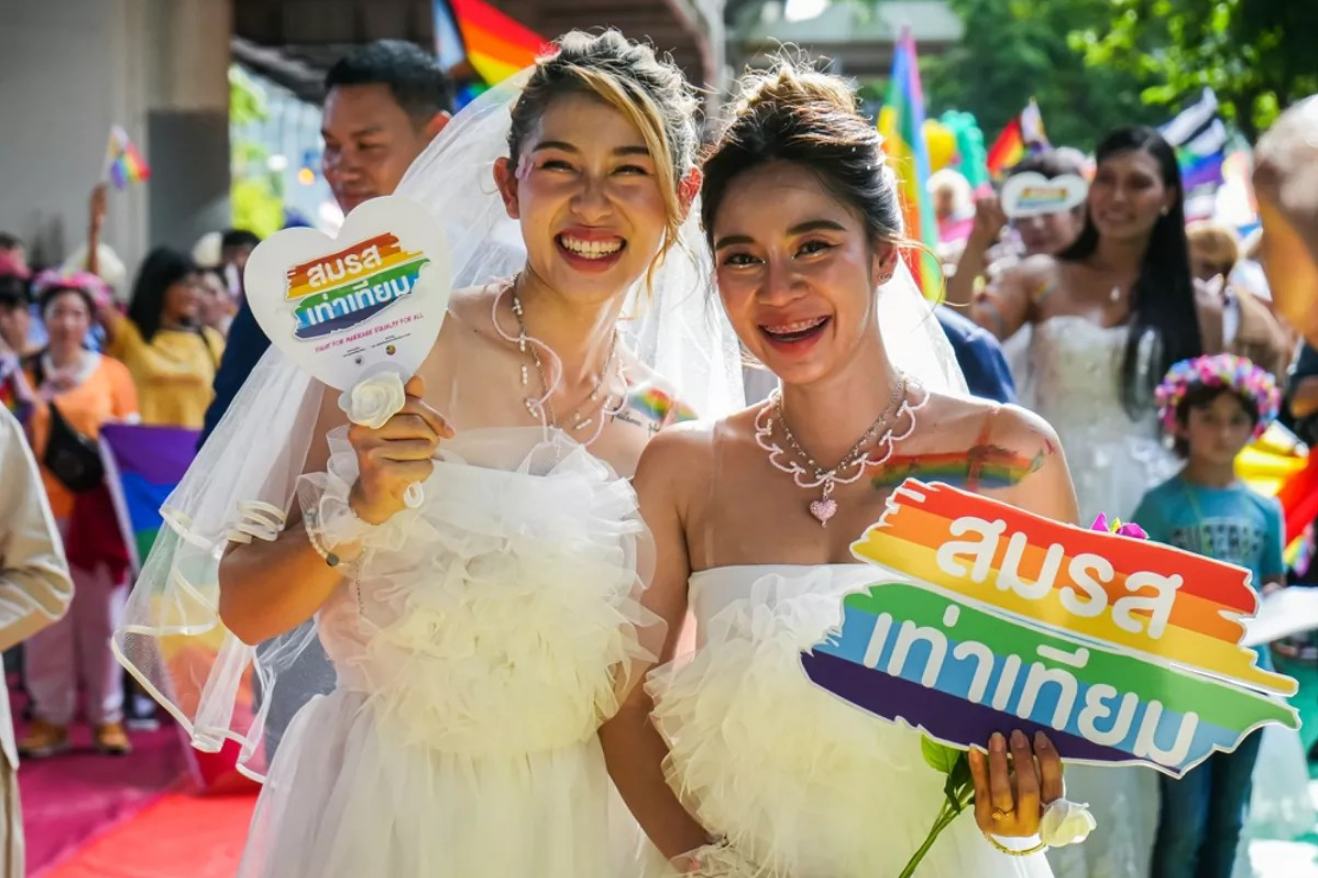
InterPride, the organization that coordinates World Pride events, has announced Bangkok and Barcelona, Spain, are the two finalists to host the biennial event in 2030. (World Pride took place in D.C. in 2025.)
Witayalerdpan told the Blade that World Pride in Bangkok would further improve Thailand’s global image. He also said his fellow lawmakers, in turn, should pass LGBTQ+ rights bills — including proposals that would allow transgender people to legally change their name and gender and enable same-sex couples to have children via surrogates from in vitro fertilization. Witayalerdpan noted the most important bill to him is one that would strengthen Thailand’s LGBTQ+-inclusive nondiscrimination law that took effect in 2015.
Impact of US funding cuts has ‘been very hard’
Witayalerdpan also offered advice to activists in the U.S. and elsewhere around the world.
“Keep on pushing forward,” he told the Blade. “I know that it’s hard for activists in Thailand as well.”
Witayalerdpan acknowledged the loss of U.S. government funding since the Trump-Vance administration took office — which has forced advocacy groups in Asia and elsewhere around the world to close — has “been very hard.” Witayalerdpan noted the global LGBTQ+ and intersex rights movement in response to these cuts has turned to the European Union, the U.K., Canada, and the Netherlands to help fill the gap.
“It’s very good that these countries are providing more funds to the activists in Asia than before because of the Trump situation,” he told the Blade. “It can increase their soft power as well.”
Witayalerdpan said American activists should “wish for a positive result in the mid-term elections.”
“Then there is some resistance,” he added.
Witayalerdpan specifically highlighted efforts to fight against the Trump-Vance administration’s efforts to restrict gender-affirming healthcare.
A federal court in Massachusetts on Aug. 15 struck down a key provision of a U.S. Department of Health and Human Service rule that would have limited access to gender-affirming care under the Affordable Care Act. Maryland and California are two of the 21 states that sued the Trump-Vance administration over the issue.
“You have to show more resistance … to show that we are still here and we will push back when we can,” said Witayalerdpan.
Russia
Russian LGBTQ+ rights group to shut down
Russian LGBT Network in April declared ‘extremist’ organization
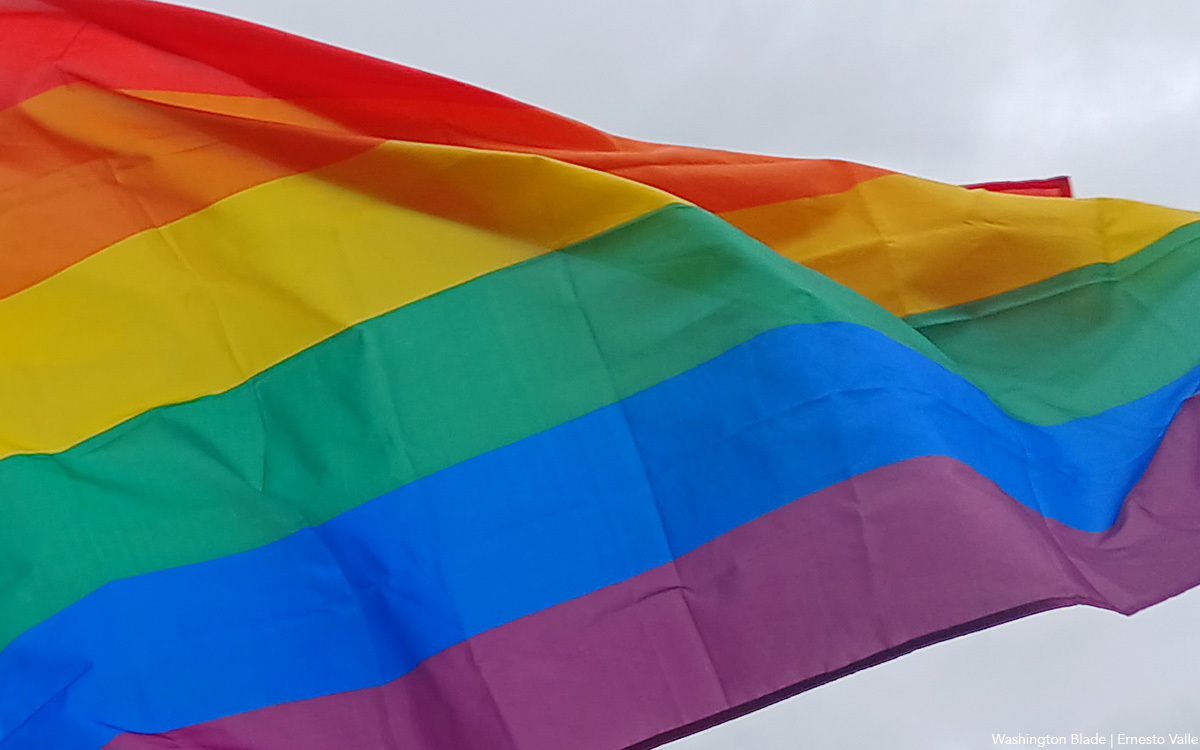
A Russian LGBTQ+ advocacy group on Monday announced it will shut down after a court declared it an “extremist” organization.
A St. Petersburg court in April in response to a Russian Justice Ministry lawsuit made the declaration against the Russian LGBT Network.
“For many years, Russian LGBT Network brought together initiatives and activists and supported queer people across the country,” said the advocacy group on its Facebook page. ” However, its ‘extremist’ status has made the previous public format of its work impossible: any connection to the organization may create additional risks for the people we seek to support and protect.”
The Russian LGBT Network formed in 2006.
The group on its Facebook page said it “made this decision” to close “after a thorough assessment of the risks.”
“Continuing our public activities could have put at risk those who took part in the organization’s work, supported it, or received assistance,” said the Russian LGBT Network. “We cannot control the repressive environment, but we can do everything possible to avoid creating additional risks for people. People’s safety comes first.”
The Kremlin over the last decade has faced global criticism over its crackdown on LGBTQ+ rights.
The Russian Supreme Court in 2023 ruled the “international LGBT movement” is an extremist organization and banned it.
Russia in January designated ILGA World, a global LGBTQ+ and intersex rights group, as an “undesirable” organization. ILGA World in response to the designation noted Russians who are found guilty of engaging with “undesirable” groups face up to six years in prison.
Human Rights Watch in May noted the Russian LGBT Network is one of nine LGBTQ+ groups that Russia this year has banned after authorities deemed them “extremist.”
“Russian LGBT Network may close; but dignity, solidarity, and people’s right to be themselves cannot be destroyed,” said the Russian LGBT Network in its statement. “Take care of yourselves.”

New voices, new vision: Trans Chorus of Los Angeles names co-artistic directors for 12th season

New book examines fashionista Audrey Smaltz’s fabulous life

Remembering the life of Ahmaud Arbery with Dr. Alexander Lloyd Blake

The politics of selective outrage: San Diego repeals bathhouse ban

‘Here the Whole Time’ delivers queer coming-of-age comedy

Gloria Steinem dies at 92

How gay nerds will shape the midterm elections

Swiss government backs nationwide conversion therapy ban

Pentagon expands testosterone screening as trans troops face hormone therapy restrictions

Defying convention (and physics): ‘Speedball’ Mike Bailey on identity and inclusion in pro-wrestling
-
 Celebrity News4 days ago
Gloria Steinem dies at 92
-
 Politics4 days ago
How gay nerds will shape the midterm elections
-
 Switzerland4 days ago
Swiss government backs nationwide conversion therapy ban
-
 Pentagon4 days ago
Pentagon expands testosterone screening as trans troops face hormone therapy restrictions
-
 a&e features4 days ago
Defying convention (and physics): ‘Speedball’ Mike Bailey on identity and inclusion in pro-wrestling
-

 Bars & Parties4 days ago
ANIMAL LA bridges the gay bar and the queer underground
-

 Palm Springs3 days ago
Here’s your Palm Springs look at Labor Day Weekend: Sep 4-7, 2026
-

 a&e features2 days ago
Falcon| NakedSword launches new publishing division, Falcon INK
-
 Movies2 days ago
‘Here the Whole Time’ delivers queer coming-of-age comedy
-

 Dining3 days ago
LGBTQ+ friendly bar El Condor will close its doors after a decade of community