
Arts & Entertainment
Nico Tortorella defends benefits of polyamory
the ‘Younger’ star says it’s not just about sexual freedom
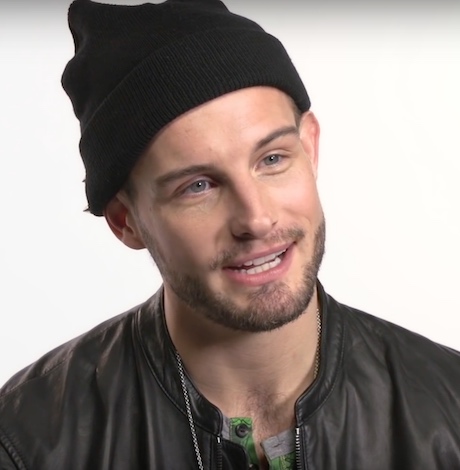
(Screenshot via YouTube.)
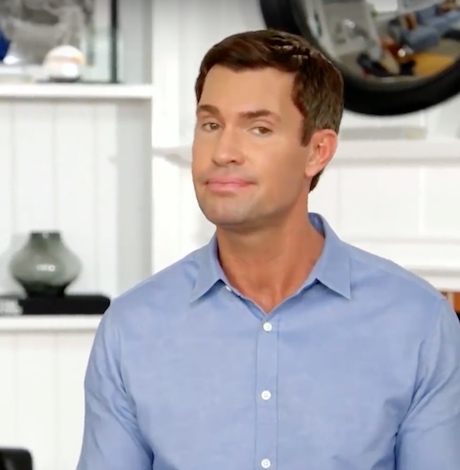
Nico Tortorella is defending the benefits of a polyamorous relationship.
The “Younger” star, who identifies as pansexual, has been frank about his open relationship of 11 years with fitness entrepreneur Bethany Meyers, who identifies as a lesbian.
On Bravo’s new digital show “Personal Space,” a panel discussion on romance and relationships, Tortorella defended his relationship and explained it is deeper than sexual freedom.
“I’m not in an open relationship so I can go out and just fu*k whoever I want,” Tortorella says. “For me, it’s more about the ability to emotionally connect with people outside of my primary partner.”
“The fact of the matter is,” Tortorella continues, “we’ve only been shown one story since basically the beginning of time and that’s man, woman and family — and that’s it.”
CEO of Matchmakers Steve Ward responded that it “isn’t good practice to invite other people” into your relationship.
“If you consider your life to be like a rock-faced wall, you can climb that wall by yourself or you can climb that wall in a group of people, like Nico here would prefer to do,” Ward analogized. “Or you can climb that wall in tandem, and two people climbing that wall together are more likely to make it to the top easier, more safely that if you have too many people in your group or if you’re just doing it on your own.”
Tortorella argued that inviting other people into a relationship only helps the couple grow.
“I’m always climbing the wall with one other person, but that person is just changing,” Tortorella says.
a&e features
How Saunder Choi crafts a queer anthem
The composer discusses the upcoming GMCLA performance of his newest piece
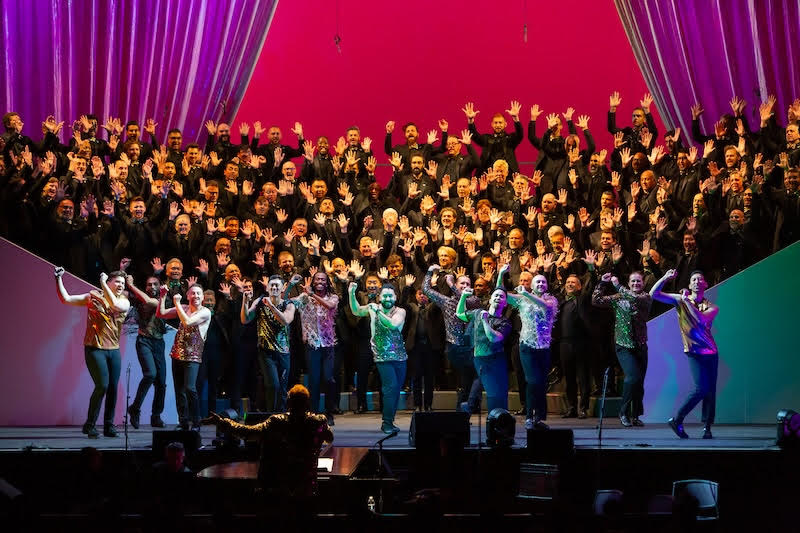
Music has always been a key part of every civil rights movement.
No matter the cause or the community, the songs of the oppressed have always underscored the fight against their oppressors, with these pieces embodying the passions of a movement — and in Saunder Choi’s newest song, the resilience of Los Angeles’ LGBTQ+ community.
The renowned composer sat down with the Los Angeles Blade to discuss “Credo,” his newest song that he’s putting together for Gay Men’s Chorus of Los Angeles (GMCLA). Debuting at the group’s upcoming Declarations of Independence show, Choi’s goal was to not only create a beautiful piece of music but a literal creed for the many identities this chorus represents. In the man’s own words, “[This song] serves as a way to memorialize, to uplift those stories, and to reflect the resilience and strength of our community.”
“Music has always been used as a tool for advocacy,” Choi explained. “Music has always been used to reflect one’s beliefs, one’s values, and one’s principles…I choose to use my [music] as a platform for that advocacy.” It’s a sentiment the composer has always embodied; after receiving a Master’s Degree in composition from USC, Choi traveled the world singing in professional choirs, sharing his skills through teaching, and writing pieces for numerous LGBTQ+ choirs. He’d dedicated too uplifting communities through music, and he decided to channel that dedication when the GMCLA reached out and requested a new song for a very important concert.
The Declarations of Independence show commemorates America’s 250th birthday, with the GMCLA celebrating our country’s queer legacy by performing the many songs that helped build the LGBTQ+ rights movement. Whether it be Broadway classics or universal hits, each of these songs will reflect the queer community’s long history within this country, with Saunders’ new piece “Credo” serving as the show’s defining number.
When tasked with composing for such a symbolic event, Choi knew that the GMCLA wasn’t looking for just any song: they needed a creed. “I wanted to build upon that tradition of creeds being set to music, being sung by a community that believes in them…[I want us] to ask ourselves, ‘What is our creed as the LGBTQ+ community? What do we believe in?”
To do this, Choi collaborated with Brian Sonia-Wallace, Poet Laureate of Los Angeles, to devise lyrics that encapsulate the current moment LGBTQ+ Americans are living in. “With all the attacks that’ve been happening in the LGBTQ+ community, what does our community need at this moment? In these times, how can we, as singers, use our songs to protect our community [and] fight for our values?” It was on this point specifically that Choi drew inspiration from, with the artist guiding his creative process by asking himself, “What would it mean for a gay men’s chorus to sing and declare [their] beliefs out loud?”
With all of this in mind, Choi went to work, writing tirelessly to craft a song that embodies the fierce sense of Pride he knows fills this city. It wasn’t always easy — the composer detailed his composing process, a complex combination of musicality and precision that can easily boggle the mind of a non-musician (and many actual musicians). Yet when he was finished, Choi believed that he had created the perfect song for GMCLA’s Declarations of Independence. A true “Credo,” one that could serve as not only an enjoyable piece of music but an anthem for what queer people all across Los Angeles are experiencing right now.
“I hope that [with ‘Credo,’] folks hear a powerful anthem that they can use as a weapon to protect themselves in an era where you know our lives, our stories, our communities are being actively threatened and erased,” Choi described. “Sometimes the lyrics get a little raw, a little specific, but as James Joyce said, ‘In the particular is contained the universal.’ These are things that I think a lot of the queer community can believe in…this is our anthem — this is our creed.”
Saunder Choi’s latest piece, “Credo,” is a reminder to whoever is listening — whether they’re in Los Angeles or not — that they are not alone. He captures a true chorus of resistance through lyrics that uplift the voices of those community members who are too often silenced. It’s the perfect song for the Gay Men’s Chorus of LA’s Declarations of Independence show, and it may just be exactly what so many people need to hear right now.
Join GMCLA for Declarations of Independence, a bold celebration of Pride and Protest, happening Saturday, June 27, at 7 pm and Sunday, June 28, at 3:30 pm at the Saban Theatre.
You’re all geared up.
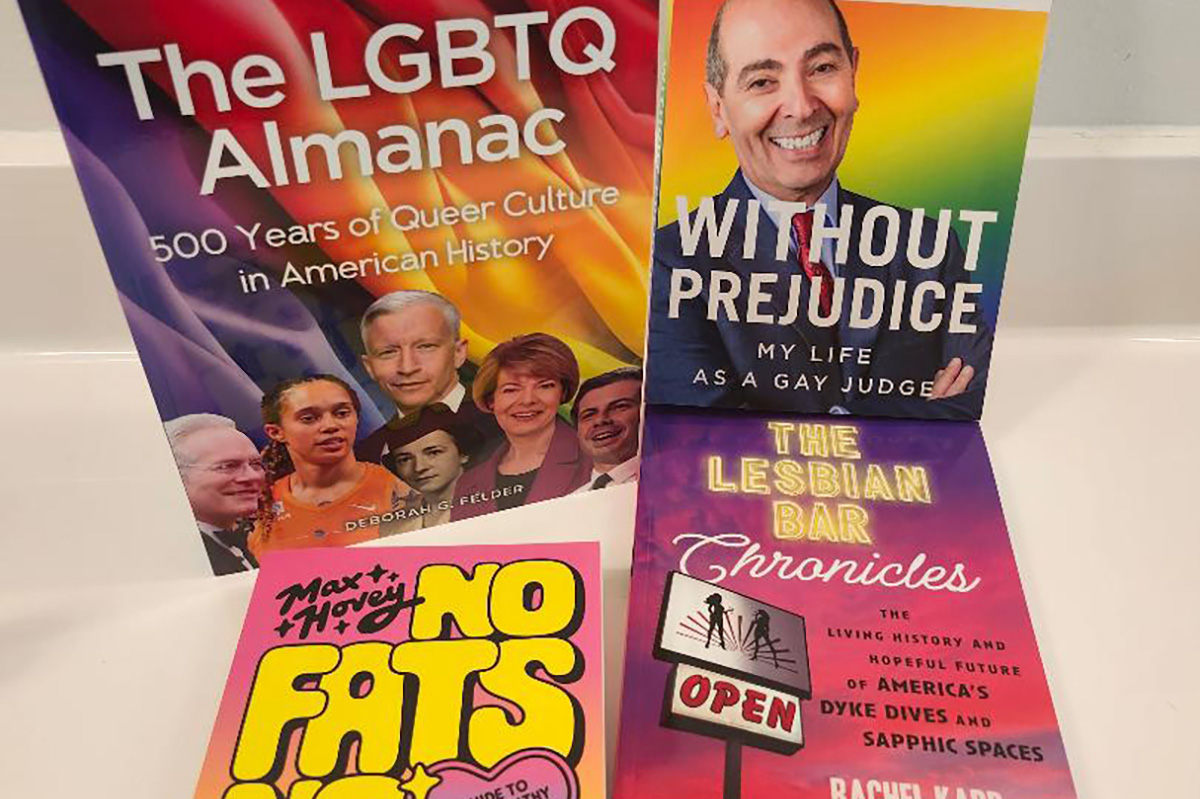
You’ve got your best parade-walking shoes, your coolest tee, your most-comfortable shorts, and a rainbow flag to carry. You’re set for Pride, but before you go, try one of these great new books about LGBTQ life and history.
After the parade, where will you end up? A place to talk your experience over, to re-hash things for the next parade? Then you may need “The Lesbian Bar Chronicles: The Living History and Hopeful Future of America’s Dyke Dives and Sapphic Spaces” by Rachel Karp (Beacon Press, $29.95).
Lesbian bars, says Karp, are more than just places to drink. They’re also places to find community, and to organize. For many, she says, they are “sanctuaries,” as they have been for at least a century, and this book introduces you to some of the people who run the establishments, the things they do to support their patrons, and the 100-year-plus bravery that it took to own, run, and enter a lesbian bar.
If you had to name a gay icon, there are probably quite a few who come to mind. So read “Without Prejudice: My Life as a Gay Judge” by Harvey Brownstone (ECW Press, $21.95) and add another name to your list.
This memoir, written by Canada’s first openly gay judge, takes readers from Brownstone’s childhood to his life as a lawyer, then to his work within the justice system in Ontario, and beyond, to his current career. This is a surprising, informative book that gives you an idea what gay life is like, north of our uppermost borders, then and now.
Pride is a celebration, an event, but it also demands a peek backwards, and in “The LGBTQ Almanac: 500 Years of Queer Culture in American History” by Deborah G. Felder (Visible Ink Press, $39.95), you’ll get a wide look at the pioneers, allies, policy, and gay life over the course of the last five centuries. Want to know more about religion in the gay community? It’s in here, along with celebrities, presidents, science, business, and more. This is the kind of book that settles bets. It’s one you want to have in any room of your home because it’s comprehensive and perfectly browse-able for all of its 600-plus pages.
And finally, here’s a book to read and think about: “No Fats No Fems: A Guide to Queer Empathy and Unpacking Prejudice” by Max Hovey (HarperOne, $19.99). How do you eliminate hateful, hurtful words, aimed at gay people – by gay people? What kind of stereotypes do we carry, unintentionally? This book takes those things out into the daylight by talking honestly and thoughtfully about them, as well as other issues. It’s a book to have when doubts creep in, when you need a new way of thinking or a different direction, or when you just want something different to read.
And if these great books aren’t enough, head to your favorite bookstore or library and ask for books that you can read before Pride or after. And happy Pride!
Bars & Parties
Meet your local bartender: Hunter Cassidy
Smalltown transplant turned big city barkeep
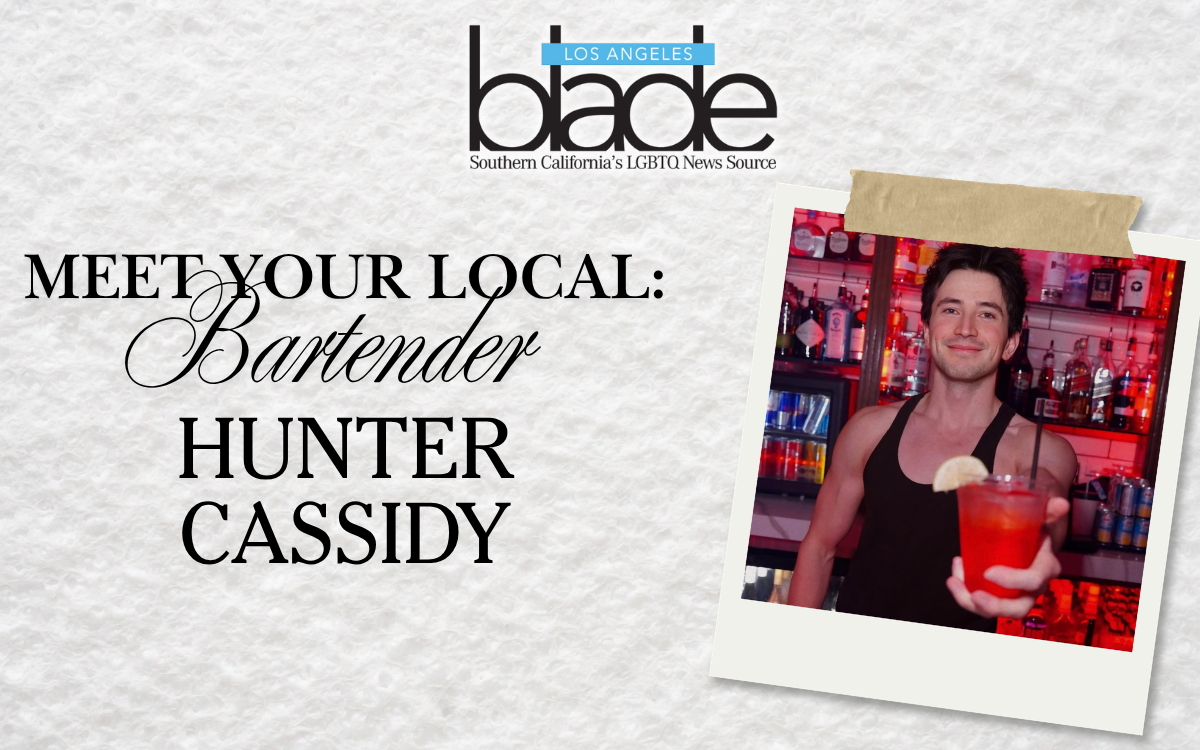
If you’re at Mattie’s (né Rocco’s), you might spot this cutie at the bar. On Hunter Cassidy’s Instagram, he says he’s a bartender, gym potato, and gay. His resume and dating profile say, “Known for driving repeat business by delivering exceptional guest experience through fast, friendly, high-quality service.” But jokes aside, he’s a sweet smartypants who fills his social media with sarcastic stories from his side of the bar.
Originally from Garden City, Kansas, he has an innocent vibe and a bone-dry sense of humor. He says he moved to “escape a small town that smells like cow shit because there’s more cows than people.” A legacy hire, he worked at Rocco’s in Westwood, then transferred to West Hollywood and stayed on as it transitioned to Mattie’s. He took some time to share his thoughts on nightlife and Los Angeles culture.
How did you get into bartending?
I lied! No place wants to hire a bartender with no experience. So, many years ago, I made a resume and said I worked at a place that had recently closed, knowing there was no way to verify it.
I applied to hundreds of places and took the first job that hired me. Then, I relentlessly networked with people at all the places I actually wanted to work. Once I got my foot in the door at a good spot, I leveraged the two jobs against each other until I had the premium shifts at the better spot.
How long have you been in nightlife?
I’ve been in nightlife for about 10 years.
What do you do besides bartending?
I’m trying to get into the fitness industry, starting as a personal trainer, but I’d like to own a business someday. I also make content on social media as a hobby, usually just talking about whatever is on my mind.
What do you love about bartending and the nightlife scene in LA?
My favorite thing about bartending is that I get to be part of everyone’s fun experience. Some people only go out once a week, maybe even once a month. I get to see people on their birthdays, during celebrations, on date nights, or maybe even just having fun after a long day. And I get to be part of that.
What do you think has changed about LA nightlife?
I think the entire landscape changed drastically post-COVID, especially on Santa Monica Blvd. So many bars on this strip alone either closed or quietly changed ownership or management.
What do you love about Los Angeles?
I love the opportunity, the chaos, and the absurdity. I like looking to my left and seeing someone with a word salad job title, then looking to my right and seeing an ambitious artist who pours everything into their work, and we’re all just at yoga at 2 p.m. on a Tuesday.
What brought you to LA?
I’m from a small town in Kansas, and I always wanted to live in a big city. So I packed two bags and got on a train.
What is your passion?
I really like math. I just don’t have enough time to pursue it. If I won the lottery, I’d probably go back to school and spend the rest of my life staring at a whiteboard.
What’s a weird thing you learned about life from bartending?
Every person you meet is someone’s child, someone’s friend. Have your boundaries, but lead with kindness.
Favorite spot in Los Angeles?
Hi Tops is definitely my go-to bar. And I’d like to thank them for still allowing me on the premises even after all the absolutely stupid things I’ve done there.
How has Los Angeles changed you?
It made me stop caring so much about how I’m perceived and start living authentically. You begin to realize that you’re just one of many people, and most people are thinking about themselves anyway.
What piece of advice would you give to your younger self?
Stop worrying. You’ve figured it out every single time.
If you could make one wish for Los Angeles, what would it be?
Trisha Paytas for mayor?
What do you want for the queer community?
I will always want gay spaces for gay people. But someday, I hope that all across the world, a child can come up to their parents and say, “Hey, I think I’m gay,” and it sounds no different than, “Hey, I think my favorite color is green.”
What do you look for in a person?
I want someone who also puts effort into building: building their mind, their health, their financial future, and their relationships with others. Because that’s the goal, to build a life together… that, or big biceps, you know, whichever.
Celebrity crush?
I’m convinced that TikTok comedian Natalia Alyssandra and I are meant to be in a lavender marriage.
What is your favorite thing to do in your downtime?
I like doing mental puzzles, karaoke, and hanging out with friends.
What are your goals for the future?
I’d like to start a fitness business, find a guy, and someday be that old gay couple with a life full of amazing stories.
Movies
‘The Stranger’ queers an existentialist classic
‘Gay male gaze’ anchors film’s visual aesthetic
When Albert Camus published “L’etranger” (“The Stranger”) in 1942, he was living in Nazi-occupied France, so it’s no surprise that it became one of the most celebrated “existential” novels of all time. A fascist regime is great for inspiring thoughts of an indifferent and meaningless universe.
It wasn’t his first experience with authoritarianism. Born to a working-class white European family in then-French Algeria, he grew up observing the harsh treatment of the native North Africans by the colonists who governed them. It was this personal history, amplified by the spread of European fascism, that found its voice in “The Stranger.” Short, terse, and shrouded in a cloak of ennui, it was his first novel – novella, really – but its impact was seismic.
Naturally, its influence has run through the world of cinema, and, it has been translated to the screen three times — most recently by French filmmaker François Ozon, whose screen version won acclaim at last year’s Venice Film Festival, and is now available for on-demand streaming in the U.S.
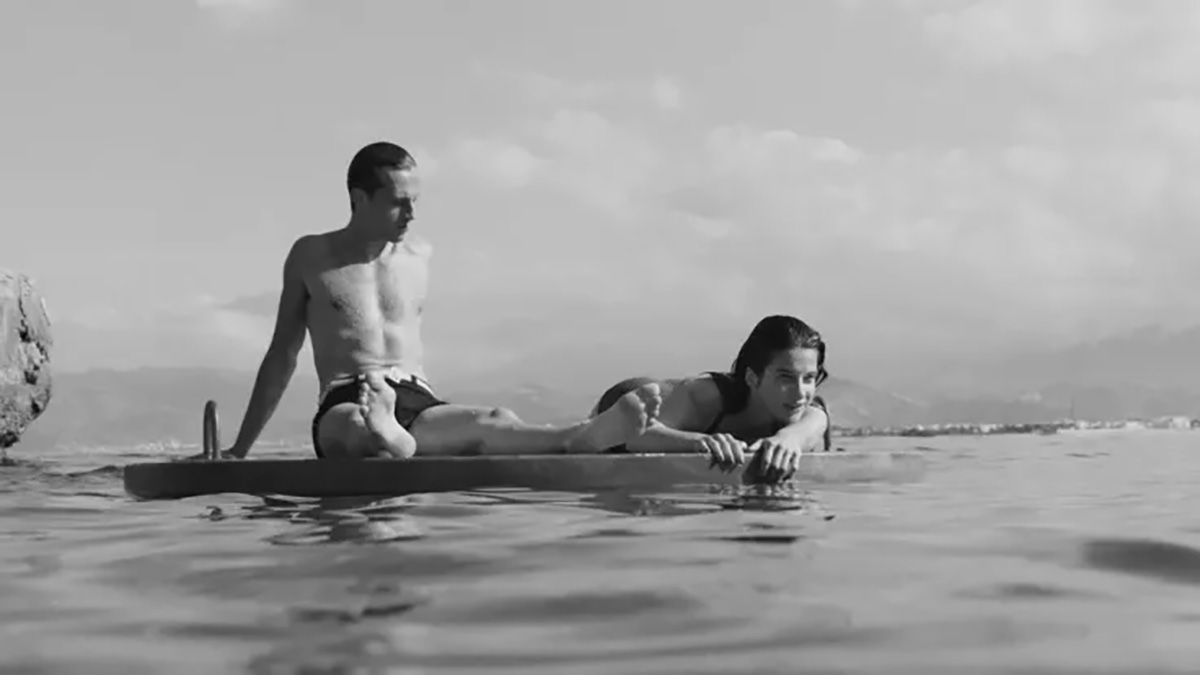
Ozon’s vision is captured in gleaming black-and-white, blending the luster of modern-day faux-vintage fashion photography with the nostalgic flavor of classic era “arthouse” and European cinema, and it maintains a largely faithful connection to Camus’s novel, at least in terms of plot. It’s the story of Meursault (Benjamin Voisin), a French settler living in the capital city of Algiers, who receives word that his mother has died. He takes time off from work, traveling to the nursing home – where he had sent her three years before – in order to attend her funeral, but remains seemingly emotionless throughout, prompting members of the staff and other residents to mark his apparent lack of customary grief.
When he returns to Algiers, he encounters Marie (Rebecca Marder), a former co-worker, and after spending the day together, the two become romantically involved. Their relationship continues over the next few weeks, while they also associate with Meursault’s neighbor Raymond (Pierre Lottin) – a suspected pimp who, after beating his Arab mistress, is being followed and harassed by her brother (Abderrahmane Dehkani) and his friends. After a skirmish with the Arabs, Meursault encounters the brother alone during a walk on the beach, and shoots the young man dead with a pistol given to him for protection by Raymond. On trial for murder, he offers no defense and expresses no remorse. He is convicted and sentenced to death, facing it all with emotional detachment, and seeming to find liberation from the recognition that none of it matters, anyway.
Though it’s a tale that includes romance, murder, and courtroom drama, it feels like a story in which nothing really happens – which is, of course, the perfect effect to emphasize the point of Camus’s philosophical viewpoint; but while that might satisfy the kind of viewers who might be drawn to any film of a Camus novel, Ozon’s movie probably won’t hold much appeal for audiences seeking action, suspense, feel-good sentiment, or easy answers to the moral dilemmas that come hand-in-hand with being alive. Camus was interested in the opposite effect, a confrontation with existence which leaves no room for comfortable denials, and Ozon’s inflection on the original’s themes makes no effort to soften the blow.
What it does, however, is introduce – without having to adjust the narrative provided by Camus – an element of queerness that lends the whole story a new layer of subtext through what can only be described as the “gay male gaze” that anchors the film’s visual aesthetic.
It’s in the way the camera – aimed by Ozon and cinematographer Manu Dacosse – remains fixated on its star, the exquisitely beautiful Voisin, lingering on his face, his frame, or his body in swim trunks. There’s a sensuality in the way the director shows us female beauty, too, but it’s never framed as the “object” of desire; and in the narrative’s key scene – the killing by the sea – there’s an inescapable element of repressed homoeroticism, born perhaps by associations with mid-20th-century queer aesthetic of writers like Jean Genet or artists like George Quaintance, or pretentiously artsy commercials for high-end men’s cologne, or just from real-life memories of cruising on the beach. On the surface, Meursault gives no sign of queerness; but the emphasis that Ozon brings to the story – almost purely through visual suggestion – lends the character, already an outsider to the world of “normal” human experience in the first place, an even deeper sense of “otherness.”
As to that, Voisin’s performance is effective for reasons beyond his model-esque physical perfection; there’s a vast inner life happening under that pretty face, and the actor conveys it with a “less-is-more” approach that aligns perfectly with the character’s dissociation from conventional humanity. He’s compelling enough to engage us, and intelligent enough in his expression of Camus’ ideas to help us grasp them even as he makes us feel them – and frankly, that’s saying a lot.
The rest of the cast is effective, as well, though most of them serve primarily as a foil to reflect Voisin and his character. Marder brings a relatably savvy-yet-romantic presence as Marie, and Lottin gives Raymond a kind of louche charisma that evokes a certain brand of appealing-but-toxic masculinity. Swann Arlaud also stands out as the prison priest who attempts to convert Meursault on the eve of his execution, bearing the full brunt of Camus’ existentialist arguments in a scene that somehow taps into transgressive homoerotic fantasies even as its characters discuss impending death.
Camus, for his part, did not see himself as an existentialist; instead, he embraced and promoted a viewpoint in which human life is defined by its relationship with what he called “The Absurd” – the gap between reality and our assumed expectations about it, where our circumstances and behavior become obviously ridiculous – and believed that, in a meaningless universe, we are free to find our own meaning. An essay he published around the same time (“The Myth of Sisyphus”) posited that finding happiness in the struggle was perhaps the most logical response to facing an unfeeling world, and the Absurdist movement he helped to define used humor – albeit often the dark and sardonic variety – as a means to expose the madness of trying to impose sense on a nonsensical world. In the end, his writings reveal him as a deeply humanistic thinker, whose acceptance of objective reality served only to deepen his dedication to the ideal of a better mankind.
Whether or not any of that comes across in Ozon’s artful film, which emphasizes the immediacy of experience – the beach, the sea, the sun, the visceral responses we get from sex or violence – over the intellectual arguments that Camus would elucidate throughout his life, probably depends on one’s own grasp of Existentialist thinking and its offshoots. In any case, while Ozon’s “The Stranger” might fall short in the challenge to convey its philosophical arguments, it more than succeeds as a stylish piece of international art cinema, and it just might – hopefully – inspire audiences to go on a deeper dive into the mind of Albert Camus.
And even if it doesn’t, it’s still pretty to look at.
Gaming
The 2026 Gayming Awards finally gives LGBTQ+ gamers the spotlight
This annual awards ceremony highlights the queer gamers fighting for our communities today.
Gaming has always been an integral part of the LGBTQ+ community — you just wouldn’t know that looking at mainstream media.
Most portrayals of queer people focus on either our communities’ party culture or the discrimination many of us face daily, shirking anything ‘nerdy’ that general audiences may not resonate with. This is deeply unfortunate because LGBTQ+ gamers have always existed! In a society where queer authenticity is stifled, many folks find freedom in the games that allow them to embody a sense of pride that isn’t attainable in their reality. Not only that, but the storytelling opportunity that modern gaming allows means that there are many projects today offering the vital representation that so many people need to see.
Gaming is such a huge part of queer culture, not just as a hobby, but as a mechanism for the queer rights movement through thoughtful storytelling and inclusion. That’s why it’s so important that queer developers, artists, and content creators continue the fight of making the gaming industry more inclusive — and it’s why we need the 2026 Gayming Awards now more than ever.
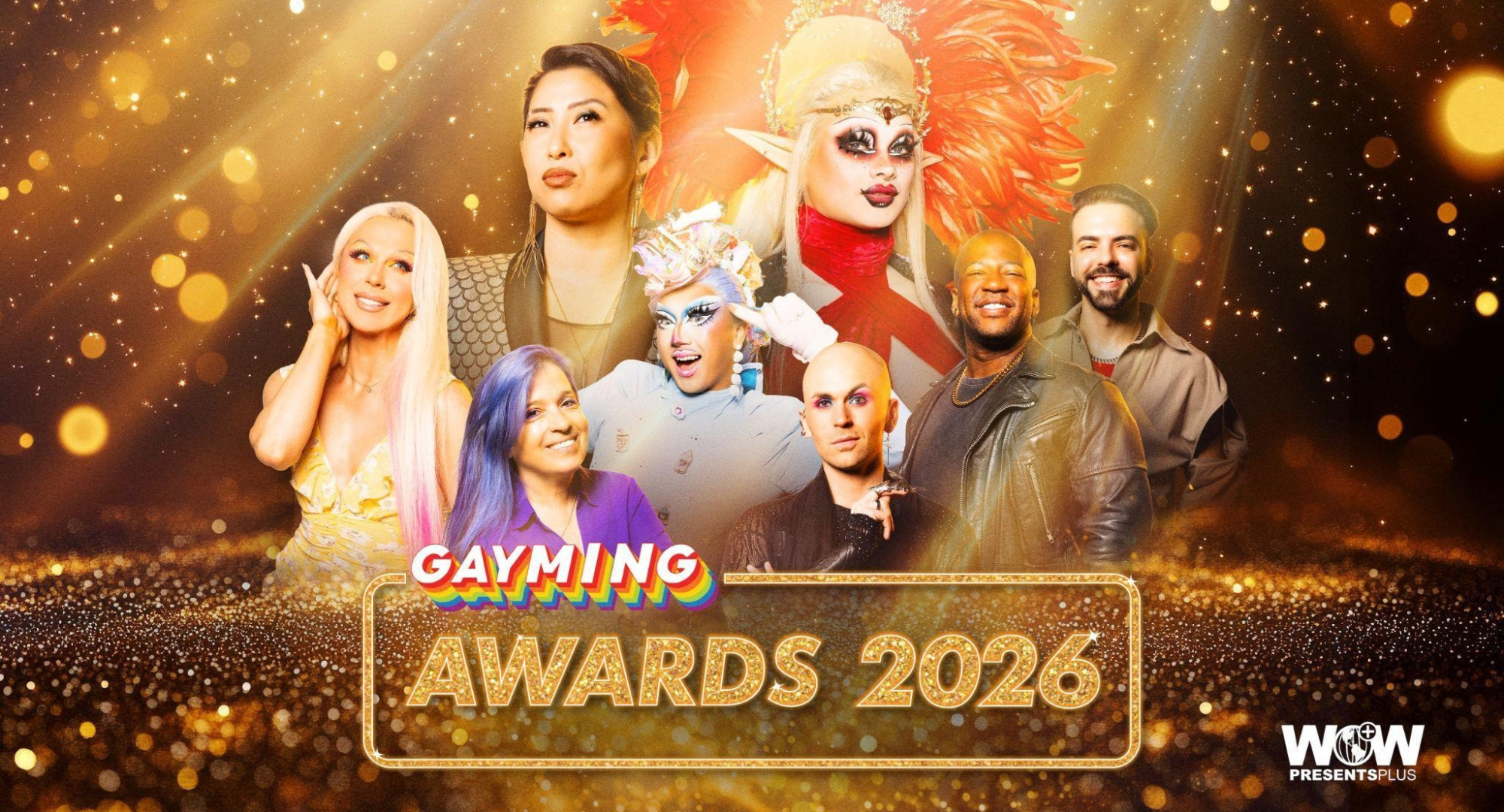
Created in 2020 by Gayming Magazine, these awards celebrate the countless individuals who make gaming a source of queer representation for players all over the world. Gayming Awards founder and CEO of Gayming Magazine, Robin Gray, sat down with the LA Blade to discuss the significance of this award show and how it has grown over the past six years. He spoke about the star-studded cast, the many awards he cannot wait to hand out, and why, when we’re seeing so many attacks against queer art, he’s working hard to make the 2026 Gayming Awards the best one fans have ever seen.
“Gaming has always been a place of escape for queer people — somewhere to find solace when the real world felt difficult or unwelcoming,” said Gray, when discussing what led him to found Gayming Magazine. The publication has proven essential for many members of the LGBTQ+ community; it explores the intersection of queer and video game culture while spotlighting marginalized voices in this medium. “And the rise of LGBTQ+ content creators has changed things enormously — they’ve built whole communities around themselves and their love of games, virtual spaces where queer people can find each other and belong.”
During a time when many queer people can’t safely connect with their own community, these spaces have proven essential for those trying to find others who will respect and understand their identity. And while fandom has always been a mechanism for connection — just look at how many LGBTQ+ people flood Comic Con every year — right now, gaming-centric spaces are proving to be some of the best opportunities for queer people to discover the friends they’ve always wanted.
This is why Gray began the Gayming Awards in the first place; he hoped to validate the love so many LGBTQ+ people have for video games and celebrate the artists creating online communities where all queer people can feel welcome. Whether it’s streamers on Twitch or LGBTQ+ game developers, these creators continue to show their followers the power that comes from being authentically yourself. And with the Gayming Awards, Robin hopes to finally celebrate these hardworking artists who fight every day for a gaming industry that truly accepts us all.
“Honestly, the talent across the show is just ridiculous,” the man raved. “Erika Ishii and Dawn hosting, Rock M Sakura and Farrah Moan on the drag side, and then the Gaymer Guys coming back after seven years — seven years! That alone is huge. And on top of all that, there are some big surprises coming.” He stressed how excited he was to have these people featured throughout the show, and how he hadn’t even mentioned the many huge stars winning awards this year! The categories range from ‘Best LGBTQ+ Character’ to ‘Game of the Year,’ with legends like Trixie Mattel receiving accolades for all they’ve done in the fight to make gaming more inclusive.
While he was excited for this stacked cast list, Robin assured audiences that the 2026 Gayming Awards wouldn’t just be a lineup of nerdy queer celebrities (though that would certainly be a great part of the show). He stressed that they would also commemorate the hard work of this industry’s many queer advocates while sharing their artistry with thousands of new fans. “At a time when our lives and contributions are under attack, having a platform that says we are here, we create, and what we do has value — that matters a lot,” he explained. “[The Gayming Awards are] about uplifting and recognizing the LGBTQ+ contribution to actually making games — developers, content creators, all of it.”
From jaw-dropping awards to cameos from some of the geekiest LGBTQ+ celebrities today, the 2026 Gayming Awards is shaping up to be a true celebration of all things nerdy and queer. It has already established itself as an important spotlight on a part of LGBTQ+ culture that doesn’t receive the appreciation it should. And, if everything CEO Robin Gray says is true, this year’s ceremony will help remind everyone watching of an important fact: queerness has been and always will be a core part of the gaming industry. And with each of these nominees showing their pride, this medium will continue to serve as a valuable resource for LGBTQ+ nerds all around the world.
The 2026 Gayming Awards premieres on WoWPresentsPlus on Monday, June 8th at 7pm PT / 10pm ET.
Events
The Artist Tree dispensary set to kick off Pride on June 4th with Studio 420 art exhibition
Hybrid art event & film screening highlights queer artists and benefits Project Angel Food
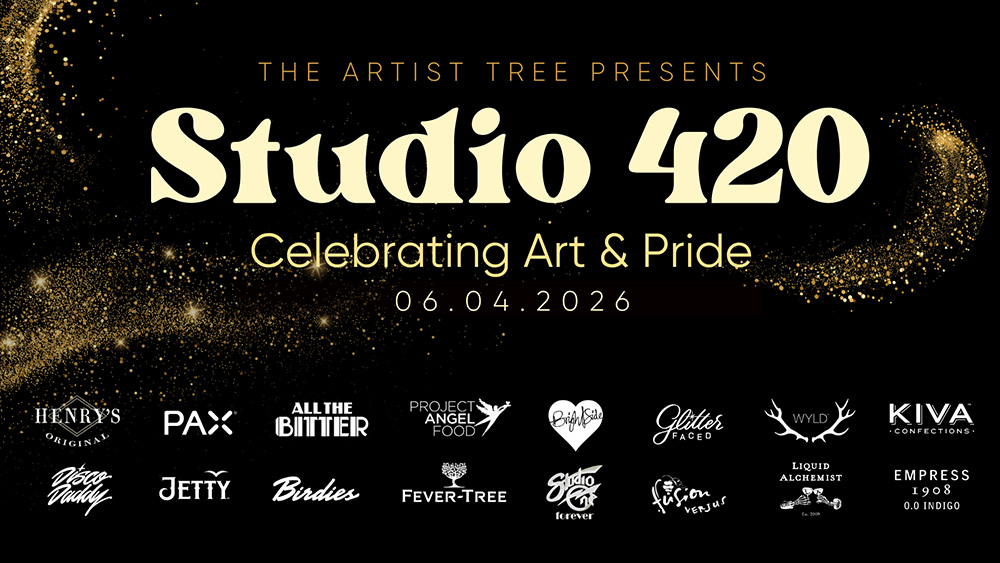
Pride season is nearly upon us. West Hollywood dispensary The Artist Tree is set to bring the worlds of art, cannabis, and Pride together in one neat package. They will have an exclusive screening of the documentary Studio One Forever about the 1980 West Hollywood nightclub, combined with other art exhibits and performances.
“Pride is not only a celebration; it is the public act of saying we are here,” says Katie Brightside, The Artist Tree’s curator-in-chief. She continues, “Art does something similar. It takes internal experience: identity, desire, grief, joy, fear, transformation, and makes it visible to others. That visibility creates recognition, and recognition creates community.”
The creatively inspired evening is a unique entrée into Pride season. The Artist Tree is a two-floor venue that unites creativity and cannabis. They serve cannabis cocktails and have various products available for purchase and an outdoor patio where you can dine al fresco while enjoying your purchases. Marketing Director Adriana Hemans adds, “At The Artist Tree, we highlight the creative power of cannabis as a source of inspiration, which artists have drawn on for thousands of years.”
The documentary inspired the entire evening, Brightside shares, “I watched the documentary Studio One Forever and found myself in tears.” She continues, “Studio One Forever is important not just as a documentary about nightlife, but as a record of queer cultural survival. It captures how spaces like Studio One were never ‘just clubs’; they were places where LGBTQ+ people could exist openly, safely, creatively, and communally at a time when much of society denied that freedom.
The genesis of the evening lies in a single still. Brightside confesses, “A photograph appears on screen showing the staff of the legendary West Hollywood nightclub Studio One from around 1980–81. Former bartender Michael Koth explains that only two of the people in the photograph are still alive today.” This is not an uncommon experience for queer people who survived the 1980s. It’s also a sad source of so much inspiration for arts and culture throughout our history.
Brightside continues, “I stopped the film and rewound the scene, realizing that this single image represents what many have called ‘the decade from hell’.” That single image has been printed and donated to Project Angel Food along with other art, which will be auctioned off at 7:30 pm, hosted by cannabis culture writer Adam Tschorn.
There’s also an entire evening of programming, which will include nonalcoholic and cannabis cocktails, bites, and an unveiling of the Pride art collection. To those new to The Artist Tree, they have art installations that rotate throughout the year. As Hemans explains, “Our goal was to connect local artists with our guests, hoping to spark an appreciation for art in each person who enters our doors. We also believe art is a powerful medium for expressing emotion and reflecting social issues in a way that often reaches the human consciousness more deeply than words alone.”
Hemans adds, “We aim to foster a sense of community and collaboration that often feels lacking in our digital world.” There’s an intention to help spread some inspiration throughout the month for Pride, allowing anyone to pop in and check out the collection. Brightside points out, “We are on the Pride parade thoroughfare. It was a conscious curation to entice people to stop, take a moment, and see how far the LGBTQ+ community has come.”
Other work being highlighted includes repurposed matchbooks and Bob Damron pages. These pages were queer equivalents of green books that let gay men know where they could travel safely. These were accompanied by poems from the 2026 Los Angeles Poet Laureate Brian Sonia-Wallace. In Brightside’s words, “One particular series that continues to emotionally overwhelm me is the poem Ghosts Discover PrEP, juxtaposed with the 1981 Damron guide, quietly echoing the 1981 imagery and histories referenced in Studio One Forever.”
Brightside explains some of the other exhibitions, “Disco Daddy is creating new works specifically for the show in collaboration with ONE Archives at the USC Libraries, reworking vintage gay flyers and club posters into contemporary pieces that preserve and reactivate queer cultural memory.”
Brightside adds, “Kii Arens’s Rainbow Jesus in the stairwell honors our dear local friend Kevin Lee Light, affectionately known as ‘WeHo Jesus,’ a beloved figure who quietly walked the streets of West Hollywood dressed in robes and sandals.” There are also art pieces by Michael Osborne, Britt Westveer, and “Mars Wright’s monumental twelve-foot-by-six-foot billboard reading, ‘Dear Trans People, LA likes you very much.'”
Tickets are available on EventBrite, giving you access to the film screening, the art unveiling, and the auction. Art is more important than ever. As Brightside puts it, “We need art more than ever right now because people are overwhelmed, disconnected, and constantly consuming information without having time to truly process it. Art slows people down long enough to feel something real again.”
Brightside continues, “In periods of instability — politically, economically, socially, or personally — art becomes more than decoration. It becomes evidence of humanity. It records emotion, creates dialogue, preserves memory, and reminds people they are not alone in what they are experiencing.” Even if you cannot attend June 4th’s event, you will still be able to observe the art installed for Pride Season.
Movies
Set in West Hollywood, ‘The Last Guest of the Holloway Motel’ tells Tony Powell’s story
The film follows Powell as he loses his job and home, and looks back on his life’s legacy
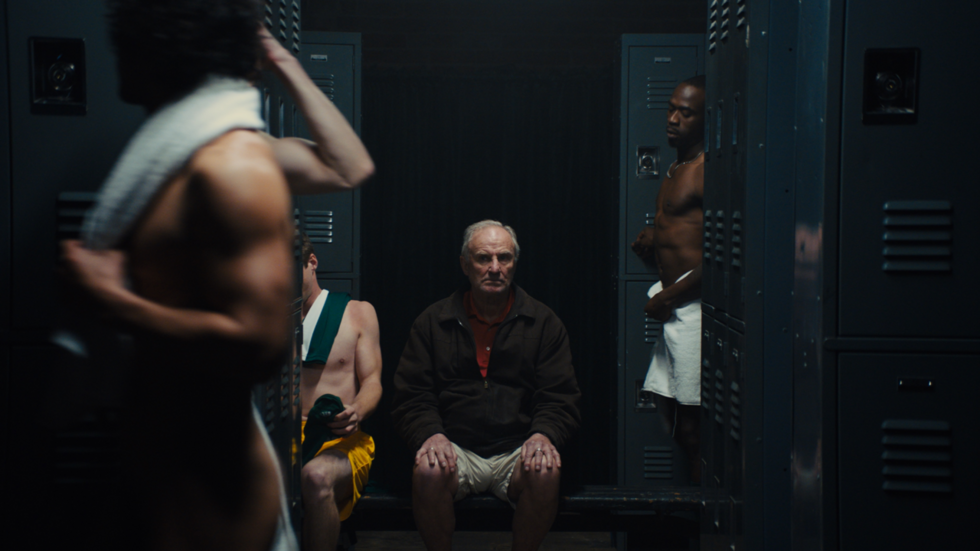
On Ramiel Petros’s daily walks through West Hollywood, he began to spot the same old man at the Holloway Motel — always holding a glass of wine, with a Chihuahua and computer in his lap. It’s an image that many long-time residents in the area, as shown in the new documentary The Last Guest of the Holloway Motel, have become familiar with.
“I’d come up with some canon on who he might be. He must own the building, maybe he’s being evicted, and he’s fighting the city!” Petros tells The Blade. “[Co-director Nicholas Freeman and I] walked over and shouted up to him from the street. He told us that it’s becoming a homeless shelter, and we walked away thinking there was a good four-minute short film.”
The man also casually mentioned that he used to play soccer. After Petros and Freeman, who met while studying film at NYU Tisch, decided to do some research, they realized they had been talking to a professional soccer player with a one-of-a-kind story. That man became the basis for Petros and Freeman’s directorial debut.
The title, The Last Guest of the Holloway Motel, of course, refers to Tony Powell, a British football player who never came out to his teammates, vanished from sports around 40 years ago, and moved all the way to West Hollywood with the goal of leaving his former life behind. He wound up managing the Holloway Motel for 20 years, which the film follows closing down as it is converted into a homeless shelter through the new Holloway Interim Housing Program.
Filmed over the course of two years — a journey the filmmakers say unfolds to the audience as it unfolded to them in real-time — the 94-minute doc explores how a professional soccer player wound up being the manager of a motel. Powell looks back on his life’s legacy, losing loved ones to the AIDS epidemic, and why West Hollywood became his permanent home after moving overseas in the early ‘80s.
“Tony’s losing his job and his home that he’s had for 20 years — we just so happen to be there right at that moment when he’s trying to figure out how to reinvent his life at this stage. This is a very emotionally-charged period,” Freeman says.
“If we had met him five years earlier, I don’t know that any of that would have happened,” Petros adds.
The filmmakers found Powell to be “completely open and off-the-cuff” about some topics, while there were many things he kept “close to his chest” throughout filming. Petros says, “What we found pretty early on was there were some things he could talk about for hours — him talking about being a soccer player and traveling, and all the exciting stuff with the motel. And as we would film, we’d come across these little moments like, ‘Have you ever been in love? Do you ever want kids?’ Like a rubber band, you’d see him snap inwards.”
The film also showcases how West Hollywood has developed over the years, and why it’s become such a safe place for queer people moving to California from around the world.
“I’m growing up in an entirely different generation than Tony did. I don’t think I can ever truly comprehend what it meant to never see another gay person, and then come to a place where suddenly it’s not a secret — you can be happy, you can fall in love!” Petros says. “I remember he really wanted to stay in West Hollywood when he was leaving, he just couldn’t afford to, and he was really struggling to say yes to an apartment just 10 minutes away.”
While Powell lived in England for 35 years, West Hollywood eventually became the place he lived the longest. Petros says, “It’s a really beautiful place, and we don’t take for granted that it’s not available everywhere in the world. And the community! Oh my god, probably our favorite day filming was getting to the street interviews … It has the most energetic characters you’ll ever find.”
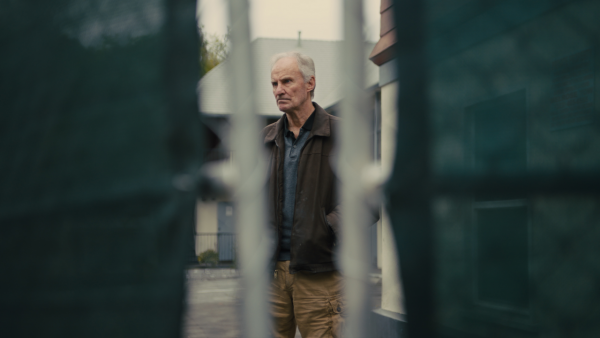
This month, Holloway Motel had its week-long run at the Lumiere Music Hall in Beverly Hills. But on the festival circuit, the film has already traveled around the world, premiering at the Tribeca Film Festival in June 2025 and even going all the way to the U.K for BFI Flare, where Freeman says many people recognized Powell from his soccer-playing days. “It was incredible to feel that history and the people who recognize him from that era,” Freeman says.
“In the film, something Tony learns is that he never gave the people who care about him the opportunity to prove it, and he made assumptions about how they would respond to him. The regret he’ll have going forward is that he didn’t do it sooner, and not that he [came out at all],” Petros says. “It’s really meaningful that queer people watch this film and say, ‘I want to be open with my family that I’ve always assumed would turn their backs on me.’”
And of course, Powell has seen the film. So what did he think?
“He’s a man of few words; he’s not very expressive in many ways when you want him to react, which is hilarious,” Freeman says, recalling how Powell’s reaction is perfectly indicative of his honest character. “But after we showed him the film, he said, ‘Wow, that was a lot more professional than I thought it would be!’”
Celebrity News
Peppermint made her mark on ‘Drag Race.’ Now, her advocacy is front and center
LGBTQ+ activist is this year’s NYC Pride grand marshal
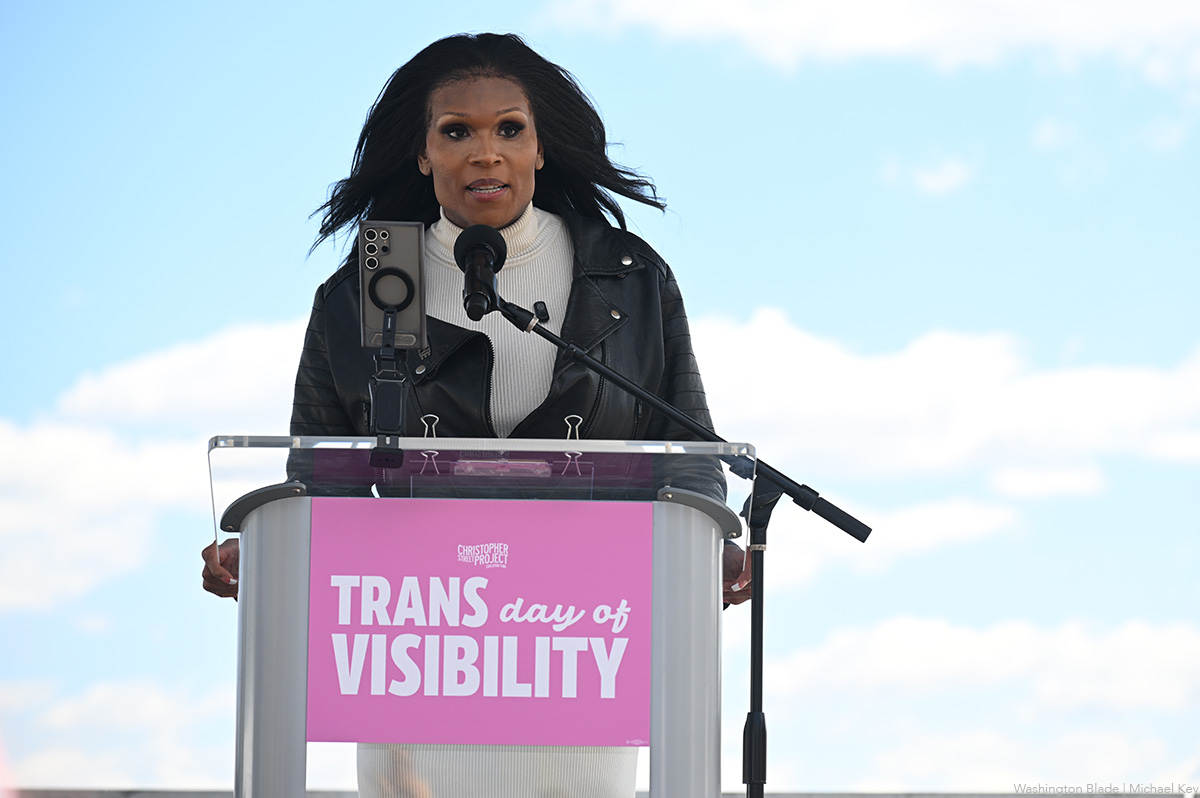
Uncloseted Media originally published this article on May 26.
By SPENCER MACNAUGHTON, BELLA SAYEGH, and LAURY PEYSSONNERIE | You may know Peppermint as a runner-up on season 9 of “RuPaul’s Drag Race.” Or for her stint as the first trans competitor on the runaway hit “The Traitors.” Or for her relentless activism at a time when the Trump administration is waging an unprecedented attack on the LGBTQ+ community.
Now, Peppermint is getting set to be one of New York City Pride’s official grand marshals. And she’s doing that while upholding the legacy of the trans women of color who were at the Stonewall Uprising in 1969.
In this episode of “UNCLOSETED, with Spencer Macnaughton,” Spencer sits down with Peppermint to hear about what it means to be a Black trans woman at the forefront of the LGBTQ+ movement during the second Trump administration.
(Uncloseted Media video)
SPENCER MACNAUGHTON: Hi everyone, welcome back to UNCLOSETED with me, Spencer Macnaughton. Today, I have the great pleasure of speaking with Miss Peppermint. She was a runner-up on “RuPaul’s Drag Race,” she was the first trans contestant on the runaway hit, “The Traitors,” and now she is the grand marshal for this year’s New York City Pride. Peppermint, thanks so much for speaking with me and Uncloseted Media today.
PEPPERMINT: Hello, I’m so happy to finally be with you. This is great! Hello, Uncloseted!
SM: Yes, we’ve done many collabs and you’ve definitely amplified our work, and you’re just such a huge advocate in the community so we’re thrilled to connect with you formally in this way. So, you were recently named the grand marshal for New York City Pride. How did that come about and what does that exactly mean? What is your duty if you’re grand marshal?
P: You know, I’m still trying to figure it out, but don’t tell them. Obviously, most parades and marches, and probably all of them traditionally, have a grand marshal who’s somebody that they honor who’s like one of the people at the very front of the parade as it goes through. And so I’ll be joined by some other fabulous grand marshals as well. I’m sharing the spotlight with Dominique Jackson, with Bernie Wagenblast, who New Yorkers will know as one of the voices of the subway system, and also Bowen Yang. And Gays Against Guns was just announced, and I’m so excited to share the spotlight with them.
SM: Yes, and you wrote, or you mentioned in a recent interview that you said, “Being named a grand marshal for New York City Pride is deeply meaningful, not just as an artist, but as a Black trans woman standing in the legacy of those who fought for us to be here.” That’s Marsha P. Johnson, that’s Sylvia Rivera. And through history, those voices, the voices of trans women of color have, for many parts since 1969, been erased from that conversation, right? So how meaningful is that to you as a Black trans woman to be in this space now in 2026, especially given the political climate we’re experiencing?
P: I am continuously dedicated to using whatever platform I have, whether it’s before I was on TV, since I’ve been on TV, still using my platform to advocate for the LGBT community, including, obviously, trans folks. As someone who is trans, it does feel good to know that they are, “they” meaning the New York City Pride, they hold some reverence for the legacy of trans women of color, of trans people in general and their contribution and to the legacy of Pride. The march is a sort of recreation of the very first time that the community marched to commemorate what happened in 1969 at the Stonewall Uprising, where, you know, the police came to raid the bar, Stonewall, the legendary gay bar Stonewall in the Village, and the community fighting back.
But, I think what a lot of people didn’t realize is that, yes, trans people, trans women were there on the forefront, but it wasn’t just an attack on the bar. This was an attack on sex workers, people who were homeless and on the street, many of which were femme presenting people, drag queens, trans women. These were the street kids who were working, who were sometimes cast out of their apartment, or kicked out of their homes from their families, and the only places that they could gather were, besides the bar, were also down at the pier and on the street, wherever, and they were, some of them were engaging in survival sex work. And the police, the NYPD, were attacking, constantly harassing, and throwing in jail, and just like targeting trans sex workers, essentially. These were the people who were, and are often, the most vulnerable when it comes to interactions with the police, and those were the people who said, “We are done, we are tired of it.” That story has been whitewashed over time in many ways. One of the very first movies, one of the mainstream movies about Stonewall that we’ve seen, is a bunch of blonde kids from Iowa as the ones fighting back when we know that it wasn’t. Again, it was the street kids, it was the people who were vulnerable. And so their legacy had been erased. And so while we’re hearing voices like Marsha P. Johnson and Sylvia Rivera being mentioned so much, especially in recent years, is because it hadn’t been included so much in the past. And it had been essentially erased. And It’s been restored, and then since then, this administration has tried to erase trans folks from that legacy, taking down the mention of trans from the official website for the Stonewall National Monument, removing trans women, you know, biology, gender, whatever, all these words from all federal government documents and websites. So, I know that was a long answer, but I think it was important for people to know that that’s why it’s important for me and that’s so important to be included in Pride, because it feels like this year in 2026, the same year that the flag came down and went back up, thank goodness, it feels it’s a good time to remind people that trans folks are a very important part of the community.
SM: A hundred percent. And when I hear you speak all that, you are at the end of the day a very brave person, a very courageous person. You have Trump erasing all references to gender identity from all government documents, taking down the pride flag for what reason? And then his administration unveiled a new counterterrorism strategy that maybe you’ve seen that talks about the biggest concern, which is not at all reflected in the evidence, is left-wing extremists and pro-radical transgender people, whatever that means. I just interviewed two extremism experts for a different episode, who talked about there’s not even one mention of white supremacy, even though all of the evidence points to that being the biggest threat. So I wanna know, you’re an advocate, but you’re also a Black trans woman, triple, quadruple jeopardy as it relates to who this administration’s attacking. How does that make you feel going into this Pride month as grand marshal?
P: It really just kind of solidified what I already knew, the absence of white supremacist groups and organizations, and white supremacy as a notion in terms of being a threat, domestic terrorism threat. It’s like the weakest part of that evidence because the biggest part of it was when they removed the proof that the federal government stated in multiple reports that white supremacy was the largest domestic terrorism threat in the United States since the ‘80s.
SM: And just so the listeners know, the Department of Homeland Security quietly removed that threat from documents so the public would not be privy to it.
P: So the absence is just an echo of that, right? Their action of removing that is what really was like, what? I clutched my pearls. So, this latest sort of act is just sort of confirmation of that, and it is terrifying. I want to leave the country.
SM: You want to leave the country? You do?
P: Yeah, part of me wants — of course. I want to continue to use my platform to advocate for what I feel is right. And part me wants to leave, part of me wants to stay and fight. You know, and I, I think like, what am I, what is this country that I want to fight for? I envision like, am I going to stay and fight and want to risk my life for like a bunch of other people that are just like, “Oh well, that’s what happened to the trans people.” Or are we all going to fight? Like, I can’t just fight by myself. We have to fight for each other. Sometimes when we see not only the government putting out documents, official documents on government letterhead that say, “We’re going to name trans people as terrorists.” But then at the end it’s saying, “We will find you and we will kill you.” That’s the part that’s like, well, do I need to wait for them to kill me?
SM: And just to be clear to the people who haven’t read this document, that is a verbatim quote. They essentially list the terror threats, which include, quote, “pro-transgender radicals,” and then they say, make no mistake, quote, “We will find you and we will kill you.” I mean, that’s insane.
P: That’s in the document.
SM: That’s in the document. You mentioned you can’t do this alone. If people are listening to this and they aren’t trans but are concerned and are seeing the stats, what can they do? What can we do to really be there for our trans siblings?
P: When I say, “I don’t want to do it alone,” it’s not so much, I need you to defend me, which would be nice; it’s more that I need you to defend yourself by defending me, is what I want people to know. Like the cis community, people who are cisgender, people who’re not trans, and also people who are outside of the queer community, need to know that if rights are what we have, if equal rights are what a democracy gives you and what you have, an attack on those and removal of those rights for who someone is, who they love or their political beliefs, then it is an attack on that very democracy and an attack on the people of that democracy and the people who value those rights. And so, going after people for who they are and removing their passports, naming them as terrorists, threatening to kill them, banning them from all types of government buildings and bathrooms and holding a job and da-da-da, and healthcare, all these things. The only way they can do that to me is if they change the rules to make it possible to do. Now we have a government that can remove people from all these things. So now that means all they have to do is include, you know, let’s include Mormons as terrorists. You know what? I mean, it took them how long to put out this document. Vegans, whatever, I don’t know. Like they can target anyone. It sounds absurd and preposterous because it is, but it won’t take long for them to widen that group to who they want to focus on next.
SM: And I know you’ve been outspoken in all different places, including mainstream media. You’ve gone on CNN a few times. I’ve seen you on there. And I worked in mainstream media, “60 Minutes,” the Wall Street Journal. And a big reason I left was because I didn’t feel like the coverage was rigorous enough, was fair enough, was frequent enough. How do you think the mainstream media is doing characterizing the issues plaguing the trans and LGBTQ community right now?
P: What is this question? They get an F, for fuck off. They get a terrible F because —
SM: Tell me why.
P: It’s so wild. Yeah, hello. We know that they’re interested because they talk about it on the daily. Every other day, there is mentions of trans people in some way, shape or form, and queer people in general. And so they’re constantly evoking us, talking about us, blaming us, bringing us up, attaching us, associating us, constantly. It is wild that they have so much to say about us and they don’t want to talk to us in general, the mainstream media. They don’t wanna include us. They don’t wanna hear. And I wonder why that is because with many other situations, they would want to go to, sort of like, the subject and speak with them about what it is, or the people who are involved in the story. You want to get their side of the story, except when it’s a situation like this, when it’s the political scapegoat. When it’s the political scapegoat, it actually is imperative that you don’t hear from them, that you just hear about them, because then you can create who they are for other people to sign off on.
SM: I have a friend, Alaina Kupec, and she’s a trans military veteran and she went on Abby Phillip’s CNN “NewsNight,” the 10 p.m. slot, after Trump passed the trans military ban. She was the only trans person on the panel. Other panelists include Scott Jennings, who is a Trump loyalist who has zero expertise in trans issues, but it created this false equivalency debate between Alaina, who was a military person and is trans, and Scott Jennings, as though both of those opinions should be considered equal from a journalistic perspective. How damaging are those kinds of conversations that are airing on shows like Abby Phillip’s that are, you know, sure we say “Americans don’t talk but they talk here,” but the majority of Americans perceive that as news still.
P: Yeah, it’s not news. It’s obviously just entertainment. And, you know, I really was upset with, I mean, I was really grateful to be on the show and have appeared there with another trans person, particularly, I got a chance to go on there.
SM: On Abby’s show?
P: On Abby’s show, pardon me, yes. But I do think that CNN has always served to launder the reputation, to launder the impact, and soften the perception of the very, very, real impact that sort of centrist politics that CNN holds. It really just exists to protect, sort of like capital and protect big business and sort of corporate, the corporate flow of politics that controls policy. And so I’m not surprised, but I think you’re 100 percent right. There is an epidemic, a habit, a vibe that this country has to just, like, take somebody off the street who has no knowledge about anything at all, other than their own opinion when they hear something, and that opinion when they hear, like, “What do you think of this concept that you’ve never heard of but we’re going to give it you and tell us what you think. And then here’s an expert in that, go!” And suddenly, you know, Scott Jennings gets to have an opinion on what I’m doing with my body or what rights I have and you know that thinks it’s harmful, it’s damaging and harmful.
SM: And I don’t want to single out, you know, Abby’s show too much because this happens on many different shows across network news, but to hosts like Abby or to producers on these shows — and I’ve worked in these newsrooms — who really care and really want to do it right, but might hit blocks. What’s your advice as a trans woman who’s experiencing this? What’s your advice to them? The people who are actually shaping the news packages we’re watching and actually do have some agency in deciding what gets to air.
P: My ask is, bring trans people on, at least to talk about the trans issues that you mentioned every day. But besides that, bring trans people on to talk about what’s going on with Medicare. Bring trans people on to talk about what’s going on with the war. Whatever. Bring trans people on to talk about more because those things impact us as well. The simplest thing is gender-affirming care. Gender-affirming care and issues of gender-affirming care, the government telling people what decisions they can make medically with their own body, ties directly with reproductive justice and access to abortion, and making your own medical decisions for your own body. That’s something that we can all talk about. That is an intersection that you could bring a trans person on to talk about.
So I would ask of those other creators, bring trans people on to talk about everything that you wanna talk about, Honey. We got lots to say, and we can add something to the conversation because we have a very unique perspective.
And then beyond that, my advice to CNN is you would want to follow what the other podcasters will be doing and having them on because you will be sealing your own demise and become a lot less relevant than you already are if you don’t.
SM: The least surprising thing from this interview is that you’re very interesting. I want to stick on media though for a second because right now you must know that the Ellisons, billionaires, own Paramount, right? And they, who are MAGA loyalists and they have really reshaped the narrative at CBS News, bringing in Bari Weiss, who is an opinion columnist, but Paramount also owns MTV, which airs “RuPaul’s Drag Race,” which you were a finalist on. Ru and the show have been a groundbreaking TV series as the most successful Emmy award-winning reality TV series of all time. They have been progressive trailblazers for many different reasons for LGBTQ rights. There’s been no messaging on the fact that Paramount’s owned by the Ellisons. Should there be? Should they stay with Paramount? What are your thoughts on that?
P: It would be wonderful to see anyone on that show speak out against sort of what is happening in our country with regards to the control over politics and policy and the intersection again of money with politics, especially as related to the Ellisons and the purchase of Paramount. We’ll know when the takeover is complete, when RuPaul is like, “I love Larry Ellison,” cause that’s probably happening. They’re gonna get a script. So let’s just wait for them to get a script and start talking about how great President Trump is, whatever, I don’t know. That’s what I envision happening is they will try to either cut “Drag Race” or use it as a tool to parrot what they want to say. I hope that doesn’t happen, but it’s either one or the other. They’re either gonna get rid of the show, but it’s such a ratings juggernaut that I imagine they’ll probably try to reshape “Drag Race” and take out any political messaging.
SM: That’s what I think about though. Ru has so much money, she doesn’t need any more money, right? And the show is such a ratings juggernaut [that] they could go somewhere else. They have enough power from a ratings perspective that they don’t have to be with Paramount. They’re enough of a product there that they could dip out. Do you think they should dip out given the political climate?
P: I don’t know, I guess I have mixed feelings on it. I certainly see a world where Paramount, CNN, anything under this new umbrella is going to have to follow what their owner and boss wants. Every show, every network that’s been sort of sucked into the umbrella is gonna have to fall in line. That’s what fascism is about. You follow directions. And so I think that’s in the future for the show if they don’t leave. If they don’t leave, then it’s probably going to, just they’ll either be disbanded or we’ll wake up one day and there’s gonna be this weird messaging coming out of drag or something like, where’s the lip sync? Suddenly they’re like forcing us to say the Pledge of Allegiance, but with Donald Trump’s name in it. Like that’s what’s gonna happen. That’s what happens in fascism. Do I think they should? I don’t wanna see a “RuPaul’s Drag Race” that’s teaching us how to march in a certain way. So I don’t know, because by that point, it won’t even matter. But I think if they could just go online and start doing it on YouTube or whatever, I think they could do that. But I think ultimately no linear, traditional television is safe. They own most of it.
SM: It’s so interesting. You know this from being on camera. I know this from being behind the scenes that there are always little things that the viewer might not realize happen. And I wonder over at Paramount, while they’re putting together “All Stars” or the next season, whatever it is, the little decisions that could be being made in the final script. And I think that there might be a lot of silent things to the next season that we don’t realize have been edited out to appease the big bosses who are MAGA loyalists. And those are just the things we’ll never know.
P: We’ll never know. And I would be so surprised if they, it would be smart of them to just leave Drag Race alone. Drag Race is a wonderful thing because it’s, because it features wonderful drag entertainers. That’s what’s so great about “Drag Race,” in my opinion. But I don’t rely on Drag Race to get my political anything.
SM: I hear you. Fascinating conversation about media, I could talk about it forever, but we’re going into Pride 2026, right? And we are now six years after the explosion of the Black Lives Matter movement after George Floyd’s murder that spawned into a submovement, the Black Trans Lives Matter Movement. And I’m curious, a lot of that has faded, at least from national international conversations, right? Where do you think we are now in 2026?
P: I think we are in a state of emergency, for sure. I think this administration has been successful. That’s where I think we are. It’s like a wild sort of, a wild, wild west. Do I think we need another moment? I mean, hopefully not, considering that what galvanized people was the death of an unarmed Black man. No, I don’t want that to happen, but it continues to happen on the daily and that we’re not marching in the street about it means that the sort of news cycle focus isn’t on it. And I’m grateful to see that people were able to become temporarily activated. And so I think we benefited from that, but I do think that it allowed people to sort of revert or to sort of jump to this automatic sort of social media style performative advocacy or reaction, which I think is a natural human response maybe in this situation. So by that matter, people posting a black square and thinking that they’ve done their part, fine, obviously it wasn’t enough. What I would like to see is instead of another sort of mainstream BLM moment is an awareness that yes, racism exists. Yes, transphobia exists. Yes, we have to fight those things, but also organizing and at the community level, connecting in sort of a mutual aid way so that we can’t say, “Oh my god girl, I can’t go out and protest because I’ll lose my job and I won’t be able to pay my rent.” Well, if we can make a way for your rent to be paid, you can go out in protest whether you lose your job or not, and then you don’t care and you’re more likely to challenge the system. And so that is where I want people’s minds to go because it’s gonna be necessary to withstand whatever’s coming.
SM: I want to be respectful of your time. That was great, that was an important answer so thank you.
I think out of all the people we collaborate with, there’s a lot of people who want to amplify our work, but you really are at the top of the list for people who are like I don’t care if this post hasn’t popped or isn’t going to get me more followers or I just want to do this and I can tell your advocacy is absolutely authentic and selfless. How did you get here?
P: That’s a good question. I wonder, I sit around asking myself, why am I doing this, like what in the world, but I’m just like driven to it, you know? And it’s something that I would be doing whether I’m alone, whether I am with people, whether there’s a benefit of it or not, it’s not something that I’ve seen that people can do to make money or things like that, most of what I do now is advocacy and all of it is unpaid. And I do it because I care about it and I will continue to do it. But it also means that I’m extremely vulnerable to not being able to survive because I’m not spending my time doing the things that it’s necessary to do to survive. I just want to make sure that we’re able to live and have basic rights, which means, you know, advocacy. And I think it started along, I mean, it definitely started a long time ago and it evolves over time. You know, I think I got it from my grandmother. She was heavily involved in civil rights and so that’s probably where it came from. I don’t know if it’s genetic or if it was just instilled as I was watching, but it’s here now.
SM: And when you got celebrity from “RuPaul’s Drag Race” and other things like that, how did that affect it? Because the celebrity status would have made you in a whole different ballgame with it, I would imagine.
P: Yeah, I remember thinking when I got on “RuPaul’s Drag Race,” I was basically, yes, my platform sort of multiplied and sort of exploded tenfold, which I’m grateful for. And I remember thinking, well, I’m basically doing exactly what I’ve always been doing the entire time, just on a larger scale. I believe I’m quite the family-friendly entertainer and personality. But I’m sure that there’s people that have been like, “Let’s not hire her because she might say the wrong thing.” I’m sure that I’ve suffered that, but it doesn’t change that if I lose every follower I have, I’m still gonna be doing the same thing. I’ll just be back to where I was before I started this stuff. And so, you know, that’s kind of my thought on it.
SM: I love it, and I feel like that is a beautiful place to stop. I could talk to you for a long time, but Peppermint, so grateful that you’ve given us your time. Thank you so much for speaking with me and Uncloseted Media today. This has been a really rich conversation.
P: Absolutely. I do want to remind people to tune in to the last job I held, which was “Survival of the Thickest” on July 2, right after New York City Pride.
SM: Absolutely, we can plug that also in the show notes. So yes, thank you again, Peppermint. This was fantastic.
P: Awesome, thank you.
Season 3 of “Survival of the Thickest” featuring Peppermint launches July 2 on Netflix.
Movies
‘Horrified’ director Mike Zara talks casting Julie Benz, Busy Philipps, and Ron Perlman in his campy horror homage
Zara breaks down the funding process and why filming in Los Angeles was out of the question

It’s the connections that filmmakers cultivate over the years — whether it be the series regular they know from writing on a hit show over a decade ago, or simply knowing the person who cuts a certain actor’s hair — that can bring moments full circle. For Los Angeles-based horror director Mike Zara, that full circle moment came when casting his directorial debut, Horrified, which is currently raising finishing funds.
Assembling a cast with names like Julie Benz (Dexter), Busy Philipps (Dawson’s Creek), Ron Perlman (Hellboy), Jim Rash (The Way Way Back), and Doug Jones (The Shape of Water) would be a tall order for any major Hollywood production. But Zara’s mix of personal and industry connections, which he’s been developing for over 20 years as a writers’ assistant on shows like The Client List and GCB and a staff writer on TNT drama Major Crimes, has helped his film garner industry attention prior to post-production being finished.
“We are truly an independent film. Even though we’ve got stars like Ron Perlman, Busy Philipps, and Julie Benz,” Zara says. “I don’t think a movie with this small of a budget has ever had this many stars in it!”
Described as a meta horror comedy and a love letter to Wes Craven films like A Nightmare on Elm Street, Horrified follows a famous scream queen (played by Benz) attending a horror convention with the goal of snagging some quick money. But of course, things don’t go as planned, with the masked killer of the character’s famous franchise resurrecting and threatening the lives of everyone at the convention.
“We’ve had a bunch of interest from buyers, but we’re not going to show the movie until it’s done,” Zara says of his independent feature. “But what I will say is talking to them, one person said, ‘You’ve done a good job because we heard about your movie and it hasn’t even been released or distributed.’”
The film’s producing partners include the Tulsa-based Rebellium Films, which helped the crew land a tax incentive deal in the state of Oklahoma — the city of Tulsa’s first film tax incentive deal. The Art of Elysium, the L.A.-based arts charity that worked on the Oscar-winning short The Singers, assumes the role of fiscal sponsor. However, shooting in L.A. was out of the question.
“Being a TV writer myself, I’ve seen productions move away from here, and there are just less and less shows shot in Los Angeles. When looking at Horrified, there was no way we were going to be able to make the movie here,” Zara says. “It’s [also] supposed to take place in a middle-of-nowhere town, so this character feels like a fish out of water.”
Zara continues, “Because it’s still a lottery here, too. In other states, you just have to submit, and if everything checks out, you get approved. But with a lottery situation, you just don’t know what you’re going to get. At least what I’ve seen here in L.A. is these huge productions getting the greenlight, but the little guys like me… I’m just not seeing it as much. But I hope that’s changing because it would be great to film here [in the future].”
As a queer filmmaker who wrote 2020’s Letters to Satan Claus, the first queer Christmas movie for Syfy, Zara embraces camp — or what he specifically calls “bloody bubble gum. It kind of tells you what it is, which, yes, there’s that bright, shiny poppy thing, but there’s something darker and bloody. There’s something below the surface where you’re saying something.”
Zara concludes, “Even though the film isn’t queer necessarily, it’s me directing and writing it, and we have some openly queer actors in the film and some smaller queer characters. I have an eight-foot drag queen in a runway scene. I named her Sephora! It’s always going to be in my work, and I’m proud of that.”
Books
Reclaiming LA’s Black queer identity: Terrell J. A. Winder talks ‘Shameless’
In ‘Shameless: The Making of Black Gay Identities in LA,’ sociologist Terrell J. A. Winder reveals how Black gay men in Los Angeles are transforming stigma into unapologetic queer joy
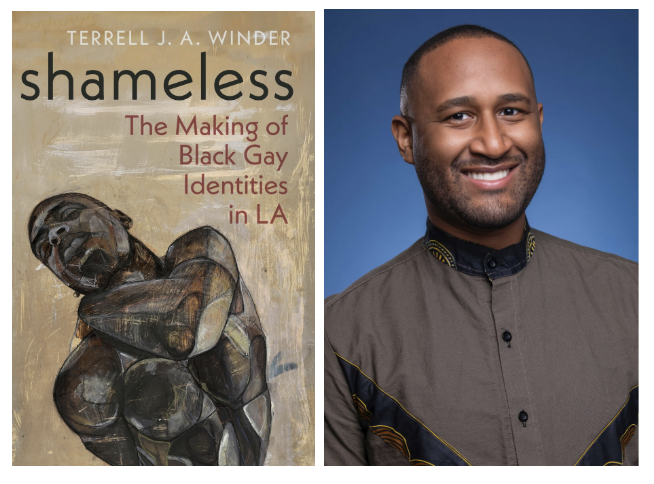
As our beloved Pride Month draws near, discussions on queer identity and resistance feel especially appropriate, particularly for the time that we are all currently in. With his forthcoming book Shameless: The Making of Black Gay Identities in LA, sociologist Terrell J. A. Winder explores how Black gay men in Los Angeles navigate stigma while building lives that are deeply rooted in self-worth, community, and queer Black joy. Drawing from years of research and personal reflection, Winder challenges many longstanding academic ideas about shame and “spoiled” identities, instead centering the resilience and creativity of Black queer communities.
Set against the cultural backdrop of our City of Angels, his book examines how Black gay men cultivate chosen families, affirming spaces, and authentic forms of self-acceptance in a society that consistently marginalizes us. From the legacy of Jewel’s Catch One to the everyday acts of vulnerability and care that sustain community, Winder reframes stigma as something that can be resisted, transformed, and ultimately rejected. In our conversation, Winder discusses shamelessness, “unspoiling,” and what an affirming future for Black queer people could look like.
The title Shameless resonates hard. What does “shamelessness” mean in the context of Black gay identity formation?
For many Black gay and queer individuals, shame and the process of learning that their identities are shameful is a common part of growing up in the US. We might hear negative things from family members, classmates, teachers, the media, etc. All of these messages create the need for shamelessness. The title is a call to all Black gay and queer people to shamelessly accept all of themselves, no matter the negativity; it is an invitation to reject stigma.
You introduce to your readers the concept of “unspoiling.” Can you walk us through what that process looks like?
For many sociologists and researchers who study stigma, or in other words, negatively marked identities, the researcher Erving Goffman’s idea that these socially unacceptable or contentious identities were “spoiled” resonates still. Many people who experience a stigma might try to “pass,” where they hide their socially negative attribute, or to “cover,” where they downplay the significance of an unaccepted identity.
Instead, I show how several young men in the book push back on the idea that they should try to make other people comfortable around them. In effect, these young men decide to prioritize their own comfort over the comfort of people who have an issue with their Blackness or queerness. In the book, I show how community organizations, media representations, and chosen gay family networks can be places where young men learn not to just simply accept negative things about their identities but instead can develop tools to reject stigma in everyday life.
You describe how Black gay men more often than not navigate competing pressures around masculinity. How do these types of internal negotiations gradually yet surely sculpt one’s identity over time?
Across the life course, these competing pressures and messages about masculinity can solidify in different ways related to a number of factors. For example, do you have a supportive social network like a “gay family” that might model different forms of masculinity? Do you have a father or father figure who tells you it’s okay to show emotion? Did you grow up hearing that your single mother couldn’t raise a “real man?” These are the types of internal struggles that many of the young men whom I studied encountered. Their varying expressions of masculinity are shaped by those experiences close to them with family and friends, but also through external factors like media representation.
Sometimes having positive reinforcement to embody masculinity in the way you’d like can result in a sculpted identity that is more expressive and free to experiment. However, being surrounded by a majority of negative messaging and sanctioning of your masculinity expression often leads to one of two choices: 1) you push back against the negativity or 2) you fall in line. While these identities do become more solidified over time, I hope that the book serves as a reminder that we are all able to continually rework our relationship with masculinity and femininity throughout our lives.
That question “Should I act more masculine to pass?” is pretty loaded. What did your research reveal about how men resolve or live with this very specific tension?
I think anyone who has ever felt less masculine around other men has considered this question. In the study, the stakes of this question often shaped the response to that tension. For example, some young men discuss feeling that their physical safety was threatened, and thus they elect to express a more masculine persona to avoid physical harm. However, not all of the young men felt that the potential for this physical danger was an acceptable reason to “pass” and instead advocated for facing these threats head-on, no matter the potential consequences.
That is where the “unspoiling” emerges. It became clear that for some of the young men that I studied, it was more important that they were true to themselves and their own expressions of masculinity and femininity than to accommodate other people who put pressure on them, whether physically or verbally, to be more masculine.
Your work shines a spotlight on how stigma operates on multiple levels (race, sexuality, gender expression). How do these layers interact with each other in everyday life?
We often think of stigmas as individual or not layered, or even forget that people are navigating multiple stigmas simultaneously. However, the young men in this study are considering the boundaries of their racial, gender, and sexual expressions daily. The men in this study discussed hearing both positive and negative messages about their Black identities growing up, but very rarely did someone hear anything positive about their non-heterosexual sexuality.
Also, as Black gay men, we are often tasked with navigating intersectional stigmas like the burden of HIV stigma. Every day, each individual must choose how to respond to stigma on their own terms; the young men in this study often do a mix of things depending on the specific situation. I think what’s most important is that we learn how to reject the internalization of stigma–the book offers a few ways to get there.
You also highlight how undoing stigma is the responsibility of the stigmatizer. What does accountability look like in this context?
Yes, I argue that we spend too much time teaching people how to cope with stigma instead of focusing on the stigmatizer and their role in creating it. As someone trained as an elementary school teacher, I think of stigma like bullying in a classroom: while we want children to protect and advocate for themselves, we ultimately recognize that the bully is the problem, not the bullied person. Accountability means refusing to ignore moments when others are being denigrated for who they are and asking ourselves when we are bystanders, stigmatizers, or capable of intervening. What people dismiss as “jokes” or “boys will be boys” can have lasting consequences. It is also important to recognize that someone experiencing stigma may still perpetuate it toward others, which is why everyone must reflect on how they contribute to either reinforcing or reducing stigma in the lives of those around them.
At the same time, you show how many folks develop internal strategies to survive and thrive. What are some of the most powerful forms of resilience you observed in your many years of research?
Some of the most memorable examples of resisting stigma came from men who had endured profound hardship. One young man shared that despite being beaten and stabbed for being Black and gay, he still proudly embraces those identities everywhere he goes. I do not take lightly the courage it takes for someone to remain true to themselves while knowing they may face harm for it. Throughout my research, I was also deeply moved by the vulnerability and resilience shown when Black queer men shared their fears and experiences within community organizations and chosen families. Simply seeking out and building these affirming spaces felt like a powerful act of resilience and self-preservation.
How do you reconcile the gap between aspirational representation and lived reality, especially in a city like Los Angeles?
I think it’s important for everyone to aspire to something, especially for people whose lived realities are filled with challenges. In Los Angeles, specifically, we have a city full of promise but also a city filled with disappointments. Every day, Angelenos must make the choice to move the needle towards a better city and a better community.
You explore Black queer history in LA, including the creation of alternative spaces. What about Jewel’s Catch One is so unmistakably essential?
Jewel’s Catch One, or “The Catch,” remains an iconic space in Black queer history in Los Angeles and beyond. Created by and for Black queer people at a time when many were excluded from predominantly White queer spaces, it provided a vital place for community, celebration, and belonging. Even as queer gathering spaces continue to close across the country, places like The Catch remain essential for navigating stigma and fostering resilience. In 2025, it was officially recognized as a Historical Cultural Monument by the city of Los Angeles, cementing its cultural and historical significance.
Figures like Jewel Thais-Williams helped build community in the face of exclusion. What lessons can these stories provide younger folks today?
Jewel Thais-Williams is a great example of someone who resisted the stigmas associated with being Black and queer and created a space for others like her to come behind. I start the book off by discussing some of the ways that, over time, younger generations forgot, or even undervalued, how important it was to have a space like Catch One–they let the stigmas associated with the neighborhood override the importance that it served as a cultural institution.
I hope that we, instead, can remember just how critical spaces created by Black queer people in the face of stigma are to our collective well-being as a community. Jewel Thais-Williams’s legacy should be a lesson and a model for how we can intentionally carve out space in a world that often relegates our lives to the margins.
How do younger generations of Black queer men today compare to those you studied in your research?
I suspect that younger generations are still experiencing negative messages and navigating stigma in similar ways to how the men in my book did. However, one major change is that the proliferation of social media examples of Black gay men has diversified significantly, with social media content created by young people on platforms like TikTok and Instagram. One great example of this is the many queer prom-posals that we get to witness on social media; the generation of men that I studied mostly attended proms with their “girlfriends.”
Additionally, we are in a moment where people are trying to censor the reality that people of different sexualities or races even exist in our society. Changes in community organization funding, access to sexual healthcare, and diverse media representations all threaten to curb the gains Black gay men (and other queer communities) have made in the effort to combat stigma. Yet, I still believe that the younger generation is boldly freer because they have online connections and access to feel less isolated–that is a powerful tool.
What do you hope readers outside queer Black communities take away from Shameless?
I hope the book can help anyone navigating stigma think differently about their relationship to their own identities and recognize that they do not have to carry that burden alone. While I wrote it to challenge scholarly narratives about stigma, it was equally important that it offer practical value by encouraging people to seek supportive communities, affirming representations, and expanded definitions of family and care. I also hope the book encourages people to reflect on the ways they may contribute to stigma in the lives of others, even while navigating stigmatized identities themselves. Ultimately, the book is both a call for self-reconciliation and an invitation to ask how we can lessen the burden of stigma for those around us.
What does a really-truly-deeply “unspoiled” future look like to you, for Black queer men, and for society as a whole?
To me, an unspoiled future means recognizing that everyone has the right to exist fully as they are without fear of harm or exclusion. For Black queer people, this would mean embracing both identities without facing physical, emotional, or psychological harm and finding joy, belonging, and community in that intersection. A truly unspoiled future also requires people to recognize the humanity in others, even when they live or love differently from themselves. Ultimately, it calls on all of us to reflect on whether we are helping lessen stigma or contributing to its continuation.

How Saunder Choi crafts a queer anthem

Books for a pre-Pride celebration

Meet your local bartender: Hunter Cassidy

Out Rep. Mark Takano recalls fight against the religious right

Ghanaian lawmakers approve anti-LGBTQ+ bill

Los Angeles LGBTQ+ organizers condemn ‘harmful anti-LGBTQ+ tropes’ in ads targeting John Erickson’s Senate race

Hey Sweet Cheeks!

Set in West Hollywood, ‘The Last Guest of the Holloway Motel’ tells Tony Powell’s story

The 2026 Gayming Awards finally gives LGBTQ+ gamers the spotlight

China’s top court acknowledges anti-LGBTQ+ discrimination
-
 California Politics3 days ago
Los Angeles LGBTQ+ organizers condemn ‘harmful anti-LGBTQ+ tropes’ in ads targeting John Erickson’s Senate race
-
 Beauty2 days ago
Hey Sweet Cheeks!
-
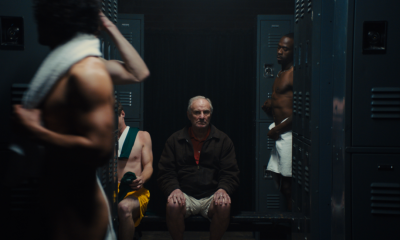 Movies5 days ago
Set in West Hollywood, ‘The Last Guest of the Holloway Motel’ tells Tony Powell’s story
-
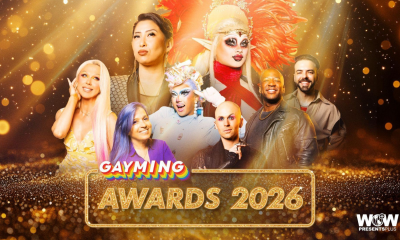 Gaming4 days ago
The 2026 Gayming Awards finally gives LGBTQ+ gamers the spotlight
-
 China4 days ago
China’s top court acknowledges anti-LGBTQ+ discrimination
-

 Events4 days ago
The Artist Tree dispensary set to kick off Pride on June 4th with Studio 420 art exhibition
-
 Commentary3 days ago
Requiem for patriotism
-
 Ghana2 days ago
Ghanaian lawmakers approve anti-LGBTQ+ bill
-
 Features4 days ago
Still marching: Rev. Troy Perry and the ongoing fight for liberation
-

 Movies2 days ago
‘The Stranger’ queers an existentialist classic