
News
Cicilline touts Equality Act as House’s new senior gay member
Cicilline talks Equality Act in new role as senior LGBT House member
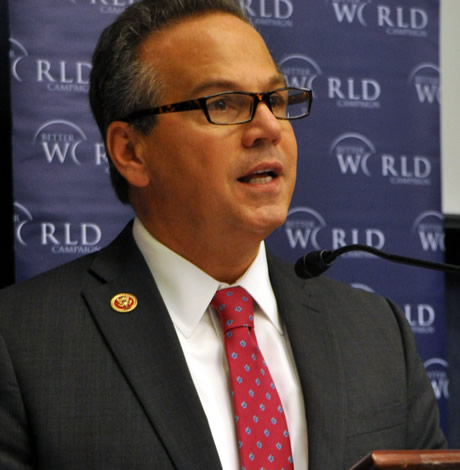
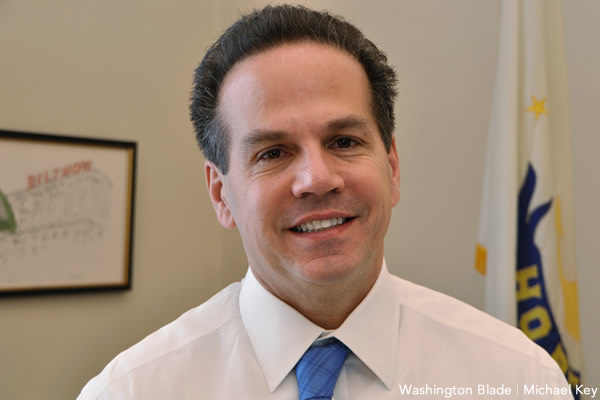
Rep. David Cicilline (D-R.I.) will become the most senior openly gay member of the U.S. House as Democrats take the majority this week. (Washington Blade file photo by Michael Key)
Rep. David Cicilline (D-R.I.) will become the most senior openly gay member of the U.S. House as Democrats take the majority this week, but he’s more excited about the growing ranks of openly LGB people who will serve in Congress alongside him and finally being able to move long-awaited legislation to ban anti-LGBT discrimination.
Asked by the Blade during an interview in his office Dec. 20 about his new distinction as the most senior out gay member of the House with outgoing Rep. Jared Polis leaving to become governor of Colorado, Cicilline said he’s “very proud” the chamber will have a net gain of two out LGB members in the 116th Congress and talked about the Equality Act.
“It’s a great privilege to be a part of that group,” Cicilline said. “I think this year will be an opportunity for us to finally move forward on the Equality Act, which I think is the single most important piece of legislation to our community in terms of, once and for all, prohibiting discrimination against members of the LGBT community as a matter of federal law. And so, I’m honored to be the senior most member and really excited about the new colleagues that are joining this caucus.”
(Although Cicilline is now the most senior openly gay person in the House, he’s not the most senior openly gay person in Congress. That distinction belongs to Sen. Tammy Baldwin of Wisconsin who was first elected to the House in 1998, but moved to the Senate and won re-election last year.)
The Equality Act would amend the Civil Rights Act of 1964 and the Fair Housing Act to ban anti-LGBT discrimination in employment, housing, public accommodations, jury service, education, federal programs and credit.
The bill also seeks to update federal law to include sex in the list of protected classes in public accommodation in addition to expanding the definition of public accommodations to include retail stores, banks, transportation services and health care services. Further, the Equality Act would establish that the Religious Freedom Restoration Act — a 1994 law aimed at protecting religious liberty — can’t be used to enable anti-LGBT discrimination.
Although the ongoing government shutdown will likely be the first priority for the Democratic majority, Nancy Pelosi said advancing the Equality Act would be a personal goal and the legislation will receive a bill number between 2 and 10.
And the lawmaker who’ll spearhead that legislation is Cicilline, who introduced the comprehensive non-discrimination measure in the previous two Congresses with Sen. Jeff Merkley (D-Ore.). For the first time, Democrats will introduce the Equality Act while controlling at least one chamber of Congress, which presents an opportunity for a floor vote on the legislation.
Cicilline said the timing for introduction for the Equality Act in the 116th Congress is yet to be determined, although it’ll definitely coincide with Merkley’s introduction of the legislation in the Senate. The Rhode Island Democrat said conversations with Democratic leadership on the timing for the legislation haven’t yet taken place “other than knowing we’re moving forward on it.”
“I know that the incoming speaker had made public statements about our intention to make the Equality Act a priority, which I’m delighted to hear,” Cicilline said.
Cicilline said he expects committees with jurisdiction over the Equality Act — such as the Judiciary Committee and the Education & the Workforce Committee — to hold hearings on the legislation before moving forward in accordance with regular order before the floor vote.
The next iteration of the Equality Act will have “pretty much” the same language as its previous iterations, Cicilline said. He added every time he reintroduces a piece of legislation “it’s another occasion to kind of look at the bill and see if there’s anything to change.”
“So we’ll go through that process, but it’ll be essentially the same bill,” Cicilline added.
Asked whether he had anything in mind that would make the Equality Act not the same in the 116th Congress, Cicilline replied, “No.”
In the previous Congress, all members of the Democratic caucus were co-sponsors of the legislation, except for two lawmakers: Rep. Dan Lipinski (D-Ill.), whom LGBT groups sought (unsuccessfully) to oust during the Democratic primary last year for not backing LGBT rights, and Rep. Marcia Fudge (D-Ohio).
Cicilline said he expects the same level of support in the Democratic caucus as it takes the majority in the 116th Congress.
“I’ve talked to a number of my new colleagues about the Equality Act, a number of them have already contacted me about wanting to be co-sponsor, so I expect will have the same kind of overwhelming Democratic support,” Cicilline said. “Hopefully, every Democrat will be a co-sponsor.”
Republicans however, are a different story. Only two Republicans co-sponsored the Equality Act in the last Congress. One of them is Rep. Ileana Ros-Lehtinen (R-Fla.), known for being the most pro-LGBT House Republican, who retired after 24 years in Congress. The other Republican co-sponsor, Rep. Scott Taylor (R-Va.), was voted out of office in the Democratic “blue” wave.
Cicilline said he’s had conversations on the Republican side of the aisle about the Equality Act and is “going to continue those because I want to do everything I had to make it bipartisan.
“I think it’ll be really important to have some of our Republican colleagues, but I don’t have any yet that are committed to it,” Cicilline added.
Asked whether there were any Republican possibilities he could name, Cicilline demurred.
“If I name them, they become less possible,” Cicilline said. “I’m going to explore with as many Republican colleagues as I can and get them on board.”
But the Equality Act also faces concerns among civil rights supporters. Many civil rights groups, including the Leadership Council on Civil & Human Rights, have said they support the goals of the Equality Act, but have stopped short of a full endorsement of the bill.
Fudge, who was considering a leadership challenge to Pelosi after Democrats won their majority, has expressed concerns about opening the Civil Rights Act to amendments on the House floor, where the landmark legislation could be watered down.
“What I opposed was including the Equality Act in the current Civil Rights Act,” Fudge said in a statement. “The Civil Rights Act is over 50 years old and isn’t even adequate to protect the people currently in it. I want us to do a new and modern civil rights bill that protects the LGBTQ community and updates protections for this era. I do not believe it is appropriate to open and relitigate the current Civil Rights Act.”
Cicilline said the Leadership Council on Civil & Human Rights made “a very strong statement of support of equality for our community” in regards to the Equality Act. As for Fudge’s concerns, Cicilline said he understands them, but doesn’t share them.
“I understand the argument advanced by Congresswoman Fudge,” Cicilline said. “I disagree with it. I think that we can’t have full equality by having a separate but equal civil rights bill.”
Cicilline said barring discrimination against LGBT people by amending the Civil Rights Act of 1964 has significant benefits that a different bill couldn’t accomplish. Among these benefits is applying more than 50 years of jurisprudence of the landmark law to anti-LGBT discrimination.
“Really the only way to do it is to include it in the existing civil rights architecture, so you have the benefit of all that jurisprudence whenever exemptions exist, whenever other kinds of tests need to be applied,” Cicilline said. “There’s significant jurisprudence on it, and so it saves kind of litigating all these things again. So, I think there’s real value legally and real value in terms of making a strong statement that we need for equality.”
Cicilline pointed out that every other member of the Congressional Black Caucus was a co-sponsor of the Equality Act, including civil rights icon Rep. John Lewis (D-Ga.), whom Cicilline said was “one of the early champions of the bill, and he’s a respected leader in that community.”
After the Equality Act passes the House, the game changes. Instead of a new Democratic majority, the U.S. Senate under Senate Majority Leader Mitch McConnell (R-Ky.) has an expanded Republican majority. Moreover, President Trump would need to sign any legislation for it to become law.
But Cicilline denied passage of the Equality Act in the House is the end of the story. In fact, he called it the “beginning of the story” because the campaign to pressure Republicans to support LGBT rights will begin.
“We will work hard to get it passed in the Senate,” Cicilline said. “I think this is one where it’s very critical for outside groups to play a role in identifying who are the key senators who are at least willing to consider supporting the Equality Act and that they hear from constituents in their districts from the LGBT community and allies about the importance of this, and we begin a real campaign to persuade them to do it.”
Referencing polls showing the American public opposes discrimination against LGBT people, Cicilline said the issue “is one where the American people are way ahead of us overwhelmingly.”
“I think part of our challenge is to catch up to where the American people are,” Cicilline said. “They understand fundamentally that discrimination is wrong. It’s antithetical to the fabric that is this country. And when you give them the examples of the kind of discrimination we’re talking about they’re opposed to it. So I think this is about kind of Congress basically catching up to where the rest of the country is and making certain that qualified people cannot be fired from their jobs, cannot be kicked out of housing.”
Cicilline also wouldn’t rule out Trump supporting the Equality Act, recalling an interview Trump gave in 2000 to The Advocate in which he said he likes the idea of adding sexual orientation to the Civil Rights Act of 1964. Trump hasn’t said whether he still holds that position.
“It’s hard to know that he’ll continue to maintain that position, especially when you think of the ways the administration has behaved, but if we bill pass the bill soon, that’s our next effort,” Cicilline said.
The third branch of the U.S. government may also have a chance to weigh in on anti-LGBT discrimination. Two petitions are pending before the Supreme Court calling on justices to affirm anti-gay discrimination amounts to sex discrimination under current law, and another petition seeks clarification on whether anti-trans discrimination is sex discrimination.
For decades, courts have more or less consistently found anti-trans discrimination is sex discrimination. Court rulings finding anti-gay discrimination is sex discrimination are a relatively new development, but a growing number of them are reaching that conclusion.
In the event the Supreme Court decides to take up these cases, Cicilline said either way justices would come down, it wouldn’t change the need for the Equality Act.
“It’s one tiny piece of this bill,” Cicilline said. “So it would answer that question, but if it was answered and said it is covered that would be great because we have some partial coverage, partial protection against discrimination for one part of the community but it doesn’t solve the problem and it would still, I think, wouldn’t in any way undermine the necessity of passing and enacting the Equality Act. If they rule against it, then it just affirms the emergency of passing the Equality Act. So, I don’t know that it has a big impact.”
The Equality Act isn’t the only LGBT issue Cicilline has spearheaded. Last year, when the nation was horrified over the Trump administration’s “zero tolerance” immigration policy that separated asylum-seekers from their children, Cicilline pointed out the LGBTQ youth in immigration detention facilities have no legal protections.
Cicilline said “there may, in fact, be some implications of the Equality Act” in the context of immigration detention in terms of if there were educational facilities or it was considered a public accommodation.
“They did not have in place any protocols or systems,” Cicilline said. “They acknowledged that when issues arise related to the sexual orientation or gender identity of youth they deal with it on a case-by-case basis, whatever that means. But it was clear there aren’t established protocols that protect this vulnerable population. This is one of many, many shortcoming in the current immigration detention proceedings.”
The treatment of LGBT youth in immigration detention facilities, Cicilline said, will be the subject of congressional oversight with the House under Democratic control.
“I think you’ll see a lot of oversight hearings on this when we take the majority in January,” Cicilline said.
That isn’t the only LGBT issue facing expected congressional oversight for Cicilline, who identified other areas he predicts will come under scrutiny.
“The same things that exist in the immigration system context exist in the criminal justice system, so protections are in place for the people in our community who are incarcerated,” Cicilline said. “There’s lots of work that needs to be done in terms of protecting students, particularly with Betsy DeVos’ rollback of some key protections.”
One LGBT issue that has reemerged is reports of anti-gay human rights abuses, including the extrajudicial killing of gay people in concentration camps, in the Russian semi-autonomous Republic of Chechnya. Last month, the State Department promoted a report from the Organization for Security for Cooperation in Europe corroborating those reports and finding Russia “appears to support the perpetrators rather than the victims.”
Cicilline said the report “confirmed what we suspected from the beginning” and found an earlier Russian investigation that found no abuse “was not legitimate.”
“We have attempted in a variety of different ways to raise that issue both by introducing and passing a resolution in Congress condemning that action as well as leading a letter to the president and secretary of state urging him to raise this issue with — abuse of LGBT people in Chechnya — with the Russian officials,” Cicilline said. “So this confirms what we have attempted to do and sadly is just another example of people from our community suffering violence and discrimination and brutality and really unforgiveable circumstances.”
The Trump administration has sanctioned Chechen leader Ramzan Kadyrov under the Magnitsky Act and supported the OSCE report, but Trump himself has said nothing about the abuses, unlike other world leaders such as Justin Trudeau, Theresa May, Emmanuel Macron and Angela Merkel.
Asked what the Trump administration or new House majority should do, Cicilline said “we just have to continue to press for human rights,” raising the possibility of legislation and sanctions.
“I think there’s some legislative stuff we can do,” Cicilline said. “I think we should continue to bring attention to these issues, continue to express condemnation when appropriate with sanctions, etc. So I think there’s a whole range of options available to us, but raising our voices and making sure that America continues to be a country that speaks out against violence against the LGBT community is really important.”
Asked what would need to happen to trigger sanctions, Cicilline said “we have current mechanisms,” but other proposals are in the works through the legislative process.
With a Democratic majority taking control of the House, Cicilline said the distinction between Democrats and Republicans on LGBT rights will exemplify the new tone in Washington.
“I think the contrast is really stark and, I think people have a right to expect that the Democrats who take the House back that LGBT equality and protecting the LGBT community from discrimination will be an important priority for us and, I think, the community should be excited about having at least one chamber that fundamentally respects who we are and is committed to fighting for our equality,” Cicilline said.
Although the House is just one chamber of Congress and Trump still occupies the White House, Cicilline said the distinction between Democrats and Republicans on LGBT rights will shine a light for the American public in time for the 2020 election.
“So this is a big change and we’re either going to get the Equality Act passed in the Senate after it passes the House and have equality, or we’re not,” Cicilline said. “And we’re going to be able to demonstrate who stopped our fight for equality, and those people will be on the ballot in two years.”
Cicilline added, “Our community will work to elect people who do support equality, so this is an important one, but the work isn’t done, so we got a lot of work ahead of us. Fights for equality are never easy, even though they seem obvious to us.”



Japan
Report: LGBTQ+ exclusion costs Japanese economy billions a year
Open for Business findings coincide with marriage equality fight
LGBTQ+ exclusion may be costing Japan as much as ¥16.42 trillion ($10.35 billion) annually, according to a new report by Open for Business, which argues that greater inclusion could help address the economic pressures facing a country with a shrinking population and workforce.
Japan’s population is projected to decline from 126.15 million in 2020 to about 87 million by 2070, according to the National Institute of Population and Social Security Research. As the country confronts a shrinking workforce; the economic stakes of retaining talent, improving productivity, and ensuring that LGBTQ+ people can participate fully in the economy are becoming increasingly significant.
Open for Business estimates that the costs extend beyond lost earnings.
The organization attributes between $25.1 billion to $75.1 billion annually to the excess economic burden associated with depression, suicide and self-harm, cardiovascular disease and HIV/AIDS, and another $12.2 billion to $26.2 billion to lost earnings linked to the LGBTQ+ wage gap.
A 2026 survey by Dentsu Japan, the Japanese arm of global advertising and public relations company Dentsu Group, found that 10.6 percent of respondents aged 20-59 identified as LGBTQ+, up from 9.7 percent in 2023. The survey polled 46,658 people living in Japan.
The report argues that Japan already has the foundations for greater LGBTQ+ inclusion; pointing to public support, corporate leadership, and growing legal momentum. Progress on these fronts, it says, could reduce the economic costs of exclusion, strengthen workforce participation and help Japan remain competitive.
“For Japan, LGBTQ inclusion is not simply a question of fairness. It is part of the country’s economic resilience,” the report states.
Japan does not legally recognize same-sex marriages at the national level, but partnership systems have spread across local governments. As of 2024, municipalities operating such systems covered nearly 93 percent of Japan’s population. The certificates can help couples access certain services, but they do not carry the same legal status as marriage, including in areas such as inheritance and medical decision-making.
The absence of marriage recognition can leave same-sex couples facing uncertainty over hospital access, medical decisions, and survivor benefits. It can also complicate employers’ decisions about spousal health coverage, relocation assistance and family leave, particularly when policies depend on a marriage recognized under Japanese law.
Japan’s PRIDE Index, administered by the nonprofit Work with Pride since 2016, evaluates corporate initiatives related to LGBTQ+ employees across five categories, awarding Bronze, Silver or Gold ratings. In 2025, 931 companies headquartered in Japan were assessed, with 80 percent receiving the highest, Gold rating.
Despite progress in corporate inclusion, workplace practices remain uneven.
A 2026 workplace white paper by Nijiiro Diversity found that 55 percent of surveyed employees reported no concrete LGBTQ+ measures at their workplaces. A separate 2025 survey found that 30 percent of professionals had experienced workplace discrimination or bias based on sexual orientation, while 27 percent reported bias based on gender identity. Only about one-third said they felt comfortable disclosing their sexual orientation or gender identity at work.
The report also points to disparities in HIV and STI outcomes.
Men who have sex with men accounted for an estimated 82 percent of newly diagnosed HIV cases in Japan, according to the report. In a separate study at a Japanese gender-affirming clinic, researchers screened 275 transgender and gender-diverse patients and found that 6.2 percent tested positive for HIV or another sexually transmitted infection. All were asymptomatic when tested.
The report also estimates substantial losses from the LGBTQ+ wage gap.
It puts Japan’s total earned income at about $1.81 trillion, of which LGBTQ+ workers account for an estimated $175 billion, or 9.7 percent. Applying a wage gap of 7 to 15 percent, a range the report says is supported by OECD analysis, yields an estimated $12.3 billion to $26.3 billion in lost wages annually. Japanese research cited in the report also points to economic disparities among transgender workers, who are disproportionately represented in non-regular employment and lower-income groups.
“Public attitudes and many leading companies have moved considerably, but national frameworks and everyday workplace experience have not yet caught up. That creates both a challenge and an opportunity,” said Open for Business CEO Ken Janssens. “Japan’s population is projected to fall from roughly 125 million in 2020 to fewer than 87 million by 2070, while its working-age population is already contracting. The country ranks 14th globally for talent appeal but 55th for talent readiness, according to the report. In that context, Japan simply does not have talent to waste. Every worker who is less healthy, less productive, pushed into lower-paid work or unable to participate fully because of discrimination represents a cost that becomes harder to absorb as the labour force shrinks.”
Janssens further told the Los Angeles Blade that the report’s ultimate message is that LGBTQ+ inclusion is a question of fairness, but in Japan, it is increasingly a question of economic resilience as well. The foundations for further progress are already there. The challenge now is to convert visible corporate leadership and social momentum into consistent practice and clearer protections.
Akira Nishiyama, a spokesperson for the Japan Alliance for LGBT Legislation, told the Blade that Japan’s business sector has pushed for stronger legal protections for sexual and gender minorities.
In 2017, the Japan Business Federation, known as Keidanren, announced a policy calling for nondiscrimination based on sexual orientation and gender identity. Its chairperson also stressed the importance of legislation explicitly prohibiting such discrimination in 2023.
Nishiyama added Japan’s laws addressing workplace power harassment cover harassment based on sexual orientation and gender identity, outing someone without their consent, and forcing or pressuring someone to disclose or conceal their identity. Employers and local governments are required to take measures to prevent such harassment.
“While such legal frameworks and social momentum continue to advance, a law prohibiting discrimination based on SOGI has still not been enacted,” said Nishiyama. “In other words, legal measures to address discriminatory treatment, such as discriminatory hiring refusals, unreasonable transfers, and coerced resignations, are still insufficient. When legislations are needed to bridge this gap, I believe that initiatives promoted by the business sectors as well as the issuance of clear policies aimed at prohibiting discrimination, will serve as one of the major driving forces in this effort.”
Makiko Terahara, co-representative and leader of the business collaboration team at Marriage for All Japan, told the Blade that the figures are estimates and that the report does not claim legal reform alone would eliminate the economic losses.
“But the connection is real. Without marriage, same-sex couples have no spousal status for inheritance, tax, social security or medical decision-making. Without anti-discrimination legislation, employees have no clear legal remedy. This insecurity drives the concealment, stress and wage gaps that the report quantifies. So yes, I believe stronger legal protections would have a measurable impact on health, retention and Japan’s ability to attract talent,” she said.
Terahara also noted to the Blade the report cites a study finding that living in a municipality with a partnership system was not associated with better mental health. She said symbolic recognition without legal rights is not enough.
“The report confirms that Japanese society and business are already ahead of national law,” said Terahara. “Public opinion and leading companies have moved, and the remaining gap is in legislation. The report shows that marriage equality is not only a human rights issue but also an economic one, and that the cost of inaction is being paid now.”
The Open for Business report can be read here.
Palm Springs
Here’s your Palm Springs look at the weekend: Oct 9-11, 2026

Somehow I missed the movie Stonewall, which came out in 2015, until this week! It chronicles the Stonewall riots of 1969 and what led up to them. In it, a small-town boy is outed at his high school, ostracized by his family, and escapes to Christopher Street in New York City. There he meets Marsha P. Johnson, and the rest is, as we say, history.
The fictionalized account shows the brutality of the police during that era, the alliances made, and how our community finally had enough. The rage boiled over into the riots. The uprising shattered the culture of silence and shame around being LGBTQ and shifted our movement to loud, public resistance.
The Second National March on Washington in 1987 galvanized those in our community who were protesting the Supreme Court’s 1986 decision to uphold criminal sodomy laws and to bring visibility to the AIDS crisis. Activists unfurled the first AIDS quilts, forcing our nation and the government to see the epidemic on nightly news and in the headlines.
Out of that protest came the first National Coming Out Day in 1988. It has provided many with the courage to do our own version of coming out. I was living “life in a Northern town” in Michigan during that time, turning 30 and still not out to family or friends. My connection to others “like me” was our gay and lesbian radio group called “Friends of Dorothy,” started by KGAY’s Chris Shebel. Each month, Chris mailed a newsletter to us with news of those of us in our closeted society. We knew that being out could mean the end of our careers in radio.
Within a couple of years, I had the courage to come out to my family. I wrote a letter to Mom and Dad, mailed it off, and waited for the consequences. It was time. Instead, I received a phone call with them crying — not with anger or hostility — but with the pain of knowing I held this secret for so long and that I couldn’t tell them. I was very lucky and am grateful that my parents accepted me.
We think that coming out is much easier today. And because of representation in media and LGBTQ role models like politicians and activists, it is. But there are still stories like the young man in Stonewall of rejection and even violence against those who dare to expose their true selves. We celebrate National Coming Out Day this weekend knowing that so many have come before us to help pave the way for a better world.
Brad Fuhr, your K-Gay Desert Guide
Here’s what’s ahead in sunny Palm Springs!
Head Trip Festival

On Saturday & Sunday, October 10 & 11, the Empire Polo Club is the site of Head Trip, an all‑day electronic music festival produced by Goldenvoice. The inaugural lineup features major artists including Calvin Harris, Swedish House Mafia, Fisher + Chris Lake, Dom Dolla b2b Kettama, Peggy Gou b2b Four Tet, and Seth Troxler b2b Ben Sterling. With top‑tier talent and a massive festival setting, Head Trip marks a bold new addition to the desert’s music festival landscape. More info
Joshua Tree Music Festival

The Joshua Tree Music Festival’s Fall Edition runs from Thursday–Sunday, October 8–11, offering four days and nights of live music, movement, mindfulness, and desert magic. Held at Joshua Tree Lake Campground, the festival features artists including Cure for Paranoia, Ácido Pantera, The Breaks, Southern Avenue, Elias Alexander, Jimetta Rose and the VOC, and Future Joy. With three rotating stages, over 100 playshops, Kidsville, visual art, and the Healing Oasis, this community‑centric event delivers a continuous, family‑friendly experience. More info
Pineapple P*rn Disco T‑Dance and Pool Party

The Sonoran Palm Springs turns up the heat on Sunday, October 11 from 1–6 pm with the Pineapple P*rn Disco T‑Dance and Pool Party, a fundraiser supporting Pineapple Support and its mental‑health services for members of the adult industry. Presented by Falcon | NakedSword and Mr. Man, the afternoon brings a soaked disco vibe with beats by MODGIRL and appearances from stars including Ryan Orion, Zac Barrett, Heath Halo, Sean Xavier, Paolo Bruni, and Trenton Ducati. More info
People

In the new exhibit People, Impell Gallery presents four artists—Barbara Griffin, Richard Fox, Karen Stein, and Jody Levinson—each exploring unique interpretations of people through different mediums. The exhibition is open Saturday, October 10 from 2–6 pm with a reception, and Sunday, October 11 from 2–4 pm. Located at The Lofts Art District, the show offers a whimsical and unexpected look at how artists see and portray human subjects. More info
The Purple Room : Anthony Nunziata, The Judy Show!

At the Purple Room, Anthony Nunziata: Romance from Italy to Broadway takes the stage Friday and Saturday, October 9 and 10, with dinner at 6 pm and show at 8 pm. Nunziata blends Italian arias, Broadway drama, jazz standards, and original songs into an inspiring concert filled with soaring vocals and heartfelt storytelling. A classically trained singer and entertainer, he brings humor, emotion, and undeniable charm to every performance. On Sunday, October 11, The Judy Show! lights up the Purple Room with dinner at 5 pm and show at 7 pm. Michael Holmes channels Judy Garland in a high‑camp, comedic musical tribute featuring glamorous costumes, razor‑sharp wit, and surprise appearances from icons like Carol Channing, Mae West, Bette Davis, and more. More info
Cat on a Hot Tin Roof

Cat on a Hot Tin Roof runs October 9–24, presented by THE BENT. Tennessee Williams’ Pulitzer Prize‑winning masterpiece holds deep significance for LGBTQ+ audiences, exploring repressed homosexuality, internalized homophobia, and the destructive nature of the closet. This production highlights the hidden desire between Brick and Skipper, offering a fresh interpretation of Williams’ groundbreaking work. More info
Joseph and the Amazing Technicolor Dreamcoat

Joseph and the Amazing Technicolor Dreamcoat runs October 9–18 at Palm Canyon Theatre, bringing Andrew Lloyd Webber and Tim Rice’s beloved musical to life with humor, heart, and choreography. This family‑friendly production celebrates resilience, forgiveness, and the power of dreams through colorful characters and a score that has charmed audiences for decades. More info
Native Painting, Ritual and Resilience in the 20th Century

The Agua Caliente Cultural Museum has unveiled A Beauty That Endures, a sweeping new exhibition curated by Tony Abeyta (Diné/Navajo) featuring more than 50 masterworks of 20th‑century American Indian painting. Spanning tribal traditions and artistic lineages shaped by boarding schools and mission institutions, the show highlights the resilience, innovation, and cultural continuity expressed through Native painters across the century. Running through May 30, 2027, this landmark exhibition offers a powerful look at ritual, identity, and the enduring influence of Native art in America. More info
Kick Bullying to the Curb Wellness Festival

Boo2Bullying brings its fourth annual Kick Bullying to the Curb Wellness Festival to Palm Springs Power Stadium on Saturday, October 10 from 4–8 pm, a free family event focused on youth wellness, inclusion, and community connection. The afternoon features the Wellness Village, music by DJ ACE BOOM, California Mobile Zoo, KONA ICE, face painting by Rainbow Sparkz Circus, and a performance by the Palm Springs High School Cheer Squad. At 6 pm, the Celebrity Kickball Game takes the field with local leaders, youth groups, and first responders. The festival also includes the Teens Off Your Screens™ Recognition Ceremony honoring James Workman Middle School. More info
Mx. Pineapple Cabaret

The 6th annual Mx. Pineapple Cabaret returns Saturday, October 10 from 7–10 pm at Oscar’s Downtown Palm Springs. Hosted by Sister Roma and Ana Foxxx, with music by Chi Chi LaRue, the night features performances by Brian Justin Crum, Ethylina Canne, Vanity Halston, Pippi Lovestocking, and surprise guests. General admission is free, and proceeds from reserved seating support Pineapple Support, providing free mental‑health services for online adult industry workers—over 70% of whom identify as LGBTQ. More info
Burgers, Boys & Brews Sunday BBQ

Every Sunday at 2:30–4:30 pm, The Social Cafe & Lounge hosts Burgers, Boys & Brews, a backyard‑style cookout featuring fresh‑grilled burgers, hot dogs, sides, bottomless mimosas, bottomless draft beer, and live male entertainment. Come for great music, cold drinks, and a lively crowd ready for a fun, all‑inclusive brunch experience. More info
Books, Films and Then Some

On Sunday, October 11 from 3–7 pm, the Palm Springs Cultural Center presents Books, Films and Then Some, a two‑part event recognizing National Disability Employment Awareness Month and National Dwarfism Advocacy Month. At 3 pm, memoirist Emily Rapp Black joins Corey Roskin for a conversation about her newest book, I Would Die If I Were You, followed by a craft activity. At 6 pm, screenings of Veronica and Buttinskis lead into a panel with Selene Luna, Taryn Manning, John T. Stapleton, and Christophe Zajac‑Denek. More info
The Rocky Horror Picture Show Original Cast Spooktacular

On Sunday, October 11 from 7:30–9:30 pm, Palm Springs Plaza Theatre hosts The Rocky Horror Picture Show (Film) / Original Cast Spooktacular with Nell Campbell. Fans can enjoy a new 4K restoration, live shadow cast, audience participation, and a costume contest. VIP ticket holders meet Nell Campbell—Columbia herself—for photos and autographs, with doors opening at 6 pm. It’s a spirited, interactive celebration of a cult classic. More info
It’s Final Round Voting Time — Best of CV

CV Independent’s Best of Coachella Valley 2026–2027 final voting round is now underway, and this is your chance to help crown the winners across the valley’s most‑loved radio stations, personalities, DJs (and many more categories). Thank you for showing us the love already with a strong nomination phase! Our finalists include KGAY 103.1 and Sunny 106.5 for Best Radio Station; John Taylor, E.J. Tyler and Patrick Evans for Best Local Radio Personality; and the dynamic DJ trio — DJ Galaxy, DJ Eric Ornelas, and MODGIRL — for Best Local DJ. Voting continues through Friday, October 23, so cast your vote and help celebrate your favorites in this year’s Best of Coachella Valley! Vote Today
- Hush-Hush: Vintage Halloween Variety Show of the Highest Class and Caliber • Vocalist Bobbi DeCarlo leads a haunting midcentury revue filled with swing music, comedy, and burlesque on Friday from 7–8:30 pm at Spirit Animal inside Hotel Zoso.
- Billy L’Amour & The Love Notes • This cabaret performance reimagines hits from music icons who died at age 27—Janis Joplin, Jimi Hendrix, and Amy Winehouse—on Friday from 7–9 pm at Spirit Animal inside Hotel Zoso.
- Hitchcock Retrospective: Psycho (1960) • Film lovers can view director Alfred Hitchcock’s cinematic horror masterpiece starring Anthony Perkins, Janet Leigh, and Vera Miles on Friday from 7–10 pm at Palm Springs Cultural Center.
- Brit Floyd – The Moon, The Wall, and Beyond • Musical director Damian Darlington leads this tribute band in replicating Pink Floyd’s soundscapes and laser displays on Friday from 8–11 pm at The Show at Agua Caliente Casino Resort Spa.
- Paint El Paseo Pink • Community supporters unite to raise funds for the Desert Cancer Foundation during an inspirational walk on Saturday at 7:30 am along El Paseo.
- 10th Annual Memorial Ride & Rally • Community members gather to honor fallen officers Lesley Zerebny and Gil Vega with a memorial ceremony and country music tribute on Saturday at 10 am in Downtown Palm Springs Park. The gathering features a police-escorted motorcycle ride, food trucks, and a beer garden.
- Palm Springs Modern Committee Architectural Preservation Awards • Recognize achievements in midcentury desert modernism preservation on Saturday from 6–9 pm at Palm Springs Art Museum.
- Burtonlesque: A Tim Burton Experience • Dance troupe Dirty Little Secrets performs a darkly whimsical burlesque tribute inspired by filmmaker Tim Burton on Saturday from 6–9 pm at Spirit Animal inside Hotel Zoso. Guests will enjoy gothic glamour, campy characters, and dark humor in this adult variety show.
- Unbuttoned: A Boylesque Social Experience • Dancer Michael Silas, former performer for Lady Gaga, presents a bold boylesque performance on Saturday from 7–8:30 pm at The Social Cafe & Lounge.
- Dance Ranch / Country Dance Saturdays • Instructor Rob Ollander-Krane teaches a beginner two-step lesson before open country-western dancing on Saturday from 7–9:30 pm at Step by Step Dance Studio.
- Bylines Film Series: The Insider • The true-story journalism drama screening is followed by a panel discussion on Sunday from 3–5:30 pm at Palm Springs Cultural Center. Presented by the Coachella Valley Journalism Foundation, the film explores whistleblowing and corporate ethics.
- Charged Stillness Exhibition • Local artist Tina Roy showcases vivid paintings reflecting the beauty, drama, and delicate ecosystems of the wild desert from through October 29 at Rubine Red Gallery.
- A Queer Arcana: Art, Magic, and Spirit • An intergenerational group of artists explores esoteric knowledge, witchcraft, and spiritual traditions in a compelling exhibit on view through October 18 at Palm Springs Art Museum.
Afghanistan
ICC unseals arrest warrants for Taliban officials accused of persecuting LGBTQ+ people, women
‘For LGBTIQ+ people, this matters enormously.’
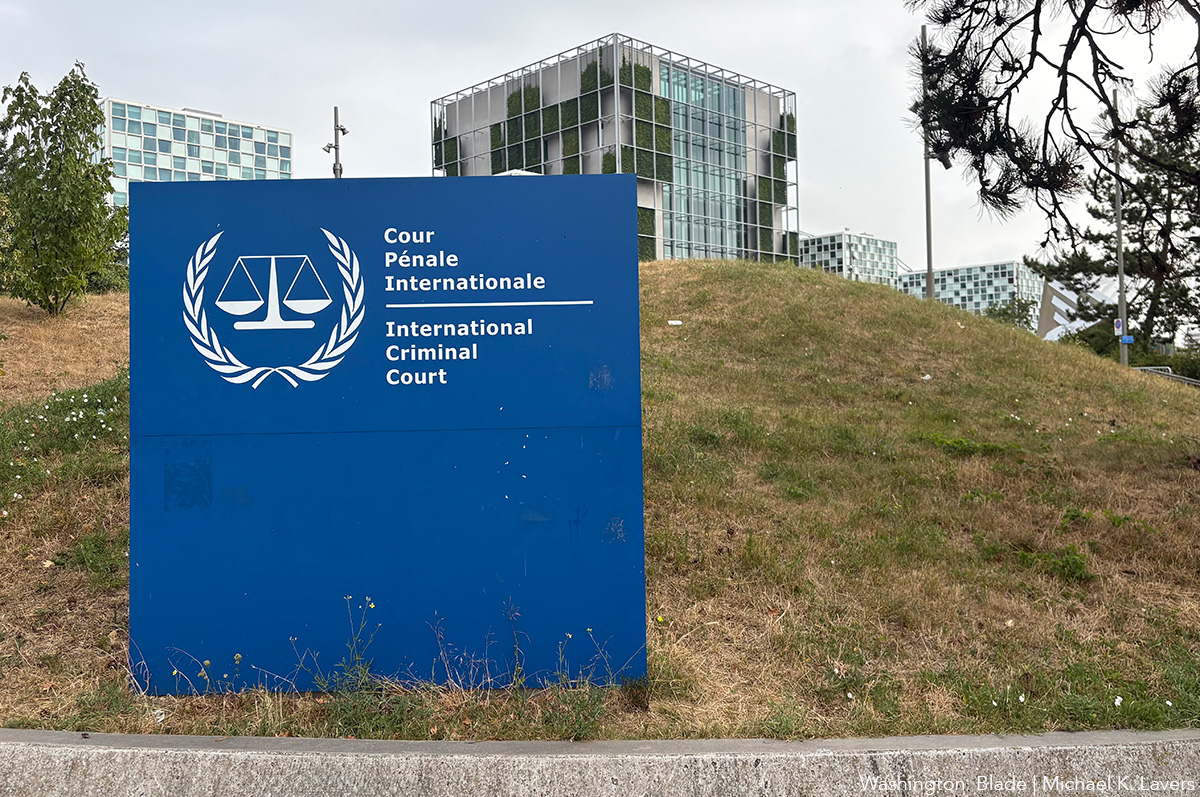
The International Criminal Court this week unsealed arrest warrants for four Taliban officials in Afghanistan accused of targeting LGBTQ+ people, women, and others who defy the group’s strict gender norms.
The warrants the ICC unsealed on Oct. 5 are for Hibatullah Akhundzada, the Taliban’s supreme leader, and Chief Justice Abdul Hakim Haqqani. The ICC also unsealed warrants for Education Minister Habibullah Agda and Higher Education Minister Neda Mohammad Nadim.
The ICC last year announced warrants for Akhundzada and Haqqani, as the Washington Blade previously reported.
“In the warrants of arrest, the (Pre-Trial) Chamber (II), in line with current developments in international law, found that the definition of ‘gender’ in the Rome Statute necessitates an interpretation that goes beyond a purely biological conception of sex,” reads the ICC’s Oct. 5 announcement. “It considered that it requires acknowledging the socially constructed roles, behaviors, expectations, and hierarchies traditionally associated with individuals on the basis of their sex. The Chamber considered that these societal constructs, commonly referred to as ‘gender norms,’ form part of the contextual lens through which acts amounting to gender-based persecution under article 7(1)(h) must be assessed.”
“It found that there are reasonable grounds to believe that the four suspects are criminally responsible for having ordered, induced or solicited the crime against humanity of persecution, under article 7(1)(h) of the Rome Statute, on gender grounds against girls, women, and other persons non-conforming with the Taliban’s policy on gender, gender identity or expression; and on political grounds against persons perceived as ‘allies of girls and women,’” it adds. “These crimes are believed to have been committed on the territory of Afghanistan since the Taliban seized power on Aug. 15, 2021, and have continued until at least Jan. 20, 2025.”
The Rome Statute established the ICC, which is in the Dutch city of The Hague, in 2002 after 60 countries ratified it.
The U.S. is among the countries that do not recognize the ICC. Secretary of State Marco Rubio on Friday announced U.S. sanctions against the ICC, which he described as a “rogue court.”
Then-ICC Chief Prosecutor Karim Khan in January 2025 announced a request for warrants against Taliban officials over their treatment of women and other groups since they regained control of Afghanistan in 2021. It marked the first time the ICC specifically named LGBTQ+ people as victims in a gender persecution case before it.
A report that Outright International released in 2023 notes Taliban officials have systematically targeted LGBTQ+ people — especially gay men and transgender women.
Taliban officials have subjected them to physical and sexual assault as well as arbitrary detention. The Outright International report also notes Taliban authorities have carried out public floggings for alleged same-sex sexual relations, and have collected intelligence on LGBTQ+ activists and community members.
Artemis Akbary, executive director of the Afghanistan LGBTIQ Organization, on Oct. 5 described the additional arrest warrants as “huge.”
“For LGBTIQ+ people, this matters enormously,” he said. “It strengthens the understanding that gender persecution can also capture persecution based on non-conformity with imposed gender roles, identities, and expressions.”
“This is an important development for accountability in Afghanistan, and potentially far beyond it,” added Akbary.
South Carolina
Trump uses anti-trans slur against Democratic Senate candidate
President mocked Annie Andrews
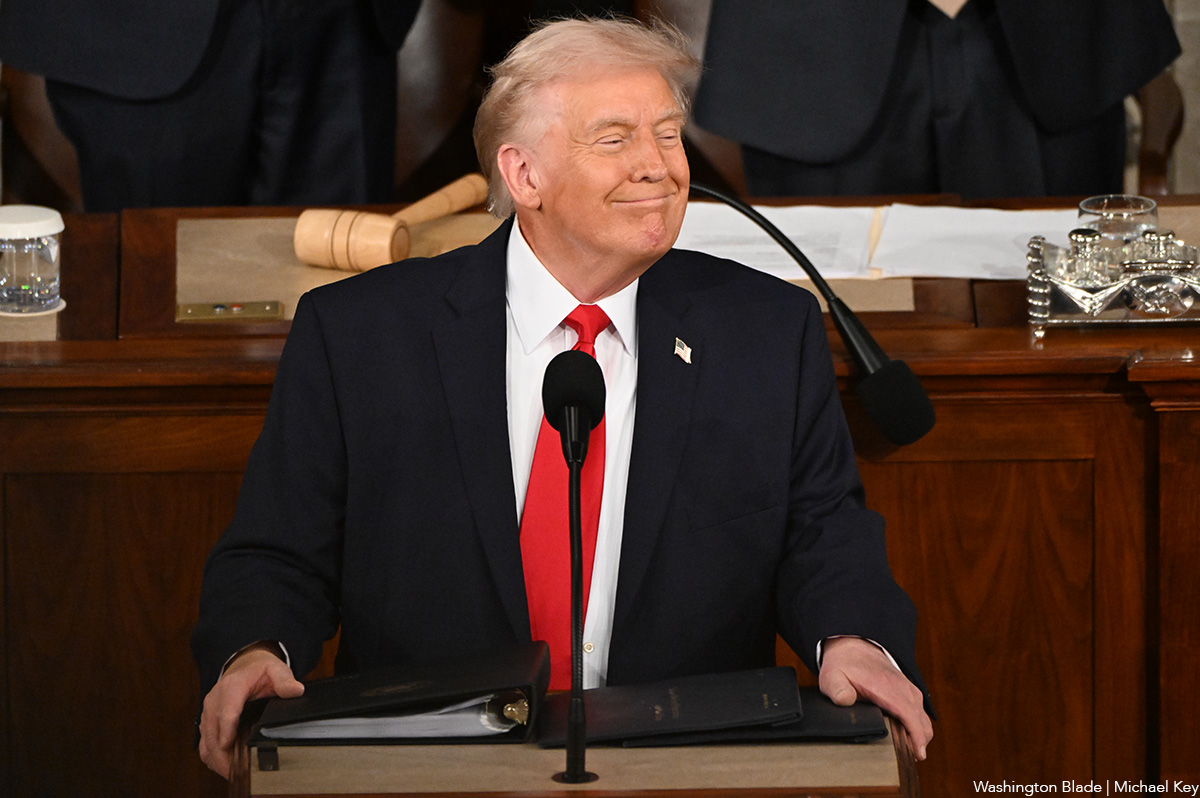
President Donald Trump used an anti-trans slur against Democratic South Carolina Senate candidate Annie Andrews on Monday as he sought to rally support for Republicans in the state’s Senate race.
In a post on Truth Social, Trump attacked Andrews three times, referring to her as “trannie” while promoting U.S. Sen. Darline Graham (R-S.C.)’s campaign.
Andrews is running against Graham for a Senate seat in the solidly Republican state.
Earlier this year, Graham was specially appointed to the seat following the death of her brother, Lindsey Graham, who represented South Carolina in the Senate from 2003 to 2026.
Andrews, the Democratic nominee from the state, is a pediatrician that lives in Charleston with her three children. She told NBC News that she will “work with anyone to put South Carolina first.”
“As a mom and a pediatrician, I’m in this race to fight for my patients, my three kids, and South Carolina,” Andrews said, adding that “lowering costs and making life better for families across our state is going to take all of us working together.”
Andrews used the attention from the president’s attack to emphasize what she described as a focus on policy issues rather than the culture wars that have dominated much of the political debate.
“If you care more about your bills than the politics in Washington, this campaign is for you,” she added.
Trump’s remarks have drawn criticism from leaders on both sides of the aisle.
Senate Minority Leader Chuck Schumer (D-N.Y.) condemned Trump’s words Monday night on social media, calling his attacks on Andrews “despicable.”
“Annie Andrews is a mom and pediatrician who’s always put her community first — and she’s exactly who South Carolina needs representing them in the Senate,” Schumer said on X.
Former South Carolina Gov. David Beasley, a Republican, also criticized the president’s attack on Andrews, urging voters to “reject politics based on division and hate.”
“This is abhorrent. Elections don’t have to be about cruelty and lies. South Carolina deserves better,” Beasley wrote Monday night on X.
South Carolina has not elected a Democratic senator in nearly three decades.
Andrews’s campaign website does not mention her positions on LGBTQ+ issues.
The Los Angeles Blade reached out to Andrews’s campaign for comment on Trump’s attack and her positions on transgender rights but did not hear back by time of publication.
Obituary
Michael Kearns has died six days before his planned return to the Celebration Theatre
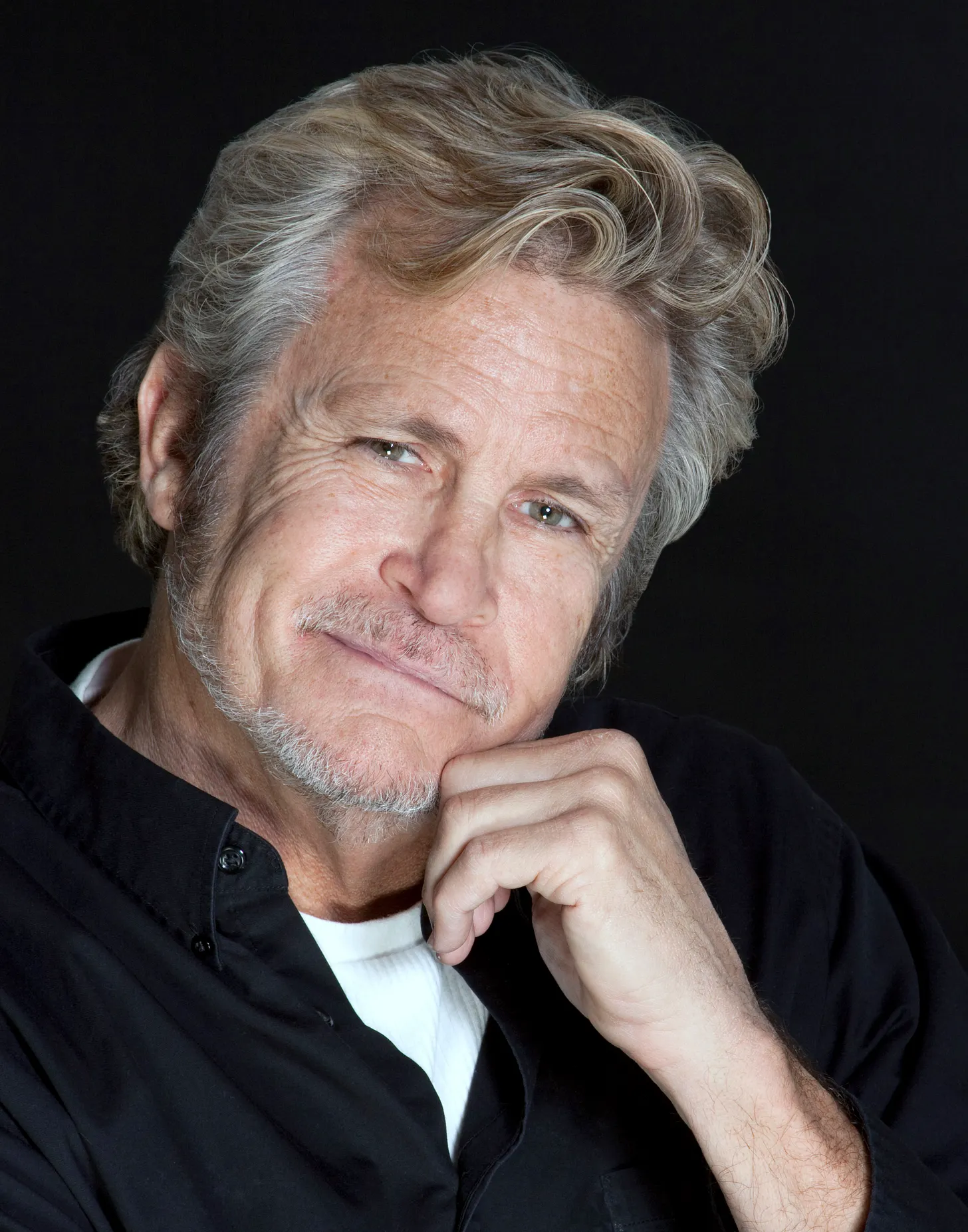
Michael Kearns is one of those friends who, even after a decade of distance, was always just a phone call away.
Michael died on Monday night, Oct. 5. He was 76. No details or cause of death have been released, but apparently Michael had not been in the best of health.
In a condolence note to the LGBTQ+ community on Facebook, Celebration Theatre posted: “At Celebration, Michael is perhaps most remembered for his production of Robert Chesley’s JERKER. In fact, Michael was due to appear this Sunday (National Coming Out Day) in our Circa: Queer Histories Festival event “Art in the Revolution: Queer Theatre in 1982 and Today”—where he was to reprise selections from the play alongside his longtime friend and colleague Joe Gill.”
Today, a stunned gay theatre and AIDS activism world is mourning the loss of the ubiquitous and creative artist who helped so many, literally touched so many, and probably died not knowing how beloved he really was.
I met Michael Kearns in late 1989. I was a new nobody freelancer at Frontiers Magazine, and Michael called because apparently no one was interested in this new play he’d written. Someone warned me that it was probably all about gay sex and I might not like it. But it was also about AIDS, and that had become my life since 1984. So, I went to his show. Intimacies changed my life.
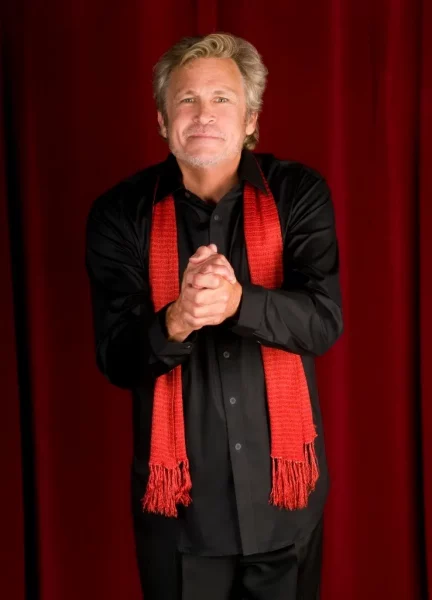
I don’t remember the location or what happened before or after. What I remember is watching Michael Kearns standing onstage, twirling this red scarf like a magical matador ushering us into his world of six characters as Darien Martus’ score quietly seeped into my bloodstream. These were not people from my world – and yet, their poverty of the soul, their angry loneliness, their reality-shy desperation for love and recognition felt like my world, too, even though I professed to myself that I was none of these things. And, given my pre-sobriety shenanigans, I was gratefully HIV-negative.
I went backstage and confessed I was too mesmerized to talk then. So we met for lunch at the French Market Place in West Hollywood and laughed and swooned with sudden enlightenment and shared story after story for hours. We were both born in January, 16 days apart – he was older. We were both in a 12 Step program. He liked to gossip; I was an old-school journalist. We really fell for each other through our mutual commitment to do what we could to fight AIDS.
Michael confessed that he wasn’t really the Happy Hustler, though he played one in real life – and I had no idea what the hell he was talking about. I knew people in AA and people with AIDS had their own language, but as someone who came out late, I had no idea what gay and lesbian-speak was.
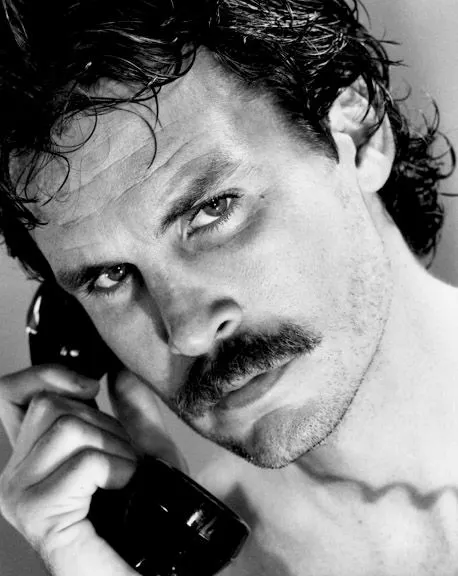
I confess that even though I’d heard enough gay sex stories through AA 9th Steps, I blushed as he explained Jerker and Dream Man – which Mark S. King says is really based on him and interviews he gave Michael’s theatrical partner, playwright James Carroll Pickett.
That’s when things got intensely intellectual and nuanced, as in Queen of Angels, which was luckily staged at Highways Performance Space – headed up by the brilliant and lovely Tim Miller – where I could go outside and catch my breath trying to figure out the Hero’s Journey.
But as extraordinary as Michael’s writing was and as riveted as I was by his acting – I still have the T-shirt featuring his performance in Charles Ludlam‘s Camille at Highways – I was a political reporter, so I had to find ways to cover him for his activism, as well as his art. Cue Artists Confronting AIDS, which Michael co-founded with Jim Pickett.
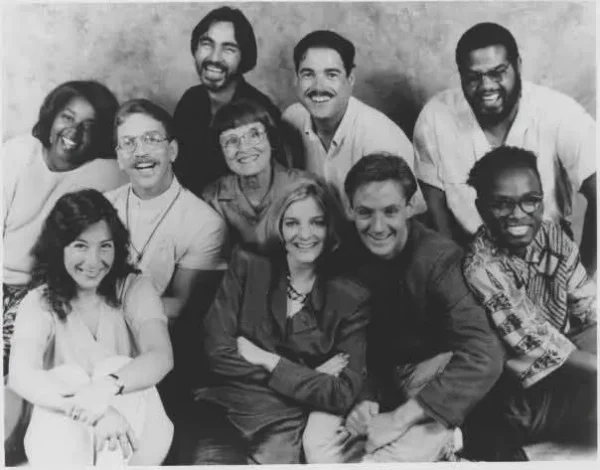
“The initial concept of AIDS/US was truly shocking: putting people who had the disease, many of whom were not well, on stage—live—to tell their stories. There were audience members who feared catching the disease from the performers,” Michael said.
Michael became a major source for journalists when explosive stories hit the news – like the death of actor Brad Davis. The 41-year-old star of the film Midnight Express died of AIDS on Sept. 8, 1991. He kept his health conditions secret for six years so he could continue to work and support his wife and child.
Two days after his death, his widow, casting director Susan Bluestein, gave the Los Angeles Times Davis’ book proposal about his struggle to work in Hollywood while secretly having AIDS. The proposal turned into an open letter charging the industry with hypocrisy, homophobia, and AIDSphobia.
Michael felt the crisis would be cathartic, serving as a “real turning point” that could yield jobs. And it served as an opportunity for him to come out as being HIV/positive.
On Sept. 16, Michael told NBC correspondent Faith Daniels that he was HIV positive.
“I felt that not one more HIV-infected actor or anyone else should die in shame,” Michael told me for an article in the Sept. 19, 1991 issue of the Bay Area Reporter. “I’m doing this for all people with HIV. HIV is nothing to be ashamed of. For me to remain silent indicates shame or fear on some level. Taking my cue from Brad Davis, I couldn’t remain silent.”
He added: “This is really revolutionary what’s going on. There’s no way I can’t be a part of it.”
And he was. “There seems to be this expectation that Hollywood should be more evolved than the rest of the world. But Hollywood is less evolved. They focus on the lowest common denominator, particularly in television, which assumes the viewer is homophobic, racist, sexist, and stupid.”
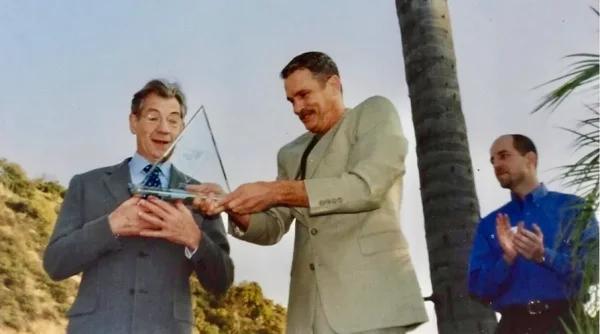
Michael blamed “the relative invisibility of gay themes in Hollywood’s film and TV product, as well as the lack of openly gay actors, let alone openly HIV-positive ones–on ‘self-hatred’ by gays in the industry who are ‘closeted,’” The Times reported.
Michael eventually came out about his 1983 unprotected sexual encounter with actor Rock Hudson, which he was certain resulted in him contracting HIV/AIDS. And, of course, that resulted in another play about homophobia and art.
“Rock was a classic victim,” Michael, tagged as “the only openly gay actor in Hollywood,” told the LA Times in 1992. “He was a victim of this town, of alcohol, of his looks, of the system, of his own publicity. In many ways he was the opposite of me.”
Michael also noted how little had changed after Brad Davis’ AIDS death. “I felt a deep kinship with Brad,” he said of disclosing his own HIV status. “Then the media comes to me, and I’m saying the same things I said six years ago with Rock. Nothing’s changed. There’s been fund-raising and consciousness-raising by heterosexual female stars, but the more subtle, insidious fear has increased.”
Being HIV positive, Michael said in 1992, before the miracle drugs, “makes me prioritize things. And I’ve never been low on the passion scale. Has it made me more passionate to know that my days may be numbered, that there may not be many more opening nights? Of course! So, yes, part of it is good. It’s no different than anyone who has an incredible obstacle and makes something beautiful out of it.”
But Hollywood is still “a scalding cauldron of collusion,” Michael told me.
“What’s troubling is that a number of Hollywood powerbrokers treat homosexuality as a ‘sin’ or ‘immoral’ or an ‘abnormality’ that somehow is to be hidden; they categorize it as a career killer which could result in a loss of box office billing or revenue,” he said. “But they have skin in the game (usually financial), so they collude. They lie, betray, falsify; they are the immoral ones.”
When actor Kevin Spacey was “trolling the halls at Burke Williams, camouflaging himself by putting the hood of his bathrobe up over his head, he was not exactly embracing his gayness,” Michael said. “And when he got in the massage room, alone with the masseur, Spacey insisted on positioning himself for something other than a ‘legit massage.’ Is that harassment? It occurred enough times, according to my very reliable source, that he was thrown out of the West Hollywood location and relegated to Santa Monica (where there were more issues reported). Even in this case, Spacey was being protected by moving him rather than really confronting this issue. Collusion.”
There’s so much more to consider about Michael Kearns – like his love for Philip Juwig. I attended their casual wedding and went to Sherman Oaks Medical Center with Michael before Philip died in 1992.
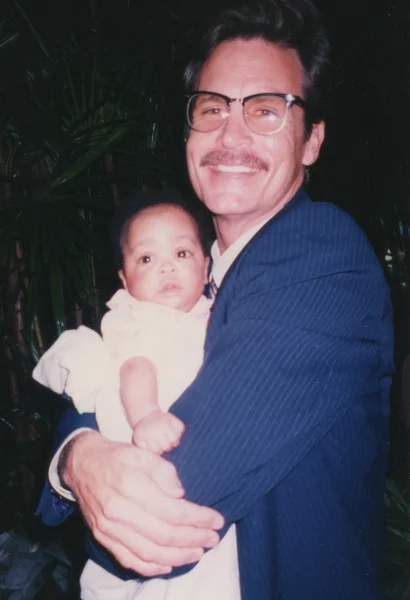
And I talked with him a lot about his desire to be a father. A lot of his friends, including me, thought it would be virtually impossible for a single, gay, HIV positive man to be “allowed” to adopt. But he did. And he was so happy with his little baby Tia that he brought her to Paul Monette’s memorial at the Directors Guild to show her off. It was close to a spiritual full-circle moment.
Over the years, I became a news editor and had my own blog – LGBT POV – and always tried to make space for Michael’s contributions. One about his daughter Tia – who renamed herself Katherine – is the essay “Bloodless but not Loveless,” which is part of a larger collection entitled What I Would Tell Her: 28 Devoted Dads on Bringing Up, Holding On To, and Letting Go of Their Daughters, edited by Andrea N. Richesin.
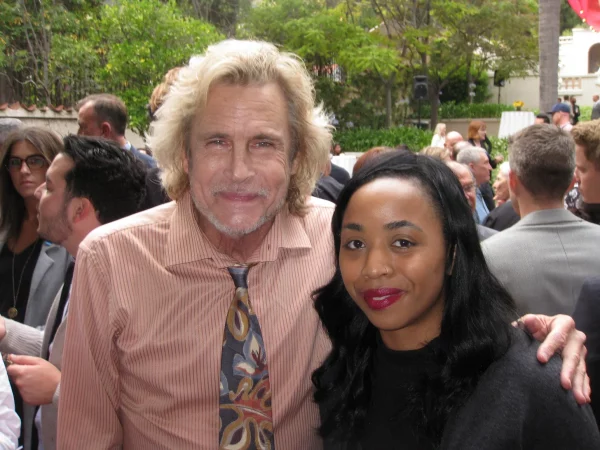
“You are my family,” Tia/Katherine says. She reminds me of the many individuals—gay, straight, young, old, black, white, rich, poor—who have helped me raise her since she and I embarked on this journey together.”
This is what I’ll remember: for Michael Kearns, it’s always been about love. And a good laugh.
This is a cross-post from Karen’s LGBTQ+ Freedom Fighters Substack.
California
‘A disgusting attempt to exploit lesbian intimacy for political attention’: suggestive Steve Hilton ad draws criticism
Steve Hilton’s newest ad aimed at liberal voters flops with LGBTQ advocates and conservatives, but for different reasons

Two women sit on a bed, a Pride flag hanging behind them. One is nervous; the other tells her to be calm and that she’ll do “all the work.” The music swells. The two hold hands and — fill out a ballot voting for Steve Hilton?
This is the new advertisement from the Hilton Gubernatorial campaign that is drawing rebuke from both sides of the aisle, but for very different reasons.
Jorge Reyes Salinas, the communications director at Equality California, said the ad was an insult to the queer community. “This ad is a disgusting attempt to exploit lesbian intimacy for political attention,” he said. The advertisement plays on media tropes that Salinas says “reduce lesbian and bisexual women… to sexual entertainment,” rather than showing them as well-rounded characters. “Any group of the LGBTQ+ community deserves the same dignity and respect as everyone else,” he said.
The ad is truly hyper-sexualized. It ends with one woman telling the other, “Now lick it.” The two pause and stare before she reveals an envelope to send the ballot, and large text pops up saying, “Just try it!”
Salinas characterized the ad as a desperate attempt to get attention from a candidate who is trailing far behind in the polls in heavily Democratic California. The Democratic Candidate Xavier Becerra, who is endorsed by Equality California, holds a 25-point lead over Hilton according to recent polling by the UC Berkeley Institute of Governmental Studies.
Conservatives have also criticized the ad. Influential evangelical Pastor Jack Hibbs thought the ad was distasteful and said, “lesbianism among college girls and some high school girls that right now is an actual pandemic of social ill.” Republican AG candidate Michael Gates said it undermines “the sanctity of the relationship between parents and their children.” This criticism is rather confusing because although the ad features two relatively young women, they both appear to be adults, not minors.
“The comments from Pastor Jack Hibbs should be criticized because there is nothing wrong with two women being attracted to each other,” Salinas said. “We’re calling out the ad’s stereotypes, while also rejecting the homophobia in the response to it … by other Republicans.”
The backlash from Hilton’s own party and supporters shows that an advertisement full of queer innuendo was ill-considered, considering the national GOP’s attacks on LGBTQ people in recent years. Hilton himself has been campaigning against transgender girls and women competing in school sports and using locker rooms that correspond with their gender identity. This context might be why Hilton’s political base responded to the ad just as poorly as the liberal voters he was attempting to court.
Hilton says the ad is part of a new series rolling out before Election Day, showing stereotypical California liberal archetypes voting for Hilton. He claims these ads are authentically filmed with real actors, as opposed to being A.I. generated, like many of his previous ads. One other advertisement has been released so far by the campaign showing a man at a spiritual retreat also being swayed to vote for Hilton, although it is notably absent of sexual innuendo.
Caleb Kaufman is a California Local News Fellow placed with the Los Angeles Blade. The California Local News Fellowship is a state-funded initiative to support and strengthen local news reporting. Learn more about it at fellowships.journalism.berkeley.edu/cafellows.
Federal Government
Bessent says Trump chose him for his qualifications, not his sexuality
Treasury secretary spoke with Axios

Treasury Secretary Scott Bessent participated in an interview in which he said his sexuality had no impact on the president’s selection of him.
On Sunday, Axios co-founder Mike Allen interviewed Secretary Bessent, the 79th person to lead the Treasury Department, in the “Cash Room” in the Treasury building. The two talked for more than 40 minutes about issues related to the current administration’s efforts for Axios’s YouTube channel.
Bessent has been something of an anomaly during this administration, breaking what many consider the “gay glass ceiling.” He is the first openly gay person to lead the U.S. Treasury Department, the first openly gay Senate-confirmed Cabinet member in a Republican administration, and the highest-ranking LGBTQ+ government official in U.S. history.
The two covered various ground — about the state of the U.S. economy, the various AI approaches by the Trump-Vance administration, and the war in Iran. All things that have made President Donald Trump’s constant appraisal of the U.S. economy difficult to sell to the American people as the affordability crisis has worsened.
Toward the end of the interview, Allen asked Bessent about deciding not to attend the U.S. Naval Academy, knowing his sexuality would be a hindrance, and instead attending Yale University. Allen asked if his choice to attend the Ivy League school held him back in life.
“I don’t think it did at all, and it’s very difficult to talk about the counterfactual … but I don’t think going to Yale held me back,” Bessent said. “Maybe some people at other schools would think it might. But I think it makes you aware, and I’ve openly spoken about it before, too. I think maybe some of my career choices were influenced by it.”
The U.S. Naval Academy only began allowing openly LGBTQ+ students to apply — and be open about their sexuality — following the 2011 repeal of “Don’t Ask, Don’t Tell.” Prior to the policy’s removal, students could be removed from the school for violating the rules, including rules related to their sexuality.
“You said President Trump chose me because he believes I’m the best candidate, not because of my sexual preference or your green eyes … ,” Allen said.
“Exactly,” Bessent replied. “And I think that’s one of the reasons we have such a great team. The president makes his decisions all the time. You know, he’ll occasionally tell me, ‘You’re breaking my friends’ hearts.’ They see you on TV and they want an intro, and we have to break the news to them.”
Bessent has been married to former New York prosecutor John Freeman since 2011, and they have lived together in South Carolina. There, they had two children through surrogacy.
Despite being a member of the LGBTQ+ community, Bessent has publicly supported Trump’s policies, including some that have drawn criticism from LGBTQ+ advocates and organizations. These include reductions to PEPFAR funding, policies removing transgender service members from the military, recognizing only two sexes, removing LGBTQ+ protections from Title IX, and other policies that LGBTQ+ advocates argue come at the cost of LGBTQ+ safety and protections.
The Los Angeles Blade has reached out to the Treasury Department and Secretary Bessent’s team for comment and responses to these questions, including questions about how he views his identity and sexuality in relation to — and potentially at odds with — the policies and mission of the current administration. The Blade did not receive a response by publication time.
AIDS and HIV
AIDS Walk Los Angeles set for 42nd year amid growing challenges
APLA Health CEO Craig E. Thompson talks with the Blade about how the fight against HIV/AIDS continues

The 42nd annual AIDS Walk Los Angeles will take place on Sunday, October 18th at West Hollywood Park. Participants are set to march a two-mile loop around West Hollywood and hear speeches from organizers and HIV/AIDS advocates.
The Los Angeles Blade spoke with Craig E. Thompson, CEO of APLA Health, the event’s organizer, about the continued importance of the fundraising event and the challenges facing AIDS research, healthcare, and advocacy.
“The idea that HIV is over is the most dangerous myth out there,” Thompson said in a written statement. According to Thompson, increased options for HIV treatment and prevention have created a public perception that AIDS is no longer a pressing issue and have led to a decrease in participation and fundraising at AIDS Walk LA. “HIV fundraisers across the country are seeing this decline,” he said.
But recent federal cuts and policy changes have created new obstacles to ending the HIV and AIDS epidemic. Congress has proposed cuts that would strip away nearly one billion dollars in HIV funding, mainly impacting prevention and outreach. And earlier this year, the Trump-Vance administration ended nearly 100 community organizations’ HIV-prevention grants, opting instead to direct the money to state and local health departments.
These funding cuts have been felt by APLA Health, which last year was one of the California HIV prevention groups impacted by a 20 million dollar funding freeze. The freeze was eventually overturned, but Thompson still fears future cuts from the federal administration. “Over the past year we took cuts to our food pantry program, PrEP navigation, housing, and more,” he said. “Thanks to relentless advocacy and partners at the state and county who stepped up, much of that funding has been restored,” adding, “but restored is not the same as safe.”
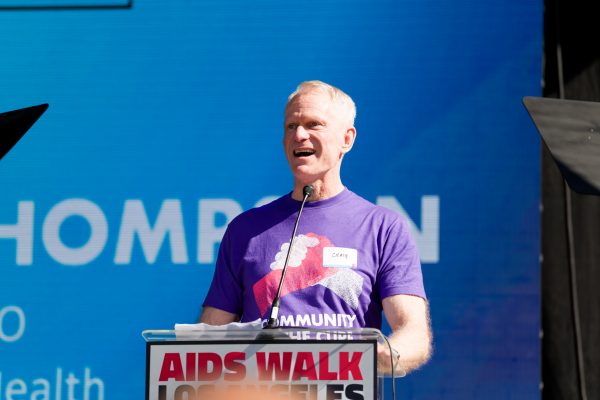
Craig E. Thompson speaks at AIDS Walk Los Angeles 2025. (Photo courtesy of Craig Allyn)
Thompson fears that continued divestment from HIV healthcare and prevention could harm vulnerable communities. “The burden once again lands on the shoulders of those with the least power and the least access to care,” he said. “New infections fall hardest on people of color, transgender women, and those in low-income communities. Every one of those diagnoses could have been prevented.”
Non-HIV-specific federal policies also pose harm to APLA Health’s clients, the biggest of which is cuts and decreased eligibility for Medi-Cal, the state’s Medicaid program. “Medi-Cal is how a huge share of our patients get care, and the federal cuts will hit hard,” Thompson said. “California is covering much of the cost through next summer, … but a patch is not a plan,” he added. And a new policy starting in 2027 will mean that some Medi-Cal recipients will soon have to recertify their coverage twice a year instead of once. “That’s a mountain of paperwork,” Thompson said. “It’s a way of quietly cutting people off without having to say it out loud.”
Despite these current challenges, Thompson sees this year’s AIDS Walk LA as an effective way to help those living with HIV and AIDS at a time when they need support the most. “Funds raised by AIDS Walk LA stay in Los Angeles County and pay for wraparound HIV care and prevention,” he said. This includes funding medical care, PrEP prevention, housing, food pantries, and more. “These programs form the safety net that keeps our community healthy, and the Walk helps hold it together,” Thompson said. Last year, the walk raised over a million dollars for APLA Health to fund its services.
“Fighting back works.” Thompson said. “Come angry, come joyful, come exactly as you are. We’ll celebrate our progress and turn that energy into action. Then [we’ll] carry it to the polls 16 days later.”
Registration for the walk is still open.
Caleb Kaufman is a California Local News Fellow placed with the Los Angeles Blade. The California Local News Fellowship is a state-funded initiative to support and strengthen local news reporting. Learn more about it at fellowships.journalism.berkeley.edu/cafellows.
Central America
Alianza para la Inclusión fortalece la defensa de derechos LGBTQ+ en Centroamérica
Se implementa el proyecto en Guatemala, El Salvador y Honduras
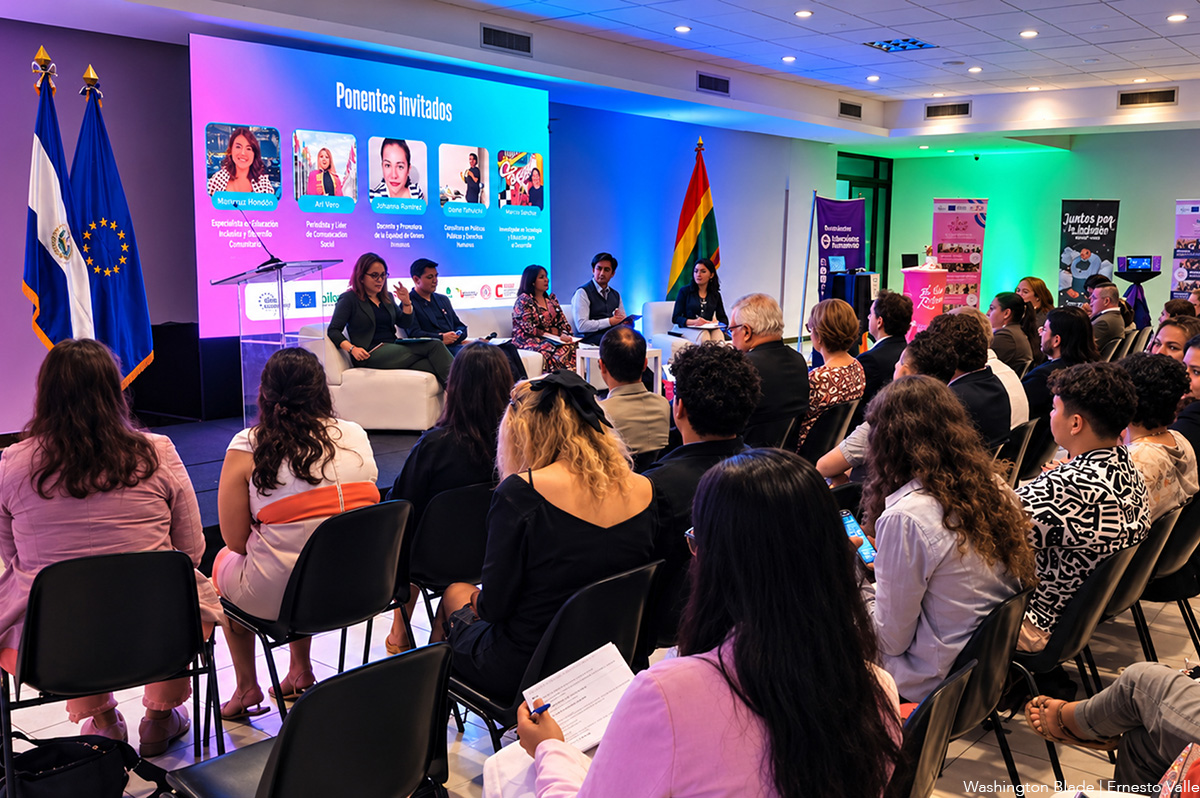
Promover, proteger y defender los derechos humanos de las personas LGBTQ+ en Centroamérica es el propósito del proyecto “Alianza para la Inclusión: hacia la promoción de derechos LGBTIQ+ en Centroamérica”, una iniciativa subvencionada por la Unión Europea, Global Gateway, Oikos Cooperação e Desenvolvimento y Camões — Instituto da Cooperação e da Língua, que articula esfuerzos en Guatemala, El Salvador y Honduras.
El proyecto, cuya implementación se desarrolla entre 2025 y 2028, busca fortalecer a organizaciones, liderazgos comunitarios y redes regionales frente a contextos marcados por la discriminación, la violencia y la reducción del espacio cívico.
A través de procesos de formación, atención integral, protección, fortalecimiento organizativo, incidencia y articulación regional, la iniciativa procura generar condiciones más seguras y dignas para que las personas LGBTQ+ puedan ejercer plenamente sus derechos.
Formación y fortalecimiento de liderazgos
Durante los primeros 18 meses de ejecución, el proyecto ha desarrollado acciones de formación y acompañamiento, otorgado subvenciones a colectivos comunitarios, impulsado estrategias de seguridad integral y respaldado procesos regionales de articulación e incidencia.
Uno de los resultados reportados es la participación de 489 personas LGBTQ+ de Guatemala, El Salvador y Honduras en procesos formativos relacionados con la desnaturalización de la violencia, organización e incidencia. Asimismo, 41 personas líderes LGBTQ+ de El Salvador y Guatemala fortalecieron sus capacidades para la formulación de proyectos.
Para Pedro Campos, coordinador de Oikos — Cooperação e Desenvolvimento en El Salvador, estos procesos tienen una dimensión que trasciende lo técnico.
“Desde hoy estamos cada día más convencidas y convencidos de que la gestión de proyectos más que técnica o administrativa es esencialmente humana. Nunca debemos olvidar que la persona en toda su diversidad es el centro de nuestro quehacer. Y si un día la empatía y el amor nos abandonan, habremos perdido la esencia de nuestro trabajo”.
La formación también ha significado una oportunidad para fortalecer liderazgos comunitarios. Josh Hernández, persona no binaria y codirectore de Espacios Seguros El Salvador, destaca el impacto que tuvo su participación.
“Esta experiencia me ha fortalecido como activista y como parte de una organización comunitaria, y me ha permitido ampliar mi visión y soñar con nuevas actividades que contribuyan a construir una cultura de paz en nuestra sociedad salvadoreña”, comenta Hernández.
Atención integral para personas LGBTQ+ en situación de vulnerabilidad
En El Salvador, uno de los componentes del proyecto se ha enfocado en brindar atención integral a personas que enfrentan situaciones de violencia, discriminación o vulnerabilidad.
A través de COMCAVIS TRANS, el proyecto permitió atender a 128 personas, mediante servicios psicosociales, legales y de resguardo temporal en su albergue.
La atención incluyó orientación para activar mecanismos de denuncia y medidas de protección, además de contención emocional, manejo de crisis y acompañamiento para la estabilización de condiciones básicas.
La experiencia también se ha extendido a Honduras. Loren López, directora ejecutiva de la Asociación de Mujeres Lesbianas y Bisexuales LITOS, resaltó el valor de generar espacios seguros para mujeres lesbianas, bisexuales y personas LTBQ (lesbianas, trans, bisexuales y queer).
“Me quedo con la satisfacción de haber contribuido a crear espacios donde una mujer LTBQ+ pueda sentirse segura, escuchada y reconocida, sin tener que esconder quién es. Esta experiencia fortaleció a LITOS y nos dejó nuevas herramientas y posibilidades para seguir trabajando por los derechos y la eliminación de la discriminación”, agrega López.
La seguridad integral como herramienta de protección
En contextos donde quienes defienden derechos pueden enfrentar diferentes tipos de riesgos, el proyecto ha incorporado la seguridad integral como un componente fundamental.
Durante 2026, 140 personas LGBTQ+ pertenecientes a seis organizaciones participaron en procesos de formación sobre seguridad integral, abordando dimensiones físicas, digitales y emocionales.
Como resultado, seis organizaciones elaboraron y consolidaron sus propios planes de seguridad integral, incorporando medidas de prevención y respuesta ante riesgos físicos y digitales, con especial énfasis en la protección de información sensible, el uso seguro de plataformas digitales y la gestión de incidentes en entornos virtuales.
Incidencia para transformar políticas y garantizar derechos
La iniciativa también ha acompañado procesos de incidencia y litigio estratégico en Guatemala.
La Asociación LAMBDA, junto con la Comisión Presidencial por la Paz y los Derechos Humanos (COPADEH), acompañó una consulta nacional con personas LGBTQ+ para contribuir a la elaboración de una Estrategia Nacional para las personas LGBTQ+, cuyo proceso se encontraba en elaboración y cuya aprobación se esperaba para finales de 2026.
Asimismo, en julio de 2026 fue presentada ante la Corte Constitucional de Guatemala una acción de inconstitucionalidad como parte de una estrategia nacional de litigio estratégico orientada a la aprobación del matrimonio igualitario. Al cierre de la actualización de resultados de este año, el proceso permanecía pendiente de resolución.
El acompañamiento jurídico también ha permitido apoyar procesos individuales relacionados con el reconocimiento de la identidad.
Uno de estos casos es el de Paula Escobar, mujer trans guatemalteca acompañada por LAMBDA en el proceso de cambio de nombre en sus documentos de identidad.
“Ha sido el paso más grande de mi vida, pues me libró de momentos incómodos y de dar explicaciones para ser reconocida como la mujer que soy”.
De acuerdo con el testimonio, la organización se encargó de la gestión legal y aproximadamente seis meses después obtuvo una respuesta favorable.
Redes regionales para ampliar el alcance de la defensa de derechos
La articulación regional constituye otro de los componentes del proyecto. La iniciativa ha apoyado a redes latinoamericanas que buscan fortalecer y posicionar el trabajo de organizaciones LGBTQ+.
Entre ellas se encuentra la Alianza Centroamericana y del Caribe de Hombres Trans, que articula organizaciones y personas transmasculinas de Guatemala, El Salvador, Honduras, Costa Rica y Panamá.
Durante su primer año, ALICAHT desarrolló su Plan Estratégico y Reglamento Interno 2025-2030, además de su identidad gráfica y sitio web.
Otro proceso regional respaldado fue el III Congreso Regional de CORPORA en Libertad, realizado en Guatemala en diciembre de 2025. El encuentro reunió esfuerzos orientados a fortalecer la defensa, promoción y garantía de los derechos humanos de las personas LGBTQ+ privadas y exprivadas de libertad en América Latina y el Caribe.
El espacio permitió fortalecer la articulación regional y compartir experiencias y estrategias frente a los desafíos que enfrentan las personas LGBTQ+ dentro y fuera de los sistemas penitenciarios.
Ari Vera, fundadora de CORPORA, ha destacado la importancia del trabajo en red como una herramienta para generar transformaciones y fortalecer las capacidades colectivas.
Inclusión más allá de las palabras
Durante el Foro “El Impacto de Incluir”, uno de los planteamientos centrales fue que la inclusión requiere transformaciones concretas y no únicamente el uso de conceptos o siglas.
Jason García, técnico PMA de Monitoreo, Evaluación y Aprendizaje para Oikos El Salvador, señaló una de las barreras que persisten en los proyectos. “Una de las barreras en los proyectos es que son binarios y no se reconocen las otras identidades”.
Desde esta perspectiva, un proyecto inclusivo no se limita a utilizar la palabra inclusión o incorporar las siglas LGBTQ+, sino que requiere revisar prácticas, metodologías, mecanismos de participación y formas de reconocer la diversidad.
Como parte de este proceso también se preparó una guía práctica que sistematiza instrumentos y mecanismos del Sistema Internacional de Derechos Humanos, destacando su importancia histórica en la ampliación y protección de derechos.
La compilación fue presentada en la X Conferencia de la Red ILGA LAC y en el 18º Encuentro de la Red Centroamericana de Intercambio Académico en Derechos Internacionales, realizado en la Universidad de El Salvador.
Cooperación centrada en las personas
Los resultados alcanzados durante los primeros 18 meses reflejan una estrategia que combina formación, atención directa, protección, fortalecimiento institucional, incidencia y construcción de redes.
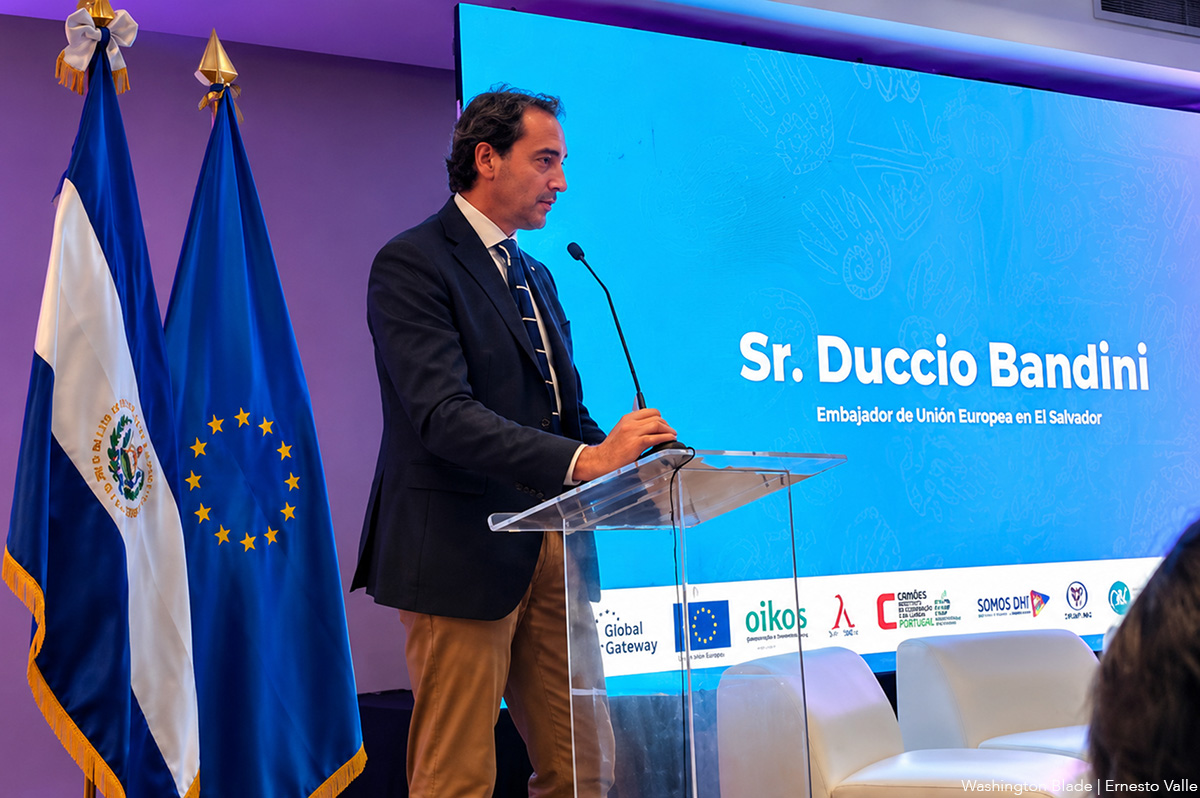
Para la Unión Europea, colocar a las personas en el centro constituye un elemento fundamental de la cooperación. Duccio Bandini, embajador de la Unión Europea en El Salvador, expresó “Desde la Unión Europea seguiremos apostando para una cooperación que pone en el centro a las personas. Porque el verdadero impacto de influir se mide en vidas transformadas, en derechos conquistados y en sociedades que celebran con orgullo su diversidad”.
Con una implementación prevista hasta 2028, la Alianza para la Inclusión continúa articulando organizaciones nacionales y redes latinoamericanas para fortalecer capacidades y generar herramientas que permitan a las personas y organizaciones LGBTQ+ enfrentar los desafíos de sus contextos y avanzar en la promoción, protección y defensa de los derechos humanos.
Más allá de las cifras y los productos alcanzados, el proyecto coloca en el centro una premisa: la inclusión se construye cuando las personas pueden participar, organizarse, defender sus derechos y vivir su identidad con dignidad y seguridad.
Georgia
In Ga., 2 trans candidates believe voters are ready for them
Bentley Hudgins, Bella Bautista running for state House of Representatives
Uncloseted Media published this story on Oct. 6.
This story was reported in partnership with The 19th, a nonprofit newsroom reporting on gender, politics and policy.
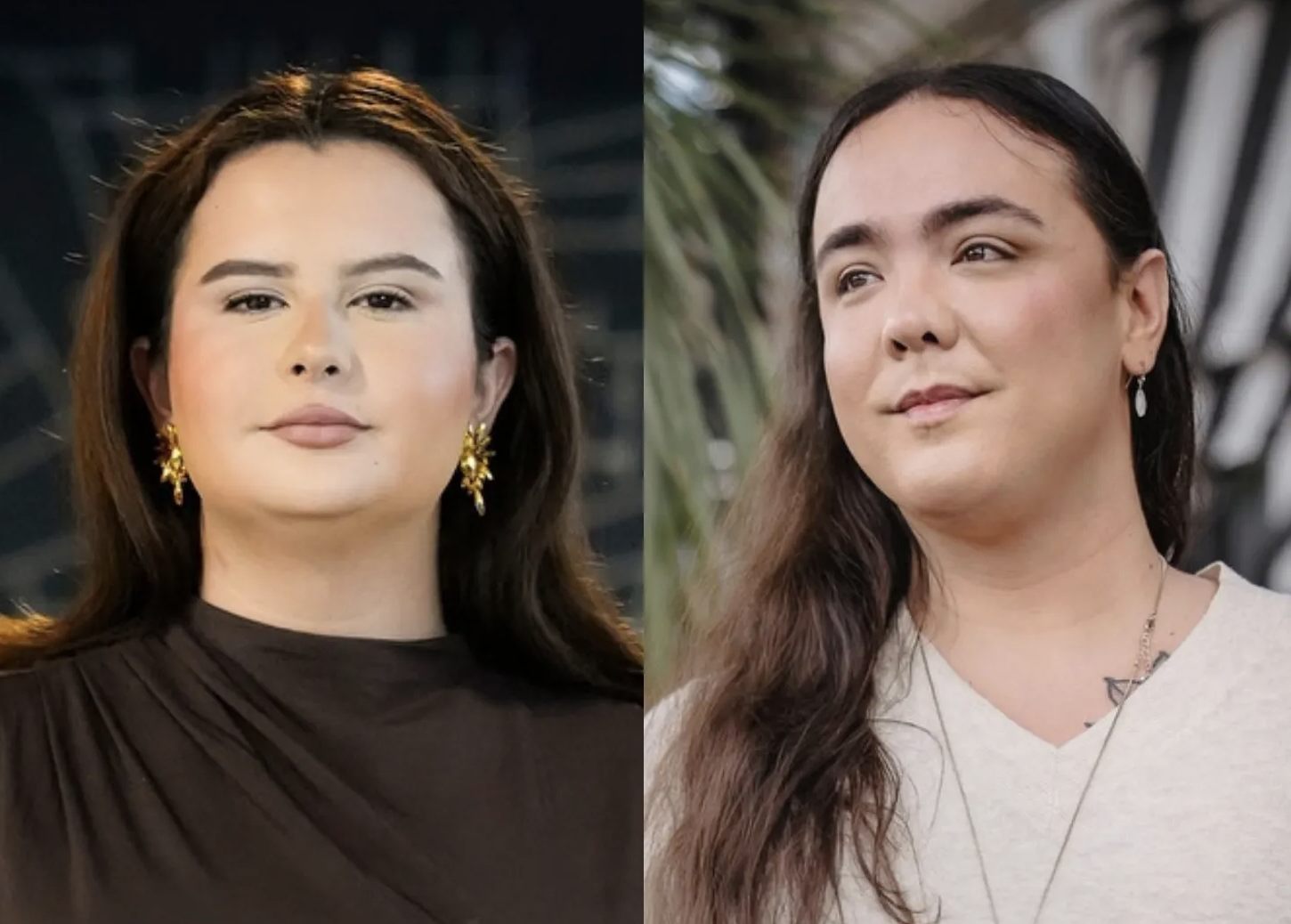
By ORION RUMMLER | Bentley Hudgins is a 33-year-old democratic socialist who spent the past three years advocating for LGBTQ+ rights in the Georgia statehouse.
Bella Bautista is 10 years younger, the first transgender woman to win a legislative primary in Georgia and head of a nonprofit distributing supplies to at-risk young adults.
Both are running for a spot in the Georgia House of Representatives, part of a cohort of Democrats who hope to shrink or end Republicans’ hold on the chamber. Both would make history as the first trans members of the body. Neither wants to discuss identity politics or pronouns — they want to talk about data centers, the price of groceries and healthcare.
But their districts are very different: Hudgins is running in a liberal stronghold in Atlanta with no serious Republican opposition and is all but certain to win in November. Bautista’s district is rural and deeply conservative; it hasn’t elected a Democratic state representative since 1996, and she’s the first to run for this seat since 2010. But Hudgins’s and Bautista’s bets are the same: Voters are looking for someone to fight for them. In Hudgins and Bautista’s view, something in the country is broken and no one else will fix it. So they stepped up.
“People around here just hate the government, and that’s why I’m running,” Bautista told Uncloseted Media and The 19th. “People have lost faith in the system as a whole.”
Hudgins’ mind is on the big picture: getting as many Democrats, especially progressives, in the statehouse as possible. Without that, they believe the future — especially for LGBTQ+ people and immigrants — isn’t certain.
“At the end of the day, we have to have the numbers,” Hudgins told Uncloseted Media and The 19th.
A deep red district in rural Ga.
In the hourlong drive from Atlanta to Cartersville, where Bautista grew up, suburbs fade away and the land expands into RV lots, farms, and houses on the edge of the woods. Bautista launched her campaign in this small town, at Noble & Main Coffee Co., across the street from a butcher shop that offers deer processing.
“It’s one of those hidden gems,” she says. “They’re friendly toward Democrats.”
It’s also not in the statehouse district she wants to represent. She’s running for office in the more rural side of the county, an area that’s about 80 percent white, mostly older and mostly conservative. And it’s been a challenge. Most people here vote Republican. Her opponent, the GOP incumbent Mitchell Scoggins, has not run against anyone since he first won a special election in 2018.
Lack of change is what spurred Bautista to run. And it’s not just Scoggins sailing unopposed to reelection every two years. Bartow County is one of a small handful of counties in Georgia with only one commissioner, who single-handedly decides the fate of everything from data center construction to new roads. The current commissioner has held the position for 14 years.
The issues facing her hometown can’t be left to one man, Bautista says. She wants to pass legislation for locals to vote on a board of commissioners, regulate Flock cameras, shield locals from data center pollution, conserve farmland and expand rural mental healthcare. She thinks these stances will appeal to voters who may otherwise vote Republican. But it’s still an uphill battle — and a lonely one.
“This is not a story about pride. It’s not a story about visibility,” she says. “It’s a story about challenges, difficulty. I don’t want to be the fucking first to do it, but I have no choice but to be the first.”
But Bautista says she’s struggling. This campaign has cost her privacy and peace, which doesn’t impact just her: She lives in her family home as the primary caretaker for her mom.
In May, during the primaries, someone came to her house twice, she says: once to put up a sign supporting President Donald Trump next to her own campaign sign in the front yard, and later to take down her sign.
“I literally live in the middle of nowhere,” she says. “That sent chills down my back, because I’m like, OK, that means someone physically went to my home, got out of their car, went up the hill, put up a Trump sign.”
Her neighbors, who she’s known her whole life and are Trump voters, assured her that they weren’t involved. But that fear hasn’t left her. Since then, more signs have gone missing: A few weeks after we met, hundreds of her campaign signs were taken down across the district. Those cost money to replace — money the campaign doesn’t have.
As a trans Latina, she belongs in Bartow County just as much as anyone else, she says. This is the only home she’s known. But campaigning in this district feels like being thrown into the ocean, she says. Online, people mock her and misgender her. It hurts. Often, they’re the same people she’s fighting for.
At one point during an interview at Noble & Main Coffee Co., Bautista started crying. Keeping her head above water means she doesn’t often take time to think about why she’s doing this.
“You’re just having to swim, swim, swim, swim and you never get any chance to look back and think, oh my gosh, why am I doing this, what does this mean to other people?”
Dramatically different districts
Hudgins launched their campaign at Joe’s Coffeehouse in East Atlanta Village, roughly 50 miles from Bautista’s district. This place, a local indie fixture, holds personal history for them: When they became homeless in 2017, it became a refuge as they couchsurfed and lived in their car. It took a year to find stable housing.
This neighborhood is where they got back on their feet after being kicked out of their apartment, something they know is common for queer people in the U.S., as well as in their own circles.
“Most of the queer electeds that I’m really close with are people who have experienced homelessness,” they say. “It just goes to show how prevalent this is for queer Southerners.”
And, years later, this same neighborhood is where they fell back in love with politics.
Being here makes Hudgins think about how the city is changing as people get priced out. Gay bars are closing and, as a former drag performer, they know of only three places still putting on shows. It’s all getting too expensive. Midtown isn’t the bustling queer neighborhood it used to be, they say, but the queers are still here: They’re just moving further into DeKalb County, East Point and southeast Atlanta, all in search of affordability.
That’s part of the problem. Hudgins sees solutions, though: raising the state minimum wage to $20 an hour or creating a state earned income tax credit to give money to lower-income families. Previous Democrat-sponsored bills to enact those policies have been blocked in the statehouse, and it’s those stalemates that are driving voters to push for something different, Hudgins says. Decades of Republican control have left people disillusioned.
“People’s political will and spirit has kind of been chipped away at,” they say. “Life can be better.”
The first time Hudgins ran for this seat in 2022, they were 28 and single, and the pandemic was still fresh. The previous year, Atlanta spa shootings targeting Asian women had taken place, and “Cop City,” the massive training ground for local police in DeKalb County, was formally proposed amid national protests against police brutality. Joe Biden was president, and from where Hudgins sat, the Democratic establishment was clamping down on progressive dissent.
They were angry — but that anger didn’t resonate with voters, they say.
“It was such a more agitated time in a lot of different ways, and this strong leftist point of view wasn’t as appreciated,” they say. “At that time, I was also angry. I was mad. And I think it came through.”
Their opener in their 2022 race was, “To be frank, I’m tired of my friends dying,” they say. They had lost friends to police violence, addiction, hunger and mental illness. One of their friends was left permanently disabled from a hate crime, they say. Hudgins had begun to get severe cluster headaches and was managing that while running their first campaign.
After losing that race, they reassessed if they wanted to do politics at all. They were broken-hearted, they say. A friend helped them get a job at a Laotian pop-up restaurant in East Atlanta Village, only a short walk from Joe’s Coffeehouse. But what they thought would be an escape from politics became a reeducation in why it mattered, they say. Surrounded by other Asian Americans, they learned about U.S. bombing campaigns in Laos and connected with their new friends’ working-class struggles.
“I really got to understand more about how my Southeast Asian neighbors and friends have experienced American identity,” they say.
If elected, Hudgins would be Georgia’s first Japanese American lawmaker. To them, it feels like that usually gets left out of their story as people instead focus on their gender identity.
They weren’t planning on running for office this year. Their wedding is in November. Until recently, they were lobbying against anti-LGBTQ+ bills as Georgia state director for Human Rights Campaign, a major LGBTQ+ advocacy group. But Saira Draper, who beat Hudgins in 2022 to represent House District 90, is running for the state Senate. That left the House seat open. And it left the door open for Hudgins to run again.
When three other Democrat contenders dropped out in the primary, Hudgins became the front-runner. Their opponent, Samantha Boston, received only about 500 votes in the Republican primary. Hudgins got over 7,000 in the Democratic contest.
Fearless advocates
On a muggy September night, Hudgins and Bautista were in full glam at the College Park Woman’s Club in Atlanta, gathered alongside activists, volunteers and political candidates at a fundraising gala for LGBTQ+ youth.
At her table, Bautista prepared to present a “fearless youth advocate” award to state Rep. Akbar Ali, sworn in last year at 21 as the youngest lawmaker in Georgia. Bautista won this same award last year for the work she does at her nonprofit, which primarily supports transgender and immigrant young adults. Seated with Ali and friends running for office in Bartow County, she read over her notes.
Democrats in the room buzzed with the possibility of reshaping the statehouse, and with nerves that Republicans’ now abandoned redistricting effort will resurface.
On stage, Bautista looked to a different future — one where trans visibility in politics is not a rarity in Georgia.
“To all my transsexual girls in the building, just know that I’m fighting for you, and that in two years it’s going to be one of y’all,” she said. “It’s going to be one of y’all running for governor. It’s going to be one of y’all running for state senator. It’s going to be one of y’all running for commissioner.”
But she knows that history recognizes the victors, people who make it past the finish line, regardless of how much work they put into the race.
“I stand before you in the middle of history, not on the other side of it,” she said on stage. “I keep going not because the water is calm, but because someone on the other side is waiting for proof that a person like them survived it.”
Hudgins watched from the front of the room. They sat next to Sam Park, the Georgia House minority whip, a longtime mentor.
“I’m incredibly proud of Bella’s leadership and her courage for stepping up,” Park told Uncloseted Media and The 19th in an interview a few days later. “Bella is giving her voters, her fellow neighbors, an option, a real choice to say enough is enough.”
Rural Democrats are craving someone willing to fight for them, says Courtney Bruder, chair of the Democratic committee of Cherokee County, where Bautista’s district also touches. But complacency has gotten in the way, she says.
“It’s been difficult to try to get someone to be willing to fight for a seat that’s going to be hard,” she told Uncloseted Media and The 19th. “It’s been a slow change to get Democrats in this area to run.”
Bautista hasn’t felt supported by the Georgia Democrats, she says. She has allies in the statehouse and in others running for office, but she still feels like the subliminal message from the party is that she just isn’t electable. She feels like she isn’t taken seriously because she’s not white, doesn’t have wealthy donors and isn’t running in a safe district for Democrats.
Democrats in leadership say she’s changed the game, though, and see her candidacy as a sign of a changing tide in Georgia.
A blue wave may be brewing in the Peach State. Georgia saw record-breaking engagement in the primaries, and an NBC analysis found that Democrats turned out in unusually high numbers across the state. But in Bartow County, where Bautista lives, Democrats make up just one-third of the vote in the gubernatorial primary, according to data from the Georgia Secretary of State’s elections office.
Bautista is positioning herself as an anti-establishment candidate first, and a Democrat second, to appeal to people who aren’t engaged in politics, she says.
It may not be enough to win. But for the past 16 years in this district, no one was willing to step into the ring at all. She still sees victory in that, and in the ways her campaign has gotten neighbors to care about what’s happening in their backyard.
‘I’m going to be who I am’
If elected, Hudgins would become the state’s first nonbinary lawmaker. But they don’t care if voters understand their gender or use the correct pronouns; they just want voters to understand the issues.
“I realized if I led with my identity, it would distract people from understanding what I had to say,” Hudgins says.
One moment in particular on the campaign trail, at Israel Missionary Baptist Church in April, changed their perspective on this.
“The deacon lays his hands on me. He’s like, ‘God, help her, help this person, help him, just help them be victorious.’ I wanted to laugh, but then I was really touched. This guy I’ve never met before … was just trying to be respectful,” they say.
If they win, a whole new set of challenges awaits them at the Georgia statehouse. The dress code is gendered; men must wear a coat and tie, while women are allowed a more nebulous “dignified dress.” But it’s not just the clothes; they would be joining an institution built around a gender binary they don’t adhere to.
Lawmakers are used to referring to each other as “Mr.,” “Mrs.” or “Miss,” per the rules. Although there are more formal options that could allow for a loophole, those are gendered too — members may identify each other by the district “he or she” represents or by the city of “his or her” residence. The bathroom is its own ordeal: if there is a gender-neutral bathroom, Hudgins has yet to find it. As a gender nonconforming person, if Hudgins takes office, they would be walking into a system designed to exclude them. And there are fines associated with breaking these rules.
They are still weighing how to respond to it. They want to be taken seriously as a legislator and build relationships that move bills, but if they don’t stand up for themselves, it sends a poor message, they say.
“I have a pesky knack for maintaining who I am regardless of what the rules say,” they say with a laugh. “If we have a Democratic majority, we can change the rules. If there is a Republican majority, I’m going to be who I am and I’m going to dress how I think is appropriate. And their problems, we’ll address them as well.”

Through the blaze: Author Deborah Samuel talks about survival, healing, and ‘Grace Through Fire’

Report: LGBTQ+ exclusion costs Japanese economy billions a year

In ‘The Lost Brontë,’ a complicated lie can lead to danger

LA writer/director gets a little ‘Psycho Baby’

Essential queer horror classics for Halloween

ICC unseals arrest warrants for Taliban officials accused of persecuting LGBTQ+ people, women

Actor Christian Tyler Dorey is a Jack of all trades

Here’s your Palm Springs look at the weekend: Oct 9-11, 2026

Veteran Broadway actor Laura Benanti bares all in her new show ‘Nobody Cares’

Carolyn Weathers: From mild-mannered to kick-ass lesbian activist in the L.A. gay liberation front
-
 Afghanistan3 days ago
ICC unseals arrest warrants for Taliban officials accused of persecuting LGBTQ+ people, women
-
 a&e features4 days ago
Actor Christian Tyler Dorey is a Jack of all trades
-
 Palm Springs3 days ago
Here’s your Palm Springs look at the weekend: Oct 9-11, 2026
-
 a&e features3 days ago
Veteran Broadway actor Laura Benanti bares all in her new show ‘Nobody Cares’
-
 Features3 days ago
Carolyn Weathers: From mild-mannered to kick-ass lesbian activist in the L.A. gay liberation front
-
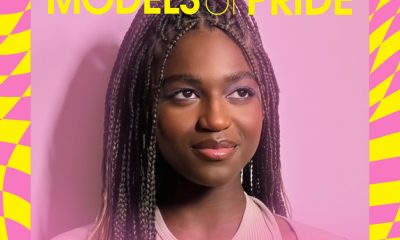
 LGBTQ+ Youth Mental Health3 days ago
Zaya Wade to be honored by LA LGBT Center with Model of Pride award
-
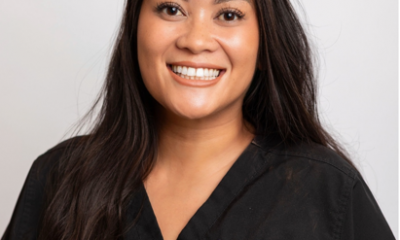
 Family4 days ago
The new “chosen family”: Suzanne Bangis on building a family through third-party reproduction
-
 Movies2 days ago
Essential queer horror classics for Halloween
-
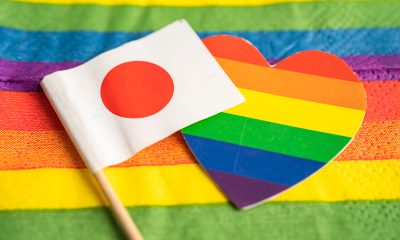 Japan3 hours ago
Report: LGBTQ+ exclusion costs Japanese economy billions a year
-
 Books1 day ago
In ‘The Lost Brontë,’ a complicated lie can lead to danger