
a&e features
John Waters is never wrong
In new book, the ‘filth elder’ has an opinion on just about everything
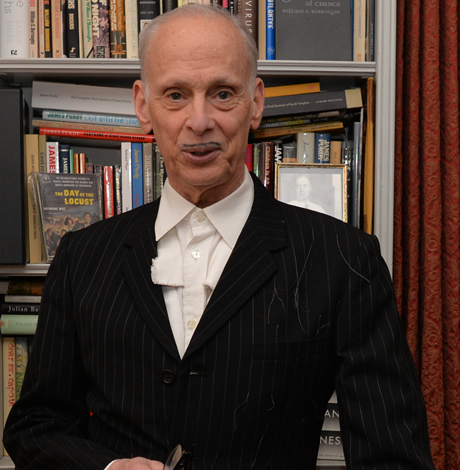
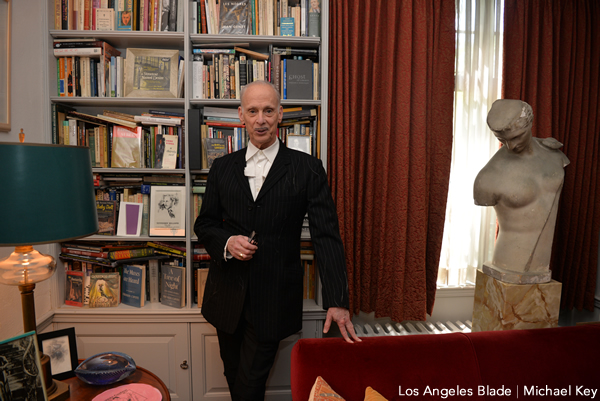
John Waters, pictured here at home in Baltimore, is back with a new book ‘Mr. Know-It-All: The Tarnished Wisdom of a Filth Elder.’ (Los Angeles Blade photo by Michael Key)
John Waters has had underwhelming meals in overpriced restaurants – so you don’t have to.
He’s been caught in long airport security lines. He’s taken the BoltBus to New York City and been delayed while the driver took a dump in the on-board restroom. He’s had to sit in a doctor’s waiting room with an embarrassing ailment and been barraged with questions from other patients who recognize him and demand to know what he’s got.
Now the Baltimore-based filmmaker and writer, who just turned 73, has put all of those experiences and more into a book of opinions and advice, presumably so people won’t have to endure what he has. Called “Mr. Know-It-All: The Tarnished Wisdom of a Filth Elder,” it’s his ninth book, and it came out this week. He’s described it as “my opinion on everything” and “how to avoid respectability at 70 years old.”
Readers will discover that “Mr. Know-It-All” isn’t just a book about coping with life’s indignities and humiliations, even though there’s plenty of guidance about that. It’s also part memoir, part celebrity tell-all, and part movie industry guidebook with separate chapters about each of his last seven films, all filmed in Baltimore (“Polyester,” “Hairspray,” “Cry-Baby,” “Serial Mom,” “Pecker,” “Cecil B. Demented” and “A Dirty Shame.”)
The book is filled with anecdotes about many of the actors he’s worked with, including Kathleen Turner, Johnny Depp, Tracey Ullman and, of course, Divine. There’s the time Waters turned down Brad Pitt at an audition for “Cry-Baby” because Pitt was too handsome to be cast as Depp’s sidekick – a decision that he thinks makes him perhaps “the only director who ever said no to Brad Pitt.” He remembers that Rikki Lake lost her virginity halfway through “Cry-Baby;” how he called Tab Hunter out of the blue to star in “Polyester,” and how he battled with motion picture censors to let him use the word “Pecker” as a movie title.
Other readers may be drawn to his essays about non-cinematic subjects, which range from art collecting and Brutalist architecture to Yippie protests, Andy Warhol, and taking LSD at 70. In one chapter, he names the one female he has adored since childhood. In another, he imagines returning to the apartment he lived in during the 1960s – a sign that, in some cases, you can go home again (especially when you still live in the town where you grew up.)
“Mr. Know-It-All is here to tell you exactly how to live your life,” he writes early in the book. “I’m never wrong.”
Though the title says it’s a book of wisdom, this is not a rehashed litany of someone else’s platitudes. All the advice he offers grows out of his own experiences. As a result, readers gain insights into the maker of “Pink Flamingos” and “Female Trouble” by learning what he’s gone through and how he dealt with it.
One of those insights is that Waters can be quite frugal and down to earth. He not only takes the inexpensive BoltBus to New York but also goes to a Laundromat when he spends the summers in Provincetown. (And of course, he hitchhiked across the country and wrote about it in his bestseller, “Carsick.”)
In many of his stories, Waters reveals a knack for handling even the most humiliating situations with humor and aplomb. He also says he licks important packages before he puts them in the mail – “to remove any ‘curse’ of show business rejection” – and instructs his staff to do the same. In the LSD chapter, he mentions texting “my boyfriend,” whom he never names.
Waters in on a national tour to launch his book, published by Farrar, Straus and Giroux. West Coast stops include ticketed events at The Green Arcade at the McRoskey Mattress Loft, 1687 Market Street in San Francisco on May 30 at 7 p.m., and Book Soup at The Renberg Theatre (Los Angeles LGBT Center’s Village), 1125 N, McCadden Place in Los Angeles on June 1 at 7 p.m.
Waters recently sat down at his home for an interview with the Blade to talk about his book and his life as a filth elder. The interview has been condensed.
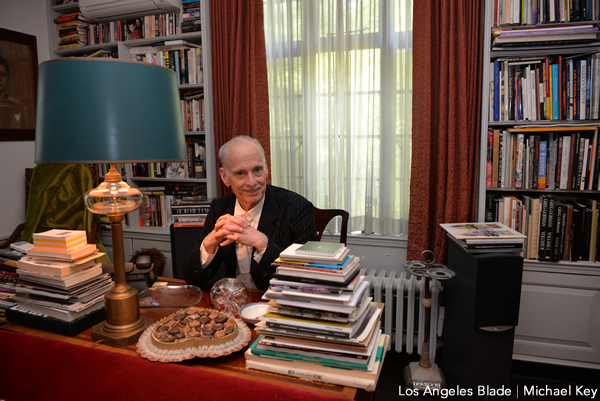
John Waters’s new book shows ‘how to avoid respectability at 70 years old.’ (Los Angeles Blade photo by Michael Key)
BLADE: A good alternative title for your book would be “The Influencer,” don’t you think? How To Win Friends and Influence People 2?
JOHN WATERS: I’m Norman Vincent Peale, you’re saying?
BLADE: You do give a lot of advice: Come up with a gimmick. Have backup plans. Get at least one other person to believe in you. Sound advice, with a John Waters twist.
WATERS: I agree with that totally.
BLADE: Why an advice book?
WATERS: Well, I always kind of parody things, so I thought an advice book coming from me would be kind of a parody in the first place. I needed that kind of genre to be able to talk about all the things I wanted to talk about.
In some ways it’s like “Shock Value” because “Shock Value” ended right before we made “Polyester,” so this has the rest of the movies in it. But I also wrote it from a viewpoint of how to tell young filmmakers how to deal with Hollywood and what happens and all that kind of stuff, and how you fail upward. And then the other subjects I had to put in — about love, about fashion, about art, about death, about every possible thing. But to talk about them all, you need a theme that runs through the whole thing, so that’s how I came up with [giving] advice.
Do I expect every person to follow my advice? No, but I believe that I gave good advice. It’s not really told ironically. I believe everything I say in it. But I hoped to write a humorous book at the same time.
BLADE: Who are you giving advice to?
WATERS: I’m giving advice, first of all, to the people that like my work, because they’re hopefully the first people that buy the book. Secondly, even if you don’t know anything about me, I’m giving advice to younger people about how to handle what’s coming, failure and success, in your life if you’ve chosen to be in the arts in any way. So I think I’m trying to give advice to anybody probably younger than me, because older than me are dead, you know. And I tell you how to beat that too.
BLADE: You’re not writing just for the hardcore fans?
WATERS: No, not at all. If you’re never seen any of my movies, you can still read the book.
BLADE: A lot of your fans may be the ‘others’ in society, those who don’t fit in or conform, the people in “Desperate Living” and other movies.
WATERS: The people that used to be the ‘others’ in society are often now the leaders. Everybody wants to be the ‘other’ now. They didn’t used to. Even Trump would probably want to be an outsider. Obama thought he was an outsider. Everybody wants to be an outsider, and I want to be an insider. I said that in “Make Trouble,” that it’s more fun to cause trouble from within. Which is what “Hairspray” did.
BLADE: But a lot of the others aren’t the ones who would typically be disposed to take advice.
WATERS: Maybe from me they might.
BLADE: Why should someone follow your advice?
WATERS: You don’t have to. I think you could read the book and not follow one bit of it and still enjoy the book. You don’t have to. I don’t expect anybody to, really.
BLADE: Your advice grows out of your experiences. It’s not warmed-over Norman Vincent Peale. And because it comes from within, your advice in turn provides insights into you.
WATERS: I always thought that is a joke, that book, which I probably never read. But my parents had it and it was such a thing then that it became a joke in a way. That same title could apply to this book.
BLADE: The other thing about your advice is, you chronicle all the ways you’ve suffered indignities. You’ve had bad dinners at good restaurants. You’ve had bad seats on international flights. You’ve been harassed at the doctor’s office.
WATERS: I’m also saying all the wonderful things that happened to me. So basically, there are different kinds of problems. It is a high-class problem to worry about being recognized in a doctor’s office. It’s the one time that it’s really bad to be seen. Although, if you weren’t [famous], you wouldn’t have gotten the appointment. So in the long run, it isn’t bad.
BLADE: Do bad things happen to you more than most, like Joe Btfsplk in “Li’l Abner?”
WATERS: No. I say in the book, not one bad thing has ever happened to me from being famous, in any way. It really hasn’t. I mean, high-class problems, some of the things I talk about. But, generally, I can bitch about flying all the time. Bitch about first class, which is really bold. But I get to fly all the time, and I don’t pay for it. But I’m working, you know? So I’m trying to tell people that when bad things happen to them, they can use it and how they can appreciate it and how they can look back on it and it doesn’t mean really anything terrible.
BLADE: You bring up all these universal things that anybody can identify with, and you’ve come out on the other side, none the worse for wear from the indignities you’ve suffered.
WATERS: Everybody has indignities.
BLADE: Are you more sensitive to things than others?
WATERS: No, I don’t think so. I think I notice them more and it’s more, like, ludicrous, some of the problems that you get from being known.
BLADE: And then you use it for comic relief.
WATERS: Yeah, comic relief. In my own life, even.
BLADE: Is there one disappointment that tops them all?
WATERS: I only regret one thing, smoking cigarettes. It’s the only thing I regret in life. Because I’ll probably die from it. I mean, I don’t have cancer, but I’m just saying that, both my parents died from some form of cancer. They were 90 though. They had a long, good life. So, yes, I regret smoking cigarettes.
BLADE: You lived through all these indignities, and that’s a sign that others can too.
WATERS: The other day in New York somebody yelled at me, a homeless person, ‘You’re still alive?’ Which really made me laugh. I thought, ‘Well, yes I am, are you?’
BLADE: You and the Queen of England ought to compare notes.
WATERS: She probably has some really good ones.
BLADE: Is this book political?
WATERS: Sure it is. All humor is political. And this book, definitely. I have a whole chapter, ACT BAD, which is really [suggesting ways] to go further than ACT UP did. I think comedy is political, trying to get you to laugh at things. I think every chapter in this book is political.
But the worst way you can be political [is to] rant. If you get people to laugh, they’ll listen. If you lecture, in a strident tone, like Elizabeth Warren, no one will pay attention. Even though I totally agree with her politics, I hate to hear her talk. She’s never said a funny thing in her life. So the thing is, it’s important, if you want to change people’s minds, to make them laugh. It’s the first way to get their attention.
BLADE: Does your book have any bombshells in it? Landing Tab Hunter for “Polyester?” Not casting Brad Pitt when he auditioned?
WATERS: That’s not up to me to say. The only thing I could think in there, maybe, is the [taking] LSD thing, in a way. That’s the stunt of the book. That’s something that I did that I thoroughly enjoyed. I think if there’s a sentimental chapter in the book about friendship, then maybe that is that. If I had known how strong the LSD was that I took, I probably would have been uptight. But I didn’t and it was great. I spent eight months getting the right acid from the purest source I could find, practically from Timothy Leary’s asshole. The Blade can print that. But the provenance of it was high and it was great. I don’t have to ever do it again. Just like I don’t have to ever hitchhike across the country again. Why would I? I did it. I don’t know if that’s newsworthy, but that would be, maybe.
BLADE: You had a big build-up about it in the book: We don’t know what this is going to do to us. And then you stopped hallucinating and it was OK and the sun rose…
WATERS: It was more than OK. It was great. I never had a bad experience when I was young, or I probably would have never done it. What I wanted to see is, what is it like to do it now, when I’m 70 years old? I certainly would never imagine that many 70-year-olds try to take acid. Especially if you haven’t done it since you were young.
BLADE: Do people still take LSD?
WATERS: Oh yeah. All the young people now do micro-doses. All the people that work in Google. All the tech kids take teeny doses of it. But not many 70-year-olds take it. People I know don’t take it.
BLADE: You write that you tried to get transgender pioneer Christine Jorgensen in a movie. That’s something probably a lot of people don’t know. You’ve sprinkled in all kinds of things that are going to be part of your lore.
WATERS: There are lots of things that people don’t know. But I don’t know that that means it’s Stop the Press. Most everything in the book is probably new information to most people.
BLADE: Who do you wish had been in one of your movies but never was?
WATERS: Always Meryl Streep. But I would have had to stop her from doing a Baltimore accent. And she would have done it brilliantly.
BLADE: Did you have a part for her?
WATERS: You know, at times, any of those movies she could have been in, yeah. We’ve met before, maybe a couple of times, at parties. She’s lovely. But she didn’t say, ‘Oh, I’ve been dying to work with you.’
BLADE: Roseanne Barr has come up.
WATERS: Well, Roseanne, when I dealt with her, she was a liberal. Completely. Yes, she came up a couple of times. I was friendly with her.
BLADE: For “Serial Mom?”
WATERS: Yeah. “And A Dirty Shame.” She was possible for that at one point. So, I was always friends with a liberal. I did her show and everything. Traci Lords was on her show. Who knows? I don’t know. I guess she’s just on the Internet too much.
BLADE: Who was the greatest delight to work with?
WATERS: They all were a delightful, in a way. I mean, making movies is horrible. I say that in the book. Basically, it’s not fun, because there’s so much pressure and you have to do something every day and we’re not going to get this shot and it’s going to be over budget. But they all were team players. That’s what I can say they were.
Somebody said about my mother after she died: She was game. And they were game. They had to be game, to come with us, come to Baltimore, especially joining a group of people that had known each other for 30 years, a lot of them. I didn’t have any trouble with any of them. They were pros. But we were pros to them. I think I was prepared. I knew what to do. It wasn’t like we mistreated them. And they sort of got into the spirit of it.
BLADE: Would you do a word association? Kathleen Turner.
WATERS: A pro. Still see her. Great actress. Stage. Screen. Movies. She could play men, women, anybody with great conviction.
BLADE: Johnny Depp from “Cry-Baby.”
WATERS: I’m on his new album, I hear. I’m not sure how. I remember I talked to him on the phone with Alice Cooper recently and he said: Say this. I don’t remember what I said, so I guess they put it in the album like when I did in The Creep [a song with Nicki Minaj]. Johnny Depp was always a pro with me.
BLADE: Tab Hunter.
WATERS: Well, he voted for Reagan, you know. He used to shock me. He was for Trump, too. He used to laugh when he told me, because he knew how crazy it made me. I love Tab. You know, that’s the thing. He was from a different era. Completely from a different era.
BLADE: Was he like Rock Hudson?
WATERS: Rock Hudson, I don’t know if he was a Republican. Tab, I think was always a Republican. Oh yeah, he was in the closet forever. He had to be. It was illegal. You know. He was loved by every woman in America. It would have ruined his career. And he wrote about all that in his book.
BLADE: Did he write about you?
WATERS: Yeah. He was lovely. I stayed friends with him right up until the end. I just talked to his husband recently. Tab was great. He was a team player too. Lovely to Divine. Matter of fact, he liked the experience so much he went and made a movie with Divine afterwards, called “Lust in the Dust.”
BLADE: Andy Warhol?
WATERS: I remember him at the Baltimore Museum of Art meeting Edith [Massey] and saying, where did you find her? And he was very supportive. He took Fellini to see “Pink Flamingos.” He put Divine on the cover of Interview. He was always supportive.
BLADE: Mink Stole. You named her?
WATERS: Her real name is Nancy Stoll. S-t-o-l-l. I knew her forever. I met her in Provincetown. She was early in my films. She was a character actress, always. She usually played Divine’s enemy. We’ve been friends forever and ever. And I think she’s a really good actor. She still works all the time.
BLADE: Any way to sum up Divine, 31 years after his death?
WATERS: He gets more and more famous as the years go by. And he’d still rather be here. He’d be pissed he’s dead. I’m still shocked he’s dead. I still am. That’s still a shock. But, it’s kind of amazing. Well, we’re all being buried in the same graveyard where he is, you know, all my friends. Obviously, he is still with us.
BLADE: You’ve been good to the guys who commissioned the Divine mural in Baltimore, Jesse Salazar and Tom Williams.
WATERS: They were lovely. Why wouldn’t I be?
BLADE: Your book has only one chapter that’s named after a female.
WATERS: Betsy.
BLADE: The finger-painting chimp from the Baltimore zoo. You reveal this life-long love affair that you’ve kept secret until now.
WATERS: Well, I didn’t have sex with Betsy. I want to make sure that people understand that.
BLADE: You wrote a chapter about her appearances on TV and about The Golden Age of Monkey Art, which she inspired.
WATERS: I just remembered her in that dress and getting national attention and being all over the country. She was on Garry Moore, who was from Baltimore, too.
BLADE: In the last chapter, you write about death and dying, specifically about your death. You try to imagine what happens after you die, and you go back and visit your first apartment at 315 E. 25th Street in Baltimore. Why so morbid?
WATERS: Is it morbid? I don’t think it’s morbid. I think, who at 70-some years old doesn’t think about that?
BLADE: Why such a potential downer?
WATERS: You think it’s a downer? I don’t think it’s a downer… I think everybody at 73 [thinks about death], and I think my friends think about it more than I do. I don’t think about it that much. But you can’t help it when you go to funerals and you think, I am 73, you know, something is going to get you. So I tried to just imagine beating it, how I could be such a control freak that I would refuse to die. And I do always dream about that apartment, so it is just a fantasy of what happens after you die.
But it was to me dealing with the one subject that you’re really not supposed to joke about or kind of focus on. To think about it was sort of liberating in a way, to go through the whole thing. Except that I want to be sure that just because I write something here to be funny, it doesn’t mean that I want my heirs to follow every single thing. Like I say in there, I don’t want something funny on my tombstone. So, I don’t know. I thought it was optimistic. I beat death in it in a way, spiritually at least. That’s optimistic.
BLADE: How is your health?
WATERS: My health is fine.
BLADE: You didn’t write the book to fight death?
WATERS: Well, you write all books to fight death. I mean, I’ve never been as busy as I am. I have more projects than I’ve ever had in my entire life.
BLADE: You don’t name in the book any kind of significant other or life partner.
WATERS: And I never would. Because every person I’ve ever been involved with…doesn’t want to be public. I wouldn’t want somebody that would want to do the red carpet with me. I don’t want a groupie. I don’t want a fan. I want somebody that has their own life.
BLADE: Do you have a partner?
WATERS: Yes, I do.
BLADE: Is that in the book?
WATERS: Obliquely.
BLADE: You don’t want to say who it is?
WATERS: If you don’t keep some things private, you don’t have a personal life. It’s the same thing I say, I have some restaurant receipts that are not tax-deductible. That means I have a personal life. When I read celebrities are telling everything, I think, don’t you have any friends?
BLADE: Your book is so wide ranging it makes one wonder what you’re saving for the next one. After “Mr. Know-It-All,” what is there to write about?
WATERS: Do I have any stories left? Well, I’m writing a novel. I’m on page 64. So, yes, there’s stuff to write about.
BLADE: Is that why your next book is fiction, because you’ve exhausted the autobiography?
WATERS: I’ve written 17 movies. They‘re fiction. The first part of “Carsick” was fiction, too, except that I was in it. That makes it a lot easier. I had never written a novel, so I wanted to try it.
BLADE: Are you ever going to slow down?
WATERS: I hope not. I don’t need to slow down. I like what I’m doing. I don’t know. I guess when I drop dead, I’ll have to.
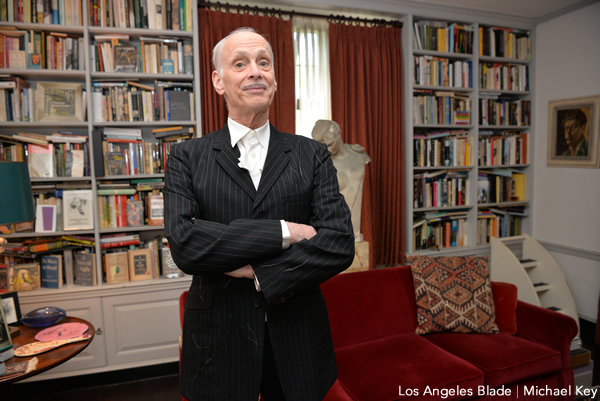
John Waters (Los Angeles Blade photo by Michael Key)





a&e features
Exposing the realities of influencer culture with Bran Flakezz
This LA-based creator uses his massive fanbase to create a better industry for all
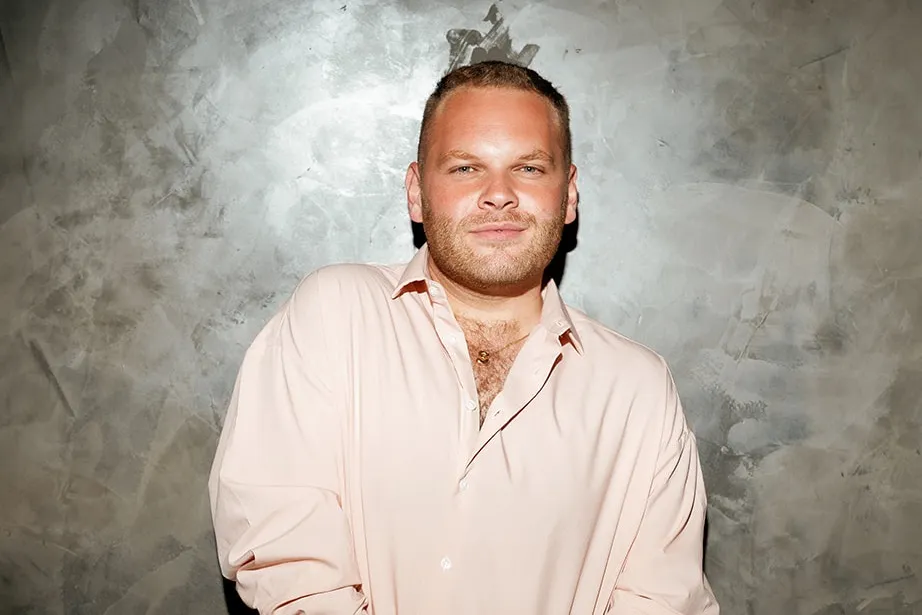
Being an influencer seems like the easiest job in the world…to the people who aren’t actually doing it.
It’s a belief that has been completely debunked in recent years, especially for diverse creators; biased algorithms have made it hard for LGBTQ+ and people-of-color to gain fame online. And even if you didn’t have strings of code fighting against your success, many creators have spoken about the tireless aspects of this job that online audiences rarely get to see. The eighteen-hour work days, the predatory brand partnerships, and the immense mental stress that comes from relying on others’ opinion of you to make rent that month.
For a majority of the successful folks we see online today, their onscreen joy is built on years of hard work and tireless determination. It’s a part of this industry that doesn’t get enough spotlight, and it’s one that Bran Flakezz is committed to showing his many followers every single day.
When he sat down with the Los Angeles Blade, Bran wanted to make one thing very clear: he absolutely loves his job. He detailed his early career after graduating with a degree in fashion merchandising — shoutout Elle Woods — where he went through the gamut of internships, part-time work, and official positions with various large brands. It was working with these jobs’ social media teams that he learned the ins and outs of online fame, skills that proved vital in 2021 when he decided to quit his role and commit to creating content full-time.
“It just feels so great to be in control, to have creative freedom and make my own goals,” said Bran when describing the many things he loves about his career. “Being my own boss is incredible — making my own schedule, and building a team around me of people that contribute to my success.” It’s a love that shows in his content; Bran first gained attention online by offering an unfiltered look into his daily (and often very chaotic) life as a gay man. It’s why his many fans — more than 1.5 million across TikTok and Instagram — feel like they know the LA-based creator, with each new follower learning about everything from Bran’s obsession with Bratz dolls to his thoughts on the latest season of Big Brother.
Bran has happily welcomed audiences into his wild life over the past few years. But though the man’s main goal is always to bring joy through his content, he also knows it’s important to educate users about the issues he and his fellow creators face today. He does this mainly through TikTok; Flakezz regularly posts videos speaking about things like the intensity of his daily work schedule and how much money people can actually make posting online (it’s a lot less than you’d think). “I never want to sound ungrateful for any of this,” Bran emphasized. “But there are prices to all of it.”
“We’re told that people’s opinions of you are not your business — but when you’re creating a business around people enjoying your content, people’s opinions of you literally become your business!” He stressed. “Your brain is always spinning [with tasks] and you have to stay consistent on all platforms, especially now more than ever, when there’s just so much saturation and competition.” It’s why Bran works so tirelessly across his many social channels and always offers a wide array of content — because he knows that in this fast-paced influencer economy, one day of rest could undo months of hard work.
Funnily enough, Flakezz did clarify that the homophobic comments he constantly receives don’t bother him much, saying, “Everything that you can say to me online, I heard the 6th grade bullies say to me on the recess yard.” But while he can easily tune out the internet trolls, his experience with large brand partnerships — one of the key ways influencers make money — has shown him how this industry still grapples with homophobia. “Sometimes I’ll see campaigns for brands, and I’ll feel like, ‘Oh, was I a token? Was I selected because they needed me to cross off on their list that they got one gay creator?’ There’s been opportunities I say no to, and I see another gay creator get the opportunity — so they were completely profiling us as LGBT influencers.”
While it is amazing that brands want to spotlight LGBTQ+ creators, Bran shows how this kind of ‘we only need one to look woke’ mentality both limits opportunities for queer influencers and reduces them to nothing more than their sexual or gender identity. This reveals how shallow this type of inclusivity truly is, and why creators like Bran are fighting to remedy this mindset so that brands create ample chances for diverse influencers who respect who they truly are.
Fans have been overwhelmingly supportive of Bran’s openness around these topics, appreciating his transparency in an industry often built on misinformation. Flakezz has been immensely grateful in turn, explaining, “I never wanted to come across as ungrateful or complaining about such a privileged life that I get to live, but…I really wanted to approach the conversation in a way of education. Because I know so many people out there want to do this career — and it’s an amazing career — but here are some of the things that people don’t always tell you.”
Through his feed, Bran offers a welcoming mix of queer humor and informed knowledge, helping his followers unwind after a long day while ensuring that they leave each scroll session with more knowledge than they had before. It’s an uplifting approach that helps improve the influencer industry for all. And it’s one that Bran Flakezz hopes to embody throughout the rest of what is shaping up to be his very bright, very long career.
a&e features
LA writer/director gets a little ‘Psycho Baby’
Charlotte Kennett discusses the wild success of her short film and shares on the state of queer people in entertainment

YouTube has created its own style of content, whether it’s “get ready with me” videos, scene compilations of your favorite shows, or simple to-camera essays. And yet, one major milestone remains: reaching one million views. Writer/Director Charlotte Kennett has done just that with her original film Psycho Baby.
Her dark comedy short explores the extreme side of lesbian relationship drama. Kennett managed to organically reach 1 million views in 2 years, which is no small feat. In 2025, she also participated in Amy Aniobi’s TRIBE Writers’ Fellowship. She also continues to work on the front lines of an unprecedented Hollywood, most recently working as a writer’s assistant, then director’s assistant on A Place in Hell, starring Michelle Williams and Daisy Edgar-Jones.
She took some time to chat with The Blade about her film and its success while also discussing the state of the industry for both queer content and queer creators. Her humor and passion for creativity shine through, and you can see how she’s a very distinct queer voice in entertainment.
Congrats on reaching 1 million views on YouTube. How does it feel to reach that with scripted long-form content vs. a sketch or standard “YouTube” content?
I’m incredibly honored that my film found its people. It’s both comforting and validating to know that other people care about longform content. I’m not interested in cutting the fat on anything. Those are the juiciest bits. We’re living in a time of bite-sized everything, from Ozempic to how short can you make this reel? The story decides the length it wants to be, and if you’re lucky, an audience finds it. Are you reading this at 2x speed?
How would you describe Psycho Baby?
Psycho Baby is an intimate, character-driven dark comedy where a love addict falls for a psychopath. Is it a recipe for disaster? I think we already know.
Any secrets to your success?
Send nudes to the algo Gods.
Manifest in the bath.
Buy lottery tickets.
Actually, I think it’s something simpler: Never stop talking about the things you create, even when everyone else is ready to move on. You know the writing advice: kill your darlings? That’s only true at a script level, but once they’re realized, you must love your darlings FOREVER. Also, never stop creating. Not everything performs well; that’s okay. If even one person watches your work, that’s a win. Success is defined on your own terms.
What was your process for writing and directing Psycho Baby?
Long before I wrote the script for Psycho Baby, I had visions of the opening scene in my mind. I saw a girl laying on a bed with a letter on her chest. A letter that would test her and render her powerless in some way. I spent a lot of time thinking about the characters and my own romantic experiences as a queer person.
So much of the process of Psycho Baby was allowing the idea to marinate in my head. And I’ve found that to be true for me on almost all of my projects: I don’t force an idea to come through before it’s ready. A year had passed by the time I finally sat down to write the script, but when I did, it just poured out. The short is pretty much word-for-word how I wrote the first draft, which is wild to think about.
Psycho Baby was initially inspired by a break-up. In processing with friends, I kept hearing other people calling their exes psycho an awful lot. I found the need for humans to villainize a person they once loved quite interesting. In truth, the snapping point- when the switch flips and someone has decided they can’t be with you anymore is quite jarring. I put on an ugly fedora and started to Nancy Drew my own feelings. When sapphic relationships end: who’s the crazy one? The core of Psycho Baby asks this question. Is it possible it’s both of them?
It was cathartic to interrogate my own flaws alongside those of past partners. Sadie and Andra are the end result of my exploring queer grief and heartbreak from the heightened lens of a psychopath and love addict; two people destined to fail. Once I had the script written, we were off to the races. Everything else was fast and furious. I’m really proud of what we created together.
What do you think of the state of the entertainment industry in LA right now?
I’m in active denial and have to remain delulu and think everything is fine. It’s been sad. Everyone has lost so much. Like most, I can only speak to my experience. It’s been hard to admit that the industry has changed, a lot more doors are closed, and we don’t know if they’ll ever open again.
We’ve lost so many great storytellers. I mourn that more than anything. I think about all the stories we’ve lost, the ones that went with them when they left. Someone had the next great classic on their laptop. That haunts me. The industry is trying to recover, but it’s like an injury that refuses to heal. Everyone still here is my hero.
How do you navigate that as a queer creator?
I’ve accepted that this is, and will continue to be, a hard and arduous journey. I’ve fallen in love with all aspects of the process. There’s inherent value and growth in winning and losing.
Mindset is everything. You must believe that your stories matter and that there is room for you in what feels like an overcrowded industry. I know deep down in my soul that LGBTQ+ media saves lives. Shows like Heartstopper. Positive queer representation in the media has the power to reach across the aisle and connect people.
I navigate the entertainment industry as a queer creator with the same relentlessness as AT&T Fiber sales reps: I’m showing up at your door at all hours, in a flashy vest, with the same damn offer.
What are some things you’re working on?
This past year, I’ve been working on a feature that I hope will be my debut. My manager is taking it out soon, so stay tuned and pray for me. Outside of writing specs and samples and hoping a showrunner will pluck me out of obscurity, I’m also actively developing a slate of queer narrative shows for my YouTube channel Sleep Late.
Traditional Hollywood opportunities and pipelines have all but evaporated, so I’m making lemonade out of sewer water. I’m not waiting for permission to create. I think creators have to take some of their power back and greenlight their own ideas. I’m excited to grow my audience on YouTube and dethrone Mr. Beast. Hollywood might be burning, but I’m an old-growth Redwood tree. This is all I’ve ever known… and I’m not going anywhere.
What do you think is lacking in stories of female queer love?
First, I want to echo the culture and say we need more stories that end on a good note. People get off on queer pain, and I get it; I’m a masochist too, but let’s listen to the corporate gays and unlock queer joy.
What’s really lacking is diversity. Like, I’ve seen two white women prancing around in the English countryside and exchanging long, silent looks across ballrooms enough times now. I’d like to see more sapphic BIPOC representation on-screen. I need another Hedda immediately.
What is your list of definitive queer movies or shows that you think should be required viewing?
The Handmaiden. Brokeback Mountain. Disobedience. Bound. The L Word. Orphan Black. Heated Rivalry. Everything Sucks!
What advice would you have for a queer young person trying to make it into the industry now in Los Angeles?
Find your people. Look out for expanders: people who invite you into the room, laugh at your jokes, connect you with others. Stay away from people who make you feel weird; if it happens once, it’s gonna happen again. Not everyone is going to like you or your voice, and that’s okay.
Rejection is redirection. Make things regardless of resources and release them into the world; people still love their ugly children, don’t they? Do it again and again. Continue to refine your craft with your friends and community. Also, just because you’re young doesn’t mean you can’t lead. You’re a leader the day you decide to be the connective tissue between people and projects. And the cardinal rule: always uplift other creatives and invite them into the room.
What is your dream project or collab?
This question lit up too many parts of my brain. In truth, my dream project or collaboration could come in so many forms. I’ll cross Genre River any chance I get. Check out the sci-fi rock banks, then wade over to rom-com island, get chased off by an Indiana Jones type who wants the girl, and getaway with stoner chicks floating the river in tubes.
I fell in love with storytelling because of big, immersive films, so naturally I want to make movies that feel all-consuming: movies that make people feel really seen, that people want to watch over and over again. Down the line, it would be meaningful to take a stab at some of my favorite IP, to work on the stories that made me a dreamer and a storyteller in the first place.
But right now, my dream is to work with passionate creatives that make me laugh. People who need to tell stories to survive. A dream collaboration is one where I’ve brought creatives from all walks of life together to tell a story only we could in partnership with one another.
What are your biggest inspirations?
I’m inspired by truth-tellers and people who are willing to say the things everyone else is afraid to say. Activists like Greta Thunberg inspire me, but so do survivors, my community, and the people I meet every day. I’m especially inspired by neurodivergent and queer people and the ways we move through a world that wasn’t necessarily built with us in mind.
I’m inspired by radically honest people, even when it’s uncomfortable or dangerous. People who are strange, resilient, uncompromising, deeply themselves. I’m inspired by risk takers and troublemakers. Those are also the kinds of people I want to uplift and make stories about. I’m a filmmaker who enjoys boundary-pushing work and unconventional characters who question the systems we live in. I’m inspired by everyday people who demand better for our world.
You can learn more about Charlotte’s work on her website or YouTube channel and follow her and her production company on Instagram( @charkenni @motherfever)
a&e features
Veteran Broadway actor Laura Benanti bares all in her new show ‘Nobody Cares’
Fresh from a run at The Wallis in Beverly Hills, she brings the show to South Coast Repertory in Costa Mesa from October 8-11.
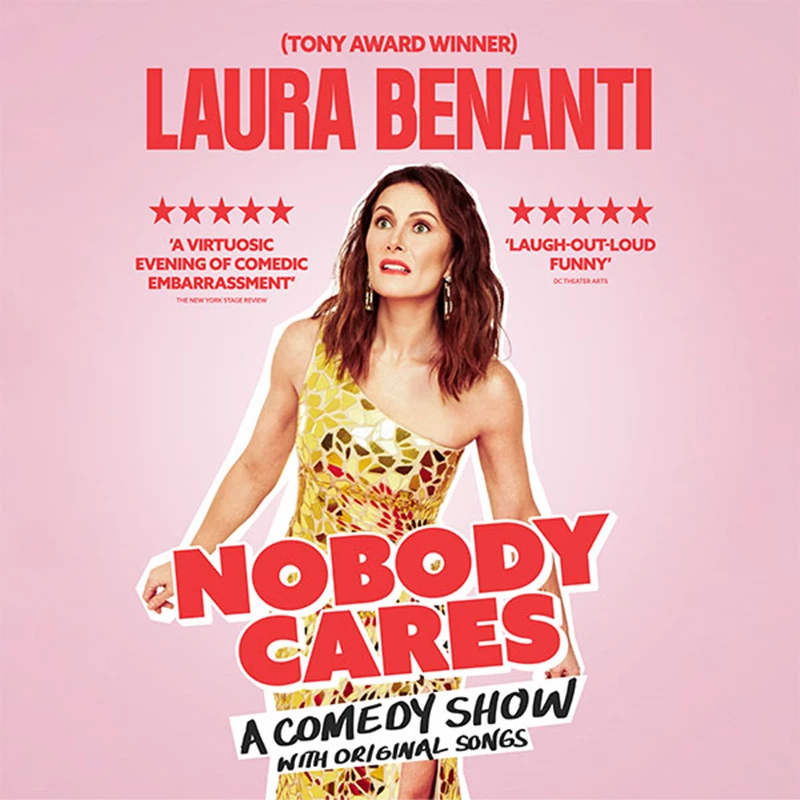
One might expect when Laura Benanti comes to town that they are in store for a feast of recognizable standards from the veteran of ten Broadway shows, as well as having a strong presence in television and film. Her new show, Nobody Cares, is not that show. Written by Benanti in collaboration with songwriting partner Todd Almond and Director Annie Tippe, this show is a surprising, personal, and hilarious take on what it is to be a 40-something woman in today’s world. It takes on subjects from motherhood to aging to relationships and perimenopause. Fresh from a run at The Wallis in Beverly Hills, she brings the show to South Coast Repertory in Costa Mesa from October 8-11.
My first exposure to Laura Benanti, the person, was on The Broadway Cruise in 2023. Unbeknownst to the audience for her featured performance on the poolside stage was that Benanti was in the middle of a miscarriage. When I asked her about that experience, she shared something important she has learned from life. “Not that I’m trying to win here, but that was my fourth miscarriage! I could have done what I did in the past and spent my time alone and sad. Instead, I wanted to do the thing I love with my audience and feel that joy of performing for and with them.” That authenticity is what she brings to this show that is so revealing and personal. The result is connection and “laughter of recognition.” In other words, she invites the audience in to laugh with her and inspires them to laugh at their own similar life experiences.
What inspired you to write Nobody Cares?
I had done ten Broadway shows and was always cast as the ingenue. Finally, I decided that the only way I was going to get a role written for me was to do it myself. What’s interesting is that when I started writing the show, in my mind, I was like, what are you doing? Nobody cares. This is so narcissistic! Then, I would read parts of it to my girlfriends, and they were like, “I do care about this, and that’s because I care about you.” And then, ironically, I was having a conversation with my 4-year-old. I was telling her something that was important to me, and I felt like I was imparting my wisdom. She stopped me and went, “Mommy, nobody cares.” I thought, she’s right, actually. All of the things I used to worry about – am I pretty enough? Am I thin enough? Am I successful enough? Nobody cares!
So, maybe it really isn’t a show about not caring, but caring about the right things?
I think it’s that, you know, I talk about going from a people pleaser to a recovering ingenue. Starting out in this business so young (she first starred in The Sound of Music at the age of 18), I started to inadvertently live out my characters in real life. I took on this persona of never upsetting anybody, being what people wanted me to be, especially men. I got caught in a trap of not living my own life, becoming whatever another person wants me to be. It’s taken a long time to unravel that.
Has there been a specific experience that helped the unraveling?
Being a parent. My children put the nail in the coffin for needing everybody to like me all the time. They’ll never like me all the time, and it can’t be their job to like me all the time. It’s my job to not need them to. I had to develop an internal fortitude. I tell some really out-there stories, very private stories that used to hold shame for me. In telling them, it takes that shame away. What I hope is that it involves people enough to release their own.
Is there a particular moment in the show that you still say, “OMG, I can’t believe I’m actually telling them this?
There is definitely one song where it’s hit or miss. I tell a story about when I was 21. A man proposed to me, and he would not take no for an answer. He just kept at it. And because I’m such a people pleaser, I didn’t have the heart to say, “Listen, I don’t love you.” I didn’t want to hurt his feelings…so I told him I had cancer…and that I didn’t want him to have to see me like that. It’s a song called “Marry Me,” and either you’re on board and you love it, or you hate me.
You have explicitly described the show as a love letter to women of all ages, mothers, and your “beloved gay men.” As you know, gay men have a long history of embracing glamorous, funny, complicated, and authentic women. What is it about you and your particular brand of comedy and performance that attracts your beloved gay men to you?
I think that’s true, and I love it. I believe it’s my sense of otherness that I have always felt since I was 11 years old. My main interests were Murder, She Wrote, the music of Steven Sondheim, and the 1944 psychological thriller Gaslight. I was so on the outs! I was so not cool. And, please know that I am in no way comparing this to the challenges of coming out. That is not the correlation. I always say I was born like a 45-year-old gay man in a little girl’s body. I just wanted to sit in a well-knit room and listen to good music and watch movies. So I think there’s a similar sense of culture. My Uncle Bob was an incredible drag queen named Wanda May Wanaburger and one of the founders of the Gay Men’s Chorus in Washington, DC. I grew up with him. Actually, the last time I ever saw him, we were singing together on stage at the Kennedy Center. I was playing Maria (Von Trapp from The Sound of Music), and he played the Mother Abbess. It was so great to have that moment with him before we lost him suddenly. I worshipped him. I grew up under his wing…or wigs, as it were! I think on some level I share the recovering people-pleaser identity with gay men. So many of us can’t change it until we have the courage to do so. I always knew, on some level, that people-pleasing was a survival strategy, not some altruistic trait.
You have spoken about women and the influence they have in your life.
Yes, when I turned 30, I met some truly wonderful women who are some of my dearest friends to this day. They just moved through the world in such a different way than me. I just started mirroring them. I started thinking, “What would Sara do? What would Kelly do? What would Celia do?” Then, I would sort of act accordingly. It became a freedom. I also had them loving and supporting me and cheering for me. That was really the beginning of a big shift in me. Having my children was the second phase of that.
How do you feel now that you’re touring the show you’ve written after becoming frustrated with waiting for other people to write a role for you?
It’s been extremely empowering in that I get to use my own words. I’ve written for a very long time, and I’ve written comedy for a while for a lot of award shows. I would write my own monologue and bits and even the sort of Broadway cabaret shows that I would tour. I would have someone who didn’t want to be there come up to me afterwards and say they really like the stand-up part. That’s when I realized that’s what I was doing, and it was ok. It didn’t make me a fraud to pursue that. And this level of authenticity that I want to bring forward, this level of connection with the audience, it’s really become my favorite thing I do. I’ll always love playing characters, but this is a real departure for me.
Do you believe that your queer fans have helped teach you about being able to be who you are and be this person you’ve become?
Yeah, because my road is so much easier than theirs, and they do it. I think about that with my uncle. He lived. He was in a long-term relationship with a black man in Washington, D.C., in the 80s. It was not a time to be gay. I think about him all the time when I’m like, it’s so hard to be a woman. I just so admire the people I know in the LGBTQIA+ community. And right now, it feels like we’re sort of going back in time. You know, to see joy, to see a Pride Parade, to see people, even if they are afraid, walking and talking and being themselves, and trans people, having the courage to live their truth. I am so inspired by that. If they can find joy, I can find joy.
Tickets for Nobody Cares are available at SCR.org.
a&e features
Actor Christian Tyler Dorey is a Jack of all trades
The young actor shines in South Coast Repertory’s ‘Into the Woods’
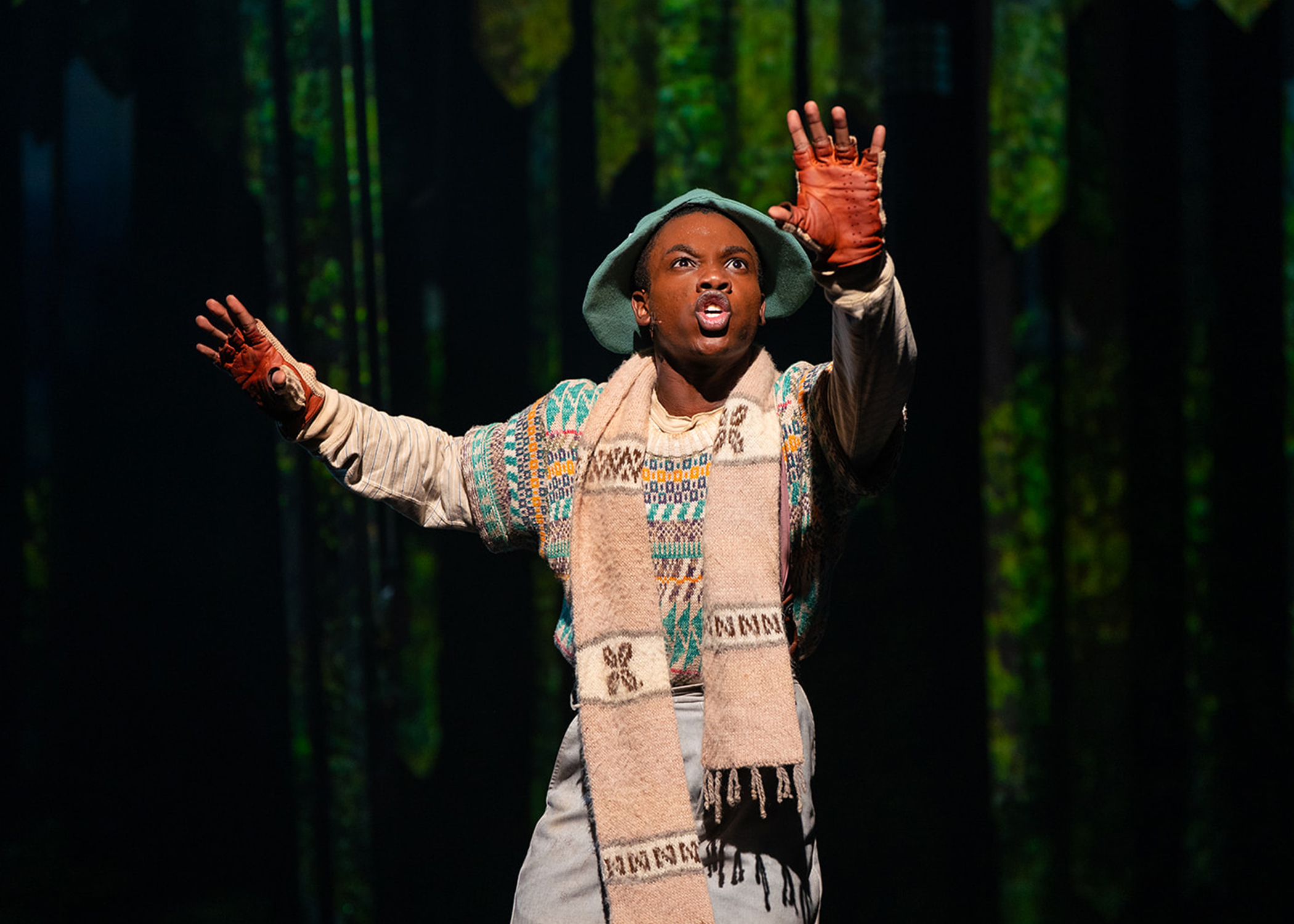
Every musical theater actor has certain roles they’d love to play; Christian Tyler Dorey is no different. He’s starred in recent musicals like Sister Act, Beautiful: The Carole King Musical, and The Wedding Singer. He’s also starred in classics like Cabaret and Les Misérables, and he played Teen Angel in Grease.
To celebrate the 40th Anniversary of the musical Into the Woods, South Coast Repertory has a fresh version of the show with Dorey starring as Jack. It’s already received rave reviews, with Dorey being described as a “showstopper” and a grounded performance making him Reel.com’s “the most believable person in this fantastical world.”
Dorey took some time to chat with the Blade about this experience, his experiences in LA, and his dreams for his career.
How does it feel to play Jack in Into the Woods?
It is truly a dream come true to get to play Jack at this moment in my life. It has been a huge dream role for me since I was first exposed to the score after seeing Rob Marshall’s film in 2014. I immediately became obsessed with Sondheim’s lyrics and score, and I then turned to the original Broadway cast album. It was full of even more information that the film left out. It was some of the most gorgeous orchestrations and lyrics I’d ever heard in my life. I was moved to tears by Bernadette Peters singing “Children Will Listen.” Safe to say, I was obsessed.
What makes this rendition of Into the Woods different?
This production of Into the Woods is unlike any production I’ve ever been a part of. From the cast’s performances to the set, lighting, costumes, and sound design, there are so many elements that make this rendition of Sondheim’s classic one to remember.
At the heart of it is the incredible direction by Peter Rothstein, whose expertise with the material played a huge part in the specificity of the choices found throughout the production. The carnival concept is brought to life beautifully through Adam Koch’s expressive set design, as well as the gorgeous costumes designed by Danielle Nieves. The projection and lighting design help bring a mythical essence to so many moments in the show, thanks to Greg Emetaz and Lonnie Alcaraz. The crisp, booming sound design by the brilliant Noel Nichols ensures that audiences don’t miss a syllable of the show’s incredibly complex score.
This score is unlike anything else in musical theatre in terms of its difficulty, and the brilliant music direction of Wiley DeWeese is a huge reason we’re all able to navigate it. His music direction is unlike any I’ve experienced for this show. His ear for Sondheim is so incredibly keen, and it allows him to make clear, motivated choices with us as an ensemble, as well as with our incredible 11-piece orchestra, who conquers this behemoth of a score masterfully. There is so much artistry happening in every department of this production, and I feel incredibly lucky to be surrounded by so many people who are bringing such specificity, imagination, and care to this show.
How would you describe your version of Jack?
I would describe my version of Jack as optimistic, impulsive, carefree, and warm. This role has been a huge dream role for me since I was first exposed to the musical. Jack being raised by a single mother and living in a world that forces him to grow up before he truly feels ready are both things I can relate to in my personal life. I think those similarities have fueled a lot of what I bring to him onstage.
“Giants in the Sky” is a beast unlike any other. I’ve been singing it in my room since I was in middle school, and it STILL feels like a feat getting through it every night. It’s truly a challenge in enunciation, timing, and range. But the beauty lies in the challenges written into the score, which make it just as rewarding as it is difficult. I feel like it adds to the stakes present in the show at that moment for Jack and allows me to really activate his childlike optimism.
You’re playing Jack, and you’ve played Teen Angel in Grease. How does it feel to bring audiences a POC version of these beloved characters?
It really is such an honor to get to breathe new life into these characters. Getting to show audiences that art is full of possibility is truly something that fuels my art. I’m very grateful that I’ve been able to work with such great directors who are able to look at the heart of the work rather than just what’s on the surface. I’m hopeful that I’ll get to play even more roles like this and open the eyes and hearts of even more audiences.
How did you get into musical theater?
I was first exposed to musicals at a very young age. I was able to see Dreamgirls at the Ahmanson in 2010 when I was seven, and it played a huge part in me falling in love with musical theatre. My middle school years also played a huge part in growing my love for the art form. I was always listening to new cast albums to grow my knowledge, and I had an incredible theatre teacher who taught me so much about what it meant to be a theatre artist.
I was lucky enough to participate in Broadway Dreams Foundation’s LA Intensive from 2015–2023, starting in sixth grade, and I was able to fall even deeper in love with the discipline and beauty of the stage. I’ve had the theatre bug ever since.
How does it feel to be in Los Angeles?
I was blessed to have grown up here! I grew up in Studio City, lived in Hollywood during my middle school years while attending Le Conte Middle School, and then attended CSArts in the San Gabriel Valley. I felt like I wanted a change of pace after living in California all my life, so I really only applied to schools outside of California so I could gain some life experience elsewhere.
I then attended Texas State University’s Musical Theatre Program under the direction of Kaitlin Hopkins. THIS is really where I was able to come into my own as an artist. I learned so much from my time in San Marcos. Both about myself and what it means to truly be a great artist in every aspect present in musical theatre. I then moved back to LA and have gotten to work at 5-Star Theatricals, the gorgeous Wagon Wheel Theatre in Warsaw, Indiana, the incredible Tuacahn Amphitheatre in Utah, and now the beautiful South Coast Repertory.
What’s your favorite thing to do in Los Angeles?
One of my favorite things to do in LA since I was in elementary school is to spend an afternoon or evening at The Grove. Getting to walk under the stars with the beautiful music, gorgeous fountains, and all the lights is something I never get tired of. Grabbing a bite at The Cheesecake Factory and then ending the night with a great movie- nothing beats it in my mind.
What are some of your dream roles?
I have so many of them! I’ve always wanted to play Tobias in Sweeney Todd, Hedwig in Hedwig And The Angry Inch, the Leading Player in Pippin, Cornelius in Hello Dolly, Man 1 in Songs for a New World, Youth in Passing Strange, and Éponine in Les Misérables!
What were your inspirations growing up?
My mother was a huge inspiration for me growing up. As the youngest of four, she was the only one who left home immediately to follow her dreams. She has always been my number 1 supporter. Whenever I said I wanted to do something, she did everything in her power to make sure I was set up for success.
The minute I said I wanted to start acting, she found the best acting classes and teachers for me so I could become immersed in the discipline required to do it at a high caliber. My mother is my everything, and I think that’s partly why playing Jack has always been such a dream for me. We both are the only children of single mothers, and there is a bond that comes from those circumstances that is unlike anything else. My vocal heroes growing up were the likes of Audra McDonald, Whitney Houston, Patti LuPone, Luther Vandross, Barbara Streisand, and Stevie Wonder.
What are your goals for your career?
As an LA native, film has always had such a special place in my heart. I have always loved the beauty of film and television and the life that can be created on a screen. I would love to be a part of a film or television ensemble.
Is there anything from LGBTQ culture that you’re currently obsessed with?
Queer culture always has something to be obsessed with! Right now, I’m especially obsessed with the creativity and community within it. There’s always something new to discover, whether it’s a new artist, a new drag queen, music, fashion, or just some ridiculous piece of queer internet culture that makes me laugh. I’ve recently been rewatching episodes of Ryan Murphy’s Pose, partly to relive the incredible performances in the show. But mainly to remind myself that my dreams are obtainable by hard work, perseverance, and ferocity.
You can find Dorey on Instagram and see Into the Woods at South Coast Repertory now through October 18th. You can purchase tickets at the theater’s website.
a&e features
From bullying to bravo: Joey Zauzig talks finding yourself while making people feel seen
Joey Zauzig went from being bullied for being gay to becoming “the internet’s best friend,” and now he’s sharing with us a glimpse into the life lessons and self-love that got him there
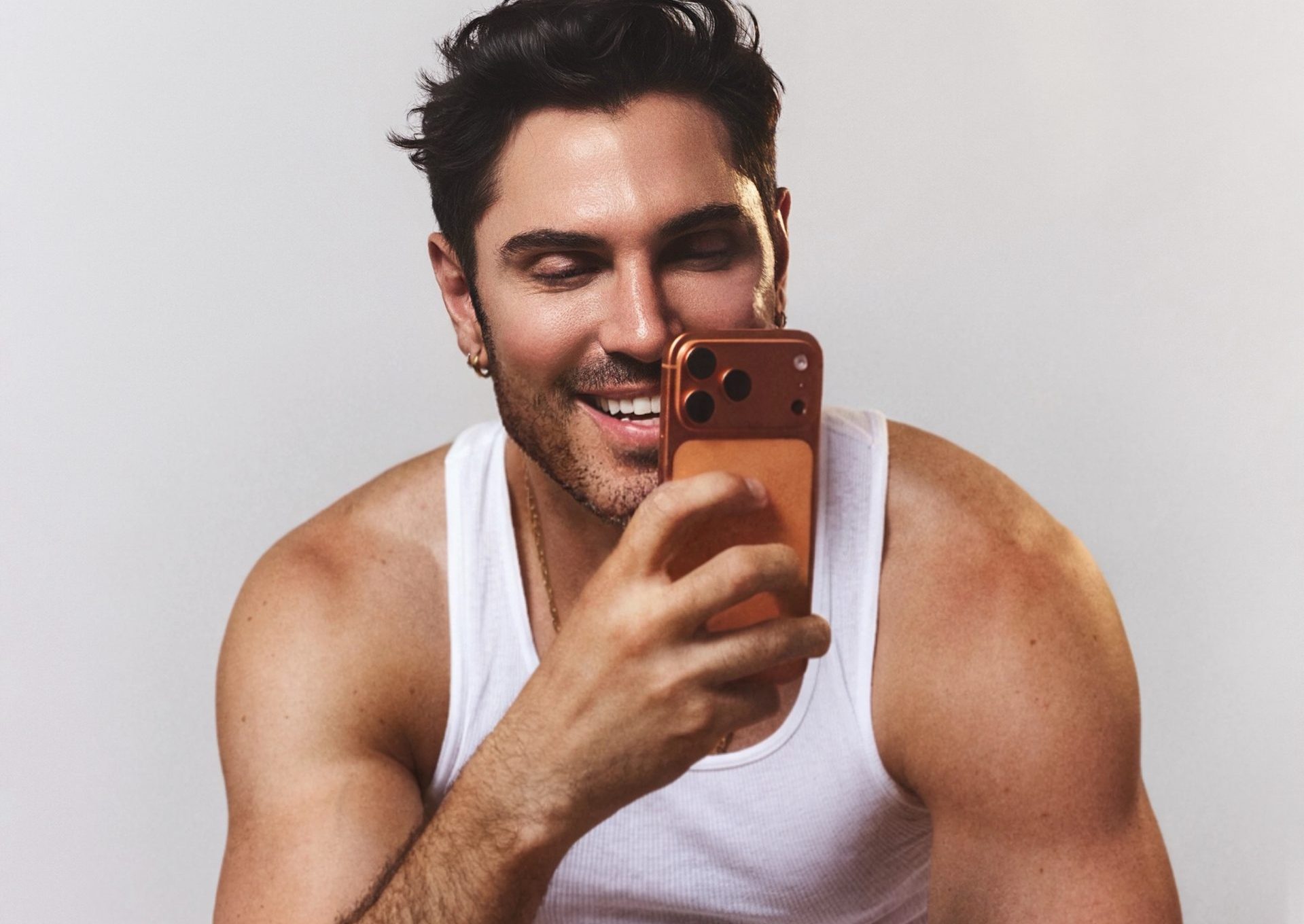
In his career, Joey Zauzig has built a unique space in our online community. Self-branded as “the internet’s best friend,” a title that stuck after an appearance on Good Morning America, Zauzig has created a digital place where humor, food, fashion, and advice all come together. Whether he’s encouraging someone to leave a relationship that no longer serves them, sharing a skinty recipe, or making his audience giggle, Joey has a way of keeping folks engaged. At the core of it all is the idea that showing up as yourself and making others feel less alone can be impactful.
Having experienced bullying for being gay before he was ready to come out, Zauzig understands what it means to search for acceptance and not find it when you need it most. Rather than allowing those experiences to own him, he has transformed them into a commitment to creating the kind of supportive space he wished he had growing up. In our conversation, Zauzig reflects on finding purpose through his platform while staying authentic and continuing to evolve. He also shares his love of food, his dream collab (you’ll have to read to find out), and what folks can look forward to as he takes his next big step with Bravo.
What does that title “the internet’s best friend” mean to you personally, and how did it come about?
It was coined when I was on Good Morning America a few years back and it just stuck. I love giving advice and being a virtual shoulder to lean on for my audience. I hope that people feel like I am a safe space for them when they come to my page and make them feel good and that I’m a friend they can rely on to be there for them.
You were bullied for being gay before you were ready to come out. In hindsight, how did these experiences impact the person and creator that you’ve become?
Those were some really tough periods in my life, but looking back, they shaped so much of who I am today. Going through that helped me develop a stronger sense of who I was and taught me the importance of accepting myself, even when it feels like the world isn’t ready to. I also didn’t have someone I felt I could look up to or turn to during those years. Because of that, I’ve always wanted to create the kind of space I wish I’d had growing up, where people feel safe, supported, and accepted exactly as they are. If sharing my experiences helps even one person feel a little less alone, then those difficult moments have found a greater purpose.
Instead of allowing those painful experiences to overtake your narrative, you’ve built a platform centered on positivity and empowerment. Was there a specific moment when you realized your story could help other folks?
I wouldn’t say there was one moment in time, but overall, as I went through these times, I found myself always wanting to make people feel good and smile. I have been so fortunate to have a platform where I’m able to give that to people, and I can’t wait for it to grow into something even bigger.
What’s the biggest responsibility that comes with being someone that thousands of people genuinely turn to for support?
I think the biggest responsibility has been being intentional with the content I make and finding a balance between putting out content that resonates with people and staying true to myself. I don’t want people to follow me because they think I have life figured out. I want them to feel like they’re hanging out with a friend who’s figuring it out too.
What’s the most meaningful message you’ve ever received from someone whose life was changed by one of your videos?
I receive messages every day, and it truly is the most meaningful part of what I do and makes it worth it. Those messages remind me that content is about so much more than entertainment. You never really know what’s happening on the other side of the screen, and it’s incredible to think that something as simple as making someone laugh, sharing a meal, or being honest about your own experiences can make another person feel seen.
You often encourage people to leave unhealthy relationships and believe in themselves. What’s one piece of advice you wish someone had given you when you were a wee one?
I wish someone had told me that the way people treat you is never a measure of your worth. When you’re young, it’s so easy to think that being rejected, judged, or made to feel like you’re “too much” or “not enough” means there’s something wrong with you. It took me a long time to realize that other people’s opinions are usually a reflection of where they are, not who you are. The right people will never require you to shrink to be loved. They’ll celebrate who you already are.
How do you protect your own mental health while constantly giving emotional support to others online?
I’ve learned that I can’t be there for everyone if I’m not taking care of myself first. I try to set healthy boundaries, spend time with the people I love, and remember that social media isn’t real life. I care deeply about the messages people send me, but I’ve also accepted that I can’t solve every problem. The best thing I can do is show up authentically, offer encouragement, and remind people, including myself, that it’s okay to ask for help and protect your own peace.
Your Skinty recipes have developed a fan base of their own. Where did that idea come from, and what makes a recipe Skinty?
Skinty came from me wanting to enjoy the foods I love while making them the healthiest version possible. I’ve never believed that eating well has to mean giving up the meals you’re craving. To me, a recipe is “Skinty” when it feels balanced. It’s satisfying, packed with flavor, made with better-for-you ingredients where it makes sense, and still feels indulgent enough that you actually want to make it again. That’s always been the goal: healthy without feeling restrictive.
Your content blends humor, fashion, dating, wellness, and food. How do you stay creative while producing content that feels green and not yet seen every day?
I think the biggest thing is that I create from my actual life instead of chasing trends. If something makes me laugh, inspires me, or feels like a conversation I’d have with my friends, that’s usually where the best content comes from. I also don’t put pressure on myself to reinvent the internet every day. I just try to tell familiar stories in my own way. If it feels authentic to me, it’ll feel fresh because no one else has my perspective.
You’ve covered plenty of viral food trends. What’s your humble opinion on folks queuing up for the latest candy-coated culinary creation sweeping TikTok?
I honestly love that food brings people together. If standing in line for the latest viral dessert or trying a crazy new food trend makes someone happy, I’m all for it.
I think the best meals are usually the ones you keep coming back to, not just the ones getting millions of views. I’ll always try the viral spot, but I’m just as excited to find those hidden gems that deserve the same attention. At the end of the day, if it tastes good, brings people together, and creates a fun memory, that’s what really matters.
Social media has blurred the line between creators and their audiences. What’s your take on parasocial relationships, and how do you balance being authentic without feeling like you owe followers access to every part of your life?
I think it’s a really interesting balance. I’m incredibly grateful that people feel connected to me; that’s honestly one of the best parts of what I do. If someone feels like they’re catching up with a friend when they watch my videos, I’ve done my job. At the same time, I’ve learned that authenticity doesn’t mean sharing everything. Some parts of my life are just for me, my family, and the people closest to me. I think it’s possible to be open, honest, and genuine while still having healthy boundaries. The goal has never been to let people into every part of my life. It’s to make people feel seen, entertained, and connected without losing myself in the process.
If you could collab with any celebrity chef or food personality, who would you be stepping into the kitchen with?
Without a doubt, Martha Stewart. She’s an absolute icon. I feel like we’d be the perfect duo; she’d be teaching me the proper way to do everything, and I’d be over there trying to convince her to make a Skinty version of one of her legendary recipes. If I could leave with one hosting tip, one recipe, and maybe an invite to Thanksgiving, I’d consider it a successful day.
Without giving away any surprises of course, what can your followers expect from you over the next year that they haven’t seen before?
Lots of exciting things are coming. You can expect to see me on Bravo, which I’m incredibly excited about. Beyond that, I’m continuing to expand my brand and platform.
a&e features
The trans Handy Ma’am helps where it matters most – at home
Mercury Stardust teaches DIY to empower vulnerable renters and homeowners
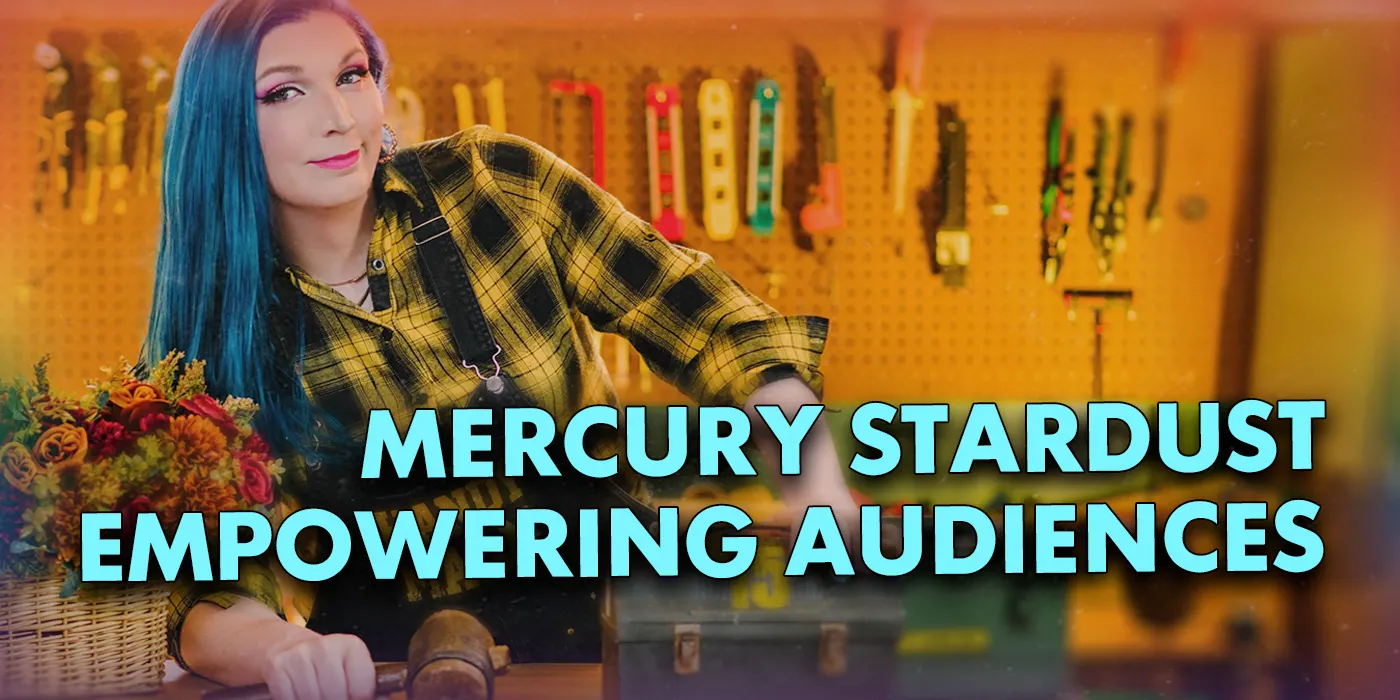
With the midterms fast approaching and Donald Trump’s malignant whimsy dictating the American agenda, many of us feel unsafe as scraps of hard economic and political news randomly swirl around our lives like debris in the swelling tornado outside Dorothy’s Wizard of Oz window. What’s happening? Will I get hit? Who can I trust to help me?
But all may not be what it seems. As America faces a reckoning with Trumpism and Trump’s cratering approval ratings, new leaders are emerging, standing in the breach to help reclaim our common humanity.
Anti-trans political spots blight the airwaves, for instance, driven by Elon Musk’s America PAC, “which has dropped $100 million on anti-transgender ads targeting Democrats,” trans columnist Erin Reed writes in her Erin in the Morning Substack.
The ads are proving largely ineffective. “Anti-trans ads may scare Democratic candidates, but among the general public, polls consistently show that voters rank transgender issues among the lowest-priority issues they care about and vote on, with less than 1% of respondents naming ‘wokeness/transgender issues’ as a top issue,” Reed notes.
However, by saturating the airwaves, trans people are constantly bombarded by “hateful messaging” that also hits unsuspecting viewers.
“They paint transgender people as predatory and disgusting to a national audience in a cheap attempt to win votes, and every viewing raises the temperature of the hate and abuse directed at a community that is already a target,” Reeds writes.
While trans people make conscious existential choices every day, many also live fulfilling lives and seek to be of service in unexpected ways and places.
Take the purple state of Wisconsin. Out lesbian Sen. Tammy Baldwin has won 17 general election races since 1986. Out trans candidate Dina Nina Martinez-Rutherford recently won her Democratic primary for a State Assembly seat representing the 76th District in Madison. And TikTok star and New York Times best-selling author Mercury Stardust, an expert in home repair, also lives in Madison with her trans spouse.
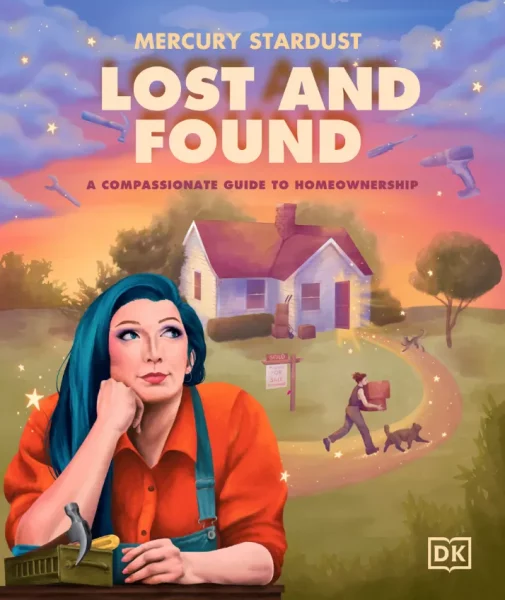
“I was a burlesque and drag entertainer, and I was also a maintenance technician for a property management company and for various companies in tropical Madison, Wisconsin,” Stardust says during an interview while on a book tour for her second book, Lost and Found, A Compassionate Guide to Home Repair.
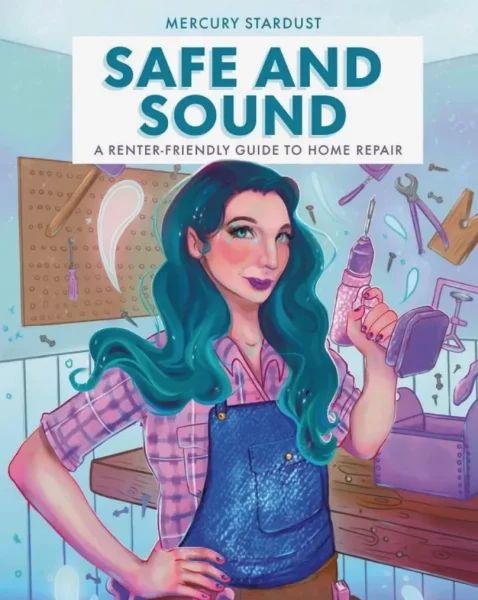
She became well known on the internet for helping strangers learn how to fix their pipes and drywall, helping a lot of renters – which led to her first book, Safe and Sound: A Renter-Friendly Guide to Home Repair.
Stardust now lives in a home in Madison with her “wonderful spouse, Mouse ZZ” to whom she has been married for 10 years. ZZ (Ari) was also born and raised in Wisconsin, went to Cleveland, Ohio, for their undergraduate college degree, and returned home to get their master’s degree at UW-Madison.
“My trans journey is a fairly small part of my entire journey as a content creator, but I have kind of been really public about me raising money for gender-affirming care and helping other trans people access gender-affirming care” through Point of Pride, Stardust says.
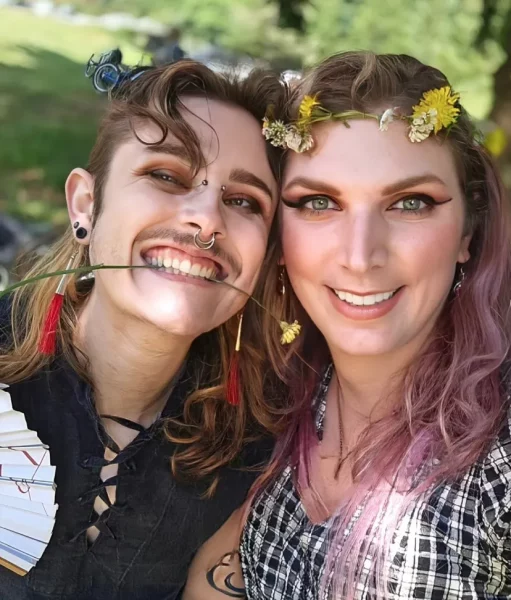
The couple came out together a few months after they were married. “We’ve kind of been living that trans T-4-T life ever since.”
Stardust grew up on a rural family farm with lots of cows. She acknowledges that Wisconsin has a strong sense of conservatism and is also “very pro-union, very pro progressive.”
“The whole motto of Wisconsin is ‘forward,’” she says. “It’s a purple state for a reason.”
A burlesque performer for 15 years, she founded the Wisconsin Burlesque Association.
By running “the only weekly drag and burlesque show (Five Star Tease) in all of Wisconsin for five years,” she says, “I was able to find out who I was. And we built a really strong, like-minded community that made it comfortable and safe to be able to come out as who we were.”
They built community by showing up.
“I think that people have an idea of rural America as if it’s only a certain demographic,” Stardust says. “But a lot of people and I grew up queer in rural Wisconsin, in rural places of the world. It doesn’t necessarily have to be where, ‘Oh, wow! I should be afraid to come out because I’m the one of only a million,’ right? That isn’t really the reality, right? There are a lot of people who are queer in those places, and all you have to do in order to make those communities is show up.”
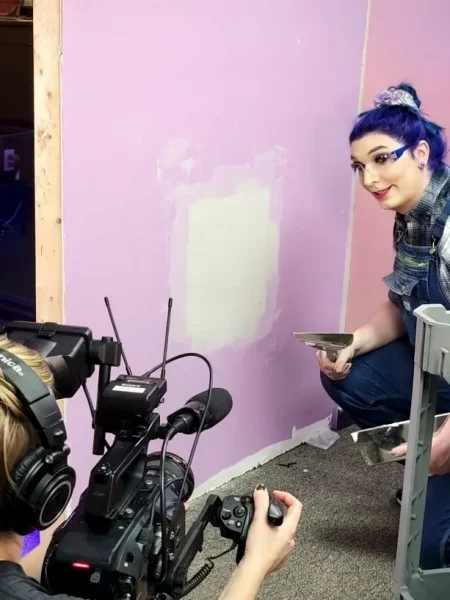
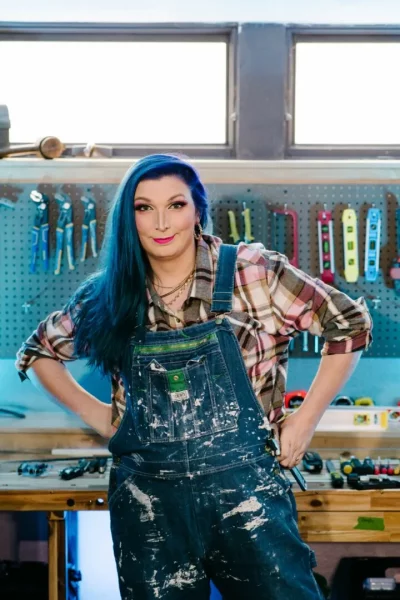
And with confidence, you get to show up as all of who you are. “It’s like being a maintenance technician in those spaces, you know? And there is no joke there. It’s like, this is a real aspect of who I am,” Stardust says, “where I’m gonna show up as who I am and just live my life the way that anyone would, because I’m just a human being. There’s nothing necessarily uniquely special about that. It’s just the fact that I’m also a trans person who happens to be really good at maintenance and is also very good at educating people” on DIY home repairs.
But Mercury Stardust’s big laugh and positive attitude, teaching DIY as The Trans Handy Ma’am, is also quietly empowering, building confidence for vulnerable people that they can fix something and not have to rely on a landlord or strangers. And if the need for maintenance is greater than their capabilities, learning how to pick professional help is important, too.
Practicing self-confidence and showing up safely can also be developed as skills to help build community at this dangerously precarious time when more and more tornadoes, real and imagined, increasingly swirl around us.
The tornadoes are a shared common problem that supersedes petty divisiveness while at the same time elevating and listening to the intersectional experience of those hit the hardest.
Here are some scraps of hard news swirling around in today’s tornadoes, issues we all have to deal with now and whenever Trump crashes.
In the last two years, the Trump administration’s enforcement of Project 2025 has resulted in trans people receiving greater hostile visibility and political scapegoating, in addition to shared cold, hard healthcare issues, food insecurity, housing insecurity, and high home heating and gasoline prices.
Right now, it’s hard to know who’s telling the truth and who’s offering credible ideas and solutions.
Since his first term, Donald Trump’s Orwellian version of truth as “alternative facts” has poisoned the well of discourse and promoted cruelty and division. Journalists were finally forced to call him a liar, question his mental stability and acuity, and peg him as a wannabe dictator.
“We do now live in a country that has an authoritarian leader in charge. We have a consolidating dictatorship in our country,” out MSNBC anchor Rachel Maddow said Monday night, Aug. 4, 2025. “The question is no longer how to prepare for this risk or how to try to avert it, but rather how to fight it now that it is here and in effect.”
Just over a year later, Trump banned broadcast TV press pool coverage from the White House campus while his Justice Department essentially lied for him in court proceedings. Trump launched his own authoritarian-like Trump TV programing to try to control the narrative. On Sept. 24, a Trump-appointed judge issued a temporary restraining order requiring the restoration of press passes.
But with the specific issue of pool coverage still unresolved, the Oval Office meeting between Trump and China’s dictator Xi Jinping was covered by Chinese state media but not covered live by US cameras, with BBC reporters noting, “we’re not sure exactly what they spoke about.” Reminder: at a two-hour private meeting with Russian dictator Vladimir Putin in 2018, Trump told the press that he believed Putin over US Intelligence.
Vice President JD Vance’s announcement of the administration’s intention to remove 760,000 Affordable Care Act enrollees from public healthcare exchanges adds to the five million people who dropped their ACA insurance after Trump and the Republican Congress let premium prices skyrocket. “Give us another chance — or, give us another couple of years to continue to work on the amazing things that we’ve been doing for the past two years,” Vance said on the All In podcast.
Meanwhile, more than 4 million people lost access to critical food aid between last July and April — many of whom are children – because of cuts to the Supplemental Nutrition Assistance Program (SNAP/food stamps), which the White House called “bloated.” More cuts are expected by the end of 2026, NPR reported last month.
Meanwhile, more than 160,000 pounds of raw meat with fake USDA inspection labels were recalled on Sept. 24; the CDC reports that as of September 17, 2026, 3,471 confirmed* measles cases were reported in the United States in 2026; and university scientists think outbreaks of infectious diseases like Ebola, hantavirus, bird flu and COVID-19 are on the rise.
And as Trump’s war of choice in Iran expands throughout the Middle East, home heating oil and gas and diesel prices continue to climb. An estimated 4 million to 5 million households use heating oil for homes during the winter, according to the U.S. Energy Information Administration. Massachusetts is already reporting that for the week of Sept. 21, 2026, the average retail price for heating oil hit $6.15 per gallon. That’s a 74.7% jump compared to last year, or a $6,000 bill compared to previous years of maybe a $3,500 or $4,000 bill.
And what’s going to happen when the nor’easter storms hit the East Coast? California Gov. Gavin Newsom has already declared a state of emergency to prepare for being the epicenter for a predicted “historically intense El Niño,” according to a news release from the governor’s office. There’s a 75% chance this super storm will become the strongest since 1950, according to the latest reliable forecast.
While Trump is bored with the war and calls the affordability crisis a hoax, community grassroots organizations such as Indivisible help produce No Kings protests nationwide, and individuals like Mercury Stardust help empower people to show up as who they are where they live.
Maybe they will also show up and share common ground over a common issue and create a new kind of real equality-based intersectional democracy, a more perfect union, in the process.
This is a cross-post from Karen’s LGBTQ+ Freedom Fighters Substack.
a&e features
Embracing queer exploration with actress Rosslyn Luke
The actress speaks about her coming out journey and making wedding plans with Scarlett Johansson.
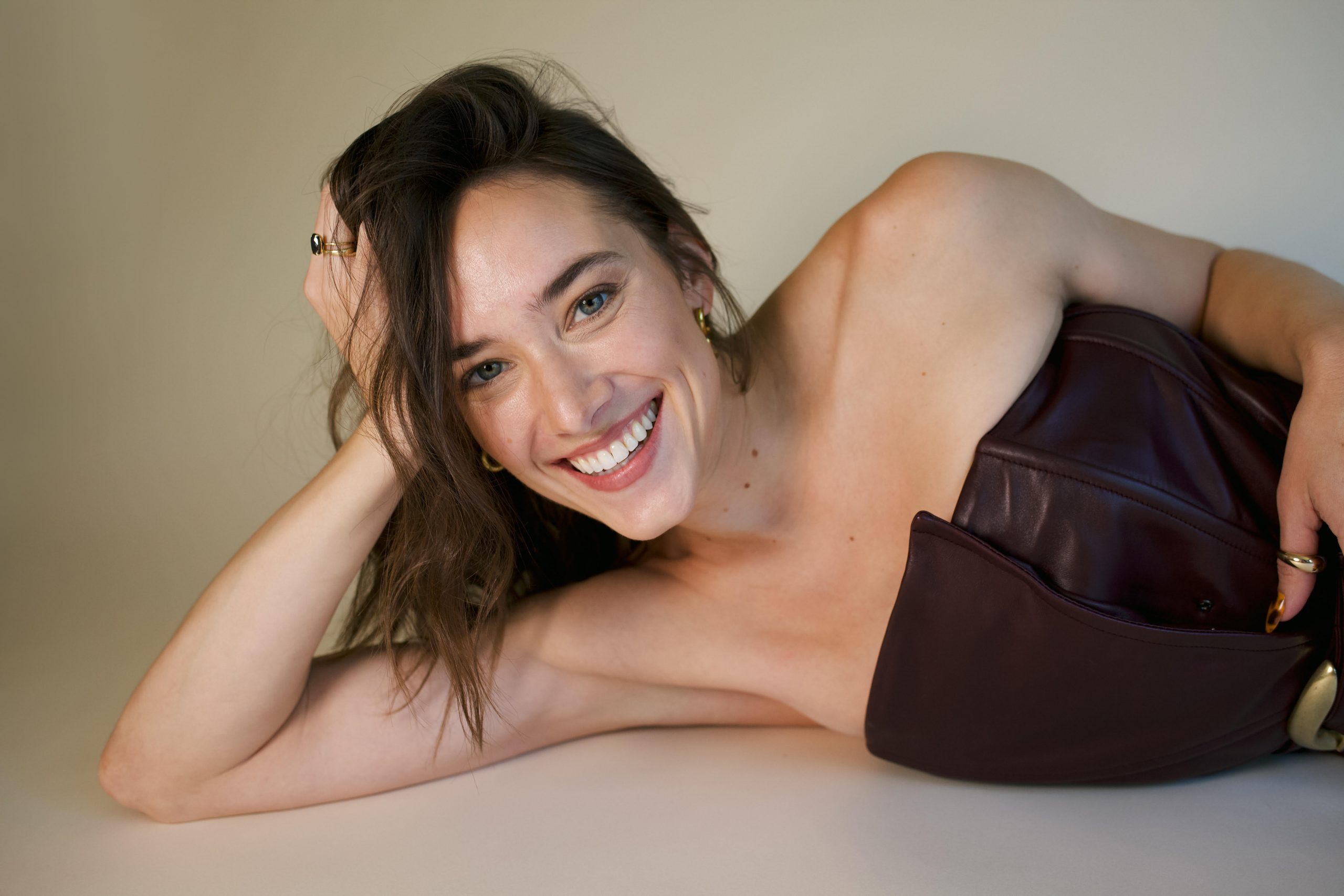
For most of history, performers have been forced to hide their queer identity to succeed — Rosslyn Luke is determined to do the exact opposite.
The past few years have been a professional whirlwind for the actress; she just starred in NEON’s Paper Tiger alongside Scarlett Johansson, Adam Driver, and Miles Teller. This comes after almost a decade of Rosslyn making a name for herself in the indie filmmaking world. It’s promising to be the first in a new wave of large-scale features, with Luke being announced alongside Emma Roberts and Leslie Bibb for a new film focused on renowned advocate Hal Donaldson.
It’s been amazing for Luke’s many longtime fans to see the actress finally receive the appreciation she deserves. And, especially for LGBTQ+ film-lovers, it’s so much better when viewers learn she’s doing all of this while being openly, proudly queer.
“Getting the role in Paper Tiger was a dream come true,” raved Luke. “My first day on set, I was sitting at a kitchen table with Scarlett Johansson and Adam Driver — my heart still kind of races when I think about it — and there was very much a feeling of, ‘Oh, I’ve done it.’”
It was a defining success for Rosslyn’s long career, with the actress joking about her first big role: starring in her Washington state elementary’s school’s Christmas play. Little Luke instantly fell in love with the versatility that acting entailed, a passion she still feels in every role today, saying, “I think it’s the exploration…I’m really curious about what makes everyone who they are. I really enjoy research and trying to figure out who my characters are, and all of the humanity that exposes me to. I think that is a huge gift.”
This sense of exploration not only fuels Rosslyn’s love for acting but also helped her realize and embrace her truest self when she came out seven years ago.
“I didn’t come out until I was 30,” the actress reminisced, thinking about the journey it took to understand her sexuality. “And the exploration it took to get there [is] a lot like the exploration I do through roles. I would take characters that weren’t necessarily gay and twist them to have queer backstories. And I think that was…my way of exploring in this safe world as an actor, before bringing it into the real world.”
And since bringing it into the real world, Luke has refused to hide her sexuality. She remembers that moment at the table with Driver and Johansson and how invested each actor was in her upcoming nuptials, with Rosslyn laughing, “It was very present in the room, my queerness. They both asked a gazillion questions — Adam was extremely invested in my engagement and how I was going to do the proposal. Yeah, it was very sweet!”
Luke’s genuine excitement over being able to pursue these large roles as an out queer woman is refreshing within an entertainment industry that still struggles with homophobia. It’s a fact that may shock some viewers; we’ve been lucky to see many queer-centric projects in the last few years. But there is still a great stigma against LGBTQ+ performers and creatives, with these people not only facing immense hurdles, but outright discrimination when trying to get their art made while being open about who they are. These lingering stigmas are ones that Rosslyn knows well and refuses to put up with in this new phase of her career, stating, “It’s such a big part of my identity, being a queer woman. And I feel like every time it’s ignored, it’s kind of… it feels like this huge boulder that I have to go around as I’m talking about myself.”
“As a queer person now, you know, years after coming out, I’ve spent so much time rediscovering who I am. Re-finding bits of myself that I now understand better. And that just brings so much more clarity to each of my performances and each of my characters. Because I feel like the more that I understand myself. the more that I can understand the world around me, and hopefully represent it in a…more accessible way.”
Luke’s deeper understanding and love for her sexuality clearly show in the powerful performances she’s offered in recent years, ones that are gaining her more attention than she’s ever had before. It’s clear that the actress is preparing for a whole new wave of big features like the ones she’s been proud to work on. And Rosslyn knows that not only do these projects mean so much to her, but also to the many viewers who want nothing more than to see an LGBTQ+ person winning today.
To these fans, Rosslyn says, “I hope…I hope they feel seen. I hope that I can present an authentic version of myself as I go out into the world, as I move forward in my career. And I hope that having my performances be respected and grounded in reality will allow other girls to know that they can do whatever they want to do. Even if they’re gay, even if they’re from a small town in Washington where there’s not a lot of representation. You can do it…you can kind of be whatever you want to be.”
And then, after thinking a moment, Rosslyn laughed and added, “You might have to get out of that town, though.”
a&e features
‘Star Trek: Strange New Worlds’ star Celia Rose Gooding breaks down that finale time travel twist
The Season 4 finale gives Gooding the ultimate showcase as a performer
At long last, Celia Rose Gooding can talk about the Star Trek: Strange New Worlds Season 4 finale. And it’s a finale that belongs almost exclusively to her.
In the finale episode, now available to stream on Paramount+, communications officer Nyota Uhura (Gooding) comes face-to-face with an older version of herself.
In order to save Scotty (Martin Quinn), Uhura must uncover a mystery and confront the leader she was always destined to be.
It’s one step closer to Strange New Worlds closing the gap between The Original Series, where fans were first introduced to Uhura through Nichelle Nichols’ iconic performance back in 1966.
“We see them confront each other and love each other in a way that can only breed more self-acceptance, self-understanding and self-actualization, which is what fans have been hungry for this whole time,” Gooding says of Uhura’s interaction between past and future self.
Gooding spoke with The Blade to break down the emotional final episode, why she was hesitant to pay homage to Nichelle Nichols’ beehive hairdo, and her hopes for the future of Black and queer representation on Star Trek amid the Paramount-Warner Bros. merger. This interview has been edited and condensed.
I know you’ve already finished filming the upcoming fifth and final season, so first of all, congratulations! This finale is such an exciting showcase for you. Can you break down this time travel twist and how you approached playing these two different versions of Uhura?
So much of what this episode meant to me was about honoring everything Uhura means — not just to me, but to Trekkies across the world, to people who’ve seen themselves in Uhura, and most importantly to Nichelle Nichols. I didn’t get the opportunity to meet her, although I’m desperate to have had that. But I think there’s something really special and unique about being able to have a conversation with a version of yourself that you no longer recognize in the past, and also a version of yourself that you do not recognize in the future. So much of the conversation between the two Uhuras in the beginning is filled with tension; they’re not super fond of each other just because they are so different. There’s so much growth and separation between their two mentalities. Given the stakes of the episode, Strange New Worlds is hearing things and is called on in a way that she does not understand. And so much of Uhura’s job, as a communications officer, is to understand — especially the things that she’s hearing, the conversations that are going on. When she is detached from that understanding, she’s left floating in this really uncomfortable space. The first thing that she can reach out and grab onto is something that should not be happening; she should not be able to speak to a version of herself that exists in the future. It breaks so many directives; she is breaking a lot of rules about time travel and temporal anomalies.
And then on the flip side, we have TOS [The Original Series] Uhura, who gets back on this mission, and something has gone terribly wrong. That tenacity, that perseverance, that reminiscent characteristic between both of these Uhuras is that they’re not going to give up. I love that in Uhura’s mind, if something doesn’t make sense to her, it’s because something is wrong. And not because she is incapable of understanding what’s happening; it’s that something has happened and it must be corrected. I love the confidence that we see in TOS Uhura of talking to her friends and crewmates and being like, “You aren’t listening to me. You need to listen to me!”
What was the most challenging part of playing these two parts?
The time jump between the two of them. Originally, it was three years, but now in the edit it’s just one. And playing Strange New Worlds Uhura, who knows all of this time has passed but doesn’t know what’s in it that makes her future self so unrecognizable — at first, I was trying really hard to make sense of that tension, trying to establish something. I kept coming up against the obstacle of, “How can I make this make sense?” Even when we only had 16 hours until shooting, I was down to the wire. I had conversations with director Chris Fisher, and he really implored me to not focus so hard on trying to make it make sense; the moment it makes sense is the moment we don’t have a story anymore. So much of the tension and conflict is that we don’t understand how this has happened; these two characters have to make it make sense together, and they do, because they always do! But it was a real challenge as an actor to live in that liminal, unknown, uncharted space and let that discomfort be the fuel for the engine that is the story. Even as I talk about it now, I fear that I’m not making any sense!
Finally, I think fans of Uhura have been so hungry for her to just inch closer and closer and close that gap, and I think while [the Season 4 finale] doesn’t completely close that gap all the way, we see them confront each other and love each other in a way that can only breed more self-acceptance, self-understanding, and self-actualization, which is what fans have been hungry for this whole time.
And you get to pay homage to Nichelle Nichols with that iconic beehive hairdo.
Story-wise, it was important for us to give the audience a way to immediately recognize who was talking because they’re both me, with my face. And it wasn’t just my hair that established the timeline change — it was the lighting, color grading, and everyone else’s different looks and costume changes. But the conversation around that iconic beehive- at first, I was a little resistant. I’m not gonna lie to you. I didn’t love the idea of recreating this iconic hairstyle because I have such admiration for Nichelle Nichols. God, I owe her so much for this era of my career. It is all thanks to her and what she has done, and so it felt like blasphemy, sacrilege. I was like, “I don’t know if this is right, guys; I think some things are just meant to be precious.” And then I saw it on camera, and I was like, “You know what? Maybe there’s a reason why they’re the showrunner, and maybe I should just do my part and let everybody else do their part.” It’s so recognizable, iconic, and immediately present.
I’m just filled with pride. I’ve been holding on to this episode for so long. I’ve been dying to talk about this episode because we shot it a year and four months ago, in June 2025. And I’m just really excited for fans to see it. It was a labor of love. It is an ode to Nichelle, but it’s also an ode to the version of Celia that said yes to playing Uhura because she had no idea what she was fucking in for. She had no idea, and just as Uhura held her hands and said, “You’re doing great,” I just want to hug that version of myself who was so hard on themselves, the same way the Strange New Worlds Uhura is, and just tell her to exhale and be like, “Baby, you got it. The hard part is behind you now. You get to just show up, do your job, and learn the lessons day-by-day.
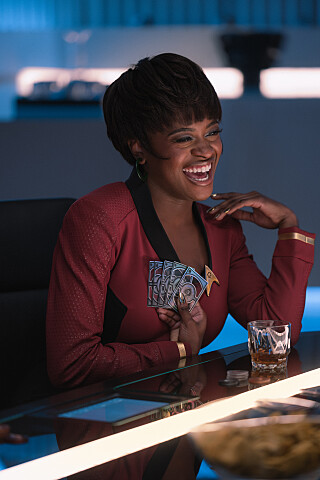
As we’re celebrating Star Trek’s 60th anniversary this year, it’s been a moment to recognize the show’s diversity and inclusion. There are, naturally, some fears about what the future of the show will look like considering where the industry is going amid the Paramount merger. As a queer person, how do you feel about the potential for the show to continue embracing diversity and perspective?
I know my publicist is holding her breath right now! I am really excited to be surprised about the future of Trek because right now, realistically, there is no Trek in production. We have another season of Starfleet Academy to release, and another season of Strange New Worlds to release, and then it gets quiet for live-action Star Trek. I know there’s a Nickelodeon show coming; there’s a lot of animated Trek happening, but when it comes to Gene Roddenberry’s vision, I don’t know what the future holds. The unknown can mean so many different things, and I am really excited about what I’ve been able to donate to this franchise. I’m so excited about what it means as a dark-skinned, Black queer individual to exist in Trek, to have my vessel that Uhura lives on in, and what it means for me and my community.
I can’t imagine that Strange New Worlds is going to be the last of Trek. I hope that is not the case because Trek has done so much for how people think about the future and how people embrace the future. There is so much positivity and diversity embraced in Trek, and the world is only going to get more diverse, despite what the powers that be want you to believe. We’re not going back, and I am excited for Star Trek to continue to be at the forefront of the stories that are told about how we do not go back, about how we move forward and embrace each other and embrace the unknown, embrace the diversity of opinion and experience. I’m just really excited to be surprised. I want to wake up one day and be like, “I could never have imagined this for Trek!”
a&e features
Are you ready to ‘Rock Out’ with Dustin Lance Black?
The filmmaker speaks about his new documentary, queer punk rock, and Dolly Parton.
It’s hard to imagine modern music without the LGBTQ+ community. Whether it’s the wild rhythms of pop or the beautiful tones of R&B, almost every genre owes a huge debt to this culture and how it sculpted this industry into the global powerhouse it is today. Every musical style has been shaped in some way by queer people throughout history, a fact that is especially true for rock, punk, and heavy metal.
These three genres are explored beautifully in Dustin Lance Black’s Rock Out, a four-part docuseries that shows how queer folks of the 60s and 70s continue to shape the music that audiences love today. It delves into the closeted musicians, gay managers, and LGBTQ+ fans who helped shape contemporary music, finally remembering the queer people that so many want you to forget. And all of this hard work can be owed to one person: Dustin Lance Black’s brother, Marcus.
“Rock Out started with a question that my brother asked me,” said Black, speaking about the project with the LA Blade. “He was really into rock and roll, punk, heavy metal — he really surprised us when he came out. He was feeling like an outsider, even in the gay community, and he’d asked, ‘Are there gay people like me, who are into this kind of music and this scene?’ I…I told him I didn’t know.”
Unfortunately, these feelings of living as an imposter led to Marcus taking his own life at a young age. It was a loss that continues to shape Dustin and his career as a filmmaker, with the man creating many award-winning queer films like Milk and Rustin to inspire new generations with the stories of those who came before. But while he’s worked on various projects documenting LGBTQ+ narratives, none have been as personal as Rock Out, with this exploration of queer people in music honoring Marcus and the many other young people struggling to find somewhere they belong today, with Black explaining, “I think that [Marcus] not having a place in the music that was the center of his world led to his early death. And this [documentary] was an opportunity for me to answer the question: were we there? Is there a place for us there now? And if we were there to begin with, what did we do? And the answers were so shocking to me.”
These answers are shown across Rock Out’s four episodes, with Black taking film crews across the United States and the UK to discover the queer stories that kickstarted punk, heavy metal, and rock so many years ago. He discovered how queer ‘transgression’ was key to many artists’ success; audiences were drawn to musicians who shirked societal norms. From the flamboyancy of Prince to The Beatles’ signature hairstyles, so many performers adopted queer mannerisms to attract fans, with the documentary showing how these legendary images were crafted by queer people working in the background. People who knew that, if their real identities ever came out, they’d be immediately blacklisted and booted from the industry they’d dedicated their lives to.
“I mean, Little Richard, who is the father of rock and roll, would eventually come out — but the backlash was so strong, he would go back in!” Exclaimed Dustin. “Jobriath was one of the biggest talents, but he tried to play as an openly gay rock star, so no one bought the records. The documentary…it does start off sad, because some of these artists tried to come out before the world was ‘ready’ to receive them. But [Rock Out] also tells the story of how queer people finally broke through.”
It’s a bittersweet evolution that Dustin documents through a mixture of never-before-seen archival footage and interviews with musicians from that era — including Dolly Parton, with Rock Out featuring one of the final interviews the country singer gave before her passing in August 2026. Black spoke about what an honor it was to speak with her, saying, “She was managed by Sandy Gallin, a gay man, and she talks about what an advantage it was to have a gay manager at the time. It was really moving to hear the interview, because she supported LGBT people very early on…I think we owe her. It will be very hard to find someone to fill her shoes.”
It’s through conversations like these and highlighting the music industry’s many LGBTQ+ changemakers that Dustin Lance Black hopes to honor his brother, with Rock Out sending a very important message to all watching: yes, you belong. In fact, not only do you belong, but by tracing the roots of heavy metal, punk, and rock, he discovered that any LGBTQ+ fan should be proud, knowing that their queer ancestors made these songs the chart-topping genres they are today. He hopes that this documentary assures them that they are not alone in their love for this music, saying, “Loneliness and isolation can lead to young people making some pretty dire decisions. And what helps prevent that is having easily accessible stories of foremothers and forefathers who came before, so that you know we have always existed, and that they were fighting for them. Fighting for them to have a better life.”
It’s a message that people like Marcus need to hear, and it’s one that Dustin gives to audiences with every song, single, and note of Rock Out.
Rock Out premieres on Revry on September 20th, 2026.
a&e features
Cameron Esposito will make you laugh (and cry) on ‘King of Drag’ season 2
The new host of this historic series breaks down why we need it today
Drag enthusiasts — and fans of LGBTQ+ excellence in general — were thrilled in 2025 when Revry debuted the first-ever drag king competition show, King of Drag.
Joining the pantheon of drag-themed reality series like RuPaul’s Drag Race, this new program finally gave the kings of our community the attention they deserve, introducing viewers to a group of stellar performers who’d been flexing their artistry for years in communities across the country. Filled with a judging panel of queer royalty, complex challenges, and jaw-dropping creations from each contestant, King of Drag ended season one to widespread acclaim and thousands of new fans all over the world.
These watchers were elated when it was announced that the show would be returning in 2026 for a second installment. And they were even more excited to find out who’d be taking over as its illustrious host: historic queer comedienne Cameron Esposito.
This comic has spent the past few decades proving why they’re the perfect person to host a show like King of Drag. Many will know Esposito from their hilarious (and often very twisted) comedy; her many stand-up specials, albums, and guest appearances have earned her numerous accolades. Pair this with her current standing as a vocal LGBTQ+ advocate, and many folks in the queer community regard Cameron as one of our funniest activists today, always ready with a joke and a lesson on why we need to come together and fight against hatred. With that reputation, it was no question that she’d be the best person to fill the shoes of former host Murray Hill, after he stepped away from the program after season one. And in conversation with the LA Blade about the new role, Esposito raved about how excited they were to take on this mantle, saying, “I started [my career] around Kings.”
“They were really socially justice-motivated. They were super fun to watch — very sexy — and funny,” she continued, recounting her early days as a comic in Chicago’s thriving queer nightlife scene. “So having a chance to lift up that community as a host….I’m trying to come up with a lot of sick jokes so that the show is as good as it possibly can be!”
Cameron spoke about what it meant to lead King of Drag season two and how honored she was to guide this whole new batch of Drag Kings. “Any reality competition show is a high-pressure situation, and folks are really putting themselves out there! There’s so much vulnerability in that. So I really hope that I was able to bring some sweet little moments of relief for them. And also for the viewers — I hope the viewers think I’m funny,” she laughed.
Joined by judges Gottmik, Vico Ortiz, and Damian Pelliccione, Esposito worked hard to not only make amazing television, but to finally give these performers the appreciation they’d worked years for. She stressed that beyond the jokes she makes on this season (all of which she assures are hilarious), this was her main reason for joining the series, saying, “One of the biggest things was to focus on the kings. To get these folks the greater recognition that television brings, so that when they go back to their cities or when they’re on tour, people have that extra incentive to get out and see them.”
Because King of Drag understands how these artists have been treated not only by the mainstream media, but by the LGBTQ+ community itself — namely, how many queer people push them aside to focus on more ‘conventional’ images of drag. It’s why so few kings have been allowed on drag-centric shows until now, a glaring erasure that not only undercuts each series as a source of queer culture, but robs these performers of the success that television often entails.
“Trans dudes, queer women, lesbians…we are still, often, at the margins of a larger cultural push,” Esposito explained. “Elevating kings is an opportunity to trust audiences more…[because] I really don’t think that viewers have been given the opportunity to treat us seriously. You know, we might be joking around — but we are not a joke. When you’re talking about our rights, our respect, our safety…knowing people who are actually in this community affects how we’re treated. It affects how people see us, that we’re not just like nameless, faceless nothings.”
“I think it’s time for these kings who deserve recognition, and I also think it’s time to trust and move the needle in a larger context. Because we deserve to feel noticed, because we deserve to be paid. And because we deserve to be safe.”
Cameron Esposito is excited to lead King of Drag with not only the comedy that has defined her career, but the advocacy that guides her every single day. Because this series is not only a competition reality show — it’s a spotlight. A spotlight on a community that faces so many issues yet has never received a platform to openly speak about them. Combine this with a celebration of their astounding art, and King of Drag provides an exploration of drag kings like most queer viewers have ever seen before.
Esposito is proud to play such a huge part in bringing that to audiences today — and she promises to give you some sick, twisted laughs along the way.
King of Drag season 2 drops on Sept. 20th on REVRY.

JD Vance takes swipe at James Talarico’s sexuality during Texas rally

Hungarian lawmakers approve bill to remove anti-LGBTQ+ provisions from ‘child protection’ law

Exposing the realities of influencer culture with Bran Flakezz

‘Governments that attack LGBTQ+ rights learn from each other’

Horror genre has evolved into space to explore queer identity

On Republican Long Island, gay Democrat Chris Gallant bets on public service over politics

Zaya Wade to be honored by LA LGBT Center with Model of Pride award

Report: LGBTQ+ exclusion costs Japanese economy billions a year

Through the blaze: Author Deborah Samuel talks about survival, healing, and ‘Grace Through Fire’

Annie Andrews denounces trans athletes after Trump targets her
-
 Politics2 days ago
On Republican Long Island, gay Democrat Chris Gallant bets on public service over politics
-
 LGBTQ+ Youth Mental Health5 days ago
Zaya Wade to be honored by LA LGBT Center with Model of Pride award
-
 Japan2 days ago
Report: LGBTQ+ exclusion costs Japanese economy billions a year
-
 Books2 days ago
Through the blaze: Author Deborah Samuel talks about survival, healing, and ‘Grace Through Fire’
-
 Congress2 days ago
Annie Andrews denounces trans athletes after Trump targets her
-
 Arts & Entertainment1 day ago
Horror genre has evolved into space to explore queer identity
-
 Movies4 days ago
Essential queer horror classics for Halloween
-
 Turkey1 day ago
‘Governments that attack LGBTQ+ rights learn from each other’
-
 Books3 days ago
In ‘The Lost Brontë,’ a complicated lie can lead to danger
-

 a&e features4 days ago
LA writer/director gets a little ‘Psycho Baby’