News
‘Conversion therapy’ resolution passes California Assembly with evangelical support
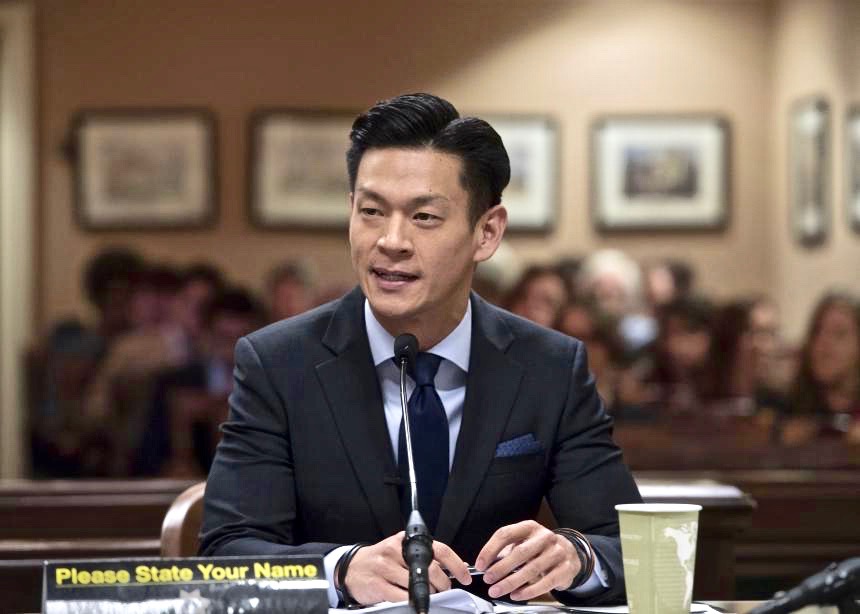
Out Assemblymember Evan Low is trying something different. He wants to not only make law but also eradicate the harmful anti-LGBT stigma at the core of so-called “conversion therapy” through persuasion. On June 24, at the end of Pride Month and just days before the 50th anniversary of the Stonewall Rebellion, he took a firm step toward that goal when his ACR 99 passed the California Assembly on a voice vote, with support from moderate Republican Chad Mayes, son of a pastor and graduate of Liberty University.
The non-binding resolution calls on all Californians, especially religious leaders and educators, to recognize the harm done to LGBT individuals who are forced to undergo the dangerous and disavowed practice of “conversion therapy” to try to change their immutable sexual orientation and gender identity into heterosexual.
But this is not the outcome LGBT politicos expected after he pulled a bill last year that was expected to have national repercussions and promised to produce stronger legislation. Low’s AB 2943 would have expanded the current California ban on “conversion therapy” by declaring it a fraudulent practice under the Consumer Legal Remedies Act and extending certain consumer protections to individuals harmed by efforts to “change” or “repair” their sexual orientation or gender identity.
AB 2943 built on the LGBT youth protection bill authored by then State Sen. Ted Lieu to prevent state-licensed therapists from practicing “psychological child abuse” on minors under 18. Then Gov. Jerry Brown signed the bill in Sept. 2012, telling the San Francisco Chronicle: “This bill bans non-scientific ‘therapies’ that have driven young people to depression and suicide. These practices have no basis in science or medicine and they will now be relegated to the dustbin of quackery.” Lieu’s bill became a national model with 18 states following with similar legislation.
Low, then chair of the California LGBT Legislative Caucus, spoke for many in presenting his case before the Assembly last year. “This is a very personal issue to me,” Low said. “Growing up with so much hate, I, too wanted to find out if I could be changed and if anything could work because of the societal pressures that we have. There is nothing wrong with me. There is nothing that needs to be changed.”
The Assembly also heard from survivors such as Ryan Kendall. “As a young teen, the anti-gay practice of so-called ‘conversion therapy’ destroyed my life and tore apart my family,” he said. “In order to stop the therapy that misled my parents into believing that I could somehow be made straight, I was forced to run away from home, surrender myself to the local department of human services, and legally separate myself from my family. At the age of 16, I had lost everything. My family and my faith had rejected me, and the damaging messages of ‘conversion therapy,’ coupled with this rejection, drove me to the brink of suicide.”
Low’s AB 2943 passed both chambers and was expected to be signed into law by Brown, despite a swarm of controversy. In fact, the conservative Federalist.com called fact-checking website Snopes a “sneaky liar” after Snopes declared “False” some religious claims that the bill would make the sale of Bibles illegal.
That didn’t stop conservative media from spreading the inaccuracies.
“This is essentially criminalizing religious beliefs. And I don’t mean to speak in hyperbole here, but if this bill were to pass, would this prohibit the sale of the Bible, that teaches these things about sexual morality?” One America News Network’s “Tipping Point” host Liz Wheeler asked Republican Assemblymember Travis Allen, a gubernatorial candidate (italization is by Snopes).
“Well, literally, according to how this law is written, yes, it would. This is, you know, PC culture, politically correct culture, gone horribly awry. This is really directly hitting at our First Amendment rights as American citizens. Now the Democrat legislators in this building, right behind me, the California state legislature, they want to tell you how to think, what sort of books that you can read, write and purchase,” Allen replied.
Many were shocked when Low pulled the bill. But in building support for AB 2943, he saw something else happening. Traditionally anti-LGBT religious told him that while they still considered homosexuality to be a sin, they did not agree with “reparative therapy.”
“I was heartened by the conversations,” Low told the Los Angeles Blade last September. “A number of religious leaders denounced conversion therapy and recognized how harmful the practice is while acknowledging it has been discredited by the medical and psychological communities. I left those productive conversations feeling hopeful.”
After Low took a year to listen and dialogue, he introduced ACR-99. “We have a long road in the fight to remove LGBTQ stigma and discrimination from our culture,” he said. “While we live in one of the most politically divided times in living memory, ACR 99 demonstrates that it is possible for two seemingly divergent, but truly overlapping, communities to work together to address a controversial subject. We will continue to work together to build bridges and strengthen alliances in our fight against the harmful practice of conversion therapy.”
Some of his most unlikely support came from religious educators who were keenly aware of the depression and suicidal thinking of LGBT students.
“Believing that every person is created in the image of God, we support this call to equitable treatment of all people. We are glad to affirm your desire to see people as they are, protecting their autonomy, dignity, and to treat them with the respect that is due them as God’s creation. The call to compassion and caring treatment is consistent with our deep desire to reflect Christ in all we do,” Kevin Mannoia, Chaplain at Azusa Pacific University and former President of the National Association of Evangelicals, said in a press release after the resolution passed the Judiciary Committee.
Low says meeting with evangelical leaders was like “going into the lion’s den.” But then he had an epiphany, finding “such a different contrast to what I had anticipated the reception would be when I met with them,” especially the expected hate.
“In fact,” Low tells the Los Angeles Blade, when I asked them point blank, ‘Do you believe in conversion therapy? And do you believe that it works?’—the answer was ‘No.’ And I said, ‘Do you agree that it’s harmful?’ And they said ‘Yes.’ And I said, ‘Well, why are you opposing this legislation, because it would appear, then, that we would be in alignment?’ And they said, ‘The unintended consequences for us is overreaching and too broad and could we have greater conversations collectively about that?’”
Low decided to introduce a resolution first, before bring back a stronger version of AB 2943. “I think progress takes time. Remember that saying: ‘if you want to go fast, go alone. But if you want to go far, go together.’ I think that this hopefully will be a transformative effort in which the evangelical community and the LGBT community can finally find something to which we can be in lockstep, hand-in-hand, in supporting collectively,” though he concedes that on individual issues such as marriage equality “we are on opposite sides.”
But, Low says, “on a fundamental issue like ‘conversion therapy,’ this, I believe, is historic. We have evangelical leaders putting their name to this resolution, coming to present in the Assembly Judiciary Committee, to stand by the side of the LGBT community in partnership in denouncing ‘conversion therapy’ as a harmful practice. And that is the first step for us. Then to build off of that relationship to hopefully look further as to how we can continue to advance the issues of inclusion, love, and respect for all people.”
But Low notes that there was some prodding that preceded evangelicals denouncing “conversion therapy” through ACR 99. Two years ago, Low and then Sen. Ricardo Lara introduced a bill that would strip Cal Grant funding of student financial aid from these religious colleges like Loyola, Azusa that discriminated against LGBT students. “Colleges in the state of California were kicking out and banning students based on sexual orientation and yet they receive public taxpayer dollars,” Low says. “That was my first entrée into sort of ‘battling’ evangelical and religious leaders with respect to LGBT rights and that of the religious community.”
But as he was trying to build a coalition of support for his bill, Low established “a number of genuine warm relationships” with some evangelicals who were also interested in finding a common ground.
“So that’s why I felt that, okay, we’re talking about conversion therapy, but this is much broader,” Low says. “The symbolism and the rhetoric and the narrative behind this is transformational. In other words, what can we now do from this resolution in which we have put ourselves on the front lines of this, and what can be build off of this? So yes, we will hope to then figure out what we can then codify and change into law with respect to strengthening our laws against conversion therapy.”
After that, Low says the coalition will look at “other things that we can do to help build bridges with the religious community on a number of things affecting our LGBT community.”
“I never thought that I actually personally would be in this position in which I’m actually thanking and standing hand-in-hand with evangelical and religious leaders,” Low says, the same leaders he’d see time after time on the opposite side. “Dialogue is so important. That’s what I think is very transformational.”
The Williams Institute at UCLA posted an update of their January 2018 report on “conversion therapy” estimates noting that 698,000 LGBTQ adults (ages 18-59) in the United States were subjected to “conversion therapy,” of which 350,000 LGBTQ adults reporting that they were subjected to the practice as adolescents.
The report notes that 16,000 LGBTQ youth (ages 13-17) will receive “conversion therapy” from a licensed health care professional before they reach the age of 18 in the 32 states that currently do not ban the practice. An estimated 57,000 youth (ages 13-17) across all states will receive “conversion therapy” from religious or spiritual advisors before they reach the age of 18.
However, an estimated 10,000 LGBTQ youth (ages 13-17) live in states that ban “conversion therapy” and thus have been protected.
A number of prominent professional health associations—including the American Medical Association, the American Psychological Association, and the American Academy of Pediatrics, among others—have issued public statements opposing the use of the therapy, saying it is harmful and ineffective.
The American Psychological Association previously released a finding stating that efforts to change a person’s sexual orientation or gender identity are associated with poor mental health and tend to increase the risk of suicide, especially in LGBTQ youth.
ACR 99 now goes to the Senate Judiciary Committee and then to the full Senate, where it is expected to pass. The resolution does not require Gov. Newsom’s signature. – Staff reports contributed to this story.
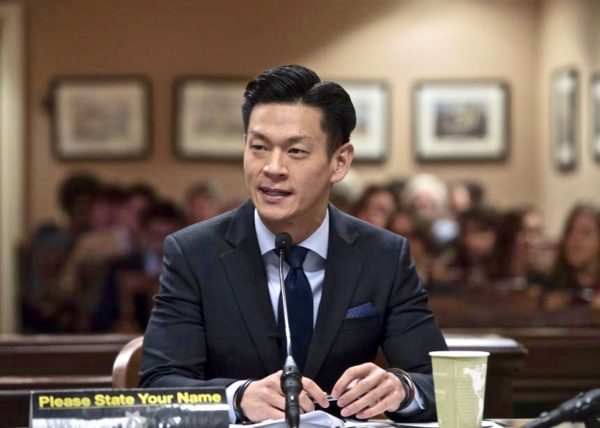
The photo of Assemblymember Evan Low testifying is courtesy Low’s office.



National
988 restores crisis services for LGBTQ+ youth
The lifesaving 988 call-in number to help people experiencing mental health crises or suicidal thoughts has once again restored its specialized services for LGBTQ+ youth.
The lifeline, which used to have the option to “press 3” to be directly sent to specialized services for LGBTQ+ youth facing mental health crises or suicidal thoughts, was returned on Wednesday following an over-year-long battle with the Trump-Vance administration, which removed the service in May 2025.
The Press 3 option rolled out as a pilot program in 2022 through a government contract with the Trevor Project, a suicide prevention and crisis intervention organization for LGBTQ+ people.
Then, in June 2025, the federal government announced that the lifeline would be eliminated within a month. By July 2025, 988 Lifeline’s “Press 3” services were terminated.
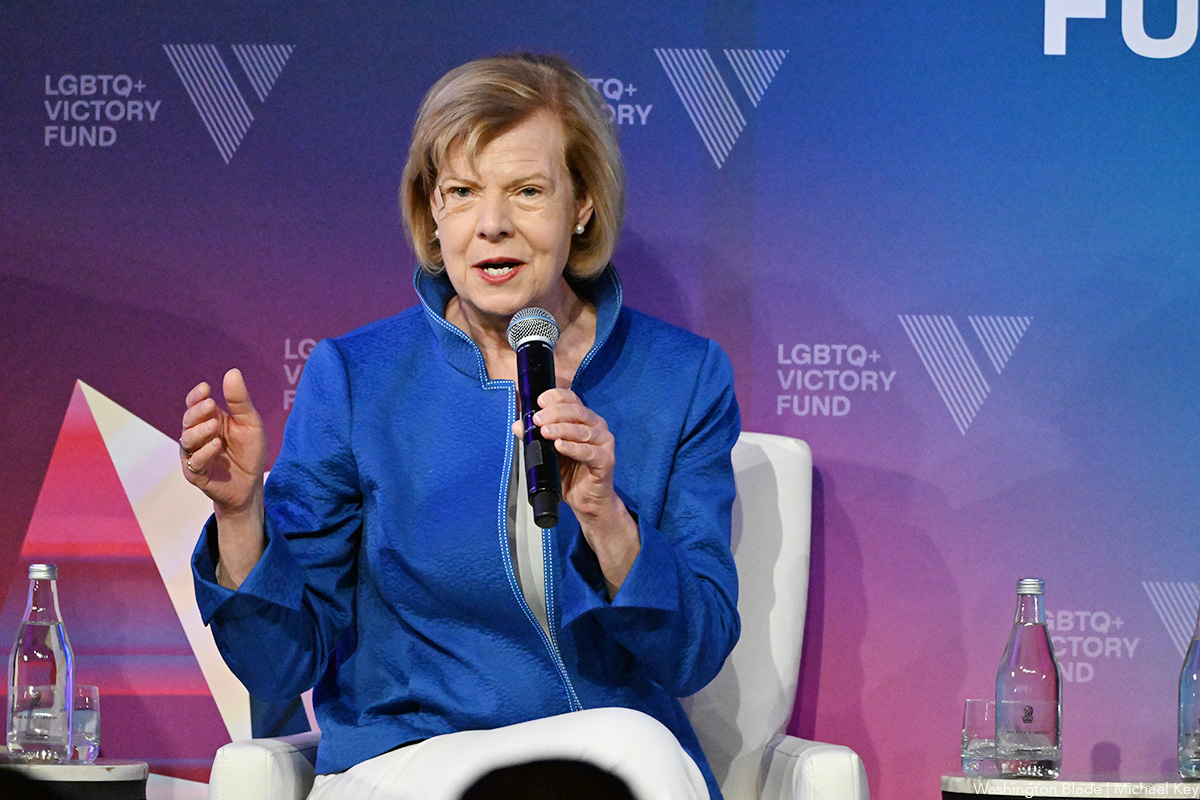
Openly gay U.S. Sen. Tammy Baldwin (D-Wis.) helped lead Congress in reversing the removal of the lifesaving resource from American phones. As a member of the Senatw Labor-HHS Appropriations Subcommittee, she started the process of securing $535 million for 988 — a $15 million increase — as well as dedicated funding for LGBTQ+ youth specialized services.
Then, in September 2025, Baldwin, along with U.S. Sen. Lisa Murkowski (R-Alaska), introduced bipartisan legislation in the Senate, the 988 LGBTQ+ Youth Access Act, to codify the 988 Lifeline’s specialized services for LGBTQ+ young people.
At the same time, U.S. Rep Raja Krishnamoorthi (D-Ill.) introduced the legislation in the House of Representatives alongside U.S. Reps. Michael Lawler (R-N.Y.) Sharice Davids (D-Kan.) Brian Fitzpatrick (R-Pa.) and Seth Moulton (D-Mass.)
The Senate passed Baldwin’s bipartisan funding bill in January 2026, funding the Department of Health and Human Services with explicit language mandating the return of 988’s LGBTQ+ youth specialized services.
In February 2026, Congress passed legislation mandating that the previously eliminated “Press 3” specialized services be restored and funded with $33,100,000 — but it was unclear if the Press 3 option would still be allowed under current executive orders, namely Executive Order 14168, or “Defending Women From Gender Ideology Extremism and Restoring Biological Truth to the Federal Government.”
Despite the securing of federal funding for the Press 3 resource, the battle to get the 988 LGBTQ+ Youth Access Act through Congress is ongoing — and would provide codafied protection from this removal ever happening again.
According to data on the Trevor Project’s website, LGBTQ+ young people are more than four times as likely to attempt suicide than their peers.
Baldwin’s office touts the immense help the lifeline provides to LGBTQ+ people in their moments of greatest need. The press release on the reinstatement of Press 3 highlighted the continued demand for the service:
“The volume of calls, texts, and chats 15 percent higher than a year earlier and nearly 50 percent higher than two years ago. Since the lifeline launched, it has received over 27 million contacts, including over 18 million calls, 4 million texts, and 3 million chats.”
Advocates for LGBTQ+ rights and mental health awareness have agreed with the increasing numbers and hailed the return as a win for everyone.
“Suicide and mental health struggles touch every community across our state, and that’s why creating the 988 crisis lifeline to make sure help is there for everyone is one of my proudest accomplishments,” said Baldwin said in a statement. “But, last year, the Trump administration decided to make these real struggles a political football and ripped away the specialized line that helped LGBTQ children. This was a deliberate choice. The Trump administration chose to put children’s lives on the line to score some political points.”
“I’ve fought tooth and nail to restore this lifesaving resource. When I realized the Trump administration was not going to do it on their own, I wrote it into federal law to require them to restore the Press 3 option,” the Wisconsin senator said. “This lifesaving resource never should have gone away in the first place, but I am glad the lifesaving support Press 3 provides is once again there for people who need it.”
“I’m proud that we secured the funding to restore this lifesaving LGBTQ+ crisis line and successfully pressured the Trump administration to bring the program back,” Krishnamoorthi said. “When an LGBTQ+ young person reaches out for help in a moment of crisis, they deserve to reach a counselor trained to understand and support them. This program should never have been taken away, and now we need to make sure it stays available for every young person who needs it. I’m grateful to the Trevor Project, NAMI Chicago, Equality Illinois, the American Foundation for Suicide Prevention, and all the advocates and young people who worked alongside us to bring these services back.”
Jaymes Black, CEO of The Trevor Project who works with the SAMHSA, in their press three operations celebrated the return of the resource.
“We are grateful to see that the 988 Suicide & Crisis Lifeline’s ‘Press 3’ specialized services for LGBTQ+ youth have been restored. Resuming this national resource will be critical in addressing the public health crisis of suicide among LGBTQ+ young people, and supporting the estimated more than 1.8 million LGBTQ+ youth who seriously consider attempting suicide in the U.S. each year,” Black said via a statement. “We are thankful for the large coalition of bipartisan lawmakers, mental health advocates, allies, and supporters who fought tirelessly for this restoration. We will monitor the launch and usage of these important services to ensure all LGBTQ+ youth are supported with clinically best standards.”
If you or someone you know needs mental health resources and support, please call, text, or chat with the 988 Suicide & Crisis Lifeline or visit 988lifeline.org for 24/7 access to free and confidential services. Trans Lifeline, designed for transgender or gender-nonconforming people, can be reached at (877) 565-8860. The lifeline also provides resources to help with other crises, such as domestic violence situations. The Trevor Project Lifeline, for LGBTQ+ youth (ages 24 and younger), can be reached at (866) 488-7386. Users can also access chat services at TheTrevorProject.org/Help or text START to 678678.
U.S. Federal Courts
Renee Good’s family files two federal lawsuits
ICE officer killed lesbian mother of three in Minneapolis in January
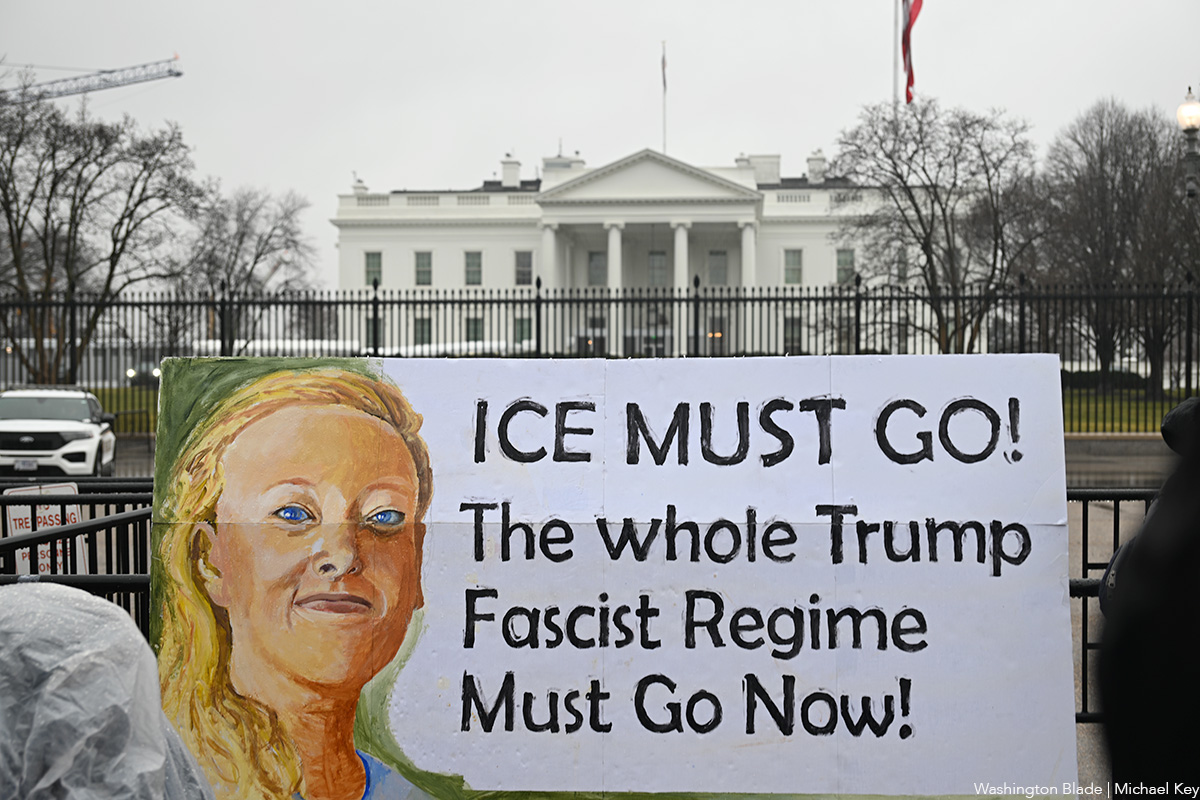
The family of lesbian woman who a U.S. Immigration and Customs Enforcement killed in Minneapolis in January have filed two federal lawsuits.
The Associated Press notes Renee Good’s partner, Becca Good, and her brother, Brent Ganger, in the lawsuits accuse the Trump-Vance administration and ICE officer Jonathan Ross of “unjustified and excessive use of force.”
Renee Good was a 37-year-old mother of three.
Ross on Jan. 7 shot and killed her in Minneapolis.
The shooting took place during the Trump-Vance administration’s so-called Operation Metro Surge that targeted Somalis and other immigrant groups in Minneapolis. U.S. Customs and Border Protection agents on Jan. 24 shot and killed Alex Pretti, a 37-year-old nurse who worked for the U.S. Department of Veterans Affairs, in Minneapolis.
Both shooting sparked outrage across the U.S. and around the world.
“Every morning, she is my first thought. I think about how the kids are growing up without their mama, and how I will grow old without the love of my life. I think about how we should have had 40 more years together. But I also think about what she would have wanted after all of this,” said Becca Good in a statement the Human Rights Campaign released after she and her partner’s family announced the lawsuits.
“As we have tried to navigate our own massive loss, I am also devastated by how many other lives have been destroyed in this darkest of times. So many other families are dealing with the loss of their loved ones; to everyone who has had to witness it — the pain of this moment extends far beyond our family,” added Becca Good. “What happened to us should never happen to any family. No child should grow up without a parent because of it. No one should lose their sister or their daughter. No one should have to live without their soulmate. Accountability — real accountability — is the only way to make sure that no other family has to go through what we have.”
HRC President Kelley Robinson in her own statement said the Good family “is one of our own — and today, the Human Rights Campaign joins them in demanding justice.”
“It has been eight months and 24 days since Renee was shot and killed by an ICE agent, and the United States government has failed to take responsibility for its actions,” said Robinson. “Her partner, Becca, and brother Brent, have made the brave and bold decision to hold the government accountable, and we stand with them. Like every person murdered by ICE, Renee should be alive today. The Goods were robbed of what every American family deserves: to be together.”
Turkey
House Democrats urge White House to confront Turkish government over anti-LGBTQ+ crackdown
More than 60 lawmakers signed letter to Secretary of State Marco Rubio

More than 60 House Democrats on Thursday called upon the Trump-Vance administration to confront the Turkish government over its anti-LGBTQ+ crackdown.
Turkish authorities last month detained dozens of people during raids that targeted the country’s LGBTQ+ community, advocacy groups, and HIV/AIDS service organizations. Journalists were among those taken into custody outside an Istanbul courthouse on Sept. 15 during a protest against the raids that are part of the government’s “My Family Is Safe” campaign.
Council for Global Equality is among the groups that organized a protest outside the Turkish Embassy in D.C. on Sept. 18.
View on Threads
U.N. High Commissioner for Human Rights Volker Türk on Sept. 21 during a U.N. LGBTI Core Group event that took place on the sidelines of the U.N. General Assembly specifically referenced Turkey.
The Core Group is a group of U.N. member states that have pledged to support LGBTQ+ and intersex rights.
The U.S. withdrew from the Core Group after the Trump-Vance administration took office. The White House has not publicly commented on Turkey’s anti-LGBTQ+ crackdown.
“These developments warrant an urgent diplomatic response from the United States to protect the rights of freedom of expression, association, and assembly for all Turkish citizens, regardless of their sexual orientation or gender identity,” reads the letter the lawmakers sent to Secretary of State Marco Rubio. “We therefore urge you to use all available channels to raise these concerns directly with the Turkish government; press for the immediate release of those arrested and detained for their legitimate human rights activities; and ensure that the U.S. Embassy in Ankara closely monitors related judicial proceedings.”
“We further urge the Department to press Turkish authorities to cease efforts to criminalize LGBTQI+ organizations and advocacy and to affirm the right of all people to peacefully assemble,” it adds.
Arizona Congresswoman Yassamin Ansari and U.S. Rep. Dina Titus (D-Nev.) spearheaded the letter. House Speaker Emerita Nancy Pelosi (D-Calif.); House Foreign Affairs Ranking Member Gregory Meeks (D-N.Y.); Del. Eleanor Holmes Norton (D-D.C.); Delaware Congresswoman Sarah McBride, and U.S. Rep. Mark Takano (D-Calif.), who chairs the Congressional Equality Caucus, are among the 65 House Democrats who signed the letter.
“The United States must be a leader in defending human rights and what is happening in Turkey demands an urgent diplomatic response. It’s absolutely appalling to see LGBTQI+ people and the organizations that stand up for their rights be targeted by the (President Recep Tayyip) Erdogan regime,” said Ansari in a press release. “I stand proudly with the LGBTQI+ community here and abroad and will continue to fight for their right to live openly, freely, and without fear, anywhere and everywhere.”
The press release notes the Human Rights Campaign, the Council for Global Equality, and the Planned Parenthood Federation of America support the letter.
“Turkey’s attacks on its LGBTQI+ community are a disturbing reminder that the fight for equality and human rights does not stop at our borders. No one should be silenced or detained for simply being who they are or peacefully demanding dignity and freedom,” said HRC Government Affairs Senior Director Jennifer Pike Bailey. “We are grateful to Representatives Ansari and Titus for recognizing that the fight for LGBTQI+ equality is global and that, even amid the many challenges facing our community here at home, we cannot turn our backs on LGBTQI+ people facing persecution abroad.”
A State Department spokesperson on Friday told the Washington Blade that “as a matter of policy, we do not comment on congressional correspondence.”
West Hollywood
We asked WeHo City Council candidates your most pressing questions
See what City Council candidates have to say about the most important issues this election cycle
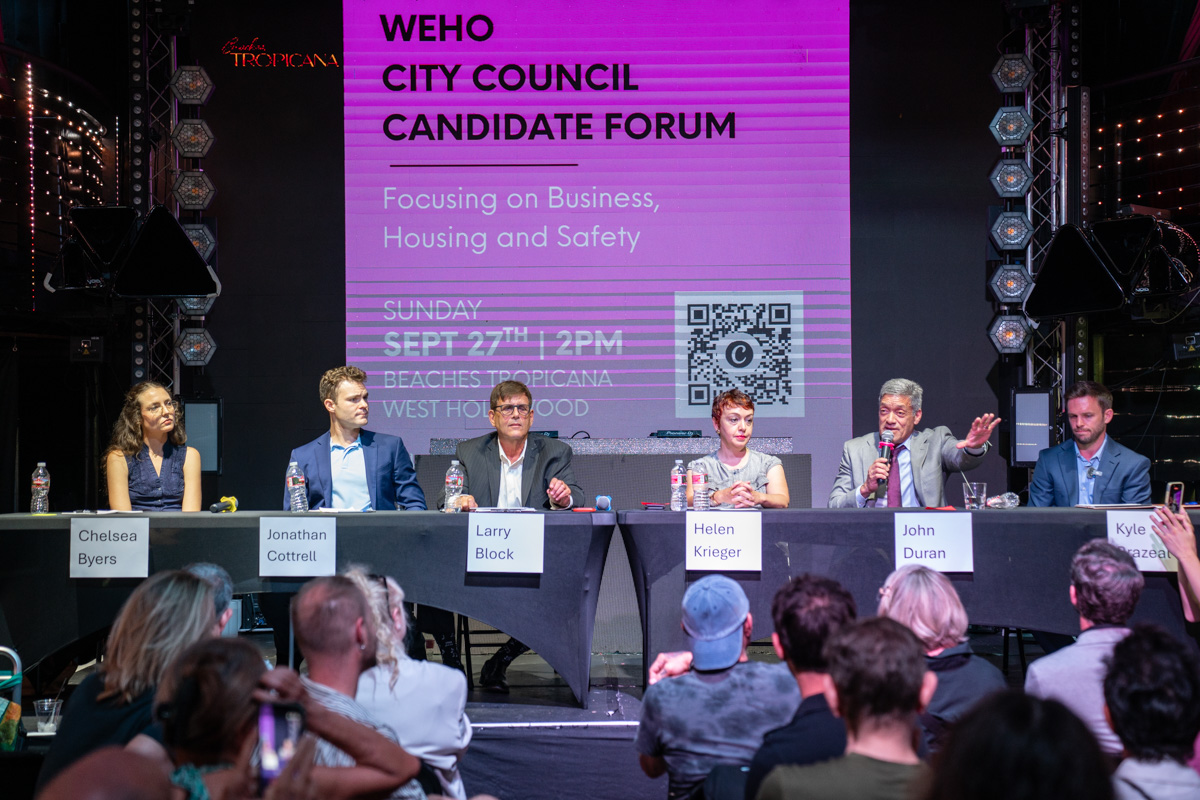
West Hollywood voters will soon be heading to the polls to elect 3 of its 5 city council members. A whopping 14 candidates are running for the open seats, and the elected 3 will go on to address issues like housing development, Flock camera contracts, and managing the city’s high cost of living. With so many candidates, keeping track of everyone’s views on policy is no easy task. So, the Los Angeles Blade sent a questionnaire to every candidate running for city council that addressed the most important issues of this election cycle.
Out of the 14 candidates, 12 responded to our questionnaire in time for publication. Tom Demille and Tatyana “Tanya” Tsikanovsky did not respond in time for publication.
Candidate profiles are listed in the order the candidates will appear on the ballot.
Candidate Profiles:
Helen Krieger
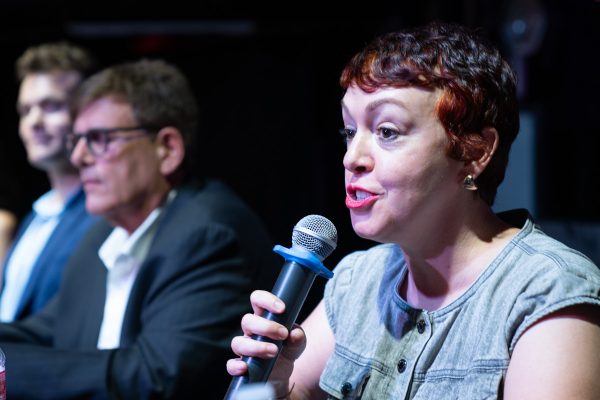
Has lived in West Hollywood for 10 years.
Occupation: Screenwriter and housing advocate
Endorsements: LA County Democratic Party, Equality CA, Stonewall Democratic Club, Firefighters Local 1014, LA Federation of Labor, Streets for All, California Working Families Party, Lindsey P. Horvath, Abbe Land, John Erickson and more
Other candidates Helen will vote for: Chelsea Byers
Policy
Do you support renewing West Hollywood’s contract with Flock Safety? No.
“We need to end the contract and physically take down the cameras. They’re a huge invasion of privacy.”
Do you support a bike lane or sidewalk extension on Fountain Avenue? Yes.
“I support widening the sidewalks to make them ADA accessible, and I support building a bike lane as part of that project to finally connect the Eastside to our micromobility infrastructure.”
Do you support creating a TODAP (Transit Oriented Development Alternative Plan) for West Hollywood? Maybe.
“I’m supportive of creating our own plan as long as it practically allows for at least as much housing as SB-79, and I would want SB-79 to remain in place until that TODAP is agreed upon, voted on, and approved by SCAG.”
Do you support renewing West Hollywood’s contract with Allied Universal to continue running the security ambassador program? No.
“Allied Universal is an ongoing vendor for ICE, and WeHo has a policy of not working with ICE vendors. But I like the ambassador program in general.”
Do you support a vacancy tax on empty storefront properties? No.
“In most commercial leases the tenant has to pay the taxes, so this would just make rent more unaffordable for small businesses. I do understand where the desire for a vacancy tax comes from – we want all our storefronts to be busy and activated – but this is the wrong answer.”
Do you support adding more digital billboards to Sunset Boulevard? Yes.
“I’m in favor of converting some existing static billboards on Sunset to digital billboards in a thoughtful way. And I would support adding more digital billboards, while being careful of oversaturation. These pay for many city services, and they also can pay for pedestrian improvements that we need on Sunset.”
Why are you running for City Council?
“I’m running because I love West Hollywood – I love how walkable it is, I love our parks, I love how gay it is. But the cost of living has continued to go up, and now, with average asking rents over $4000 for a one-bedroom and $6000 for a two-bedroom, we’re in danger of losing what makes us special. I’m running to create more housing, including affordable housing, safer streets, and thriving local businesses.”
What are your policy priorities?
“Housing is my biggest priority. West Hollywood (like much of the country) hasn’t been building enough housing, so demand has built up. In the 40 years since we became a city, we’ve built 70 percent fewer homes than the 40 years before we were a city, even as the population of the US has gone up 50 percent. We need to once again be the city that’s not afraid to build housing while also protecting existing tenants and strengthening tenants’ rights. Safe streets — WeHo has inherited a lot of bad street designs from the 60s when we were unincorporated LA County. I want to focus on designing complete streets with multimodal transportation options and ADA accessible sidewalks. Thriving local businesses — our businesses are part of what makes us so unique, so I want to unleash our creative entrepreneurship by streamlining the permitting process. One easy way we can do this – make it easier to film in WeHo. We’re currently the hardest city in all of LA County for film and TV production, which means we’re missing out on the tens of millions of dollars and hundreds of union jobs.”
How will you address the high cost of living in West Hollywood?
“I believe the main reason for the high cost of living in West Hollywood is housing. This is most people’s biggest cost, and about 20 percent of renters pay half their income just on rent alone. By building more housing, we can ease this burden on people’s wallets. We need to build more housing of all types – market-rate housing with affordable or rent-stabilized set-asides, 100 percent affordable housing, and also “missing middle” housing for people who make too much to qualify for affordable housing, but not enough to afford market rates.”
Kody Christiansen
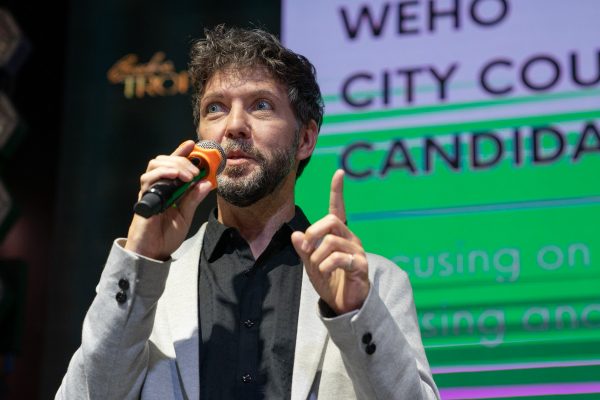
Has lived in West Hollywood for 21 years.
Occupation: Sales associate at an LGBTQIA+ owned small business, author, and actor
Endorsements: The Bayou, Greenwich Pizzeria, Karina’s Cleaners, Mail Service Center, Joshua Baum, and Cosmo: the Queen of Melrose
Other candidates Kody will vote for: Declined to answer
Policy
Do you support renewing West Hollywood’s contract with Flock Safety? Maybe.
“I would consider a pause until we have clear reports on how our own sheriff’s deputies have used the system, and would consider renewal only with strict, ongoing oversight, verifiable privacy protections, and immediate reporting of outside access requests. If safeguards fail, the agreement is violated even once, or our data is used to support federal immigration enforcement, I would support ending the contract immediately.”
Do you support a bike lane or sidewalk extension on Fountain Avenue? Yes, sidewalks.
“I support wider, ADA-compliant sidewalks and immediate safety improvements on Fountain, including better lighting, safer crossings, and traffic calming, but I oppose the current bike lane plan that removes parking and traffic lanes. Accessibility should come first, and we need to think bigger than ‘this plan or nothing,’ including bike lanes on corridors like Santa Monica Boulevard that connect people to the places they want to go.”
Do you support creating a TODAP (Transit Oriented Development Alternative Plan) for West Hollywood? Yes.
“Yes, I strongly support a TODAP that allows us to plan for housing while protecting existing renters and historic neighborhoods and directing growth toward appropriate commercial corridors. I call my approach SIMBY BWAP: ‘Sure In My Backyard, But With A Plan.’”
Do you support renewing West Hollywood’s contract with Allied Universal to continue running the security ambassador program? Maybe.
“Before supporting renewal, I would review other providers and compare their training, capabilities, cost, and results. Residents deserve a program equipped to provide meaningful assistance beyond simply making calls, with clear responsibilities and effective coordination with our sheriff’s deputies.”
Do you support a vacancy tax on empty storefront properties? Maybe.
“My first approach would be incentives and direct relationships with building owners to connect vacant spaces with businesses, temporary uses, and community activity. But I would not rule out a carefully targeted vacancy tax for larger property owners who leave storefronts empty for years while our neighborhoods bear the consequences.”
Do you support adding more digital billboards to Sunset Boulevard? No.
“The Sunset Strip has a character worth protecting, and adding more digital billboards is not the direction I want for our city.”
Why are you running for City Council?
“West Hollywood gave me the freedom to find myself when I moved here in 2005. I’m running because I want that same promise of belonging to remain possible for others. My journey has taken me from experiencing homelessness on the Sunset Strip to earning degrees from NYU, Harvard, and Cambridge, and now studying public administration at USC (which I consider job training for the seat I intend to take on our next council). As an East Side renter, small business employee, and someone who has both needed help and helped others, I bring lived experience and policy training to decisions that affect real lives. I want residents to feel heard at City Hall, and I’ll back that up with weekly office hours, independent judgment, and a commitment to serving the full four years.”
What are your policy priorities?
“My priorities are housing people can afford, practical solutions to homelessness, safe and accessible streets, thriving small businesses, and a City Hall that listens. Having experienced homelessness and later worked at the Harvard Square Homeless Shelter as a student volunteer, I am uniquely qualified to help connect people with housing and the mental health care, recovery support, identification, and ongoing services they need. My proposals include a locally designed housing plan, a legacy business program, a West Hollywood animal shelter, and a community ideas fund that gives neighborhoods a direct say in public spending. I also support responsible sheriff staffing, accessible sidewalks, and accountability for every public dollar, because compassion and a safe, well-run city belong together.”
How will you address the high cost of living in West Hollywood?
“I live in a rent-stabilized apartment and work in a small business, so affordability is personal to me. [If elected,] I would defend rent-stabilized housing and tenant protections while supporting more affordable housing along appropriate commercial corridors through a thoughtful, locally designed plan. Through my proposed legacy business program and efforts to bring vacant storefronts back to life, I would help strengthen neighborhood businesses that provide jobs and everyday services. We need to support workers and small businesses together, with decisions grounded in current information and an honest understanding of what it costs to live and work here.”
Jonathan Cottrell
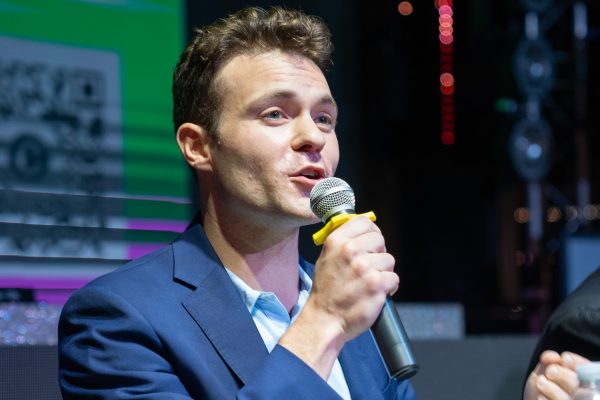
Has lived in West Hollywood for 7 years.
Occupation: Owner of GYM Bar WeHo, software engineer at ESPN
Endorsements: Los Angeles County Democratic Party, John Heilman, Danny Hang, Ben Allen, Rick Chavez Zbur, Nikki Perez, Freddy Puza, Jeff Prang, Teamsters Joint Council 42, Laborers Local 300, and more
Other candidates Jonathan will vote for: Declined to answer
Policy
Do you support renewing West Hollywood’s contract with Flock Safety? No.
“No.”
Do you support a bike lane or sidewalk extension on Fountain Avenue? Yes.
“Phase 1 is already approved. My commitment for Phase 2 is to follow the Plummer Park revisioning model where we brought meaningful community input to the table and made sure the process is transparent, with a competitive bid process, and brings the best minds towards solving the issues our community is facing.”
Do you support creating a TODAP (Transit Oriented Development Alternative Plan) for West Hollywood? Yes.
“The housing is coming either way under state law, and I’d rather West Hollywood target building where the infrastructure can already support it on day one. As an engineer by trade, I believe smart planning is how we get to more housing that meets the need faster. This is not about slowing it down, but coordinating and planning the rollout.”
Do you support renewing West Hollywood’s contract with Allied Universal to continue running the security ambassador program? Yes.
“I would support renewing it. However, I would like to see more training and more coordination among the different safety and human services agencies that we have. We need to make sure the community is not confused about who to call, and that service and response times are unaffected. We must increase our investment in our sheriff’s station as well.”
Do you support a vacancy tax on empty storefront properties? No.
“Vacant storefronts are a common issue I’m hearing from community members. However, I caution us to make sure we understand the root causes before enacting any sort of penalty. For example: we are seeing commercial property rates fall in many areas, and certain property owners giving 2 years free to tenants. I believe a vacancy tax would not solve the issue we are facing with commercial storefronts. We need to tackle the actual problems that are making it tough to do business in West Hollywood. ”
Do you support adding more digital billboards to Sunset Boulevard? Maybe.
“When contemplating any expansion to our digital billboards program, we must absolutely do the homework of getting community input and impact studies, particularly for those impacted directly by the billboards. Without specific details of plans and impact studies, I do not feel it would be responsible to comment.”
Why are you running for City Council?
“When I first came to West Hollywood, I was 24 years old, and I instantly felt that I was home. I found love here, built a life here, and now my husband Erik and I are raising our newborn son, Matheo, in the city we love (although he unfortunately can’t vote for his dad yet). I own and operate GYM Bar, a sports bar and community gathering spot where people walk in alone and find their community, which is exactly what this city did for me. With two pioneers retiring from the City Council, our city is at a major inflection point, and I’m running to preserve what we love about West Hollywood, work on the problems we have, and position our city for the future. I’m a software engineer by trade, so I love big ideas, and I take big swings at finding solutions, and I believe we should be bold about where we’re going while being thoughtful and strategic about how we get there.”
What are your policy priorities?
“Community safety: we should measure safety by whether residents actually feel it, which means trained personnel where they’re needed most, permanent night shifts, making the entertainment policing team permanent, and real coordination between deputies, security ambassadors, businesses, and residents. Housing and affordability: strengthen rent stabilization and tenant protections, expand quality affordable housing where the infrastructure can support it, and distinguish neighborhood property owners from the corporations and outside speculators pushing longtime residents out. Economic opportunity: City Hall should treat entrepreneurs and local businesses as partners, not case numbers, with streamlined permits, a one-stop business concierge, and amazing public service. Public office is a public trust: present a budget residents can understand, and measure the results of public programs, not simply how much money was spent.”
How will you address the high cost of living in West Hollywood?
“We have to address the cost of living from multiple directions: rent, groceries, transportation, and basic services. I support stronger rent stabilization via lowering rent increase caps, protections for seniors and disabled tenants, building public and community-owned housing, and using every available tool to create more permanently affordable homes. We should also support small businesses and local workers, reduce transportation costs by investing in walking, biking, and transit, and use the City’s purchasing power and policy tools to help make everyday necessities more affordable, like a publicly subsidized grocery store. The goal should be an affordable West Hollywood where people who work here can actually afford to live here.”
Stephen Post
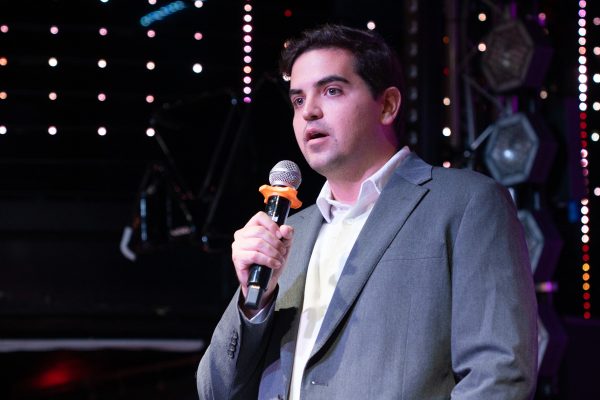
Has lived in West Hollywood for 5 years.
Occupation: Nonprofit leader and business improvement district manager
Endorsements: Stonewall Democratic Club, Democratic Socialists of America-Los Angeles, Los Angeles County Young Democrats, Sunrise Movement LA, Streets for All, Bubba Fish, Kenneth Mejia, Eunisses Hernandez, UNITE HERE! Local 11, Los Angeles County Public Defenders Union Local 148, and more
Other candidates Stephen will vote for: Chelsea Byers, Helen Krieger
Policy
Do you support renewing West Hollywood’s contract with Flock Safety? No.
“I would end the Flock contract as soon as legally and practically possible and would not allow the current pilot to be renewed for any surveillance technology including the drone and real time watch cameras. Public safety should be proactive and care-first, not built around a digital, reactive surveillance system that can disproportionately impact immigrants, LGBTQ+ people, and other vulnerable communities.”
Do you support a bike lane or sidewalk extension on Fountain Avenue? Yes.
“I support completing the Fountain Avenue safety improvements, including protected space for cyclists and wider, ADA-accessible sidewalks, while making sure the project is designed around the needs of residents and the surrounding community. Streets For All specifically endorsed my campaign in part because of my support for safe, multimodal improvements on Fountain and my experience managing community engagement similar public street safety projects.”
Do you support creating a TODAP (Transit Oriented Development Alternative Plan) for West Hollywood? No.
“I do not support creating a TODAP that would allow transit-oriented development to become a backdoor for slowing housing production, weakening West Hollywood’s tenant protections, or subverting local planning priorities already laid out through our Zoning Improvement Program (ZIP). We should build more housing, especially affordable and public housing, while using state housing tools strategically and preserving strong renters’ rights.”
Do you support renewing West Hollywood’s contract with Allied Universal to continue running the security ambassador program? No.
“Similar to Flock, I would want to end the contract sooner rather than renew it, particularly given Allied Universal’s ownership of G4S and ongoing contracts with ICE and DHS for services including the electronic monitoring of people in immigration enforcement proceedings. I support the security ambassador program under a different vendor, but West Hollywood should not be financially supporting a security company that profits from immigration enforcement and surveillance.”
Do you support a vacancy tax on empty storefront properties? Yes.
“As a business improvement district manager, I know long-term vacant storefronts hurt our commercial corridors and can make neighborhoods feel less safe and less vibrant. I support exploring a vacancy tax or similar policy that creates an incentive for property owners to put empty commercial spaces back into productive use, rather than use them as tax write-offs.”
Do you support adding more digital billboards to Sunset Boulevard? Yes.
“There is already a vibrant streetscape that the billboards have created. These projects would be evaluated on a case-by-case basis, and I would approve projects where there is a clear public benefit to West Hollywood. Any proposal should preserve the character and safety of Sunset Boulevard and deliver meaningful funding resources.”
Why are you running for City Council?
“I’m a renter, nonprofit advocate, and business improvement district manager who has spent my career bringing people together to advance justice and strengthen communities. As Vice Chair of the Public Safety Commission, and through my prior work helping craft the WeHo 2040 Strategic Plan, I have dedicated myself to listening to local residents to guide the next fifteen years of our city’s future. I’m running because I believe West Hollywood should continue setting the standard for what bold, progressive local government can accomplish. WeHo can’t wait for stronger renter protections, more affordable housing, safer and cleaner streets, and a City Hall that is transparent, accountable, and responsive to residents. Our city was built by LGBTQ+ and tenants’ rights advocates who fought to be heard, refused to remain invisible, and I’m ready to build on that legacy and fight for a West Hollywood where everyone can thrive.”
What are your policy priorities?
“My top priorities center on keeping West Hollywood affordable, establishing a care-first and proactive approach to public safety, and fostering a transparent, accountable local government. I would work toward capping rent increases so renters are closer to spending 30% of their income on housing by 2030, advocate for stronger tenant protections, and to help residents thrive without being overburdened by everyday costs of living. To ensure safety, we must fully fund human services, expand emergency mental health response systems, and focus on homelessness and violence prevention rather than depending on reactive Flock and drone surveillance. Lastly, I will bring deep community engagement and participatory budgeting to City Hall, empowering neighbors to directly influence how municipal resources serve our community. It is time we bring the next generation of leadership to WeHo.”
How will you address the high cost of living in West Hollywood?
“West Hollywood cannot remain a place where people who work here are unable to afford living here. I would strengthen tenant protections and expand affordable and community-owned housing to prevent displacement. We also need to address the other costs that make it harder to live here by supporting local workers and small businesses, expanding transit and safer alternatives to driving, and investing in human services that address the root causes of safety and housing instability. I would also pursue new affordable housing funding and partnerships with nonprofit housing providers while making sure new development prioritizes affordability rather than simply increasing property values. Ultimately, making WeHo more affordable means building a city where renters, working people, seniors, immigrants, and LGBTQ+ residents can afford not just to visit or work here, but to stay.”
Joel Zaldivar
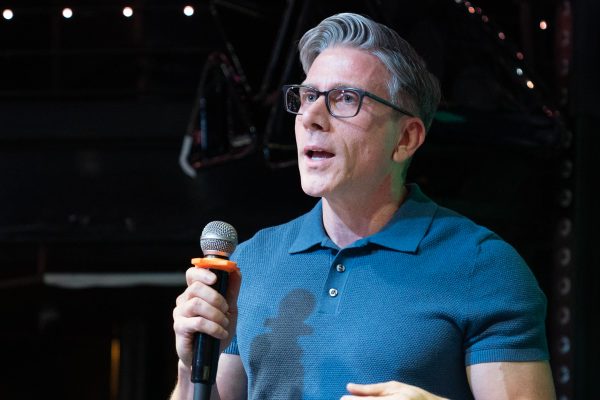
Has lived in West Hollywood for 11 years.
Occupation: Owner of OPVS
Endorsements: Rogerio Carvalheiro (West Hollywood Planning Commissioner)
Other candidates Joel will vote for: Declined to answer
Policy
Do you support renewing West Hollywood’s contract with Flock Safety? No.
“I do not support renewing the contract due to safety and privacy concerns from the community.”
Do you support a bike lane or sidewalk extension on Fountain Avenue? No.
“I do not support the Fountain Ave project as currently proposed.”
Do you support creating a TODAP (Transit Oriented Development Alternative Plan) for West Hollywood? Yes.
“I am 100% in favor of the city taking charge and creating its own TODAP.”
Do you support renewing West Hollywood’s contract with Allied Universal to continue running the security ambassador program? No.
“I do not support renewing West Hollywood’s contract with Allied Universal due to their inconsistent security measures. I would seek a new provider that meets the demands of our city. To be clear, I would only not renew them upon having secured another provider, as we are currently not permitted to increase our Sheriff’s in West Hollywood due to an LA County hiring freeze.”
Do you support a vacancy tax on empty storefront properties? Yes.
“I support a vacancy tax on storefront properties only if it’s tied through the business licensing division. Otherwise, the tax will be passed on from the building owner to the tenant, bypassing its original intent to place added pressure on Landlords to lease their properties below their asking.”
Do you support adding more digital billboards to Sunset Boulevard? Maybe.
“I would only support this measure if a majority of residents within a specificized distance of its placement, agreed to the measure.”
Why are you running for City Council?
“In addition to being a resident, I’m also a father and small business owner here in the city. I am heavily invested in our community and in its long-term success. We need a Council Member who is above bickering and grandstanding and ready to take matters into their hands and get things done, one policy initiative at a time.”
What are your policy priorities?
“I support overhauling the business task force to help small business owners negotiate as well and renew existing leases that don’t financially imperialize their business model and force them to raise prices on WeHo residents. We should revamp our parking department to work for residents instead of finding ways to penalize and tax them. Finally, City Hall, should triple down on safety for our residents, our communities and our city guests. We cannot grow as a city unless people feel safe to put down their roots here.”
How will you address the high cost of living in West Hollywood?
“By tasking our newly overhauled business department to “act as a developer” and intentionally seek out business opportunities that we, as a city, can leverage and entice developers to build affordable housing for our city. We need to be a proactive player in how, when, and where housing is built.”
Kevin Ligon
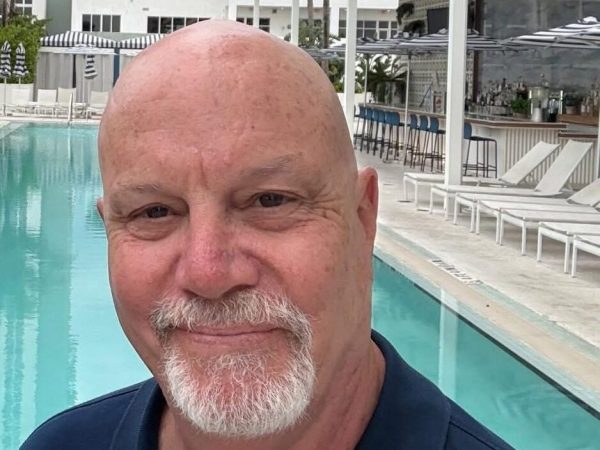
Has lived in West Hollywood for 16 years.
Occupation: Retired civil servant at the Veterans Health Administration
Endorsements: N/A
Other candidates Kevin will vote for: Declined to answer
Policy
Do you support renewing West Hollywood’s contract with Flock Safety? No.
“Currently, I’m not in support of renewing the flock safety contract in its current state. There are too many issues with the system. I believe that West Hollywood citizens and their privacy take priority.”
Do you support a bike lane or sidewalk extension on Fountain Avenue? Yes, sidewalks.
“Fountain Avenue needs wider sidewalks for safety reasons. I believe there are also alternatives to the approved plan that would be safer for all concerned. A review of systems from other cities where safety and traffic have found better solutions is in order.”
Do you support creating a TODAP (Transit Oriented Development Alternative Plan) for West Hollywood? Yes.
“Yes, I would support a TODAP for West Hollywood.”
Do you support renewing West Hollywood’s contract with Allied Universal to continue running the security ambassador program? Maybe.
“The Allied universal contract has only been in place since August 25, 2025. I find that they have been much more attentive to our homeless population and our citizens than the previous contract. I’m not aware of current issues with that contract or their current service.”
Do you support a vacancy tax on empty storefront properties? Maybe.
“I’m not sure that a vacancy tax is going to actually address the problem itself. Storefronts are staying closed much longer because the owners have the financial resources to wait out any drop in rental value. Another possibility might be to remove options where landlords can take tax write-offs for unoccupied properties based on current rental value. We definitely need to have a carrot-and-stick approach to getting new, and particularly small, businesses into our storefronts.”
Do you support adding more digital billboards to Sunset Boulevard? Maybe.
“I live just off Sunset Boulevard, and I was definitely affected when the Pendry Hotel, now the Sun Rose, installed its passive video wall facing east on Sunset. I’m not against digital billboards per se, but I do believe that residents come first.”
Long Form Responses:
Why are you running for City Council?
“I’m running for city Council due to my experiences with a new owner of my particular apartment building not following guidelines set by the city. This caused us to form a tenant association during Covid. Since then, I realize there’s a need for rent stabilization, rent control, consistency, and maintaining protected status for vulnerable renters in West Hollywood.”
What are your policy priorities?
“My priorities are focused on community through renter and landlord communication, be it residential or commercial, supporting small businesses in our community, and ensuring that our town remains one of the finest examples of a walkable culture in California.”
How will you address the high cost of living in West Hollywood?
[The candidate did not respond to this question].
John Duran
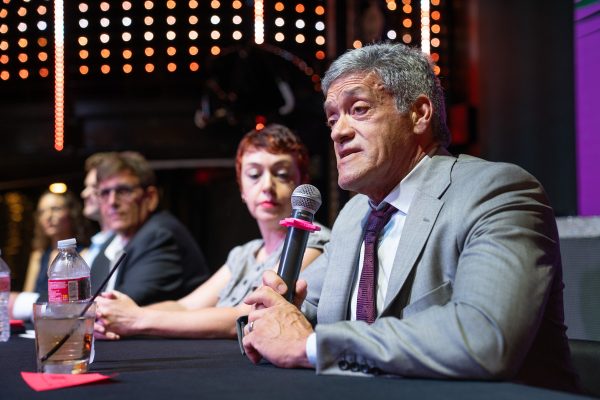
Has lived in West Hollywood for 36 years.
Occupation: Civil rights attorney
Endorsements: Association for Los Angeles Deputy Sheriffs, LA County Firefighters, the West Hollywood Municipal Employees Union, Ben Allen, John Heilman, Lauren Meister, and Steve Martin
Other candidates John will vote for: Declined to answer
Policy
Do you support renewing West Hollywood’s contract with Flock Safety? Yes.
“I would support renewing the city’s contract with Flock provided that privacy and usage safeguards were in place.”
Do you support a bike lane or sidewalk extension on Fountain Avenue? Maybe.
“I do not support the removal of traffic lanes on Fountain Avenue. I do support bike lanes where they make sense in other parts of the city. I do support sidewalk extensions where they are warranted.”
Do you support creating a TODAP (Transit Oriented Development Alternative Plan) for West Hollywood? Yes.
“I do support a TODAP for West Hollywood.”
Do you support renewing West Hollywood’s contract with Allied Universal to continue running the security ambassador program? No.
“I have serious reservations about renewing the security ambassador program. I would more likely support adding additional deputy sheriffs on foot patrol and in the entertainment districts.”
Do you support a vacancy tax on empty storefront properties? No.
“I do not support a vacancy tax on empty storefronts. They do not work as intended when the tax is passed onto commercial tenants in triple net leases.”
Do you support adding more digital billboards to Sunset Boulevard? Maybe.
“I approved the initial Sunset Strip billboard program but do find the current proposals to be excessive.”
Why are you running for City Council?
“I am running for City Council because there needs to be one seasoned voice in the room. I served on the council for 20 years and bring years of experience that will be helpful to the deliberations.”
What are your policy priorities?
“My policy priorities are keeping local control on land use decisions to prevent over-development, public safety and economic development on commercial corridors.”
How will you address the high cost of living in West Hollywood?
“West Hollywood is a very desirable place to be. There are legal limits on what we can do to address the high cost of living within a capitalistic system. We can continue to strengthen our rent stabilization ordinance for tenants in existing rent controlled apartments and approve new developments with inclusionary housing units reserved for low and middle class income households.”
Larry Block
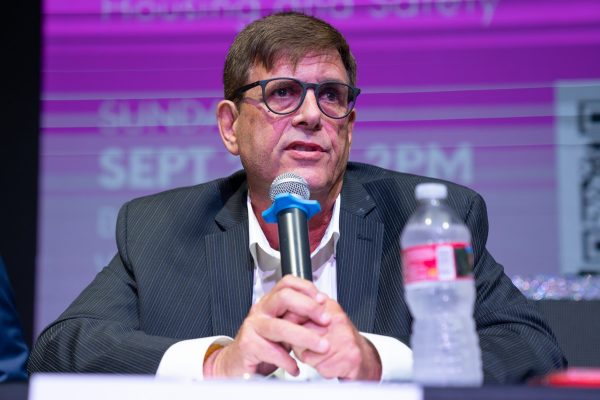
Has lived in West Hollywood for 40 years.
Occupation: Owner of BlockParty WeHo, publisher of WEHOonline
Endorsements: Association for Los Angeles Deputy Sheriffs, Greater Los Angeles Realtor Association
Other candidates Larry will vote for: Declined to answer
Policy
Do you support renewing West Hollywood’s contract with Flock Safety? No.
“I’ve changed my mind on this topic after a loud backlash. Instead we should opt into an Axon or Motorola system that we buy and control the data. I was Pro-Flock, but if a council member is going to listen to the voices of the people, then clearly they have spoken. We can do better. We can never be a beacon of hope for a transgender kid seeking medical treatment from a red state if their information has any chance of being shared. We can own our own data.”
Do you support a bike lane or sidewalk extension on Fountain Avenue? Yes, sidewalks.
“I support safe sidewalks on Fountain. I do not support the false sense of safety of 120 driveways intersecting a bike lane. We can have connectivity if we get on the same page with
our neighboring cities and not have a patchwork of bike lanes that do not connect – be it Fountain, Santa Monica Blvd, or Beverly.”
Do you support creating a TODAP (Transit Oriented Development Alternative Plan) for West Hollywood? Yes.
“100% support a TODAP and cannot be done soon enough. There is so much at stake.”
Do you support renewing West Hollywood’s contract with Allied Universal to continue running the security ambassador program? Yes.
“At this point it’s hard to recruit new Sheriffs and Allied has been an improvement over the previous Block by Block ambassadors.”
Do you support a vacancy tax on empty storefront properties? No.
“Commercial leases are 5, 10, 20 years in duration. Most leases are triple-net, meaning the tenant pays the expenses. A vacancy tax penalizes the other tenants. Residential leases are gross leases, tenant pays and the landlord picks up the expenses. So my question is would any resident want to pay extra because the space next to them was empty? People who want a vacancy tax do not understand a commercial lease.”
Do you support adding more digital billboards to Sunset Boulevard? Yes.
“Of course there will be some new billboards, but on a case by case basis. We need to maximize the benefits of our Sunset arts and billboard program without cannibalizing our precious assets. Sunset needs to remain vibrant and exciting without becoming chaotic and unsafe.”
Long Form Responses
Why are you running for City Council?
“I’m running for the city council because it’s becoming harder and harder to enjoy the dream of West Hollywood. The community is changing, and I’d like a seat at the table to help us craft policy that keeps the dream alive and restore West Hollywood as a beacon of hope. I’m the oldest guy in the race with a lifetime of experience to share, and I enjoy fixing things, building things and solving people’s problems.”
What are your policy priorities?
“Public Safety is my top priority. Residents need to be able to feel safe to walk their dogs at night. Entrepreneurs need to be able to imagine a new business without a homeless person in front of the for-lease sign. We can’t build a community with the rash of public safety issues we have been facing. Protecting seniors and those with disabilities is another top priority. We have to keep the promise of WeHo.”
How will you address the high cost of living in West Hollywood?
“West Hollywood has the highest rents, the highest cost of labor, and the highest sales tax. The cost of labor and the highest sales tax, which will be 11%, were voted on by the city council. As a councilmember, we can’t lower the rents or the price of gas, but we can run a smart city and offer residents a free parking pass at city garages and other benefits to residency in West Hollywood.”
Kyle Brazeal
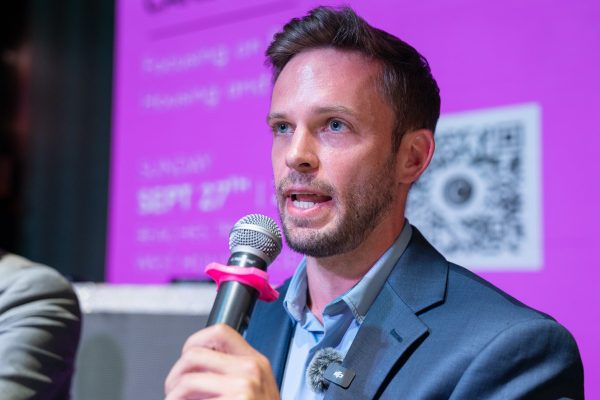
Has lived in West Hollywood for 11 years.
Occupation: Finance
Endorsements: West Hollywood/Beverly Hills Democratic Club, Equality California, HONOR PAC, Association for Los Angeles Deputy Sheriffs, Greater Los Angeles Realtors Association, Democrats for the Protection of Animals, John Heilman, Lauren Meister, and Rick Chavez Zbur
Other candidates Kyle will vote for: Declined to answer
Policy
Do you support renewing West Hollywood’s contract with Flock Safety? Maybe.
“A contract with significant public safety and privacy implications requires meaningful public input and trust. Before moving forward, public town halls with residents, sheriff’s representatives, city staff, and privacy advocates should examine safeguards against misuse and inappropriate data access, storage, and sharing so our approach protects both community safety and privacy.”
Do you support a bike lane or sidewalk extension on Fountain Avenue? Yes, sidewalks.
“The priority on Fountain Avenue should be extending sidewalks to become ADA-compliant and safe for pedestrians. Rather than eliminating hundreds of parking spaces to place a bike lane on a road carrying 35,000 cars a day, I would prioritize an east-west bike path on a calmer, safer street, like Willoughby, to enhance cyclist safety while preserving mobility and parking for our residents.”
Do you support creating a TODAP (Transit Oriented Development Alternative Plan) for West Hollywood? Yes.
“A TODAP protects residents’ ability to shape development, guided by the careful, neighborhood-specific analysis led by our city staff. By law, a TODAP produces the same housing capacity, but it allows our community to shape it in a thoughtful way that strengthens protections for our rent-stabilized housing and considers our unique emergency access needs, commercial activity, transit options, and infrastructure capacity.”
Do you support renewing West Hollywood’s contract with Allied Universal to continue running the security ambassador program? No.
“I would not support renewing the contract in its current form because the program has not demonstrated improvements in public safety and homelessness that justify spending more than $5 million annually. I support a tiered public safety structure that includes unarmed responders, but their value must be measured through meaningful results beyond the volume of calls and contacts.”
Do you support a vacancy tax on empty storefront properties? Yes.
“I support a limited commercial vacancy tax that discourages landlords from holding storefronts empty while protecting small property owners making good-faith efforts to find tenants. Revenue from the tax should help new businesses fund tenant improvements, pairing accountability for prolonged vacancies with practical assistance to help fill empty storefronts and bring those spaces back to life.”
Do you support adding more digital billboards to Sunset Boulevard? Maybe.
“Billboards can generate revenue for city services, but the city allowed an overproliferation of large, animated signs and granted exceptions to standards meant to protect residents. I would oppose new billboards that worsen light intrusion or otherwise erode quality of life in surrounding neighborhoods.”
Why are you running for City Council?
“I believe residents deserve a real voice in shaping the local decisions that impact their daily lives. I saw a Council majority that dismisses resident concerns to prioritize the preferred projects of outside entities with significant political or financial interests in our city. Residents are left living with the consequences while elected officials secure the relationships and donors needed to advance their political careers. While other candidates relied on developers and outside interests to fund their campaigns, I built a campaign funded by and accountable to West Hollywood residents so we can elect City Councilmembers focused on protecting residents from displacement while fighting for the high quality of life they deserve.”
What are your policy priorities?
“My priorities are housing stability, public safety, and a strong local economy, guided by a City Hall that listens before acting and is accountable for results. We should preserve rent-stabilized homes, protect renters against displacement, and create new housing with dedicated affordability through planning shaped by residents and city staff to protect neighborhood livability. Public safety policies should deliver measurable improvements in neighborhood safety, homelessness, and traffic collision prevention. By streamlining bureaucracy and supporting sensible, balanced policies for local businesses, we can create a safe, inviting city where residents can remain in their homes and enjoy the vibrant business corridors that bring West Hollywood to life.”
How will you address the high cost of living in West Hollywood?
“City Hall should help make life more affordable by avoiding unnecessary fees and regulations that increase costs for residents and local businesses. I would revisit local sales taxes and evaluate opportunities to reduce that burden through disciplined spending while protecting essential services. Preserving rent-stabilized homes and enforcing protections against harassment and displacement can help residents maintain predictable housing costs as other expenses rise. We must also maintain a dependable safety net, ensuring people struggling to make ends meet can access food assistance, healthcare, housing support, and services that help them remain in our community.”
Chelsea Byers
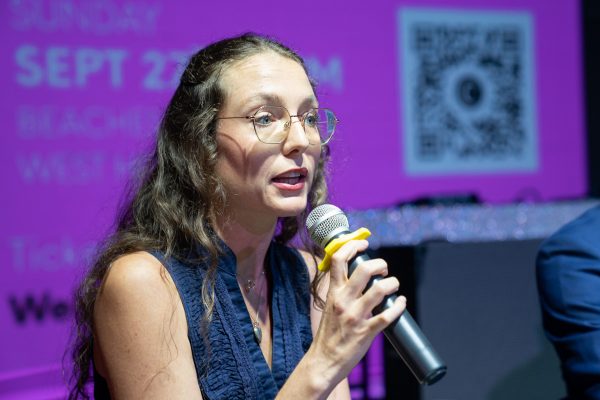
Has lived in West Hollywood for 6 years.
Occupation: Incumbent Councilmember, policy director at housing affordability advocacy organization
Endorsements: Los Angeles County Democratic Party, the California Working Families Party, the Sierra Club, Streets for All, Laura Friedman, Lindsey Horvath, Jeff Prang, LA County Federation of Labor, LA/OC Building and Construction Trades Council, LA County Firefighters Local 1014, and more
Other candidates Chelsea will vote for: Declined to answer
Policy
Do you support renewing West Hollywood’s contract with Flock Safety? No.
“I have been the leading voice on City Council against Flock since the time it was brought to Council as part of a broader surveillance expansion and continue to advocate against the use of this product in our City.”
Do you support a bike lane or sidewalk extension on Fountain Avenue? Yes.
“I ran in 2022 as a supporter of the Fountain Avenue streetscape project, and I continue to support it today. Fountain should be a neighborhood street where people, particularly children, those with disabilities, and the elderly, feel safe walking, biking, and crossing the street, and we should work quickly to improve the safety, expand the sidewalks, and beautify the street.”
Do you support creating a TODAP (Transit Oriented Development Alternative Plan) for West Hollywood? No.
“With the K-Line Northern Extension coming to the City in the years ahead, I support creating more transit-oriented housing, which is made possible under the recently approved state law SB79. We should treat the housing affordability crisis we are facing like the emergency it is and work to build the housing our community needs in the years ahead.”
Do you support renewing West Hollywood’s contract with Allied Universal to continue running the security ambassador program? Maybe.
“I support the security ambassador program and unarmed responders in general. However, upon learning that Allied Universal has ties to DHS and ICE activity, it feels incredibly important that we revisit options and ensure we are investing our public dollars into companies that reflect our values and promote the safety of all residents and visitors.”
Do you support a vacancy tax on empty storefront properties? No.
“A thriving commercial corridor is an essential backbone of our city, and we should be addressing the barriers that can leave commercial spaces vacant, including the ways in which the City itself can create unnecessary obstacles for businesses trying to open and succeed. This would include clearing roadblocks for new businesses trying to open, cutting the time and costs to open businesses, and better coordinating the countywide agencies like electric and fire, who can often slow down opening. ”
Do you support adding more digital billboards to Sunset Boulevard? Yes.
“Sunset’s digital billboard program was established to generate much-needed revenue to fund the City’s basic services and deliver the supportive care our community relies on — everything from sidewalk maintenance to our social service programs for renters and adults aging in place — the investments in our City’s future depend on ensuring this program’s success.”
Why are you running for City Council?
“My commitment to the work of improving our City and advancing care in our communities is deeply personal. My family could not afford health care despite the long days my dad worked in construction, and like so many families, we lost our home during the 2008 financial crisis. That experience has shaped the issues I prioritize on West Hollywood’s City Council. Challenges facing working families today require real action. Renters are being squeezed by the cost of housing. Wages are not keeping up with the cost of living. Women, queer people, and immigrants are under constant attack by this administration. West Hollywood is a community that has the opportunity and the means to lead with compassion, courage, and urgency. Our city must continue to be a model for what it looks like to protect vulnerable people, address the climate crisis, and make government work for those who need it most.”
What are your policy priorities?
“In my time in office, I have been working to implement West Hollywood’s Housing Element and the 116 strategies outlined in that plan to unlock greater affordable housing capacity locally, alongside the ongoing work to bring the Metro K Line Northern Extension into West Hollywood. From there, West Hollywood’s broken network of bicycle lanes needs ongoing support, and we must have a mobility-minded leader moving this infrastructure work forward in the City. As a third priority policy area, West Hollywood’s Climate Action Plan outlines ambitious policy goals, many of which stand to be undermined or challenged by special interests in our City. Building modernization and energy efficiency standards are critical ways the City can mitigate our carbon output, and furthering and reinforcing these policies with programs and financing to support the mandatory changes is going to be a major part of the City’s future work.”
How will you address the high cost of living in West Hollywood?
“Affordability is the defining issue facing families in my city as well as many families across LA County. West Hollywood is a city of renters, and too many of our residents are rent-burdened, paying more each month just to stay in the community they call home. West Hollywood has a responsibility to build more housing at every income level, protect tenants, and plan for growth in a way that reflects our values. We need to continue to lead on policies that make it easier and more affordable to build the housing our community needs and for businesses to get started and open. We can also continue investing in our social service programs that support people aging in place and expand this programming to support more families through child care resources. Every city has a role to play in tackling the affordability crisis, and West Hollywood can show it is possible to grow while staying true to who we are: a city that protects renters, supports working people, welcomes LGBTQ+ residents and seniors, and believes everyone deserves a safe, stable, and affordable place to live.”
Alden “Marlon” Gobel
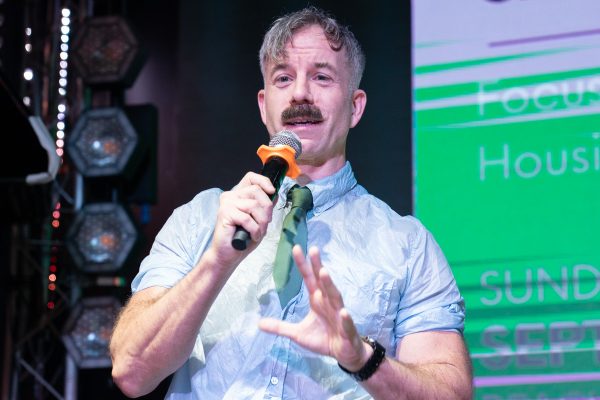
Has lived in West Hollywood for 5 years.
Occupation: Fashion designer and creative director
Endorsements: N/A
Other candidates Marlon will vote for: Chelsea Byers
Policy
Do you support renewing West Hollywood’s contract with Flock Safety? No.
“I do not feel that overreaching mass surveillance is ever a good idea. There are other ways to get the police the information they need without using the Flock camera system and Flock owning the aggregate data.”
Do you support a bike lane or sidewalk extension on Fountain Avenue? Yes.
“With gasoline prices reaching $6.50 per gallon here in LA, it is getting nearly unaffordable to fill a car’s tank. That means the way people commute and move through West Hollywood is going to change, and that’s not going to be car-focused, so we need to be prepared for that with robust mobility systems like bike lanes, transit, and great sidewalks.”
Do you support creating a TODAP (Transit Oriented Development Alternative Plan) for West Hollywood? Maybe.
“I am in favor of the need for West Hollywood to be in control of the development process, and we can look to Beverly Hills as an example of how to successfully implement the SB 79’s requirements. We need affordable housing, but we need a plan for development that addresses the needs of residents and business owners.”
Do you support renewing West Hollywood’s contract with Allied Universal to continue running the security ambassador program? Maybe.
“I think the security ambassadors bring a much-needed level of padding and connection between everyday residents/guests and the police department while relieving pressure on our sheriffs. But information is still pending from Allied on how connected they are with ICE and Homeland Security. That information will determine our future working with them.”
Do you support a vacancy tax on empty storefront properties? Maybe.
“It is something to explore. It’s important to make it easier for young emerging businesses to move into West Hollywood without landlords waiting for cash-cow corporations to fill up their spaces.”
Do you support adding more digital billboards to Sunset Boulevard? Yes.
“These things must be tastefully done and created with consideration of the surroundings. I don’t want Sunset Boulevard to become a Times Square replica chaotic orgy of light pollution.”
Why are you running for City Council?
“West Hollywood thrives on bold vision, authentic expression, and collaborative leadership. I have spent my career turning ambitious ideas into reality by balancing artistic execution with rigorous operational strategy. When I launched my eponymous brand, MARLON GOBEL, it demanded absolute strategic precision—skills that translated into immediate global partnerships with historic institutions like Bergdorf Goodman, Swarovski, and the Fashion Institute of Technology. Over a twelve-year career, my work has been recognized by The New York Times and trusted by legendary creative icons because I deliver on bold ideas, resilience, and unique innovation. West Hollywood deserves leadership that understands how to manage complex operations while preserving our distinct, rebellious, and authentic spirit. I will bring fiscal discipline, project management expertise, and an unwavering dedication to making our community a vibrant, sustainable, and forward-thinking destination for residents and creators alike.”
What are your policy priorities?
“1. Affordable Housing
2. A Freedom of Living Standard (anti-surveillance, self-expression, non-discrimination)
3. Compassionate Public Safety”
How will you address the high cost of living in West Hollywood?
“I feel like my answer was covered in my response [to the first long form question].”
Chukwudubem “Chiedu” Egbuniwe
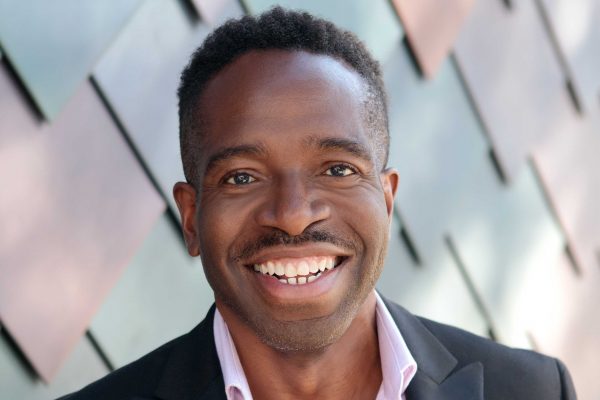
Has lived in West Hollywood for 22 years.
Occupation: IT professional and consultant
Endorsements: N/A
Other candidates Chiedu will vote for: Declined to Answer
Policy
Do you support renewing West Hollywood’s contract with Flock Safety? No.
“After years of working directly with data security and privacy issues as an IT Manager, it is critical that our data is with trustworthy vendors.”
Do you support a bike lane or sidewalk extension on Fountain Avenue? Yes.
“Yes, but I would adjust the timeline to after the Olympics in 2028, re-order the phases of the project, and greatly expand accessibility to e-Bikes in preparation.”
Do you support creating a TODAP (Transit Oriented Development Alternative Plan) for West Hollywood? Yes.
“Yes, most definitely. The TODAP is central to my priorities.”
Do you support renewing West Hollywood’s contract with Allied Universal to continue running the security ambassador program? Maybe.
“I would renew a short-term contract, revise our needs with a focus on more highly trained security staff, and offer Allied (and other vendors) a chance to provide a bid for more highly trained staff.”
Do you support a vacancy tax on empty storefront properties? Not answered.
[The candidate did not respond to this question.]
Do you support adding more digital billboards to Sunset Boulevard? Not answered.
[The candidate did not respond to this question.]
Why are you running for City Council?
“The city needs people who listen to residents and business owners: someone who can bring people together. As an IT professional and through my work with the city, I bring decades of strategic, big picture thinking and consensus building. I’ve served this city for over two decades, working on the WeHo40big-pictureconsensus-building Action Team, as a panelist on the Arts Grants, the Pride Arts Grants, and as a commissioner on the LGBTQ+ Commission. It’s time for me to deepen my service to my community.”
What are your policy priorities?
“Housing accessibility, small business support, and sensible safety. Rezoning for mixed-use development is central to my platform. In accordance with SB79, I propose a TODAP, focusing development along commercial corridors like Santa Monica, with small businesses on the first floors and residences on higher floors. We would see more foot traffic and greater safety around these small businesses, and less dependency on driving for services. I would also expand foot patrols by law enforcement and security ambassadors.”
How will you address the high cost of living in West Hollywood?
“We need sensible development and strict enforcement of affordable housing percentages for new development. We have to follow state law SB79, but with a TODAP we can restrict development to commercial corridors and preserve the character of our neighborhood streets. With new high-density mixed-use developments on commercial corridors, similar to the Trader Joe’s development near Plummer Park, we have an opportunity to add affordable housing units and foot traffic to support businesses in these spaces.”
LA County will start sending out mail-in ballots on October 5th; early voting will begin on October 20th, and election day is November 3rd.
Caleb Kaufman is a California Local News Fellow placed with the Los Angeles Blade. The California Local News Fellowship is a state-funded initiative to support and strengthen local news reporting. Learn more about it at fellowships.journalism.berkeley.edu/cafellows.
Serbia
Ana Brnabić becomes world’s first openly lesbian head of state
Former Serbian prime minister succeeded President Aleksandar Vučić on Monday
Ana Brnabić on Monday became the world’s first openly lesbian head of state after Serbian President Aleksandar Vučić resigned.
Brnabić was the country’s prime minister from 2017-2024. She was most recently the president of the Serbian National Assembly.
Vučić resigned ahead of parliamentary elections that will take place on Oct. 25. Media reports indicate Vučić could become Serbia’s next prime minister if his Serbian Progressive Party can successfully form a new government. Brnabić until then will be the country’s acting president.
Former Irish Prime Minister Leo Varadkar, who became his country’s first openly gay head of government in 2017, praised Brnabić.
“Congratulations to Ana Brnabić on becoming the world’s first lesbian head of state (president of Serbia),” said Varadkar on social media. “She visited while in her previous office and is a friend of Ireland.”
Congratulations to Ana Brnabic on becoming the world's first lesbian head of state (President of Serbia). She visited while in her previous office and is a friend of Ireland. 12 countries have now had gay or lesbian head of state/government. So far, all in Europe – the… https://t.co/TBpmeeEs9I
— Leo Varadkar (@LeoVaradkar) September 29, 2026
Former Icelandic Prime Minister Jóhanna Sigurðardóttir in 2009 became the world’s first openly lesbian head of government. Former San Marino Captain Regent Paolo Rondelli in 2022 became the world’s first openly gay head of state.
Andorran Prime Minister Xavier Espot Zamora, Dutch Prime Minister Rob Jetten, and Latvian President Edgars Rinkēvičs are openly gay. Former Luxembourgish Prime Minister Xavier Bettel, former French Prime Minister Gabriel Attal, and former Belgian Prime Minister Elio Di Rupo are also gay.
Varadkar was Ireland’s prime minister from 2017-2020 and again from 2022-2024.
Brazil
529 openly LGBTQ+ candidates running in Brazilian election
Lula running against Jair Bolsonaro’s son in presidential contest
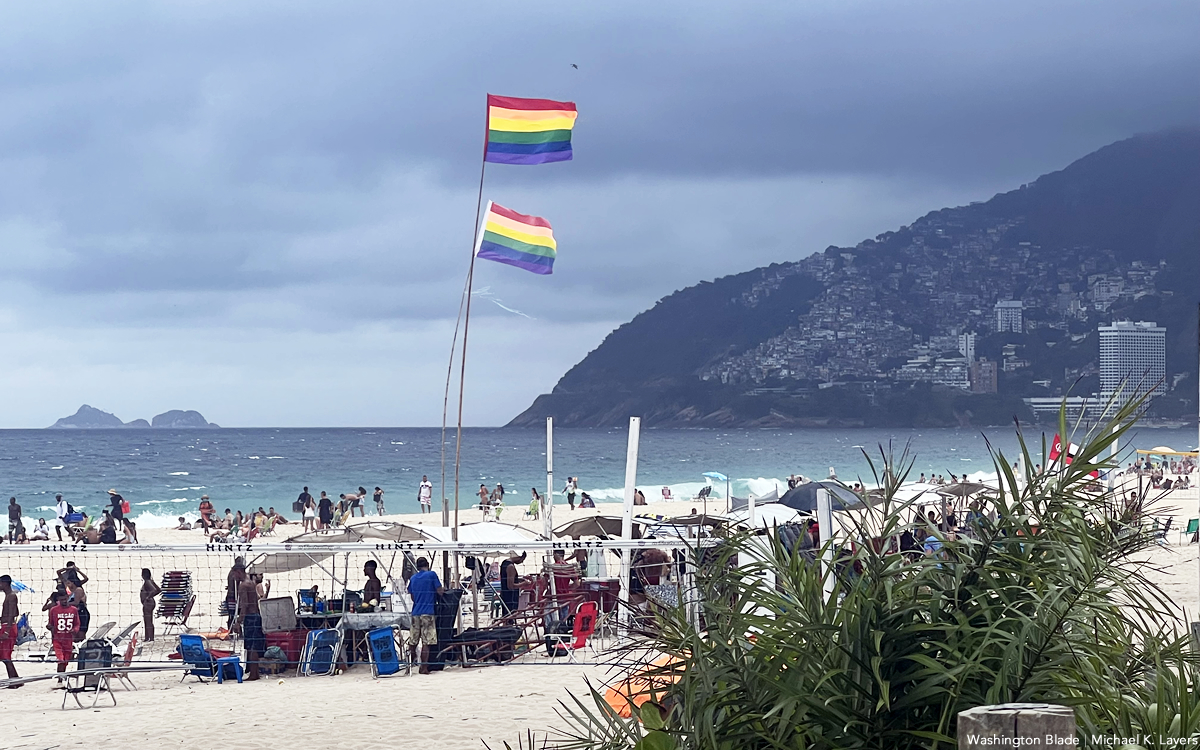
Editor’s note: International News Editor Michael K. Lavers will be on assignment in Brazil through Oct. 6.
SÃO PAULO — 529 openly LGBTQ+ candidates are running for in the Brazilian election that will take place on Sunday.
VoteLGBT, an organization that seeks to increase LGBTQ+ representation in Brazilian politics, notes 109 of these candidates are either transgender or travesti. They include Congresswomen Erika Hilton and Duda Salabert, who made history in 2022 as the first travesti and first trans women respectively to win seats in the Brazilian Congress.
Hilton, a member of the leftist Socialism and Liberty Party, known by the acronym PSOL, is a former sex worker who was a member of the São Paulo Municipal Council before her election to Congress. She currently chairs the Chamber of Deputies’ Women’s Rights Commission.
The Chamber of Deputies is Congress’s lower house.
Salabert, who is also a member of PSOL, represents Minas Gerais state in the Chamber of Deputies. Both she and Hilton in 2025 sharply criticized the Trump-Vance administration after it listed their gender as “male” on American visas that would have allowed them to travel to the U.S.

Benny Briolly is a travesti woman and member of President Luiz Inácio Lula da Silva’s Workers’ Party who is running to represent Rio de Janeiro state in the Chamber of Deputies. Thabatta Pimenta is a trans woman of mixed ethnicity who is running to represent Rio Grande do Norte state in the Chamber of Deputies as a member of the Green Party.
Nicolas is a trans masculine bisexual man from Pará state who is part of the Banca Transformer, a “collective candidature” for the Chamber of Deputies that VoteLGBT notes is “100 percent trans and lead by a trans masculine person.” Mãe Kaká Garcia is a gay travesti woman of African descent who is running to represent Mato Grosso state in the Chamber of Deputies as a member of PSOL.
“My bid for Congress stems from my life story and the need to bring voices that have historically been marginalized into the political arena,” Garcia told the Los Angeles Blade.
“I am a Black travesti woman and a leader within the African-derived religious community, with a background in work, entrepreneurship, and community activism in Mato Grosso,” she added. “I am intimately familiar with the challenges faced by the LGBTQIA+ community, the Black population, women, and terreiro communities.”
Garcia added she is running because she believes “these spaces must also be occupied by people who live these realities.”
“I want issues such as combating violence against trans people, racism, religious intolerance, protections for women, LGBTQIA+ rights, and social policies to be treated as permanent public policies,” she said.
Associaçao Nacional de Travestis e Transexuais (National Association of Travestis and Transsexuals) President Bruna Benavides in a statement to the Blade praised all of the trans and travesti candidates.
“For ANTRA, the strength of trans and travesti candidacies lies in what our representatives already demonstrate through their work in office — acting beyond the LGBTQIA+ agenda in areas such as education, health, labor, human rights, culture, the environment, public safety, and the fight against inequality,” she said. “The presence of trans people is already a reality, and democracy needs them in politics — not merely as representatives of an identity, but as agents capable of shaping initiatives that benefit society as a whole.”
“Politics will only be truly transformed when it incorporates the perspectives and experiences of those historically excluded from centers of power — people who have nonetheless envisioned a nation where everyone can be free and live with dignity and security,” she added.
The Blade also spoke with other openly gay, lesbian, and bisexual candidates.
Uédem Lima is a bisexual, Makuxi Indigenous man who is running to represent Roraima state in the Chamber of Deputies as a member of the centrist Brazilian Democratic Movement.
“I am 23-years-old, a Makuxi Indigenous man, and bisexual,” he told the Blade. “I come from a reality where young people, Indigenous people, and LGBTQ+ individuals often still face difficulties in occupying spaces where decisions are made.”
“My candidacy is also a way to show that these spaces can — and must — be occupied by people who know these realities firsthand,” added Lima.
He told the Blade that education, health, climate justice, and Indigenous rights are among the top issues on which he will work in Congress if elected. Lima added his life in Roraima state, which borders Venezuela and Guyana in northern Brazil, and his identity will further shape his tenure.
“I know what it is like to grow up in Roraima, experience the shifts between the interior and the capital, and forge my path while carrying multiple identities,” he said. “I do not want to separate these parts of who I am. They are part of my story and also help explain why I chose to enter politics.”
Former Congressman Jean de Wyllys, who is the first openly gay man elected to the Brazilian Congress, resigned in 2019 and fled the country after he received death threats that he claimed came from supporters of then-President Jair Bolsonaro. De Wyllys at the time of his resignation represented Rio de Janeiro state and had just been elected for a third term.
De Wyllys has returned to Brazil and is running to represent São Paulo state in the Chamber of Deputies as a member of the Workers’ Party.
“My decision to return to present myself as a candidate is linked to the public responsibility with respect to this year’s elections, the most important for the future of Latin America in the last two decades,” he told the Blade. “Everyone knows that not just our region, but the whole world is a stage for a clash between two projects: one led by Donald Trump and his far-right (supporters) internationally that is neofascist, neocolonial, and neofeudalistic, and the other spearheaded by China that advocates for multipolarity, nations’ sovereignty, and global cooperation to overcome challenges, such as the climate crisis and possible pandemics.”
“As someone who enjoys national popularity and international connections, and having served two highly productive terms regarding human rights and cultural diversity, I could not ignore the electorate’s calls to participate in this global contest — and not merely as an intellectual and artist,” added de Wyllys.
Mônica Benício is a Rio de Janeiro Municipal Councilwoman who is running for the Brazilian Senate as a PSOL member.
Her widow, Rio de Janeiro Municipal Councilwoman Marielle Franco, and her driver, Anderson Gomes, were murdered on March 14, 2018. One of the two former police officers later convicted lived in the same condominium complex in the city’s exclusive Barra da Tijuca neighborhood in which Bolsonaro lived at the time. (Bolsonaro was not president when the murders took place, and strongly denied media reports that suggested one of the suspects visited his home before Franco and Gomes were killed.)
Franco was also friends with De Wyllys and a political ally.
“After Marielle’s assassination, the LGBTQIAPN+ (lesbian, gay, bisexual, transgender/transsexual/travesti/, queer, intersex, asexual, pansexual, nonbinary) community was one of the networks that embraced me and gave me the strength to carry on,” Benício told the Blade on Tuesday. “My Senate candidacy stems from this very commitment: to transform that affection and collective strength into a voice, protection, and rights within Congress.”
Benício stressed the LGBTQ+ and intersex community “needs to occupy more decision-making spaces.”
“I want to reach the Senate so that our rights, families, and lives are represented where laws are made,” she said.
Lula is running for a second consecutive term.
He defeated Bolsonaro in the second round of the 2022 presidential election.
The Brazilian Supreme Court last year sentenced Bolsonaro — who repeatedly targeted LGBTQ+ Brazilians and other groups while in office — to more than 27 years in prison for his role in an attempted coup that saw thousands of his supporters storm the Congress, presidential palace, and the Supreme Court itself on Jan. 8, 2023. Bolsonaro is currently serving his sentence at his home in Brasília, the country’s capital, because of his poor health.
Lula main challenger in this year’s presidential election is Bolsonaro’s son, Sen. Flávio Bolsonaro.
A second round will take place on Oct. 25 if no candidate receives at least 50 percent of the vote.
California
Governor Newsom signs 6 pro-LGBTQ bills, vetoes 1
Newsom signs all but one Pro-LGBTQ bills into law, claiming legislative overreach.

Last week, California Governor Gavin Newsom signed and vetoed a slew of bills into state law. Among them were seven pertaining to California’s LGBTQ community. Newsom signed six while vetoing one. His actions drew applause and scorn from advocacy groups in the state.
The 6 Signed Bills:
Assembly Bill 1775 allows transgender veterans, who were banned from service last year by the Trump-Vance administration, to access housing assistance, use California’s discharge upgrade assistance program, and get support for gaining employment.
Assembly Bill 1930 strengthens privacy protections for healthcare patients and providers by creating clear guidelines for California agencies, individuals, and corporations to respond to out-of-state subpoena requests relating to abortion or gender-affirming care. This includes a requirement to contact the California Attorney General at least 7 days prior to responding to the subpoena or providing legal documents. This should add additional protection to those residing in California from investigations in states where abortion or gender-affirming care has more restrictions.
Senate Bill 934 targets conversion therapy in California and increases the amount of time a patient has to bring a medical malpractice lawsuit against a provider for attempting to change the patient’s sexual orientation or gender identity. The bill takes aim at the widely debunked practice that treats queerness as a mental disorder that could be cured through psychotherapeutic methods. Conversion therapy has been illegal in California since 2012; however, a recent Supreme Court decision threw the ban into question, prompting lawmakers to write this new bill that legally defines it as medical malpractice.
Senate Bill 1023 expands access to PrEP, Pre-Exposure Prophylaxis, a medication that protects people from contracting HIV. The bill requires insurers to cover the drug through the medical benefit and the pharmacy benefit pathways, allowing for more providers to give patients PrEP.
Senate Bill 1114 strengthens privacy protections for voluntary self-identification data about sexual orientation and gender identity. The bill limits when California government agencies can share this data and bars it from being disclosed outside of the state government, with few exceptions.
Senate Bill 1328 expands support for LGBTQ students and staff in California colleges. The bill requires any institution of higher education to designate an employee at any campus, satellite campus, branch campus, or outreach center to support the needs of LGBTQ individuals.
Equality California, the largest statewide LGBTQ civil rights group in the country, commended the Governor for his support of legislation that protects and supports the queer community amid escalating threats, attacks, and rollbacks from the federal government.
Executive Director Tony Hoang said in a written statement, “California is once again demonstrating that when LGBTQ+ people are targeted, our state will respond with action,” adding, “We are grateful to Governor Newsom for signing these measures.”
The Vetoed Bill:
Assembly Bill 2164 would have banned California from extraditing anyone residing in California for providing abortions or gender-affirming care in another state. Governor Newsom vetoed this bill despite agreeing with its principles, claiming in a written statement that “extradition is an exclusively executive function” and that he did not want to limit the “executive authority of an incoming Governor.”
This bill was created in response to Louisiana’s attempt to extradite a California physician for allegedly sending abortion pills in the mail to a Louisiana woman. Governor Newsom responded forcefully to the extradition request, publicly denying it and stating, “We will not allow extremist politicians from other states to reach into California and try to punish doctors based on allegations that they provided reproductive health care services.”
In a written statement responding to the veto, Lizzy Hinkley, the legal director of the bill’s lead sponsor, Abortion Coalition for Telemedicine, criticized Newsom, stating, “[the] outgoing Governor’s principled stance is cold comfort to Californians living and working in the real world post-Dobbs. A high-brow, academic justification for refusing to codify legal protections only reveals an ignorance for the lived reality of patients and providers – and does nothing to help them.”
Caleb Kaufman is a California Local News Fellow placed with the Los Angeles Blade. The California Local News Fellowship is a state-funded initiative to support and strengthen local news reporting. Learn more about it at fellowships.journalism.berkeley.edu/cafellows.
National
HRC report: LGBTQ+ students face ‘far greater challenges’ in non-supportive states
Survey finds anti-LGBTQ+ school harassment, bullying highest in 17 states
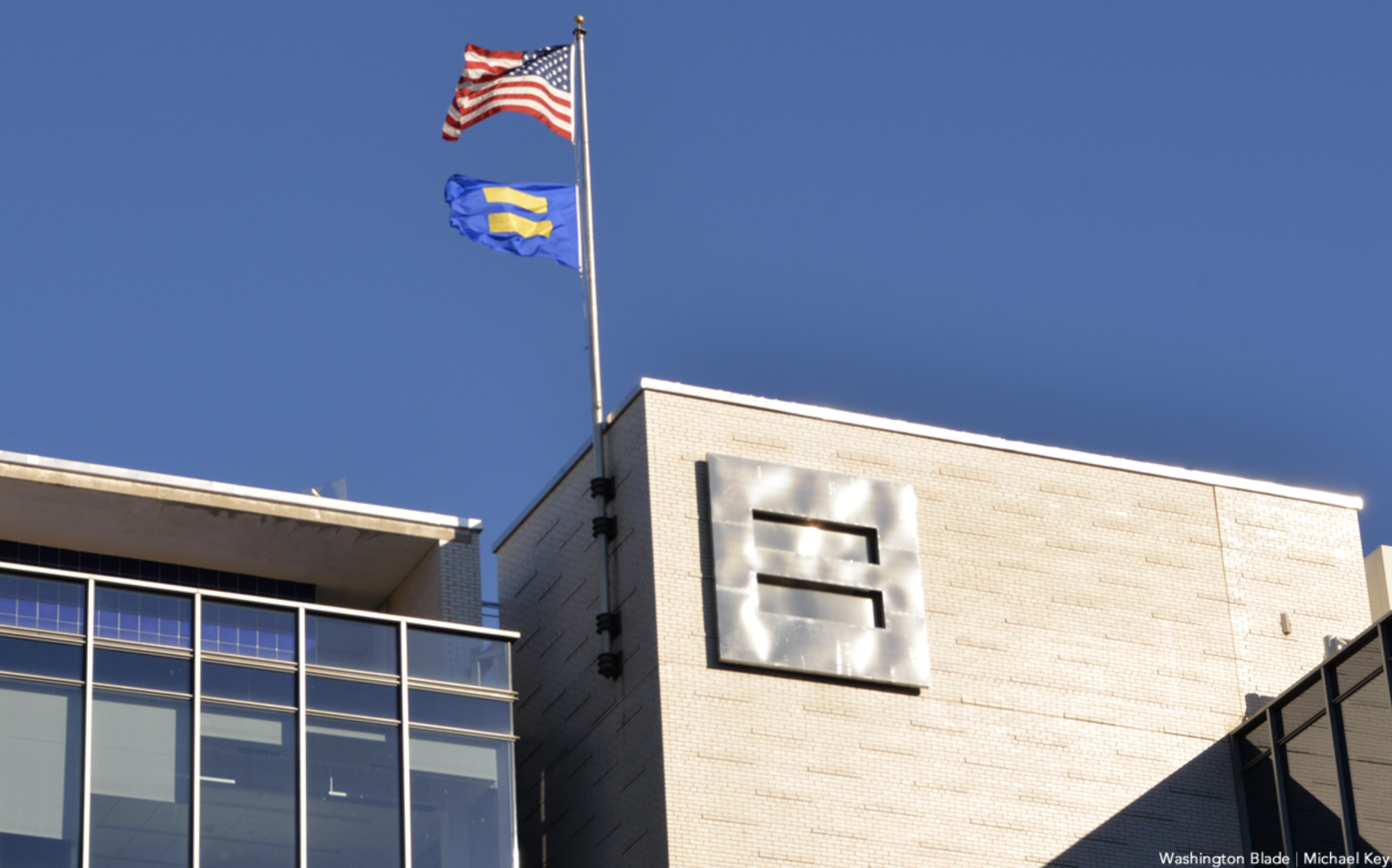
The Human Rights Campaign Foundation, the educational arm of the national LGBTQ+ advocacy organization Human Rights Campaign, has released a report showing LGBTQ+ public school students are more likely to face bullying, harassment, and “other barriers” in states that have less overall supportive LGBTQ+ laws and policies.
The report is based on the HRC Foundation’s National Educator Survey of School Climate and Bullying, which was released on Sept. 17.
“The report finds that harassment, bullying, and other barriers to LGBTQ+ inclusion are more prevalent in states with limiting policies, where educators report widespread restrictions on LGBTQ+ resources, visible expressions of support, and assistance for transgender students,” a statement released by HRC says.
“As just one example,” the statement adds, “while 59 percent of educators in states with limiting policies report restrictions on supporting their transgender students, just 6 percent to 8 percent of educators in states with supportive policies report the same, underscoring the impact of these policies on school climate, student well-being, and the stakes of the upcoming midterm elections for LGBTQ+ youth and inclusive classrooms.”
The report says the survey consisted of responses by 826 educators in 42 states who worked as teachers, principals, counselors, administrators, and others who worked in support services. All worked at schools with students from pre-kindergarten to 12th grade, most being public schools and a smaller number being charter schools, the report says.
It says the survey was conducted between April 15 and May 21, 2026, and included a survey questionnaire with about 55 questions covering a wide range of LGBTQ+ related school issues.
According to the report, its classification of LGBTQ+ supportive and non-LGBTQ+ supportive states is based on a detailed analysis of the LGBTQ+ related laws and policies of all 50 states, D.C., and U.S. territories conducted by the Movement Advancement Project, or MAP, which describes itself as an “independent, nonprofit thinktank.”
The report includes a chart consisting of 51 boxes representing the 50 states and D.C., with 32 plus D.C. colored as blue and said to have overall LGBTQ+ supportive policies. The 17 boxes colored in red are said to have overall non-LGBTQ+ supportive policies and laws, Each of the boxes has the initial of a state or D.C. printed inside it.
In addition to D.C., the chart shows Maryland, Virginia, New York, California, and Massachusetts as among the supportive states. Florida, Texas, West Virginia, and Ohio are among the states shown to be non-LGBTQ+ supportive.
The HRC statement includes these “key” findings from the survey:
- In states with restrictive LGBTQ+ inclusion policies, 59 percent of educators report restrictions on supporting transgender students, compared to just 6-8 percent of educators in states with supportive LGBTQ+ inclusion policies.
- In states with restrictive policies, nearly 50 percent of educators reported restrictions on LGBTQ+ books or resources, compared to just 7 percent of educators in states with supportive policies.
- Roughly 32 percent of educators in states with restrictive policies reported anti-LGBTQ+ harassment was a moderate or serious problem, compared with 11 percent of educators in states with supportive LGBTQ+ inclusion policies.
- In states with restrictive LGBTQ+ inclusion policies, 29 percent of educators were very worried about anti-LGBTQ+ harassment, compared to 15 percent in states with supportive LGBTQ+ inclusion policies.
- In states with restrictive LGBTQ+ inclusion policies, 36 percent of educators witnessed anti-LGBTQ+ student bullying, compared to 27 percent in states with supportive LGBTQ+ inclusion policies.
- In states with supportive LGBTQ+ inclusion policies, 75 percent of educators reported no restrictions on LGBTQ+-supportive displays, highlighting a substantially more supportive school environment than in states with restrictive policies.
- Educators in states with restrictive LGBTQ+ inclusion policies also reported significant harassment of students based on appearance (57 percent), race or ethnicity (43 percent), sexual orientation (42 percent), and gender identity or expression (39 percent). (No direct comparison figure from supportive-policy states is provided in the data above.)
“Every young person deserves to feel safe and supportive at school, but this report makes clear that fore too many LGBTQ+ students, especially transgender youth, are being failed by policies designed to exclude them,” said HRC President Kelley Robinson in the HRC statement.
“We know that when students feel seen, supported, and affirmed, they are more likely too thrive, but when schools become places of exclusion or hostility, young people pay the price through lower engagement, missed opportunities to learn, and poorer mental and physical health,” Robinson said.
The HRC statement notes that the survey findings come at a time when a growing number of states have passed laws targeting LGBTQ+ students and the school officials and teachers who support them. It says that for the first time, the survey found that “educators themselves are also experiencing anti-LGBTQ+ harassment, highlighting the growing impact of these policies on school staff as well as students.”
The full survey findings and report can be accessed here:
National
Education Department rolls back protections for LGBTQ+ students under Title IX
The DoE policy rescinds Biden-era protections
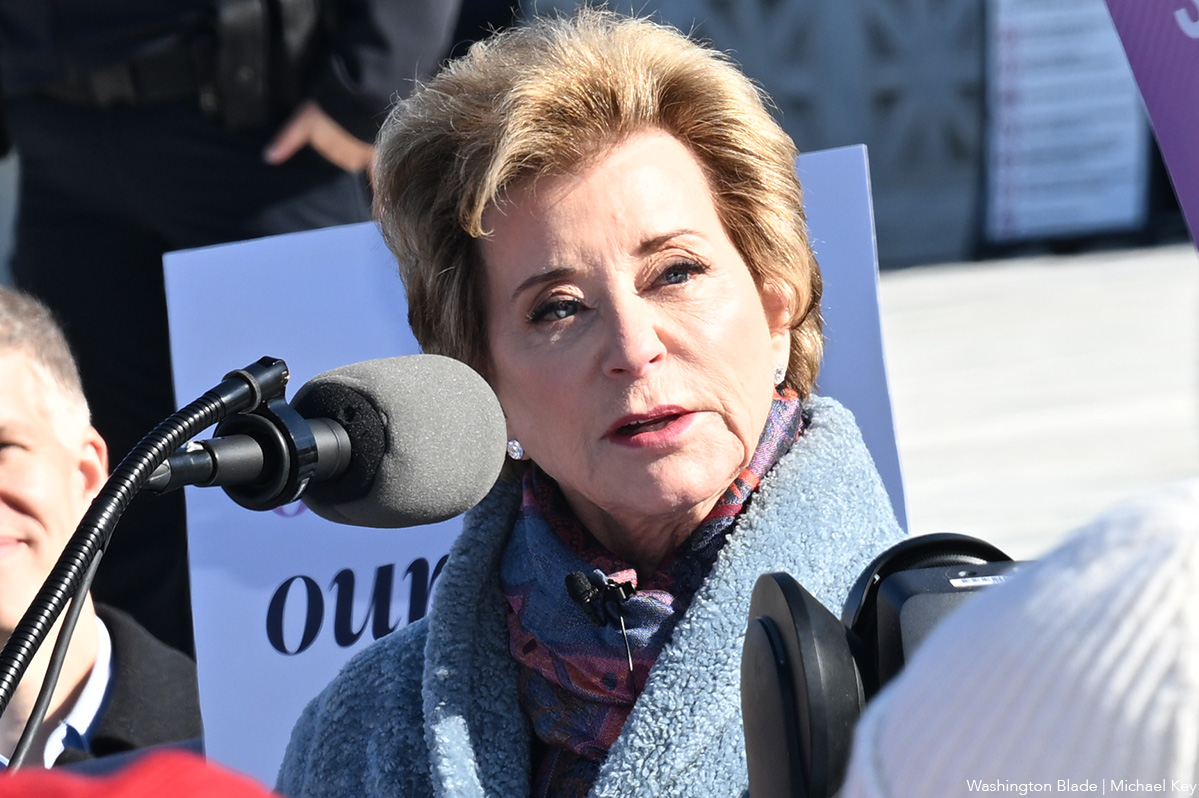
The Department of Education rolled back a Biden-era Title IX interpretation on Monday that secured sex-based discrimination protections for students on the basis of sexual orientation and gender identity.
Title IX was established in 1972 as landmark civil rights law. It prohibits sex-based discrimination in any school or any other education program that receives funding from the federal government.
Education Secretary Linda McMahon spoke about the revision of the policy, claiming the decision would explicitly help “women and girls.”
“Thanks to today’s action, the published Title IX regulations faithfully reflect court orders and congressional intent — reducing confusion for parents, students, and educational institutions. We will continue to relentlessly champion equal opportunity for all Americans and hold accountable any school or college that violates the rights, privacy, or athletic opportunities of our women and girls,” McMahon said via press release.
Prior to her work under the Trump-Vance administration, McMahon was a World Wrestling Federation/World Wrestling Entertainment executive before resigning to pursue a career in politics. She was appointed to the Connecticut State Board of Education by then-Gov. Jodi Rell in January 2009, but resigned from her role shortly afterward to run what ultimately became two failed campaigns for Connecticut’s U.S. Senate seat in 2010 and 2012.
A “fact sheet” provided by the Department of Education also called the inclusive sexual assault and gender identity protections expanded under the Biden-Harris unlawful, saying, “This change is necessary to provide clarity in the Code of Federal Regulations so that institutions, administrations, students, and families can see the rules that are actually in force and to help eliminate public confusion about the Biden administration’s unlawful attempt to stretch Title IX’s legal protections to cover ‘sexual orientation’ and ‘gender identity.’”
This is not the first time this policy has faced judicial hurdles. While Biden was still in office, the plan was struck down in multiple courts in Republican states.
Opponents of the move say it will harm transgender athletes and weaken protections for sexual assault victims.
“Sexual harassment and assault continue to be pervasive in schools and, to the fullest extent possible, we should be working to enforce the laws that protect student survivors of sexual violence. Yet, Education Secretary Linda McMahon and the Trump administration have decided to ignore what survivors need, instead weaponizing Title IX to attack trans students,” said Shiwali Patel, senior director of education justice at the National Women’s Law Center.
This is a return to a first Trump term policy after Biden issued an executive order to attempt to curb discrimination for all — especially those with different sexual orientations and gender identities — that had been given a pass during Trump’s first term. Much of Title IX’s policy has a narrow vision of what sex protections look like that often and enthusiastically leave gender-diverse and non-heterosexual people out.
In March 2021, President Joe Biden signed Executive Order 14021, “Guaranteeing an Educational Environment Free From Discrimination on the Basis of Sex, Including Sexual Orientation or Gender Identity,” to attempt to undo some of the flagrantly anti-LGBTQ+ policy the Trump-Pence administration had set forth relating to Title IX protections for LGBTQ+ students and sexual assault survivors.
The secretary focused this “win” for the administration as one more step toward restricting transgender students from competing in women’s sports, but the 2020 rule, completed under former Education Secretary Betsy DeVos, didn’t explicitly ban trans students from participating on sports teams consistent with their gender identity. It did limit the types of sexual harassment and assault complaints that schools had to investigate and required live hearings so male students could respond to accusations.
McMahon didn’t discuss those aspects in her statement or in requests for comment. The 2020 rule drew praise from conservatives and intense opposition from advocates who said it downplayed sexual abuse and left victims unprotected.
In a statement, U.S. Rep. Tim Walberg (R-Mich.), who chairs the House Education Committee, said, “Returning to the 2020 regulations restores longstanding protections for women and girls that the Biden-Harris administration attempted to dismantle and realigns Title IX policy with court precedents.”
LGBTQ+ activists have called this decision a direct attack on LGBTQ+ safety — particularly for trans students who continue to face a barrage of legislative, executive, and judicial attacks in recent years from the Trump-Vance administration.
Kelley Robinson, president of the Human Rights Campaign, the largest LGBTQ+ advocacy group in the world, released a statement following the DoE’s announcement.
“Title IX is, quite simply, about protecting students and ensuring that they are safe from abuse, harassment, and discrimination while they pursue their education. But Donald Trump and his cronies aren’t interested in any of that,” Robinson said. “Donald Trump’s Department of Education has completely lost sight of that mission. Instead of enforcing protections for students, they’re rescinding them. They don’t care if sexual harassment and assault go unaddressed. And they’re happy to strip funding away from school districts and states that are actually trying to keep students safe.
“We know who will be hurt: women, girls, and others who are vulnerable to sexual harassment, assault and abuse — including LGBTQ+ students. The fact that they’re dropping this rule into place abruptly, without a comment period, denying families, educators, loved ones, and the students themselves a say in how they should be treated, shows how little they care about the safety of our students.
“This is a monstrous injustice, and it drives home how essential it is that we take action at the polls this November to start bringing some accountability to an administration that has turned its back on the very students Title IX was written to protect,” she added.
The Los Angeles Blade reached out to the DoE for comment and questions on whether Title IX protections still included LGBTQ+ students, but did not receive an answer.
Palm Springs
Here’s your Palm Springs look at the weekend: Sep 25-27, 2026

We could be in for a bumpy ride – weather-wise – this season. It started Thursday with a storm in Yucca Valley and 29 Palms with heavy rain and hail that also sparked a few dry lightning fires in the Coachella Valley. I was in the middle of it in Joshua Tree — loving every minute of the rain, the thunder, and lightning. That tends to be an anomaly for those of us who spend the majority of our time in the desert.
The real concern is the super El Niño winter we’re about to experience. It’s happening as we speak, with two hurricanes off the coast of Mexico that are expected to bring us higher humidity, a chance of rain next week, and coastal flooding. And that’s just the beginning, according to Patrick Evans, chief meteorologist at Newschannel 3.
We count on the typical dry weather of the Coachella Valley as tourists start to flock back for “season”. The way we roll is with outdoor concerts and music festivals, sporting events, mixers, and of course, Palm Springs Pride itself. So when the forecast starts to increase the odds of rainy days, we get a little nervous. We’ll all be watching the forecasts just a little more carefully and making last-minute adjustments to plans, whereas in most years we barely give it a second thought.
Maybe Palm Springs will have snow again like on January 31st, 1979. We recorded 1.5 inches that day, and it shut down the city, according to reports from The Desert Sun, which covered it extensively. A good friend of mine was here for that storm and has the newspaper clippings to prove it.
Whether that weather was an El Niño event, we may never know. But suffice it to say, we’ll be paying a little closer attention to Patrick’s forecasts this winter.
Brad Fuhr, your K-Gay Desert Guide
Here’s what’s ahead in sunny Palm Springs!
Debby Holiday‘s Tribute to Tina Turner

Simply the Best: A Tribute to Tina Turner & Friends brings Debby Holiday to the Purple Room Supper Club Friday & Saturday, September 25 & 26 (Dinner at 6 pm, Show at 8 pm). A 17‑time Billboard Top 20 artist, Debby delivers passion and powerhouse vocals while honoring Tina Turner and other legendary divas. Debby’s three‑decade career includes touring with Rod Stewart, KISS and Joe Walsh, plus appearances on David Letterman, The View and Rosie O’Donnell. More info
Que Calor Pool Party

The Que Calor Pool Party at Arrive Hotel is an end‑of‑summer celebration on Saturday, September 26 from 4–8 pm. The event transforms the poolside into a lively oasis with music, food, and drinks, creating a fun afternoon of splashing, dancing, and unwinding. Produced by SOS Entertainers, the party also supports the Palm Springs Animal Shelter, adding heart to the festivities. Guests can enjoy general admission or reserve one of eight VIP cabanas. More info
Perez Art District — 4th Friday Art Walk

The Perez Art District: 4th Friday Art Walk happens Friday, September 25 from 11 am–7 pm. Visitors can explore local galleries, meet artists and enjoy a full day of creativity and community across Buildings H & I. It’s an easygoing, open‑house‑style stroll through one of the valley’s most vibrant artist hubs, offering a chance to discover new work, connect with makers and experience the district’s growing cultural energy. More info
Cinema Diverse 2026 Weekend 2

Cinema Diverse 2026 Weekend 2 at The Palm Springs Cultural Center runs all weekend through Sunday September 27. A celebration of LGBTQ+ storytelling, identity, history, love, resilience and queer imagination, the festival spans multiple theatres and screening blocks. Across documentary, narrative, comedy, drama and experimental shorts, Cinema Diverse highlights emerging and established filmmakers exploring coming out, chosen family, cultural heritage, activism, romance and the intersections of gender, sexuality and community. More info
Mama’s Boy

Mama’s Boy starring Gregg Glaviano is Saturday, September 26 at 7:30 pm at Palm Springs Plaza Theatre. This emotional cabaret blends music and storytelling as Glaviano reflects on growing up with a mother living with chronic depression—and how those experiences shaped his journey through first love, marriage, divorce and coming out. Featuring Paul Cady, Richard Elander, Jim Gnaster and Jenny Carey, the show moves between humor, vulnerability and heartfelt musical moments drawn from Broadway, the Rat Pack and classic pop. More info
It’s Final Round Voting Time — Best of CV

CV Independent’s Best of Coachella Valley 2026–2027 final voting round is now underway, and this is your chance to help crown the winners across the valley’s most‑loved radio stations, personalities, DJs (and many more categories). Thank you for showing us the love already with a strong nomination phase! Our finalists include KGAY 103.1 and Sunny 106.5 for Best Radio Station; John Taylor, E.J. Tyler and Patrick Evans for Best Local Radio Personality; and the dynamic DJ trio — DJ Galaxy, DJ Eric Ornelas, and MODGIRL — for Best Local DJ. Voting continues through Friday, October 23, so cast your vote and help celebrate your favorites in this year’s Best of Coachella Valley! Vote Today
Greater Palm Springs Spa Month

Greater Palm Springs Spa Month heads into its final days with exclusive wellness experiences throughout all nine resort cities. Slow down, breathe deeply, and embrace self‑care your way—whether through a mineral spring soak, a rejuvenating facial, a deeply relaxing massage, a sound bath under the desert sky, or a full day dedicated entirely to restoration. Participating resort spas, day spas, and hot springs spas offer limited‑time treatments and special packages through the end of September. More info
Planned Parenthood’s Riverside County Cocktail Reception

Planned Parenthood’s Riverside County Cocktail Reception takes place Friday, September 25 from 5:30–11 pm at Avalon Hotel & Bungalows Palm Springs. Celebrating 63 years of compassionate, essential care, the evening highlights the movement to protect access to sexual and reproductive health services. Guests will hear inspiring stories about the organization’s impact, including live entertainment and remarks from Jenny Black, President and CEO of Planned Parenthood of the Pacific Southwest. More info
The Shawshank Redemption

The Shawshank Redemption at Desert Theatreworks runs September 25–October 4 in the Blackbox Theatre. This gripping stage production follows banker Andy Dufresne, wrongly convicted of murder, as he navigates corruption, brutality and the faint glimmer of hope inside Shawshank State Penitentiary. His bond with Ellis “Red” Redding and his quiet, decades‑long plan for freedom unfold in an intimate setting where audiences feel the weight of the walls around them. This is not the movie—it’s harder, closer and deeply human, launching the 2026–2027 season with a limited eight‑performance run. More info
Films in the Gardens — At Eternity’s Gate (2018)

At Eternity’s Gate (2018) screens Friday, September 25 at 7:30 pm at Sunnylands Center and Gardens. Presented with the Palm Springs International Film Society, this free outdoor series invites guests to bring a blanket, arrive early and enjoy cinema under the stars. At Eternity’s Gate offers an intimate portrait of Vincent van Gogh’s final, prolific years painting in Arles and Auvers‑sur‑Oise, set against the serene backdrop of the Gardens. More info
Dance Me — The Music of Leonard Cohen

Dance Me: The Music of Leonard Cohen takes the stage Saturday, September 26 at 8 pm at McCallum Theatre, performed by Ballets Jazz Montréal. Inspired by the work of Montreal‑born poet, artist and songwriter Leonard Cohen — and approved by Cohen during his lifetime — this exclusive creation evokes the cycles of existence explored in his music and poems. More info
Heart Centered Healing Sound Bath

The Desert Sound Sessions: Heart Centered Healing Sound Bath at Kimpton Rowan Palm Springs happens Sunday, September 27 from 9:45–11 am. Led by Ashley Tiedeman, this immersive morning experience begins with tea, mingling and a gentle Quantum Heart Meditation designed to expand inner awareness and ignite the heart’s electromagnetic field. Participants then settle into a soothing sound bath where crystal bowls and healing frequencies support deep relaxation, energetic clearing and alignment. More info
Burgers, Boys & Brews Sunday BBQ

Burgers, Boys & Brews — Sunday BBQ returns Sunday, September 27 from 2:30–4:30 pm at The Social Cafe & Lounge. This weekly backyard‑style cookout features fresh‑grilled burgers, hot dogs, sides, bottomless mimosas, bottomless draft beer, great music, and live male entertainment. It’s a lively Sunday afternoon tradition where guests can eat, drink, and enjoy the atmosphere. More info
- Billy L’Amour & The Love Notes • Singer Billy L’Amour joins The Love Notes and guest music director Paul McDonald for an intoxicating musical journey on Friday from 6–9 pm at Spirit Animal at Hotel Zoso.
- A Disco Affair • Resident DJ NRich and guest DJ Papa Trebizo spin an all-vinyl dance party on Friday from 8 pm–12 am at Saguaro Palm Springs. Music lovers can dance to disco, boogie, funk, synth rarities, and left-field club records mixed entirely by hand.
- Kevin Costner & Modern West • Actor and musician Kevin Costner and his band present cinematic storytelling and Americana-driven country-rock on Friday at 8 pm at The Show at Agua Caliente Casino Resort Spa.
- Are You A Humanist? • Presenters explore humanist values through video clips of American Humanist Association CEO Fish Stark on Saturday from 11 am–12:30 pm at the LGBTQ Center. Speakers Jim Barnett and Carsten Smidt share personal journeys and discuss principles that promote human dignity, freedom, and ethical responsibility.
- PS Brew Crew LA SD Brewery Takeovers • Beer enthusiasts gather for a multi-stop brewery crawl on Saturday from 1–5:30 pm at Coachella Valley Brewing Company. Visiting Bear brewery-hopping groups from Los Angeles and San Diego team up with local beer lovers to explore downtown Palm Springs craft breweries.
- A League of Their Own, Film Screening & Drag Spectacular • Celebrate pop icon Madonna with live drag performances on Saturday at 6 pm at Festival Theaters in Palm Springs. The event includes a screening of director Penny Marshall‘s beloved sports comedy A League of Their Own.
- Sloshed: National Lampoon’s Vacation — Live Shadow Cast • Moviegoers join a live shadow cast recreating scenes onscreen on Saturday from 6–10 pm at Spirit Animal at Hotel Zoso. Performers bring National Lampoon’s Vacation into the room with costumes, props, audience interaction, and improvised surprises during this interactive comedy screening.
- Night Swim at Palm Springs Surf Club • Gather for an after-hours pool party on Saturday from 6–10 pm with live DJs, cocktails at the Island Bar, and access to the Island Pool and Lazy River under the lights.
- Unbuttoned, A Boylesque Social Experience • Dancer Michael Silas, known as one of Lady Gaga‘s original dancers, delivers a bold boylesque performance on Saturday from 7–8:30 pm at The Social Cafe & Lounge.
- Dance Ranch Country Dance Saturdays • Dancers of all skill levels gather for country-western dancing on Saturday from 7–9:30 pm at Step by Step Dance Studio. Instructor Rob Ollander-Krane teaches a beginner shadow lesson before open dancing featuring two-step, waltz, swing, and line dances.
- Marni Von Wilpert for Congress Fundraiser • Senator Barbara Boxer and Congressman Raul Ruiz join the host committee for this political fundraising event to back candidate Marni Von Wilpert on Sunday from 11 am–1 pm at a private location in Palm Springs.
- NSFW – New Season of Work • Art enthusiasts can discover a special exhibition celebrating the opening of the Palm Springs art season through September 30 at Rubine Red Gallery. Featured artists Russ White, T. Young, Merick Reed, Don Fisher, and Terrence Payne showcase exciting new work reflecting the distinctive creative energy of contemporary art.
- A Queer Arcana: Art, Magic, and Spirit • Explore how spirituality, magic, and esoteric knowledge shape LGBTQ+ culture through October 18 at the Palm Springs Art Museum.

From bullying to bravo: Joey Zauzig talks finding yourself while making people feel seen

The California Gubernatorial Debate missed getting real

988 restores crisis services for LGBTQ+ youth

Renee Good’s family files two federal lawsuits

House Democrats urge White House to confront Turkish government over anti-LGBTQ+ crackdown

We asked WeHo City Council candidates your most pressing questions

Governor Newsom signs 6 pro-LGBTQ bills, vetoes 1

Lesbian Bar Project co-founder: purity politics could destroy our remaining spaces

Science takes the runway: HIV Unwrapped at NYFW

529 openly LGBTQ+ candidates running in Brazilian election
-
 West Hollywood3 days ago
We asked WeHo City Council candidates your most pressing questions
-
 California5 days ago
Governor Newsom signs 6 pro-LGBTQ bills, vetoes 1
-
 Bars & Parties5 days ago
Lesbian Bar Project co-founder: purity politics could destroy our remaining spaces
-
 AIDS and HIV5 days ago
Science takes the runway: HIV Unwrapped at NYFW
-
 Brazil5 days ago
529 openly LGBTQ+ candidates running in Brazilian election
-
 Serbia4 days ago
Ana Brnabić becomes world’s first openly lesbian head of state
-

 Travel4 days ago
‘(Out) On the Road’ revels and reveals the joys of queer travel
-
 U.S. Federal Courts2 days ago
Renee Good’s family files two federal lawsuits
-
 Features3 days ago
The survivors we don’t talk about: October is Domestic Violence Awareness Month
-
 Turkey2 days ago
House Democrats urge White House to confront Turkish government over anti-LGBTQ+ crackdown