
COMMENTARY
Reporter’s Notebook: landing in history, a commemoration on Harvey Milk Day 2020
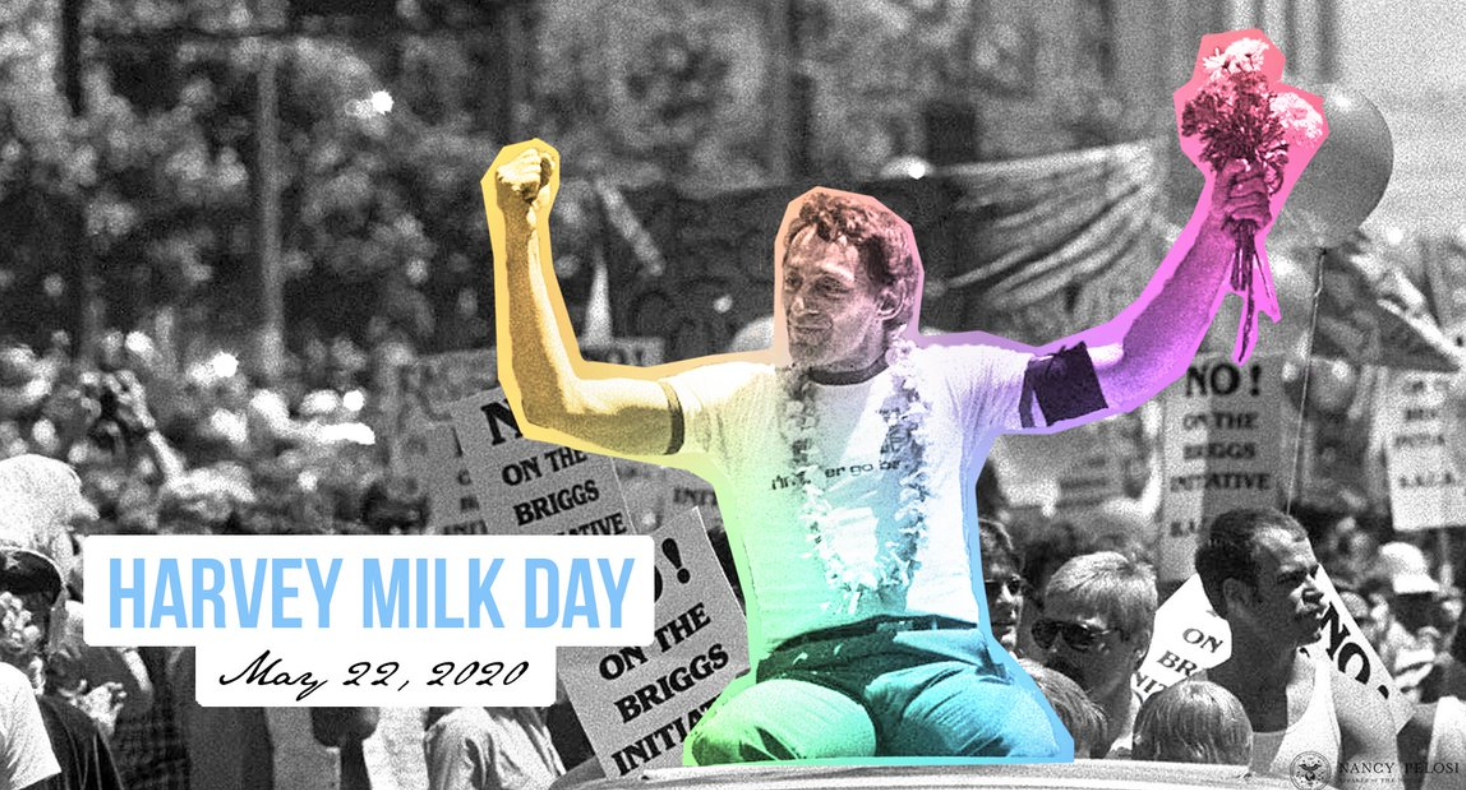
As the onslaught of anti-LGBTQI+ animus continues from the Trump administration, particularly targeting the Trans community, this day in celebration of one of California’s early LGBTQI+ pioneers seems almost poignant.
May 22 was designated ‘Harvey Milk Day’ by a law signed in 2009 by then California Republican Governor Arnold Schwarzenegger, to commemorate annually the life and legacy of the assassinated LGBTQI equality and civil rights leader.
As the first openly gay person to be elected as a Supervisor to the Board of Supervisors for the City & County of San Francisco, Milk not only advocated for the LGBTQ community but for other minorities and the elderly. Years after his death, Time magazine included Milk on a list titled “The 100 Most Important People of the 20th Century.”
However, on May 21st, 1979, some forty-one years ago, sitting on a jet which had landed at San Francisco International Airport, Harvey Milk was not a name I recognized nor was I aware of his story and importance- but I was about to be educated on that subject matter and in a pretty dramatic fashion.
I was a young, very closeted 20-year-old gay man leaving my home and my country to travel to the City by the Bay at the invitation of my best friend who I’d grown up with in rural Ontario outside of Toronto, Canada. He had moved to the city in February, two and a half months previously.
As my plane taxied up to the gate at around 10 AM that Monday morning, approximately 12 miles north of the terminal, a jury of seven women and five men were deciding the fate of a former colleague of Milk’s, who was on trial for murdering him and then San Francisco Mayor George Moscone. A decision that was to have a significant impact on my life and ultimately my career.
Seven months prior, on November 27, 1978, 32-year-old Dan White crawled through a basement window to avoid the metal detectors located at the entrances to San Francisco’s City Hall. White, a former Supervisor, and ex-city police officer made his way to the second-floor office suites of Mayor Moscone.
In the summer of 1978 White had resigned his supervisor’s seat and now wanted it back. After several minutes of heated argument as he attempted to persuade Moscone to reappoint him- he pulled out a revolver and shot Moscone to death. He then went in search of Harvey Milk who he had repeatedly clashed with especially over issues of LGBTQ rights and then shot him to death. He fled the building only to surrender to SFPD detectives a couple of hours later.
White’s defense team of Douglas Schmidt and Stephen Scherr managed to refocus the trial into an examination of his mental state. Several psychiatrists were called to testy that White had not really meant to commit murder but had been driven to it by stress over finances, loss of the job, and family Then Schmidt highlighted White’s considerable intake of junk food and candy—what came to be known as the “Twinkies Defense“—in which White’s allegedly abnormally high blood sugar count at the time of the murders was blamed for his rampage.
It turned out to be a rather effective defense.
But it was a defense that rendered a lesser finding by the jury of voluntary manslaughter, from which defendant White was sentenced to seven years and eight months of prison time.
Word spread that late afternoon quickly throughout San Francisco, but had the most negative impact in the principally LGBTQ quarter in a city neighborhood district known simply as ‘the Castro.’ It was the area that Milk had represented during his time first as an LGBTQ activist and then later as an elected official.
I was at my friend’s walk-up flat a block away from the intersection of 18th and Castro streets. The phone rang, my friend answered, the next thing I knew I was swept up in the crowds of LGBTQ people appearing in the streets of the Castro and quite angered by the jury’s verdict and the judge’s sentence.
What happened in the next few hours became know as the White Night riots as the LGBTQ population of the city rioted against the injustice not only of the unjust verdict over the killing of a beloved community leader, as well as the mayor but the oppressive and ongoing campaign of persecution by the S.F.P.D. against the LGBTQ community. It was the night before what would have been Milk’s 49th birthday.
In the weeks and months after that night I was fortunate enough to not only meet people who knew Harvey Milk well but in more than a few cases worked with him as activists or in the city government. It was also the event that cast in stone my decision to become a journalist, in part encouraged by Cleve Jones who had protested alongside Milk for LGBTQ equality and rights.
Today would have been Harvey Milk’s 90th birthday, I have long wondered what he would have thought of the transition his beloved LGBTQ community has gone through- marriage equality, the ending of don’t ask don’t tell, but then too at 90 I can also see him still fighting, and still demanding respect and acknowledgment of the humanity of all LGBTQ people.
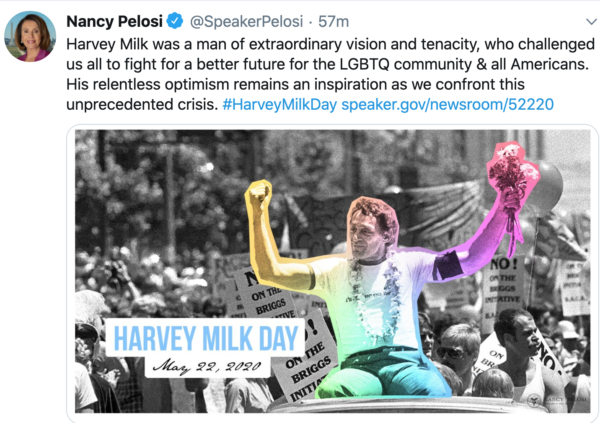
U. S. House Speaker Nancy Pelosi issued this statement Friday saying; “On Harvey Milk Day, people in San Francisco, throughout California and across the country honor a man of extraordinary vision and tenacity, who challenged us all to live with strength, integrity, and courage. As we mark what would have been Harvey’s 90th birthday, we renew our commitment to continue his work by ensuring all people, regardless of who they are or whom they love, can be equal participants in our democracy.
“This year, as our nation faces an unprecedented crisis, Harvey’s message to ‘hope for a better world, hope for a better tomorrow… and hope that all will be alright’ remains as vital as ever. But Harvey was more than a messenger of hope, he was also a clarion voice for action, inspiring generations of leaders, advocates, and ordinary Americans to not just hope for change but to work for it. Thanks in part to Harvey’s trailblazing efforts, our nation has made great progress toward advancing the rights and dignity of the LGBTQ community and all Americans. From helping pass fully inclusive hate crimes legislation and sending the hateful ‘Don’t Ask, Don’t Tell’ policy into the dustbin of history to ensuring the right to marriage equality, our nation now more fully embodies our founding promise of equality and justice for all.
“This Harvey Milk Day, while we continue to combat the coronavirus threat, we must act boldly, with hope in our hearts, to build on Harvey’s legacy of progress and opportunity. While we work to ensure that every vulnerable community has the support they need to stay healthy and safe, we must also continue to demand that Leader McConnell and Senate Republicans end their year-long obstruction and bring the House-passed Equality Act up for a vote. By finally and fully ending anti-LGBTQ discrimination once and for all, we can honor the life of Harvey Milk and build a brighter future for all Americans.”



Opinions
Evan Low is not the leader the Victory Fund needs at this moment
The board must recognize what is at stake and act before org’s legacy is lost
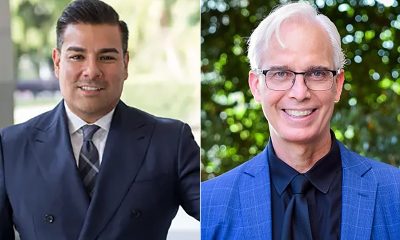
As co-founder and the first executive director of the Victory Fund and Victory Institute, I find the ongoing turmoil between a dozen or more employees and the organization’s new president, Evan Low, deeply distressing—particularly during such a critical election year.
The Victory Fund’s mission has always been clear and important: to elect and support qualified LGBTQ candidates for public office and, in doing so, secure a “seat at the table” from which LGBTQ issues can be advanced. That mission is too important to let internal turmoil diminish it.
I applaud the employees for going public with their concerns. When harassment allegations and other serious complaints threaten to derail an organization that was once so effective, where else are employees supposed to turn? The board of directors has a legal and fiduciary responsibility to the organization and to its donors. Once it received complaints of this magnitude, the board should have undertaken an independent investigation to determine the facts and assess the seriousness of the allegations.
I do not know Mr. Low, nor have I ever met him. Given my role as a founder, former executive director, and major donor, I found that somewhat remarkable. I was also surprised by the organization’s lack of contact with me at any level—whether to seek my financial support, ask for help with fundraising, or simply seek the perspective of someone involved in building the organization from its earliest days.
When Mr. Low was hired, members of the press contacted me about reports concerning his involvement in previous election-law matters. I declined to comment beyond saying that the board had hired an outside search firm to conduct the search and that I was in no position to assess any issues in Mr. Low’s past.
In hindsight, however, I have come to believe that Mr. Low is not the leader the Victory Fund needs at this particular moment. Ultimately, though, this is a matter for the board of directors to resolve. The board has an obligation to act decisively and independently before this internal conflict further damages an organization whose stature, effectiveness, and reputation were built over decades. The work of the founding board, subsequent boards of directors, and former leaders David Mixner, Brian Bond, Chuck Wolfe, and Annise Parker should not be so easily undone.
The Victory Fund once commanded the admiration, confidence, and financial support of countless people—including me. I hope the board recognizes what is at stake and acts before that legacy is lost.
William Waybourn is co-founder and the first executive director of the Victory Fund and Victory Institute.
COMMENTARY
The politics of selective outrage: San Diego repeals bathhouse ban
While we celebrate San Diego, it’s worth asking why we can raise our voices for bathhouses while turning a blind eye to the far more urgent suffering unfolding around the world

I’m no stranger to and am an advocate for a little group release every now and again. That said, I of course am all for San Diego repealing its antiquated bathhouse ordinance. Despite the likely anti-queer motivations of the time, the ordinance also came during a time when, unfortunately, the casual connections that many folks take for granted today came at a potentially deadly cost. This repeal is a small yet significant testament to the early and darkest ties of the HIV/AIDS crisis.
This ordinance dates back to 1988 and subjected bathhouses to regulations rooted in their stated concern that bathhouses facilitated sex practices that were a legitimate risk to the plague of HIV/AIDS transmission at the time. Now, almost 40 years later, the City Council of San Diego unanimously decided to repeal it – great move for queer tourism, and can’t wait to see how these spaces flourish as a result. If Black’s Beach wasn’t enough of a reason to go to San Diego…
Bathhouses have, historically, been a place that, dare I say therapeutic balance of community and anonymity. At different points in history and in cultures, they have served as a home base of refuge and solidarity as well. When identifying as gay, queer, trans, or any other letter of our god blessed rainbow could cost your reputation, your job, your family, or even your life, these and other queer spaces encompassed the duality of places for both recreation just as much as they were for resistance.
Our dearly queer elders quite literally fought to exist openly so that we pole smokers and clam connoisseurs today can eat at our hearts’ content. They were the pioneers who threw bricks and were arrested at Stonewall in order for us to perform fellatio in those very bathrooms today with next to zero concern of, well, anything.
The HIV/AIDS crisis was just yesterday for so many of our community. In the US alone, more than 100,000 died from AIDS by 1990. To spare the details ( that I implore every last one of you to look up the next time you’re tempted to doom scroll), eventually the advocacy and outrage paid off (TAKE NOTE!). The implementation of proper medical intervention coupled with sex education in the virus paid tf off.
Fast forward to today, treatment can suppress HIV to the point that it is not sexually transmittable. In 2024, over 68% of folks age thirteen and older living with HIV had reached viral suppression. If this isn’t progress, I don’t know what is.
At the same time, progress has a way of making folks forget about what it took to get us here. Before receiving this assignment from my publisher, I had already been made aware of the San Diego repeal. A friend’s husband had mentioned it with gusto in the same conversation in which he was deflecting a comment about refugees worldwide. I could not help but find myself taken aback by the juxtaposition between his enthusiasm for the right to simultaneously steam and blow with his dismissal of crises abroad. These are the politics that get you to raise your voice?
I had a similar thought the night the Knicks won the World Series or Super Bowl or whichever they do. A friend and I had made the mistake of going to catch a flick that evening – thank you, AMC A-List, thank you, Nicole Kidman. We found ourselves at a theatre around the corner from Madison Square Garden, and what a mistake that was. I won’t go into detail on the chaos we were witness to, as I assume you have Instagram.
At the time, I couldn’t help but think: where was this energy during Black Lives Matter? Where is even a fraction of this uproar when very real people are being displaced, persecuted, starved, and killed? I love New York City, but I love basic human rights even more.
Many of us become passionate about injustice once it is at our stoop, then suddenly become preoccupied once it is absent from our immediate line of vision. When it affects our healthcare, our relationships, and our right to raw-dog in a sauna, suddenly we are activists. But when it’s happening to someone whose life looks a little different from our own or who happens to be somewhere else on the planet… blind eye turned. Indifference. Active ignorance.
There are queer folks around the world at this very moment whose safety and lives would be at risk if they were to live their true identities openly and authentically. There are so many members of our LGBTQ+ community whose families, communities, governments, and religions would persecute them for doing exactly what many of us consider to be a regular Thursday night. And yet so many of us exist in extraordinary comfort, basking in the rights that queer folks fifty years ago fought, protested, and sometimes died for, while remaining almost entirely disengaged from those who are still waiting for their own liberation. This should upset us.
I was reminded about a year ago on a visit to the Metropolitan Museum of Art with a childhood friend. We were making our way through the fairly new and long overdue native American wing, taking in these breathtakingly vibrant patterns and aesthetics. At some point, I turned to him and commented something along the lines of, “Can you imagine how spectacular this country might look like today if these populations had never been displaced and decimated?”
His response: a casual and dismissive shrug. “Well, it’s happened thousands of times, so what are we supposed to do about it?” And with that, he walked to the next piece. I have a feeling that I won’t soon forget this response. There is something deeply and dangerously dismissive about becoming so very comfortable inside one’s own worldview that one is unable to imagine another one. Or worse, becomes upset or confrontational when challenged to.
We don’t have to agree on everything. We don’t have to care about the same things. But what I know is possible is that we are capable of developing the basic human capacity to recognize suffering outside of our immediate line of vision.
So yes, let us celebrate San Diego on repealing the bathhouse ordinance. Let gay men gather. Let consenting adults have consensual sex in consensual places. Let queer spaces exist without the government treating our sexual identities as shameful or dangerous. And let us never forget our queer forefathers and foremothers who fought to make it all possible for us today.
But maybe, just maybe, we can redirect some of that queer political vigor to Sudan. To Palestine. To Iran. To Western Sahara. To refugees. To indigenous communities worldwide. To all of the LGBTQ+ folks living under governments where authenticity is straight up dangerous. And don’t get me wrong – I’m not suggesting that we stop caring about d*ck, I am suggesting that we care about more than just d*ck.
I challenge everyone who has made it this far to step that much further outside our likely comfortable worldview and embrace getting a little uncomfortable questioning what you think you already know. I do fear, however, that all of you who have made it this far in my article are likely not the folks that most need to hear this. I guess, for all of them, we can always put the world news on in their bathhouses. They can sweat out their toxins as well as their political apathy. And with their mouths likely full, perhaps they’ll finally open their ears.
Opinions
Not all trans people are the same
Media, activists need to do more to challenge stereotypes
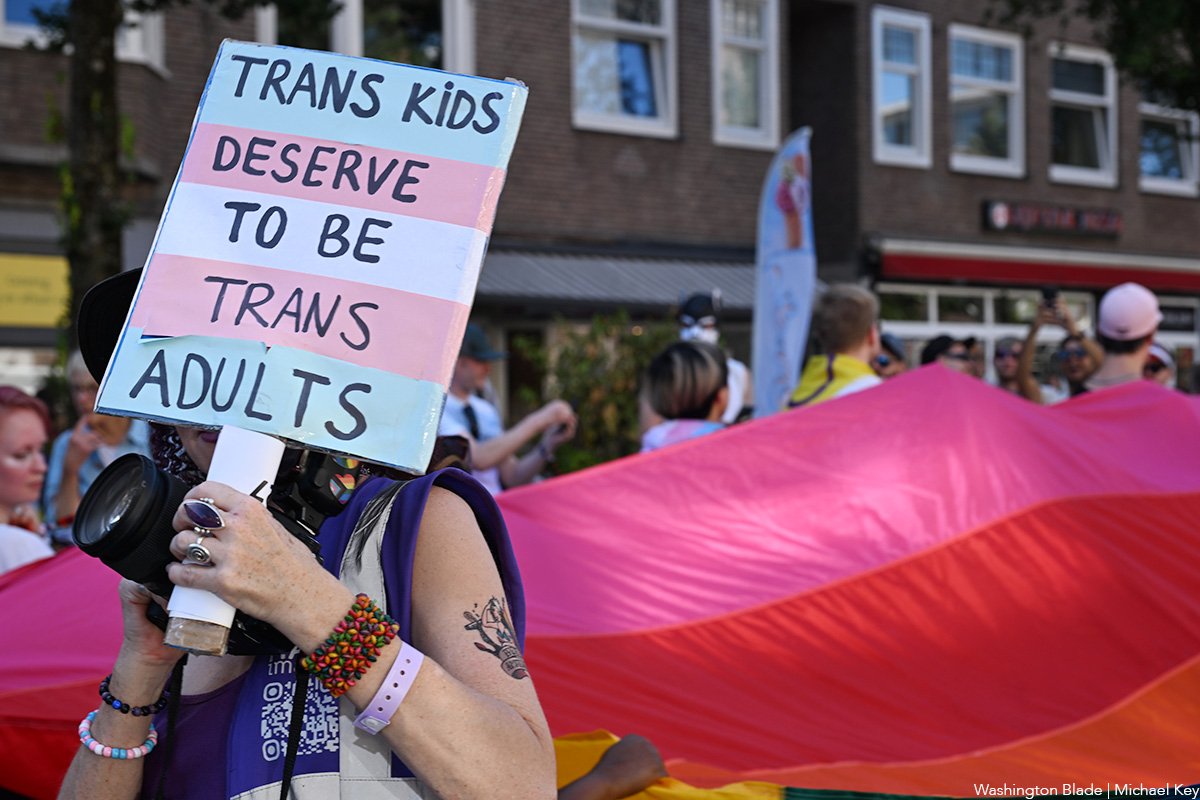
It’s interesting how the mainstream media, especially the conservative part of it, likes to write about transgender subculture when they should speak up about trans people.
How often do you see mentions of blue or purple hair, Marxism, specific clothing styles and ecology when you see a mention of a trans person?
It happens more often than it should. It looks like the mainstream media, even the ones that don’t demonise us, sincerely believe that being trans means sharing a whole bunch of characteristics that have nothing to do with having a gender identity different from the one that was assigned at birth.
Here are four reasons why it may create problems, and what to do about them.
1. A subculture idea
The assumption that being trans is part of a subculture creates a very specific kind of discrimination, because the mainstream audience who read those stories sincerely believes that being trans is a personal choice or a trend in the same way as being a K-pop fan, a goth, or a metalhead. It basically means that being trans is nothing more than a trend, and trends, as we all know, can change. People who believe in this idea are more likely to speak about “gender ideology” and “propaganda trends” and less likely to listen to scientists and studies around trans issues, or to different experiences of what it means to be trans.
Even if trans people made a choice to be trans, they shouldn’t be discriminated against. In a democratic, free country, no one should be punished for choosing what to do with their body. And hate for subcultures is a real thing that leads to violence. But the problem is that, despite there being a trans subculture, most trans people are statistically not part of it. But where are they in activism?
2. Misleading about goals
Let’s be honest. We are partly to blame for this stereotype. And before you stop reading, let’s just think about the topics most people discuss before the average protest or radical Pride event. Or let’s imagine trans-friendly events. They are mostly leftist, and people at these events share the exact same interests, hobbies, and political positions.
At my last protest about the new draconian Equality and Human Rights Commission guidelines in the U.K. that say trans people can only use public places according to the sex assigned to them at birth, we were speaking about anything else. For example, some speeches were about abolishing “bourgeois democracy,” speaking up for socialist revolution, and saying some other things I definitely couldn’t support.
I’m not against socialism, but I’m against the idea that all trans people are socialists. That is inherently misleading, at best, and harmful, at worst. I support universal basic income and free healthcare, but not revolution or Marxist reform. If I were a cis person who generally supported trans rights but knew too well about the Russian Revolution of 1917 and how it ended for indigenous people and queer people, if I were a bystander, I wouldn’t stop at a protest like that. I probably wouldn’t even believe that the situation is as bad as they are saying.
There is nothing bad about inviting a socialist speaker. The problem begins when all trans events become socialist events. Those protests don’t look like protests for trans rights – they look like protests for socialist revolution or just like a rebel teens gathering.
3. Self-fulfilling prophecy
At the protest I mentioned and at other similar protests, including the ones from the U.S. I saw online, there weren’t a lot of “traditionally” trans people — the ones you may have been able to see in old TV programs about trans experiences, where trans people were presented to be more gender-conforming.
Most activists are young, white, poor but not extremely poor, citizens of the country where they are living, gender-non-conforming, leftist, and non-religious. They like trans horror, drag queen shows, drawing and reading MfM romantasy. And despite the fact that I just finished writing my own trans horror novel, I wonder — where are the other trans people? With different hobbies and lifestyles?
Where are all those “traditional” trans women from old TV shows who like make-up and want to give birth to kids if only it was possible, and trans men who like to spend their time drinking beer in pubs and going to the gym with their bros? I think we need them more than we think. They may give new ideas and perspectives. And they need us.
Why don’t we see them? Why do we see so few trans refugees who came from Middle Eastern, Asian, and African countries? May they be triggered by the world then because the U.S. had the worst dictatorship on the planet, or that the U.K. is a fascist country when they saw something worse than the British government or even MAGA? For some trans person who survived Bashar al-Assad in the Syrian government or fled Eastern Turkestan, such slogans would feel like gaslighting — and I knew because I met many refugees.
Why, finally, do so many trans activists have similar clothing styles, similar interests, and similar experiences?
Because it’s a self-fulfilling prophecy. When trans activists create this kind of culture, they accidentally gatekeep all other trans people who may feel less comfortable within a subculture that has its own rules, style, and ideology, even if none of those things have anything to do with being trans.
4. Media misrepresentation
When the media — conservative and not very conservative — sees the same thing, it doesn’t matter if we are speaking about a trans man who is traditionally masculine and wants a traditional family, or if we are speaking about soft, nice gay boys who happen to promote socialist revolution like many modern stereotypical trans activists. It is equally misleading.
I hate the idea that we need to pretend to be more convenient and normal in order to be accepted by society, because society has never worked that way. But pretending to be accepted by the community is no better.
Trans people are different — and sometimes problematic — and despite the core of activist trans culture, we can have some distinctions when we speak with the media. We should never try to tell people that all trans people are similar.
Now, when trans rights are under attack, it is more important than ever to show that all trans people are just people. We are different, like everyone else. We have our rights, even if we are wrong. Even if we are ugly. Or struggle with inner transphobia. Or some of us internalise traditional roles, or; the opposite, too weird for any culture and subculture. We can make mistakes. But we are not a political party or a monolithic group. Being trans is not a lifestyle, because we have different lifestyles.
Trans kids need to see that they can be whoever they are and still be true, real trans people. And the media should always be questioned when they try to push all trans people into the frame of a subculture.
But to do so, we need to look at our activism and at the representation we are creating.
Germany
We must not scapegoat refugees after Berlin Pride terrorist attack
‘LGBTI people must not be instrumentalized to spread hatred against others.’
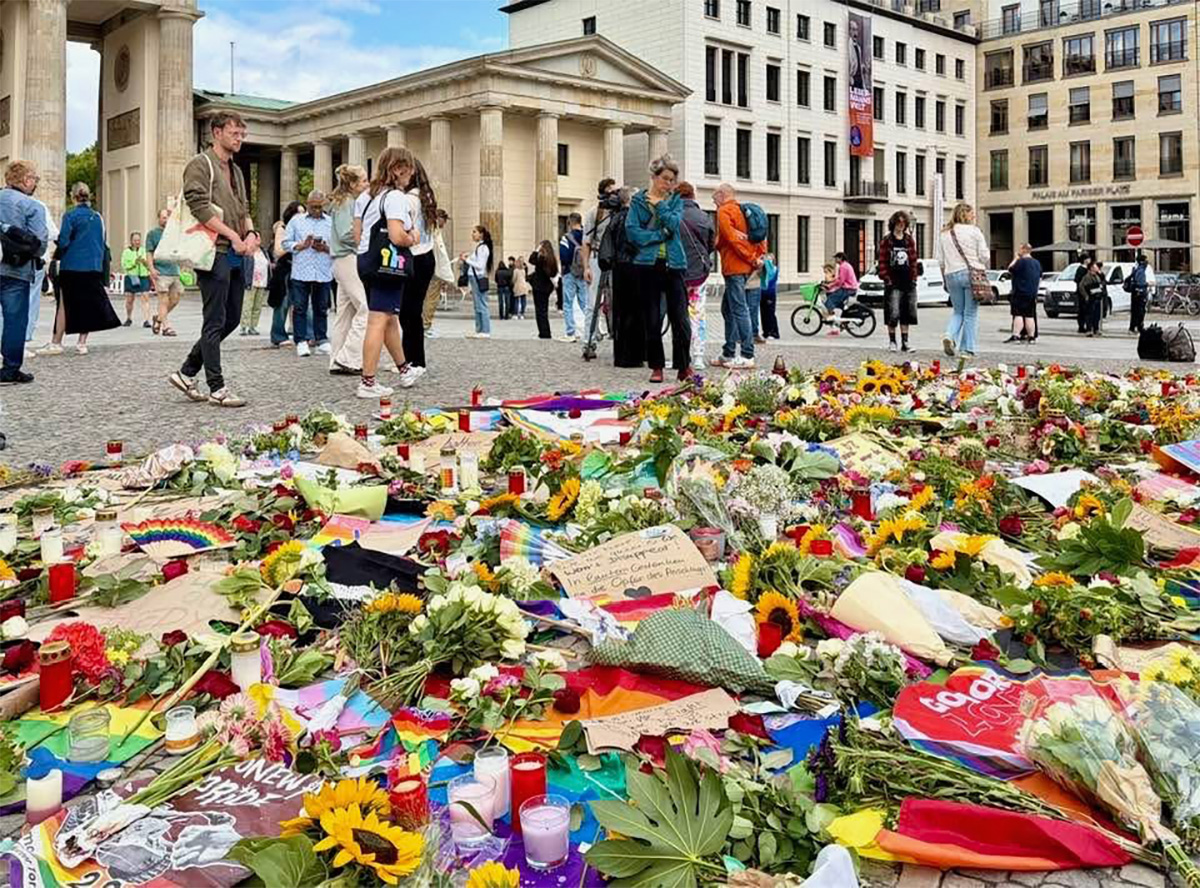
On Saturday, during Berlin’s Christopher Street Day, one of Europe’s biggest LGBTQ+ Pride events, a 21-year-old religious extremist drove a van into the crowd and then used a knife to stab multiple people. One person died and 29 others were injured.
When I saw this news on social media, I sincerely felt scared, and not because one more bigot used his religion to justify violence against people like me. It has, unfortunately, happened too often. Despite being happy to see the overwhelming support for the queer community and the condemnation of terrorism, I was terrified by the wave of Islamophobic and anti-immigrant statements that came even from “left” and “progressive” people who should know better, who generally support refugees, who know that all people are equal, and that you shouldn’t treat others as less human because of their religion.
In 2020, a Russian MP threatened to start a criminal case against me after I interviewed Muslim women about why they called themselves feminists and wrote about my own relationship with feminism and Islam, mentioning that I was following events in Syria and had read some academic books on the Islamic State. Surprisingly, the MP claimed that I was recruiting women to ISIS by using feminist ideas, which, of course, was absolutely ridiculous for many reasons, including the fact that I was an openly nonbinary transgender person. But some media outlets and queer people online, including those who called themselves progressive, refused to support me or believed the lie. This is what an anti-extremist witchhunt looks like. If I had been in Russia, and not in the UK, I probably would have been in prison.
It is extremely important to oppose extremism by knowing the actual facts about terrorist groups and not starting a moral panic.
Here are four examples of what media coverage and queer people online often misunderstand about the events in Berlin, and why it’s important.
1. Islam is not the problem
Despite a common misunderstanding, this terrorist act wasn’t even about Islam.
Islam, just like Christianity and Judaism, has a variety of views on LGBTQ+ rights, from affirmative to condemning. I think everyone in the American Bible Belt has met Christian fundamentalists who praised violence against LGBTQ+ people or used violence against their own queer children, so it is a universal problem. But the thing is Abdul Ballout was not an ordinary conservative Muslim. He was known for wanting to join ISIS. It is an apocalyptic cult that teaches that we are living in the last era, so they are trying to re-create the caliphate that they believe should be restored before Doomsday.
Most of the Muslim people I know, including conservative Salafi Muslims, see the group as dangerous criminals, or don’t see the group as a Muslim group at all. The vast majority of ISIS victims are not Western people or queer people, but cisgender heterosexual Muslims in the Middle East and Africa who the group considers to be infidels. ISIS is widely condemned by Muslim communities and scholars, and blaming Islam for the actions of cult members is like blaming Christianity and all Christians — or even all Christian fundamentalists — for the actions of Branch Davidians members or for the mass murder-suicide committed by members of the People’s Temple.
2. Refugees are not the problem — and Germany is not a safe haven for refugees
First, the attacker was a German citizen. But the media continue to blame migration. Germany is seen as a safe haven for refugees and asylum seekers in the U.S., the UK and beyond. But the time when Germany was safe is long gone. For refugees from Russia between 2022 and 2025 alone, around 90 percent of refugee claims have been refused by Germany, including the claims of political prisoners. The situation for non-White Muslim refugees is even worse, especially in regions such as Bavaria.
I have personal experience working with some refugees in Germany who are also Muslim. The way the migration service mistreated them is beyond anything I saw while working with refugees and being a refugee in the UK. I saw cases in Germany where an asylum seeker’s family was threatened back home because of social media posts the asylum seeker had made, or where a person was detained and sent back to their homeland despite having a history of persecution and torture by the government. Very often, when a person is taken by the immigration service, their loved ones don’t know where they are. Queer refugees also report homophobic and transphobic attitudes in the system.
The narrative that Germany is too generous to refugees was created by the far right and has little to do with reality, and it harms actual refugees, including queer refugees, by silencing their voices.
3. There is no collective responsibility
It is an extremely old and dangerous idea.
Just as all gay men shouldn’t be blamed for what the American serial killer Jeffrey Dahmer did just because he was gay; we shouldn’t blame all Muslims, all people of Middle Eastern origin, or any other large demographic group for the crime of one terrorist. Even if the terrorist had been a refugee and a Muslim, it shouldn’t actually matter, because under the law in any modern non-authoritarian country, an individual shouldn’t be held responsible for the actions of their social group.
After all, when a white, Christian, cisgender, heterosexual, neurotypical person commits a crime, it is almost always seen as an individual’s fault. Why is it different for marginalized groups? The idea of collective responsibility harmed the gay community for decades and is harming the trans community right now, for example after Charlie Kirk’s murder. The best thing we can do is stop this narrative, because it will be used against us.
The only reason I explained about ISIS and the refugee experience in Germany is to show how far from reality the popular accusations are.
4. Witch-hunts and scapegoating serve the far-right agenda and are extremely anti-queer
From my own experience, as an openly trans person speaking against Islamophobia, sexism and queerphobia who was accused of supporting the cult that kills queer people, promotes the sexual exploitation of women and sees the majority of Muslims as legitimate targets, I can say for sure that moral panic can go wild.
People who remember the Satanic Panic of the 1980s, or even the attacks on Muslim communities after Sept. 11, should know this.
Now even queer people are attacking refugees and Muslim communities online while the German government is introducing more draconian measures against those groups.
ILGA-Europe, the biggest LGBTQ+ organization in Europe, made a statement warning against any attempt to weaponize the attack.
“This tragedy must not be used to fuel hatred against migrants, foreigners or Muslim communities. We reject any attempt by anti-democratic actors to exploit what happened to divide communities, scapegoat minorities or turn one group against another,” Chaber, the group’s executive director, said. “LGBTI people must not be instrumentalized to spread hatred against others, nor should the existence of racism, Islamophobia or anti-migrant hatred be used to minimize the threats faced by LGBTI people. The rights, safety, and dignity of all people must be defended.”
People who live at the intersection of multiple marginalized identities — LGBTQ+ Muslims, LGBTQ+ people of color and LGBTQ+ refugees — will probably suffer the most from this moral panic. Moreover, these are the same political groups that target refugees, Muslim communities and queer people. If this hatred isn’t stopped now, everyone is potentially at risk.
Condemning terrorism is important, but it is no less important to stop creating more victims.
Commentary
When a church fears the rainbow
Puerto Rico pastor objected to Pride symbols outside congregation
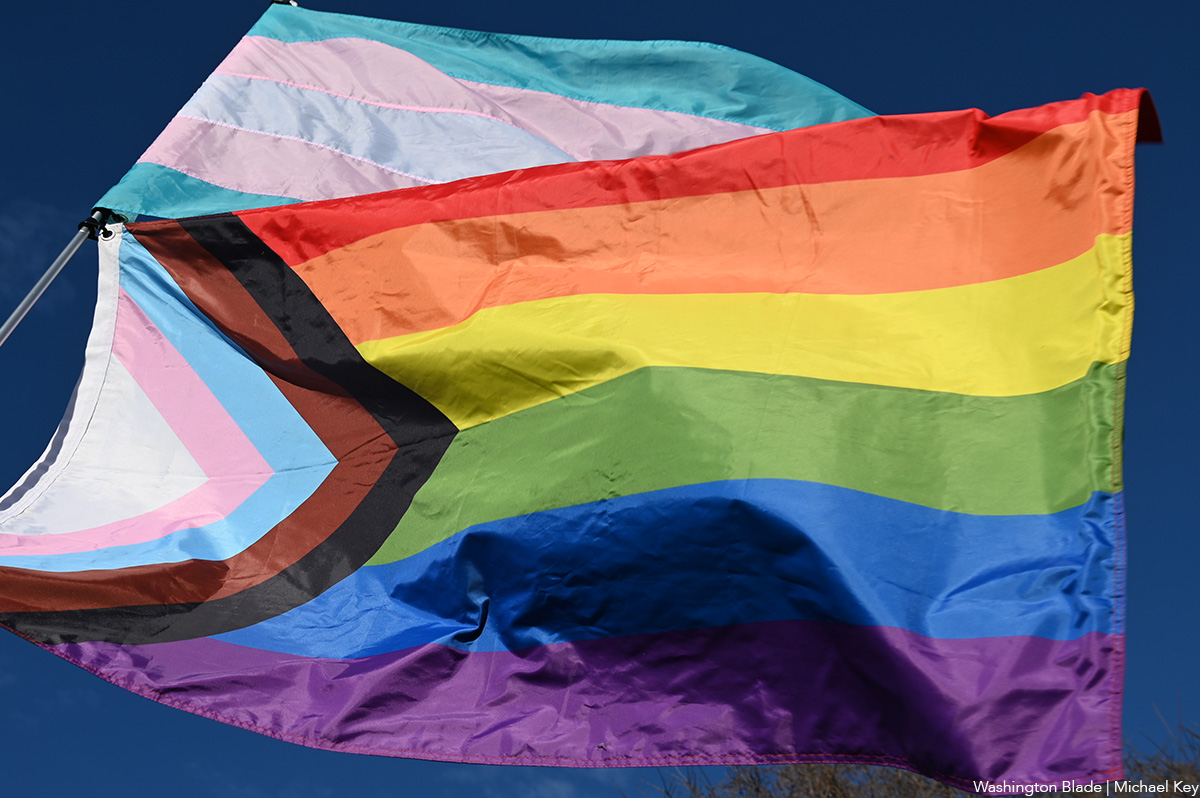
There are moments when an incident stops being merely a local story and begins to reveal something much deeper. What happened on June 28 outside One Church, in Comerío, Puerto Rico, belongs in that category.
I do not know who painted the rainbow colors on the asphalt and on a roadside guardrail. I do not know what motivated them, and it is not my place to justify their actions. If someone believes a law was broken, there are authorities and legal mechanisms to address that. That is not the point of this reflection.
The point is the words that followed.
Hours after those colors appeared, Pastor Jorge J. Santiago Reyes went live on social media. He said he felt threatened. He described what happened as a physical attack against his church. He appeared angry and disappointed. He called those who painted the rainbow “cowards” and “charlatans.” He expressed frustration with the support that, according to him, the municipal government of Comerío has shown toward the LGBTQ+ community, and with those who support posts related to that community. He repeated several times that the people responsible had “crossed the line.” He ended his message by saying, “These charlatans have to be stopped.”
As I listened to his words, I stopped thinking about the paint.
I began thinking about fear.
There is one phrase the pastor repeated again and again: “They crossed the line.” Yet he never explained what that line was. If he was referring to a possible violation of the law, that is for the authorities to determine. If he meant respect for property, there are also procedures to deal with that. But when that line remains undefined and the message begins to associate a rainbow with a threat, the question changes. It is no longer only about a guardrail or a road. It becomes a question about what boundary, in the pastor’s view, was actually crossed.
Paint can be erased.
A brush can cover the asphalt and return a guardrail to its original color.
What does not disappear so easily is the meaning of those colors.
And perhaps that is where the real conflict begins.
It is significant that this happened precisely on June 28, the day when the LGBTQ+ community remembers a history marked by exclusion, violence, and the struggle for dignity. What represents memory, hope, and the possibility of living without hiding for millions of people was presented by others as a threat.
I do not know why someone painted that rainbow. I do not need to know in order to ask whether those were the words society should expect from a pastor.
A religious leader may feel hurt, frustrated, or angry. What he cannot forget is the responsibility that comes with every public expression. His words do not end when a livestream ends. They move beyond the space of his church, reach people who may never share his faith, and help shape the way others see those who think differently. When a pastor calls other people “charlatans” and “cowards,” says they “have to be stopped,” and turns a rainbow into evidence of an attack, he is no longer speaking only from frustration. He begins to build a discourse that can feed rejection toward a community far larger than the people responsible for that act.
There was another moment in the livestream that caught my attention. The pastor reminded viewers how much he has served Comerío, how much he has accompanied his community, and how much he has worked for it. I have no reason to question that service. I am sure many people can testify to the good he has done.
That is precisely why it was difficult to hear.
Pastoral vocation is not about reminding a town of everything one has done for it when conflict appears. Service does not lose its value when it goes unrecognized; it loses something when it becomes an argument to claim a moral position from which to speak down to others. A person who serves does so because that is the nature of the calling, not because that service grants authority to discredit those who think differently.
As a pastor, that part of the message left me deeply uneasy. Not because I expect ministers of God to be perfect. We are not. But because our words carry weight, we are called to speak with greater responsibility. Some expressions build bridges. Others raise walls. Some words invite encounter. Others end up justifying rejection.
The paint will disappear. A brush will be enough to cover the asphalt and return the guardrail to its original color.
The words will not disappear as easily.
They will remain recorded in a video, shared again and again on social media, and remembered by those who heard them. They will remain long after the last trace of paint has been erased.
When this episode is remembered, it probably will not be because of the rainbow that appeared outside One Church, in Comerío, Puerto Rico.
It will be because of the words a pastor chose to use when speaking about it.
And that difference changes everything.
Ghana
Intersex lives, constitutional freedom, and the dangerous future of Ghana’s Human Sexual Rights and Family Values Bill
Lawmakers continue to consider draconian measure

There is a dangerous silence surrounding intersex lives in Ghana — a silence shaped by fear, misinformation, cultural misunderstanding, and institutional neglect. Today, amid discussions around the possible passage of the Human Sexual Rights and Family Values Bill, 2025, that silence risks becoming law, reinforcing exclusion and deepening the marginalization of already invisible lives.
Much of the national debate surrounding the bill has focused on LGBTQ+ identities. Yet buried within it are implications for intersex persons that many Ghanaians do not fully understand because intersex realities remain largely invisible.
Intersex persons are born with natural variations in chromosomes, hormones, reproductive anatomy, and/or genital characteristics that do not fit typical definitions of male or female bodies. Intersex is not a sexual orientation or gender identity. It is a biological reality. Ghana’s Commission on Human Rights and Administrative Justice (CHRAJ) has clearly acknowledged this distinction.
Despite this distinction, the bill mistakenly collapses intersex realities into a legal framework linked to LGBTQ+ criminalization.
Although the bill contains only limited references to intersex persons, under certain medical exceptions, these references do not amount to recognition or protection. Instead, they frame intersex bodies as abnormalities requiring regulation, correction, and institutional management. This approach is inconsistent not only with Ghana’s constitutional guarantees of dignity, equality, privacy, and liberty, but also with emerging African and international human rights standards. The African Commission on Human and Peoples’ Rights Resolution on the Promotion and Protection of the Rights of Intersex Persons in Africa – ACHPR/Res.552 (LXXIV) 2023 affirms protections relating to bodily integrity, dignity, freedom from discrimination, and against harmful medical practices. Additionally, the United Nations has repeatedly condemned medically unnecessary and non-consensual interventions on intersex children. Rather than affirming the humanity and autonomy of intersex persons, the bill risks legitimizing systems of surveillance, coercion, violence, and institutional erasure.
This is not protection.
It is managed erasure.
A child born intersex in Ghana already enters a society shaped by secrecy and stigma. Families are often pressured to hide intersex children or seek “correction” to make their bodies conform to social expectations.
The bill risks intensifying this pressure.
Clause 17 creates space for “approved service providers” to support interventions relating to intersex persons, yet offers little protection around informed consent, bodily autonomy, confidentiality, or coercive treatment. Under the language of “correction” or “support,” harmful interventions may become normalized.
The intersex community has documented painful lived experiences of intersex Ghanaians that reveal the devastating consequences of stigma and invisibility.
One heartbreaking case involved intersex twins born in Ghana’s Eastern Region in 1993, who were repeatedly forced to move from village to village because of rejection and ridicule. After losing their father, their main source of protection and support, they became even more vulnerable and reportedly experienced severe emotional distress, including suicidal thoughts linked to years of stigma and exclusion. This is what invisibility looks like in practice.
Another painful example is the story of Ativor Holali, whose lived experience exposed the cruel realities intersex persons face in sports and public life. Ativor Holali endured invasive scrutiny, public humiliation, and social suspicion because her body did not conform to rigid expectations of femininity. Rather than being protected as a Ghanaian athlete deserving dignity and privacy, she became the subject of speculation, gossip, and institutional discomfort.
Her experience reflects a broader social crisis: when society insists that every body must fit a narrow binary definition, intersex people are forced to defend their humanity in spaces where dignity should already be guaranteed.
Intersex Persons Society Of Ghana (IPSOG)’s Ŋusẽdodo research further revealed that approximately 70 percent of intersex respondents reported depression, anxiety, trauma, or severe emotional distress linked to medical mistreatment, family rejection, bullying, and social exclusion.
The bill risks transforming these existing prejudices into institutional policy. Several provisions risk deepening surveillance, restricting advocacy, weakening confidentiality, and discouraging public education around intersex realities. Intersex-led organizations providing healthcare guidance, legal referrals, psychosocial support, and community services may face serious challenges.
This places IPSOG and other intersex-led organizations in Ghana at serious risk.
For many intersex Ghanaians, these spaces are not political luxuries.
They are survival mechanisms.
Governments derive legitimacy by protecting the natural rights of all persons, including dignity, liberty, bodily autonomy, and freedom from arbitrary interference. The bill raises concerns because it risks weakening these protections for intersex persons through surveillance, coercive interventions, and restrictions on advocacy.
Ghana’s Constitution declares that “the dignity of all persons shall be inviolable.” Articles 15, 17, 18, and 21 specifically protect dignity, equality, privacy, expression, and freedom of association. These protections should apply equally to intersex persons.
Intersex persons are not threats to Ghanaian culture.
Intersex children are not moral dangers.
Intersex bodies are not political weapons.
They are human beings deserving dignity, healthcare, safety, and constitutional protection.
The true measure of a democracy is how it protects those most vulnerable to exclusion. At this moment, Ghana faces a choice: deepen fear and silence, or uphold dignity, bodily autonomy, and constitutional freedom for intersex persons.
History will remember the choice we make.
Fafali Delight Akortsu is the founder and president of the Intersex Persons Society of Ghana (IPSOG).
Commentary
‘Live Your Pride’ is much more than a slogan
Waves Ahead forced to cancel May 17 event in Puerto Rico

On May 5, I spoke by phone with Wilfred Labiosa, executive director of Waves Ahead, a Puerto Rico-based LGBTQ+ community organization that for years has provided mental health services, support programs, and safe spaces for vulnerable communities across the island. During our conversation, Labiosa confirmed every concern described in the organization’s public statement announcing the cancellation of “Live Your Pride,” an event scheduled for Sunday in the northwestern municipality of Isabela. But beyond the financial struggles and organizational challenges, what stayed with me most was the emotional weight behind his words. There was pain in his voice while describing what it means to watch spaces like these slowly disappear.
This was not simply the cancellation of a community event.
“Live Your Pride” had been envisioned as a celebration and affirming gathering for LGBTQ+ older adults and their allies in Puerto Rico. In a society where many LGBTQ+ elders spent decades hiding parts of themselves in order to survive, spaces like this carry enormous emotional and social significance. They become places where people can finally exist openly, without fear, apology, or shame.
That is why this cancellation matters far beyond Isabela.
What is happening in Puerto Rico cannot be separated from the broader political climate unfolding across the U.S. and its territories, where programs connected to diversity, inclusion, education, mental health, and LGBTQ+ visibility increasingly find themselves under political attack. These changes do not always arrive through dramatic announcements. More often, they happen quietly. Funding disappears. Community organizations weaken. Safe spaces become harder to sustain. Eventually, the absence itself begins to feel normal.
That normalization is dangerous.
For years, organizations like Waves Ahead have stepped into gaps left behind by institutions and governments, particularly in communities where LGBTQ+ people continue facing discrimination, social isolation, economic instability, and mental health struggles. Their work has never been limited to organizing events. It has involved accompanying people through loneliness, trauma, rejection, depression, aging, and survival itself.
“Live Your Pride” represented much more than entertainment. It represented visibility for LGBTQ+ older adults, many of whom survived decades of family rejection, religious exclusion, workplace discrimination, violence, and silence. These are individuals who came of age during years when living openly could cost someone employment, housing, relationships, or personal safety. Many learned to survive by making themselves invisible.
When spaces like this disappear, something deeply human is lost.
A gathering is canceled, yes, but so is an opportunity for healing, connection, recognition, and dignity. For many LGBTQ+ older adults, especially in smaller municipalities across Puerto Rico, these events are not secondary luxuries. They are reminders that their lives still matter in a society that too often treats aging and queer existence as disposable.
There are still political and religious sectors that portray the rainbow as some kind of ideological threat. But the rainbow does not erase anyone. It illuminates people and stories that society has often tried to ignore. It reflects the lives of young people forced out of their homes, transgender individuals targeted by violence, older adults aging in silence, and families that spent years defending their right to exist openly.
Perhaps that is precisely why the rainbow unsettles some people so deeply.
Its colors expose abandonment, hypocrisy, inequality, and fear. They force societies to confront realities that are easier to ignore than to address honestly. They reveal how fragile human dignity becomes when political agendas decide that certain communities are no longer worthy of protection, funding, or visibility.
The greatest concern here is not solely the cancellation of one event in one Puerto Rican town. The deeper concern is the message quietly taking shape behind decisions like these — the idea that some communities can wait, that some lives deserve fewer resources, and that safe spaces for vulnerable people are expendable during moments of political tension.
History has shown repeatedly how social regression begins. Rarely with one dramatic act. More often through exhaustion, silence, budget cuts, and the slow dismantling of organizations doing essential community work.
Even so, Waves Ahead made one thing clear in its statement. Although “Live Your Pride” has been canceled, the organization will continue providing mental health and community support services through its centers across Puerto Rico. That commitment matters because people do not survive on slogans alone. They survive because somewhere there are still open doors, trained professionals, supportive communities, and people willing to remain present when the world becomes colder and more hostile.
Puerto Rico should pay close attention to what this moment represents. No healthy society is built by weakening the organizations that care for vulnerable people. No government should feel comfortable watching community groups struggle to survive while attempting to provide services and compassion that public institutions themselves often fail to offer.
The rainbow has never been the problem.
The real problem is the discomfort created when its colors force society to confront the wounds, inequalities, and human realities that too many people would rather keep hidden.
COMMENTARY
CNN debate for California Governor: If “character matters,” where is it?
CNN California Gubernatorial Debate was on May 5, 2026

Takeaways from the CNN CA Gubernatorial debate last night. Californians are just a month shy of voting for the person who will replace Gavin Newsom as governor of this incredible, incredibly expensive, myth-producing state. But watching tonight’s debate felt a little like experiencing Eugene O’Neill’s “The Iceman Cometh” set in some old LA bar with seven characters high on their own supply going on about their “pipe dreams” with the others listening only for openings to get their digs in. What this version of the play lacked was a sober Hickey character played by Democrat Tony Thurmond to act as the moral center, someone to speak truth to the presumed power of a passionate sound bite.
Centerless, I struggled to get engaged because in this world, right now, we need our pipe dreams to live on as we madly steam into the June 2 jungle primaries. But I was taken by no one. And that’s a problem since I just got my ballot in the mail.
So here are my thoughts and observations as I do my 6 or 7 on who to vote for.
Republican Steve Hilton was given the center TV spot on stage because he has one percentage point more than Democrat Tom Steyer in the latest poll before tonight’s debate. Hilton, who is endorsed by Trump and refuses that the Donald lost the 2020 election, blamed Democrats for everything with a British accent, snide FOX TV host façade, and simplistic rhetoric designed to make people nod. The other Republican, Riverside Sheriff Chad Bianco, went from cartoonish to creepy, arrogant bully when he defended the Oath Keepers.
Low-polling Democrats Antonio Villaraigosa and Matt Mahan each had their sparkling moments but took the gloves off in attacking Xavier Becerra for knowing about a financial scandal involving his former chief of staff when Becerra was HHS Secretary. Becerra and Villaraigosa have often sparred publicly – but this was another level. “Character matters,” Villaraigosa said after calming down from a very real flash of anger.
Becerra’s response was weak, saying that if Trump’s DOJ something was there, he’d be named in the indictment too – but he’s not. He didn’t answer the “Yeah, but you knew about it” part.
This is an issue because Becerra seems to have inherited Eric Swalwell voters and jettisoned up in the polls while more and more former Biden staff colleagues said Becerra was “ineffective” in his job and would have the guts to stand up to Trump.
Katie Porter let everyone know she was behaving well onstage, even as she was virtually ignored by the TV hosts. And she got some good zingers and excellent financial points in. But while she acknowledged her leaked-video “mistake” and apologized for how she reacted to an obstinate reporter by bitching at her staff, Katie Porter’s personality transplant still only barely covered the sense that she was really an old, too-stern Mother Superior with a ruler.
Tom Steyer came off at times like a bobble-head billionaire. And while he virtually oozes authenticity, he also has an air of incredulity that some people don’t get his legit passionate commitment and sincerity. Sometimes he seems genuinely surprised that not everyone knows about his past endeavors and the Great Good motives behind them. That said, I do believe Tom Styers would know how to stand up to Trump and could even possibly pull off some deals to help the environment that no one now sees coming.
Plus, I confess – I liked Styers’ answer to who should play him in a movie. Gregory Peck, he said. He didn’t care that Peck has been dead for a long time. I think he was thinking of Gregory Peck in “To Kill a Mockingbird” – and he, too, was thinking “character matters.”
There’s another gubernatorial debate on Wednesday night on KNBC4. I’ll wait for that before I decide how I’m going to vote.
This is a cross-post from Karen’s LGBTQ+ Freedom Fighters Substack.
COMMENTARY
Is the Stonewall Generation being screwed by the San Diego LGBT Center?
Seniors question the handling of an $18.9 million bequest intended to support them
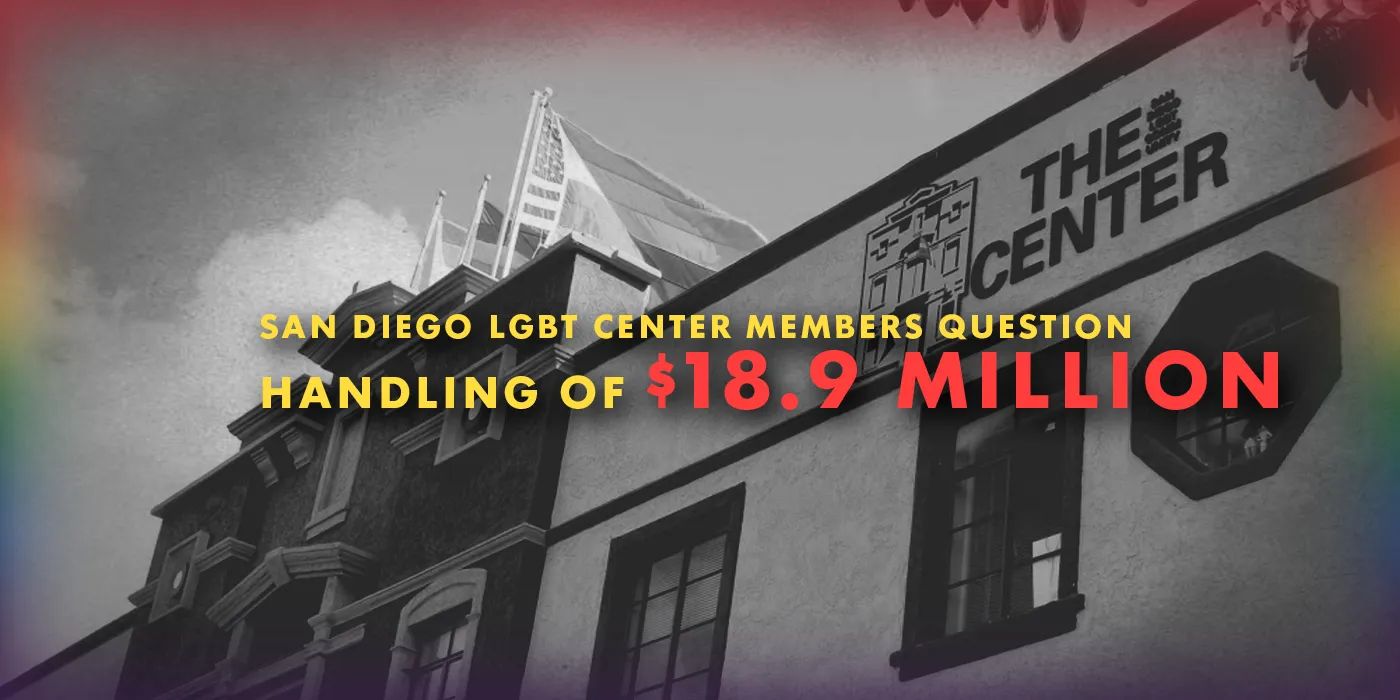
Beautiful San Diego, the second largest city in California, is shuddering through challenging times. Amid city deficits, federal budget cuts and emotional and fiscal consternation over the war in Iran, the LGBTQ+ community is facing, what to some, is an ego-driven tiff and, to others, is a deep dispute over transparency and trust between the San Diego LGBT Community Center and Stonewall Generation seniors who want to know what’s happening with an $18.9 million gift their late friends bequeathed the Center for senior services, programs, and housing.
While this may seem like some niche soap opera that will blow over with enough delay, the circumstances are darker and more dire than the drama reveals. On the surface, exchanges between the two camps appear politely professional. But there is a deep, widening, and hardening chasm developing between those who fought for gay liberation when homosexuality was still a criminal perversion, and the Center board and staff committed to protecting vulnerable LGBTQ+ youth who only know Trumpian cacophony in a nihilistic world.
The feud is growing so loud that it is drowning out the fiscal winds banging outside the Center door, harbingers of massive tornadoes threatening to obliterate the house. The “what ifs” are near: what if government funding is cut to the quick and donors start questioning their once-firm trust in Center management?
Particularly painful: a source overheard some Center youth dismiss the Stonewall Generation seniors: “They’re just bitter old racist cis queens causing all the trouble.” What happens if a significant number of gay white men act on what is now just a whispered feeling: “Why should I care about the Center? They hate us!”
Who’s going to fund the Center without an engaged and unified community?
The terrible irony is that without recognition of the stakes and the need for authentic negotiation, the feud may render the Center complicit in Project 2025’s erasure of LGBTQ+ people.
Context: The Gathering Storm
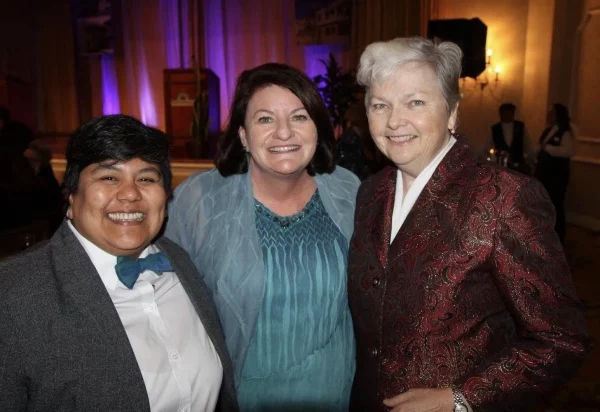
San Diego was once a bastion of conservative Republicanism, but its political landscape has skewed blue over the past two decades, led in part by trailblazing out lesbian political icons Christine Kehoe and Toni Atkins, who paved the way for Todd Gloria to become the first out LGBTQ+ person and the first person of color to serve as the city’s mayor.
But with the historic honor comes grave responsibility, including Gloria’s proposed $2.2 billion budget for the new fiscal year with significant cuts to close a projected $146 million deficit. “Find the money elsewhere,” protesters at City Hall screamed at a Monday night meeting on April 20th.
In early April, Trump revealed his full discretionary budget request for fiscal year 2027 – obviously not including expected requests for the Department of Homeland Security in the aftermath of the incident at the White House Correspondents Association dinner. The budget would reduce nondefense discretionary spending by $73 billion, including $33.5 billion in funding cuts for the Department of Housing and Urban Development (HUD), according to a bipartisan policy analysis.
Despite promises not to cut safety net programs — and an added $174 million in prospective renovations to his $400 million gilded ballroom — Trump later said it’s “not possible” for the federal government to fund Medicare, Medicaid, and child care costs, adding that the states should “take care” of those programs while the federal government focuses on the military. The food assistance program SNAP has already dropped 2.5 million people.
Steve Rattner, a prominent economic analyst, told MS NOW that Trump’s proposed budget is a reincarnation of Project 2025. If passed, the budget would be the most dramatic re-structuring of federal government spending “since certainly the New Deal and who knows when beyond that.”
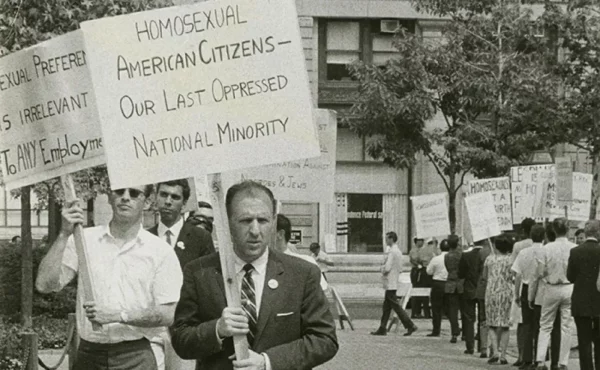
The proposed cuts are real, deep, wide, and cultural. Preparing for America’s 250th anniversary, Trump issued Executive Order 14253, Restoring Truth and Sanity to American History and ordered a sweep of the Smithsonian Institution: “Museums should begin implementing content corrections where necessary, replacing divisive or ideologically driven language with unifying, historically accurate, and constructive descriptions across placards, wall didactics, digital displays, and other public-facing materials.” Historic narratives to be “corrected” include exhibits about slavery, the violent Manifest Destiny ruination of Indigenous people and the relatively new recognition of LGBTQ+ history.
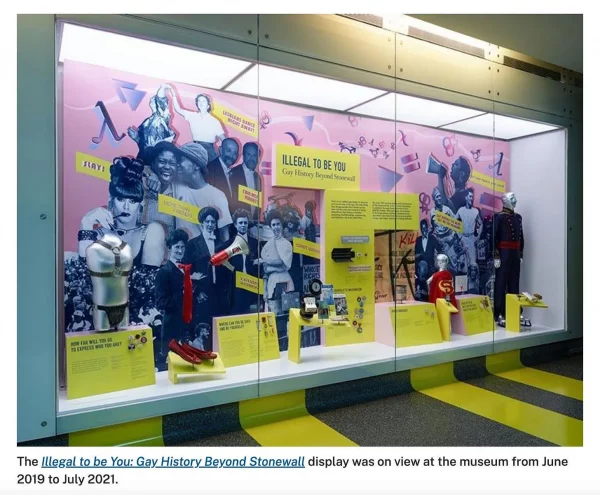
But not all anti-LGBTQ+ cultural attacks are happening behind closed doors. Last year, San Diego woke up to the Union-Tribune headline: “Chucky Lozano’s injury, homophobic chant temper San Diego FC’s soccer celebration.” SDFC coach Mike Varas decried the one-word chant as “palabras discriminatorias” or “discriminatory language.”
The infamous homophobic soccer chant recently resurfaced in Mexico, which is co-hosting the 2026 World Cup with the US and Canada. FIFA has scheduled eight matches this summer in LA’s SoFi Stadium, including the highly coveted U.S. Men’s National Team (USMNT) opening match. Think security and Border Patrol will care about a little sports-related gay-bashing during Pride season?
Violence is in the air, with winds picking up speed, veering toward the vulnerable.
The Feud, in Summary
The San Diego LGBT Center is aware of the pending fiscal crisis. On July 3, 2025, the Center issued an urgent preemptive warning to its 106 employees of possible layoffs around Sept. 6 in anticipation of federal cuts. Center spokesperson Gus Hernandez told the San Diego Union-Tribune that about $4.4 million of the Center’s $15.5 million budget comes from federal grants from HUD and the Department of Health and Human Services (HHS).
“It’s very precarious right now with the federal funding,” Hernandez said. “We’re not putting on rose-colored glasses … We think it will happen to us.”
It didn’t. There were no layoffs. The Union-Tribune noted the Center’s growth from 63 employees and a budget under $5 million in 2015 to 106 on staff and more than $15 million in July 2025.
“The nonprofit’s tax filings have been audited every year since 2011, and from 2021 to 2023, the audits found repeated deficiencies in The Center’s financial reporting. The Center’s most recent audit, for the fiscal year ending June 2024, came back without any concerns,” the Union-Tribune reported. “The Center did not immediately respond to questions about why it took so long to correct the deficiencies, but Hernandez blamed the problems on rapid and unexpected growth at the Center.”
“We’ve been growing a little bit faster than we anticipated,” Hernandez said. “Every year, we’ve just been growing and growing and adding programs and adding services. And I think in that growth process … we weren’t keeping up our accounting to match that growth.”
A handful of Stonewall Generation seniors pressed the Center board for a more complete and thorough explanation of why their published Financial Statements and Annual Reports from 2021 to 2023 show changing descriptions of what the seniors assume is the $18.9 million gift from the estate of Maurice Thimot and M. Rust Rawnsley.
On Tuesday, April 21, Ted Callam, Charles “Chuck” Kaminski, and Elaine Lewis of Pride Across Generations and 120 community supporters issued a press release calling for attendance at the Center board meeting on Tuesday, April 28, 6:30 PM at the Center Auditorium. They said Note 15 in the Center’s 2025 audit “raises serious questions.”
The audit “shows that nearly $1 million was reclassified as donor-restricted — retroactively to 2023,” they reported. “In plain terms: funds previously treated as unrestricted are now being acknowledged as restricted all along. The amount closely matches the annual income associated with the Thimot–Rawnsley Fund bequest.”
And that, they said, “creates urgent questions for the community,” including “Who is advising these decisions on behalf of our community?”
“This is not about speculation. It is about transparency, accountability, and honoring donor intent. The stakes reach beyond one fund. This affects trust in the Center and confidence across San Diego’s senior LGBTQ+ community,” they said. “We are not asking for more. We are asking for clear answers — and for what was already meant for our community.”
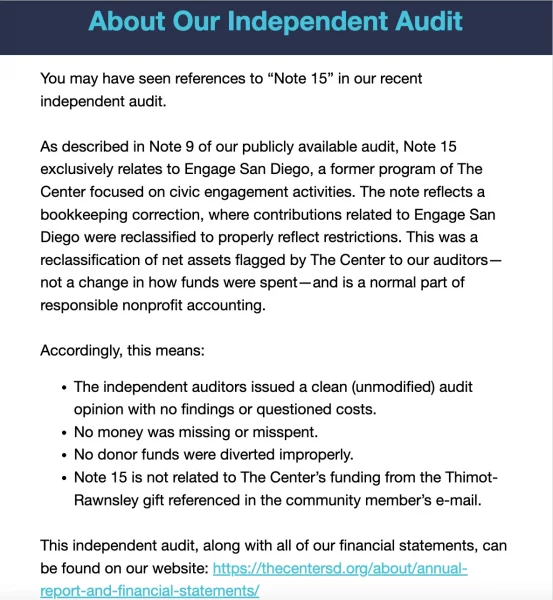
The board responded two days later, via an April 23 email from longtime Center board member Sue Reynolds, who thanked the leaders for their letter and promised to pass it along to the board treasurer and the rest of the board. She then noted the message attached at the end of a promotion for the Dining Out for Life event held that night, which “responds to the questions/issues you posed.”
Here’s the Center’s message:
The Center closed with a promise to be transparent:
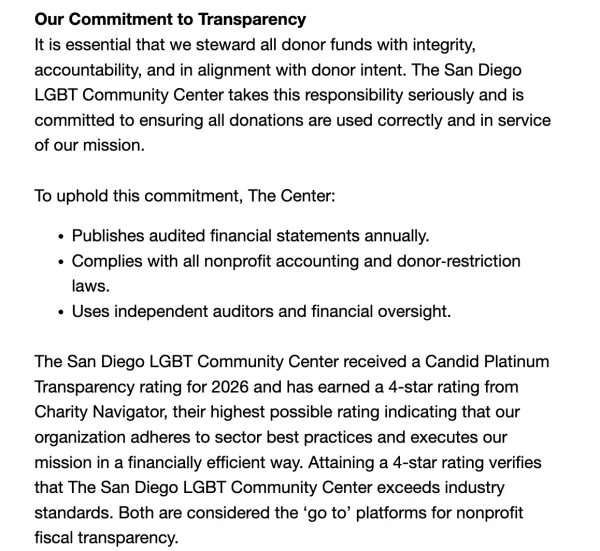
And herein lies the crux of the feud.
The Center may be transparent with the government and general public about its numbers, but these Stonewall Generation retired professionals – who are not accountants – are transparently honest and quick to fix a misconception.
“In our previous email, we pointed out Note 15 in the 2025 audit report. The Center clarified that the Note refers to another Center program and not to the Thimot Rawnsley Fund. If only the Center would respond as rapidly and as clearly with regard to the Fund questions we have asked them, we would then expect these issues raised to be resolved,” Kaminski wrote to supporters Sunday night.
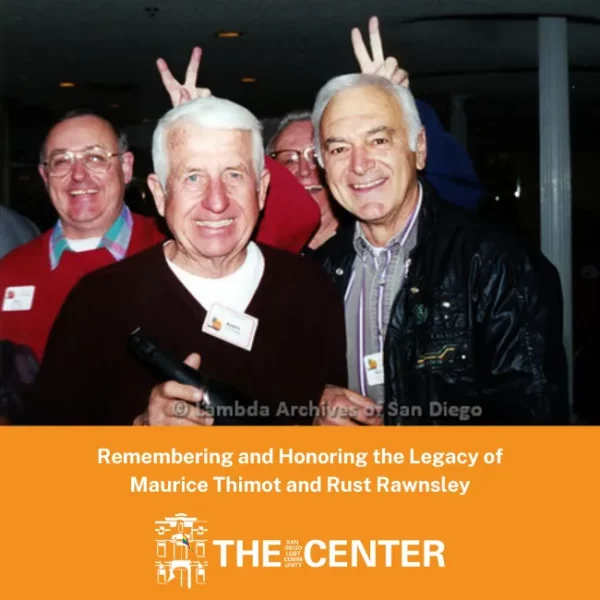
The Stonewall Seniors have been asking about the donation since Center CEO Cara Dessert first announced it in the Center’s June 13, 2022, newsletter.
“This amazing couple has created a legacy for our community’s future, directing The Center to establish a fund, The Maurice J. Thimot and M. Rust Rawnsley Fund (the Thimot and Rawnsley Fund). The purpose of the Thimot and Rawnsley Fund includes investing in our LGBTQ seniors. We look forward to stewarding this fund by investing in our senior services, exploring long-term investments in capital projects, and soliciting feedback from our community,” Dessert wrote.
“Once we have a full understanding of the fund and any proceeds from the fund itself, we look forward to sharing more with our Center community and seeking input about our future!” she continued. “We are deeply grateful to Rust and Maurice for their confidence in The Center, their generosity, and their care for our San Diego LGBTQ community, especially our seniors. Stay tuned for more information about the Thimot and Rawnsley Fund at The Center!”
The Stonewall Seniors expected their input to be solicited and questions answered such as: could the $18.9 million and the interest it generates be used for something other than senior housing and programs, as the late gay couple had often publicly discussed? In the March 31, 1990 issue of Update discussing SAGE, for instance, Maurice J. Thimot specifically talked about housing.
There’s also precedent. When Dr. Delores Jacobs announced her retirement as the Center’s chief executive in June 2018, for instance, “more than 200 interviews and focus groups, [and] feedback was solicited regarding characteristics sought in the new Center chief executive, led by Board Co-Chair Joyce Rowland,” the Center announced.
The Stonewall Seniors say the Center has given varied explanations about the gift, the first $10 million of which came in 2022, the remainder in 2024, and they want to see the language of the Thimot-Rawnsley estate trust to find out how their bequest was to be used.
“It’s four years of interpretations, four years of shifting explanations, four years of telling this community to trust them without ever producing the one document that would actually answer the question,” said Ted Callam, who served on the Center’s senior advisory committee before it was disbanded and replaced with new members.
Center officials initially said the gift would be used for community programs and spaces with an emphasis on seniors. There was also talk of expanding the building, according to Callam, Kaminski, and Lewis. But that did not come to fruition. Then, last December, Center leaders said the gift was restricted to seniors, housing, and housing-related services and could not be used to establish a senior center.
Earlier, the Center’s board of directors had approved an annual draw of $350,000 from the bequest to fund housing navigation, rental assistance, and eviction prevention. Center officials further said interest income may be used for certain interconnected services, on the basis that seniors are part of everything the group does. But now the $350,000 draw has been paused until the Center hears from its attorneys and consultants.
In a recent newsletter, Center officials said they are “awaiting final guidance and will continue providing transparent, quarterly updates, with our next update scheduled for this summer.”
“We’ve watched the story change,” Callam said. “So senior programs and services, then senior housing, then housing and related services, and now ‘we’re awaiting guidance.’”
At the Center’s March 24 board meeting, several seniors spoke up, including Tom Kirkman, who ran San Diego’s SAGE Center from 2000 to 2009, when Thimot was on the board of that organization.
“Maurice and Rusty were very interested in the quality of life for seniors,” Kirkman told LGBTQ Freedom Fighters. He believes they would have wanted their bequest to support senior services, although he hasn’t seen whatever document governs that. “I’m looking forward to seeing that document,” he said. (San Diego’s SAGE organization, now disbanded, was independent and not affiliated with the national group of the same name.)
LGBTQ+ seniors initially offered to help the Center decide how to spend the bequest, Lewis said. “They said, ‘Yes, we want the community involved. Yes, we’re going to talk to the community,” she recalled.
Both Lewis and Callam have experience in designing surveys, and they decided to create one, only to find that the Center had sent one out already. That survey was useless because it didn’t ask if respondents were part of the LGBTQ+ community, she said.
Kaminski has filed three ethics complaints with the California attorney general’s office over the handling of the bequest. A staff member responded that the AG’s office does not have the resources to investigate every complaint filed and that it does not investigate certain types of complaints. The staffer also told Kaminski that the AG does not comment on ongoing or potential investigations, which was the same answer LGBTQ Freedom Fighters received.
As for the legalities concerning the Center’s use of the funds: If there are written restrictions on a donation’s use, the terms are legally binding. Only the donors, not the recipient, can impose such restrictions. But the terms do not have to be shared publicly, according to the National Council of Nonprofits.
“Because this was a complex, multi‑property estate, we conducted an extensive, multi‑year due diligence process with legal and accounting specialists. We are implementing a clear strategy that strengthens current services benefiting LGBTQ+ seniors while ensuring long‑term organizational stability and compliance with donor intent,” Center spokesperson Hernandez said.
“Over the last nearly four years, The Center conducted a careful, thorough review of the $18.9 million bequest, which was received in full in September 2024. This review included monitoring the progress of the sale of 21 domestic and international properties and consultations with multiple specialists, who at times had differing opinions on the scope of the bequest’s intent,” he continued.
“To ensure that this extraordinary gift is used in the way it was intended, we assembled a team of experts that includes our attorneys and auditor. It took time to organize the team and for them to align on how the full gift could be utilized to maximize the benefit to the community. As we near the end of this long process, we are awaiting final guidance to ensure our shared interpretation follows all regulations related to charitable assets. We have paused the use of gift funds until that final guidance is confirmed,” Hernandez said.
The Center gave a similar answer to Manuel Reyes, an aide to San Diego City Council member Jennifer Campbell, who represents the district where the center is located. Callam, Kaminski, and Lewis did not find the answer satisfactory.
In a letter to Reyes and Campbell, they emphasized that the Center should release the original bequest language and questioned why, if the bequest required interpretation, it had taken so long. They also wondered if the funds had been used for purposes other than the donors intended.
Lewis, Callam, and Kaminski of Pride Across Generations said the Center has disrespected seniors in other ways. There used to be a drop-in room dedicated to seniors. “It was the perfect room, because it has an outside entrance, and there were always seniors in there, and there were snacks and conversation, and if somebody needed help, they could go in and ask,” Lewis said. But it was turned into an office, and senior resources were moved into a hallway off the library, which was inaccessible because of meetings in the library, and “even to get past the front desk, you had to ask permission and have some reason to be there,” she said.
The disbanding and replacement of the senior advisory committee is another sore point with the three. Center officials said they wanted a new model, but someone with the Center did comment that the earlier committee was “too white and too cisgender.” The new committee’s members and meeting dates are not made public, according to Kaminski, Lewis, and Callam. How do you get community information to a multi-layered secret committee, and how do you find out results?
“I have served on the boards of many nonprofits over nearly 50 years and I have never seen anything like this,” says out former KNBC4 reporter Garrett Glaser, who signed the Pride Generations’ March 15 letter to the Center board and senior leadership.
That letter says, in part: “When seniors ask questions about governance, finances, and mission alignment, they are not being disruptive—they are exercising their right to understand how an organization that claims to serve them is being run. Treating those questions as something to be managed or silenced undermines trust and excludes the very community the Center exists to support.
“Trust and transparency are earned through consistent integrity, not rhetoric. Until the Center demonstrates genuine accountability, transparency, and meaningful engagement with LGBTQ+ seniors, trust remains broken.”
So, who is asking what happens if and when that fiscal tornado hits?
Pride Across Generations requests your presence and possible participation in the Center’s board meeting on Tuesday, April 28 at 6:30 PM in the Center Auditorium. The theme: “Honor the Past. Secure the Future. Moments like this define institutions. Let’s show up—for transparency, accountability, and trust.”
The meeting will also be available on Zoom.
You can reach Pride Across Generations at: [email protected]
This is a cross-post from Karen’s LGBTQ+ Freedom Fighters Substack.
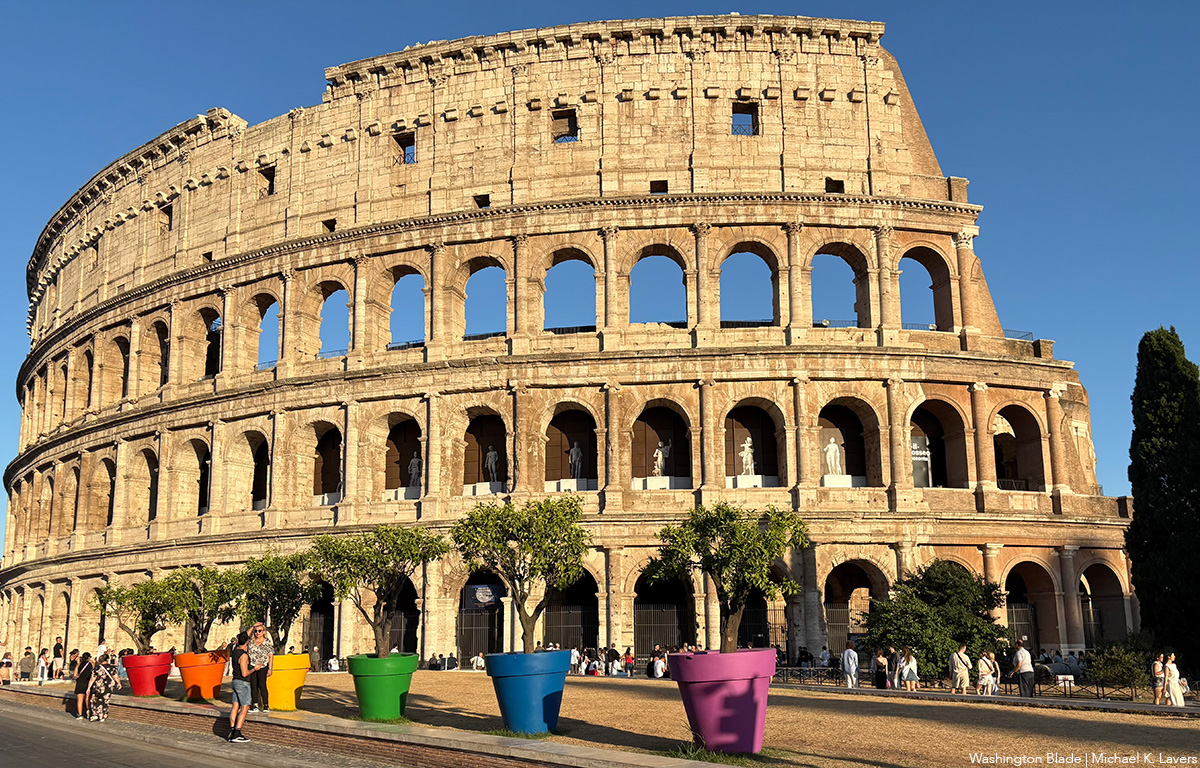
A right does not need to be banned to be restricted. Sometimes it only needs to be made uncertain.
That is what emerges from a closer examination of adoption access for same-sex couples across different countries. There is no broad legal rollback. What appears instead is a more subtle pattern: rights that remain on paper but become fragile, conditional, and uneven in practice.
Italy provides a clear example.
Since 2023, under the government of Giorgia Meloni, administrative decisions have limited the automatic recognition of both mothers in female same-sex couples, particularly in cases involving assisted reproduction abroad. In practice, many families have been forced into additional legal proceedings to validate relationships already established.
At the same time, Italy has intensified its opposition to surrogacy, extending penalties even to those who pursue it outside the country. Human rights organizations have warned that these measures disproportionately affect LGBTQ+ families, particularly male couples.
The judiciary, however, has pushed back.
In 2025, the Constitutional Court ruled that a non-biological mother cannot be excluded from legal recognition when there is a shared parental project. It also removed a long-standing restriction that prevented single individuals from accessing international adoption.
Italy has not eliminated these rights. But it has made them unstable.
When a right depends on litigation, judicial timelines, or shifting interpretations, it is no longer fully guaranteed.
In the United States, the structure differs, but the outcome converges.
At the federal level, same-sex couples can adopt. Yet the system varies widely across states.
Data from the Movement Advancement Project show that while some states explicitly prohibit discrimination in adoption, others provide no clear protections. In several states, licensed agencies can refuse to work with same-sex couples based on religious objections.
Access, therefore, is shaped not only by law, but by geography, institutions, and applied standards.
Research from the Williams Institute further complicates the narrative. Same-sex couples adopt and foster children at higher rates than different-sex couples.
The contradiction is clear.
Child welfare is invoked, yet the pool of available families is reduced. Faith is cited, yet it is used as a filter within publicly funded systems.
The consequences are tangible
children remain longer in care
processes become more complex
families face unequal scrutiny
What is happening in Italy and the United States is not isolated. Across parts of Europe, conservative governments have advanced legal frameworks that reinforce traditional definitions of family while limiting recognition of diverse ones.
Adoption is not always addressed directly. But the impact accumulates.
Options are restricted while the language of protection is used to justify it.
There is no need to soften it.
This is not only a debate about family models. It is a decision about who is recognized as family and who must continue asking for permission.
That is not neutral.
It is political.
And when a right depends on where you live, who evaluates you, or how hard you are willing to fight for it, that right is already being weakened.

Making waves in the desert: How Brad Fuhr and KGAY keep the Coachella Valley connected

From ‘La Bola Negra’ to ‘Coward,’ here are this award season’s must-watch queer films

‘Male Aesthetic’ challenges conventional tropes of masculinity through dance at Nickerson-Rossi Dance Company

Key Midterm Election races as SoCal joins No Kings ‘Vote Early’ rallies on Saturday

Here’s your Palm Springs look at the weekend: Oct 16-18, 2026

Trans woman says Kyle Brazeal used anti-trans slur, threw purse at her in 2024

Hungarian lawmakers approve bill to remove anti-LGBTQ+ provisions from ‘child protection’ law

JD Vance takes swipe at James Talarico’s sexuality during Texas rally

‘Come Out for the Games’ gets Los Angeles excited for the 2028 Olympics

Ahead of the midterms, Meta has paid at least 29 anti-LGBTQ+ accounts for their posts
-
 California3 days ago
Trans woman says Kyle Brazeal used anti-trans slur, threw purse at her in 2024
-
 Hungary5 days ago
Hungarian lawmakers approve bill to remove anti-LGBTQ+ provisions from ‘child protection’ law
-
 Politics5 days ago
JD Vance takes swipe at James Talarico’s sexuality during Texas rally
-
 Sports5 days ago
‘Come Out for the Games’ gets Los Angeles excited for the 2028 Olympics
-
 Politics5 days ago
Ahead of the midterms, Meta has paid at least 29 anti-LGBTQ+ accounts for their posts
-
 Politics4 days ago
Victory Institute to honor Nancy Pelosi at D.C. conference
-
 Features4 days ago
Lu Corporan on designing the darkroom
-
 Palm Springs19 hours ago
Making waves in the desert: How Brad Fuhr and KGAY keep the Coachella Valley connected
-
 Palm Springs3 days ago
Here’s your Palm Springs look at the weekend: Oct 16-18, 2026
-

 a&e features3 days ago
How Orville Peck healed his inner child through ‘Street Fighter (2026)’