
a&e features
Former Avalon singer on coming out, getting ousted and where he is today
Michael Passons was founding member of CCM supergroup known for ‘Testify to Love’
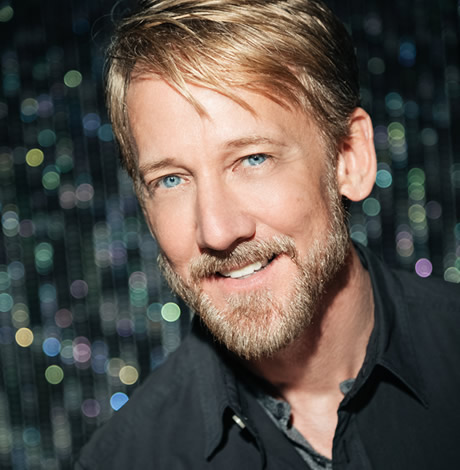
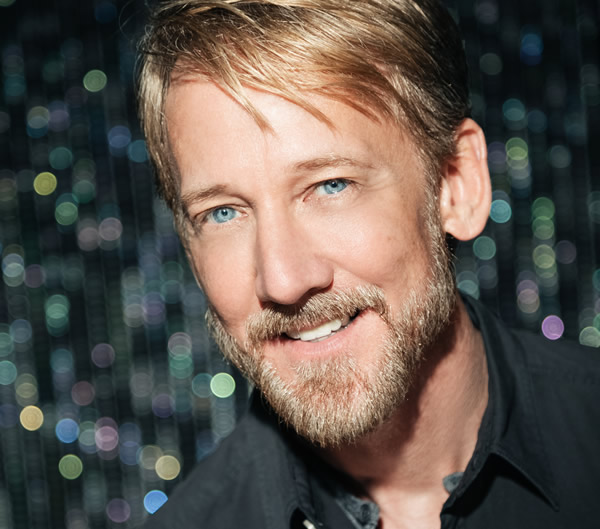
Fans of the Christian pop group Avalon always wondered why founding member Michael Passons resigned abruptly in 2003 and then seemed to drop off the face of the earth.
There was talk of a solo album but none materialized. The official word was that he was “moving on to other things.”
The group had had a wildly successful run. Founded in the mid-’90s, Avalon released its self-titled debut album in 1996 on Sparrow and four more (“A Maze of Grace” in 1997, “In a Different Light” in 1999, “Joy: a Christmas Collection” in 2000 and “Oxygen” in 2001) as well as a hits collection with new material (“Testify to Love: the Very Best of Avalon”) in 2003 racking up 19 No. 1 singles on the Billboard gospel charts, two RIAA-certified gold albums, six Dove Awards, an American Music Award and three Grammy nominations.
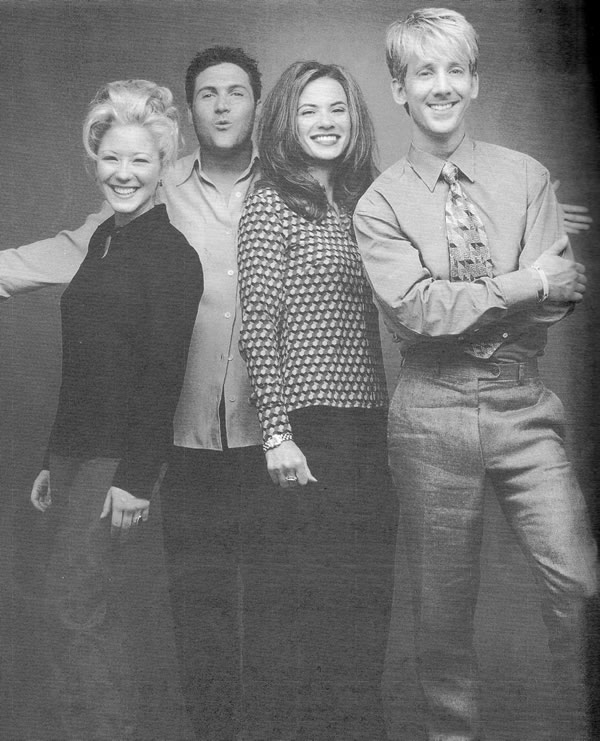
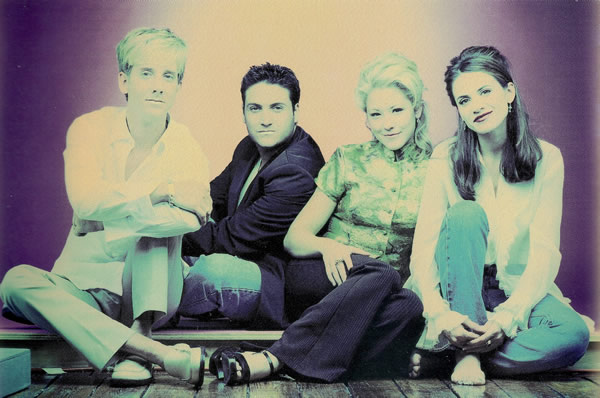
Initially there was a blond male and female singer and a brunette male and female singer to round out the foursome in ways that were both visually and sonically appealing. There was regular turnover in one of the “female” slots but Passons, Janna (nee Potter) Long and Jody McBrayer formed the group’s backbone all through its early and most successful years.
After years of silence, in September, Passons came out as gay on Josh Skinner’s “Jonah and the Whale” podcast and said he was fired from the group for declining to continue with “reparative” therapy. The podcast generated significant media buzz and was aggregated in mainstream outlets like Billboard and People.
Though candid and forthcoming in the podcast, there was more to the story. Passons, a 54-year-old Yazoo City, Miss., native, was chatty and candid in a 45-minute phone interview from his Nashville home on working in the CCM (contemporary Christian music) bubble, hiding his sexuality for so many years, why he opted to come out now and about the Dove Award he nabbed from Whitney Houston at the 1998 ceremony. His comments have been slightly edited for length.
WASHINGTON BLADE: It was great to hear the podcast. It felt like you’d just kinda vanished.
MICHAEL PASSONS: I understand that people would see it that way because you’re just kind of out of the public eye when you’re not making music, not putting music out and doing interviews, and I had not done any of that pretty much in 17 years. And I didn’t really expect this podcast to get the attention that it did get. It was a bit of a surprise to me that there was so much of an interest in a 17-year-old story.
BLADE: Why did it feel like now was the right time? How did it come about?
PASSONS: It wasn’t some calculated move, I was approached by a friend who introduced me to Josh Skinner who has a podcast Jonah and the Whale and said would you like to be a guest? This particular podcast deals with an underwater moment in your life and I had previously had conversations with my family just a couple months earlier, just about my life and the truth of my life so I thought, “Well now is the perfect time,” so it really wasn’t planned out far in advance. An opportunity landed in my lap and I decided to tell the story.
BLADE: Had you been approached before?
PASSONS: Well, I’ve been pretty under the radar. I’ve been traveling the last 15 years with another Christian group, but only in the band. I play keys for Point of Grace. I wanted to keep my foot in the water … but I didn’t want to be the front guy … so I really hadn’t been approached by journalists at all until now.
BLADE: You tell in the podcast about how they came to your house for a meeting in 2003 and this all came to a head. How had they known you were gay in the first place? What led up to that meeting?
PASSONS: Well at that point I was 38 years old, I wasn’t married, I wasn’t dating, (so) rumors begin to swirl when you have that type of scenario and we had discussions about it several years before. So that’s when … they said to me I needed to go to therapy. It really was in 2002 that they wanted me to go to reparative therapy or at least go see a counselor or some guy who said his credentials were counseling gay people. So I did that to appease them but I knew it was a fruitless effort, and as I say in the podcast, that didn’t last very long. I told them I wasn’t going back to that. It had been a conversation for about a year or so before 2003.
BLADE: Did you have a pretty good relationship with them otherwise?
PASSONS: Well over the course of the eight years we were traveling together, I saw those people more than anyone else. Our schedule was so demanding and we toured almost nonstop. … So we did at the time have this family-type relationship but … groups often have a shorter shelf life than solo artists because there are multiple people with multiple goals and aspirations and so unless all four of us aligned, there were always going to be these times where one wants to do a solo deal or they think we should do this or go in this direction and so we kind of started growing apart in our vision. Jody and Janna wanted to do solo records and I thought that was something that was going to fracture the group and our brand and that did cause some tensions because the other two members really wanted to focus our efforts on the Avalon brand because that’s what was familiar to everyone. So over the years we became not as close and then of course you add something like this which kind of draws a line and you have to choose what side of the line you’re going to be on.
BLADE: Bear with me a sec, but I’m going to read you Jody’s quote to CCM Magazine in April, 2004 when he said: “We had a meeting at Michael’s house one day and he told us he was going to move on to other things. We sat and cried and felt like the rug had been pulled out from under us. Things had felt great with the new group and Michael seemed to get along and blend vocally with (then-new member) Melissa (Greene) really well. But Michael had been with us from the beginning and just felt it was time for him to do something else. It’s weird but since his departure, it seems everyone is looking for some scandalous thing to have happened there. It makes me just want to say, ‘Look, I’m sorry to disappoint you that we don’t have some juicy gossip or ‘Dynasty’ episode happening here.” Based on what you shared in the podcast, that was a gross mischaracterization of how it went down. Did you read that at the time? How did it make you feel?
PASSONS: At the time the record label and management held really right reins on us because they created the group, it was their idea. They wanted to find a group that was already in existence that was two guys, two girls. They couldn’t do it so they said, “Let’s just put one together,” so we never felt like we had ownership of much. … So when management and label say, “This is what you are to say,” it became kind of like a bullshit fest at that point. You just gotta stick with the story and that’s what Jody was doing, he was sticking with the story he was told to say. … That was just the way they chose to handle it at the time. … Interestingly enough, Jody reached out to me after the podcast aired and we had not really talked in 17 years other than bumping into each other in a restaurant and saying a quick hello. We met for about an hour we met at a park here in Nashville and just walked around and he apologized profusely and said his heart was broken when he was listening to that podcast. He was very sincere and I accepted what he had to say and I feel like our relationship has actually — there was some definite closure there as far as what I’d been feeling all of these years and so that was a good thing that came out of this and I’m glad he reached out to me.
The Blade invited McBrayer to comment. In response to the question, “Did you feel muzzled by the label?” he sent this response: “Absolutely muzzled. However I would have never ever said anything to hurt Michael’s reputation. We were asked for years about what happened and myself and my family refused to say anything that would put Michael in a bad light. We were given a statement and told to go with it. We did everything we were told at the time. … Michael knows I love him and hate how all of it went down and how he was treated by the industry. I’m so thankful he’s happy and grown beyond it all now. I will continue to protect him. He will always be family.”
BLADE: Was there any truth to what they were saying? Had you been considering a solo album?
PASSONS: No. I know my strengths and my strength was not as a solo artist. … I enjoyed the team mentality of a group. … I think fans and people outside the industry took the press release at face value but people inside the industry heard pretty quickly what had really happened. Gossip and rumors spread really quickly around Nashville so I just thought, “OK, I’m gonna just start life No. 3 here.” (chuckles)
BLADE: A few other big CCM artists eventually came out like Jennifer Knapp and Ray Boltz. Did you follow that or ever compare notes with them?
PASSONS: I don’t know either of those artists personally. I’ve never really interacted with them. I think we did a show once with Jennifer years and years ago but it was just mainly, “Hello, nice to meet you.” I applaud them for living their best life and telling their truth but I just never felt like mine was necessarily a story that needed to be told. I wasn’t a solo artist. I would get recognized occasionally. People would say, “Oh, you’re that guy who was in that group,” but I would say 80 percent of fans just knew me as the blond guy. So I didn’t feel like I had tons of name recognition or that my story mattered. But in the last few years, I wanted to be more truthful with my family so that’s really where all this came out of.
BLADE: Did anybody else from your CCM days reach out besides Jody?
PASSONS: I’ve received tons of texts and Instagram messages from friends from home, friends from college, fans, strangers. As far as the industry, some people that I haven’t seen in a while. It was very interesting. Amy Grant texted me and told me she listened and thought my story was beautiful in the way I told it and graceful and I appreciated that. Susan Ashton reached out and I haven’t seen her in years. She was very encouraging. She said, “You are seen and heard and loved.” Everything has been overwhelmingly positive.
BLADE: Did you get to know the other artists very well or have much interaction on the multi-artist tours you did like “Emmanuel” or “My Utmost”?
PASSONS: Yeah, we had a lot of time to just hang out, especially on the bus. You’re traveling late at night and everyone’s wired so you’re staying up and visiting. But we were really new artists at that time and we were thrown into a mix of all of these people that were our mentors, our heroes. We were fans of theirs and now we’re all of a sudden peers, just because of how Avalon came together. Our very first tour before we even sang a note on a record was “Young Messiah” in ’95. We had just come together weeks before and just had enough time to record one Christmas song so that we could sing that song on that tour and there we were next to 4 HIM and Point of Grace and Steven Curtis Chapman and Larnelle Harris and that was mind-blowing to be with all these great artists. But yes, everyone was very welcoming had lots of encouragement for us and advice and I actually really enjoyed those tours.
BLADE: I saw you guys once with Twila Paris. What was she like?
PASSONS: That was our first tour (the “Where I Stand Tour” in 1997). We did Young Messiah that Christmas and then we did our record, then we toured with Twila. We were definitely getting our feet wet just seeing how this industry was going to work … how we were gonna mesh as a group because we were thrown on stage and we had to find our blend. Live, It’s one thing to be in the studio and be mixed and blended but to sing live, the Twila Paris tour was really just where we began to hone our craft as a group and so yeah, that was wonderful. I had many good experiences wth that tour. We dd a spring tour and a fall tour with Twila and it was a long tour but we definitely leaned a lot.
BLADE: Is there anybody in CCM who struck you as markedly different from their public persona?
PASSONS: I feel like everyone would be a little different than what you perceive them to be because you only see a very structured view of them by the PR department of the record label. I really enjoyed getting to know Sandi Patty because when you listen to her music, you just don’t pick up on the edge that she has. She has this great sense of humor that’s a little edgy. I don’t know, my image of Sandi Patty was that she was always walking around in some state of meditation or sitting around in a prayer circle because when you’re growing up you just think of someone in such a reverent way because you respected their music so much and she was just she a cut up, she kidded around, she invited us to her home in Indiana at that point just to hang out with her family and I just I enjoyed seeing a whole different side of her. She’s a very strong personality, a strong woman and listening and singing along with her records, it was just good to see the other side of her.
BLADE: What have you been living on all these years?
PASSONS: I play for Point of Grace and also a friend of mine in town, an attorney and I actually work with her in her law practice and of course being friends with the boss, you can leave anytime and so I’m free to travel whenever I need to and want to so that allows me to hang out with Point of Grace and go where they go. 2020 has been interesting. Since March, we’ve only had two shows and they were very small, so it’s been really interesting year for sure.
BLADE: What denomination did you grow up in?
PASSONS: Southern Baptist. A little country church in Mississippi.
BLADE: Are there still elements of Baptist or evangelical theology you struggle with? Queer or otherwise?
PASSONS: I’m past struggling with it. Of course, it’s something I think about often but I don’t struggle with it any longer. … I’ve definitely got a different view of spiritualism. I don’t consider myself religious but I do believe in God and so I do have a spiritual life but it just doesn’t involve organized religion and that’s just where I’ve landed.
BLADE: But do you still believe the Christianity basics — Jesus died for our sins and rose on the third day and so on or is it a broader thing for you?
PASSONS: It’s a broader spiritual thing and like I said in my previous interview, I’m just in this place of my prayer to God is show me what is true. I’m not gonna close my mind to anything, I’m not going to say, “Oh this is what I was taught and I don’t believe that anymore,” I just want to step back and rebuild all those boxes, rebuild what my spirituality is, kind of like just implode it to ground level and let’s start again. I was taught by very well-intended people. All my Sunday School teachers in that little church, they didn’t have any malice, they were well-intended people teaching what they believed. We were spoon fed, so at some point in your life you have to just decide of all that information you took in, what do you really believe? I had to get to the point where I was OK disagreeing and not believing some of the things I was taught. it wasn’t disrespectful to those people, I just have to find my own way.
BLADE: Do you think the conservative, white evangelical world will ever become openly accepting of LGBT people? Is it a lost cause or could it be a whole different story in another generation?
PASSONS: I think there is hope. I’ve seen so much progress in Christian circles just in my lifetime that I never thought I would see. It’s pockets, it’s not widespread, but … I think there is hope. A lot of things used to be justified with scripture that they eventually came around on. (Author) Peter Gomes calls it “the last prejudice of the church.” … After I left, Avalon recorded a song called “Orphans of God,” which I thought was interesting that they were singing it because I was definitely an outcast to them. But now my friend (out country singer) Ty Herndon and Kristen Chenoweth are going to cover it for a Christmas release as a duet and they asked Melissa Greene and I to sing backing vocals on it so now it will take on a whole new meaning. It was a really nice, full circle moment.
BLADE: Did you keep up with what Avalon was doing much after you were kicked out?
PASSONS: No. It would have put me in a bad headspace.
BLADE: Have you had many boyfriends? Are you in a relationship now?
PASSONS: I am. I’m with a wonderful guy now and it’s going well.
BLADE: Not married though?
PASSONS: No, not married (laughs).
BLADE: How long was it before you were comfortable dating guys?
PASSONS: It took me a while, because when all that went down, I internalized a lot of things and I thought, “Well this is my fault,” type of thing. It really took many years for me to just work through all the junk and work through that cloud in my head and so it wasn’t like some big unleashing. It wasn’t like I left Avalon and just started living my best life, it definitely took awhile to repair the hurt that happened from those several years when Avalon was ending and all the things I went through at that point.
BLADE: Do you know of other LGBT people in CCM who are not out?
PASSONS: Yeah, I do. I feel for them because I know that panicky feeling I used to have, that someone might catch on. … But I think a lot of conservative Christians might be naive as to how many people are gay or bi in their church. You learn from a very early age to be a good actor.
BLADE: Who was your favorite Avalon producer to work with?
PASSONS: Brown Bannister produced most of the records when I was in the group. He’s, you know, such an icon in our industry and I have so much reverence for him and so much respect, so it was an honor to work with him. He actually brought out the best in me. There was something about just his people skills and he was just so kind and thoughtful in how he spoke with you and guided you through the recording process. He just took the time, even just to find the right microphone for me, because the mic in the studio can make a world of difference. I remember going through five or six mics before we found the right one. A lot of producers are just like, “OK let’s get this going, all right that’s great on to the next one.” He just took time to make it right and I appreciated that.
BLADE: How long did it take to make those albums on average?
PASSONS: When it came time to record, we would try to just block off weeks where we would just go in there and do vocals, vocals, vocals vocals and really mainly weekdays because we would go out on the weekends and do one-off, you know, weekend dates here and there. So we wouldn’t obviously do a new record in the midst of a tour because we’d want to tour the new record but during our one-offs we would get in there and try to get in it done and probably over the course of a month and a half, two months, we would have everything done.
BLADE: How involved were you all with the vocal arrangements? I always loved that outro and all those layers on “We Are the Reason,” for instance. How did you come up with all those intricate lines?
PASSONS: We had a great vocal vocal producer named Michael Mellett and he had been a studio singer in Nashville a long time and had toured with Billy Joel as a background singer. He would come in and help arrange our parts and he was amazing at it. And I remember he did work on our Christmas record and I remember that outro those alternate melodies that he helped us come up with, I loved that too. I felt like that really updated the song. It’s interesting because when we did it it was 20 years old and now it’s been 20 years since we did it, so it needs to be done again now. But it was my favorite song growing up. I used to sing it with an accompaniment tape at my little country church when I was a kid.
BLADE: Yeah, I love it too. Did (songwriter) David Meece ever say anything after you guys cut it?
PASSONS: Indirectly. I think he might have said something to Brown but we heard that he liked it.
BLADE: Who’s a celebrity who would exemplify your type?
PASSONS: (laughs) My type, wow. I’m definitely attracted to someone who is confident but not cocky, someone who has sensitivity but is not overly sensitive, someone who’s just confident in themselves, that’s a big attraction to me. If I were to throw out a celebrity I see a lot of those qualities in, and maybe I’m wrong, but someone like Bradley Cooper.
BLADE: Did you guys in Avalon have any say in choosing singles?
PASSONS: We were included in conversations but I feel like ultimately the label got what they wanted. There’s one little battle that we won and in retrospect not just one, but I just remember this instance, where the label disagreed with us about what we should call our second record and had we listened to the label, we probably would have sold a lot more. They wanted us to call it “Testify to Love” and we had no idea when we were naming the record and about to release it that that would be the one song that Avalon would be known for or that it be our biggest song ever. We thought “A Maze of Grace” was such a clever title. They disagreed but they let us do what we wanted. But who knew “Testify to Love” would become such a huge song for us?
BLADE: Was (Sparrow president) Bill Hearn around much?
PASSONS: We would see him periodically and even his father Billy Ray, who started the company, they’re both deceased now, but they were very approachable. They weren’t always in our meetings because we were more with A&R and publicity and stylists but when they were around, they were very approachable, very hands on.
BLADE: When you win a Dove Award, did you each get one or just one for the group?
PASSONS: At the ceremony, just one is given but then they mail three more to you like a month later.
BLADE: Where do you keep yours?
PASSONS: I have a little study/office that I’m sitting in right now. I just have them on a shelf along with some pictures and mementos and things I like to keep out. The interesting story about one our Dove Awards is our first Dove Award for new artist of the year and that was in 1998 I believe, and we got new artist of the year at the 29th Dove Awards and that was the year that Whitney Houston performed with Dottie Rambo … and we were backstage after we won doing a press junket so I missed her performance and I’m a huge Whitney Houston fan, like I would rival anyone else saying they’re a huge Whitney Houston fan. (laughs) She’s pretty much my all-time favorite artist. So after the show some press people wanted to take a photo of Whitney holding a Dove Award. She didn’t have one so Jody was standing close by with his and they said, “Can we have your Dove Award for a picture,” and so Whitney took our Dove Award and had her picture made with it and of course that was the only one we got that night and our manager said, “OK I’m gonna take that to the office and hold it ’til the others come in and you all can come by and pick them up,” and so before he could get to it, I got that particular one and took a Sharpie and made a mark on the bottom of it and the day that our manager said, “OK you can come by and pick up the Dove Awards they’re all in,” I was first one in there and I picked them all up and looked for the one I made the mark on because I wanted the one that Whitney had held. So I’m holding it right now, I’ve got that one in my hand and I always think of Whitney.
BLADE: Who were your favorite CCM acts growing up? Or did you listen to more pop?
PASSONS: I listened to a lot of pop and and country. My family is from a rural Mississippi town so country music was really most of what was on the radio and I love that old ’70s country. I still listen to it just because it has a lot of good memories. But I didn’t really know there was such a thing as CCM other than, you know, like Bill and Gloria Gaither-type stuff until I was in high school and someone handed me a tape of “Age to Age” by Amy Grant and that just lit a fire in me like I had no idea this type of thing existed, this is what I want to do. And of course I’ve just been I was a fan of Amy Grant from that day on and she was definitely a huge influence in the way I would sing music, the way I would write music, I would listen to interviews of her and I would just — she was a great teacher in that respect of just knowing how to respond to questions, how to react to people, just her demeanor, how she handled herself, she was definitely a role model.
BLADE: So that must have been mind-blowing to work with her producer (Brown Bannister) all those years later.
PASSONS: Yeah, definitely. And then her text last week, yeah, that was a nice moment.
BLADE: Why didn’t the more progressive Christian denominations ever have their own version of CCM? There are a few fledgling queer gospel singers out there but nothing like the machine that CCM was. Maybe they didn’t care as much if their kids listened to Metallica or whatever?
PASSONS: I think your theory might hold some weight, just that the conservative Christians were looking for an alternative for them and their families to listen to. One thing I think there probably wouldn’t have been a market in the liberal circles to sustain the industry, they wouldn’t have purchased the CDs and the music. It was the conservatives who made this a business and the Christian music business is a business. You have to be making money to be in CCM, that’s the dichotomy that I’ve always wrestled with. CCM depended on Becky, and I’ll tell you who Becky is. Becky is the pseudonym for their target audience. So any meeting we were in, it was always asked, “What would Becky buy, would Becky like this song?” And Becky is a 20-, 30- or 40-something conservative Christian female and she was the target audience because she was the ones buying the CDs and the tapes and downloading the music and so I think that’s maybe why the conservative church has kind of a market on CCM music.
BLADE: Is she related to Karen?
PASSONS: (laughs) That’s funny. If they’re not related, they’re probably best friends.
BLADE: When your bandmates came to your house that day, did it feel like it was coming from a place of love and concern or did it feel like a power play? Like they were trying to oust you?
PASSONS: It did feel like a power play. There were some very complicated personalities in the group and so it definitely — I did not feel much love that day.
BLADE: To me, it was like when Florence got kicked out of the Supremes. They could go on and do whatever they want, but without Florence, it wasn’t the Supremes. Without you, it wasn’t Avalon. The one female singer didn’t matter so much because she always changed. That was like the new season of “Charlie’s Angels,” you always knew she would change. But when you left, it was never the same.
PASSONS: I appreciate that, I’ve heard several say that and it’s always good to know that my contribution is something that was missed.
a&e features
ChiChi brings drag, history, and advocacy to LA Pride’s main stage
The Los Angeles drag performer, commissioner, and housing advocate honors Pride’s roots while uplifting the community beyond the parade
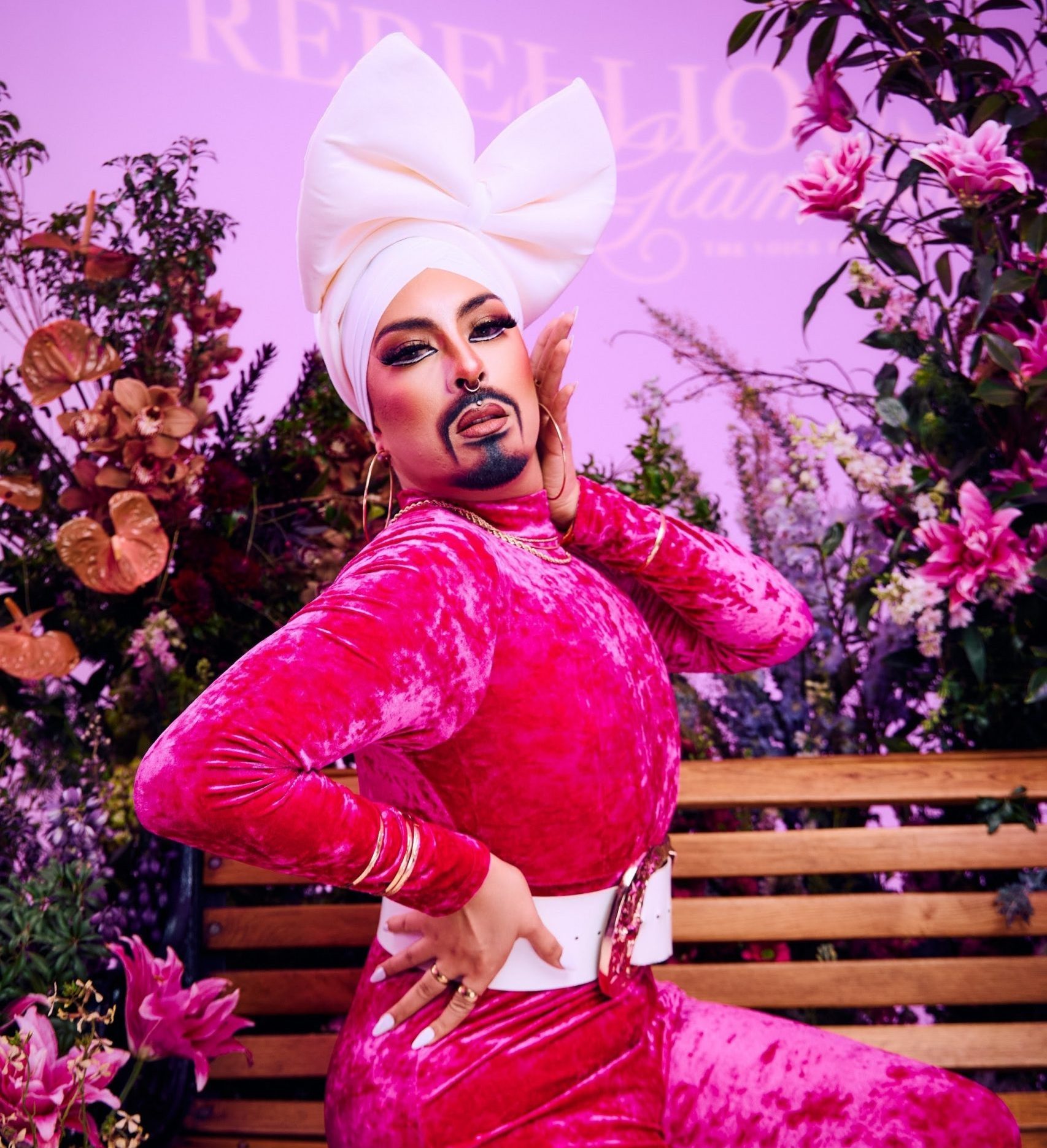
When ChiChi Charlas steps onto the main stage at the 56th Annual LA Pride Parade on June 14, the moment will carry more weight than a typical hosting role.
For the Los Angeles drag performer, policy advocate and commissioner, moderating the main stage is an opportunity to honor what Pride has always been about: celebration, protest, and community.
“The origin of Pride has its roots in uprisings and protests, oftentimes led by Black and brown trans women,” ChiChi told the Blade. “From Christopher Street to Cooper Do-nuts to the fight against Rule No. 9 here in Los Angeles, trans and gender expansive people have resisted criminalization and have demanded the right to live freely.”
That history, ChiChi explains, is the foundation of how they understand Pride. After hosting LA Pride’s Latine Stage last year, being invited to host the main stage this year feels like a profound accomplishment.
“I am showing up as a first-generation Mexican-American, queer, trans, gender-expansive Angeleno,” ChiChi confidently told the Blade, “But also as a commissioner, a community and policy advocate, and an educator.”
Many view hosting events as simply introducing performers. However, for ChiChi, this opportunity to host is about creating a space where people feel welcome and connected to something larger than a single day of celebration.
“It is about creating a space where our history, our joy, and our collective experiences and power can all be uplifted and celebrated,” ChiChi said. “I want people to leave with an instilled sense of hope, empowerment, and knowledge on how to get involved in the community.”
As a drag performer who accentuates their facial hair, ChiChi said their work does not fit neatly into traditional drag queen or drag king aesthetics. “I feel that this kind of visibility matters now more than ever when drag and trans people are being hyper-targeted for their gender and gender expression,” ChiChi stated. It is evident that ChiChi’s drag challenges gender expectations directly and seeks to make the LGBTQ+ community more open to diverse forms of expression.
That visibility is personally meaningful to ChiChi as a Latine performer. They said they want other Latine community members to feel seen when they are on stage – including families who may still be learning how to support LGBTQ+ loved ones.
“Homophobia, transphobia, and machismo are very much alive within many Latine communities,” ChiChi said. “I know that we will have many parents present who are learning and unlearning. I hope to provide them with a message of kindness and gratitude for all their work.”
Beyond performance, ChiChi’s advocacy has focused heavily on housing policy for trans and gender expansive people. Before shifting fully into LGBTQ+ advocacy, ChiChi spent nearly ten years in the housing nonprofit sector. In that work, they saw how homophobia, transphobia, racism, and structural inequities place LGBTQ+ people – especially Black and brown trans and gender expansive people – at greater risk of housing instability.
ChiChi told the Blade that their policy work is “grounded in the belief that when trans and gender expansive people have stable housing, our entire community becomes safer and stronger.”
For ChiChi, supporting trans people beyond Pride means moving from individual celebrations to sustained action. That includes “supporting trans-led organizations, protecting trans youth, and challenging anti-trans rhetoric in the spaces we move through.”
As thousands gather for LA Pride, ChiChi hopes people remember that Pride was made possible by those who resisted criminalization and state violence – and that the work is not over when the parade ends and the curtain falls.
ChiChi leads the readers with a final and important question:
“If we are not visible, if we are not supported, if our struggles are not taken into account in spaces such as Pride,” ChiChi said, “then how can we expect non-LGBTQ+ people to even look our way?”
a&e features
From ‘XO, Kitty’ to Marvel: The multi-talented Regan Aliyah is only getting started
Actor, rapper, and activist Regan Aliyah shares how she balances blockbuster opportunities with a deep commitment to community and authenticity..
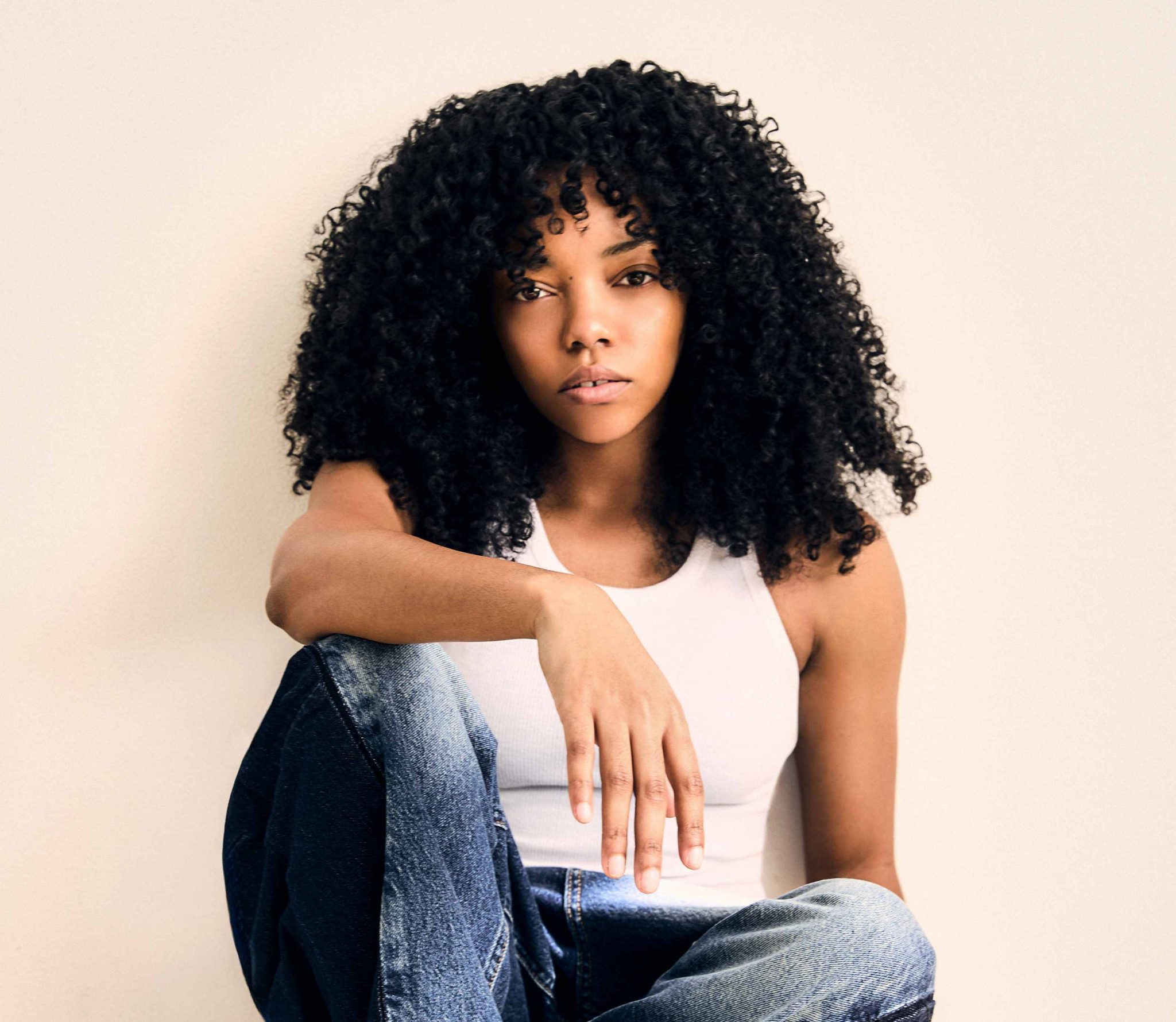
We seldom get to see a rising star moving through Hollywood with the same fearlessness and versatility as Regan Aliyah. Whether she’s navigating the heartfelt chaos of a beloved YA dramedy, stepping into the expansive mythology of Marvel, or plunging audiences into the emotional intensity of a psychological thriller, Aliyah approaches every role with curiosity, preparation, and a very real commitment to authenticity. Actor, rapper, dancer, and creative force, Aliyah’s building a career defined not by depth, all while bringing nuance and humanity to every character that she steps into.
Off-screen, Aliyah is equally, if not more, compelling. As a proud queer Black artist, outspoken advocate, and lifelong Angeleno, she speaks with refreshing candor about identity, representation, and the responsibility that comes with visibility. In our conversation, Aliyah opens up about the emotional challenges of her most recent projects, the evolution of queer storytelling in Hollywood, the lessons she’s learned from staying true to herself, and why the younger version of Regan would be proud of exactly who she is today.
From YA dramedy to Marvel to psychological thriller, how do you approach building a character in such different worlds?
I think it’s about feeling comfortable in the words that are written and really understanding who the specific character is, as well as what they’re going through in this piece of media. Understanding how they’re affected by their surroundings, other characters, and even themselves. There’s also the element of research; like for Marvel, I was lucky enough to have so many comics that I could read and see how my character interacted with this mystical world. It was a very different process from Juliana, in XO, Kitty, where I watched the To All The Boys I Loved Before films, and I learned more about the tone of the space she would be a part of. So, it can look very different for each role that you get, but the preparation and research will always get you where you need to be.
You’re currently starring as Juliana in XO, Kitty. What aspects of yourself do you see reflected in her? And on the flip side, what are some Juliana-isms that would never fly with Regan?
I think Juliana and I are a lot alike. We lead with our heart, we’re both very artistic, and if I do say so myself…we’ve got great fashion sense. Oh, and we’re both gay. That’s definitely my favorite thing we share in common. I think Juliana is a lot more muted than me. She’s a lot quieter and a little less confrontational, but she has definitely learned to be more upfront in the later seasons. She’s absolutely someone I would be friends with in real life. I don’t know, I think she’s just such a cool girl.
Your work in Please Don’t Feed the Children explores a much darker, survivalist tone. What challenged you most about that role? What did you find most rewarding?
I think when you’re in a horror or a thriller, it’s just such a different space than anything else. It took a second for me to get used to hearing the word “action“ and knowing it meant my body had to stay in a state of panic and despair. I think by like, page 10, we’re already in this trapped situation, so finding ways to sit with this continued emotion while making it feel layered on screen was really important to me. I also had to cry on camera for the first time, which I thought would be more taxing on my mental because I was getting so much advice about pulling on personal trauma or to think about some terrible situation to produce tears. When I actually got to that scene, I felt so comfortable with this character that it was actually easy for me to find that emotion and those tears through her and not myself. That was a very rewarding moment.
Belated congrats on coming out publicly just a few years ago. How has that moment shaped the way you move through your career and your visibility?
First off, thank you so much! That moment wasn’t because of my career or any type of external pressure; it was genuinely me just wanting to live an honest life with everyone who interacts with me — whether that’s in person or online. I want you to know me for me. That honesty is very freeing. So, I don’t think I pay attention to if it’s negatively affecting my career…if you don’t want to work with me for being my authentic self, then that opportunity was just not meant for me. On the flip side, it has brought me joy, love, community, and business relationships that are all founded on, “you are who you are, and we support who you are.”
How do you think queer representation is evolving in the kinds of projects you’re getting to be part of?
I think we’ve made a lot of progress. I think we’re seeing a lot more queer characters on screen as a whole. I’m interested in going past the representation and diving deeper into the actual stories that are being portrayed. I think a lot of media still needs to get better at nuance and depth for the queer characters they have in their stories. But I always feel really blessed to be a queer actor playing queer roles; it’s the most fulfilling thing to me. So, every opportunity I get to do that, I am beyond happy.
What does it mean to you to be a young, queer Black artist working in mainstream Hollywood right now?
It means learning how to run before ever getting the chance to walk. It means pushing open doors that have multiple signs of no entry. It means making a name for yourself that holds weight for multiple communities. It means joy, nuance, and beauty that deserve airtime. It means so much, but to me, it’s just who I am, and I hope Hollywood can love, respect, and share more from all individuals who have this same intersectional identity.
You’re outspoken about issues like racial justice, food access, and homelessness (as more people should be). How do you decide when and how to use your platform?
I don’t decide, I just do. It’s that simple. There’s no 12-step program or 40-person team that I need to ask. It’s about humanity. We’re all connected, and we’re all meant to fight for one another. Sometimes that’s through my social media, sometimes that’s on Skid Row feeding our houseless community, sometimes that’s mutual aid, or sometimes that’s performing at a benefit show. There are so many ways to show up, and I believe everyone needs to be doing that in their own way.
Growing up in Los Angeles, how did your environment shape your artistry? Your worldview?
I like to call myself a “county kid.” I grew up in schools in the Valley; my family is in Inglewood, Baldwin Hills, Carson, and all the way up to Palmdale. My friends are in South Central and Leimert Park. I love and see LA for what it truly is. We’re dealing with the housing crisis, are being priced out of our own neighborhoods we built, witness the brutalization of the police, and see so much more. But we are also a place where dreams come true, where the sun attracts anyone who dares to think outside the box, and plan block parties with some of the best musicians in the world. Our culture runs deeper than the valleys of the land. The people of this city, the natives, shaped me to be who I am. I love this place so much…I mean, it’s my hometown. Every day, I think of the ways I can contribute to it, protect it, and preserve it for what it truly is.
When you think about the roles you want to take on in the future, what kinds of stories are you hoping to tell or be part of?
I want to be in stories that push the needle, ones that reflect the times, or ones that challenge the brain. I would also love to do something otherworldly. I always say that I want to play a role that would have me in the makeup chair for like 12 hours. Something where I could fully transform. That would be so cool and something I’ve never done yet.
We could all benefit from a bit of grounding and decompression. Can you share with us two things you do to decompress during your downtime?
Oof, I’ll let you know when I figure that out myself. I’ve been in work, work, work mode, but I do love cartoons, animation, and stop motion. So I’ll throw on one of those when times get stressful.
What is one invigorating phrase or mantra that your mind recites when the stress of work, and life in general, is getting a little too loud?
Recently, I’ve been reminding myself of how proud the younger version of me would be of who I am today. I think that will always center me and humble me, but light a fire in me like no other.
If you could go back and give your younger self one piece of advice before entering this industry, what would it be?
Nothing really. Younger me was THAT girl. She had some strong boundaries and one goal on her mind…I love her for that. Now, she would have some advice for older me, but she’s definitely very proud.
a&e features
EROS LA is starting a queerotic art movement in KTown
Local artists activate gay-owned Earl Gallery, bridging queer art history
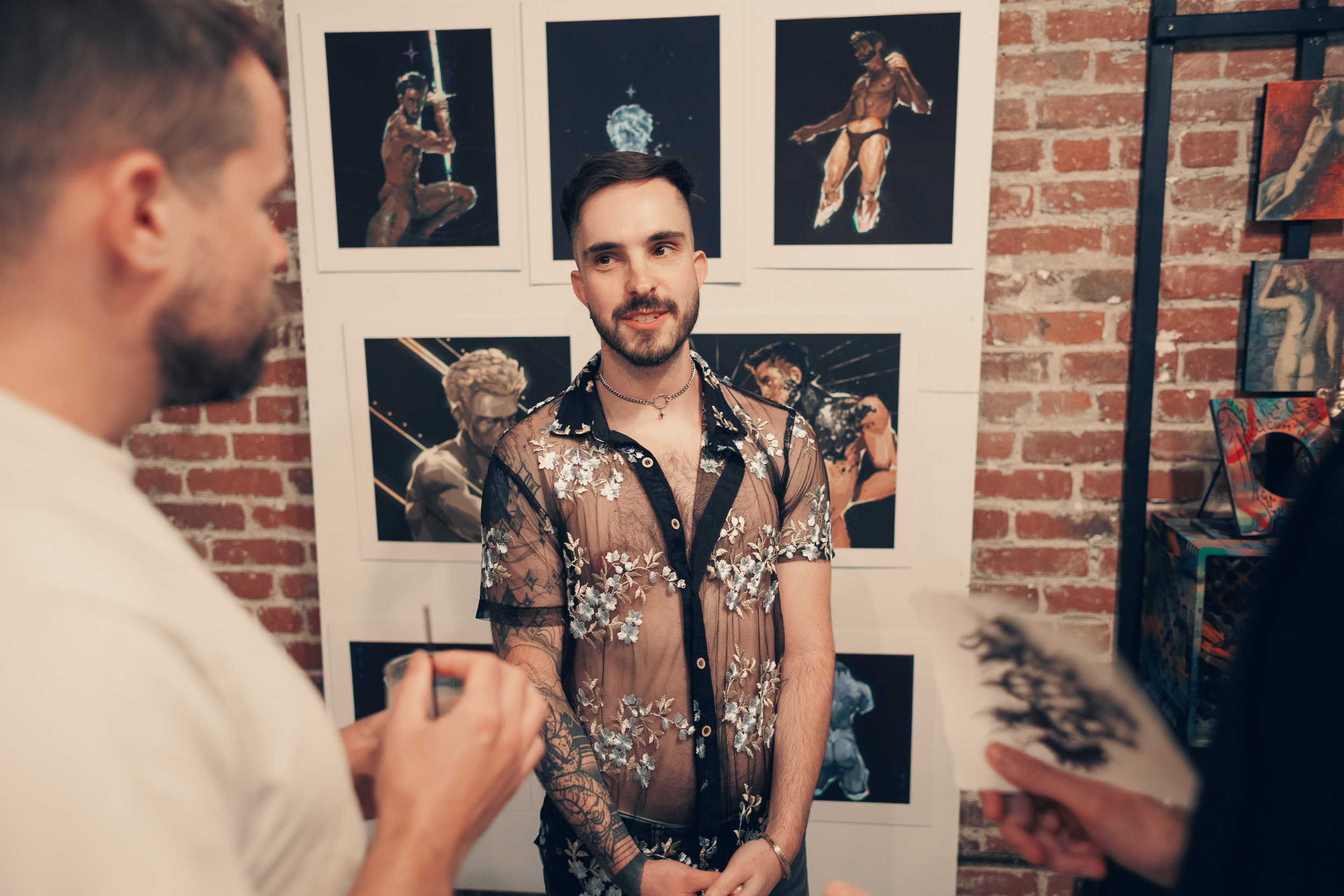
Erotic art in the gay community? Groundbreaking. The Devil Wears Prada references aside, with both the arts and the LGBTQIA community under attack, erotic art has much more of a political sheen these days. After all, if our private lives can be the subject of political action and public outrage, why can’t they also be artistic? Enter: EROS LA.
Beyond the debates of arts, decency, and what is porn vs. erotica? There is a collective need for community and safe spaces for queer men that don’t center on drinking at a bar or doing drugs at a warehouse party. Why not hang out with other creative, curious queer men to look at art, wear fun outfits, pose for photos, and more?
EROS LA is curating the vibe to engage with all of this. The, for lack of a better word, movement celebrated its 7th installment this past Saturday, May 9th, and Sunday, May 10th. What started as an art show to showcase local queer erotic artists has expanded to include drawing classes, speed dating, networking, and even a film collective.
As Casey Kringlen, the mind behind EROS LA, puts it, “There’s a heat that creatives generate when they’re operating beyond fear, connected to their primal sensibilities and willing to follow creative instincts that don’t always fit neatly into polished cultural spaces. ‘Erotic’ is the word that gets closest to that feeling.”
EROS LA, which happens every month, began simply as an art show. It curates a flirty, creative vibe that invites hotties of all ages, shapes, and sizes to converse, consume art, and feel a little frisky. Over its last 7 iterations, it’s expanded into a whole weekend of events.
Kringlen adds, “Each show includes curated programming alongside the exhibition: speed dating activations, live movement and dance performances, and a VIP Drawing Lounge where guests can draw live figure models, mingle, or simply watch. The art is the anchor, but the night has a full arc.”
This past Saturday, a group of artists ranging from painters and photographers to dancers and adult performers gathered to share their wares at the Earl Gallery in Koreatown. Kringlen continues, “The Earl is perfect for EROS: raw energy, a maze-like layout, high ceilings, brick walls, original elements from the early 1900s, room for art, conversation, performance, and mischief. This is not a white cube or a WeHo bar.”
EROS was born through the collaboration between Kringlen and gallery owner Michael Monk. Kringlen explains, “Michael has run The Earl in Koreatown for over 20 years. Michael has deep roots in queer publishing and culture. He co-founded Monk Magazine and wrote Pink Highways, and brings a lived sense of history and perspective that have grounded EROS from the beginning. He didn’t just offer a space; he offered a partnership.”
Kringlen met Monk while exhibiting his own nude photography. Kringlen shares, “I had shown work in a series of group exhibitions there, and during one of them, he asked what other queer erotic art events were happening in LA and whether we could bring that energy into his space.”
The rest is history. In Kringlen’s words, ” EROS has been built by a community that showed up on its own. Artists, regulars, and passionate people who found us and fell in love with what we were doing.” It cannot be understated that Kringlen and Monk have cultivated an environment that invites artistic appreciation, conversation, and community.
As the show’s resident in-house photographer, Alexander Chadryan puts it: “There is a real hunger for human-to-human connection right now. People want to be seen, not just evaluated. They want sensuality, but also warmth. They want desire, but not only the transactional logic of the hookup market.”
Chadryan continues, “A lot of gay nightlife, especially in LA, can be shaped by status, body hierarchy, self-protection, and performance. It can create this notorious ‘fake people’ feeling — everyone looking perfect, everyone acting unavailable, everyone trying not to seem vulnerable. EROS feels different from that.”
EROS is creating an amazing space for emerging artists. Diego De León, who creates art nouveau-inspired watercolors, shares, “EROS creates a space where erotic art can be celebrated openly, while still allowing artists to approach it from very different perspectives and styles. They show a lot of artists that don’t have big followings; it’s really about the art.” He adds, “Art is one of the highest forms of human evolution. To create it and to receive it is something no other creature that has ever existed is able to do. To take what we see in our mind and bring it into the physical world.”
Ricardo Villanueva, who was sharing his art for the first time at EROS, adds, “It’s a great way for artists with a specific focus to come together in one place. I also think it’s a really good opportunity to network and connect with other creatives.” He continues, “EROS creates a space where erotic art can be celebrated openly, while still allowing artists to approach it from very different perspectives and styles.” Villanueva paints sexy shirtless versions of characters like GhostFace, Jason, and other figures from horror and pop culture. He also sells colorfully painted statues of cartoon bears.
Another first-time exhibitor, Walker Paulsen, who was sharing digital portraits he made using a program called Heavy Paint, observed, “The Earl Gallery provides a unique space for everyone’s work, and the community is so uplifting and feels like a tight-knit group of artists.” About his art, Paulsen shares, “My work is directly related to the ethereal emotions that are felt in our experiences battling depression in the gay community and the dating woes.”
Regardless of the type of erotic art, anyone is welcome. Kringlen adds, “We apply the broadest possible definition of ‘erotic.’ If an artist says their work is erotic, that counts. It could be an explicit photograph or a painting of two rain clouds talking about love. We don’t jury. We don’t filter. We trust the artists, and we trust the audience.”
EROS is not just a show; it’s a weekend it is expanding into Sunday programming. Kringlen adds, “We now have a figure drawing workshop with live models, no experience necessary, and we just launched EROS Film Club, a recurring queer film night at The Earl curated in collaboration with Kurt Osenlund and Maksym Varenyk.” In addition to the film screening, there was also a networking event for entertainment professionals to mix and mingle.
Kringlen shares, “Art processes what ordinary language can’t. Queer people frequently move through experiences that lead to self-examination, and creative expression can become a powerful way to process and understand those experiences. Through art, people recognize themselves and each other more honestly, and that recognition can become the foundation for real community.”
The Next EROS weekend is Saturday, June 13, with the art class and film screening on Sunday, June 14. EROS is also entering the female art space with a show called SAPPHO on Saturday, June 27. You can stay up-to-date by following their Instagram and RSVP to events at EROS on Partiful.
a&e features
Andrew Max Modlin returns with FIELDWORK
At Jarrow & Goodman, the West Hollywood resident turns his travels into immersive landscapes of belonging
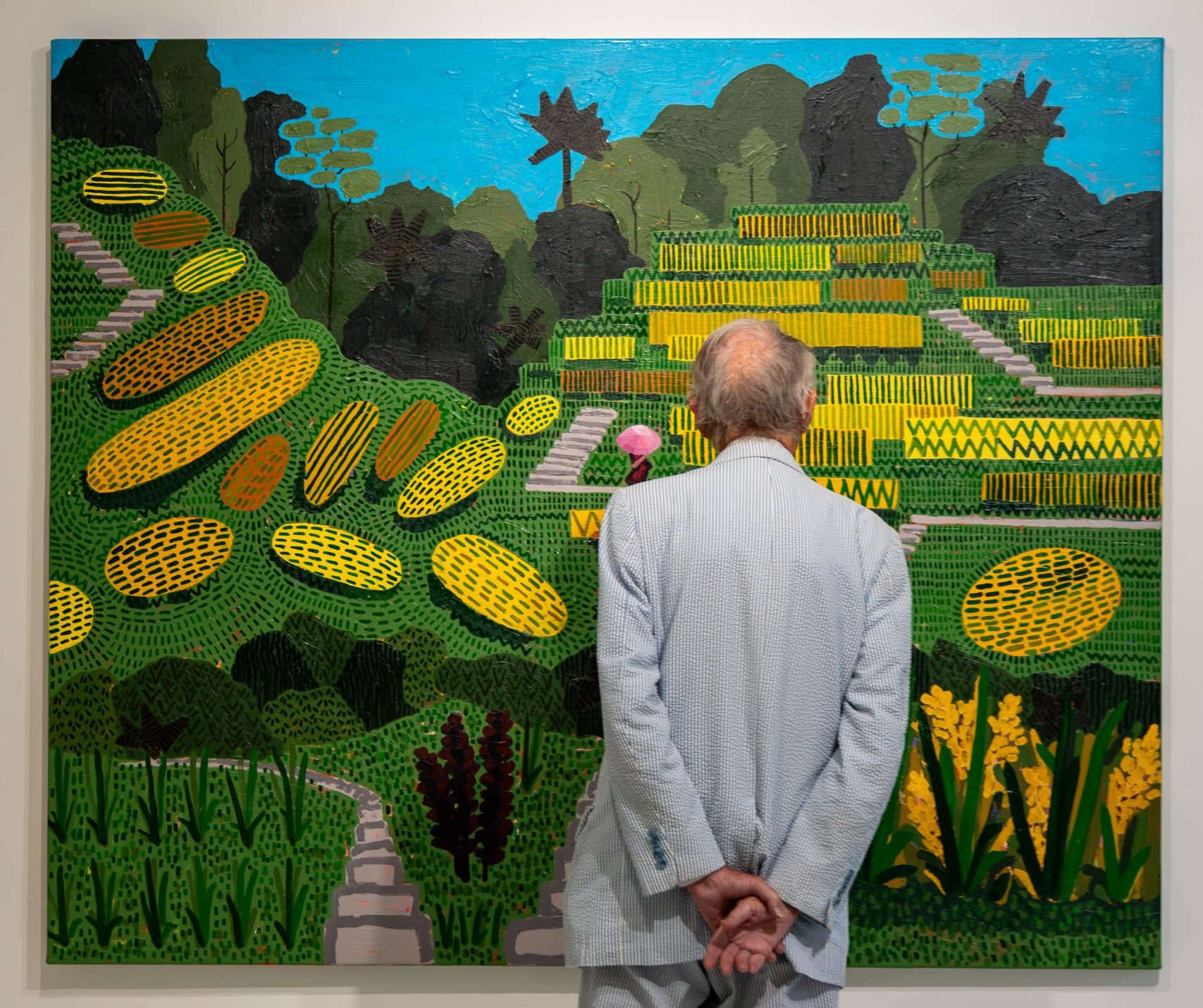
With FIELDWORK, his new exhibition at Jarrow & Goodman, Modlin turns toward colorful forests, rice terraces, tea plantations, canopies, trees, and luscious green worlds. The show is on view at 8825 Beverly Blvd. in Los Angeles, through June 10, 2026. The exhibition catalog includes works such as Green Lung, Rice Terrace, Tea Plantation, and Looking Across Waimea.
For the West Hollywood resident, the exhibition marks a continuation of community-centered practice. In a previous conversation with the Blade, Modlin spoke about the importance of “starting things within our own community.” As an openly queer artist, that means sharing work with members of the community.
“I’m honored to be showing at Jarrow & Goodman, a gallery within this community,” Modlin explains, “Being able to bring these works here first, and to show them to the people I live among, means a great deal to me.”
For Modlin, showing up as an artist is not only about the public moment, such as the gallery opening, the conversations, the wine, or the viewers sharing stories about the places they’ve traveled. It also happens in solitude, in the private space before the work is ever shown. His paintings come from an intense attention to detail, from sitting with a place long enough to feel responsible for how it appears on the canvas.
“For these locations to work, I have to genuinely care about them. I have to feel a responsibility to do them justice and put forward an honest point of view.”
The series took more than six months to produce, beginning with the first watercolor study and continuing through the finished canvases. “I couldn’t sustain that kind of attention without a real connection to the places,” Modlin tells the Blade.
That connection is immediately found upon setting eyes upon the vast landscapes within the gallery. The paintings are immersive and dense with color, texture, and motion. The canvas becomes fertile ground for the landscapes Modlin carries back with him. They do not present nature as a distant view, but as a space the viewer can feel present.
For Modlin, that immersive quality has changed over the course of his artistic career. “Three years ago, when I first started painting immersive landscapes, they were very much an escape for me,” he tells the Blade. “Now they’ve become something more. This series grew out of watercolors made directly in the field and from photographs; those studies were then composited into larger visual representations of each place.”
By working from watercolors made directly in the field, Modlin narrows the distance between landscape and image. The paintings do not simply depict nature from afar; they carry the process of being there into the finished work. That is why Modlin describes this series as more “process-driven.” The result is a body of work that feels open and immersive, but never detached from how it was made.
For an LGBTQ audience, that process-driven approach carries a particular resonance. Queer community has often been built through chosen spaces: bars, galleries, neighborhoods, homes, and rooms where people can gather, see one another, and feel less alone. Modlin’s paintings offer a version of that refuge on canvas.
At a time when LGBTQ communities continue to face political hostility, Modlin’s commitment to joy feels less like avoidance than insistence.
“We’re living through a genuinely dark moment,” he states. “My work is about joy and beauty, that’s always been its center. I hope people can stand in front of these paintings and simply feel good. That feels more important right now than it ever has.”In FIELDWORK, the gallery becomes its own kind of canvas. The paintings bring the landscapes back, but the community completes them — moving through the room, gathering around them, and finding itself inside the world Modlin has made.
Jarrow & Goodman Present FIELDWORK by Andrew Max Modlin, 8825 Beverly Blvd. Los Angeles, CA 90048
a&e features
The club that built community: C. Fitz on the Black queer sanctuary that changed Los Angeles forever
Filmmaker C. Fitz discusses the appropriately timed re-release of JEWEL’S CATCH ONE, reflecting on the ongoing legacy of Jewel Thais-Williams, the cultural impact of Catch One, and why preserving Black queer history is needed now more than ever
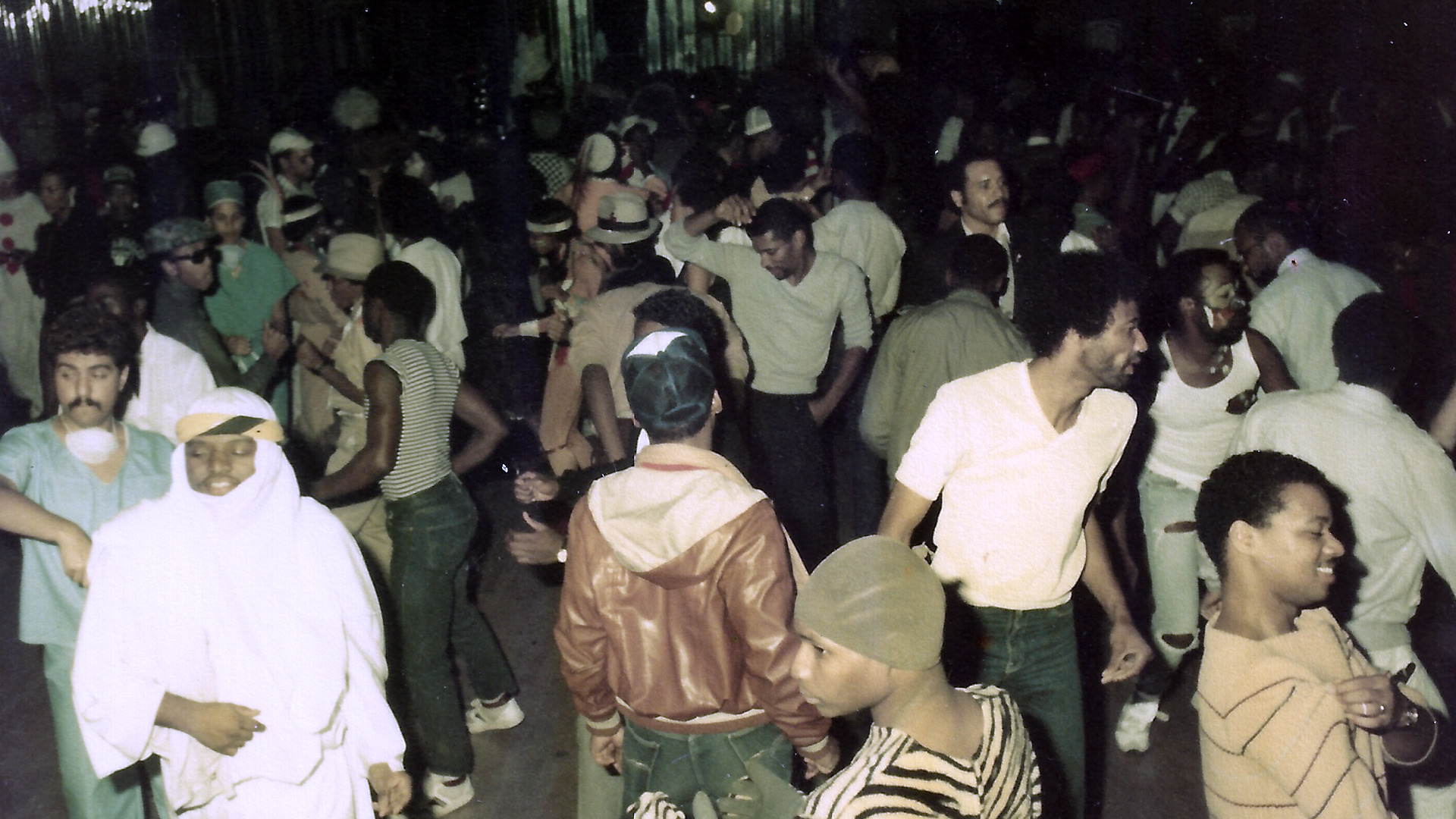
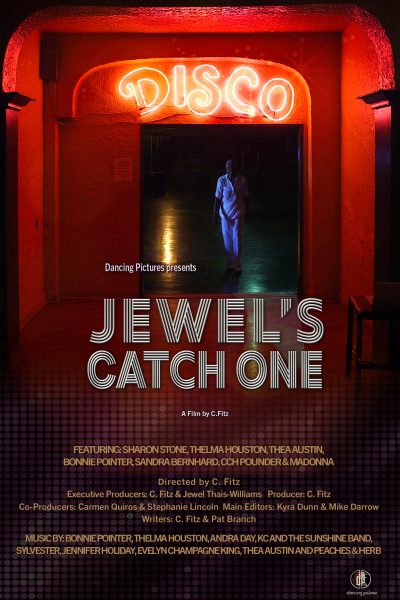
Award-winning filmmaker C. Fitz has never been interested in entertaining the stories history books share. With the upcoming re-release of JEWEL’S CATCH ONE, Fitz once again shines a spotlight on the legendary Jewel Thais-Williams, the first out Black lesbian to own a nightclub in Los Angeles and the legendary force behind Catch One, the iconic nightclub that became a sanctuary and cultural hub for generations of Black and LGBTQ+ Angelenos far and wide. Sometimes inaccurately referred to as the “West Coast Studio 54,” Catch One was much more revolutionary than it was trendy. Sure, it was a place to dance and vibe out to. But more importantly, it served the community as a place to organize, to celebrate, to connect with one another, and to belong.
In our deeply moving conversation, Fitz reflects on the six-year journey of making the critically acclaimed documentary, the political urgency of preserving Black queer history, and why spaces like Catch One still matter in an age of social media and cultural turmoil. With wit, honesty, and a palpable admiration for Jewel’s unapologetic drive, Fitz talks not just as a filmmaker but as an usher of a legacy too powerful to fade quietly into the shadows. As Pride Month and Juneteenth converge against an increasingly polarized American backdrop, JEWEL’S CATCH ONE arrives as both a celebration and a much-needed and appropriately timed call to action.
A resounding congratulations on the upcoming re-release of JEWEL’S CATCH ONE! What first drew you to the story of Jewel Thais-Williams and Catch One?
My initial inspiration came when I met Jewel in 2010 while directing a short piece on her community work. The moment I stepped into her world, I realized how much of her story had gone undocumented. As a filmmaker, that immediately felt like something I needed to change.
What stayed with me was not just who she was as a pioneering entrepreneur and activist, but the scale of what she built and how many lives her community touched. There was very little written about her, and I made a conscious decision to commit to capturing that history before it was lost. That led to six years of making the film, followed by two years on the festival circuit, where I focused on building momentum to get the film distributed so this history could reach a much wider audience.
From a storytelling perspective, it was important for me to go beyond a single narrative and trace the broader cultural impact. The film connects Jewel’s story to the evolution of Black and LGBTQ+ life, as well as music, fashion, pop culture, and politics. I wanted to reveal her not just as a local figure, but as a hidden hero whose influence reached far beyond what most people realize.
Catch One has often been called the “West Coast Studio 54,” but your film reveals something much more. How would you describe what the club truly represented for Black LGBTQ+ communities?
I wanted to capture a time when community wasn’t optional, but it was survival. I approached the film with that urgency in mind, to make the audience feel, through visuals, the intimacy, resilience, and joy that existed inside those walls.
Catch One was more than a club. It was a safe haven for Black and LGBTQ+ communities at a time when that kind of space meant the difference between isolation and belonging. It was home to many who had lost theirs. In shaping the film, I focused on blending archival material with a cinematic language captured in the present day that brings those decades and community milestones to life.
Why do you think stories like Jewel’s have historically been overlooked in mainstream LGBTQ+ history?
It has always been a struggle for POC LGBTQ+ stories to be properly recognized and canonized, both now and in Jewel’s time. Jewel was inspired to start the club not only because of the racism her community faced in local neighborhood bars, but also because of the discrimination she and her friends experienced in trendy West Hollywood nightclubs.
When I began making the film in 2010, the industry wasn’t supporting these stories or this history. I had a VERY hard time getting support, including grants from mainstream resources. I had to chip away at it, which also makes this story so powerful, as I filmed for six years while gathering decades of exclusive archival material from the community. I didn’t have the funds to jump into a full production or edit of the movie. I do feel that more resources for films and stories like this emerged over time; however, today it feels like those resources are being stripped back again.
My film is proof that audiences want to see these stories. They shouldn’t be passed over or overlooked. These fabulous pieces of history, stories of how we got to where we are today, should be celebrated and supported by everyone who supports filmmaking: studios, producers, grant organizations, and even cities preserving their own history. So are these stories overlooked, or are they just really hard to make?
And I do want to shine a light on the people who made this possible. I had incredible support from my closest film colleagues who helped me bring this story to life. Without this amazing crew, especially Pat Branch, who was with me since Day 1 as a writer, producer, and all-around crew person; producers Tim Vermeulen and Carmen Quiros; the fabulous DP Abe Martinez (Hunting Wives, The Lincoln Lawyer); and the immensely talented Kelly Boesch, I don’t know if I could have made the film I wanted. It was a labor of love, and I had some great help bringing it to life.
As both Pride Month and Juneteenth approach, this re-release feels especially timely. What conversations do you hope the film ignites in our community today?
Real change comes from within. Like Jewel, one incredible woman ignited her friends, community, and city to help create change. I hope the film sparks conversations around the need to be active in our communities and with our neighbors in order to fight racism and discrimination in all its forms. Jewel’s life and the injustices her community faced still resonate with our current political climate. I hope the tenacity within this storytelling inspires action and helps people work toward a brighter future.
Jewel Thais-Williams was the first out Black lesbian to own a nightclub in Los Angeles, which is a groundbreaking achievement in itself. What struck you most about her courage and leadership?
What struck me most about Jewel was her sheer tenacity in pursuing her goals. Her people needed a safe space, and she kept those doors open. She stood in the doorway when the cops came, even buying time for patrons to flee or hide. She stood up again and again. Somehow, this one woman had the energy of ten, and always with a sense of humor.
The film also captures how nightlife can become not only political but even spiritual. Why are queer gathering spaces so essential, especially during periods of social backlash?
Safe spaces are always essential, especially for the LGBTQ+ community, where family support is often jeopardized. The space becomes home, a place to be whoever you are in peace and to find love and support. Often like church, but usually open to everyone.
During the AIDS crisis, Catch One became a hub for activism, fundraising, and care. What did you learn about community resilience while researching this chapter of the story?
In the face of patrons, friends, and loved ones dying all around her, Jewel and the community came together. Instead of saving what little she had and closing the club, she turned the parking lot into a soup kitchen for sick patrons and worked even harder to help them. Against all odds, with minimal financial and political support, Jewel and the community poured more love and hard work into helping those who needed it most. That’s what real community is and does. This story shows audiences the true meaning of community.
Do younger generations fully comprehend what spaces like Catch One meant before social media and mainstream acceptance?
No, and how could they, when so many have never had the opportunity to experience spaces like these? Some haven’t needed a safe space, and in this social media age, they don’t crave one in the same way. Online spaces can feel “safe,” in a sense. I hope a film like Jewel’s Catch One encourages people to step outside those digital walls, feel the music, experience the people dancing, and discover a “Catch One” in their own backyard. There’s nothing like it, and they’re missing out if they never experience it.
With the film also capturing the music and fashion of the era, how important was it for you to preserve not just the politics of the era, but its joy and glamour as well?
HUGE! The world of Catch One and spaces like it is where fashion is born and thrives. I wish I had a mini-series so I could show everything I witnessed in the photos and ball culture footage from our archival collection. It was incredible, and incredibly important, to celebrate the fabulous fashions of the ’70s, ’80s, ’90s, and early 2000s. It was a blast, and I only wish I’d had more time to show the world even more of the incredible trend-setting imagery.
What surprised you most while exploring the history of Catch One and the communities built around it?
The desperation to meet love. The community protects each other and fights so hard together. These were times when one wrong move could cost you everything, your job, family, or home. People were fearless, and Jewel was a leader in that fight.
The film arrives at a moment when LGBTQ+ rights and Black history are increasingly politicized in the United States. Did revisiting this story feel different now than it did during the original release?
I’m so thrilled to be partnering with Freestyle for the re-release. The original release was about celebrating the story and preserving this history on film forever. I never imagined we’d need to be shining a light on it again just a few years later because of today’s polarized climate.
This is one of the biggest reasons I made the film. I wanted Jewel’s inspirational story to encourage people to become heroes in their own communities. I didn’t know at the time that all of America would one day feel like a single backyard in need of inspiration, but here we are.
How did Jewel herself respond to seeing her life and legacy reflected back through the documentary?
When I first approached Jewel on the day we met, I told her how incredibly impressed I was by everything she had created and was doing: running the club, running the nonprofit health clinic, and, at the time, also running a vegan restaurant, an entire chapter I filmed and interviewed people about that ultimately had to be cut. I told her we needed to make a full documentary about her. She humbly shrugged and said, “Sure.”
Years later, when we were attending film festivals, and I would bring her onstage, she would receive standing ovations. For Jewel to receive her flowers not only at Los Angeles film festivals, where so many patrons and club workers had lived, but from audiences all over the world, was incredibly moving. It deeply touched her. And I felt very blessed to witness it and help shine a light on a true hero in our community.
As a filmmaker, how do you balance documenting trauma and discrimination while still honoring celebration and joy?
It was a challenge, and my first rough cut was over 10 hours long! I think you have to understand the purpose of showing trauma and discrimination in order to fully tell the story of how Jewel and her community overcame it, rose above it, and created real change. That’s where the inspiration lives.
There were moments, I’m not going to lie, when I struggled with letting go of certain stories. But the goal was to inspire change through the film’s storytelling, just as Jewel’s life inspired change. That balancing act was painful at times, but it felt worth it when audiences told us the film made them want to look at their own communities and ask what they could do to help make a difference. That made all the time and sweat that my editors and I poured into it worthwhile.
July 2026 will mark one year since Jewel Thais-Williams’ passing. How has her absence changed the emotional meaning of this re-release for you?
I’m very sad that Jewel isn’t here to witness the documentary’s next chapter and new audiences discovering her work, tenacity, and legacy. We traveled the world with this film, and, as I mentioned, seeing audiences everywhere discover her work and celebrate her was the best part of making it.
In today’s climate, I know she would be happy to contribute to the resilience needed to reclaim what we’ve lost and continue fighting for equality, just as she did through Catch One and her foundation.
If Jewel were here today watching the current cultural and political climate surrounding LGBTQ+ rights, what do you think she would want communities to remember about resilience and resistance?
Jewel was a doer. She didn’t wait for someone else to open the door, rather, she opened it herself and then held it open for everyone behind her. I think she would want communities to remember that real change doesn’t come from watching it happen; it comes from showing up again and again, even when the odds are against you.
She did it with minimal resources, in a climate that was often hostile, and she never stopped. I think she would say: look at what we built, look at what we survived, and know that we can do it again.
Her life is proof that one person with enough tenacity and love can change everything. That is ultimately why this re-release matters so much to me. Jewel’s story is not just history. It is a roadmap.
The film will be re-released on June 16, 2026, across major streaming platforms throughout North America, including Apple TV, Amazon, Kanopy, cable VOD, and additional digital outlets. Check out the pre-order link on AppleTV.
a&e features
Why Michelle Visage needs you to get ‘PrEP Wise’
The ‘RuPaul’s Drag Race’ judge speaks about her new campaign with ViiV Healthcare
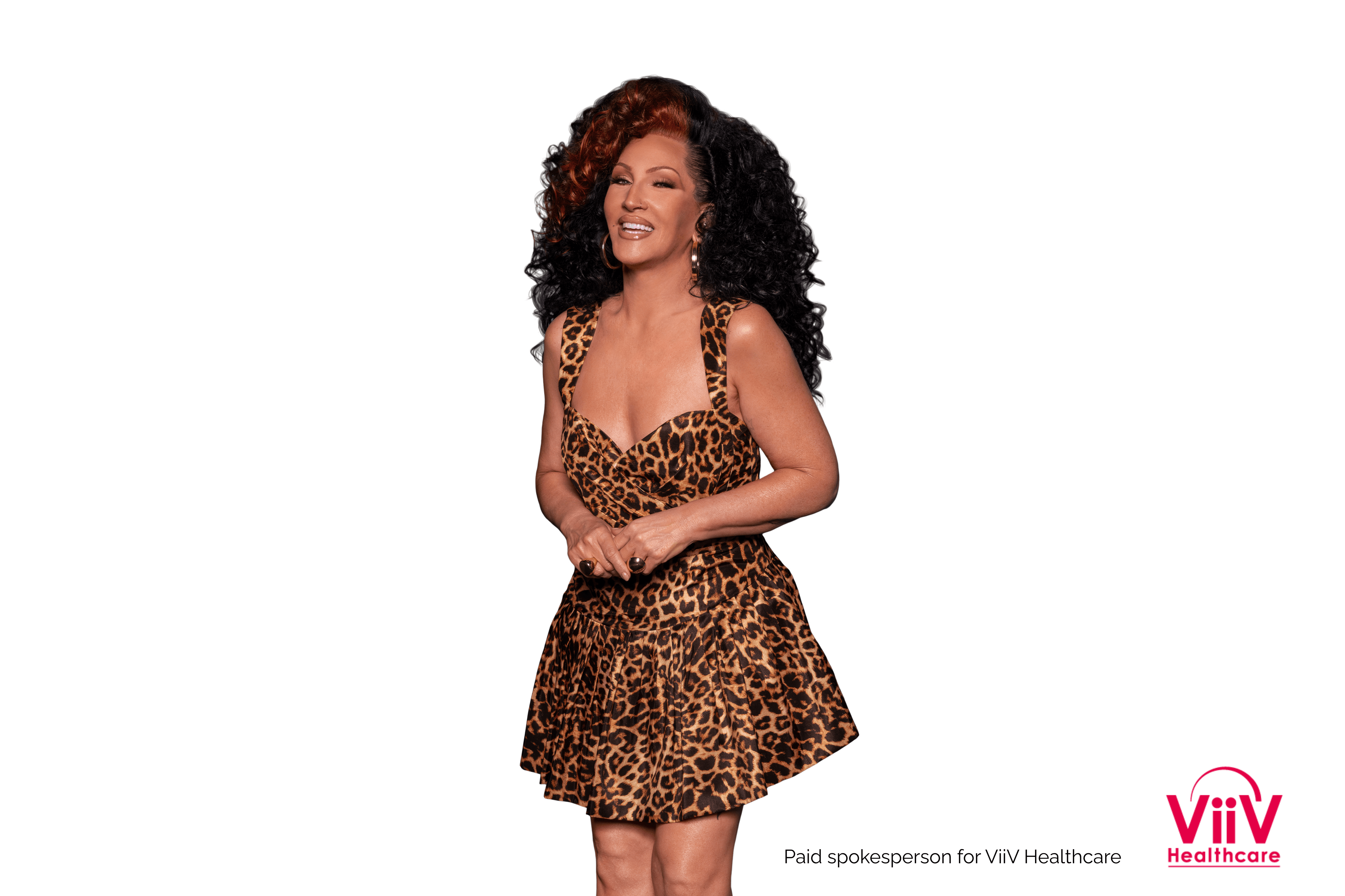
If you ask an LGBTQ+ person what Michelle Visage is known for, you’re likely to get a few similar answers. Most people will say that they know her as the co-judge on RuPaul’s Drag Race, with the woman serving looks (and scathing critiques) for more than a decade on this seminal program. Others may bring up her time aweing audiences on the West End, or her initial star turn in the hit girl group Seduction. There are a few answers you may get when asking about Michelle Visage, but there’s one part of the performer’s career that not enough people bring up today: her advocacy.
Before the record deals and hit TV shows, Michelle Visage was a tough teenager from New Jersey. A girl who knew she was meant for fame but was still figuring out how to get there. Eventually, the search for stardom brought her to 1980s New York, a thriving home of queer nightlife that taught Visage how her voice could be used to fight against hatred. And while she flexes that skill every day as a fierce advocate, she’s excited to be louder than ever through ViiV Healthcare’s new ‘PrEP Wisdom Campaign.’
Michelle Visage sat down with the Los Angeles Blade to discuss this campaign and how it feels to speak up about this important issue. But before we could get to the present, she stressed that if people wanted to know about her current work, they first had to understand how it all began.
Visage detailed her youth in New Jersey, her no-nonsense parents, and the many times she snuck into nightclubs hoping to be ‘discovered.’ It was in these clubs that she found the thriving ballroom scene of 1980s New York, saying, “I felt like Dorothy [from the Wizard of Oz] when she clicked her heels! [Except] Dorothy clicked her heels three times, and she ended up in Kansas — I ended up on Christopher Street with 30 or 40 of the weirdest, craziest looking misfits I’d ever seen in my life.” Michelle smiled widely as she remembered those early moments. “I was like, ‘Oh my god…I think I found my people.”
“I met Willie Ninja and Caesar Ninja Valentino, and they took me in as one of their own and started teaching me how to vogue. And that’s how life began for me in the ballroom!” She began to walk as a member of the House of Valentino — specifically Face, Body, and Femme Vogue — and found a second home amidst this thriving subculture of marginalized artists. “When I didn’t have anybody or a group or a clique to speak of, the queer scene in New York City took me in as one of theirs — and I became ‘Michelle Magnifique.’”
Through this community, Visage got to see the birth of our modern LGBTQ+ rights movement — as well as just how much the AIDS crisis would come to terrorize these people she’d begun to call her family.
“Because I was so deep in this scene, I was affected greatly by the AIDS crisis and the lack of any kind of support from anything around us,“ said Michelle, speaking candidly about her many days spent at the bedsides of those suffering from this disease, acting as a source of comfort for folks whose blood family had abandoned them long ago. “I was standing by their side and holding their hand and being with them…I didn’t know what I was doing. But I knew that I needed to show up, and I knew that I needed to be there.”
Even when her career took Michelle from New York, she always carried those memories of standing by community members when nobody else would. This, when paired with her massive singing and acting talents, is what made her one of pop culture’s staunchest advocates for LGBTQ+ rights in the 90s and early 2000s. This earned her a massive queer following, and today, it’s what makes her the perfect partner for ViiV’s new PrEP Wisdom Campaign.
“Viiv Healthcare is the only pharmaceutical company solely focused on preventing, treating, and ultimately curing HIV,” Michelle explained. “Their goal is to help end the HIV epidemic for all — and that, to me, is music to my ears.”
It’s a goal that’s only become more important since the company was founded back in 2009. The only large-scale pharmaceutical company focused on ending the HIV epidemic, ViiV, not only fights cultural stigma but also saves thousands of lives daily by connecting folks to the treatment and prevention resources they need. Especially as we’re seeing numerous states — including California — begin to slash HIV funding, their work through campaigns like this one is becoming more important than ever.
“The PrEP Wisdom Campaign, first and foremost, is intended to encourage conversations between people who could benefit from PrEP, and [why they should] talk to their doctors to help determine which injectable PrEP might be right for them,” said Visage. She discussed how the campaign is information-oriented, with ViiV developing easy-to-understand pathways for folks to become more aware of injectable PrEP services as well as general HIV/AIDS-related resources.
“More than 2 million Americans could benefit from PrEP to help prevent HIV [according to the] CDC — yet only 25% of them are currently using it!” She understands that there were many things holding people back from getting PrEP, ranging from cultural stigma to discriminatory doctors to a lack of awareness that these resources even exist. But she emphasizes that people cannot let social judgment hold them back from their health and safety! “If you’re not clicking with your health care provider, please find a new one. You don’t have to settle…there are plenty of people to choose from. Plenty of healthcare providers, plenty of doctors who want to work with you, who want to give you the information about PrEP, who want you to be on PrEP so you are protected.”
“Listen, we have come a long way since I started [back in] 1986], and we’ve got so much further to go,” Visage said, reflecting on her lifelong role as an HIV advocate, first as a teenager, and now as an acclaimed performer. But while she may have grown since then, she still carries the commitment to fighting against injustice that the queer community of 80s New York instilled in her. “I will fight forever on this platform. [Discrimination hasn’t] changed, so I don’t plan on changing.”
Michelle Visage knows that change doesn’t happen by being silent — it happens by staying informed and keeping yourself healthy so that you can speak out for what you know is right. In honor of the many lives she fought for in 1980s New York, Visage wants to help as many people as she can today get the PrEP resources they need. And through her new PrEP Wisdom campaign with ViiV, she’s excited to do exactly that.
Check out www.getprepwisdom.com for more information
a&e features
How Saunder Choi crafts a queer anthem
The composer discusses the upcoming GMCLA performance of his newest piece
Music has always been a key part of every civil rights movement.
No matter the cause or the community, the songs of the oppressed have always underscored the fight against their oppressors, with these pieces embodying the passions of a movement — and in Saunder Choi’s newest song, the resilience of Los Angeles’ LGBTQ+ community.
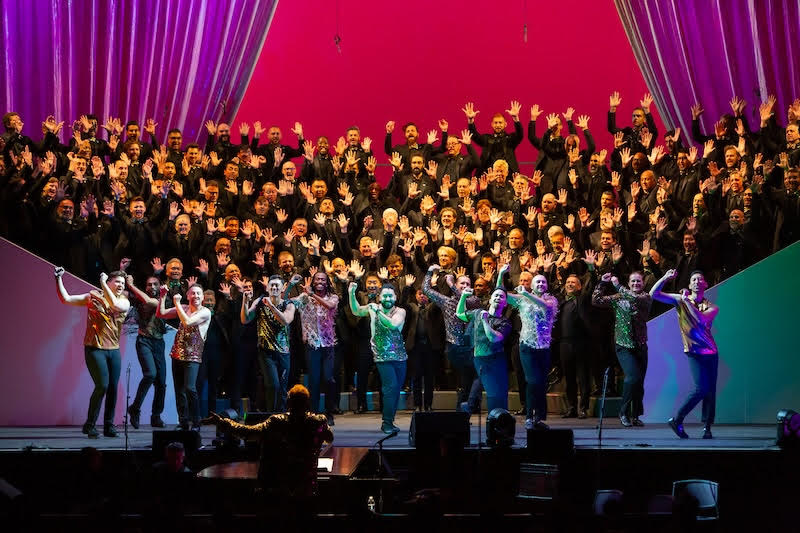
The renowned composer sat down with the Los Angeles Blade to discuss “Credo,” his newest song that he’s putting together for Gay Men’s Chorus of Los Angeles (GMCLA). Debuting at the group’s upcoming Declarations of Independence show, Choi’s goal was to not only create a beautiful piece of music but a literal creed for the many identities this chorus represents. In the man’s own words, “[This song] serves as a way to memorialize, to uplift those stories, and to reflect the resilience and strength of our community.”
“Music has always been used as a tool for advocacy,” Choi explained. “Music has always been used to reflect one’s beliefs, one’s values, and one’s principles…I choose to use my [music] as a platform for that advocacy.” It’s a sentiment the composer has always embodied; after receiving a Master’s Degree in composition from USC, Choi traveled the world singing in professional choirs, sharing his skills through teaching, and writing pieces for numerous LGBTQ+ choirs. He’d dedicated too uplifting communities through music, and he decided to channel that dedication when the GMCLA reached out and requested a new song for a very important concert.
The Declarations of Independence show commemorates America’s 250th birthday, with the GMCLA celebrating our country’s queer legacy by performing the many songs that helped build the LGBTQ+ rights movement. Whether it be Broadway classics or universal hits, each of these songs will reflect the queer community’s long history within this country, with Saunders’ new piece “Credo” serving as the show’s defining number.
When tasked with composing for such a symbolic event, Choi knew that the GMCLA wasn’t looking for just any song: they needed a creed. “I wanted to build upon that tradition of creeds being set to music, being sung by a community that believes in them…[I want us] to ask ourselves, ‘What is our creed as the LGBTQ+ community? What do we believe in?”
To do this, Choi collaborated with Brian Sonia-Wallace, Poet Laureate of Los Angeles, to devise lyrics that encapsulate the current moment LGBTQ+ Americans are living in. “With all the attacks that’ve been happening in the LGBTQ+ community, what does our community need at this moment? In these times, how can we, as singers, use our songs to protect our community [and] fight for our values?” It was on this point specifically that Choi drew inspiration from, with the artist guiding his creative process by asking himself, “What would it mean for a gay men’s chorus to sing and declare [their] beliefs out loud?”
With all of this in mind, Choi went to work, writing tirelessly to craft a song that embodies the fierce sense of Pride he knows fills this city. It wasn’t always easy — the composer detailed his composing process, a complex combination of musicality and precision that can easily boggle the mind of a non-musician (and many actual musicians). Yet when he was finished, Choi believed that he had created the perfect song for GMCLA’s Declarations of Independence. A true “Credo,” one that could serve as not only an enjoyable piece of music but an anthem for what queer people all across Los Angeles are experiencing right now.
“I hope that [with ‘Credo,’] folks hear a powerful anthem that they can use as a weapon to protect themselves in an era where you know our lives, our stories, our communities are being actively threatened and erased,” Choi described. “Sometimes the lyrics get a little raw, a little specific, but as James Joyce said, ‘In the particular is contained the universal.’ These are things that I think a lot of the queer community can believe in…this is our anthem — this is our creed.”
Saunder Choi’s latest piece, “Credo,” is a reminder to whoever is listening — whether they’re in Los Angeles or not — that they are not alone. He captures a true chorus of resistance through lyrics that uplift the voices of those community members who are too often silenced. It’s the perfect song for the Gay Men’s Chorus of LA’s Declarations of Independence show, and it may just be exactly what so many people need to hear right now.
Join GMCLA for Declarations of Independence, a bold celebration of Pride and Protest, happening Saturday, June 27, at 7 pm and Sunday, June 28, at 3:30 pm at the Saban Theatre.
a&e features
The 40th anniversary of ‘Pee-wee’s Playhouse’ was a celebration of weird, queer art
This star-studded evening commemorated the impact this kids’ show continues to have today.
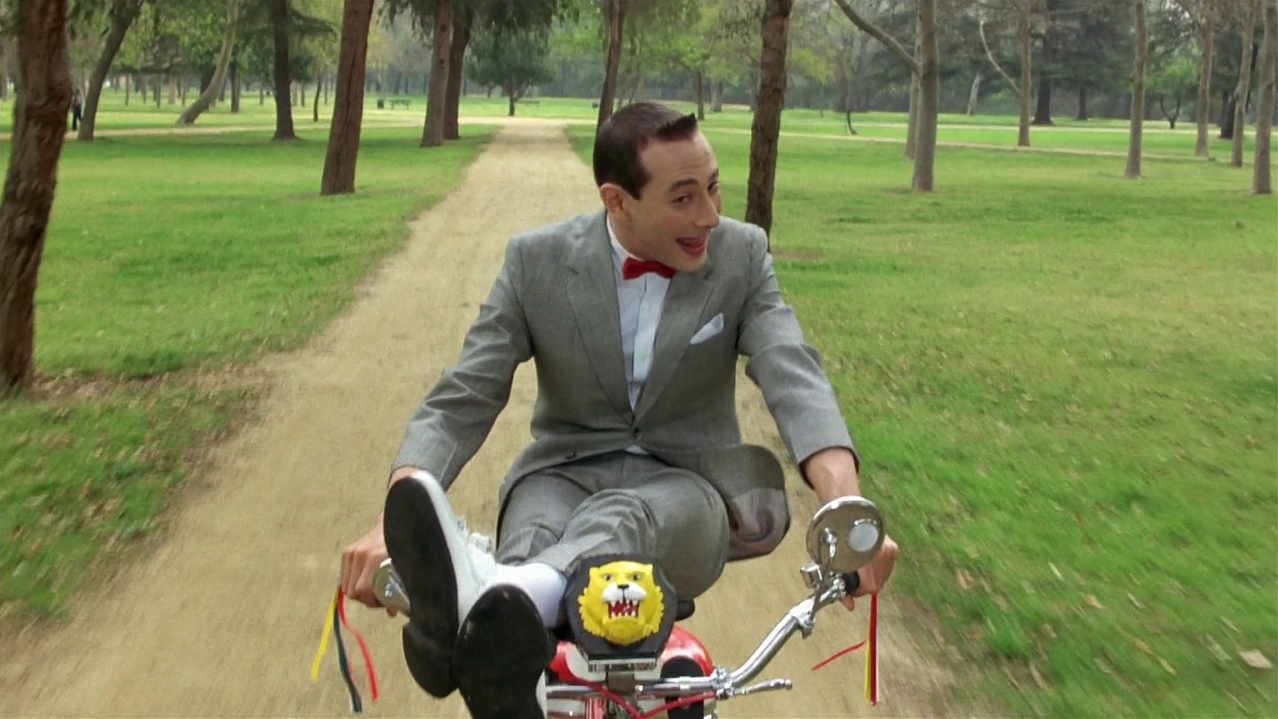
There is only one ‘magic’ word to describe The 40th Anniversary of Pee-wee’s Playhouse: fantastic.
Hosted at the Greek Theater as part of Netflix is a Joke, the streaming service’s yearly comedy festival, this event commemorated four decades of this pivotal program influencing modern artists. The evening was a variety show packed with a jaw-dropping lineup of stars; whether it be musical acts like The B-52s and Devo, or comedians like Patton Oswalt and Cheri Oteri, more than a dozen celebrities came out to show how much this series means to them. It featured memorabilia from the original set, clips from unaired episodes, and tributes to the many performers who made the show so unforgettable for millions of children then and now. And, in keeping with Pee-wee’s Playhouse traditions, the 40th Anniversary even got its own magic word for attendees to scream about whenever it was uttered: fantastic.
Above all else, The 40th Anniversary Of Pee-wee’s Playhouse honored how this show continues to influence artists today. It was a monumental series that encouraged everyone watching to go after what they truly wanted in life, no matter how ‘weird’ those dreams may be. And for LGBTQ+ watchers especially, it gave thousands of young viewers the confidence they needed to be their most authentic, absolutely oddest selves, even after the TV was turned off.
“Listen, no matter who you are, there was someone in puppet land to make you feel safe,” said Bob the Drag Queen, as the RuPaul’s Drag Race season eight winner stepped onto the 40th Anniversary stage. She was, of course, referring to the setting that Pee-wee’s Playhouse inhabited, a home filled with countless puppets (often personified pieces of furniture, animals, and the occasional dummy) and people who went on wild adventures with Pee-wee. Every watcher had their favorite character, but Bob came onstage ready to honor one beauty in particular: Miss Yvonne.
A dolled-up queen who always boasted about her looks, the Drag Queen spoke about how uplifting Miss Yvonne was for her young audience. “We often talk about how beautiful Miss Yvonne is, but I feel like we don’t often talk enough about how inspirational Miss Yvonne truly is!” Bob explained. “We live in a world that is constantly telling people to shrink themselves, to doubt themselves, to be humble, to wait for permission — and Miss Yvonne did the opposite of all of that! She decided who she was…and maybe [that’s something to learn from, because sometimes becoming who you are starts with believing it before anyone else does.”
It’s a message of self-acceptance that resonated throughout Pee-wee’s Playhouse; Pee-wee encouraged children to be their strangest, realest selves…by always being his strangest, realest self. He played with gender expression and constantly criticized cultural norms, with many episodes telling children that their voices matter (no matter what the adults around them say). For queer viewers, this was a monumental lesson in ignoring anyone who tells you you’re ‘wrong.’ Through Pee-wee’s Playhouse, they not only got to see someone who shirked cultural norms, but were finally told that it was okay to be different than how society told them to be.
Pee-wee’s message of self-love is what spurred many artists onto the successful careers they have today. And for Julio Torres and Patti Harrison, this allowed them to create the anarchic artistry that audiences were lucky to see at the 40th Anniversary.
It’s hard to characterize Julio Torres’ set, largely because the Problemista and Fantasmas star spent most of it desperately reaching for a can of Diet Coke mounted on a pole above his head. Dressed in a bedazzled suit once-worn by Pee-wee himself, the late Paul Reubens, Torres barely spoke about the show this event was commemorating. He instead lamented about the indignity of his situation (being deprived of Diet Coke) and how he yearned for the ease of youth (when he always had Diet Coke). Yet while he barely Pee-wee’s Playhouse, Torres’ irreverent humor — and the way he plays with surrealism and color schemes in every project — illustrates how much Pee-wee’s Playhouse continues to influence his current work.
One of the 40th Anniversary’s true highlights was Patti Harrison, who spent her first minutes onstage monologuing about her difficult childhood and the impact Pee-Wee’s Playhouse had on her younger self. “I’m really honored to be here,” she timidly began. “I truly feel like I owe so much of what I get to do now and who I am today to artists like Paul Rubens and Pee Wee’s Playhouse, and getting to have that growing up…I feel very fortunate.”
Harrison then went on to describe the horrors of her childhood, the abuse she endured from bullies, and the nonstop torture she faced daily…before cleverly using the secret word to make the entire Greek Theater shout with glee at her traumatic storytelling.
After this, Patti reverted to the hilariously vulgar comedy she’s known for, but the performer never stopped crediting Pee-wee’s Playhouse for inspiring countless queer performers to pursue their art today. Between screaming about her mother’s body and poop jokes she reminded the audience that many LGBTQ+ artists wouldn’t have gone after their dreams if not for the lessons taught by this show. She ended her time onstage with a perfect summary of everything this event represented, shouting at everyone in attendance: “Stay freaky, stay weird, and long live Pee-wee!”
This was the true message of The 40th Anniversary Of Pee-wee’s Playhouse and the series it was created to celebrate. The event not only showcased memorabilia and memories from the show — though that was certainly a wonderful aspect of it — but offered a long list of performers whose careers testify the impact Pee-wee’s Playhouse had on everyone lucky enough to watch it. Through this anniversary, the queer community is reminded of how our culture was shaped by the unbridled, chaotic joy that Pee-wee’s Playhouse embodied in every episode.
And with over 40 years of inspiring artists, there is only one word that truly describes the legacy of Pee-wee’s Playhouse that LGBTQ+ people can still learn from today: great.
Just kidding. Fantastic.
a&e features
On ‘The Pitt,’ Amielynn Abellera brings the Filipino healthcare representation she wishes she had growing up
Abellera reflects on Nurse Perlah’s journey on HBO Max’s hit show
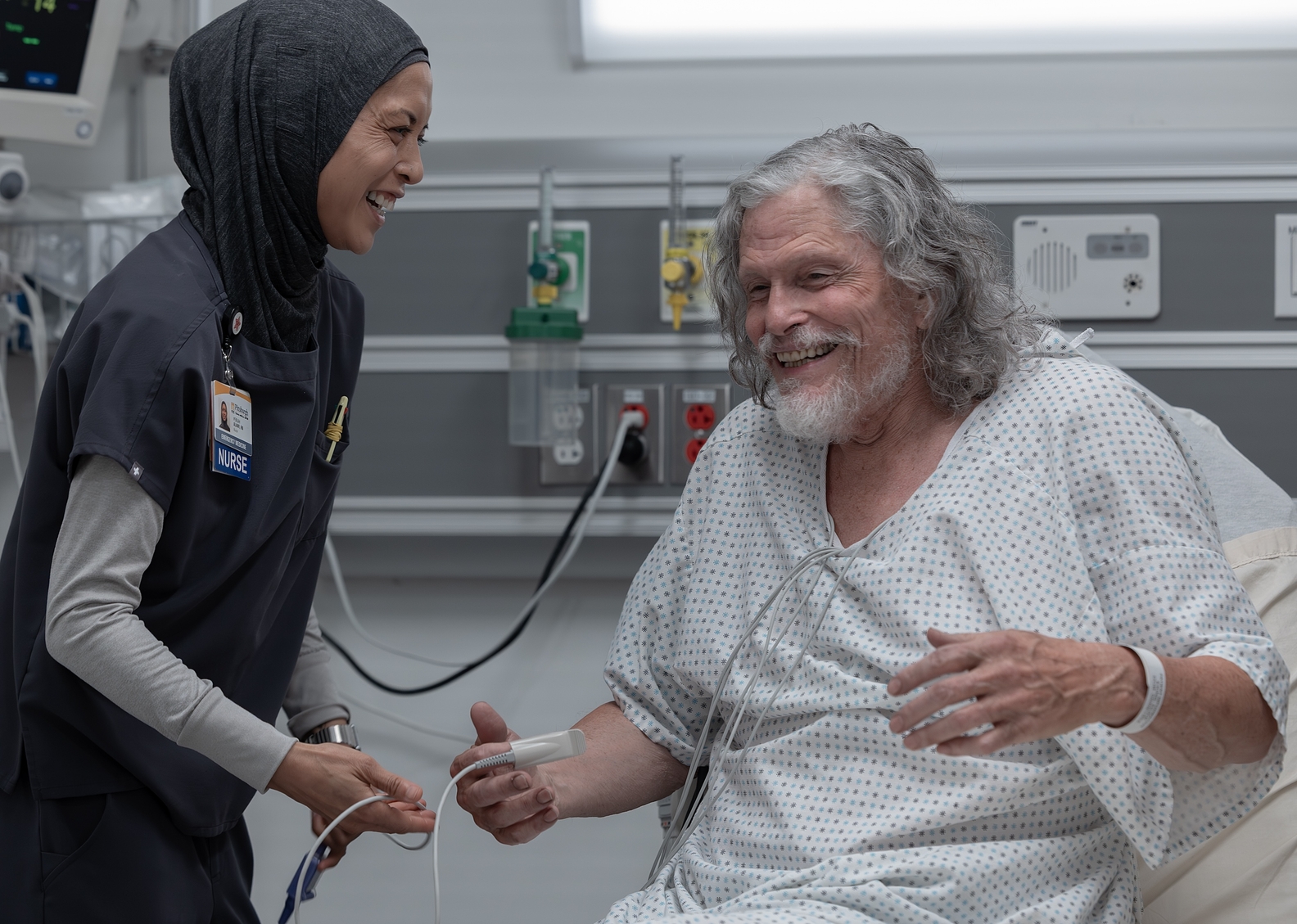
Amielynn Abellera grew up with a nurse practitioner mother and a doctor father, so perhaps she was always destined to appear in a show like The Pitt. Looking at popular media as a Filipino child, though, she never saw “authentic representation” when watching shows about healthcare workers.
“If I did have representation, I would have been more curious and more celebratory, and want to investigate more and ask [my parents] questions,” she tells The Blade. “It’s never too late, and now that there is representation, it’s really making waves across the Filipino and Filipino-American community to initiate conversations.”
Acting on HBO Max’s The Pitt, as she has since the very first episode, carries a deeper meaning for Abellera, who plays the steady and empathetic Nurse Perlah. The second season once again follows a full 15-hour shift in the ER, this time taking place on the Fourth of July.
Abellera reflects on Perlah’s journey: “As a nurse, she is really good at her job, she’s really calm and composed and confident. She knows how to protect herself in such a challenging career. That has been part of how she’s able to get through it. In this season, on this particular day, she hits some challenges, and we start to see a little bit of that armor crack — just a tiny bit.”
It’s been a breakthrough role for Abellera, who previously appeared in episodes of The Cleaning Lady, Bosch: Legacy, and NCIS. The unique filming style of The Pitt, where every episode is synchronized with one hour in the hospital, has given Abellera a new experience altogether: “It feels very sporadic, very panicked, and very immediate.”
“It does feel like I’m waking up at five in the morning, starting a shift, and doing a 12-hour day. Sometimes, the reality mixed with the not-reality and the pretend can sort of meld together,” she says, while adding with a laugh, “I’m not a nurse, I’m nowhere near anything being a healthcare worker, of course, but sometimes you end up thinking, ‘I can actually put an IV in!’”
As she looks back on the season at large, one episode that stands out to her is Episode 3 (titled 9:00 A.M.), which incorporated the 2018 Tree of Life synagogue shooting that took place in Pittsburgh, where the show is also located. In a poignant moment, a Jewish patient named Yana (played by Irina Dubova) connects with Perlah, who wears a hijab.
“Quite honestly, I didn’t know so much about the shooting until we started working,” she says. “I really loved how simple the scene was, in terms of it being two people just connecting and caring for each other in that moment, and also acknowledging this bigger thing. It took both Yana and Perlah by surprise — the feelings that came up for them. I remember even filming it; it took both of us by surprise.”
When I ask about bringing both Filipino and queer representation to the show, Abellera says “I know I sound like a broken record. But I’m so proud, and it’s such an honor to be able to represent the Filipino community as healthcare workers. It’s such a big part of Filipino history and my personal history.”
On the show, she’s also found solidarity with Isa Briones and Kristin Villanueva. “Something I like about the three of us is we’re three different dimensions of Filipino,” she says.
Beyond the community she’s cultivated with her cast on-set, The Pitt has been celebrated across the entire industry, most recently winning the ensemble in a drama series prize at the Actor Awards and, of course, the Emmy award for best drama series. The Actor Award recognition was especially notable since it brought the main cast together on stage. With Season 3 already in the works, one can only imagine how many more awards the show will nab.
“I don’t think anybody knew that we were so hungry for this type of going back to how television used to be,” Abellera says, noting the 15-episode order for Season 2. “It’s taken all demographics by surprise.”
a&e features
From Glenn Close to Carol Burnett: How this year’s TCM Classic Film Festival highlighted female icons
The festival was a true celebration of both past and present, and how female icons have shaped so many different generations
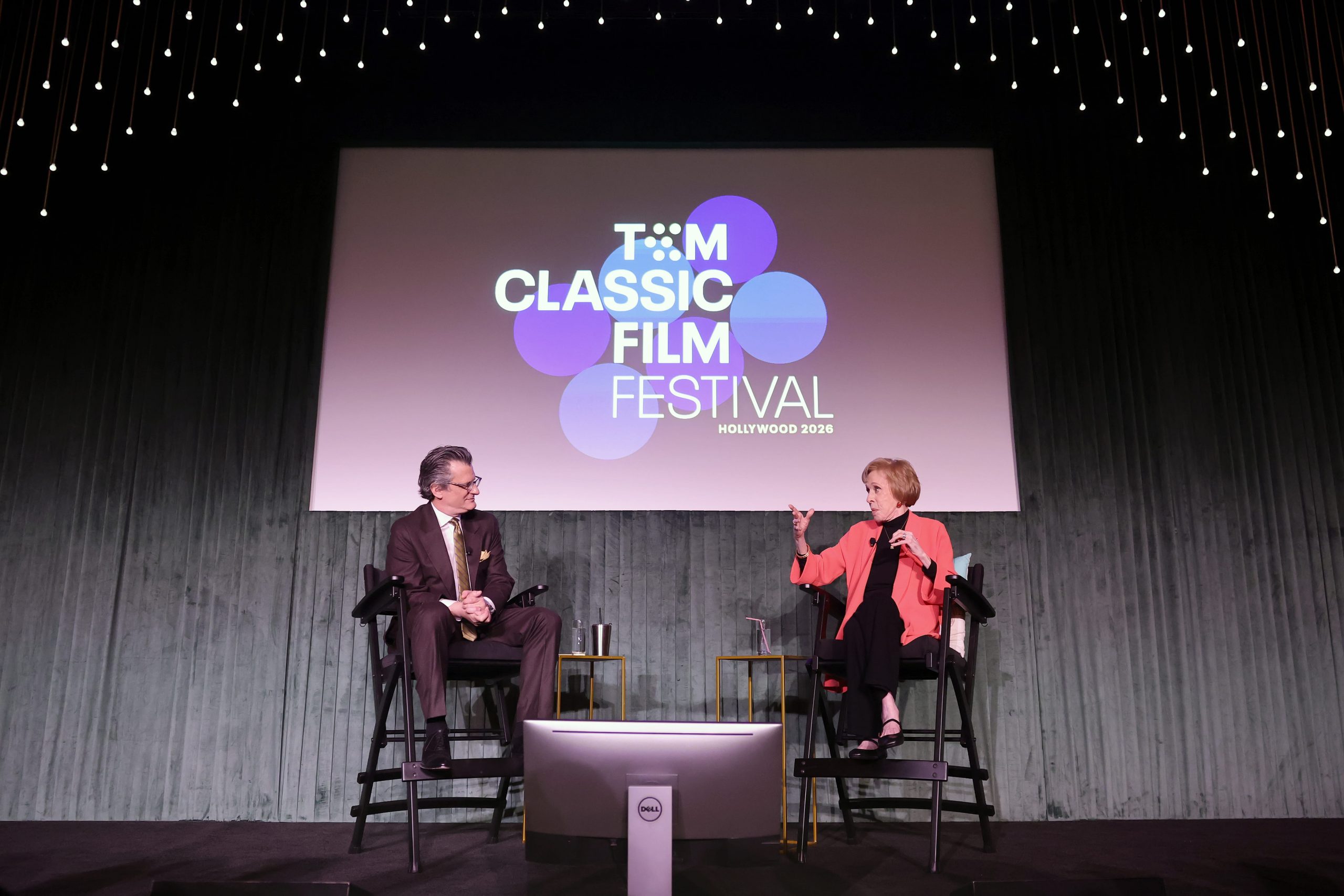
As the ever-fashionable Glenn Close walked out in front of the TCL Chinese Theatre sporting a pair of circular shades, sitting down in a chair to block out the sun from her view, she looked a lot like Norma Desmond, the character she brought new dimensions to while starring in Sunset Boulevard on Broadway.
Unlike the famous character she played that lost touch with reality decades after finding success as an actor, Close is one of the rare actors to continue finding success decades after achieving stardom. The eight-time Oscar nominee, who landed her first nomination back in 1983 for The World According to Garp, was surrounded by her family, including her granddaughter, and a very well-behaved white dog that accompanied her on stage. Many of her close collaborators were also in attendance, including Melissa McCarthy and Hunger Games: Sunrise on the Reaping director Frances Lawrence.
The crowd, which included select press and TCM passholders, hung on Close’s words as she reflected on the kind of career most aspiring actors dream of. This was the kind of event the TCM Classic Film Festival does best — not just the yearly Hand & Footprint Ceremony where stars get their hands and feet imprinted by the TCL Chinese Theatre, but the daily programming that connects passionate film fans with the female icons they grew up watching and idolizing. It was a true celebration of both past and present. Where else can classic movie fans not only see an icon like Close receive their dues, but share that moment with the actor’s loved ones?
Close’s ceremony was just the beginning of the action. The festival also gave attendees the chance to hear Carol Burnett and Barbara Hershey speak in dedicated one-hour Q&As; Faye Dunaway, Laura Dern, Sharon Stone, Julia Sweeney, Lorna Luft and Lesley Ann Warren all presented different screenings throughout the four-day festival in Los Angeles (read The Blade’s coverage of Warren’s talk before Victor/Victoria here), while Close herself presented a screening of 1988’s Dangerous Liaisons.
The line just to get into Burnett’s conversation was the longest I saw at this year’s festival, quite literally spiraling around the lobby of the historic Roosevelt Hotel to the point where people couldn’t locate where it even ended. The crowd immediately took to their knees once Burnett walked into the room. In a conversation with TCM host Ben Mankiewicz, the seven-time Emmy winner looked back on the origins of her TV career and the women who mentored her.
Burnett would go on to make history as the first woman to host a variety show with The Carol Burnett Show, which ran on CBS from 1967 to 1978. One of the most surprising bits of her conversation was her freeing experience working with studio executives.
“When we got our show, [William S. Paley] said to us, ‘You’re the artist, I’m the businessman. You do what I do, I’ll do what I do. Go do your thing. If it’s not working, I’ll be in touch,’” Burnett recalled. “We never had a sponsor bothering us, or the network bothering us,” adding that the writers’ room was free of outside influence. In today’s media landscape, such a story is unheard of.
Beyond these incredible stories shared by beloved actors, the festival was also an opportunity for different generations to connect through their shared love of film. As a young queer person myself, I’ve noticed how TCM can sometimes be unfairly labeled as a network solely for older people. While the festival’s attendees certainly skew older, the wide variety of female stars drew in multiple different generations; from the women who grew up on Burnett’s variety show in the ‘60s and the ‘70s, to today’s young audiences — mainly gay men! — who fell in love with Laura Dern through more recent hits like Big Little Lies and Marriage Story.
That’s part of what makes the festival so wonderful: the opportunity to connect with all different kinds of people while waiting in line for screenings and panels, and reflecting on how everyone came across a piece of media at a different point in their life. As a queer person, many of these actors resonate with me in a completely different way than they might for older women who grew up seeing a female comedian like Burnett pave the way for more representation.
The opportunity to see living legends in person hits even harder after the recent passing of Catherine O’Hara, Diane Keaton, and Rob Reiner. This theme of crossing generations and passing the baton down couldn’t have been made clearer than the way Mankiewicz chose to close his conversation with Burnett, who reminisced on how I Love Lucy star Lucille Ball became a crucial mentor and friend before her death in 1989.
“I’m listening to you with Amy Poehler and the way she talked about you … the way Tina Fey feels about you,” Mankiewicz said. “To that generation of these brilliantly funny women — and plenty of men, too — you’re Lucille.”
It was impossible to leave that room without thinking about Burnett’s signature line: “I’m so glad we had this time together.”

Calif. governor’s race spotlights Becerra’s LGBTQ advocacy

Trans voices take center stage at EPIC Players LA: Visibility, safety, and art in a time of crisis

Pride without prejudice: LGBTQ+ pioneer Christy H. Jenkins shares her story on Stonewall and then some

UFC fighter says ‘Michelle Obama is a man’ at White House event

School of Sexuality Project nonprofit hits the Pride parade circuit to normalize queer sexuality

Queer slayers unite at the 2026 Hellmouth Con

‘DRAGGED’ pulls relationship drama into the spotlight

‘The Vampire Lestat’ heats up Pride Month with queer action

Blade reporters reflect on covering Pulse massacre 10 years ago

Gender-bending buddy film gets 4K restoration for 25th anniversary
-
 Events4 days ago
Queer slayers unite at the 2026 Hellmouth Con
-
 Theater4 days ago
‘DRAGGED’ pulls relationship drama into the spotlight
-
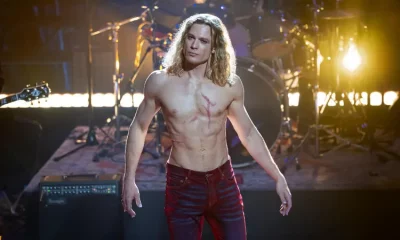 Television2 days ago
‘The Vampire Lestat’ heats up Pride Month with queer action
-
 National4 days ago
Blade reporters reflect on covering Pulse massacre 10 years ago
-
 Movies3 days ago
Gender-bending buddy film gets 4K restoration for 25th anniversary
-
 Events4 days ago
LA Blade and Best Man Matchmaking present free gay singles mixer for Pride
-

 Germany4 days ago
German group slams White House’s LGBTQ+ rights record ahead of World Cup
-
 Commentary4 days ago
Bridging the gap: Creating gender affirming care by us for us
-
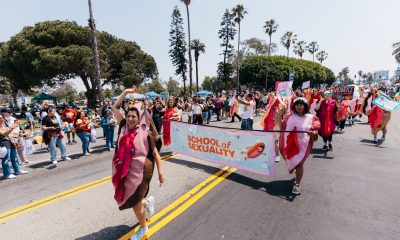 Features22 hours ago
School of Sexuality Project nonprofit hits the Pride parade circuit to normalize queer sexuality
-
 Books1 day ago
David Archuleta on Mormon faith, ‘Idol,’ more in new book