
Living
When giving, more than just the thought counts
This holiday season, support small LGBT-allied businesses
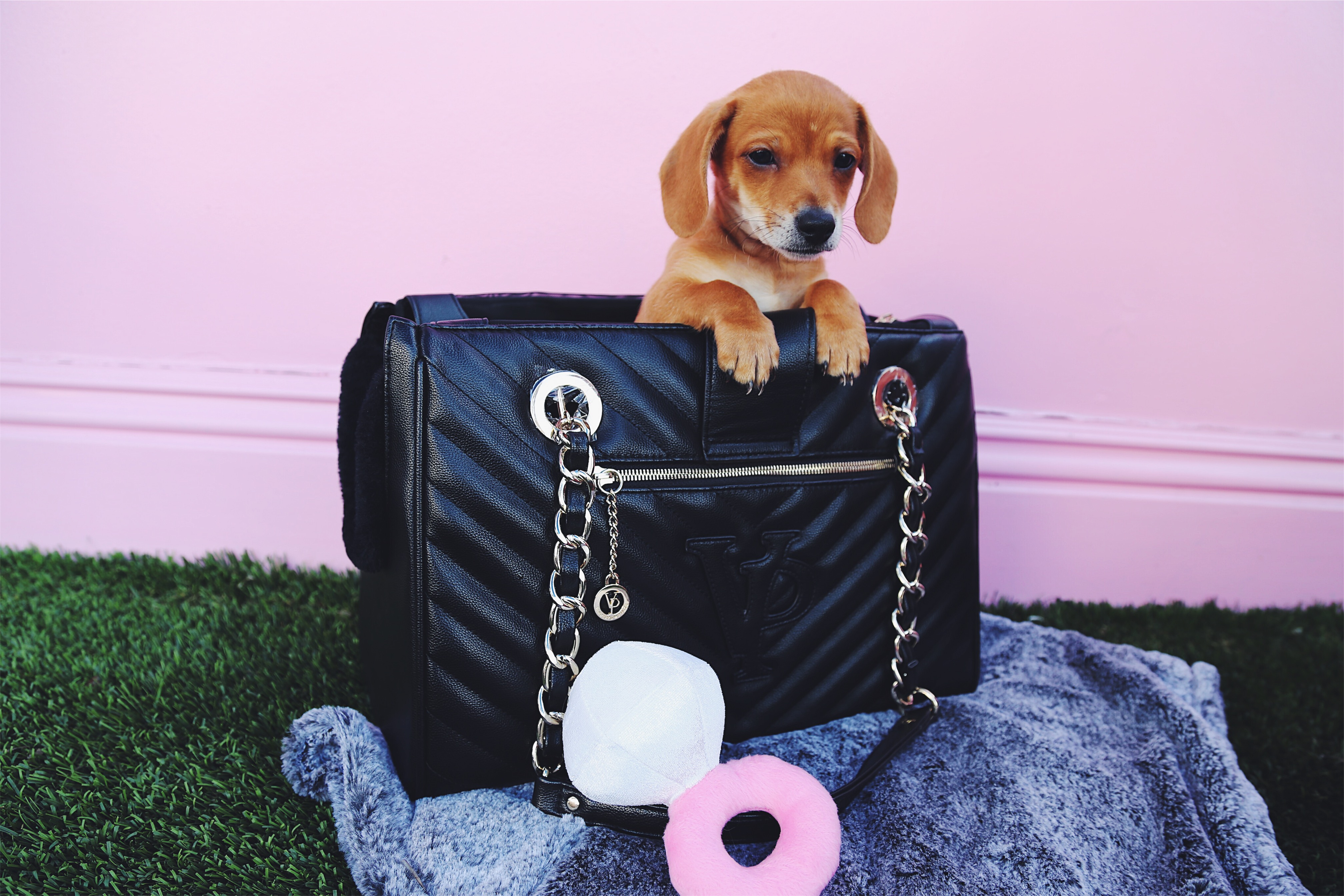
Lisa Vanderpump and Ken Todd’s local Los Angeles empire now includes one of the best dog boutiques in the world, located on the increasingly trendy West 3rd Street near Crescent Heights Boulevard in Beverly-Grove. It’s a rescue chic boutique for a cause.
In part one of the Los Angeles Blade’s Shopping Favorites, we focus on a mix of our favorite LGBT-owned or friendly merchants (both online and storefront), from charitable chic to the purely indulgent.
We encourage you to give without expecting to receive. And we also encourage you to donate money to the Los Angeles LGBT Center’s Homeless LGBT Youth Program at Highland.
Vanderpump Dogs
The gift that also gives back — Vanderpump Dogs is a chic dog rescue concept dedicated to creating a more humane world for dogs, while keeping them and their companions looking stylishly fabulous.
This glamorous storefront dog rescue and pet boutique is owned by Lisa Vanderpump, the British restaurateur, author, actress, and television personality
Best known for her role on the reality TV show, “Real Housewives of Beverly Hills.”
Offering grooming services and a gorgeous selection of niche brands, the brick and mortar was inspired by Gigi the Pom, Lisa Vanderpump’s own precious pup. Go in and #shopwithapurpose at LA’s most fabulous rescue center.
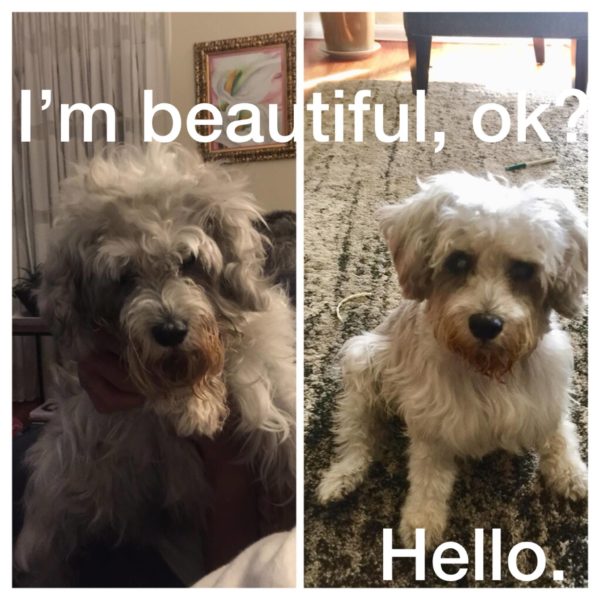
Lilly, 15, could not be bathed or cut due to a diabetic related series of infections, but once clear she dashed over to her favorite groomer at Vanderpump and got transformed. (Photo by Cody Masters)
Troy Masters, Los Angeles Blade publisher and former West Hollywood Mayor Lauren Meister are big fans and both get their dogs groomed there. “Vanderpump transformed our 15-year-old Lilly back into a puppy again,” said Masters.
If you visit, be prepared to fall in love with the dog of your dreams.
“What we’re trying to do is create more humane treatment for dogs worldwide,” Lisa Vanderpump told the Los Angeles Blade.
The store is located at 8134 W. 3rd St., Los Angeles. You can call 323-852-DOGS or visit vanderpumpdogs.com to make an appointment for your pooch’s grooming.

Pals Socks
Pals Socks is a company dedicated to “defeeting” bullies one foot at a time. Using mismatched socks to showcase how difference is cool, the line was created by a young L of LGBTQ living in Philly.
“I wouldn’t say that me being attracted to ladies made me launch this brand in particular. I just am a very empathetic person, and was also a kid who was ‘different,’” Lavon says.
“When I was younger I sometimes stuttered… I was weird, apparently. I want more kids to grow up being comfortable with people not exactly like them…I don’t like seeing all this hate, bigotry, fear of people not exactly like them. I’m just trying to put more positivity into this world and create something that can create positive social change, not just a simple novelty,” Lavon adds.
Pals encourage playful dialogue between two different friends — you don’t need to match to be best Pals. Our hashtag is #defeetthenorm
You can find Pal Socks in L.A. at stores such as: Books and Cookies, the Library Store, Dustmuffin, and Ron Robinson. Or just visit palssocks.com

NiK Kacy’s debut collection consists of five basic traditionally ‘masculine of center’ styles now created in a unisex sizing and proportion for all individuals. (Photo courtesy NiK Kacy)
Nik Kacy Footwear
NiK Kacy Footwear is a brand inspired by the fashion needs of both its founder and the larger LGBTQ community.
NiK Kacy says they designed the first collection to provide a solution to address the divide between shoe designs and the gender binary. Being unable to find shoes that fit their gender expression and their feet.
“I still feel the discomfort and embarrassment of being mis-gendered on a daily basis. Most people I come into contact with mis-gender me. I try to take the time to educate them about what non-binary means and how making assumptions about one’s gender is so archaic (not to mention politically incorrect and offensive),” Kacy says.
Their desire for gender equality extends beyond gender and features styles ranging from masculine, feminine, gender-neutral, to high-heels in a gender-equal size range from 34-47 (US women’s 3.5 to men’s 14). Subsequent releases include a unisex utility holster that is completely adjustable to fit all body spectrums.
Kacy’s hope for the holidays, under the current administration, is that they’re able to find a little piece of their souls and stop taking away the rights of so many deserving Americans.
“I’d like them to reverse most of the horrific decisions/changes they have made in the past 12 months… my Christmas wish this year, is to remove everyone in the administration related to or working for Trump and Pence and bring back BO [Barack Obama] and JB [Joe Biden]. I can wish for a miracle, can’t I,” Kacy says.
NiK Kacy is a Certified LGBT Business Enterprise. Visit the store online at nikkacy.com.

The ideal package is round and firm and it can easily be achieved with a quick visit to the new RounderBum on Santa Monica Boulevard. (Photo courtesy RounderBum)
RounderBum
RounderBum is hoping to change the world one pair of men´s undergarments at a time.
With a growing trend of men who take care of their appearance, RounderBum created a men’s line for those who want to look more attractive and athletic.
In comes RounderBum, offering men’s shapewear. From a patented designed padding to seamless and fusing manufacturing, the company looks to help every man feel more confident, and look more, ahem, masculine.
RounderBum’s signature padded technology uses hidden padding made of flexible polyurethane that conforms to every body shape, with hidden bands that lift and define the muscles with a subtle and discreet effect.
As retailer Andrew Christian, the famous men’s undergarment store, closes shop with plans to relocate to Downtown LA in January, the men of WeHo can rest assured that RounderBum is anxious to help showcase the goods.
No date has been set for the grand opening of the new flagship store at the northeast corner of San Vicente and Santa Monica Boulevard, located where American Apparel once ruled.
In the meantime, Larry Block’s Block Party is happy to be of service; Block Party carries some choice RounderBum gear.
RounderBum will be located at 802 North San Vicente Blvd., West Hollywood, and you can visit them online at rounderbum.com.
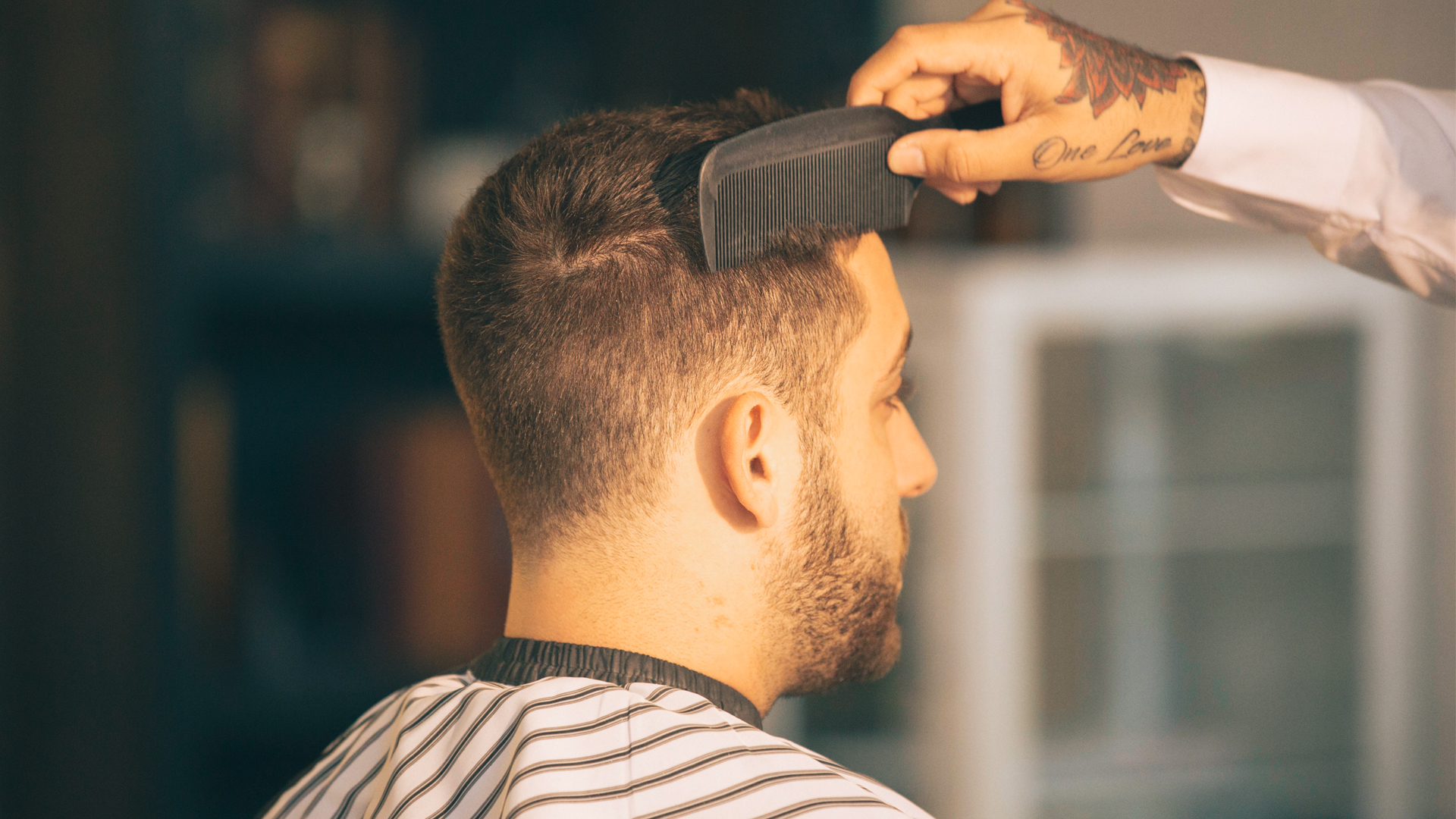
There’s an almost fetish art to grooming and Barber Surgeons Guild just off Santa Monica Boulevard delivers. Every WeHoan wants a little pampering, with an edge. (Photo courtesy Barber Surgeons Guild)
Barber Surgeons Guild
File this one away under the purely indulgent, but irresistible category.
Barber Surgeons Guild provides high-quality grooming products and services, combining grooming with advanced medical procedures, backed by Dr. Justin Rome, a plastic surgeon who runs and oversees the store.
BSG originates from the history of barber surgeons who were the medical and grooming experts throughout the Middle Ages.
BSG products are formulated by master barbers and an expert medical team; offering shampoos, conditioners, pomades, texture liniment and hair serums, each product is scientifically structured with an active ingredient to ensure hair is healthy, thick, stylish and strong.
In addition to the traditional barbershop experience, BSG also offers advanced hair therapies including hair regeneration. It’s artisanal grooming and a whole lot more.
Barber Surgeons Guild is located at 805 Larrabee St., West Hollywood. You can make an appointment by calling 310-975-7094. Or visit barbersurgeonsguild.com for more information.






Business
Minding more than our own business: Marquita Thomas dishes on queer entrepreneurship amping up for the LGBTQ Mega Mixer
California LGBTQ Chamber of Commerce’s Marquita Thomas is proving that queer connections have the power to raise empires
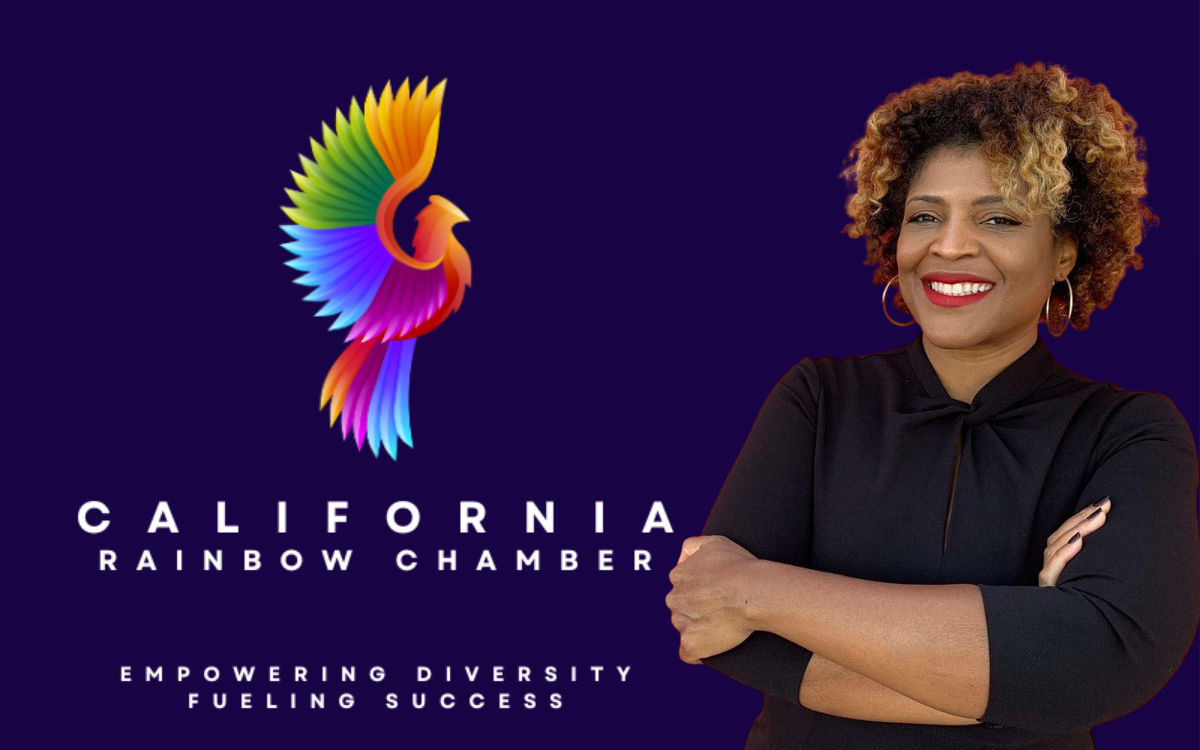
For over two decades, Marquita Thomas has been demonstrating that when queer entrepreneurs actually get a seat at the table, they have the opportunity to transform the economy. As the founding president and CEO of the California LGBTQ Chamber of Commerce, Thomas has made it her mission to make conversations about inclusion more than just conversations, assisting queer-owned businesses in accessing the funding they need and building wealth. Now, as the LGBTQ Mega Mixer celebrates its 10th Anniversary, Thomas is welcoming in the next generation of queer entrepreneurs.
On Wednesday, October 21st, the Networking Mega Mixer returns to the Sofitel Los Angeles and will be honoring the flawlessly fabulous Trixie Mattel with its Entrepreneurial Excellence award. Mattel, who will be joining the festivities to receive her award, embodies precisely what Thomas champions – the freedom and autonomy to create one’s own business empire while staying true to one’s authenticity in all of its glisteningly glittery glory. We had the chance to talk with Thomas about queer economic mobility and why the future of queer entrepreneurship deserves to thrive.
You have spent more than 20 years championing economic equity and entrepreneurship. What was your initial inspiration to dedicate your career to creating better opportunities for LGBTQ-owned businesses?
As someone who belongs to multiple diverse communities, I’m intimately aware of why this work is needed. My communities have been historically underutilized, and that has real economic consequences: less access to capital, fewer contracts, and fewer seats at the table. Repairing that damage takes investment in economic improvement. When LGBTQ entrepreneurs get access, they create jobs, build wealth, and strengthen their communities, and that is what has kept me in this work for more than 20 years.
What are some of the biggest challenges these entrepreneurs face today, and how is the Chamber helping them combat these challenges?
The big three are access to capital, access to contracts, and access to networks. Many LGBTQ-owned businesses don’t know that minority LGBT certification exists, or that corporations and public agencies have supplier diversity goals they’re actively trying to meet. At the California Rainbow Chamber, we close that gap with education, introductions to supplier diversity professionals, and events where relationships actually start. I also serve on the California Department of General Services Small Business Advisory Council and the California Department of Insurance Diversity Task Force, so what business owners tell me reaches the people who shape state procurement. We are also a partner organization for LASEC and LA28, which puts our members in front of major opportunities early.
This year’s LGBTQ Networking Mega Mixer celebrates 10 Years of Connections. Why are events like this so essential to fostering a more fortified LGBTQ+ business community?
Contracts and partnerships start with relationships, and relationships start in a room. Ten years of this mixer means ten years of introductions between LGBTQ business owners, corporate partners, and public agencies. For a community that has historically been left out of traditional networks, building our own is a business strategy. It’s also community economics: when LGBTQ business owners connect, they hire each other, buy from each other, and refer each other, so more dollars stay in our community and keep circulating. It also shows corporate and government partners that our community is organized, visible, and ready to do business.
What advice would you provide to a queer entrepreneur who is ready to blossom but doesn’t know how to get started with supplier diversity programs?
Build capacity so you’re ready for large-scale contracts. Everyone wants the big contract, but buyers need proof that you can do the work. That means having the insurance and bonding they require, strong infrastructure behind your business, and access to the capital to deliver before you get paid. Develop the relationships that help you scale, and make sure your foundation is solid before the opportunity arrives. I also recommend getting certified as an LGBT business. Certification gives you access to technical assistance and mentorship, and that support helps you build capacity. Be ready for what can be a long road. It won’t be long for everyone. I’ve heard of people landing contracts within 30 days of getting certified, but that isn’t everyone’s path, so prepare for the work, not just the win.
You’re also involved in supplier diversity efforts connected to the LA28 Olympic and Paralympic Games. How can such events foster lasting economic opportunities for queer-owned businesses and other underrepresented or marginalized entrepreneurs?
You’ve received recognition from organizations such as KCET and the Los Angeles LGBT Center. How do these honors reflect the collective work of the entrepreneurs and advocates you serve?
They belong to the community. Every honor reflects the business owners who trusted us, the members who showed up, and the partners who invested in this work. I’m grateful for the recognition, and I treat it as a responsibility to keep opening doors for the next group of entrepreneurs.
World-famous Queen Trixie Mattel is being recognized with the Entrepreneurial Excellence Award at this year’s LGBTQ Networking Mega Mixer. What does honoring such an iconic and inspirational member of our community mean to you?
Trixie is a model of what entrepreneurial excellence looks like. She turned a drag persona into a business empire and did it as herself. She founded Trixie Cosmetics and still runs it as CEO. She opened the Trixie Motel in Palm Springs with her partner, David Silver, and turned the renovation into a TV series. She is also co-owner of This Is It!, Wisconsin’s oldest gay bar, which she helped keep going when many small venues were closing. On top of that, she has built a following through her podcasts, YouTube channel, music, and a New York Times bestselling book. Every one of those ventures grew from the same brand and the same community, and each created jobs and revenue. Honoring her tells young LGBTQ+ people that they don’t have to choose between being authentic and being successful. It also reminds our community that entrepreneurship takes many forms, including entertainment, beauty, hospitality, and the arts.
What is it about the intersection of entertainment, networking, and business that makes it so powerful for bringing people together and raising the visibility of LGBTQ entrepreneurship?
In Los Angeles, entertainment is a business. It’s one of the industries that built this city, so it belongs in the room at a business event. That’s especially true at a venue like the Sofitel, which brings together the luxury of Beverly Hills, the entertainment pull of Los Angeles, and the creativity of West Hollywood, right next door. We would be remiss not to blend all of those elements. Entertainment also makes the networking better. It gives people a shared experience to talk about, and they remember the people who chose to be in the room with them. That memory is what turns a first conversation into a follow-up call, and then a partnership.
What’s your vision for the next decade of queer entrepreneurship in Los Angeles? What progress would you like to see and make happen in the near future?
In the near term, I want more LGBTQ-owned businesses certified, more of them in corporate and public supplier databases, and more of them winning contracts tied to the Super Bowl and LA28. I also want to see more LGBTQ people in the higher-spend categories, especially construction and infrastructure. There are billions of dollars of opportunity in those sectors, and our community is underrepresented there compared with other diverse groups. Many of those contracts require bonding, insurance, and capital, so we need to help LGBTQ entrepreneurs build the capacity to compete for them and bring more of our community into the trades and the businesses behind them. Over the next decade, I want those businesses to grow into employers with a seat wherever economic decisions are made. The goal is for an LGBTQ-owned supplier winning a major contract to be ordinary news, not a first.
Family
The new “chosen family”: Suzanne Bangis on building a family through third-party reproduction
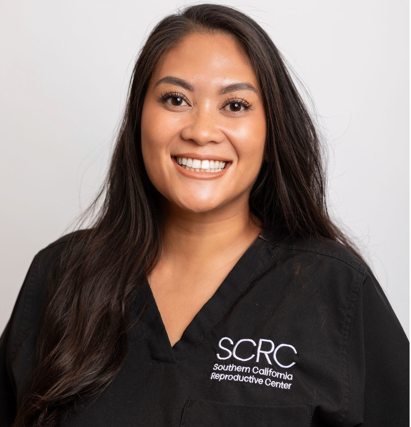
Suzanne Bangis, IVF Third Party Manager with Southern California Reproductive Center and ACRC Global, speaks on the legal, financial, and emotional questions aspiring parents may want to consider when exploring their journey toward parenthood
I can only imagine that for many folks who hope to become parents, the path is not as simple as it once was. Third-party reproduction involves fertility specialists, donors, carriers, lawyers, money, and, of course, a deep and honest emotional investment. LGBTQ+ aspiring parents may also face further legal and logistical challenges, making the decision that much more difficult.
Suzanne Bangis, IVF Third Party Manager with Southern California Reproductive Center and ACRC Global, assists aspiring parents in navigating this complex process. In our interview, Bangis provides insight into deciding on donors and carriers, managing the emotional and legal intricacies, and addressing the challenges that are specific to those in our LGBTQ+ community who’d like to start a family. Bangis also considers how assisted reproduction compares with alternatives like fostering and adoption because, while there may be no single path to creating a family, there are important questions to ask before choosing one.
For folks who are beginning to consider exploring third-party reproduction, where would you advise them to start their journey and what are some of the preliminary decisions that they’ll confront?
Step away from the 2 a.m. donor-profile doomscroll. Every hit movie starts with a crew, so begin by hiring three key players: a fertility doctor (your screenwriter), an egg donor agency and a surrogacy agency (your casting directors, though some clinics can handle casting in-house), and a reproductive lawyer (because “we’ll figure out the paperwork later” is how horror movies start). Then it’s casting season. Known or unknown egg donor? Fresh or frozen eggs? Indie budget or summer blockbuster? Make the big calls early, while you still have snacks and patience.
Third-party reproduction involves many parties, including egg donors, carriers, fertility specialists, attorneys, and of course, agencies. Can you shed some light on how to effectively navigate the multiple conversations and how they all fit together in the end?
Picture a group chat with a doctor, two agencies, a lawyer, an egg donor, and a gestational carrier. Now picture someone muting it so you don’t lose your mind. That someone is your agency, with help from your clinic, aka the directors.
The production schedule goes like this:
- Meet your fertility doctor. They map out the medical plan.
- Cast your egg donor. Bring your wish list and find your match.
- Get the egg donor process rolling. Screen tests, contracts, and then retrieval.
- Cast your gestational carrier. Then repeat the screen tests and contracts.
- Make the movie. Embryo transfer, pregnancy, and the big premiere.
And the golden rule for every step is this: no contract, no hormone shots, no exceptions.
Your egg donor agency, your surrogacy agency, and your clinic should be guiding you from the opening scene until the moment that baby is in your arms.
For folks considering an egg donor, what are some important things to consider outside of medical history and phenotypic background?
This isn’t a dating app. Swipe past the cheekbones and read the fine print. Is she open to future contact if your kid comes knocking at 18 with a DNA test and questions? Has she donated before, and did those cycles go well? What’s her “why”? Is her profile written by someone you’d happily grab coffee with? Your child will someday ask, “So who was she?” You want an answer that makes you smile.
I can only imagine that there are also emotional considerations when it comes to trusting and working with another person who is carrying the child you’d like to add to your own family. How do the people on your team assist aspiring parents in navigating these feelings?
Letting someone else carry your baby is the ultimate trust fall, except it lasts nine months and comes with a lot of ultrasounds. It all starts with reading her profile. I always tell my intended parents, “You’ll just know.” When you find the right one, something clicks, and you’ll know this is the woman you want carrying your future child.
Before matching, we make sure everyone is on the same page. How often will you text? Who will be in the delivery room? What happens if things don’t go to plan? The match meeting is like a first date, just with a lot more paperwork.
Here’s the plot twist: some of the things that feel huge at the start turn out to matter a lot less than you’d think. What really matters is trust and support. If you trust this woman and feel supported by her, and she feels supported by you, the rest falls into place.
Throughout the pregnancy, your team stays on speed dial for all the “Is it weird that I’m anxious about her eating sushi?” moments. Spoiler alert: many dads and their carriers end up as lifelong friends.
For LGBTQ+ folks, reproductive rights and access to family-building rights are increasingly politicized. What kind of talks are you engaging in with aspiring parents of the LGBTQ+ community regarding the current legal landscape and the very real possibility that laws and protections can change overnight?
I always recommend talking with a reproductive lawyer early. Think of them as the script supervisor who catches the plot holes before the cameras roll. You’ll get a ton of valuable information before you move forward.
Laws vary from state to state, and they can get tricky fast. That’s the kind of plot twist you want to sort out in pre-production, not once your carrier is already pregnant. Get the legal pieces in place first, and you can enjoy the rest of the show.
Are there any specific challenges that you’ve seen LGBTQ+ aspiring parents still face in fertility care?
The sequel nobody asked for: the price tag, since two dads usually need both an egg donor and a carrier. Then there’s insurance, where some policies define infertility in ways that leave same-sex couples out. The non-genetic dad sometimes has to fight for legal recognition, too.
Adoption is also an alternative to assisted reproduction, particularly when people voice concerns about the ethics or environmental implications of bringing another child into an already crowded world where our species can be seen as the main threat to it. How do you respond when someone is struggling with weighing their options with this in mind?
Both paths are valid, and neither one is the “easy” version. Adoption isn’t a simple swap. It’s its own journey, centered on a child who needs a family.
I’m upfront with my intended parents: my expertise is in egg donation and surrogacy, so that’s the movie I know how to help produce. If adoption feels like the right fit, I’ll happily point you toward people who specialize in it. There’s no wrong door here.
There are also ethical questions that arise when discussing the commercialization of reproduction, particularly when money is involved in egg donation or gestational carrying. How does the industry find balance in assisting aspiring parents build families while ensuring that these other parties involved in the process are protected and treated ethically?
When it comes to ethics, good programs treat everyone on set fairly. Most give donors and carriers thorough screening, real informed consent, and their own independent lawyer, paid for by you, the intended parents. Compensation follows professional guidelines, like those from the American Society for Reproductive Medicine (ASRM). There are limits on how many times someone can donate, escrow accounts to keep payments secure, and insurance for carriers.
And the most important rule? Find a carrier who’s committed to following the medical guidelines and the agreements you made together for the pregnancy. When everyone respects the script you wrote as a team, the whole production runs smoothly.
What would you wish more people understood about the women who become egg donors and carriers? Their motivations, autonomy, and the weight of the decision that they are making?
They’re not just carrying a baby; they’re superheroes with very good reasons. Many carriers are moms who loved being pregnant (yes, those people exist!) and want to share that joy with another family. Many donors have watched someone they love struggle with infertility. Money is part of the picture too, and that’s perfectly fine. Kindness and fair pay can absolutely share a scene. These women sign up for shots, scans, and procedures, and in a carrier’s case, nine months plus a delivery. They deserve a standing ovation.
For any potential reader out there who may be thinking of becoming a parent and have absolutely no idea where to begin that journey, what words would you like them to hear?
Congratulations, you’re exactly where every parent starts! My best advice? Research, research, research. And ASK THE QUESTIONS! No question is too small or too silly, and you’ll never regret asking. Expect bloopers, plot twists, and maybe a reshoot or two. But the premiere, when that tiny person grabs your finger for the first time, will be the best thing you ever make.
Lights, camera, Dad!
Dining
LGBTQ+ friendly bar El Condor will close its doors after a decade of community
This Silverlake fixture ends its residence with queer celebrations and theater

Queer denizens across Silverlake were gutted when it was recently announced that El Condor, a local bar and LGBTQ+ hub, would be shutting its doors at the end of October 2026.
It’s not the first time this space has undergone massive change. Starting out as El Conquistador in 1973, the bar has faced many evolutions as its owners have struggled to keep up with LA’s constantly rising property costs. But no matter its name or aesthetic, two things have remained true about this venue: it’s Latinx-owned, and it’s queer-led. With its welcoming ambience, two floors, and boho decor, this building has always served as a cultural center for Silverlake residents. Sadly, this didn’t stop the original owners from having to sell the space in 2013 due to high rent — a situation that Dustin Lancaster, El Condor’s current owner, is facing now.
“A lot of people call it gentrification,” said Lancaster, speaking with the LA Blade. “When neighborhoods get popular, you have the artists come in, and then the sort of yuppies and stuff like that. As buildings, commercial spaces, and homes are bought and sold, those prices just come up. And for a lot of the working people, it becomes unsustainable.” It’s what forced the owner and his team to give up El Condor’s current lease. They recently announced that this meant they’d be forced to vacate on November 1st, with the bar’s many local supporters expressing how horrible it will be to lose this community fixture. “The outpouring of love from the community when we announced we were closing has been astonishing, and really, it’s so, so impactful to feel that this restaurant and bar have meant so much.”
Recognizing the immense love people have for this bar, Dustin has decided to spend El Condor’s last few months hosting events for patrons to enjoy. These range from themed happy hours to local musical revues, to an upcoming Halloween party that will end their residency with a bang. But it was a recent show hosted at the bar that really stood out: Fool in the Pool. Created by, starring, and hosted by Edward Kiniry-Ostro, this funny, deeply upsetting avant-garde show spotlights the many issues faced by LA residents like Lancaster today — and how, even in the face of this adversity, there’s always a chance for them to thrive.
While he’s featured in dozens of shows across his long career, most Gen Z folks will recognize Kiniry-Ostro from his appearances on the Nickelodeon series Zoey 101. The actor guest-starred on this hit show, joining the network during one of its most successful eras…and, as we’d learn decades later, one of its most horrific.
“I spent 6 months researching before I felt comfortable enough to start creating this story,” explained Edward. “I did a lot of research on child actors, on PTSD, and on sexual assault survivors.” It was, unfortunately, a very relevant study for Fool in the Pool; the show follows a washed-up child actor still reeling from the sexual and mental abuse he suffered on the set of a kids’ TV program. Mirroring the many real cases of abuse faced by Edward’s peers on early 2000s Nickelodeon, it mixes dark humor and psychological trauma to highlight Hollywood’s habit of disregarding its vulnerable members while uplifting their abusers.
El Condor was grateful to host Fool in the Pool, with the LA Blade attending its final performance to learn why it’s been one of the bar’s most talked-about runs ever. This showed our team that the production wasn’t just a theatrical marvel, but also, somehow, a celebration of the bar that has meant so much to so many.
Because Fool in the Pool goes beyond just using El Condor as a hosting space. The story physically traverses across its two stories and uses its many unique features — including a sunroom and a picturesque staircase — to tell this complex narrative. Lancaster raved about how it spotlights the physical splendor of El Condor, saying, “I love finding an opportunity to activate the space in a different way than what it was naturally set up for. [Fool in the Pool] is really interactive, you know…the space sort of becomes its own character in the show, which is really kind of special and unique.”
Beyond just physical, though, Fool in the Pool is fitting as one of El Condor’s final shows because its distressing themes mirror the bar’s own experience. It emphasizes how the entertainment industry — and, by extension, Los Angeles — will callously use people before throwing them away when they no longer make a profit. It’s a treatment mirrored by how current LA landlords treat tenants, with the stark pricing of Silverlake property pushing El Condor out despite serving as a constant resource for thousands in this city.
But, along with this hardship, the show also packages a shockingly positive message: you can always get back your control. It may be immensely difficult, but there are ways to regain your autonomy and thrive in spite of the many people calculating your downfall. It’s an important message for all, and it’s one that guides the El Condor team as they enter this next phase of their business.
Dustin assures El Condor’s many supporters that while they may be losing the space, this bar and all that it represents will persist. “I can say that the goal is to have it live on in a different space — but it will certainly be in Silver Lake,” he affirmed. “It has to remain in the neighborhood. By the time we get to October 31st, we should be able to announce where the next location is, and where people can continue to support and love the space that they’ve loved for the last 52 years.”
In the meantime, he urges folks to come out and support the bar in whatever way they can. Whether it’s stopping by for a drink or attending one of its great events, the team wants to spend these final months in celebration rather than mourning. Because, as Fool in the Pool makes clear, local community members have the power to keep wonderful resources like El Condor alive. And by supporting this bar and whatever version of it comes next, queer folks across Silverlake will be making sure that people in this neighborhood and beyond will always have an LGBTQ+, Latinx space where they can feel welcomed.
For more information, visit ElCondorLA.com.

character? This summer, the average new-vehicle price hit $49,758—basically $50,000 with a little lipstick on it. That makes the Kia K4 hatchback and Nissan Kicks especially refreshing. Neither requires a second mortgage, a trust fund or a makeover to look good. And both prove you can still buy a new vehicle without selling your soul — or your vacation plans.
KIA K4 HATCHBACK
$25,000
Mpg: 28 city/34 highway
0 to 60 mph: 9.1 seconds
Cargo space: 22.2 cu. ft.
PROS: Edgy exterior. Roomy interior. User-friendly controls.
CONS: So-so base engine. Pricy turbo. No all-wheel drive.
WHAT’S NEW: Basically everything. The K4 hatchback debuted earlier this year, joining the K4 sedan.
Kia’s stylish five-door K4 boasts three trim levels. The first two use a capable four-cylinder engine, while the top-of-the-line model comes with a turbo.
That turbo provides some genuine zip, though it won’t blow your socks off. Think Janelle Monáe in a tailored suit, not Brad Pitt arriving at the F1 racetrack in a fireproof jumpsuit.
The real star, though, is the design. Sleek. Upscale. A tad mysterious.
Inside, another surprise: vast legroom and storage. Fold the backseats and you can toss in the usual road-trip clutter, plus that regrettable piece of furniture you bought after watching one too many HGTV shows.
Technology is also a bonus, including a digital key that lets you use a smartphone or smartwatch as a direct key fob. You can even share this digital key with friends or family. Just don’t share it with anyone who often loses their actual keys.
Despite some SUV vibes, the K4 remains unapologetically car-like. It sits lower. Feels more conventional. And offers hatchback practicality without itching to conquer the Rockies.
The biggest downside? No all-wheel drive.
Still, for shoppers who crave style, space and gadgetry, the K4 won’t break the bank. To me, it’s like finding a designer jacket at a thrift shop.
NISSAN KICKS
$23,000
Mpg: 28 city/35 highway
0 to 60 mph: 8.9 seconds
Cargo space: 23.9 cubic feet
PROS: Dashing design. Safety gear galore. All-wheel drive.
CONS: Bit pokey. Noisy engine. Limited rear visibility.
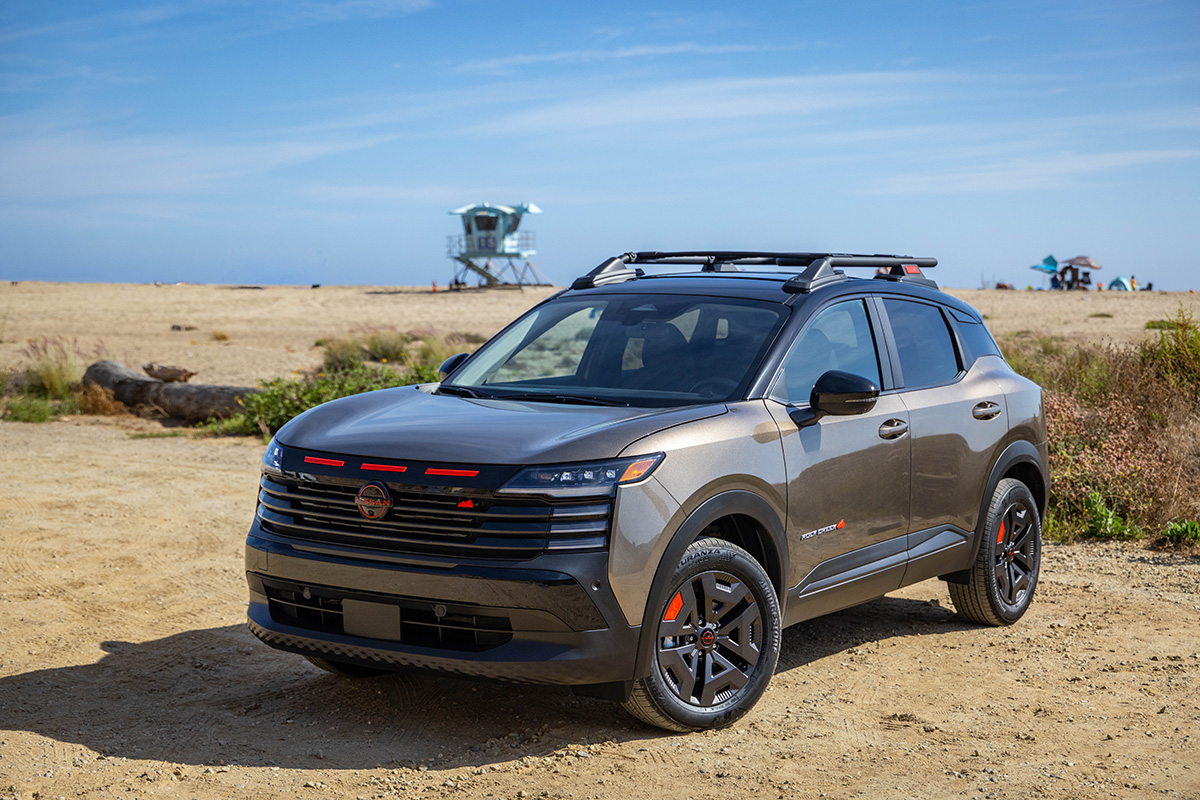
WHAT’S NEW: Redesigned last year with a bit more power, bigger cabin and bold looks, Nissan leaves the winning formula alone.
Like the Kia K4, the Nissan Kicks comes in three trims levels. But it also includes all-wheel drive — a nice plus when navigating snow, sleet or cratered alleys.
There’s an extensive suite of active and passive safety features. And the high ground clearance improves driver visibility, which is somewhat hindered in the back by thick roof pillars.
Styling is tastefully flamboyant. Dramatic lighting. Two-tone finishes. Cheerful, without being cartoonish. Miranda Priestly would approve.
Power, though, is more akin to Miranda’s art director Nigel Kipling. Dependable. Functional. Just not enthusiastic.
Inside, the mod cabin has large 12.3-inch displays, wireless smartphone connectivity and charging, and “zero gravity seats” designed to reduce driver fatigue and stiffness. Add in the stunning Bose Personal Plus audio system, with 10 speakers—including those integrated into the headrests—for an immersive 360-degree sound experience.
The Kicks doesn’t try to be rugged or luxurious. It simply offers a lot of everyday usefulness in a small package.
There is a trade-off. The engine gets noisy when pushed, and there are sportier (often pricier) competitors. But that’s hardly a crime. Not every vehicle needs to perform catwalk struts down the street.
Business
Opening doors: Caio Buchalla & Dan Cafiero on building OVE and community
Caio Buchalla and Dan Cafiero on building OVE, creating meaningful connections, and why the secret to entrepreneurial success is all about our community
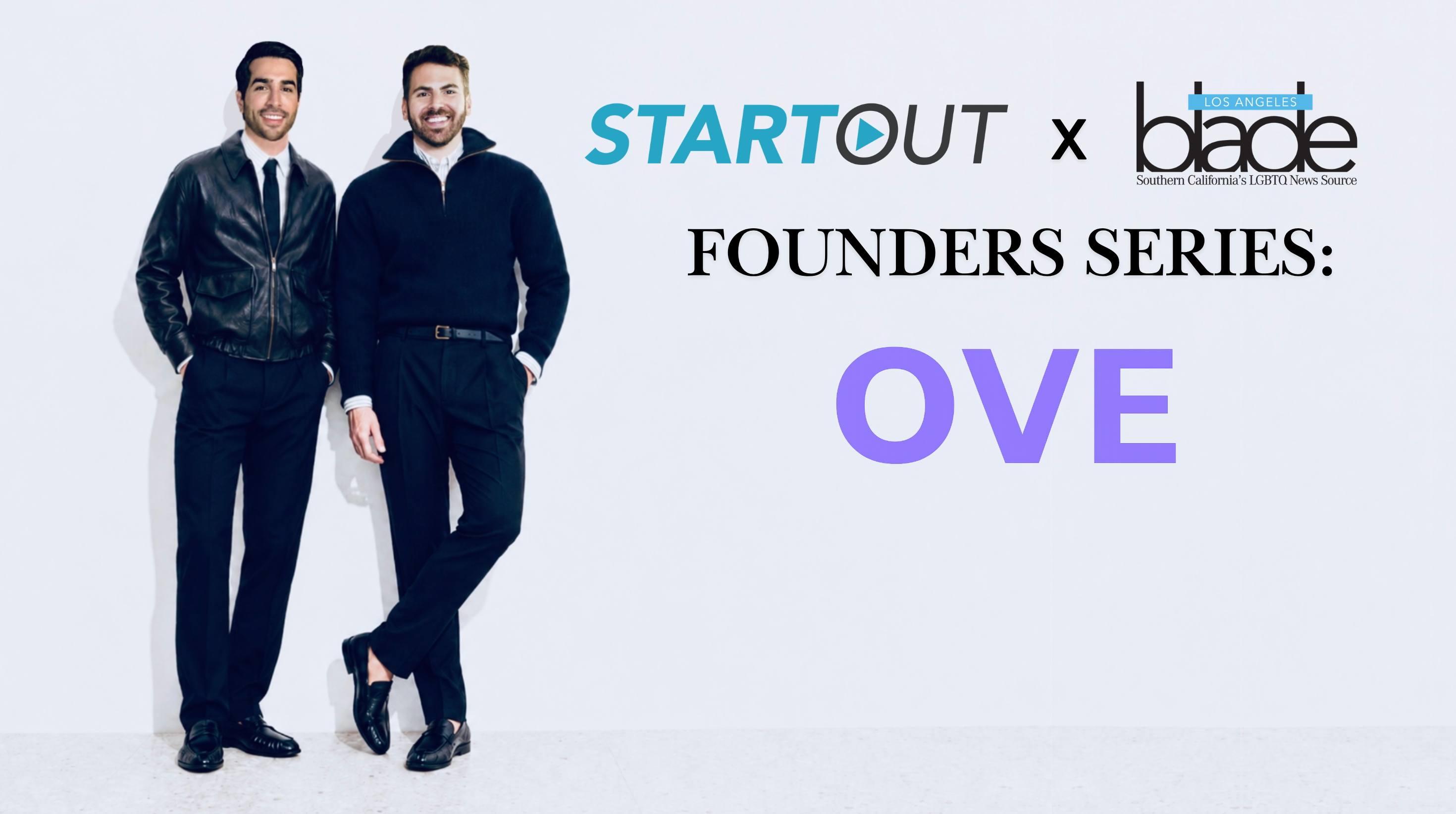
Some partnerships are built over matcha lattes while others are built over a mutual belief that the world could work just a little better. Enter Caio Buchalla and Dan Cafiero. As co-founders of OVE, they’re reimagining transactions while their roles as Co-Chairs of StartOut Los Angeles have them rethinking something equally important: how founders connect with the folks in our LGBTQ+ community that can help turn ideas into realities. Simply put, Buchalla and Cafiero are building a company while building the room in which the next generation of companies can be built.
This dual mission is no accident. From the start, Buchalla and Cafiero viewed StartOut as an intentional facet of OVE’s growth strategy and a way to build the community that every ambitious startup needs. Their story is a reminder that entrepreneurship is no solo endeavor. Sometimes the smartest thing a founder can build is a community around them. We caught up with Buchalla and Cafiero to talk OVE, StartOut, the evolving Los Angeles startup scene, and why bringing the right people into the same room can be just as meaningful as the product itself.
For those of our readers who may be new to StartOut, how would you describe its mission, and why is it such a significant organization for LGBTQ+ entrepreneurs?
StartOut’s mission is to help LGBTQ+ founders build successful companies by expanding access to mentors, investors, education, and community. For us, it’s about creating opportunities by opening doors to relationships and conversations that can change the trajectory of a company. As a nonprofit, StartOut brings together high-caliber partners like JPMorgan, Morgan Stanley, Gaingels, Holland & Knight, Passes, and many others, creating environments where those opportunities can happen.
When Daniel and I became co-chairs of StartOut Los Angeles in early 2025, we spent our first year understanding what was missing in the city’s startup ecosystem and how StartOut could create the greatest impact. In 2026, we put that vision into action by launching the year’s first event, StartOut Connect at The West Hollywood EDITION – a networking event designed to bring founders, investors, advisors, and community leaders together to create meaningful connections and new opportunities.
The response exceeded our expectations. Founders told us they had been waiting for exactly that kind of community, sponsors immediately scheduled follow-up meetings, and new partners wanted to get involved. That’s when it clicked: these aren’t just networking events. They’re catalysts that turn introductions into relationships and relationships into opportunities. That’s why StartOut matters.
You both wear multiple hats as the founders of OVE and StartOut co-chairs. How do these multiple roles influence and impact each other?
They reinforce each other because both roles are ultimately about creating opportunities. As founders of OVE, we’re building, solving problems, raising capital, and turning a vision into reality. As StartOut LA co-chairs, we’re creating a space where founders, investors, advisors, and community leaders can build meaningful connections.
One of the biggest advantages is that we’re founders ourselves. We know firsthand what our audience is looking for. We’re not showing up just to network; we’re looking for the right introductions, conversations, and opportunities. That perspective helps us design experiences that are intentional and valuable. Every event we organize shapes our reputation as founders, consistently bringing people together, following through, and delivering on what we promise demonstrates execution, and that’s what investors ultimately back. So it works both ways.
Our experience building OVE helps us create better opportunities for the StartOut community. And our work with StartOut strengthens our credibility as founders who can lead, execute, and bring people together. What started as a strategic decision has evolved into something much more meaningful. Today, we’re not only building our own company, but we’re helping to build a community where more founders have a greater chance to succeed.
What was the inspiration behind creating OVE? What issues were you motivated to address?
The inspiration behind OVE came from a really ordinary moment. After a morning run in San Francisco, near the Golden Gate Bridge, I stopped to get coconut water, but couldn’t pay because I didn’t have my wallet or phone. The situation stuck with me, and I thought, why am I dependent on carrying a device just to prove who I am or make a payment?
When I shared this with Daniel, we realized this wasn’t just about making another access, authorization or payment method. It was about rethinking how people can do all three simultaneously, easier and safer to authenticate and transact in general. So what started as a question about convenience turned into building an infrastructure that makes payments more seamless, secure, and flexible across methods. And honestly, one of the reactions we hear most often is, wait, how does this not already exist? That’s usually a good sign we’re on to something with real potential.
How did your involvement with StartOut directly influence the growth of OVE?
Our involvement with StartOut gave OVE what every early-stage founder needs: opportunity. It expanded our access to investors, advisors, and peers who challenge and support us. By creating opportunities for other founders, we also created opportunities for ourselves. That network and credibility helped OVE grow and reinforced a core belief: community and company-building fuel each other, and opportunity grows when you invest in both.
With Los Angeles increasingly becoming its own thriving startup ecosystem, what makes it a particularly appropriate city for LGBTQ+ founders to begin their own companies?
Los Angeles is one of the most creative cities in the world. It’s full of artists, builders, entrepreneurs, and innovators. What we noticed is that a lot of that creative talent isn’t always dialed into the local business ecosystem that helps turn ideas, brands, creators and more into a scalable company.
Creativity is everywhere here, but building a business also takes access to investors, advisors, and peers who’ve done it before. So that’s where we believe StartOut adds tremendous value to the community of LA builders, creators, founders, etc. We’re bringing those worlds together. One room at a time. Connecting creators with capital, mentorship, and opportunities that help transform ideas into real businesses. Los Angeles doesn’t need more creators; it needs the ability for them to convert into founders/creators in order to monetize their brand, image, and recognition.
What are some of the advantages, disadvantages, or surprises about creating a company together?
One of our biggest strengths is that we’re very different, and we’ve learned to treat that as an advantage rather than a challenge. I’m naturally more product and design focused. I like building systems, thinking strategically, and shaping the product.
Dan is more charismatic, outgoing, and exceptional at building relationships. He’s great at connecting with people and opening doors that lead to investors, advisors, partnerships, and friendships. Because our strengths are so complementary, we’ve never felt the need to compete for the same role. Instead, we trust each other’s judgment and give each other the space to lead where we add the most value. We’ve developed a simple decision-making rhythm that really works for us. If we both say yes, we move forward. If there’s no alignment, we slow down, recalibrate by asking more questions, and optimize based on the strategy and decision so we are aligned. That keeps the focus on making the right decision rather than winning an argument.
So, what started as a strategic choice has turned into a real operating system between us.
What patterns stand out to you most amongst LGBTQ+ founders today that give you optimism for our community?
What gives us optimism is the resilience we see in so many LGBTQ+ founders. In our experience, many have spent part of their lives trying to prove themselves, growing up feeling different, wanting to be accepted, and worrying about being judged. That can push people to work incredibly hard and to develop creativity, empathy, and a different way of seeing the world. We think that’s one reason so many LGBTQ+ entrepreneurs build companies differently. They’re solving problems through a perspective shaped by their own experiences. And what makes us even more optimistic is that this resilience doesn’t stop with individual success.
Through StartOut, we’ve seen founders generously help others along the way, sharing contacts, mentorship, opportunities. When people who’ve had to overcome challenges invest in others, the whole ecosystem gets stronger. And that’s what gives us confidence in the future of our community. Watching people turn challenges into strengths and then use those strengths to lift others. That’s incredibly inspiring.
What obstacles still exist for LGBTQ+ entrepreneurs, and what changes still need to happen?
What gives us the most optimism is the resilience we see in so many LGBTQ+ founders. In our experience, many have spent part of their lives trying to prove themselves, growing up feeling different, wanting to be accepted, worrying about being judged. That can push people to work incredibly hard and to develop creativity, empathy, and a different way of seeing the world. We think that’s one reason so many LGBTQ+ entrepreneurs build companies differently. They’re solving problems through a perspective shaped by their own experiences. And what makes us even more optimistic is that this resilience doesn’t stop with individual success.
Through StartOut, we’ve seen founders generously help others along the way, sharing contacts, mentorship, opportunities. When people who’ve had to overcome challenges invest in others, the whole ecosystem gets stronger. And that’s what gives us confidence in the future of our community. Watching people turn challenges into strengths and then use those strengths to lift others. That’s incredibly inspiring.
Speaking from your own experience, why should LGBTQ+ entrepreneurs consider becoming part of the StartOut community?
Because entrepreneurship can be incredibly lonely. Building a company means hearing “no” far more often than “yes.” Having a community of founders who understand that journey makes an enormous difference.
StartOut won’t build your company for you. What it will do is dramatically increase the number of opportunities you have to build it yourself. You’ll meet founders who’ve already solved problems you’re facing today. You’ll find mentors, investors, and people willing to share experiences that can save you months or years of learning.
If you’re serious about building a scalable company, surrounding yourself with the right people isn’t optional. It’s one of the smartest investments you can make. For us, joining StartOut became one of the best investments we made, not because someone handed us opportunities, but because it put us in the right environment to create them.
Time for words of wisdom. If you could give some advice to an LGBTQ+ founder who is just beginning their entrepreneurial journey, what would it be?
What I’ve seen as a founder and an investor is that even very clever products fail if they don’t start in a niche with real demand. You can believe in the potential to scale later, but if you try to go too broad too soon, you burn time and energy chasing customers who aren’t convinced. So the practical move is to choose one beachhead, one user type with one painful problem to solve. Build around that until adoption is repeatable and ready for expansion.
Secondly, you need to create opportunities. Don’t wait for them. When we landed in LA, we didn’t wait for that perfect ecosystem to appear. We helped build it. We stepped into roles, organized events, reached out to people, and created momentum. Opportunities usually show up for founders who make them. Not for founders who wait. So focus on what matters (community building), create the runway by developing the ecosystem you need, one conversation and partnership at a time.
Looking at the future, what’s next for OVE, and what do you find most exciting about the company’s future?
Our long-term vision is for OVE to become ubiquitous. The kind of technology you never have to think about, because it just works. That’s the future we’re building, one where any form of value- cards, ACH, stablecoins, crypto, and even methods that don’t exist yet, flows through one simple touch.
What excites us most is how we’re approaching it. We’re building a bridge that connects point-of-sale systems, processors, and payment rails old and new. Merchants keep what works, and people can use whatever options they want. And if, one day, people say “Just OVE it,” as naturally as they say, “Google it,” or, “Venmo me,” that won’t just mean we’ve built a successful company. It’ll mean we’ve become part of everyday life.
OVE is freedom at your fingertips.
For more information, head to www.OVEtouchngo.com
Food
The love story of the bug, the bear, and cannolis
Los Angeles couple Matt Wilson & Joe Serpico take their love of Italian confections to West Hollywood and the world
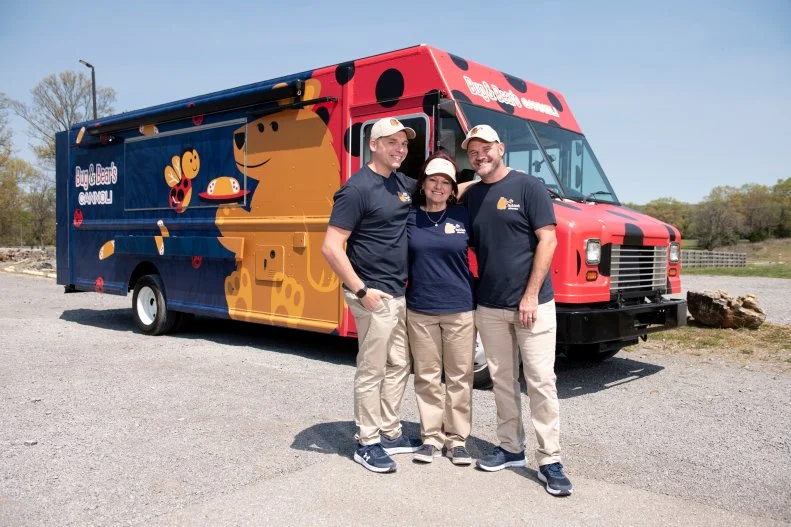
When you think of the gay men of West Hollywood, your first thought might not be dessert.
Matt Wilson and Joe Serpico want to change that. Their business, Bug & Bear’s Cannoli, is bringing Italian confections made with love to Los Angeles.
Named after the husbands’ nicknames for each other, they’re planning to bring their farmer’s market favorites to their “pop n’ pop” owned brick-and-mortar cafè in West Hollywood (7990-7992 Santa Monica Blvd).
They’re also one of eight teams competing on Season 19 of Food Network’s The Great Food Truck Race, hosted by Tyler Florence, on Food Network and HBO Max. The couple will compete for $50,000 on this season’s savory vs. sweet battle.
The brand is built on the couple’s love story and family recipes passed down for seven generations from Joe’s Sicilian great-grandmother. They have a memorable cannoli trailer you may have seen at WeHo Pride, which was designed by the legendary mid-century artist SHAG.
Their cafe was also designed by SHAG with glowing paw-print floors, a mossy canopy, and a ceiling that shifts from daytime sky at the entrance to dusk in the back. Their menu will feature their heirloom cannoli, fried lasagna, zeppole, pizza roll calzones, espresso and matcha drinks, cannoli-making classes, and even wine & beer after 8 pm.
The couple took some time to talk to the LA Blade about their business, relationship, and queer representation on reality television.
So much of your brand is about your relationship; how did you two meet?
Matt: I went to a local bar on a Monday night to play pool, and Joe was sitting across the room. The second I saw him, I froze. I remember thinking, “That’s the most handsome man I’ve ever seen.” I worked up the courage to walk over and say hello… then completely chickened out and went back to my pool table. A few minutes later, Joe turned around and looked at me, and my arm shot straight up into what I can only describe as a really dorky Forrest Gump “Lieutenant Dan!” wave.
Joe: He still doesn’t live that wave down. I was actually there waiting for a date, and this random guy across the bar throws up this frantic wave like he’s flagging down a plane. I couldn’t help but laugh. It broke the ice before we’d even spoken a word.
Matt: That gave me the courage to walk back over. We started talking, and that’s when I found out he was waiting for someone else. I figured I had nothing to lose, so I gave him my number, started walking away, then turned back and asked, “Can I kiss you?”
Joe: We kissed, he walked out, and my actual date showed up a few minutes later. I’ll be honest — I spent the whole date thinking about Matt. Not long after, I got up and left.
Matt: The very next night we had our first official date at Casa Vega. We’ve been together every day since.
Joe: Looking back, it’s amazing that one awkward wave, one kiss, and one leap of faith led to a life together, Bug & Bear, and everything that’s happened since.
Your company is the nicknames you have for each other; where did those come from?
Joe: I’ve called Matt “Love Bug” since the very beginning of our relationship. What I didn’t know at the time was that his mom used to call him that when he was growing up — nobody had called him that since he was a kid. The first time I said it, something just clicked for both of us.
Matt: I remember thinking, “I’m going to marry this man.” I’ve always called Joe “Baby Bear.” It just fit him perfectly. Over time, “Love Bug” naturally became “Bug,” and “Baby Bear” became “Bear.”
Joe: When we started the business, we never even considered another name. Bug & Bear wasn’t something we came up with for branding — it was already who we were. The business simply became an extension of our relationship.
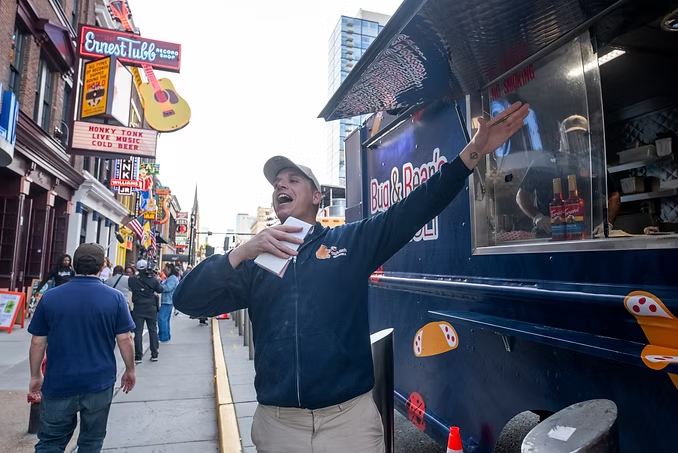
Speaking of your relationship, what is it like working together?
Matt: People ask us that all the time! We spend almost every waking hour together, and we genuinely love it.
Joe: We’re very different in the best ways. I handle a lot of the finance and operations side; Matt leads on brand and story, and we’ve learned to trust each other completely in our lanes. Building Bug & Bear together has made our relationship stronger, because we’ve had to learn how to communicate through the stressful moments just as much as the exciting ones.
Matt: At the end of the day, we still make each other laugh, and I think that’s incredibly important.
Speaking of important things, why are cannolis important to you?
Matt: Cannolis represent home to us. They’re more than a dessert — they’re how Joe’s Sicilian family showed love, and when he taught me his great-grandmother’s recipe, it became something we could build a life around together.
Joe: Every cannoli we make is a reminder that food has a way of bringing people together, no matter where they come from. We always say we’re not really in the cannoli business — we’re in the business of creating moments and memories.
Can you tell me a bit more about your great-grandmother?
Joe: The recipe comes from my Sicilian great-grandmother, and honoring that has always mattered to us. We haven’t tried to reinvent it, because it’s already incredible. Instead, we built a brand around respecting that tradition while giving ourselves permission to have fun with flavors and presentation.
Matt: That’s why we like to say we’re “Traditionally Untraditional.” We want people to experience something rooted in family history while still feeling fresh, creative, and uniquely Los Angeles.
Any secrets for good Italian cooking for LA residents?
Joe: Don’t rush it. Whether it’s cannoli cream, Sunday sauce, or fresh pasta, great Italian cooking is about patience and quality ingredients. My great-grandmother never overcomplicated anything — she just used great ingredients and let them shine.
Matt: Food made with love really does taste different.
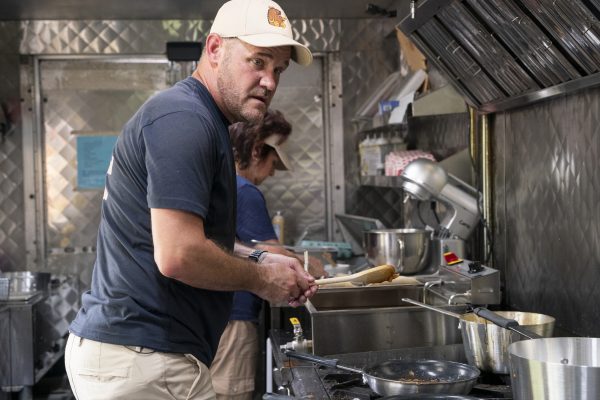
What was it like starring together on Food Network’s The Great Food Truck Race?
Joe: Surreal is the right word. One day you’re serving customers at a farmers market, and the next you’re racing across the country with cameras following you everywhere. It pushed us in ways we never expected.
Matt: But it also reminded us why we started Bug & Bear in the first place. We wanted people to experience not just our cannolis, but who we are. Watching people fall in love with our food and our story has been incredibly rewarding.
How do you think LGBTQ visibility is important on reality television?
Matt: Representation matters most when it feels authentic. Joe and I never went into the show thinking we had to represent every LGBTQ couple. We simply wanted to be ourselves.
Joe: We happen to be two husbands building a business together and chasing a dream. If a young LGBTQ person watches and thinks, “That could be me someday,” that’s incredibly meaningful to us. We hope people see that love, hard work, and family are universal.
Opening up a new dessert spot sounds exciting. How has that been going?
Joe: It’s incredibly exciting because it’s no longer just a dream — we’re officially pulling permits and getting ready to begin construction. I’ve been heads-down on the operational side, making sure everything lines up before we open the doors.
Matt: The café has become much bigger than just opening a dessert shop. We want it to be an experience. From the outside, it’ll have the same playful SHAG-inspired spirit as our trailer, but when you walk inside, it’ll feel like you’ve stepped into the whimsical world where Bug and Bear actually live. Our hope is that people don’t just come for dessert — they come for a place that feels warm, welcoming, and full of joy.
Why did you choose West Hollywood?
Matt: West Hollywood has always felt like home. It’s creative, diverse, welcoming, and full of people who appreciate unique small businesses.
Joe: As a married gay couple, it felt meaningful to open our first café in a community that has celebrated LGBTQ people for generations. We also love that people actually walk around here — we wanted to be part of the neighborhood, not just another place people drive past. We can’t wait to become a place where neighbors stop in for coffee, dessert, or simply to say hello.
How do you think we can keep West Hollywood LGBTQ?
Joe: Continue showing up for one another. Support LGBTQ-owned businesses. Go to local events. Celebrate queer artists and entrepreneurs. Protect the spaces that make West Hollywood feel like West Hollywood.
Matt: Community doesn’t happen by accident. It’s something we all create together, and we’re incredibly grateful to now be a small part of that community ourselves.
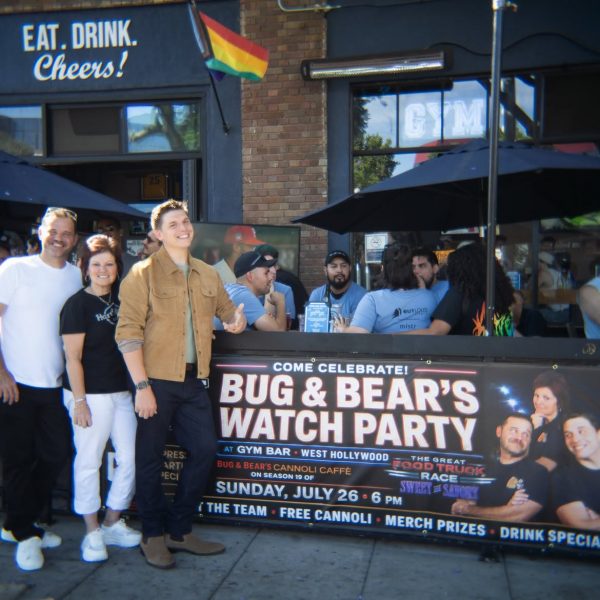
What was it like partnering with SHAG for the design of both your trailer and the shop?
Matt: It’s honestly been a dream. We’ve admired Josh’s work for years because his art captures this timeless, playful version of Southern California that feels both nostalgic and optimistic.
Joe: When we started imagining Bug & Bear, we kept coming back to that feeling. Working with Josh has been incredibly collaborative because he understands we’re not just designing a café — we’re creating a world. We want guests to feel like they’ve stepped inside the home of Bug and Bear.
How did that relationship start?
Matt: Long before Bug & Bear existed, I worked at the SHAG Store in West Hollywood. That’s where I got to know Josh, and over the years we became friends. I’d always admired his work, not just because it’s iconic Southern California art, but because it creates a feeling of joy, nostalgia, and escapism.
Joe: When Matt and I started Bug & Bear, Josh believed in what we were creating and wanted to be part of the journey from the very beginning. He designed our logo, then brought our food trailer to life, and now he’s helping us create the world of our first café.
We’re incredibly lucky and grateful to have his support — his artwork has become such an important part of Bug & Bear because it perfectly captures the whimsical, playful, welcoming feeling we want every guest to experience. His art doesn’t just decorate our business. It helps tell our story.
You can see their run on The Great Food Truck Race on Food Network and HBOMax. You can also keep up with their cafe and pop-up locations on their Instagram
Business
The Blade joins forces with StartOut Los Angeles
This partnership will focus on supporting the efforts and representation of LGBTQ+ and allied entrepreneurs
The Los Angeles Blade is excited to announce our partnership with the LA Chapter of the StartOut. Founded in 2009 as a national organization with individual chapters, it has built a community of over 18,000 members.
Over 700 founders are supported every year, connecting them with knowledge, peers, capital, and resources to build scalable businesses – strengthening the economic power of the queer community. Los Angeles Blade publisher Alexander Rodriguez joins the Leadership Council for StartOut LA. The Blade will be responsible for highlighting StartOut members, entrepreneurial hot topics and issues related to the queer community, and tentpole events occurring throughout the year. In addition, the Blade will co-present The Founders Series. Debuting next week, The Founders Series will highlight and interview LGBTQ entrepreneurs who have made an impact in the business world at large.
This marks a new chapter for StartOut Los Angeles. Newly appointed (in 2025) co-chairs Caio Buchalla and Daniel Cafiero bring expertise and experience from the San Francisco chapter of StartOut and are founders themselves, co-founding OVE, using verified payment systems, all securely linked and authorized, through a user’s fingerprints. Unique and innovative, indeed. The two spent the first part of their current run understanding what was missing in the city’s startup ecosystem and how StartOut LA should be structured and how the organization could offer the most support.
Highlights from this year thus far include:
• StartOut Connect at The West Hollywood EDITION
The year began with StartOut Connect, a high-level networking event that brought together founders, investors, and community leaders. StartOut had a full house (160 guests), sponsored by Gaingels, J.P. Morgan, and Holland & Knight. Because of its success, the goal is to make StartOut Connect an annual event.
• StartOut Capital Circle
The organization hosted an intimate dinner at Jerry Bloom’s home with 36 investors. The goal was to build stronger relationships within the investment community and create more opportunities for LGBTQ+ founders. The event was sponsored by Morgan Stanley and Silicon Legal Strategy.
• A Conversation with Lucy Guo
StartOut LA’s third major event was a conversation with Lucy Guo, founder of Passes. Once again, it was a full house (120 guests) and gave founders and entrepreneurs the opportunity to learn more about her journey in technology, artificial intelligence, and entrepreneurship.
Main events for the second half of the year are in production and will be announced within the next few weeks. StartOut’s main goal is to continue creating opportunities for founders, investors, and community leaders to meet, build relationships, exchange ideas, and create new businesses together.
StartOut LA Co-Chair Caoi Buchalla told the Blade, “I’m really excited about StartOut Los Angeles joining forces with the Los Angeles Blade. Having the media behind organizations like ours is incredibly important, not only for StartOut, but for everyone working to support founders, investors, and our community. We should use the power of the media for good, to inspire people to get involved, take risks, start new businesses, and help our community continue to grow.”
Brian Richardson, the CEO of StartOut, also commented on the new partnership, “At StartOut, we know community support, networking, and mentorship can make the difference for LGBTQ+ entrepreneurs; that’s why we are working hard to nurture Los Angeles’ queer entrepreneurial community, alongside offering the best training and education available. Our partnership with the Los Angeles Blade will help us share our founders’ stories, reach new members, and continue to move our community forward, together.”
The Blade is looking forward to serving as the media partner for StartOut. With all of the negative news about the plight of LGBTQ culture, economy, and political rights, it is imperative that we share and spotlight the power and impact our queer entrepreneurs have in the economy and in the business world.
For more information, head to StartOut.org
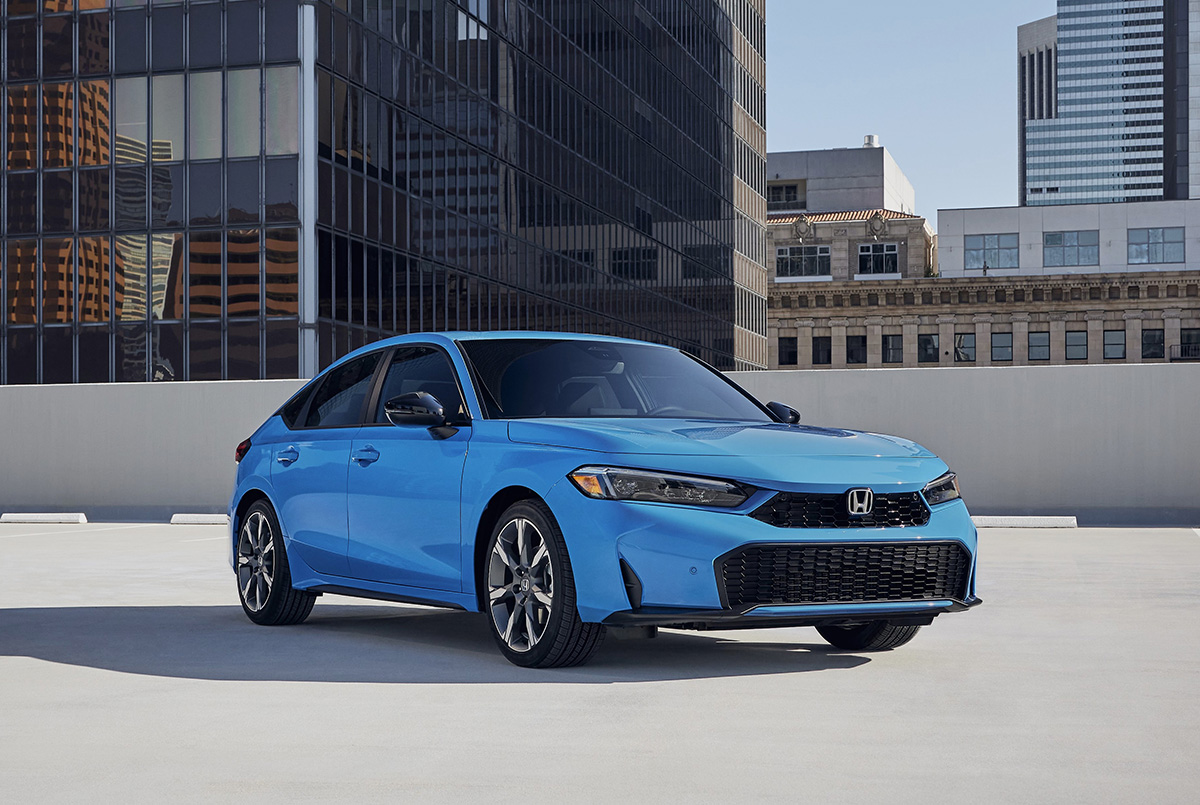
The latest Honda Civic hatchback and Subaru Impreza are two of the segment’s stars. Both offer sensible pricing, excellent utility and enough personality to avoid feeling like appliances.
The Civic is more polished. The Impreza, more rugged. Luckily, neither is trying to be obnoxiously flashy.
HONDA CIVIC
$28,000
MPG: 30 city/38 highway
0 to 60 mph: 8.9 seconds
Cargo space: 24.5 cu. ft.
PROS: Fuel efficient. Spacious cargo area. Good resale value.
CONS: No all-wheel drive. Fussy infotainment. Low rear headroom.
WHAT’S NEW: Only minor updates for 2026. The biggest change carries over from last year’s refresh: the addition of the hybrid, which has become a star performer.
The Honda Civic hatchback won’t scream for attention. It won’t arrive wearing sequins and carrying a smoke machine. It’s more like Nomi Marks from “Sense8”: intelligent, sophisticated and impressively capable.
The styling remains handsome and clean. Long hood. Low roofline. Crisp lines everywhere.Honda resisted the urge to make this vehicle look like a spaceship or an angry robot. That’s refreshing.
Inside, the dashboard is simple and elegant. The honeycomb air-vent treatment remains one of the coolest interior details in the segment. Materials feel expensive. Controls are easy to understand. And visibility is excellent.
I love how the cargo space is generous, with rear seats that fold flat. A bicycle, several suitcases or enough supplies for an ambitious weekend road trip fit without much hassle.
Then there’s the hybrid. The system produces a healthy amount of power while delivering fuel economy that borders on the absurd. Around town, handling feels smooth, quiet and surprisingly quick. You almost glide through traffic. The standard gasoline engine isn’t bad, but the hybrid is stellar.
The Civic also shines on twisty roads. Steering is precise. Body motions stay controlled. The suspension strikes a sweet balance between comfort and sportiness.
Biggest weakness? No all-wheel drive. For drivers in snowy climates, that’s not so good.
Still, the Civic’s stellar combination of efficiency, quality, and driving enjoyment remains incredibly hard to beat.
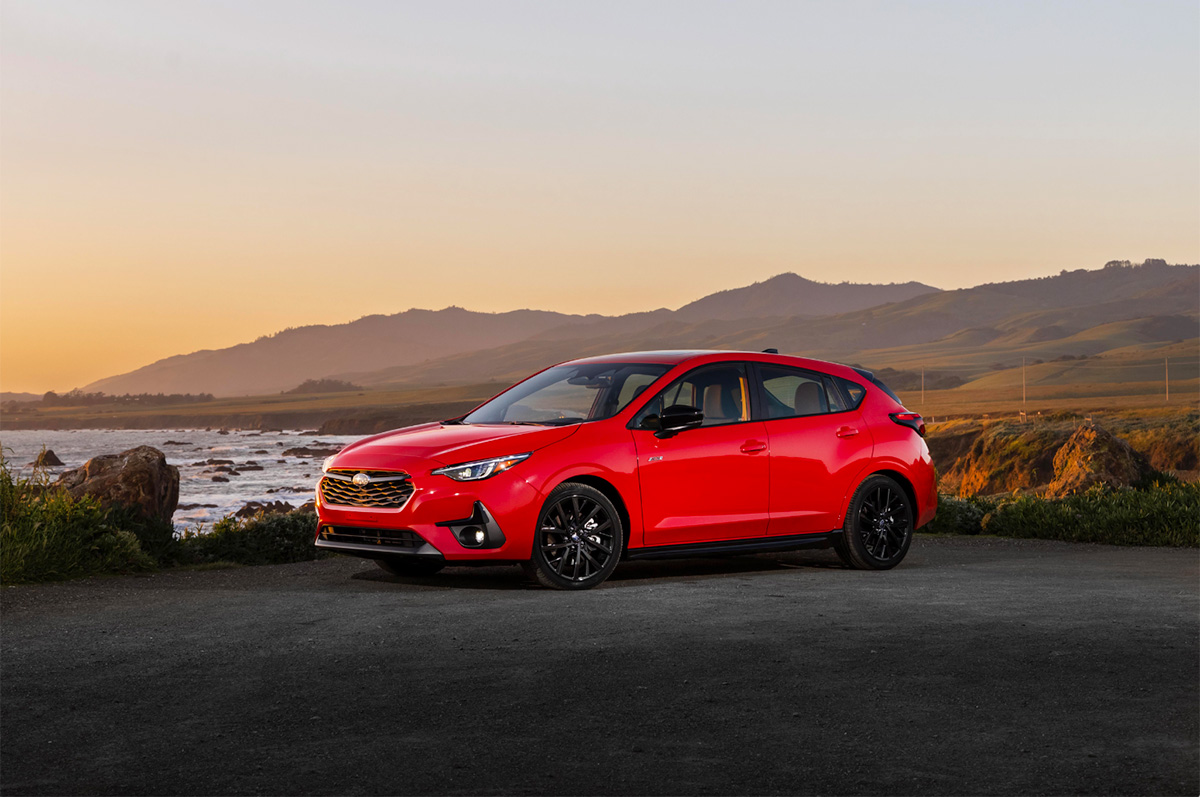
SUBARU IMPREZA
$27,000
MPG: 27 city/33 highway
0 to 60 mph: 8.5 seconds
Cargo space: 20.4 cubic feet
PROS: All-wheel drive. User-friendly tech. Safety cred.
CONS: No hybrid version. Some road noise. Modest cargo room.
WHAT’S NEW: The Impreza receives relatively minor updates for 2026. Subaru continues refining this hatchback rather than reinventing it.
If the Honda Civic is urbane, the Subaru Impreza is unfussy. There’s a kind of Kristen Stewart energy here. Cool without trying too hard.
The styling isn’t dramatic, but it works. This hauler appears ready to tackle rain, snow, dirt roads or an impromptu weekend escape.
And all-wheel drive comes standard on every Impreza. (Most competitors only offer front-wheel drive or include all-wheel drive as a pricey option.)
The result: Slippery roads simply don’t create much anxiety. The suspension absorbs bumps nicely. Long trips are comfortable. Visibility is great, thanks to relatively thin roof pillars and large windows.
I like how the cabin is functional rather than fancy. Materials don’t quite match the Civic’s upscale vibe, but everything feels sturdy. A large infotainment screen dominates the dashboard and generally works well, though some drivers may prefer more physical buttons.
Cargo space is respectable, and the design makes loading bulky items easy.
Performance depends heavily on trim. The base engine gets the job done, but nobody will confuse it for a sports car. The RS trim’s larger engine provides more power and makes the ride livelier. But even then, acceleration remains merely adequate.
The Impreza’s real appeal lies elsewhere, with a mix that few rivals can match: hatchback practicality, standard all-wheel drive, strong safety scores and reasonable pricing.
Perhaps that’s the key difference between these two hatchbacks. The Honda Civic impresses immediately. The Subaru Impreza grows on you.
Fortunately, choosing between them is less stressful than deciding who gets the last mimosa at brunch.
Business
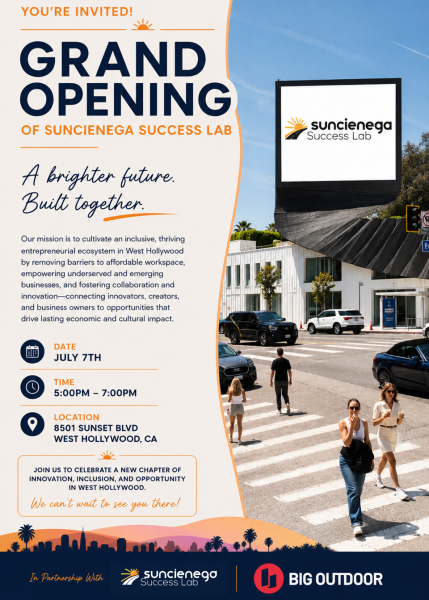
SunCienega Success Lab launches to empower local entrepreneurs with free resources
Big Outdoor partners with the City of West Hollywood to mentor small businesses

Many people come to Los Angeles to realize their creative dreams. Cities like West Hollywood offer resources for artists to give them a leg up. Now the city partners with BIG Outdoor, a media owner specializing in large-format digital signage, to galvanize the Sunset Strip area with dynamic Netflix ads or art installations as well as free resources for entrepreneurs.
On July 7th, the launch of the SunCienega Success Lab will take place at their Sunset Strip location. The lab offers free workspace, mentorship, educational programs, and resources to support business growth. Applicants, including locals and underserved businesses, were eligible to apply.
City of West Hollywood Mayor John Heilman says, “By offering free workspace to local entrepreneurs at the SunCienega Success Lab, the City of West Hollywood and BIG Outdoor are making sure innovation has a home in our community.”
The collaboration started as an idea 6 years ago when Big Outdoor took over the lease of 8501 Sunset Blvd. This year’s inaugural class includes:
Michael Meo, who founded Build Momentum, a founder-led venture firm partnering with technological experts to help build venture-scalable companies.
Artem Korolev, Founder of Sixtwenty, Inc., which is developing WYM, a wellness brand that pairs a premium toothpaste with an AI companion app.
Ali Rad Design, a luxury residential design studio specializing in interior and landscape design.
The goal of this partnership is to transform underutilized real estate while also empowering local businesses. Brad Berkley, CEO of BIG Outdoor, adds, “We didn’t simply redevelop a building—we created a place where entrepreneurs, creators, and small businesses can grow, collaborate, and succeed.”
The Success Lab features six dedicated workstations in three offices, a shared lounge, and a conference room. Eligible applicants include locally licensed startups, nonprofits, minority-owned businesses, women-owned businesses, and other qualifying entrepreneurs. The facility will operate Monday through Friday from 8:00 a.m. to 6:00 p.m.
The program will expand from free workspaces for those participants to include a speaker series and mentorship programs, which will roll out later this year.
If you’re interested in applying, Albin Gielicz, Director of Community Relations, adds, “In Spring 2027, we will reopen the application process for small businesses located in West Hollywood that hold a current business license. We will review the applicants and make a decision by May 1, 2027.”
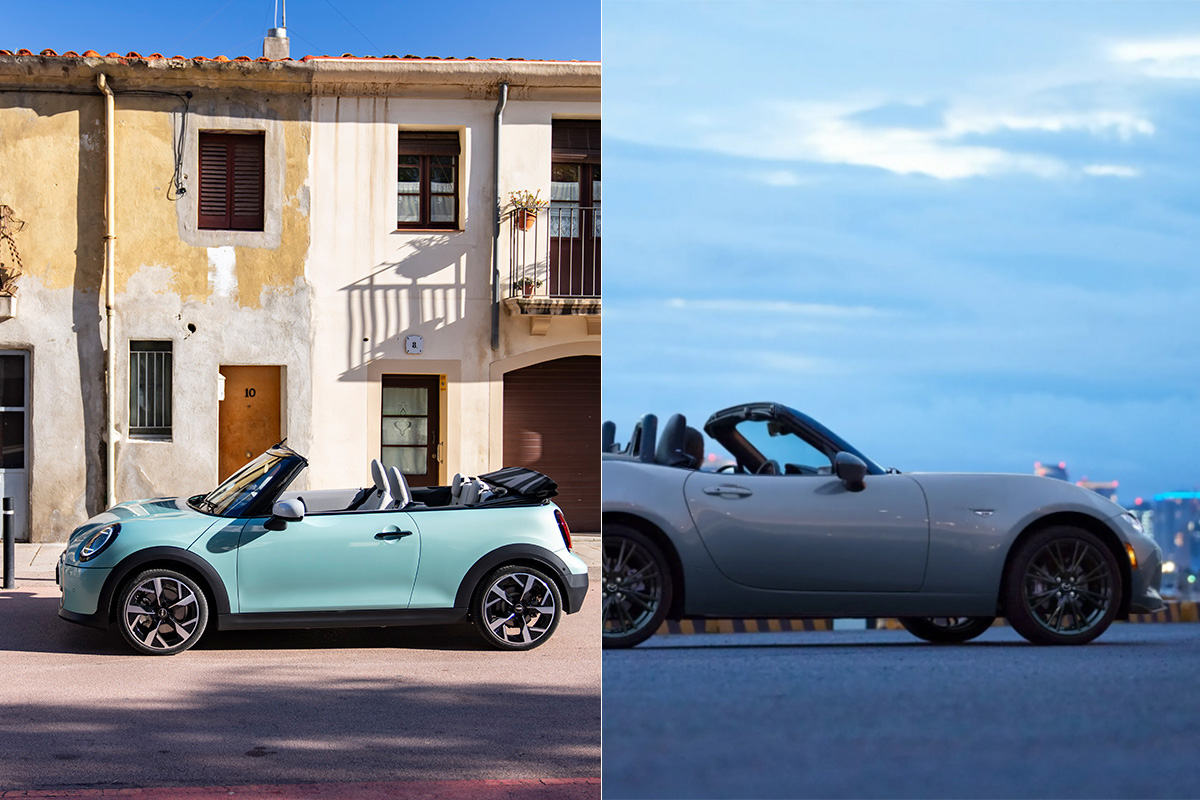
Ragtops rock! For drivers looking to carve their own lane, the world already has enough sensible crossovers, minivans, and pickups. These three convertibles trade practicality for sunshine, wind, and the occasional wild-hair day.
BMW Z4

$58,000
MPG: 25 city/33 highway
0 to 60 mph: 5.2 seconds
Trunk space: 10.0 cu. ft.
PROS: Strong engines. Uber comfy. Stylish.
CONS: Expensive. Final year of production.
Act fast, Bimmer fans, this is the last year the BMW Z4 roadster will be produced. Along with the entry-level xDrive30i and high-performing M40i, there is a Final Edition model.
Since 2002, the Z4 has expertly balanced performance, comfort, and style. The long hood and short rear deck still look fantastic. The stance is athletic. And with the top down, this car gains an extra dose of drama.
Under the hood, BMW offers turbo power that feels eager rather than overwhelming. Acceleration is brisk. The steering precise. The chassis composed.
Upgrading to the premium models lets you scoot from 0 to 60 mph in just 3.9 seconds. But—ka-ching!—the MSRP soars to $79,000.
Available in manual or automatic transmissions, this convertible can sprint through mountain roads on Saturday and soothingly devour highway miles on Sunday.
As for the interior, it blends luxury and functionality. Materials feel expensive. Controls are easy to use. And the seats are supportive.
For me, other ragtops may be more party hearty, but the Z4 is low-key, impeccably tailored and still the center of attention. Think suave James Bond versus sparkling RuPaul.
MAZDA MX-5 MIATA
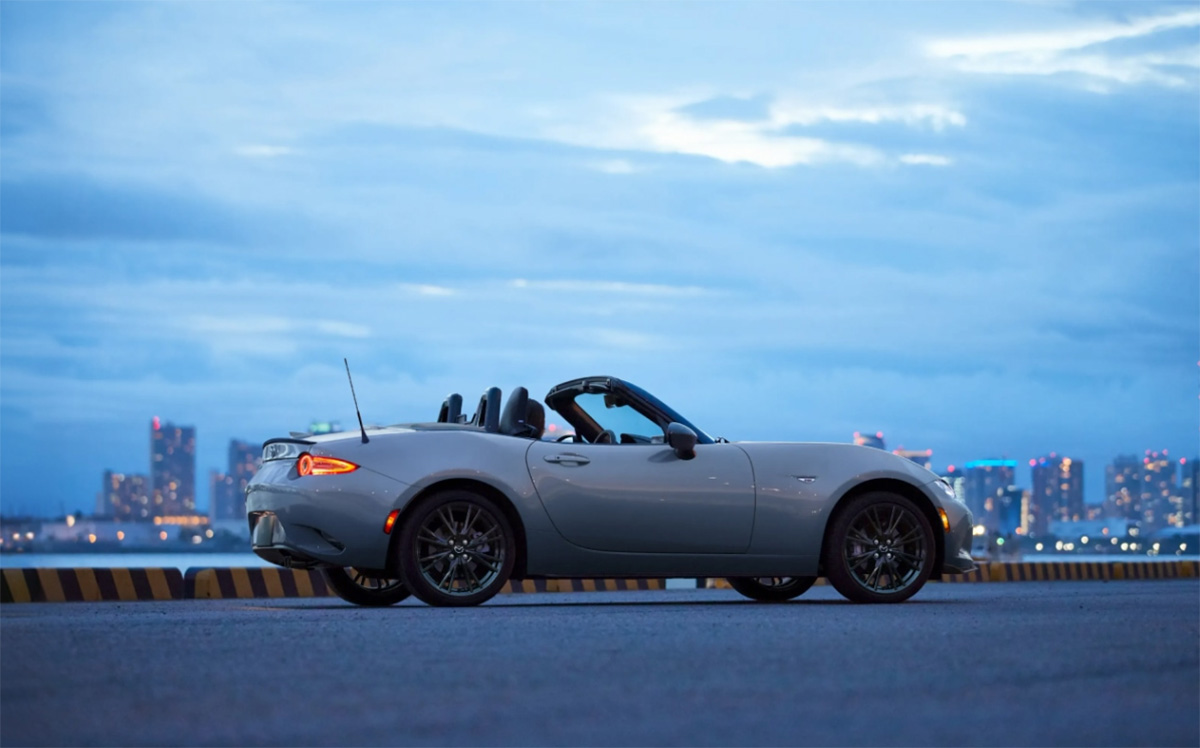
$32,000
MPG: 26 city/35 highway
0 to 60 mph: 5.5 seconds
Trunk space: 5.0 cu. ft.
PROS: Nimble. Lightweight. Affordable.
CONS: So-so power. Wind noise. Limited space
For decades, the Mazda MX-5 Miata has followed a simple formula: Keep it light, keep it balanced and make every drive feel special. The result: Automotive comfort food that never gets old.
Many vehicles grow larger every year, but the Miata has remained Lilliputian in a way that feels rebellious. You sit low. The controls are user-friendly. Visibility is excellent.
No, the engine power won’t blow you away. But this beachcomber isn’t about brute force. It’s about how the Miata makes you feel wonderfully alive, whether tootling along city streets or a winding road.
Inside, the dashboard is sparse but echoes a traditional sports car. Large analog tachometer and analog speedometer. And while the 8.8-inch infotainment display is dinky, it works nicely.
Alas, storage is limited. The cabin is snug. And taller drivers may wish for a bit more room.
Yet somehow even those compromises feel almost charming. This ride knows exactly what it is and refuses to apologize. Sort of like showing up to Pride wearing what makes you happy rather than chasing trends.
MINI COOPER
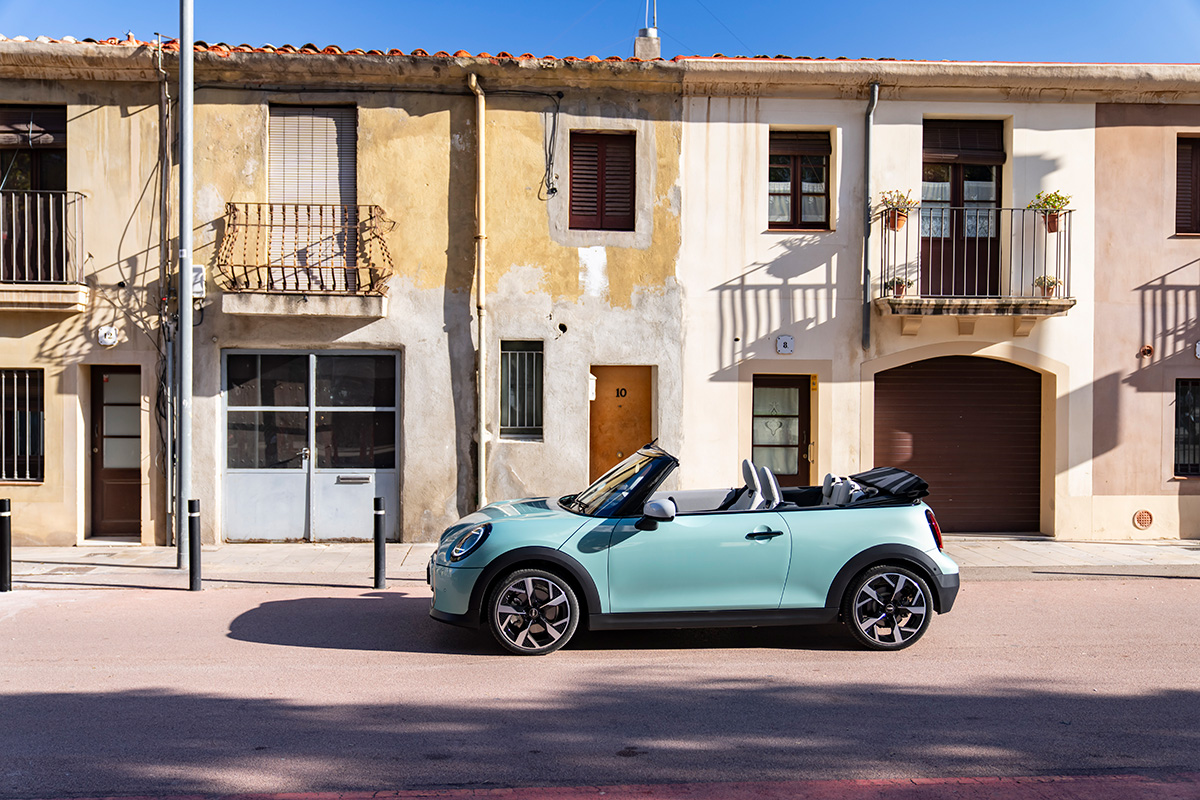
$27,000
MPG: 28 city/39 highway
0 to 60 mph: 7.9 seconds
Trunk space: 5.2 cu. ft.
PROS: Playful styling. Fun handling. Extra stowage.
CONS: Ride can be firm. Not a speed demon.
Mini Coopers approach life with a wink and a grin. Rounded headlights. Compact dimensions. Cheerful styling. It all works to create a vehicle that looks like it’s having fun before you’ve even started the engine.
Driving this ragtop is equally entertaining. The steering is quick, and the chassis feels eager to please. Overall performance is lively rather than blistering.
The cabin leans heavily into Mini’s playful design language. Circular elements appear throughout. Details feel intentionally quirky. Many modern interiors seem created by committees that fear excitement. This cabin feels designed by someone who enjoys color, personality and perhaps spontaneous dance breaks.
Unlike the BMW Z4 and Mazda Miata, the Mini offers a small rear seat. “Small” is doing some heavy lifting there, but the extra space adds flexibility. It may not be enough room to comfortably squeeze in friends, but you can easily stow a few bags here.
To me, driving this convertible feels like attending the world’s friendliest block party. People notice it. People smile. Sometimes people even wave.

Her royal ‘Travesty’: Sasha Velour dishes on her new show

City Attorney candidate Marissa Roy to Children’s Hospital L.A.: ‘You still have to comply with state law’

Lula defeats Flávio Bolsonaro in second round of Brazilian presidential election

LGBTQ+ pioneer Rev. Troy Perry to young people: ‘Don’t be afraid’

With exquisite 4K restoration, ‘The Devils’ finally gets its due

Here’s your Palm Springs look at the weekend: Oct 23 – 25, 2026

Common Sense Isn’t Political

‘WOOF’ worthy: Christopher Schellenger shares the unique challenges of playing a dog
LGBTQ+ pioneer Rev. Troy Perry to young people: ‘Don’t be afraid’
Immunology gave HIV survivors the chance to grow old, Proposition 38 is the next step
-
 Palm Springs4 days ago
Here’s your Palm Springs look at the weekend: Oct 23 – 25, 2026
-
 opinions4 days ago
Common Sense Isn’t Political
-
 Theater4 days ago
‘WOOF’ worthy: Christopher Schellenger shares the unique challenges of playing a dog
-
 Features2 days ago
LGBTQ+ pioneer Rev. Troy Perry to young people: ‘Don’t be afraid’
-
Commentary4 days ago
Immunology gave HIV survivors the chance to grow old, Proposition 38 is the next step
-
 Features3 days ago
Drag queens go from Send Noodz straight to the polls
-
 Movies2 days ago
With exquisite 4K restoration, ‘The Devils’ finally gets its due
-
 Brazil2 days ago
Lula defeats Flávio Bolsonaro in second round of Brazilian presidential election
-
 California4 hours ago
City Attorney candidate Marissa Roy to Children’s Hospital L.A.: ‘You still have to comply with state law’
-
 Theater4 hours ago
Her royal ‘Travesty’: Sasha Velour dishes on her new show