
Arts & Entertainment
Oscars So Gay: LGBTQ films win big at 91st Academy Awards
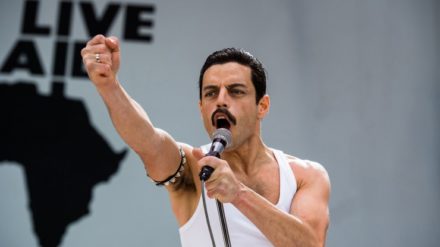
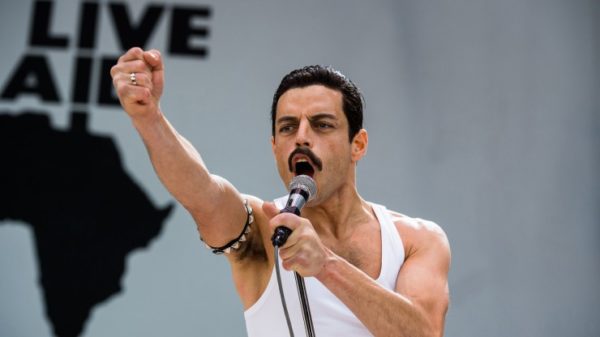
Rami Malek won Oscar gold for playing queer icon Freddie Mercury in “Bohemian Rhapsody.” (Photo courtesy Fox/New Regency)
After a lead-up marked by public relations missteps, the 91st annual Academy Awards race concluded Sunday night at a presentation which, by and large, distributed its statues relatively evenly among the evening’s favored contenders. Despite the controversies it faced ahead of this year’s ceremony, the Academy managed to put together a smooth and efficient – if unremarkable – broadcast. The lack of a central host kept the evening’s success from hinging on a single personality, and the result was a more relaxed atmosphere that managed to stay, for the most part, controversy free.
In the biggest show of LGBTQ inclusion in Oscar history, three of the four acting awards went to performers playing queer characters and the eventual Best Picture winner featured a queer character in a central role.
Going into the ceremony, the year’s nominations were already stacked with nods toward the LGBTQ community. Among the major acting categories, 7 of the 20 nominees were for actors playing queer roles, and 5 of the 8 Best Picture contenders featured queer characters either in central or significant supporting roles.
Indeed, from the opening moments, when out singer Adam Lambert hit the stage with Queen – the classic rock band at the center of one of the year’s most-nominated films, “Bohemian Rhapsody” – the telecast seemed poised to be the gayest Academy Awards ever.
Mahershala Ali of “Green Book” took home his second Oscar for Best Supporting Actor for playing real-life gay jazz pianist Dr. Don Shirley; Rami Malek won the Best Actor prize for his acclaimed performance as LGBTQ icon Freddie Mercury in “Bohemian Rhapsody”; and, in a semi-surprising upset, Olivia Colman was named Best Actress for portraying the queer Queen Anne in “The Favourite.”
The evening’s first presenters – the popular comic trio of Maya Rudolph, Tina Fey, and Amy Poehler – set the tone for the evening by spoofing the all the expected topics right out of the gate.
“We are not your hosts,” said Fey, addressing the Academy’s choice to go host-less after the debacle surrounding Kevin Hart, who resigned from the gig after controversy arose over his history of homophobic comments and tweets, “but we’re going to stand here just a little bit too long so that the people who get USA Today tomorrow will think that we hosted.”
Rudolph also touched on another sore spot for the Academy when she added, “In case you’re confused, there is no host tonight, there won’t be a Popular Movie category, and Mexico is not paying for the wall,” and Poehler wrapped up the trio’s introductory remarks by saying, “That’s right, and we won’t be doing awards during the commercials but we will be presenting commercials during the awards.”
The Academy faced criticism over its announcements that this year’s awards would include a separate category for “Best Popular Film” and that several technical awards would be presented during commercial breaks in order to keep the broadcast within a shorter running time. Both decisions were rescinded after objections from both the public and the Academy membership.
The evening was full of gay moments. When Helen Mirren appeared with “Aquaman” star Jason Momoa to present the award for Best Documentary, both dressed in pink evening wear, she quipped, “Jason and I didn’t coordinate our outfits tonight – but it just goes to show that these days, a Hawaiian god and very mature English woman can both wear the same color. We can both wear pink.”
There was also a significant presence of established LGBTQ icons throughout the evening. Lady Gaga (who is openly bi) and Glenn Close, both favorites of the gay community, were among the nominees. Bette Midler made an appearance to sing the nominated song, “Where the Lost Things Go,” from “Mary Poppins Returns,” and Barbra Streisand introduced the clip showcasing Best Picture nominee “BlacKkKlansman.”
Streisand, who was met with a standing ovation as she took the stage, made one of the evening’s few overtly political remarks when she acknowledged the importance of a movie based on the truth by saying “truth is especially precious these days.”
The evening’s winners also included a record number of people and films representing communities of color. The acting awards in supporting categories both went to African-American performers, Ali and Regina King, who won for her role in “If Beale Street Could Talk.” Best Actor Malek is of Egyptian heritage. The trio of winners marks the first time in Oscar history that the majority of acting prizes went to non-white performers.
For many, the evening’s most satisfying moment was the win for Spike Lee, who shared the Best Adapted Screenplay Oscar for his film “BlacKkKlansman” with Charlie Wachtel, David Rabinowitz and Kevin Willmott. Presenter Samuel L. Jackson, a longtime friend and collaborator, turned his announcement of Lee’s name into a jubilant whoop of triumph as the iconic black director took the stage with his co-winners. It was the Lee’s first win after five nominations, and he took the opportunity to deliver a passionate speech acknowledging the importance of honoring black history in America.
Production Designer Hannah Beachler, who shared the Oscar for Best Production Design with Set Decorator Jay Hart, became the first African-American woman to win the prize in that category for her work on “Black Panther.” The Marvel superhero adventure, thought by many industry observers to be the most culturally significant film of the year for bringing black inclusion to a new level in mainstream Hollywood, also won several other behind-the-scenes awards, including Best Original Score and Best Costume Design, but it failed to take home the Best Picture prize, for which it was also nominated.
“Roma,” Alfonso Cuarón’s gorgeously cinematic love letter to the Mexico City of his childhood and the women who raised him, was another highly-respected contender that took home several prizes, including both Best Director and Best CInematographer for Cuarón. It, too, failed to win Best Picture despite being a front-runner – though it did take home the Best Foreign Language Film Oscar, the first Mexican film to win that award to date.
In his acceptance speech for the Director prize, Cuarón thanked the Academy “for recognizing a film centered around an indigenous woman… a character that historically had been relegated to the background in cinema.” It was his second win in the category (his first was for 2013’s “Gravity”), and the fifth time in six years that the award has gone to a Mexican director.
Ironically, the biggest controversies of the evening had nothing to do with the swirl of bad publicity around the Academy, but in the outcome of the races in two major categories.
“Green Book” beat out other favorites like “Roma,” “Rhapsody,” and “Panther” to win Best Picture. The film, which tells the “true” buddy story of a black musician and his white driver during a segregation era tour of the deep American South, received initial acclaim, but has been heavily criticized for perpetuating “retrograde” racial attitudes and been called out by members of Dr. Shirley’s family as being inaccurate. In a year when so many other nominees celebrated diverse stories in new and ground-breaking ways, it was a choice that had some members of the audience visibly unhappy – including Lee, who appeared ready to walk out of the auditorium when the win was announced before returning to his seat.
The shock that will likely become “Oscar legend,” though, came in the Best Actress category, where Colman’s victory brought a surprise end to the showdown between front-runners Close and Gaga, for “The Wife” and “A Star Is Born,” respectively. In her gracious, charming, and endearingly down-to-earth acceptance speech, Colman acknowledged both women, who beamed with apparent delight in return.
Gaga did not go home empty-handed. She won (with co-writers Mark Ronson, Anthony Rossomando, Andrew Wyatt and Benjamin Rice) the Best Original Song Oscar for “Shallow.”
Close’s Oscar record now stands at 7 nominations, 0 wins.



a&e features
Falcon| NakedSword launches new publishing division, Falcon INK
The gay adult studio publishes two erotic novels
While there’s been an overall movement against LGBTQ people in politics, media, and print, there’s also been a huge gay male erotica boom. Not just Heated Rivalry, but Heartstopper and Red, White and Royal Blue have revealed a huge hunger for erotic male love stories across multiple forms of media. Those books not only found huge fanbases, but drove wildly successful adaptations and launched stars like Connor Storrie and Joe Locke. Ready to enter this landscape is the popular adult film studio, Falcon| NakedSword.
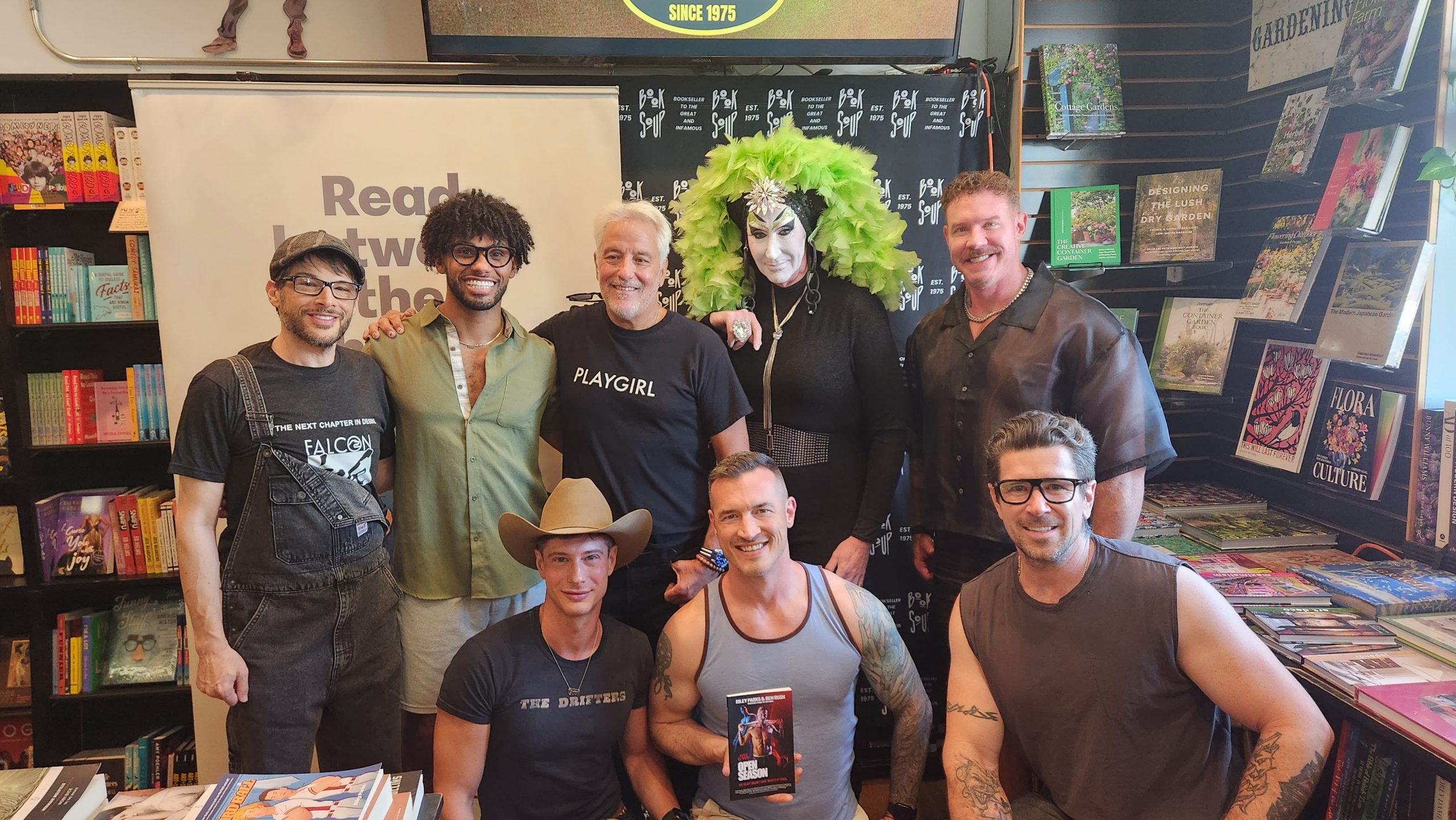
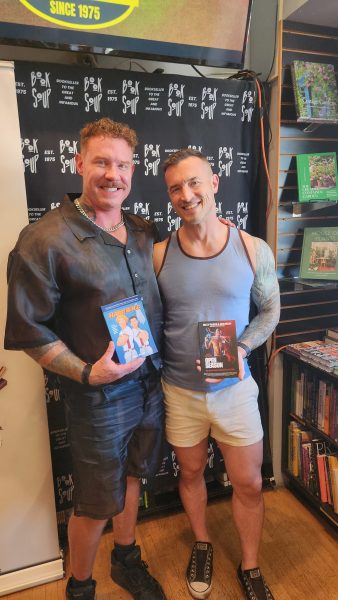
The studio has created a new publishing division, Falcon INK. They celebrated this expansion with the release of their first two novels, Hard Ball and Wild Game: Open Season at Book Soup in West Hollywood on August 29th. The guest list included major players from both behind and in front of the camera, including stars Derek Kage, Beau Butler, Trenton Ducati, Tony Genius, and Eddie Burke. Also present were the studio’s President Tim Valenti, Sister of Perpetual Indulgence and Falcon’s Creative Director, Sister Roma, and Writer/Director and VP of Content, Ben Rush.
The books in question include Hard Ball, which follows two baseball players whose relationship gets way more than heated. Wild Game: Open Season is a prequel to the multiple award-winning film Wild Game, where Kage plays a man desperate for money who enters a dangerous, high-stakes chase. If caught, his captors could do anything they want. Spoiler alert: it’s triple penetration. The book revealed how Kage’s character got to that level of desperation.
This expansion into print media is interesting considering there’s a growing war on queer content in books and adult content. Rigorous age verification laws require viewers to submit a prohibitive amount of personal information to access adult content. Kage is quick to point out, “The written word can be just as intense, just as controversial, if not more provocative than what you see on screen.”
He adds, “The part that bugs me is with age verification, the state could decide this is harmful to minors and make people who want to access it have to show an ID. You have states that are banning books that have LGBTQ+ themes and sexual education in the name of it’s harmful to minors. When you lump it all together, not only is it unconstitutional, you’re making it harder for consenting adults who want to access it.” Then he really hits the nail on the head, exclaiming, “People should be able to read what they want to read and consenting adults should be able to view what they want to view.”
In addition to print media, Falcon| NakedSword is expanding into safe-for-work content with a thriller microdrama, The Last Guest, and has even partnered with an apparel company for their own line of tie-in underwear. Rush was quick to clarify that this is not a shift from their core business model.
Rush shares, “I don’t really see it as a turn away from adult content as much as an expansion of what we can do. We’ve spent years telling stories where sexuality is obviously a major component, but, underneath that, you’re still dealing with character, chemistry, fantasy, romance and humor. Those are the things that make people connect with a story.” The studio has gone out of their way to explore countless genres with films ranging from thrillers and horror to romantic comedies.
Rush adds, “‘Safe-for-work’ content gives us another canvas for that. It allows us to take some of the storytelling instincts we’ve developed and see how far they can go when sex isn’t necessarily the destination.” Now these erotic novels are hardly safe for work but also enter the growing genre of male-on-male sex and romance.
The Heated Rivalry Connection
The runaway success of Heated Rivalry couldn’t be avoided, and Rush was quick to clarify that Falcon INK, while a savvy business move, is not necessarily related to the rise of that hockey romance. In his words, “Their success demonstrates that there’s a huge appetite for queer romance and queer characters, and that the audience extends far beyond what people might traditionally think of as a niche LGBTQIA+ market. But I wouldn’t say we looked at those properties and said, ‘Let’s make our version of that.’ If anything, their success reinforces the idea that queer stories can move between books, television, film, and other media and still find passionate audiences. That’s exciting from a creative perspective.”
Derek Kage adds, “Heterosexual cisgendered women are loving gay stories. I find it fascinating. I also find it a little lucrative. I’ve noticed an uptick in my fan sites: heterosexual women who love watching two men have sex with each other.” He also notes that now cis-female performers are actually enjoying filming more with gay men. HIV concerns really limited male-on-male performers, whether they were gay or straight, but now times clearly have changed.
Tim Valenti adds that this demographic is growing. He shares, “Sure. It is a different demographic. It’s much younger, and female. I can honestly say we now know about 12-13% of our membership is female for our hardcore sites.”
While a different demographic, Rush doesn’t believe there’s much of a real difference adding, ” I don’t think the audiences are completely separate. People who consume adult content also read books, watch television, fall in love with characters, and want rich stories. We sometimes talk about “adult audiences” as though that’s their entire identity as consumers, and, obviously, it isn’t. The interesting part is seeing where those audiences overlap.”
Sister Roma was quick to point out the political importance tied to the success of these stories. She adds, “I think that stories that show queer people in romantic situations are very healthy and important, especially right now, because there are real attempts to take away the right to marry, and there’s so much oppression headed towards our community from every angle. It’s important to show that for people with genuine feelings of love and expression like everybody else, to make people know we’ve always been here; we’re not going away.”
The Future
With a budding cinematic universe and cross-platform storytelling, is this the making of a new media empire? Rush jokes, “I’m not sure I’m ready to put ‘media empire’ on my business card. But I do think there’s something exciting about building a creative brand that isn’t restricted to one format.”
He continues, “If we have characters or stories that people connect with, why should they only live in one place? A book can become something on screen, and a character can have a life beyond one project. The goal isn’t expansion just for the sake of expansion. It’s to create things people genuinely want more of. If that ultimately looks like an empire, I suppose there are worse problems to have.”
Both Kage and Eddie Burke opened up about the unique differences between performing their audiobooks. Whether it’s Burke working on his Southern accent or Kage using his teenage closeted history to get into character and even putting himself in the mindset of the female character, it’s clear these are serious actors who take their art seriously.
Kage adds, “We are actually talented performers. Not only are we talented, but we are also educated, and we love what we do. We are authentic in everything we do. If you can put on a performance while taking 3 dicks at once, that is talent.” He jokes, “Meryl could do it. She could do anything.” Jokes aside, Kage confessed to staying in character to deliver some of his more challenging performances, so it’s not surprising this character would live on in print.
As to whether Kage and his fellow co-stars could find some of the same breakthrough success as the stars of other male erotic stories he shares, “If Hollywood or a major television show or production company needed my talents, I’d happily accept. If you need a deep-voiced, muscley dude who has a way with men and women and anyone in between. Call me.”
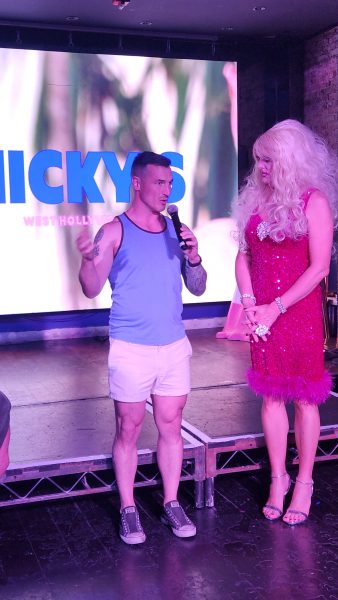
The group ended their night at Micky’s supporting their drag show hosted by Ingenue. They shared Falcon| NakedSword prizes, including free copies of the book. If you’d like to get yours, you can purchase Hard Ball or Wild Game: Open Season as a paperback, digital copy, or audiobook.
Bars & Parties
ANIMAL LA bridges the gay bar and the queer underground
The new Arts District bar is giving underground DJs a permanent home while carving out its own place in Los Angeles queer nightlife
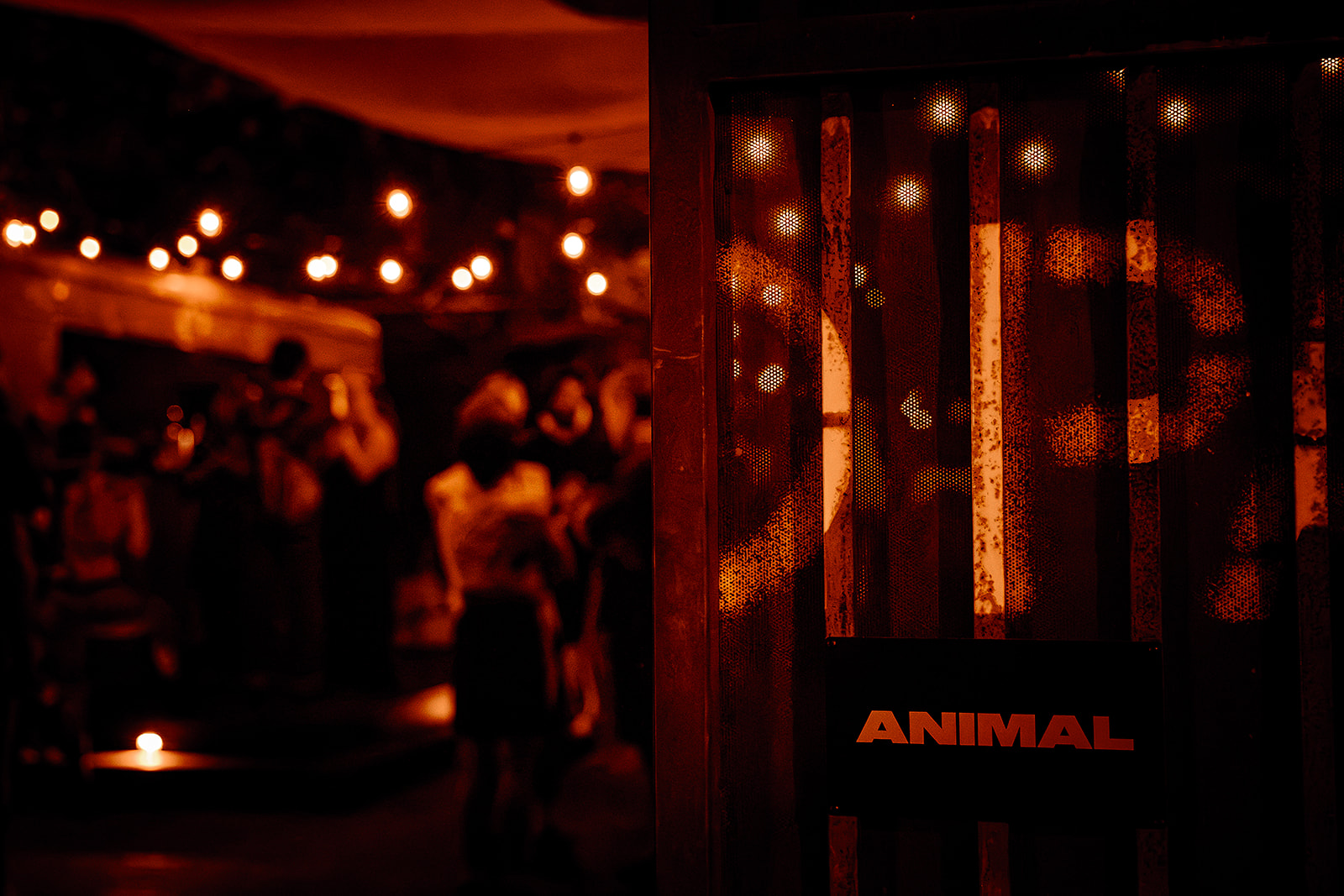
In Los Angeles, underground electronic music has largely occupied a separate corner of queer nightlife from the city’s traditional gay bars, existing instead in transient DIY warehouse parties.
ANIMAL LA is trying to bridge those two sides of queer nightlife. The new Arts District queer bar, which soft-opened July 25, offers a permanent venue for DJs and crowds from L.A.’s queer underground scene, with attention to detail extending from its music curation to cocktails and design.
“Queer folks have historically been our fashion designers, our writers, our musicians, our hairstylists, our interior decorators, all the creatives,” Ashton Correa, one of the partners behind ANIMAL, said. “When we were creating ANIMAL, it was about a place where we would be inspired and enjoy the atmosphere, low lighting, nice decor, a good cocktail, and some interesting music.”
Correa opened ANIMAL LA with partners Jim Morrison Hevert, Nick Eskelinen and Tony Kelley, following the group’s first ANIMAL location in Brooklyn, which opened in March 2024. The team aimed to create a bar for queer people that felt refined and considered.
“As queer tastemakers, we deserve something nice,” Correa said. “We wanted to be that for the community and for all of the amazing, talented creatives.”
That philosophy guides ANIMAL LA’s DJ bookings. The team focuses on local talent, including artists who play the city’s DIY warehouse parties. Correa praised the “robust, vibrant underground warehouse scene” that exists despite California’s 2 a.m. last call, and said ANIMAL LA aims to complement it with the consistency of a legal venue.
“We don’t have huge budgets, but if we can supplement an artist’s income by giving them close to a monthly type of gig, then that will hopefully support the nightlife and the artists,” Correa said.
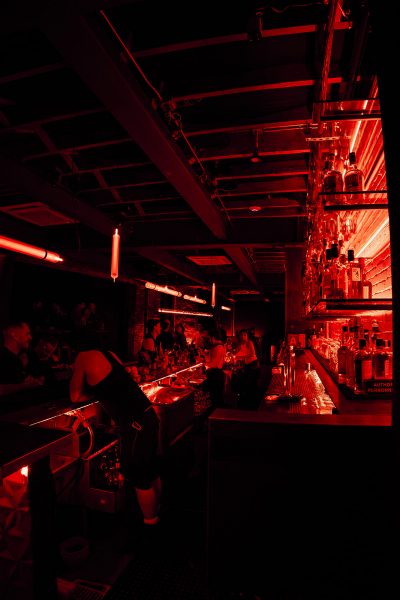
DJs including Sindri, ts GO!, Eva Myra May, Ashley Younniä, Terrell Brooke, Munro, Pretty Gay Friendly, DJ Kerry, and Cocteautwinks are among those already returning to the ANIMAL LA decks.
Stacy Christine, a longtime DJ in L.A.’s queer underground who has played at both ANIMAL locations, said the bar also gives DJs the freedom to play underground sounds less common at traditional gay bars.
“ANIMAL understands underground music,” Christine said. “If you were to play this type of music in another queer bar, someone would come up with a request on their phone for Britney or Bad Bunny. This is not that kind of place.”
DJs at ANIMAL LA are encouraged to play groovy electronic music, including house and techno, or, as Correa puts it, “music that people can flirt to, sway their hips to, dance to.”
“The bookers and Ashton specifically come from the underground,” Christine said. “They are tapped in, and there’s no compromising.”
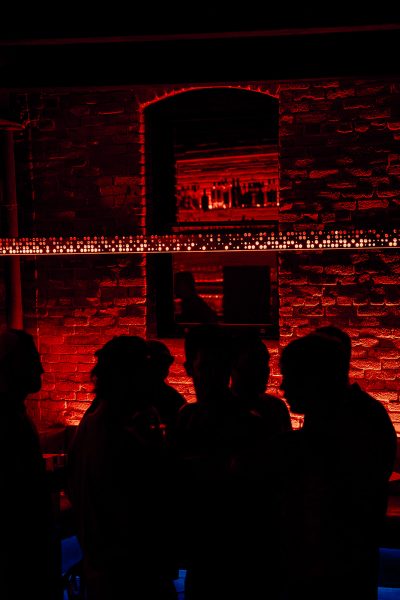
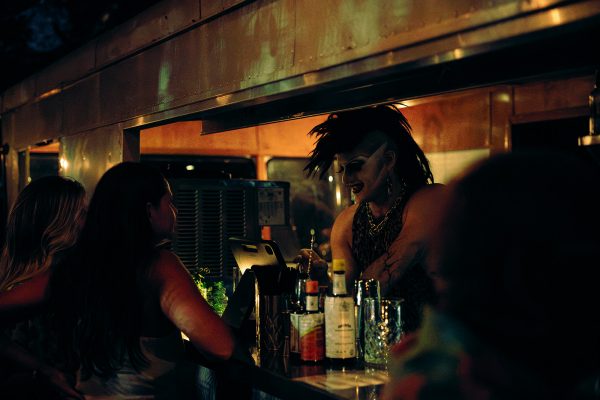
That refusal to compromise extends beyond the music. ANIMAL LA’s cocktail program uses a draft system to serve drinks quickly without sacrificing care. Bartenders prepare ingredients in-house before batching them, helping to handle crowds while keeping prices accessible. The menu includes a house-brewed maté, three types of Negronis, and a frozen espresso martini.
“Whether it’s fashion or aesthetics or architecture, [queer people] consider ourselves to be a cut above, and we’re not wrong,” ANIMAL LA partner Jim Morrison Hevert said. “The only thing is, we’ve never really had that in our bar spaces, and it’s sort of a lightbulb moment, like, ‘Excuse me, why?’”
ANIMAL LA’s indoor-outdoor layout includes a garden patio with its own bar and DJ booth. Inside, a giant disco banana designed by local artist and fabricator Eric Schum hangs over the dance floor, while custom metalwork by William Patchen is visible throughout the venue.
The partners initially considered opening in Silver Lake at the site of the former Faultline Bar, a gay leather bar which closed in January 2021. However, once they saw the expansive patio at the former Resident DTLA music venue at 428 S. Hewitt St., they chose the Arts District space instead, placing ANIMAL LA away from existing queer bars.
“I walked into this space in the Arts District, and I was like, ‘Holy shit, this is ANIMAL!’” Morrison Hevert said. “Opening the Arts District has panned out to be something that’s more leaning into Los Angeles, rather than just plopping down a Brooklyn ANIMAL between Akbar and the Eagle.”
The team was nervous to open outside of the city’s established gay bar corridors, but Correa said they were “excited to not step on anybody’s toes” and “to be able to go into our own little pocket of L.A.”
“It was exciting to open a bar in a place that doesn’t have gay bars and to be a little beacon of queerness,” Correa said.
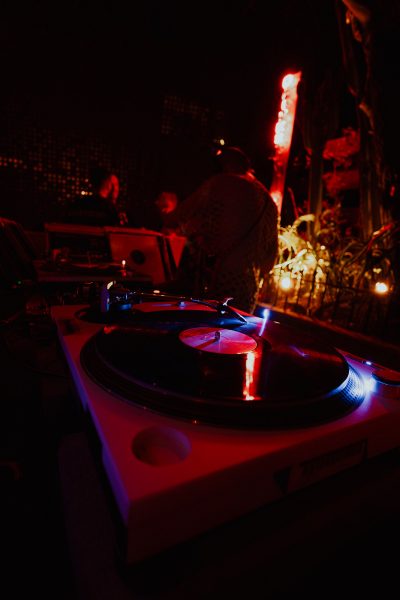
ANIMAL LA hopes to introduce programming including kink and fetish community events, flea markets, drag shows, and live music performances, while continuing to spotlight local and international underground DJs.
“We’re really grateful that ANIMAL is part of the L.A. queer ecosystem,” Christine said. “We’ve been needing a space like this for so long. ANIMAL has really breathed new life, giving us invigoration. She was right on time.”
ANIMAL LA is open Tuesday to Friday from 4 p.m. to 2 a.m. and Saturday and Sunday from 2 p.m. to 2 a.m. at 428 S. Hewitt St. with no cover charge.
a&e features
Defying convention (and physics): ‘Speedball’ Mike Bailey on identity and inclusion in pro-wrestling
All Elite Wrestling’s first non-binary champion talks about early wrestling inspirations, the importance of connecting with fans, and the history (or lack thereof) of queer representation in the squared circle.
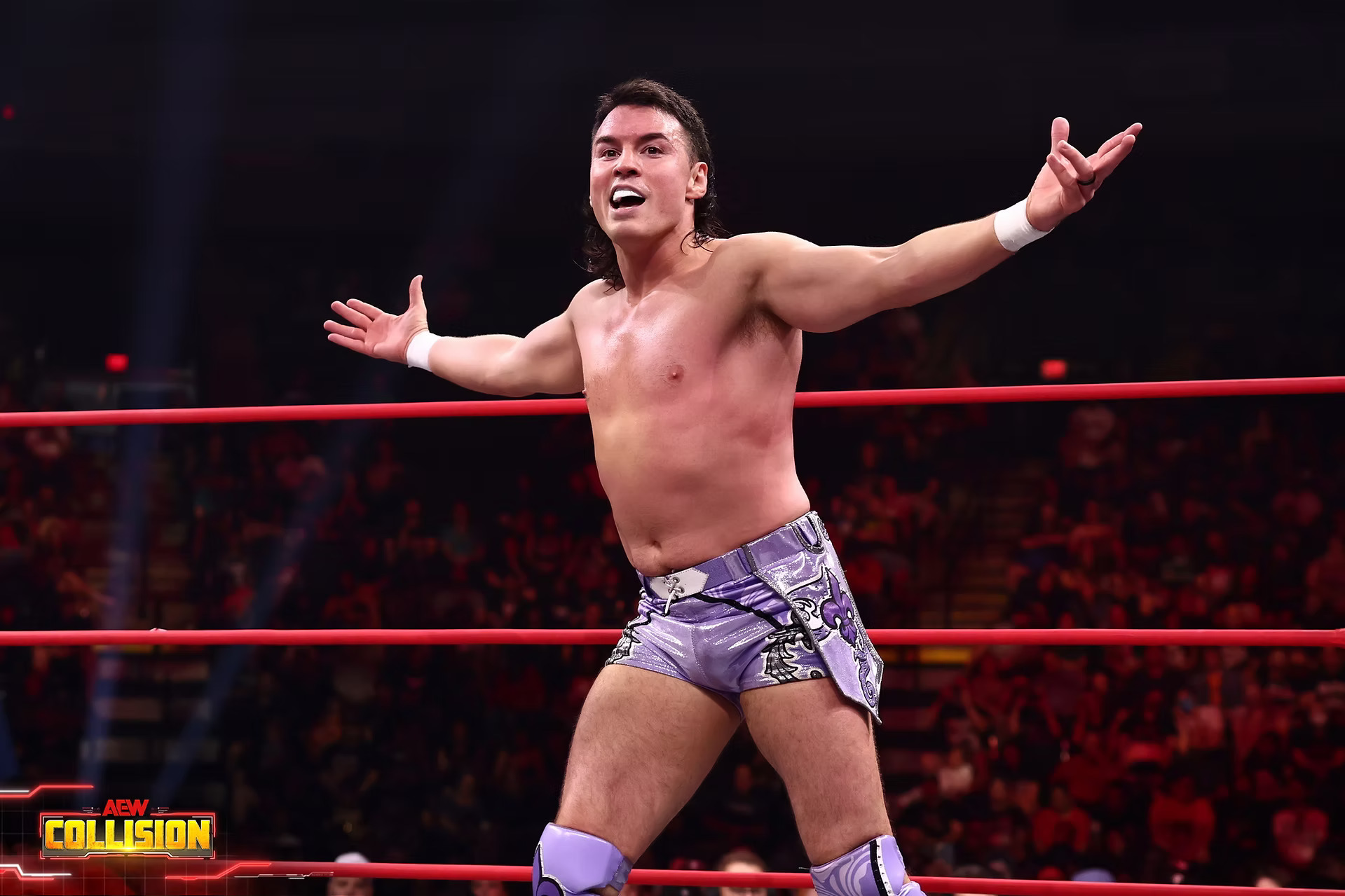
Canadian professional wrestler “Speedball” Mike Bailey may be a regular fixture on national TV as a key member of All Elite Wrestling’s expansive roster, but their path to wrestling stardom is anything but conventional. Nicknamed “Speedball” for his high-velocity, gravity-defying work in the ring, Bailey (who identifies as nonbinary) has spent more than 20 years traveling the globe as a star of the international independent wrestling scene, holding titles in TNA, DDT, and the IWS.
Thanks in large part to a 5-year travel ban incurred in 2016 that prevented him from working in the United States, Bailey’s international career flourished, and after years of globetrotting as a freelancer (and a stint in TNA), Speedball officially signed with AEW in January of 2025. On the road to AEW’s largest annual pay-per-view, AEW: All In, The Blade had the opportunity to talk to Speedball about connecting with fans, representation in wrestling, and how/why the industry can become more inclusive.
Between your YouTube vlogs and your Twitch streams, you’ve cultivated a very deliberate digital presence. What inspired you to start vlogging/streaming, and why is it important for you to maintain those channels now that you’re signed to AEW?
There are a lot of facets to the answer to that question, but the main one is that I believe that in 2026, wrestling is and should be an immersive experience – that’s how it’s going to grow. I think the days of people playing characters that were only able to exist on television in 15-minute weekly increments, because they’re some kind of undead creature that can’t really have a conversation, are not what the wrestling world needs anymore. As is Kayfabe, the whole secrecy behind wrestling. I think these days, if you look at social media, you will see that being open and honest and cultivating an audience that knows you well is the way to go. For professional wrestling, to have the best matches, what I want is an audience who can connect with me and who understands what I’m going through on an emotional level; so that’s one aspect of it.
But there’s a lot more – the reason I started the vlog is pretty much the same reason I started Twitch streaming, which was that during the pandemic, when the world was shut down, I was unable to travel, unable to engage with my audience, unable to see a lot of the friends I’d made around the world of professional wrestling. To try to re-form that connection, I decided I would try to leverage the internet to make up for the fact that I couldn’t be there in person, which is kind of what I’ve had to do my entire career.
If you’re familiar with my story, I was unable to enter the US for five years. During those five years, my focus was on growing my skill set as a professional wrestler, but also my brand, and trying to get as much global recognition as I could. Those five years really highlighted to me the importance of putting yourself out there as much as possible.
Historically, depictions of LGBTQ+ people in professional wrestling have been either negative or non-existent. Could you talk about the importance of AEW not just as an alternative promotion to the mainstream, but as a platform for queer talent?
If you’re familiar with pro wrestling, you’re familiar with its history in this century: where you basically had one promotion that had the monopoly on professional wrestling, and that promotion really was only one person’s vision being put on screen. Over the years, in the early 2010s, social media came about, and it became possible for independent promotions to actually advertise their shows, to build an audience, and to distribute their shows online.
Independent wrestling is intrinsically connected to the audience, right? It’s smaller shows for smaller audiences: if your crowd doesn’t like something, you will find out very, very quickly. So independent wrestling grew to the point that there was a giant hole in the wrestling market between what was presented on TV and what was happening at an independent level, which is so much closer to the audience. Tony Khan saw that gap in the market, and that’s what led him to create AEW. But I think the key here is that in order to be successful and continue to grow, pro wrestling needed to listen to its audience.
It became very, very clear that the homogeneous, uniform professional wrestler that was presented on TV was not representative of the audience who wanted to see professional wrestling anymore. The world is diverse. If people want to see that same diversity reflected in their professional wrestling, there is no reason for it to be reserved for only one kind of person. That is absurd. People want to see queer people. People want to see all kinds of stuff that doesn’t fit the historical mold of what a professional wrestler should be.
Were there any early LGBTQ+ wrestling trailblazers who inspired you?
It’s funny – no, not really, because there kind of weren’t any. But I remember finding a box of Manami Toyota tapes – I think someone had gifted them to my sister when she wanted to be a professional wrestler as well. But I remember watching those tapes of women’s wrestling in Japan, and seeing these women perform in front of a sold-out Tokyo Dome in the early 90s, and getting the sense that “Hmm, I think the way that women are treated on American televised wrestling is ridiculous. Clearly, they’ve drawn a crowd, and they’re able to put on a great show.” Seeing someone like Aja Kong, who is an absolute icon and the exact opposite of what was presented on televised pro wrestling for women at the time, really blew my mind.
Aja Kong is one of the greatest professional wrestlers of all time, and she doesn’t get nearly enough credit, just by getting a ton of credit. But we’re talking about the early 90s here, and this is a mixed-race queer woman who was selling out the Tokyo Dome. Seeing that really opened up possibilities for me. The fact that Aja Kong and Meiko Satomura are routinely ignored in the ‘greatest wrestler of all time’ conversations just shows you how heteronormative pro wrestling historians are, the fact that their careers are largely ignored.
Meiko Satomura, to me, is one of the top five greatest professional wrestlers of all time. Not just because of how good she is in the ring, but because of how her career has transcended decades, what she’s done through her own promotions, and the other wrestlers she’s trained. I think that’s completely incredible, and the fact that they get so little credit is very indicative of how things need to change regarding the way professional wrestling is viewed historically.
As someone who has been wrestling for 20 years, how and when did you know it was the right time to come out publicly?
So I never really ‘came out ’; I never declared anything. In fact, it was quite the opposite. I just rejected the theory of gender, if that makes sense – specifically, by design, there was no declaration. There was just a changing of my vocabulary, the words I used and how I described myself, especially within pro-wrestling, where that kind of thing is very relevant. Baked into the scripts, in the words of pro-wrestlers, there is so much talk of ‘manliness,’ and none of that ever resonated with me. I’m very lucky to have a platform such as pro-wrestling, which is stereotypically hyper-masculine, through which I can show people you don’t have to abide by those standards.
You mentioned the lack of LGBTQ+ wrestling influences you had early in your career – how does it feel to know that the next generation of wrestlers are going to have the likes of Nyla Rose, VENY, and Speedball Mike Bailey to look up to?
I haven’t thought about it too much. I’m glad that I resonate with people, but I feel like there are so many other ways people can resonate with me. Whether it’s non-binary, or trans, or through any other way, what I want people to take away is that you can still succeed if you don’t fit the mold. That is a huge hurdle I think professional wrestling, as an art form and a community, needs to overcome.
I always make extra time for anyone who is part of a queer or any marginalized community, or who otherwise doesn’t fit the mold, to give them advice and help however I can. There needs to be more of a conversation to be had about people who enter the pro wrestling space who have disabilities, and how there is space for those people, and that they belong just as much as anyone else.
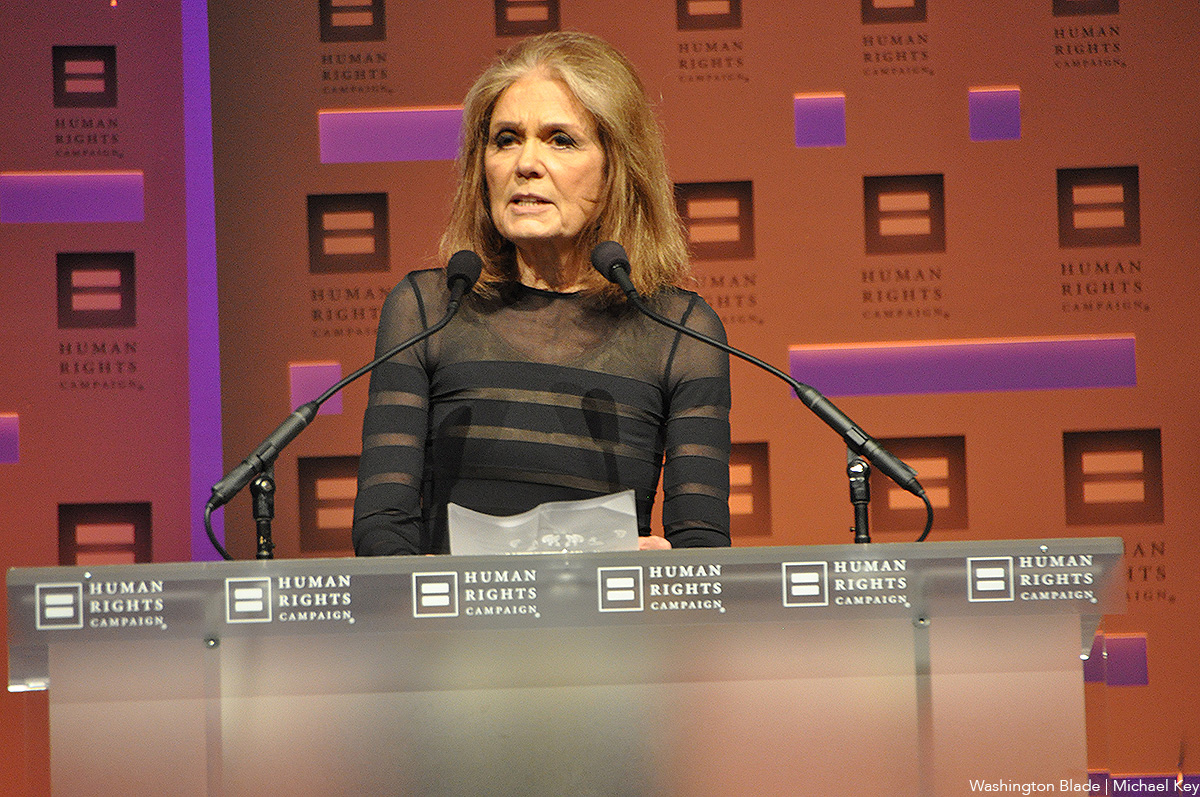
Gloria Steinem, writer, activist, and a leading voice of the feminist movement in the 1970s, died on Wednesday in Manhattan. Her death was announced on Instagram by her official foundation, Gloria’s Foundation, which shared that Steinem “passed away peacefully at her home, surrounded by some of the many who loved her.” She was 92.
A leading figure and spokesperson for the second-wave feminist movement, running from the 1960s through the ’80s — the earlier women’s rights suffrage movement being considered the first — Gloria Steinem campaigned for workplace equality, equality in the home and reproductive freedom, seeing those struggles as inseparable from the wider causes of social and racial equality.
She also championed LGBTQ+ rights, supporting lesbian visibility within the larger women’s liberation movement, and standing in opposition to the idea that lesbians posed a “lavender menace” to the cause of feminism.
In her vision of the future, marriage equality was a given: “Lesbians or homosexuals will no longer be denied legally binding marriages, complete with mutual-support agreements and inheritance rights.”
GLAAD President Sarah Kate Ellis said in a statement following Steinem’s death: “Gloria Steinem was a trailblazing titan of civil rights whose vision for liberation bridged the movements for gender equality, bodily autonomy, and LGBTQ+ rights. She recognized that feminist progress is incomplete without full inclusion and stood as an ally to transgender people’s fight for equality. Gloria rejected rigid binaries, choosing instead to build bridges of empathy and coalition across all marginalized identities. Gloria’s life was a masterclass in coalition-building, courage, and unconditional empathy.”
Among her many trailblazing milestones, Steinem was widely known for co-founding the National Women’s Political Caucus in 1971 alongside foundational feminist figures Bella Abzug, Shirley Chisholm, Betty Friedan, Fannie Lou Hamer, LaDonna Harris, Mildred Jeffrey, and Jill Ruckelshaus.
The mandate: get women into political office and positions of power — “women who are committed to the causes of other women — not women who are going to just imitate the male politics as it has been practiced all these years complete with elitism, racism and prejudice against women,” she said, “but women who really care about their sisters and will work for social reform.”
“This is no simple reform. It really is a revolution.”
Liz Abzug, daughter of Bella Abzug, remembers Steinem as “a lifelong activist and a humanist with lots of love to give,” as well as “a very, very close and dear friend of my mother’s,” as the two “worked side by side to change the American landscape for women.”
“It’s hard for me and all of her other supporters and admirers to imagine a world without Gloria leading the charge and fighting for women’s rights and full gender equality,” Abzug shared.
Indeed, there was much about that American landscape in need of change. Steinem came up during a time when discrimination against women was the legal and societal norm.
A married woman, for instance, often required her husband’s signature to obtain a credit card, a form of gender discrimination remedied in 1974 with the Equal Credit Opportunity Act. Women were often unable to get jobs. Life turned Steinem down, saying “We don’t want a pretty girl, we want a writer. Get out of here.” If women did land a job, in 1973, they would have likely made 56.6 cents to every dollar that men earned.
The law’s failure to support women’s autonomy was especially visible on the matter of reproductive rights.
For many women in America, legal abortion remained unavailable until 1973, when Roe v. Wade established a constitutional right to abortion nationwide. Steinem spent years speaking out for women’s safety, and promoted the idea that “decision-making power over our own physical selves” was intertwined with equal regard for women as citizens.
“The vast majority of women support safe and legal abortion. My response is if those legislators were half women, this wouldn’t happen,” she said in a 2022 interview with Katie Couric. “If we actually had a democracy, if those legislators looked like the country from a gender, racial, and class perspective, this probably would not be happening…”
Gloria Marie Steinem was born on March 25, 1934, in Toledo, Ohio, the daughter of Leo and Ruth (Nuneviller) Steinem. Her father was an antiques salesman; her mother had worked for a newspaper before she got married, but suffered what was called at the time a “nervous breakdown” and spent time in an institution. Following a divorce, her mother was left largely in the care of 11-year-old Gloria Steinem in a house that has been described as infested by vermin.
“I didn’t go to school a full year until I was 11 or 12, so I lived in books. I really was an observer of life,” Steinem said in a 2011 interview.
After moving to Washington to live with her older sister, Susanne, Steinem graduated from Western High School in 1952. She followed Susanne to Smith College where she studied government and wrote for the student newspaper, graduating in 1956.
Upon moving to New York in 1960, she worked for Help! magazine and wrote freelance for publications that included Life, Esquire, and Glamour. According to Smith College Libraries, she co-founded New York magazine in 1968 and served as political columnist until 1972. In the 1960s and ’70s, Steinem was active in causes that included United Farmworkers, Vietnam War Tax Protest, and Committee for the Legal Defense of Angela Davis. She also participated in the political campaigns of Adlai Stevenson, Robert Kennedy, Shirley Chisholm, and others.
Steinem is said to have found her way to the Women’s Movement in 1969, following an abortion “speak-out” meeting of the Redstockings. She was inspired to begin speaking to audiences across the country, alongside activist Dorothy Pitman Hughes, and later Florynce Kennedy and Margaret Sloan.
Among Steinem’s most enduring legacies, and still in publication today, is Ms. magazine, which she co-founded. Widely considered the first national American feminist magazine (and owned, operated, and written by women!), it first appeared as a preview insert in New York Magazine in December 1971 with a tagline, “The New Magazine for Women.” Ms. earned status as a full-on publication in July 1972 with a cover image depicting a modern pregnant Hindu goddess Kali holding a clock, skillet, typewriter, rake, mirror, telephone, steering wheel, and an iron.
Ms. is credited with raising cultural awareness on policy issues, like the Equal Rights Amendment, taking on taboo topics and putting women’s issues front and center.
Steinem’s long list of published work includes the 1983 bestselling book Outrageous Acts and Everyday Rebellions, a collection of her Ms. articles and other pieces. The book includes the feminist’s essay on her undercover exposé of the Playboy Club, for which she donned bunny ears, collar, and bow to covertly report on working conditions for women.
In 1986, she published “Marilyn: Norma Jeane,” which explored the life of Marilyn Monroe and the idea of women as vulnerable and at the disposal of society — men in particular.
Steinem also wrote “Revolution from Within” (1992); “Moving Beyond Words” (1994); and “Doing Sixty & Seventy” (2006). She was awarded the Presidential Medal of Freedom in 2013 by President Barack Obama.
Steinem’s relationships over the years included Ted Sorensen, counselor to President John F. Kennedy; Stanley Pottinger, a Justice Department official; and publisher and real-estate businessman Mort Zuckerman. In 2000, she married South African businessman David Bale, who died in 2003.
Steinem was predeceased by her mother and her sister, Susanne Steinem Patch, who died in 2007. On multiple occasions, she spoke of a community that extended beyond birth family — people whom she chose, and who chose her.
“[Feminism is] about friends and sisters and community,” Steinem said in an interview with bell hooks. “The good part and the great part is that it’s about chosen family. We have each other’s backs and that is so precious.
In announcing Steinem’s passing, her foundation offered this reflection: “Gloria’s greatest gift was her ability to listen to others, to make others feel seen and heard. Her words, actions, and example gave people permission to be their truest selves. Gloria lived true to her independent spirit, always with curiosity and a great sense of humor.
“She spent her recent years doing the two things she loved most: being in community with others and writing … Gloria loved the tradition of lighting signal fires on hills to light the way to the other side of the mountain.”
Gossip
Spilling some dating tea with the guys from ‘A Little Throuple Tea’
The internet’s favorite throuple shares helpful dating and romance advice
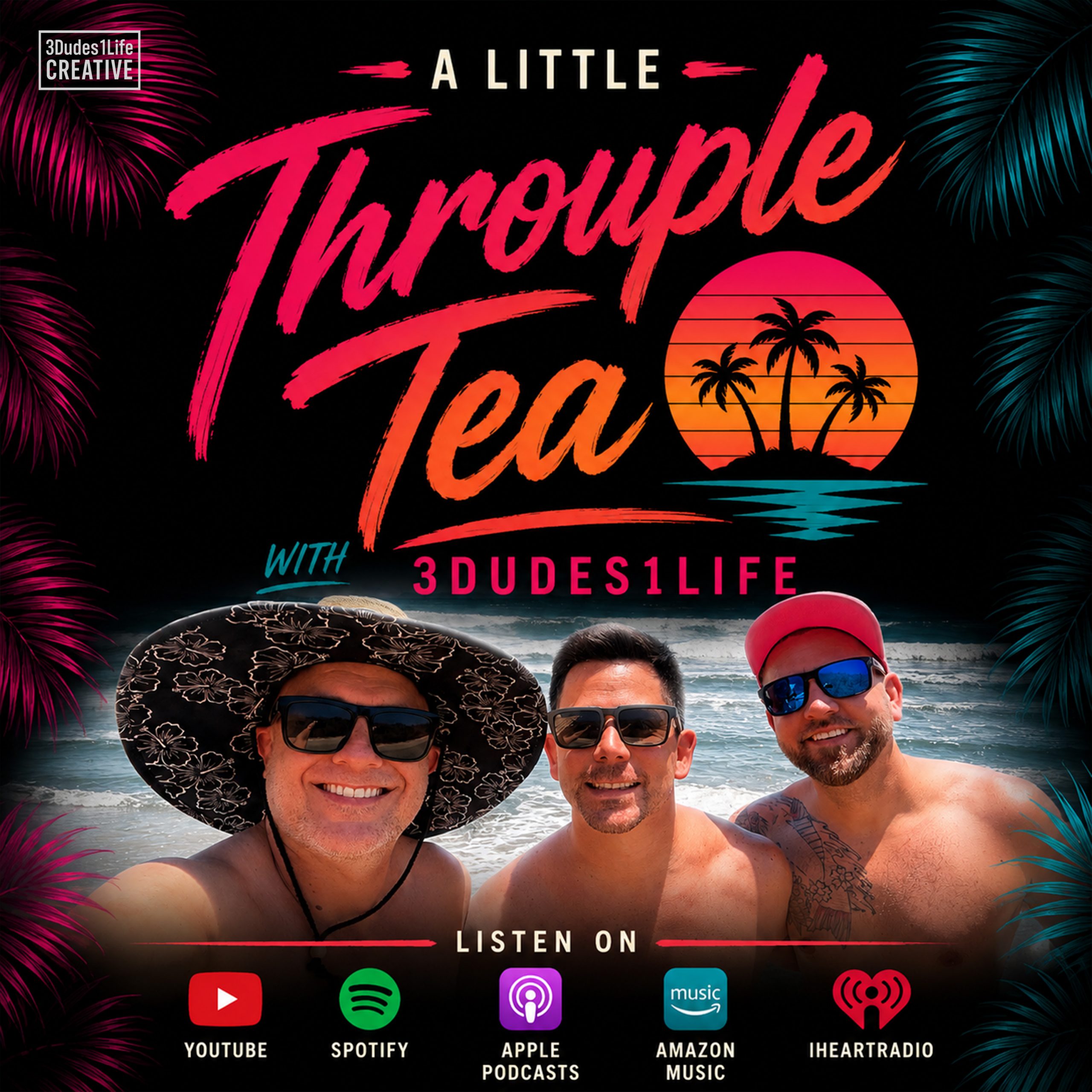
A lot of people are out here offering dating advice when they have no partner, a sex life that can best be described as suspicious, and a therapist on speed dial. If you want dating advice, why not go to someone who not only found one partner but found two?
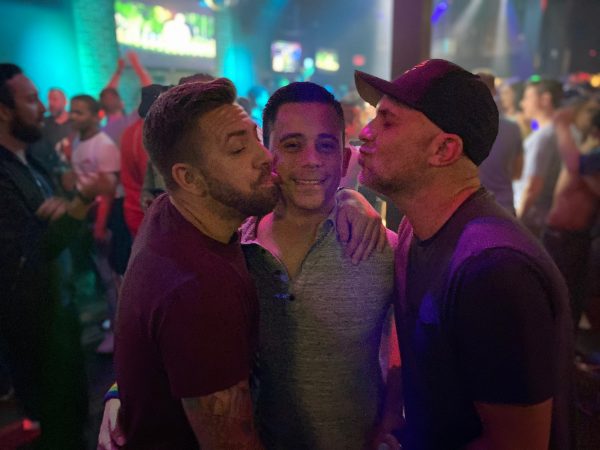
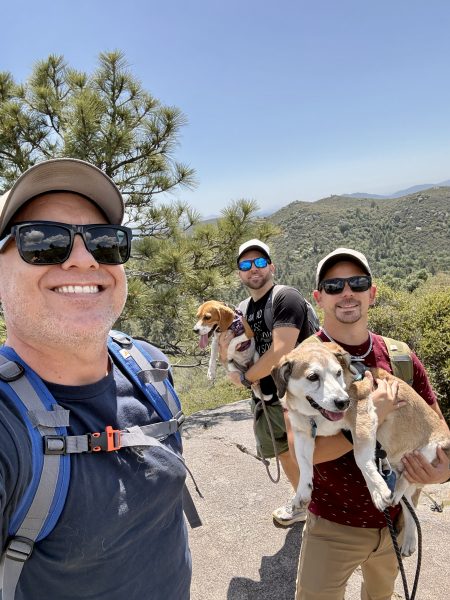
Will, Caleb, and Daniel have invited the Internet into their relationship with their podcast A Little Throuple Tea and are out to unseat Derrick Barry, Nick San Pedro, and Nebraska Thunderfuck as the Internet’s most notable throuple.
Jokes aside, they offer some insight into how they make their relationship work and some advice they have for all you lonely hearts, recovering fuck boys, and guys who just want someone special to settle down with.
After all, relationships take effort, vulnerability, and work, so why not hear from people who have made it work twice as well.
What dating advice would you have for gay/queer singles?
Daniel: As with any relationship, don’t force something just because you want it to work. The best relationships often develop naturally. Ours grew out of friendship, trust, and genuine connection. Stay open to possibilities and let things evolve at their own pace.
Will: Sometimes the best things in life happen when you’re not actively looking for them.
My advice would be to focus on enjoying your life, building friendships, pursuing your passions, and becoming the best version of yourself. When you’re comfortable with who you are, the right person often shows up when you least expect it.
None of us were searching for the life we have today—it developed naturally through friendship, timing, and genuine connection. Sometimes that special someone really does just bump into you.
Caleb: GET OFF THE APPS!!! Go outside, put yourself out there, and meet people; feel the feelings that go along with dating: the rush, the heartbreak, the feeling of being judged, the pleasure of being accepted. We as humans learn from this. We learn what kind of person we like and what we don’t like. Real human connection. I know it’s harder for gay and queer people because some of us may be in situations where we can’t be honest about who we are, but remember, we are everywhere!
What have you learned in your relationship that you think could help singles or the community as a whole?
Caleb: Honestly, I’m going to take one out of the LGBTQ+ handbook that we as a community tend to forget: Accept people for who they are. We just want to be accepted, but then we can’t accept our own kind. I’m not saying that we have to like each other and hold hands and sing “Kumbayah” around a Pride flag pole. But we should be lifting each other up as a whole community. We are only as strong as our weakest link!
Will: One of the biggest things we’ve learned is that if something brings you happiness, fills your life with love, and isn’t causing harm to anyone, then other people’s opinions really don’t matter.
Life is far too short to spend it worrying about what a “Karen” might think about your relationship, your choices, or your happiness. For us, our love and happiness come first, and I think that’s a lesson that applies to everyone.
Whether you’re single, dating, married, or somewhere in between, you have to build a life that makes you happy. At the end of the day, you’re the one who has to live it—not everyone else.
Daniel: I’ve learned that every day is a journey. Sometimes you can plan everything down to a T and nothing goes as expected. Having patience, staying flexible, and finding humor in life’s ridiculous moments goes a long way. We try to focus on what we can control and laugh about the rest, even if it occasionally takes a little meditation first.
In the world of open relationships, polyamory, and throuples, what are your thoughts?
Daniel: No judgment on open relationships. If it works for a couple or throuple, let them live their lives and have fun. We aren’t an open triad. We’re exclusively committed to each other. That doesn’t mean everyone else’s relationship should look like ours. Every relationship is different, and what matters most is that everyone involved is happy, honest, and on the same page.
Will: Honestly, I didn’t know much about the world of polyamory until we joined Instagram and people started reaching out to us and sharing their own stories.
What I’ve learned is that relationships come in many different forms, and if a relationship works for you, you’re treated with love and respect, and you’re genuinely happy, then who am I to judge? At the end of the day, I think people should focus less on fitting into someone else’s definition of a relationship and more on finding the kind of love and partnership that makes them happy.
Caleb: I love it! I feel like maybe people might be happier in their relationship if they allow themselves and their loved ones a little freedom. Relationships can grow old and stale real quick, and love lives can really hit a snag. By allowing the relationship to open up, a “play night” with others, or inviting a third or even a fourth in can really change the dynamic of the relationship. It goes from being with this person because I have to, because society said so, or there’s a ring on it to I’m with this person because I want to be with this person.
What is a reality check you have for people who may be fantasizing about throuple life?
Daniel: Throuple life can be incredibly fun, and yes, it can be pretty hot too. But what I tell people is that instead of having one partner, you have two. That means double the communication, double the schedules, double the opinions, and sometimes double the food bill. The rewards are bigger, but so is the effort. You don’t just add another person to the relationship. You build an entirely new relationship dynamic together.
Will: Your life will change, and you’ll probably have a lot less alone time. The upside is that when you do get that time to yourself, you appreciate it a whole lot more. You also need to be prepared for the fact that your relationship will likely be judged more than a traditional two-person relationship. We’ve had people look completely confused when we tell them we’re a throuple, and some people’s brains seem to short-circuit trying to figure it out. The amount of judgment can be surprising, especially considering our relationship has absolutely no impact on their lives.
That said, if you’re secure in who you are and committed to making it work, those opinions become a lot less important over time.
Caleb: You have to remember this quote that’s a good reality check: “more money, more problems.” When we do fight, there’s 3, not 2, and sometimes 2 of them are fighting, and 1 is stuck in the middle. More than 2 people in a relationship can mean more problems too. So you have to keep those things in mind.
Will: One final reality check: nobody will ever be able to decide where to eat. If you think choosing dinner is hard with two people, try doing it with three. It’s way worse.
Check out their 3Dudes1Life app to access their podcast, their book, and more!
And look for more of these guys on the Los Angeles Blade; we will be sharing the latest episodes of their podcast right here!
EMMYS
‘Jokes with Joysauce’ brings queer AAPI comedy to the Emmys
Peter Kim and Dylan McKeever discuss representation, comedy, and cartoon cowboy outfits
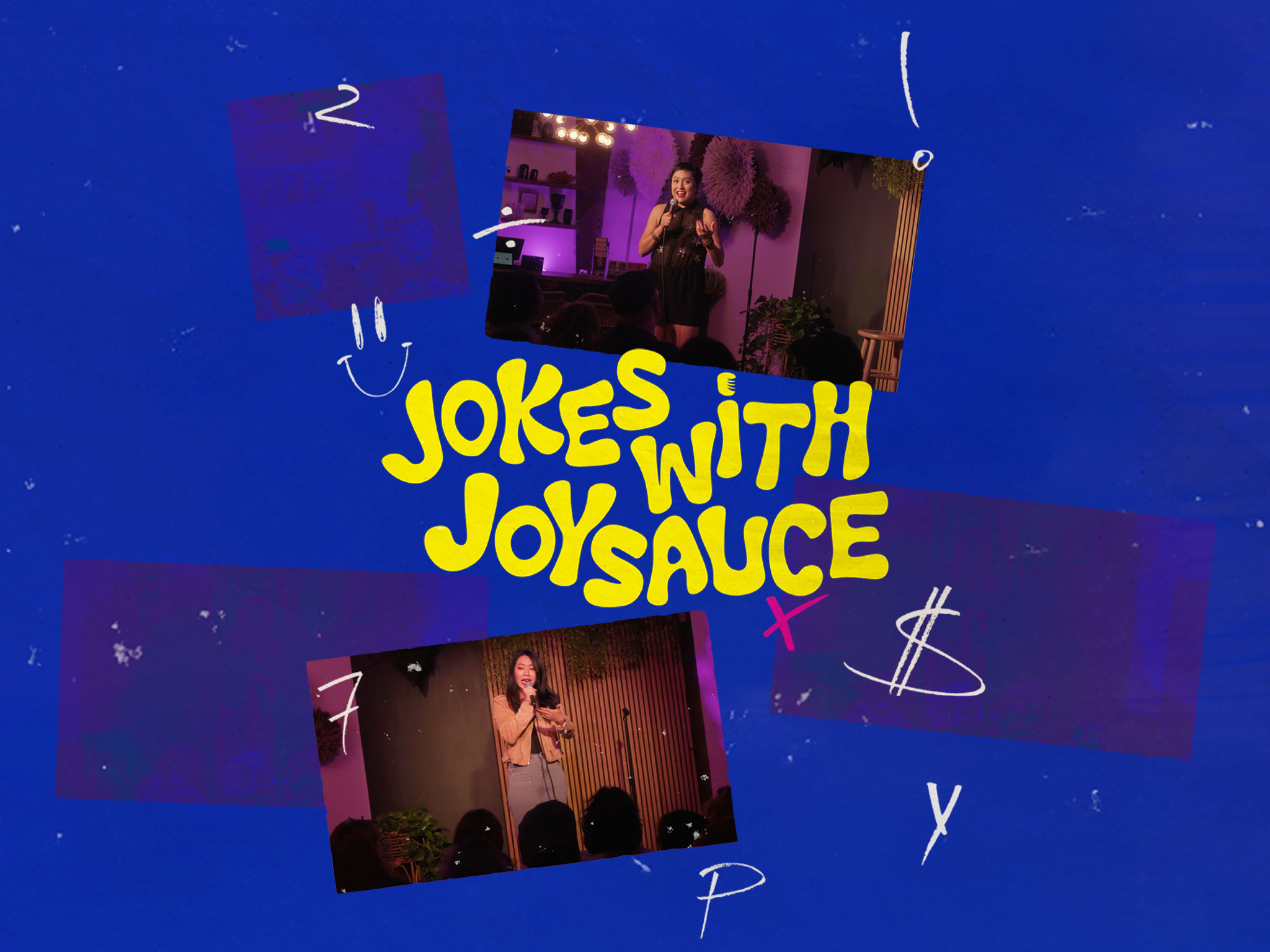
For comedians Peter Kim and Dylan McKeever, the recognition surrounding Jokes With JoySauce came as a surprise.
“I didn’t think a bunch of Asian comedians talking about their upbringing would end up at the Emmys,” Kim said. “But hey, everything’s TV now, so I love that.”
Jokes with JoySauce, the AAPI comedy series created and executive produced by Ana Parsons, is nominated for Outstanding Short Form Comedy, Drama or Variety Series at this year’s Emmy Awards. The show brings together AAPI comedians for stand-up performances and conversations about comedy, identity, and the life experiences that shape their work.
For Kim, the project is one of the few examples of Asian American comedy he can think of.“I don’t know of anything else,” Kim told the Blade, “I grew up watching The Kims of Comedy series … And that wasn’t a series. It was more like a one-time special.”
Jokes with JoySauce defies expectations for Asian Americans, LGBTQ+ people, and those at the intersection of both identities. While rooted in a specific community, it creates space for a wide range of experiences and perspectives.
“It was cool to have our own version of [The Kims of Comedy] and not just be all Korean men. Our show is diverse within the API world as well,” Kim said.
For McKeever, a trans comedian, that representation feels especially significant at a moment when she sees opportunities for trans performers becoming increasingly scarce.
“There were no trans people in the media when I was growing up, like absolutely zero,” McKeever said. “Now, I feel like the wave has come, but is now receding, so it’s nice to have something.”
Unfortunately, trans people have become the subject of other comedians’ material, which makes the lack of trans representation especially frustrating.
“Oh, I love that we have 200 cis straight men – all talking about trans issues – and everyone gets a special … and there has not been a single trans person who’s gotten a special on any of the major streamers,” she said sarcastically. “It’s a great balance.”
That tension between being represented and being spoken for continues to shape how Kim and McKeever approach different audiences.
McKeever said that performing for queer audiences allows her to use a shared language that tends to disappear in front of predominantly straight audiences:
“It feels like I can really dig into the inner-community jokes and have fun with it,” she explained, laughing but making the point seriously. “But if it’s with a straight crowd, I can’t do those jokes as much because if I hear the straight audiences repeating this stuff, I’m gonna be pissed.”
Kim shared McKeever’s outlook. “It takes a little more setup for straight audiences, whereas, for queer audiences, there’s a shorthand that lets you skip right to it,” he told the Blade.
In most lineups, both Kim and McKeever’s identity becomes difficult to ignore.
“Most of the lineups we’re on, we’re the only queer person or a person of color. We check both. So we’re, you know, a BOGO,” Kim laughingly said. “But it does sometimes feel like, “Oh! Here comes the queer one! Here comes the non-white guy!”
For McKeever, the feeling is almost comical. “It’s like walking into a show with a big cartoon cowboy outfit on and not talking about it,” she said.
Yet amid the stereotypes, jokes made at these communities’ expense, and pressure to perform in a certain way, the Emmy nomination offers a measure of what hard work can achieve. For Kim and McKeever, the endless hours spent writing and performing stand-up have opened a path toward the kind of representation they once sought out as young LGBTQ+ viewers – and that they can now help provide for others.
However, while awards may offer validation for a show built around voices that have historically been excluded, neither comedian defines success by trophies alone – though they joked otherwise at first.
“No, it’s trophy or bust for me,” Kim said, prompting McKeever to add, “I am quitting if we don’t win.”
Once the jokes quieted down, both described success in more personal terms. For Kim, that means the chance to keep expanding his work beyond stand-up. “Success,” he said, “feels like more opportunities – more opportunities to be ourselves, to go up and do comedy, and to pursue acting opportunities.”
McKeever largely agrees, telling the Blade, “Success is just to keep on going and being creative,” McKeever said. “Which I’ll always be doing – whether there’s an award or even an audience for it.”
While most enjoyers of comedy assume the only way to watch it is through Netflix specials or other streaming platforms, both Kim and McKeever hope that audiences will seek comedy outside of their own homes. “There’s fabulous comics out here just locally doing cool stuff,” Kim said. McKeever put it even more simply: “There’s nothing that could replicate the feeling of a live show.
Whether Jokes with Joysauce takes home the award will be decided during the 78th Emmy Awards ceremony in September.
But regardless of a win or loss, McKeever leaves readers of the Blade with a simple task: “Go to a comedy show.”
Check out Jokes with Joysauce on JoysauceTV.
a&e features
Are you ready for a ‘Culture Shock’ with Andy Lalwani?
The LA reporter dishes about everything going on with his new podcast

If you’ve been to an event in Los Angeles, then there’s a good chance you’ve had the pleasure of seeing Andy Lalwani’s work firsthand.
The gay reporter has spent almost a decade bouncing around the city’s hottest venues for some of today’s biggest publications. Whether it’s Grindr or Disney — yes, the man has recently done work for both companies — Andy has become known for not only his fantastic carpet interviews, but the engaging social content that he always produces afterward. He offers a simultaneously relaxed yet engaged approach to these moments, with his videos being filled with intriguing conversation from huge stars and a shocking amount of casual laughs.
Pair this constant presence with an engaged social media audience of more than 30,000 followers, and it’s safe to say Andy Lalwani is a true star in LA’s bustling reporting scene. It’s why so many folks across the city were excited when he announced his newest project: the Culture Shock podcast.
“It is so fun to show up to a studio and just have no idea what you’re about to get into,” laughed Lalwani, reminiscing on the past few months since Culture Shock debuted in March 2026. “I want every guest to feel like this is just a great time, to be sitting across from somebody and just getting on. I think the world needs to laugh a little bit more, and that’s what this whole podcast is about.” Culture Shock sees the reporter go from the carpet to the recording studio as he sits down with some of LA’s biggest cultural changemakers. Whether it be musicians like Icona Pop, comedians like Matt Rogers, or even Leland of RuPaul’s Drag Race fame, the podcast has quickly gained an audience who love Andy’s intriguing conversations with each personality.
The host has been overwhelmed with the response from his audience, saying how happy he’s been to see folks enjoying this project — especially because Culture Shock wasn’t created in the best of circumstances. Candidly speaking about what led him to make this show, Andy stated, “I started my podcast when I got laid off from my job.”
“It definitely has a lot of highs and lows when you’re trying to work and break into the [media]…it’s been really hard for LGBT people to be involved in news whatsoever because of the landscape.” It’s an issue that affected thousands of folks in this community, with many queer journalists from big publications — including ones catered to the LGBTQ+ community — being laid off in recent months. But Andy stressed that after years of trying to prove himself to others, it actually felt inspiring to finally get the chance to create something completely unique to him. “Seeing gay people-of-color is hard in the media — behind and in front of the camera — and so being an Indian guy…there’s not a ton of us who do what I do,” he explained. “So once I got laid off, I was like, ‘I just want to own something myself for a change, and not have to report to anyone else.’”
And own it he does, with Andy offering his trademark style of interviewing into each episode of Culture Shock. He was quick to emphasize, though, that the show’s success can’t all be owed to himself. Andy thanked his entire team at Spotify by saying, “Spotify has been really supportive with this endeavor,” describing how they’ve helped him fight through the early nerves of this process. Made up of professionals from around LA, he offered immense gratitude to the many folks in both production and promotion, with the podcast even being featured in the platform’s June spotlight on LGBTQ+ creators.
Lalwani spoke proudly about all that he’s accomplished with Culture Shock, but when asked about the future of the podcast, he calmly stated that he wasn’t sure what would come next — and that was on purpose.
“When you work in media, you think you have it all laid out for you. But for me, if you asked me five years ago where I thought I’d be now: completely different,” he laughed. “But I’m in the prime seat, and I want to keep that going. Maybe expand it even more! I can’t tell you where the next thing is going to be, but it’s…it is just such a joyous, rewarding process to say I’ve taken every skill — production, reporting, on-camera experience — and just like housed it into one. That’s it…it’s just a nice home for myself.”
An earned sense of optimism from a person who’s worked to master the skills audiences hear in every Culture Shock episode. Though while he’s keeping his options open, one thing is for sure: Andy Lalwani is prepared for the many big and bright things that are certainly in his future. And now that he has access to his very own studio at Spotify, he’s excited to ensure audiences listen in on these new adventures every step of the way.
Movies
‘Teenage Sex and Death’ has never been more entertaining
Come for the jump scares, but stay for the tour-de-force filmmaking
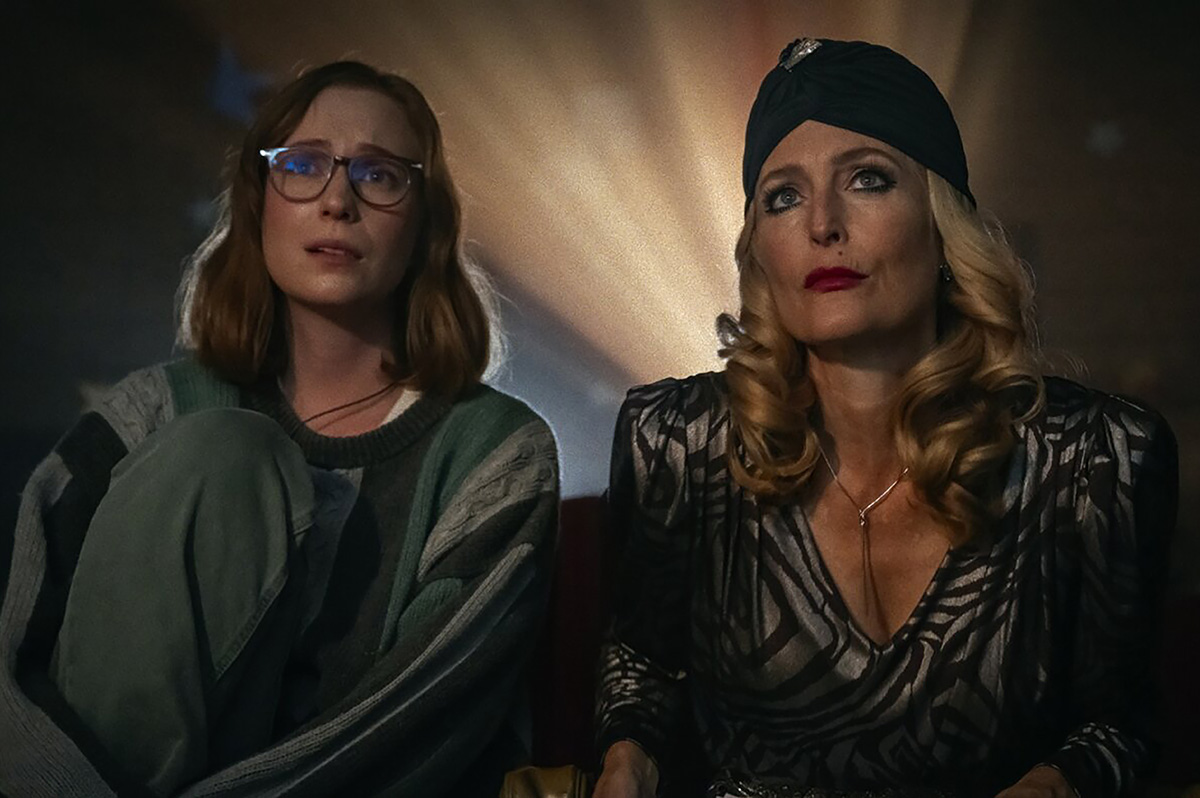
If any movie title can be said to describe exactly what it is going to show us, “Teenage Sex and Death at Camp Miasma” would have to be it – and yet, it doesn’t communicate anything to prepare us for what we are going to see.
For that, you’d have to already be a fan of the creator behind it – transfeminine, non-binary filmmaker Jane Schoenbrun – and the surreal, dysphoric, and meta-formal nature of their previous work.
A horror fan since childhood, Schoenbrun spent their teen years frequenting online message boards for popular horror shows, writing fan fiction, and going to see punk bands in basements; a bachelor’s degree in film from Boston University paved their way into the world of “indie” cinema, and their first directorial effort was an online documentary about the phenomenon of “Slender Man” (look it up), which explored the way media and reality can blend together in the cultural imagination.
That blending has continued to permeate their films: their first feature, “We’re All Going to the World’s Fair,” about a lonely teen who is drawn into a creepy online challenge, tells its story entirely through video clips she and the other participants share online; their second, “I Saw the TV Glow,” is an eerie and devastating tale of two teen friends who form a bond over their shared obsession with a paranormal television show and drift apart when it is cancelled, only to be drawn together again when buried memories of it begin to infiltrate their “real” lives. Both are driven by themes of gender identity, social isolation, queer awakening, and transformation – the stuff that resonates deeply with queer and trans audiences – and Schoenbrun didn’t bury the subtext in the story; instead, the subtext was the story.
With “Camp Miasma,” their third and (thanks to its win of the “Queer Palm” at Cannes) highest profile feature film to date, they carry their creative obsessions forward into a surreal narrative that exists around the border between reality and media-manufactured fantasy, and brings them into the the world of queer adulthood. Even more boldly, perhaps, it’s a comedy (albeit a dark and grisly one), a satire of the movie industry itself – which gives the director plenty of cheekily self-referential opportunities to make this their most “meta” film yet. After all, it’s about a young non-binary director working on a horror film, and you can’t get much more “meta” than that.
The onscreen director who serves as Schoenbrun’s semi-autobiographical avatar is Kris Williams (Hannah Einbinder), who has been tasked by a studio with remaking its classic slasher movie from the 1980s (“Camp Miasma”), in hope of generating an updated reboot of the once-lucrative franchise it spawned. Kris, who loves the original film, hopes to coax the actress who starred as its “final girl” – Billy Presley (Gillian Anderson) – into returning to the screen for the new one, though she has been retired from acting and living as a recluse ever since. Managing to get a meeting with her at her secluded home in the Pacific Northwest, Kris arrives in a snowstorm to discover that Billy now lives in the same abandoned campground where “Camp Miasma” was filmed four decades ago. She also has seemingly developed the unsettling eccentricities of an aging once-famous scream queen who has faded into obscurity and spent decades dwelling in memories of the past.
Despite some initial misgivings (on both sides), the two hit it off, and Billy agrees to help Kris develop her ideas for the reboot. As they work, their shared obsessions around the original film and its horrifying mythos draws them closer together into a more intimate kind of relationship – even as Billy’s unconvincingly “tongue-in-cheek” insistence that the franchise’s iconic killer is a real entity, waiting to be reawakened for the next massacre, begins to creep into Kris’s own psyche.
Ingeniously mixing fan nostalgia for vintage “Friday the 13th”-style slasher films with the Lynchian surrealism of modern horror cinema and the campy-but-transgressive absurdity of a movie that wants us to be “in” on the joke, “Camp Miasma” takes Schoenbrun’s broodingly ironic Gen-Z sensibilities and spins them into something that works on multiple levels. As a horror film, it relies on the familiarity of its tropes and gleefully manipulates our reactions, yet undercuts its own formula to turn it into a blend of parody and homage that somehow elevates the genre by way of its own deconstruction. As a piece of postmodern cinema, it precludes attempts at analysis by transparently analyzing itself as it goes as part of its own self-aware scenario, turning intellectual interpretation into just another trope of its own. As a queer allegory, it nullifies the standard critical interpretations by wearing them jokingly on its sleeve. As a love-letter to cinema, it brims with callbacks to iconic masterworks like “Sunset Boulevard” and “Psycho.” It uses the irresistible darkness of its milieu as a vehicle through which to express a liberating, sex-positive celebration of queer joy, unencumbered at last by a confrontation with the fear, shame, and insecurity forged by social constructs that are so often used to suppress it. It even works as a romance, turning the age gap between its two leads into a bridge that overpasses any notions of conformity and eliminates false sentiment by framing it as a sexy kind of cross-generational mentoring.
At the center of it all is the powerhouse pairing of Einbinder and Anderson, whose dynamic together works so well we never bat an eye over that age gap; they sink their teeth into the material and deliver it with a fearlessness that feels a bit like pure glee, and they give what might just be the two best screen performances of the year.
of the year so far.
There are also some winking cameos, like “Kids in the Hall” alumnus Kevin MacDonald as a local hotel clerk who was once enlisted as a supporting player in the “Camp Miasma” franchise, and veteran character actor Dylan Baker as the facile-minded studio exec who simply wants Kris to create something commercial enough to turn the franchise into a cash cow again. Jack Haven (the trans co-star of “I Saw the TV Glow” opposite Justice Smith) commands our attention as Camp Miasma’s weirdly air-duct-masked slasher – named “Little Death,” a phrase which, translated into the French “La petite morte,” is a euphemism for orgasm, just in case it wasn’t already clear that the movie operates as a psychosexual drama, on top of everything else.
Ultimately, though, it’s Shoenbrun who is the real star; much in the way that Alfred Hitchcock turned his own unique milieu into a kind of star power that eclipsed even the draw of the big name actors who populated his films. They come into their own with “Teenage Sex and Death at Camp Miasma, creating one of the best films of the year so far and cementing their reputation as one of the most excitingly visionary filmmakers of the post-Millennial era.
In other words, come for the blood, gore, and jump scares, but stay for the sublimely entertaining — and entertainingly original — tour-de-force filmmaking that raises this one to the level of pop culture masterpiece.
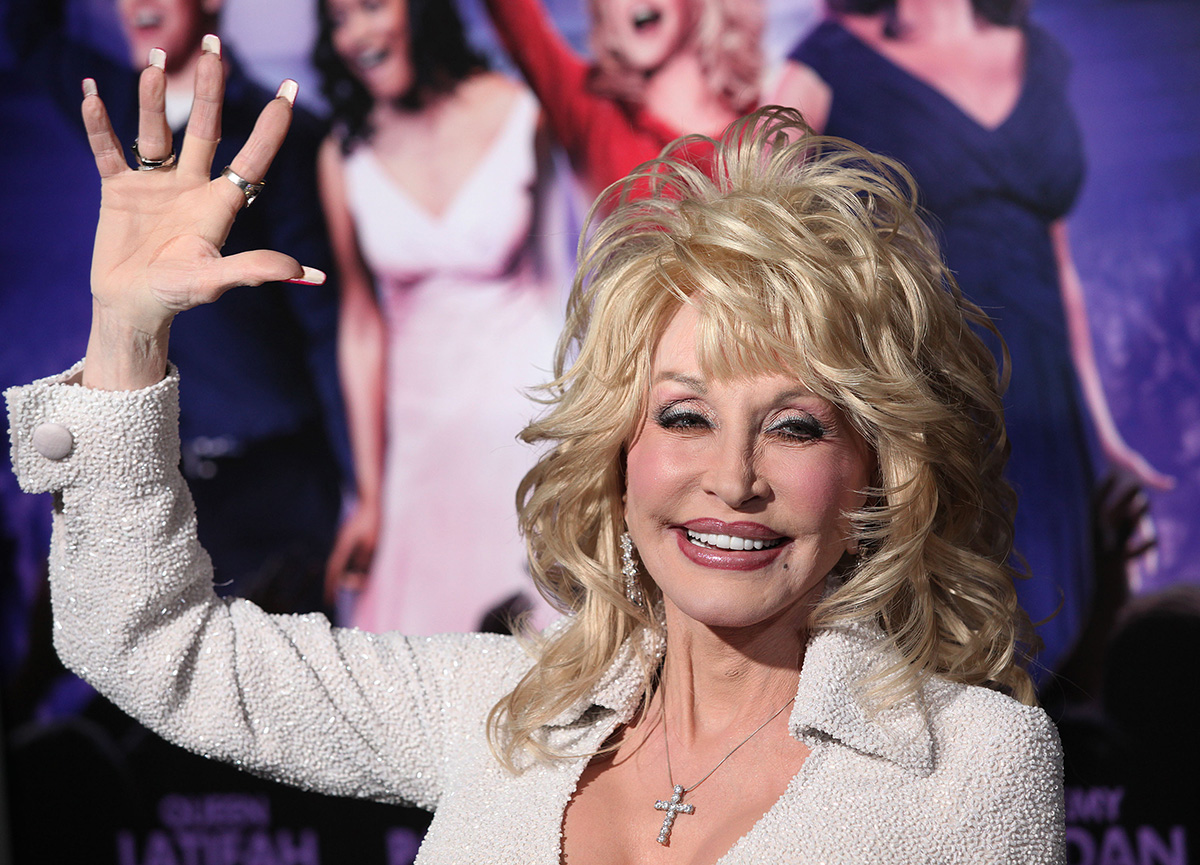
Dolly Parton died on Tuesday at a Nashville hospital. She was 80.
Her publicist, Marcel Pariseau, said Parton passed away at the Vanderbilt-Ingram Cancer Center “after bravely facing a brief battle with cancer.” Parton’s nephew, Bryan Seaver, announced his aunt’s death in a video posted to her Instagram page.
Born in Sevier County, Tenn., on Jan. 19, 1946, Parton was one of 12 children who grew up in poverty.
She moved to Nashville in 1964 and later became known as the “Queen of Country Music” with hits that include “Jolene” and “I Will Always Love You.” Parton also starred in “9 to 5” and “Steel Magnolias.”
Parton in 1995 created the Imagination Library, which sends free books to children. Parton, among other things, donated $1 million to Vanderbilt University Medical Center that helped fund research that paved the way for Moderna’s COVID-19 vaccine, and gave another $1 million for Hurricane Helene relief efforts in Tennessee and North Carolina.
Parton was also a long-time LGBTQ+ ally.
She spoke in support of marriage equality and wrote “Travelin’ Thru,” a song that was part of the soundtrack for “Transamerica,” a 2005 film that documented a transgender woman’s trip across the country with her son. Parton in 2011 also appeared at the GLAAD Media Awards.
“Parton’s warm spirit, kindheartedness, and joie de vivre deeply resonated with the LGBTQ community, cementing her as a global queer icon whose art always held space for outsiders, no matter the risk,” said GLAAD on Tuesday. “Parton’s entire career was built on love and respect for all, and her unwavering allyship is a legacy that will last forever.”
Human Rights Campaign President Kelley Robinson in a statement said HRC is “heartbroken by Dolly’s passing.”
“She showed the world what it looks like to lead with love and stood with our community long before others in entertainment, using her voice and platform to create a world where LGBTQ+ people feel seen and celebrated,” she said. “Her music and her spirit touched millions; and her generosity, especially toward children, will be felt for generations. We will miss her dearly, and we will carry forward the light she shared with all of us.”
Lambda Legal CEO Kevin Jennings also mourned Parton.
“Long before it was easy or popular, Dolly Parton told our community that we belonged, and she meant it. She championed children’s literacy through her Imagination Library, lent her voice and resources to the fight against HIV and AIDS, and stood up, time and again, for the community she embraced as her own, all with the humor, warmth, and grace that made the whole world fall for her,” said Jennings.
The Congressional Equality Caucus and U.S. Rep. Sarah McBride (D-Del.), who is the first openly trans person elected to Congress, are among those who also celebrated Parton’s life.
Events
Get ‘Gritty In Pink’ this Thursday, August 27
New music pride event celebrates women in music
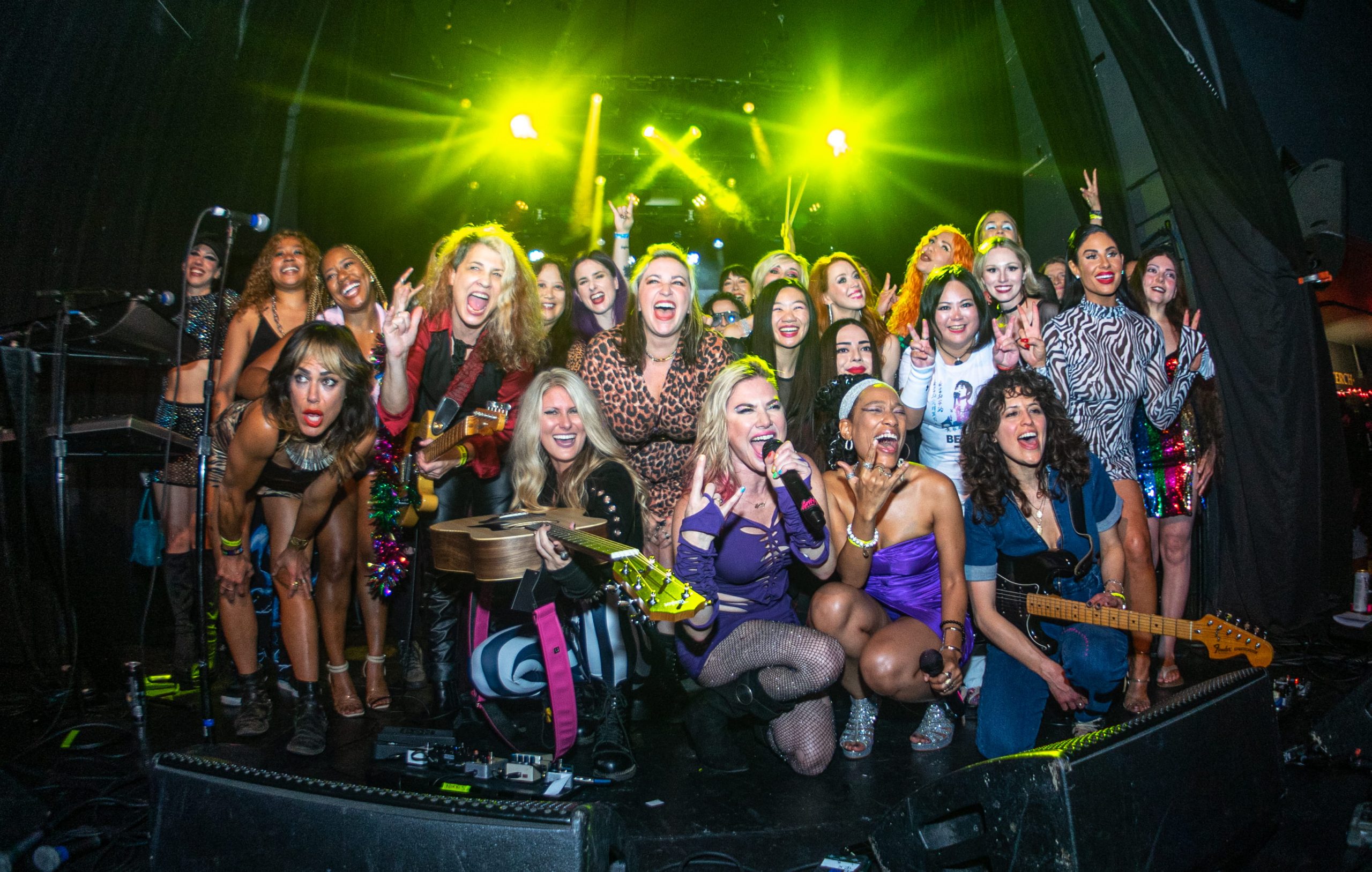
The LGBTQ community loves women who rock. Enter InPink. Their event Gritty In Pink: Summer of Pride Jam brings together their roster of female and non-binary musical artists for a Pride performance at Lucky Strike Hollywood.
CEO and Founder Shira Yevin took some time to tell us about her organization and highlight the importance of an event like this.
She shares, “Women in the music industry need more opportunities, pay, visibility, resources, support, safety, and community.” That’s exactly where InPink comes in to add visibility and resources for female and non-binary music talent. She continues, “Inpink is an online marketplace to hire women and non-binary professionals in the music industry and beyond. You can think of it as a female-powered Upwork.” She adds, “Our goal is to get women more gigs, as well as to provide them with access to more opportunities, from performances to joining a tribe of more women who support each other along our journeys.”
Live Nation is one of their lead investors, and they are also partnering with StartOut for this event. Yevin explains, “StartOut is a non-profit organization that supports LGBTQ+ founders and startups. I was honored to be part of their Growth Lab program. We are partnering on more events this year.”
“The Gritty jam series started as a platform to showcase the best female musicians in LA, in an often male-dominated scene. We also wanted to highlight musicians touring with the biggest names in music, like Eva Gardner, bassist for Pink.” Yevin adds. “These incredibly talented players often remain in the background, but deserve more of a spotlight. The pride theme was a natural fit, as so many in our community, including myself, identify as LGBTQ.”
The night will feature a networking hour, then will continue with DJ sets and a high-powered, all-female jam session featuring 40+ women and non-binary artists performing Pride anthems.
Yevin was sure to shout out some of her roster, adding, “Manda Malina is an out singer who’s phenomenal. Sterling Victorian is a talented DJ as well as artist. Vashonda Sherra is an incredible keyboardist, DJ, and also vocalist who just released a new single. Mad Hippie Beauty is our presenting sponsor; they are a non-toxic beauty company and ongoing brand partner that is extremely supportive of women in music and the Gritty movement!”
If you’d like to get “Gritty in Pink,” you can RSVP for the event and check out their websites: www.grittyinpink.co and www.inpink.com.

Falcon| NakedSword launches new publishing division, Falcon INK

LGBTQ+ friendly bar El Condor will close its doors after a decade of community

Here’s your Palm Springs look at Labor Day Weekend: Sep 4-7, 2026

ANIMAL LA bridges the gay bar and the queer underground

Pentagon expands testosterone screening as trans troops face hormone therapy restrictions
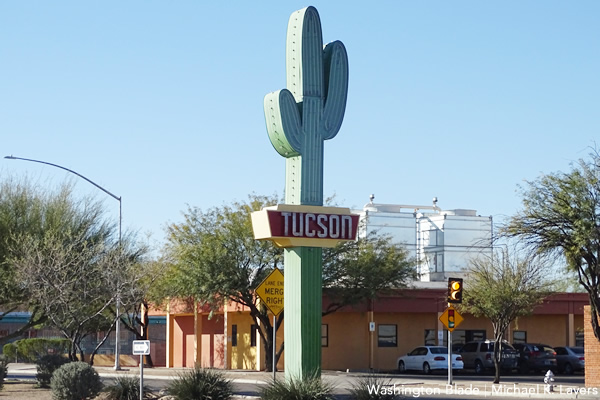
Shooting outside gay bar in Ariz. leaves three dead

Gloria Steinem dies at 92

Leather and legacy: Hector S. Quintana-Smith’s journey to West Hollywood Leather 2026 and beyond

Naked Warrior Yoga is fighting to stay in the heart of West Hollywood

Top Bulgarian court rules government must legally recognize trans people
-
Arizona5 days ago
Shooting outside gay bar in Ariz. leaves three dead
-
 Celebrity News3 days ago
Gloria Steinem dies at 92
-
 Leather community4 days ago
Leather and legacy: Hector S. Quintana-Smith’s journey to West Hollywood Leather 2026 and beyond
-
 Fitness4 days ago
Naked Warrior Yoga is fighting to stay in the heart of West Hollywood
-
 Bulgaria4 days ago
Top Bulgarian court rules government must legally recognize trans people
-
 France5 days ago
Prominent French activist attacked outside Paris bar
-
 Politics5 days ago
Out combat vet Cait Conley fights Trump flunkie for New York’s flippable 17th Congressional District
-
 Politics3 days ago
How gay nerds will shape the midterm elections
-
 Congress4 days ago
Markey’s primary win deemed success for LGBTQ+ activists
-
 Health4 days ago
Medical information queer men should know