
Politics
Will Cristina Garcia’s career tank after calling John Perez a ‘homo?’
Former Gov. Bill Richardson still hasn’t lived down saying “maricon’
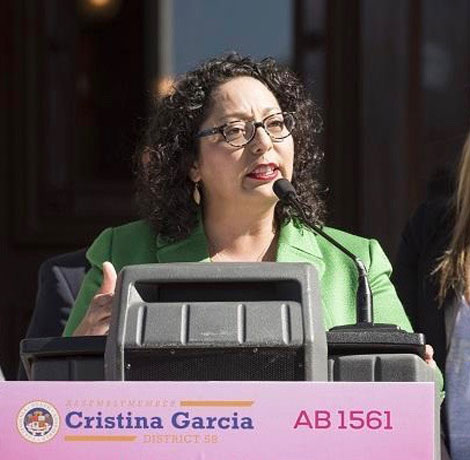
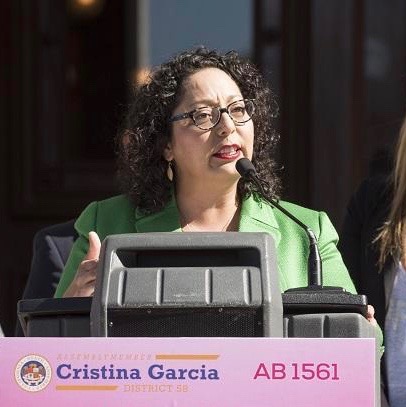 On her Twitter page, California Assemblymember Cristina Garcia calls herself “Reformer, community activist, math lover and teacher.” In her AD 58 office in Sacramento and on the radio, she called Los Angeles-based gay Assembly Speaker Emeritus John Perez a “homo.” While “very disturbed” by the divisive slur, Perez is more concerned about its harmful impact on closeted LGBT staffers and what it says about the legislator’s real attitudes.
Garcia, who represents Bell Gardens, told KQED on Monday, March 26, that she sees nothing wrong with using the word “homo,” suggesting that lawmakers should have a “safe space” to talk “candidly” about colleagues, which apparently includes using slurs. But after being outed by Politico, Garcia apologized for calling Perez a ‘”homo” five years ago.
“I did make that remark in a moment of anger. I have no reason to lie about something that is true,” Garcia said in a statement. “However, in no way was my use of that term meant to belittle Mr. Perez for his sexuality….I have a long and chronicled history of being a straight ally of the LGBTQ community.”
“I realize that words can be harmful and I humbly and sincerely apologize to Mr. Perez and any member of the LGBTQ community who feels offended by the comment,” Garcia added.
But it’s the casualness with which the slur was used that may prove unforgivable if the LGBT community and allies think the unthinking use of such pejorative terms actually reflect Garcia’s true beliefs, uncensored by political expediency. To LGBT people, such slurs are not just a matter of an “authentic” politician being politically incorrect. Pejorative terms like “homo” and “faggot” are not meant just to harm and offend: they are intended to dehumanize. Like a hate crime, they target not just the person being called “homo” or “faggot,” but the whole LGBT community. And they are not easily forgotten.
Take what happened to New Mexico Gov. Bill Richardson, for instance. In 2007, Richardson was receiving a lot of positive attention as he ran for the Democratic presidential nomination, garnering an endorsement from powerful LA County Supervisor Gloria Molina and receiving warm consideration from then-labor leader John Perez. While not expected to win the nomination, he was high on the short list as a vice-presidential pick.
But Richardson’s popularity among LGBT politicos came to a screeching halt after this reporter and former Washington Blade editor Chris Crain wrote about Richardson’s casual use of the gay pejorative “maricon” during a March 2006 appearance on the Don Imus radio show. Richardson immediately called Equality New Mexico, which was pressing him to sign two domestic partners bill, apparently claiming that he understood “maricón” to mean “effeminate,” not “faggot,’ which was the general US understanding of that word. By the time he ran for president, Richardson’s non-apology apology turn “maricon” into meaning simply “gay.”
“It has been brought to my attention that the word also has a hurtful or derogatory connotation, which was never my intent,” Richardson at the time. “If I offended anybody, I’m sorry.”
Richardson’s pro forma apology evaporated during the HRC/LOGO Democratic presidential forum where he responded to a question from Melissa Etheridge saying he thought being gay was a choice. There was an audible gasp in the LGBT audience. Though he immediately tried to clarify, it was clear that the LGBT community would not back Richardson and would scorch any Democrat who gave him a pass.
That may not happen with Garcia. But the assemblymember has more to explain than why the self-described LGBT ally used the slur “homo” at all. And, according to a formerly closeted male staff member caught up in the Assembly investigation into claims of sexual harassment against her, Garcia has called Perez a “faggot,” too.
The investigation has thrown Garcia supporters into confusion. After all, she was a leader of California’s #MeToo movement, which landed her on the cover of Time magazine. But it has also brought into sharp relief the fact that inappropriate behavior toward male staffers constitutes sexual harassment, just as much as it does towards women.
Daniel Fierro, a then-25-year-old staffer to Assemblymember Ian Calderon, claims that in 2014, an apparently inebriated Garcia cornered him in the dugout after an Assembly softball game and “began stroking his back, then squeezed his buttocks and attempted to touch his crotch before he extricated himself and quickly left,” Politico reported last February.
Fierro kept quiet until the #MeToo movement and new whistleblower protections for legislative staffers prompted him to tell Calderon, who referred the matter to the Assembly Rules Committee for investigation.
“If the person leading the charge on [sexual harassment] isn’t credible it just ends up hurting the credibility of these very real stories,” Fierro told the AP.
The day after the Politico report, Garcia went on an unpaid leave of absence.
“Upon reflection of the details alleged, I am certain I did not engage in the behavior I am accused of. However, as I’ve said before, any claims about sexual harassment must be taken seriously, and I believe elected officials should be held to a higher standard of accountability. Therefore, I am voluntarily taking an immediate unpaid leave from my position in the State Assembly, including any accompanying committee assignments, so as not to serve as a distraction or in any way influence the process of this investigation,” Garcia said in a statement Feb. 9. “I implore the Assembly Rules Committee to conduct a thorough and expeditious investigation, and I look forward to getting back to work on behalf of my constituents and for the betterment of California.”
But new allegations surfaced claiming that Garcia “urged staffers to play ‘spin the bottle’ after a political fundraiser,” according to Politico on Feb. 18. https://www.politico.com/story/2018/02/18/california-metoo-allegations-legislator-416916
“It was definitely uncomfortable,’’ David John Kernick, 38, who worked for Garcia for five months in 2014, told Politico. He’s filed a formal complaint with the California Department of Fair Employment and Housing asserting that Garcia charged him with insubordination after questioning the propriety of trying to engage staffers in that kissing game in a hotel room after a night of heavy drinking. He says he lost his district office job two days later.
Kernick and three other ex-staffers sent an open letter to Assembly Speaker Anthony Rendon complaining about the “toxic” workplace environment “where activities included regular heavy drinking with staffers, sexually charged meetings and raunchy conversations highlighting intimate details of her sex life,” Politico reported.
The day after the Politico story, on Feb. 19, a letter critical of Kernick, signed by Garcia’s 2014 Chief of Staff Tim Reardon, was taken from Kernick’s personnel file and circulated around the State Capitol. “Obviously, it’s improper. It’s a violation of privacy, and it does nothing to counter the narrative for a boss that was accused of being very vindictive. In fact, it seems to confirm it,” Christine Pelosi, the legal counsel for #WeSaidEnough movement, told Politico. “Whoever thought they were helping Cristina Garcia did her no favors.”
On Monday, Kernick challenged Garcia’s denial in the KQED radio interview (transcript below) about using the word “faggot.”
“I don’t use the ‘faggot.’ It’s not in my vocabulary,” she told KQED. “I think that terms like ‘faggot’ are purely derogatory. There’s no good way to use that word.”
Kernick told Politico that Garcia’s denial about never using that word was “a bald-faced lie.”
“The ex-Marine said he is a member of the LGBT community, but he was not out when he worked for Garcia – and so had to remain silent when he ‘routinely’ heard Garcia use both those words [‘homo’ and ‘faggot’] ‘distinctly about the speaker [John Perez], but it was also part of her regular vocabulary. It wasn’t unusual. … And so I just had to internalize it. I had no choice.’”
Perez told the Los Angeles Blade that while he is “incredibly disturbed” by the slurs Garcia made about him, he is even more upset at the thought of the harm done to closeted staffers like Kernick who fear calling out the homophobia lest they lose their jobs.
“I’m incredibly disturbed by the interview I heard on KQED and a pattern of rationalization and minimization of the impact of the use of homophobic language,” Perez said by phone Tuesday while on vacation in Japan. “The lack of appreciation for the impact on staff—and quite frankly, for every kid in society.”
Perez recalled growing up thinking gay people would never be elected until Sheila Kuehl became the first out LGBT person elected to the Assembly in 1994.
“I never thought I’d have the opportunity to succeed her some day and advance to be Speaker,” he said. “But one of the reasons I felt that way was because of the pervasive and pernicious nature of homophobia in society.
“And so it’s so disturbing—despite all the progress we’ve made—to see this additional example of homophobia in the workplace,” Perez continued. “Not because it was a negative statement about me. I assumed as Speaker of the Assembly that at some point every member would be upset with me about something and be angry at me and say something angry. But it is different to say something in anger, something in frustration based on facts and based on circumstances than it is to immediately go to base-level homophobic attacks. Because when you go to base-level homophobic attacks—not only is it an attack on that individual—but it’s attacking the whole community. And it’s borne out of a notion of dehumanizing us based on that which makes us unique.”
The impact of the slurs are an injustice toward “those hearing them directly and indirectly and what it means for a young gay or lesbian or bisexual or transgender staff or even more so, a closeted member of our community hearing these kinds of comments in the workplace and what that means to have a thriving career is particularly bothersome,” Perez said.
“I’m hopeful that the fact-finders [in the sexual harassment allegations] will look into this as they look into the totality of the allegations,” Perez said, “because of the impact on staff. And quite frankly, what it means for how we view people and whether we see our obligation to represent everybody. It’s hard to reconcile divisive language with the notion of representing all people and our constituencies.”
“I do not comment on ongoing investigations,” Assembly Speaker Anthony Rendon told the LA Blade. “That said, using homophobic language is inappropriate and indefensible. Words have consequences and can cause harm. Officials who are elected to represent everyone in their districts should know better and do better.”
Assemblymember Evan Low, Chair of the California LGBT Legislative Caucus, said: “It’s disappointing to hear a respected former Speaker be subjected to hurtful homophobic comments. It’s upsetting but not surprising—it reflects the everyday struggles that our LGBT community faces on a daily basis. We must continue to work to educate others about the importance of eradicating all forms of homophobia—and the ignorance and bigotry behind them.”
The California Democratic Party endorsed incumbent Garcia via their consent calendar. But neither out CDP Chair Eric Bauman nor out LA County Democratic Party Chair Mark Gonzalez are happy with Garcia.
“The use of pejorative terms of any kind is ALWAYS unacceptable, even more so from those who claim to speak to others about morality from on high. This is positively unacceptable and attempts to rationalize, minimize or mitigate the pain caused by the use of slurs only makes it even more offensive,” said Bauman.
“Assemblymember Garcia’s comments regarding the homophobic language she used to refer to openly gay members of the Assembly were offensive, to say the least. The fact that Ms. Garcia justified using homophobic language is a poor defense for actions taken as an adult and leader in the community. She has stood behind the LGBT community in her record as a legislator, but as a leader of California, Assemblymember Garcia and all elected officials need to show that they walk the talk. Language contrary to what one has a history of standing up for has a chilling effect on staff and on the community,” said Gonzalez. “Any language that is derogatory or inflammatory is unacceptable,” said Gonzalez.
Will all the outrage matter? Garcia has given no indication that she is thinking of resigning, though the outcome of the Assembly’s investigation may change that. And as of now, the only Democrat who has announced an intention to challenge Garcia in the June primary is a gay man, John Paul Drayer of Bellflower, a former member of the Cerritos College board of trustees who filed papers on Feb. 12.
“Having effectively no representation in the state assembly 58th District we need new ideas & candidate to turn around the drunken misguided culture of being too close to Sacramento lobbyists,” Drayer wrote in an email to the Downey Patriot. “Therefore I am seriously thinking about running for this effectively vacant seat. Plus I encourage many others to run in a strong debate about fixing Sacramento to work for working families & small businesses with tax cuts from our large surplus. I will protect the 5th amendment due process rights of men & women equally. No gender should be above another.”
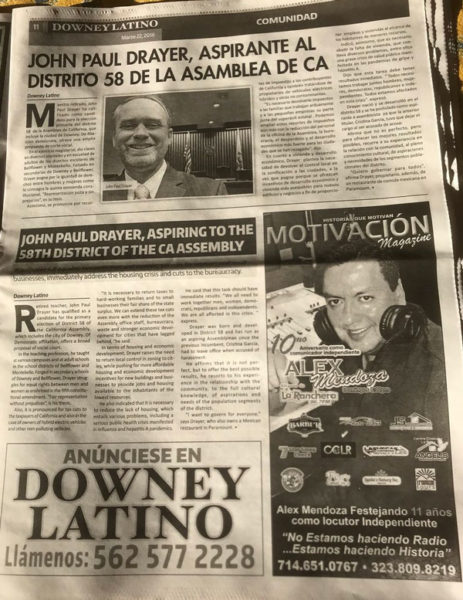
There is a bit of confusion over this, however, since Drayer boasted on Twitter about newspaper cover of his Assembly challenge on March 24—but on March 13 he posted @drayerpaul:
Mor
“I filed for the Special Election to fill the unexpired term in the CA State Senate 32nd District on June 5th.”
Here is the link to a clip of Christina Garcia’s interview on KQED:
Here’s the transcript:
KQED: “The other thing I heard that might be concerning for some people in the Capitol and perhaps some people in your district is this idea that you use slurs or something other than respectful word to describe the former Speaker of the House (sic) who is gay, and other folks. Did you ever use slurs like ‘faggot’ or ‘homo?’ Did you ever say anything like that to your staff?
Cristina Garcia: Oh, I will be clear. There’s no one in politics who doesn’t talk about some of the peers we work with and we use candid language. And so along the way, I’ve used candid language – I curse. I mean, I’ve been vocal about some of my (?) words – I don’t know if I can say them on the radio. And you know, if I see staff who didn’t want to engage in that kind of conversation, I would stop. But they never seemed to have any problem with it. But even then, it’s pretty limited. But these are in places where you think you’re in a safe space and you can speak your mind and be vocal.
I don’t use the ‘faggot.’ It’s not in my vocabulary. But at some point, have I used the word homo. Yeah. I’ve used that word homo. I don’t know that I’ve used it in derogatory context. I think you need to think about the context in which it was used. But anything can be taken out of context, clearly, hearing the situation (?)
KQED: Well, I bring that up – I grew up in a neighborhood where the word homo, for example, people still say ‘no homo’ as a way to express their identity, the masculinity. The reason I’m asking you, though, is there – what has been presented to me as this question of whether these words were used in a professional setting and whether they made people uncomfortable. So did you ever use that to describe the Speaker of the House – the word homo?
CG: I can’t remember but I wouldn’t be surprised if I used that word. Right. So I think that that’s fair. I think that terms like ‘faggot’ are purely derogatory. There’s no good way to use that word. I think the word ‘homo’ can also be derogatory. But I’m not going to sit here and pretend I’m an angel. Was how I was using them in derogatory terms? No. It’s almost like I was saying I’m a brown person sometimes. Am I perfect? I think all of us at sometime have biases but I try to be open and accepting of all communities, including the LGBT community. You can look at my voting record, you can look at the advocacy I’ve been doing well before I was elected in conjunction with not just the LGBT community but with communities that have been marginalized.”


Federal Government
Inside the LGBTQ+ records of Todd Blanche and Markwayne Mullin
Two men are acting attorney general, DHS secretary
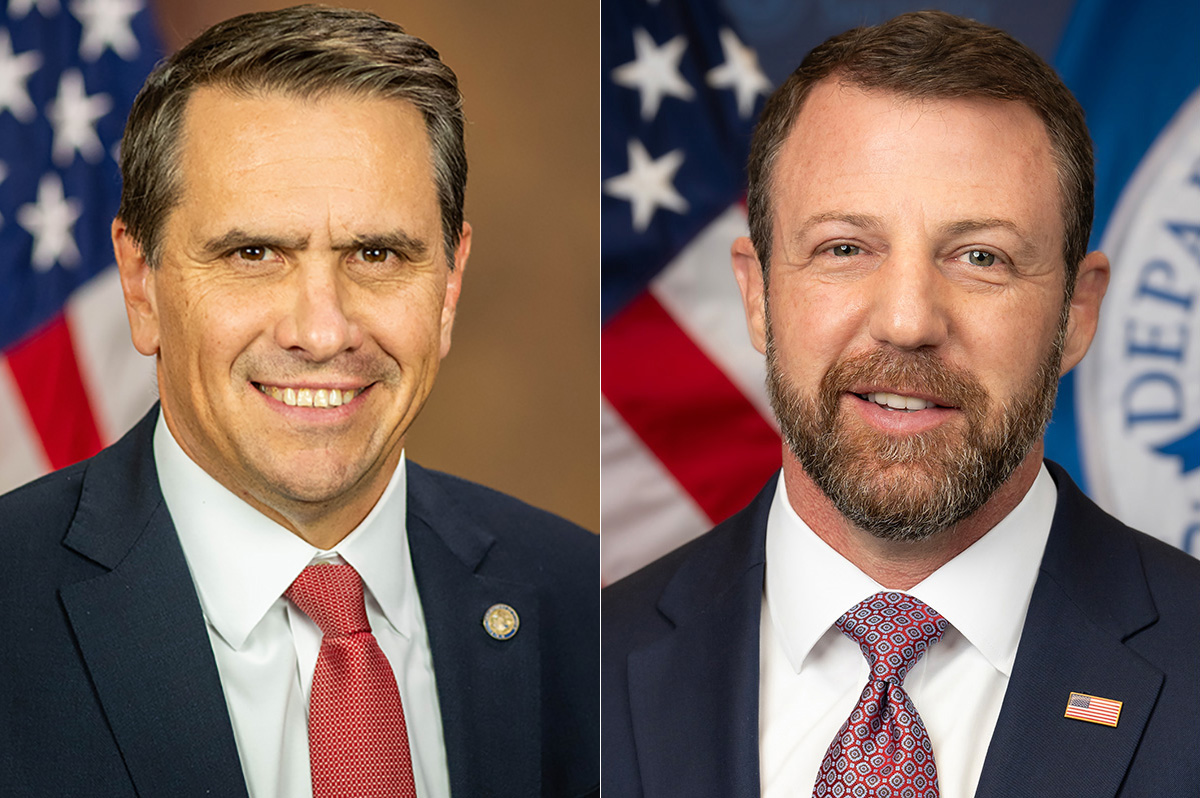
President Donald Trump became famous for his use of the phrase “You’re fired!” while hosting the reality TV show “The Apprentice” in the early 2000s. However, during his time in the Oval Office, he has attempted to distance himself from that image.
Despite those efforts, the phrase once again comes to mind as Trump has fired two high-level female Cabinet members within the past month: Pam Bondi and Kristi Noem.
Their replacements — Todd Blanche at the Justice Department and Markwayne Mullin at the Department of Homeland Security — bring records that, while different in depth, both reflect limited support for LGBTQ+ protections and, in some cases, direct opposition.
Todd Blanche
Acting attorney general
Little has been found regarding Todd Blanche’s LGBTQ+ history prior to his role as acting head of the Department of Justice. Unlike those who have worked within the Justice Department’s Civil Rights Division or served as state attorneys general, he has not developed a public-facing legal ideology on LGBTQ+ issues.
Blanche attended American University for his undergraduate studies — like fellow Trump attorney Michael Cohen — where he met his future wife, Kristin, who was studying at nearby Catholic University in D.C.
He began his legal career as an intern at the U.S. Attorney’s Office in Washington, which eventually became a full-time position. He later worked as a paralegal in the U.S. Attorney’s Office for the Southern District of New York while attending Brooklyn Law School at night. Blanche graduated cum laude in 2003. He and his wife later married and had two children.
Blanche left the U.S. attorney’s office in 2014, taking a job in the Manhattan office of the law firm WilmerHale. In September 2017, he moved to Cadwalader, Wickersham & Taft LLP, where he was a partner in the White Collar Defense and Investigations practice.
In his personal capacity, he represented several figures associated with Donald Trump and former New York City Mayor Rudy Giuliani, including Trump’s former campaign manager Paul Manafort, businessman Igor Fruman, and attorney Boris Epshteyn.
In 2024, Blanche switched from Democrat to Republican, aligning himself with Trump’s political orbit. He later served as Trump’s personal defense attorney in the New York State case that led to Trump’s 2024 conviction on 34 felony counts of falsifying business records to cover up hush-money payments to bisexual adult film star Stormy Daniels.
Now the highest-ranking official at the Justice Department, Blanche has played a central role in overseeing the department and has been involved in leadership decisions tied to several controversial actions affecting LGBTQ+ people.
In a letter to New York Attorney General Letitia James, Blanche declared that the Justice Department “will not sit idly by while you attempt to use your office to force harmful procedures on our most vulnerable population,” if legal action were taken against NYU Langone. The hospital had “permanently” ended a program earlier that month after the Trump-Vance administration threatened to pull all federal funding if it continued prescribing puberty blockers and hormones to minors.
Blanche wrote that “the Justice Department believes the law is clear, and anti-discrimination laws cannot be used to force NYU Langone to perform sex-rejecting procedures on children.”
“As just one example, your office’s position would require a hospital to prescribe certain medications for certain diagnoses, regardless of the hospital’s or its doctors’ independent medical determination about the propriety of such treatment,” he said.
Blanche also echoed his predecessor’s public stance on limiting LGBTQ+-related protections at the federal level, aligning with Bondi’s sentiments in June 2025 regarding the U.S. Supreme Court’s 6–3 decision that restricted LGBTQ+ history lessions in schools and limits lower federal courts from issuing nationwide injunctions — rulings that have often blocked Trump administration policies.
Calling it “another great decision that came down today,” Blanche argued that the ruling “restores parents’ rights to decide their child’s education,” adding: “It seems like a basic idea, but it took the Supreme Court to set the record straight, and we thank them for that. And now that ruling allows parents to opt out of dangerous trans ideology and make the decisions for their children that they believe is correct.”
In December 2025, a Justice Department memo stated that, “effective immediately,” prisons and jails would no longer be held responsible for violations of standards meant to protect LGBTQ+ people from harassment, abuse, and rape under the Prison Rape Elimination Act. The law, passed unanimously by Congress in 2003, requires that incarcerated people be screened for their risk of sexual assault, including consideration of LGBTQ+ status, and applies to all correctional facilities.
Additionally, when the Justice Department, under Blanche’s deputy leadership and at Trump’s behest, attempted to force Children’s National Hospital in D.C. to turn over medical records related to gender-affirming care, U.S. District Judge Julie R. Rubin ruled that the effort “appears to have no purpose other than to intimidate and harass.”
Blanche is also described as having a “strong belief in executive authority.”
Markwayne Mullin
Secretary of Homeland Security
While Blanche’s record is defined more by recent actions than a long paper trail, Markwayne Mullin brings a more established history on LGBTQ+ issues from his time in Congress.
The head of the Department of Homeland Security has served in Congress since 2013, in both the U.S. House of Representatives and U.S. Senate. He has been actively engaged in shaping restrictions and aligns with broader cultural rhetoric that frames anti-LGBTQ+ speech as protected expression.
In May 2016, Mullin criticized the Department of Education and the Justice Department’s “Dear Colleague” letter on transgender students, arguing that trans girls should not use girls’ restrooms in public schools.
By January 2021, Mullin and then-Hawaii Congresswoman Tulsi Gabbard had introduced a bill to prevent trans women from participating in women’s sports.
Mullin was not recorded as voting on the final passage of the Respect for Marriage Act, which codified federal recognition of same-sex and interracial marriage.
In 2023, Mullin received a rating of just 6 percent from the Human Rights Campaign.
While serving in the Senate and as a member of the Health, Education, Labor, and Pensions (HELP) Committee, Mullin has been a vocal critic of policies aimed at expanding LGBTQ+ inclusion in federal programs. He has participated in broader Republican efforts questioning equity-based implementation of the Older Americans Act, including guidance related to sexual orientation and gender identity in aging services, arguing such policies could have unintended consequences.
Mullin also makes history as the first Native American — and a citizen of the Cherokee Nation — to lead the Department of Homeland Security.
He was among the 147 Republicans who voted to overturn the 2020 presidential election results despite no evidence of widespread fraud, and was present in the House on Jan. 6.
Politics
Advocacy meets action: Weho City Council candidate Jonathan Wilson intends to lead with purpose
Jonathan Wilson shares on his decision to run for West Hollywood City Council, highlighting advocacy, representation, and a vision for meaningful change
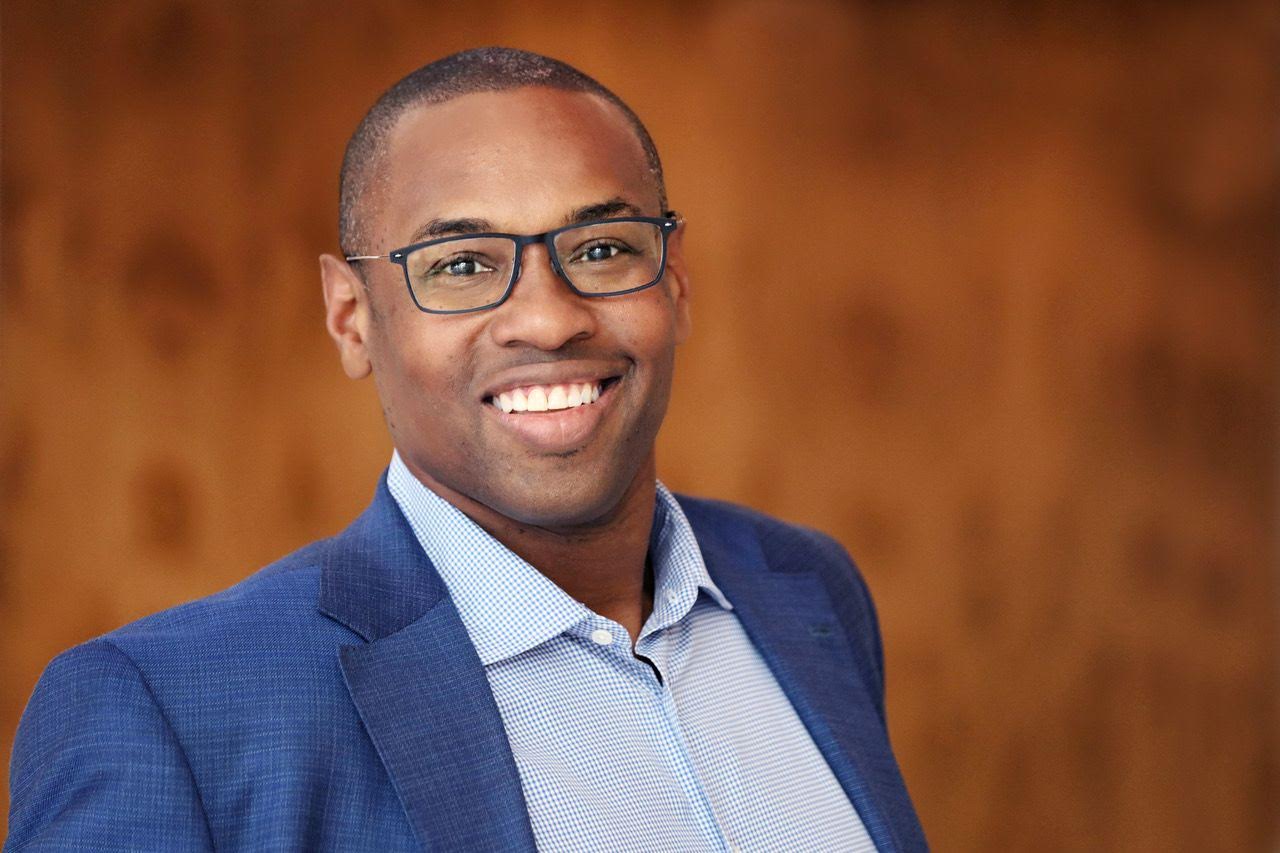
At a critical moment for West Hollywood and cities across the United States, Jonathan Wilson comes forward with a candidacy for West Hollywood City Council that is grounded in advocacy and a crystal-clear call for change. In our conversation, Wilson reflects on the decision to enter public office as a necessary response to widening divides, shifting political realities, and the urgent necessity for leadership that is both responsive and representative. His perspective is founded on years of navigating spaces where identity and opportunity aren’t always aligned, fueling a commitment to ensure that more voices are not just included, but actually heard and addressed.
Drawing from his experiences as a Black and queer Angeleno, as well as his work across corporate, civic, and community spheres, Wilson speaks to the power of identity as both a lens and a responsibility. He approaches leadership with an emphasis on accountability, innovation, and equity, from addressing public safety to the always-evolving priorities of LGBTQ+ communities. The result is a clear portrait of a candidate focused on practical solutions, intentional inclusion, and structural change that moves beyond rhetoric to deliver real, much-needed impact.
You’ve described your decision to run as a moment where you realized meaningful change requires stepping up. What in particular made this the right time for you to throw your hat in the race?
At this time, when our country is so divided, and there are increasing barriers to support our California residents at a state level, I believe that now is the time for me to help my community and residents in the City of West Hollywood. I can best accomplish that by stepping up and becoming involved as an elected official in my local West Hollywood City Council.
This November election will be pivotal for the future of our residents. While I applaud our City Council on various levels, I believe that there are key perspectives that will be lost when two prominent City Council members term out.
That provides me with an opportunity to help place more focus on the needs of our residents, attract more businesses and workers to our great city, and increase safety. It pains me to see businesses close and drive by an increasing number of empty storefronts. It hurts to hear residents say they feel like they can’t afford to live in the city any longer and to read the headlines about people being attacked on the street.
If elected, you’d become the first Black City Council member and the first Black LGBTQ+ councilmember in Los Angeles County. Can you describe from your perspective the sheer significance of this?
West Hollywood has never had a Black City Council member.
The significance is about the diversity of voices. Having a seat at the table. But this isn’t about race; it’s about the representation of the diverse residents in my community and helping all people within my community. I just happen to be Black.
While I’m not hanging my hat on being the black voice, it does add a bit more flavor to what I can offer as a City Council member. I’m also the only candidate operating a for-profit company, and I’m in the process of building a family through surrogacy. My family journey creates a unique perspective because I’m not just thinking about myself, I’m thinking about what’s right for families with kids who live in this great city.
Studies show that leading organizations perform better when they have diverse perspectives at the top. For the City of West Hollywood, the top of our government is the City Council – and that’s where I believe I can make the most impact.
While it’s unfortunate that a Black City Council member has never existed in a city that is known for its progressive politics, I believe I am the right person at this moment in our history, who happens to be Black.
How have your identities as a Black & queer Los Angelino shaped your understanding of leadership and representation?
This is a tough one because throughout my life, I have been one of a few. This goes all the way back to being one of two or three people in my AP and Honors classes at Palisades High School — Pali High. Even though the school was diverse at the time, I was still the odd man out.
I have also worked with a variety of Fortune 100 and 500 companies on projects as a management consultant for Accenture and Deloitte Consulting. There were very few executives of color at some of these organizations, and rarely any Black LGBTQ executives.
There is a unique experience that many LGBTQ people of color share within mainstream LGBTQ spaces that also seems to parallel that of non-LGBTQ spaces. That is – their voices are muted. Do I think that Los Angeles and WEHO are significantly more accepting of people of color and LGBTQ people than many other parts of our country? Yes! However, there is still work to be done.
What experiences in your personal journey would you say most prepared you to run for public office?
Great question. I’ve always been involved in leadership positions — in high school and college, in business organizations where I worked, and for non-profits where I’ve volunteered. Specific to West Hollywood, I have been part of the Social Justice Advisory Board (originally the Social Justice Task Force) for over five years. I am a current member and past board member of the West Hollywood Chamber of Commerce. And, I have helped influence/lead key initiatives for the City as it relates to small business initiatives and advocating for residents.
I see a gap in the leadership of our great city, and I really want to serve. I want to help make things better. I also really believe and live by President Obama’s quotes, “We are the change that we seek” and “We are the change that we have been waiting for.” I was waiting to see someone who understood what businesses needed while also addressing the needs of residents. And now I believe that person must be me.
You’ve highlighted public safety as one of your key issues. What does “public safety that works” look like for folks in West Hollywood?
I have developed a lot of respect for our Sheriff’s department, security ambassadors, and our city staff who collectively work to provide our public safety.
For me, “public safety that works” involves a couple of things — one that focuses on continuous process improvement, and another that focuses on technology enablement. We must improve efficiency in our processes and update them with modern technology to support those processes.
How does that pertain the public safety? I’ve seen people walk out of the sheriff’s department without making a report because of the long wait. In addition, the City Council approved a drone system several years ago, and it has not yet been implemented. Why can’t our city launch a simple drone initiative? That boils down to proper planning, processes, and execution.
There are many processes and technology solutions that can be implemented without requiring a significant amount of funds. I’m happy to get more granular, but the bottom line is that we can do better in protecting our city.
We also need more eyes, watching and reporting.
How will you go about fostering stronger trust between the community and law enforcement?
This is an excellent question because it boils down to trust. Transparency and simplified reports for the public can really assist with trust. I review reports regularly that are presented at the Public Safety meetings, and they don’t really inform the public on what they need to know to stay safe. We’re not focused on metrics that matter. As a data person, I think we need a live dashboard with metrics the public can view – and in plain language they can understand. We can also consider developing a Community Task Force that is focused on solutions that help to build trust.
I recognize that law enforcement may feel underappreciated. At the same time, they don’t do themselves any favors by providing inaccurate accounts of the true state of public safety in West Hollywood. My answer is to fix the problem – not mask it.
What creativity will you be taking to revitalize empty storefronts and support local businesses?
West Hollywood primarily focuses on providing reports on the many restaurants, bars, retail shops, and hotels in our City. However, there are so many other industries that can also add value to our City. I believe we need to focus on creating incentives for a variety of industries to come to West Hollywood.
As a native Angeleno, I love our media and entertainment industries. Many of my friends are in the industry as creatives, production support, and/or investors. I would like to find incentives that can work for property owners and their realtors that would permit entertainment companies to film in some of the empty storefronts, to bring in revenue to West Hollywood. I would also like to take a deeper dive on what positive incentives can be made towards encouraging more businesses to migrate to our City, which will ultimately help all businesses.
As of late 2024, according to our City staff, we have never implemented industry-specific incentives for businesses to come to West Hollywood. Most businesses I know would appreciate a good deal.
Bottom line is that I believe incentives will help the local economy thrive by attracting new businesses and increasing tourism. Los Angeles is hosting the 2028 Olympics, so we’ve got to get busy.
Housing remains an ever-present issue across Los Angeles. What new or practical solutions would you advocate to maintain affordability in West Hollywood?
I have been a strong advocate of the West Hollywood Community Housing Corporation (WHCHC), and I like the idea of affordable housing. In addition, I believe that with more money coming from taxes based on our potential business growth, our City will eventually produce more money to give back to the residents, which will allow them to stay in their homes in West Hollywood. I look for win-win solutions and am a strong believer that if we do this right, everyone can win in our City.
In a city with a long history of LGBTQ advocacy, what new or evolving priorities do you believe need attention at this moment in time?
While I am concerned about some of our recent advancements with marriage and reproductive rights, my biggest concern lies with our transgender community. I’m saddened every day by the level of vulnerability that exists with our trans family members. Anything we can do to help advance their level of safety, provide adequate health support, and assist with ensuring their human rights are not being violated remains among my top priorities.
How do queer politics today differ from decades past, and how does/will that impact your campaign?
Representation matters. I think it’s time to hear ideas from BIPOC LGBTQ representatives. I would love to be in a position where I could help lift others. Today is similar to and different from past decades regarding queer politics. Today, the federal government is working to dismantle rights that have existed for years now. Whereas, in the past, the LGBTQ community was fighting for those rights. And many organizations, including the private sector, are uncertain on how to provide support without fear of retaliation.
What does inclusive leadership mean to you beyond representation?
Inclusive leadership means that we have diversity of thought – pluralism of ideas — helping to lead our great City. I voted for some of our City Council members — not always because I agreed with all of their policies — but because they had a unique perspective that I believed would benefit our City. It would be an unfathomable scenario if everyone thought alike and agendas were simply rubber-stamped without meaningful questions being raised or serious dialogue being had. Passion for the community, lived experiences, commitment to doing what’s right for the City, ethics and integrity– in addition to educational background and career skills- should all be considered when electing a City Council member. Any City Council bearing those traits will focus on delivering the best solutions for the people of West Hollywood.
What challenges do you foresee as a fresh candidate entering local politics, and how are you preparing yourself and your team to meet them?
As a new candidate, I am learning as I go. I bring a passionate commitment to my community and an ethical approach to politics. I hope my competitors will join me. I am running to support the people in my community. To help make West Hollywood a better place to live and work. I am talking to residents, businesses, law enforcement, industries, trade unions, and most importantly – the people who live here. I am listening to what the people want. I plan to host listening sessions because I want to digest the diverse voices so I can represent ALL OF THE PEOPLE. My team is focused on scheduling me to talk with a variety of groups, and I plan to canvas my local community, door by door, and ask the people for their vote.
Looking into the near future, what would success look like at the end of your first term if (or when) you are elected?
My first term would start in January of 2027 and last through January 2031. At the end of those four years, I would like to see the following:
1) Residents feel like they can afford to live in the City of West Hollywood and that the city adequately supports their basic needs regardless of stage of life, whether it’s starting their career, growing a family, or aging in place as a retired individual.
2) A thriving economy where new industries are emerging in the city and legacy footholds (like media and entertainment) are demonstrating a renewed presence in the City. 3) Simplified government processes, enabled by policy and technology, with people who are working together for the safety and good of the residents in the City of West Hollywood.
For more information about Wilson’s candidate campaign, head to Wilson4Weho.com
Iran
LGBTQ+ groups condemn Trump’s threat to destroy Iranian civilization
Ceasefire announced less than two hours before Tuesday deadline
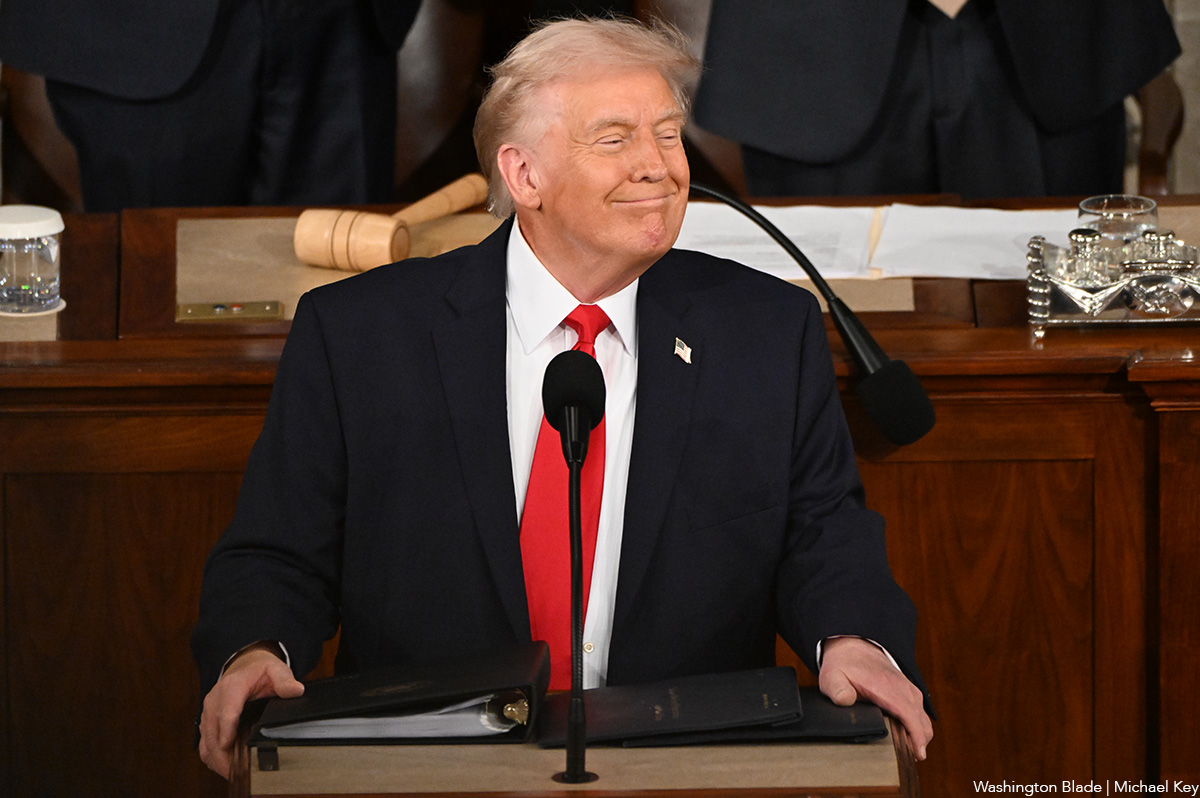
The Council for Global Equality is among the groups that condemned President Donald Trump on Tuesday over his latest threats against Iran.
Trump in a Truth Social post said “a whole civilization will die tonight” if Tehran did not reach an agreement with the U.S. by 8 p.m. ET (5 p.m. PT) on Tuesday.
Iran is among the handful of countries in which consensual same-sex sexual relations remain punishable by death.
Israel and the U.S. on Feb. 28 launched airstrikes against Iran.
One of them killed Supreme Leader Ayatollah Ali Khamenei. Iran in response launched missiles and drones against Israel and other countries that include Kuwait, Bahrain, Qatar, the United Arab Emirates, Jordan, Saudi Arabia, Azerbaijan, and Cyprus.
Gas prices in the U.S. and around the world continue to increase because the war has essentially closed the Strait of Hormuz, a strategic waterway that connects the Persian Gulf and the Gulf of Oman through which roughly 20 percent of the world’s crude oil passes.
Trump less than 90 minutes before his deadline announced a two-week ceasefire with Iran that Pakistan helped broker.
“We the undersigned human rights, humanitarian, civil liberties, faith-based and environmental organizations, think tanks and experts are deeply alarmed by President Trump’s threat regarding Iran that ‘a whole civilization will die tonight’ if his demands are not met. Such language describes a grave atrocity if carried out,” reads the statement that the Council for Global Equality more than 200 other organizations and human rights experts signed. “A threat to wipe out ‘a whole civilization’ may amount to a threat of genocide. Genocide is a crime defined by the Genocide Convention and by the Rome Statute of the International Criminal Court as committing one or more of several acts ‘with intent to destroy in whole or in part a national, racial or religious groups as such.'”
The statement states “the law is clear that civilians must not be targeted, and they must also be protected from indiscriminate or disproportionate attacks.”
“Strikes on civilian infrastructure — such as the recent attack on a bridge and the attacks President Trump is repeatedly threatening to carry out to destroy power plants — have devastating consequences for the civilian population and environment,” it reads.
“We urge all parties to respect international law,” adds the statement. “Those responsible for atrocities, including crimes against humanity and war crimes, can and must be held accountable.”
The Alliance for Diplomacy and Justice, Amnesty International USA, Human Rights Watch, the American Civil Liberties Union, the NAACP, MADRE, and the Robert and Ethel Kennedy Human Rights Center are among the other groups that signed the letter.
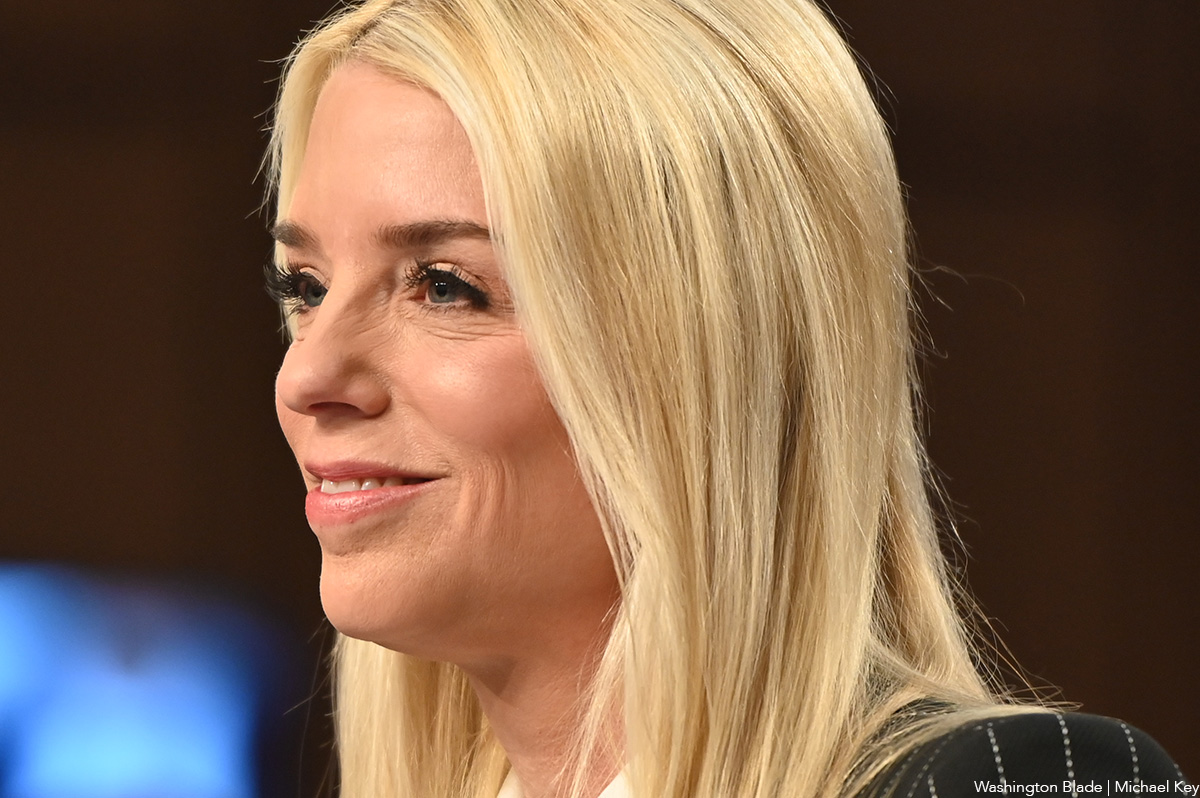
President Donald Trump removed Attorney General Pam Bondi from her post Thursday, following growing criticism over how she and the Department of Justice handled a range of issues, including matters related to sex offender and Trump ally Jeffrey Epstein.
Trump announced Bondi’s removal on Truth Social, where he also said Todd Blanche will serve as acting head of the Justice Department.
“Pam Bondi is a great American patriot and a loyal friend, who faithfully served as my attorney general over the past year,” Trump wrote on the platform. “Pam did a tremendous job overseeing a massive crackdown on crime across our country, with murders plummeting to their lowest level since 1900.”
Trump was seen as recently as Wednesday with the now-former attorney general at a Supreme Court hearing on citizenship.
The decision contrasts with Trump’s previous public praise of Bondi, the 87th U.S. attorney general and former 37th attorney general of Florida, who served in that role from 2011-2019 before joining the Trump-Vance administration. He has frequently lauded her loyalty and said he speaks with her often. Bondi was also one of president’s defense lawyers during his first impeachment trial.
Privately, however, Trump had grown frustrated that Bondi was not “moving quickly enough” to prosecute critics and political adversaries he wanted to face criminal charges, according to multiple sources. The New York Times reported that her inability to charge former FBI Director James B. Comey and New York Attorney General Letitia James with any crimes is a large factor in the president’s choice to fire her from the government’s primary law enforcement agency.
The move comes as Trump has sought to minimize public turmoil within his administration, avoiding the perception of a revolving-door Cabinet that defined his first term.
Lee Zeldin, a former Republican congressman from New York who unsuccessfully ran for governor, has emerged as a leading contender to lead the Justice Department. He has been one of Trump’s most reliable allies.
“He’s our secret weapon,” Trump said of Zeldin in February during a White House event promoting the coal industry, adding, “He’s getting those approvals done in record-setting time.”
Bondi has also growing faced scrutiny from Congress.
The House Oversight Committee recently subpoenaed her to testify about the department’s handling of certain files, where she declined to answer key questions during a contentious House Judiciary Committee hearing in February.
The Tampa native has a long history of opposing LGBTQ+ rights through her roles in government. As Florida attorney general, she fought against the legalization of same-sex marriage, arguing it would cause “serious public harm,” pushing forward a legal battle that cost taxpayers nearly half a million dollars. She also asked the Florida Supreme Court to overturn a lower court ruling that found the state’s same-sex marriage ban unconstitutional.
More recently, Bondi established a “Title IX Special Investigations Team” within the Justice Department focused on restricting transgender women and girls from participating in women’s and girls’ sports teams and accessing facilities aligned with their gender identity. She also told Children’s Hospital of Philadelphia to turn over the medical records of anyone under 19 who received gender-affirming care.
Her removal follows Trump’s decision last month to oust another controversial female Cabinet figure, Kristi Noem.
California Politics
“I’ve always been an ally.” Seven gubernatorial candidates discuss LGBTQ+ rights at recent forum
Read what seven Democratic candidates running for governor said about how they would support queer Californians.
On Monday evening, seven Democratic candidates running for California governor walked into a packed auditorium in front of the county’s most prominent LGBTQ+ communities. In a forum co-presented by civil rights organization Equality California and the local queer nonprofit Los Angeles LGBT Center, each candidate tried to convince the crowd why they are the best choice for LGBTQ+ Californians.
The candidates present were: former California Attorney General and U.S. Secretary of Health and Human Services Xavier Becerra, former Congresswoman Katie Porter, Congressman Eric Swalwell, billionaire entrepreneur and environmentalist Tom Steyer, California State Superintendent of Public Instruction Tony Thurmond, former L.A. mayor and Speaker of the California State Assembly Antonio Villaraigosa, and former California State Controller Betty Yee.
Swalwell, Steyer, and Porter are top contenders, according to a recent statewide survey conducted by the Public Policy Institute of California. 30% of the survey’s voters are split between other candidates, including Villaraigosa, Yee, Thurmond, and Becerra.
Political analysts and reporters are stumped; it’s difficult to parse out a clear frontrunner at this moment. As we head towards a primary election in June, community offerings like Monday’s forum allow constituents, including those who are LGBTQ+, decide which candidate is most likely to fulfill their promise of defending queer rights.
The Blade gathered notable quotes from each candidate in regards to LGBTQ+ issues. Passages have been edited for clarity.
How has each candidate stood with LGBTQ+ communities?
Each candidate was individually called up to the stage and given about 13 minutes to answer the same set of questions. A forum rather than a debate, the evening allowed each person to discuss their past work with LGBTQ+ communities as well as their perspectives on transgender health care, LGBTQ+ youth, homelessness, and the war in Iran.
The first question of the evening was definitive. NBC4 anchor Colleen Williams, the forum’s co-moderator, asked candidates to give themselves a letter grade to define their past work with LGBTQ+ communities.
Xavier Becerra
“I have been an ally. Equality California has recognized that twice. But I go further back than that. There was a time in the 1990’s where two individuals who loved each other couldn’t get married if they were the same sex. There was a law that passed in Congress, called the ‘Defense of Marriage Act.’ 67 members out of 435 voted ‘no’ against that discriminatory law. I was one of them.
I will never put a vote down or take an action that would discriminate against someone else. That’s why I’ve taken action year over year, whether it was as Attorney General when I defended the ability of our LGBTQ community to have access to affordable care under the ACA [or] as Secretary of HHS. When it [came] to gender affirming care, it’s not what the politicians in Congress say: it’s what the medical and scientific experts say is the best health for every American.
I have a history that runs longer than anyone who’s running for governor in talking about how I’ve been a true and enduring ally of the LGBTQ+ community.”
Katie Porter
“I’m a professor, and I’m a pretty notoriously tough grader. I don’t really believe in A-pluses, because I think there is always work to be done. But I would give myself an A, and I feel proud of the way that I’ve fought alongside the LGBTQ+ community, the way that I have represented those that I was fortunate enough to represent in Orange County, and to do that in an area that has historically been very, very hostile to the gay community.
I’m so very proud to have flipped the seat and to have been bold in voting for the Equality Act, in calling out Republicans for trying to attack LGBTQ families and limit their ability to adopt, for example. What would I do differently as governor? I think that starts with recognizing that we are not at a place of full equality. It is a journey, and we are not at our destination, and that is particularly true for transgender people. They are still facing discrimination in health care, housing, and employment in so many other areas. So I think that’s something I would really want to focus on, is recognizing that within the coalition, within the LGBTQ+ community, we have real work to do, particularly for those who are facing the most challenges.”
Eric Swalwell
“I’ve been in Congress for 14 years. So, you get as a future governor someone who’s been in the arena and someone who has been on record, and my record with the Human Rights Campaign has been 100%, and I’m proud of that. I’ve always been an ally. I always will be an ally, but there’s a lot more for me to learn. [There’s] always room for improvement, but [I have] a 14-year record of working on these issues and 100% of the time being with the community.”
Tom Steyer
“I don’t think my grade for myself is the way to think about it. I think the LGBTQ community’s grade is the one that counts. And I have worked actually very closely over the years with Equality California. And in fact, the former executive director of Equality California, Rick Zbur has endorsed me. I mean, we’re friends, but we’ve done so much work together through this organization. So for me, my question is going to always be: What are the people in the community think about what I’m trying to do? Does it have real impact in terms of doing a better job as governor? You have an ability to have immense impact on this community and in general.
To me, the question is going to be to make sure that this is a priority that is incredibly high because of what’s at risk. What’s the cost of not coming through for this community? Very, very, very high.”
Tony Thurmond
“As the State Superintendent of Schools, I sponsored the legislation to establish gender neutral bathrooms in our schools in California. I sponsored the legislation to ban any banning of curricula that would block the contributions of LGBTQ Californians to our great state, and I sponsored the legislation that made the law the Safety Act that says we don’t do forced outings in the state of California.
And as governor, I will continue to support our LGBTQ+ community: to support the right for health care, including gender affirming care, to make sure that there are health care resources, [and] that we address discrimination in housing. As we speak right now, I’m sponsoring legislation that would provide subsidized housing to minors who are homeless. In our state, there are 10,000 homeless youth in our state who are on their own under the age of 18. And as many of you know, our young people [who are homeless] are oftentimes disproportionately LGBTQ+.
As [for] a grade, I’ll say I’m a work in progress, because I’m hungry to do more. I think that more needs to be done. I’m not here to rest on laurels. As a governor, I’m going to fight back on the Trump administration in the same way that I’ve done to pass legislation that says ICE has no place in our schools [and] in our hospitals. We are under attack, but we’re going to fight back, and as your governor, I’m going to help lead that attack against Trump in this reckless administration.”
Antonio Villaraigosa
“A+. I started in the beginning. I was doing this. When I was Speaker of the California State Assembly, I was chair of this budget subcommittee that dealt with the AIDS formulary. I took on Pete Wilson, [who] had pushed back constantly on that formulary, and we won. [And the] first anti-discrimination bill in housing and employment. We’d been working on it for 30 years. I authored it. I joined [what was then the] Gay and Lesbian Caucus at the time. I authored, with Carole Migden, the first domestic partnership bill.
Then, when I was mayor, I led Mayors for Equality. When I was chairman of the convention, the first thing they asked me in 2012 was my position on gay marriage. I said: ‘You know it. I’ve been strongly for it since 1994.’ Obama’s people got upset with me because I was the chair of the convention, and I said it should be on the platform. I was the first person in the country to take out transgender females [and] separate them in the men’s jail.
So, what would I do to continue the A+? Continue to be at the forefront of fighting for LGBTQ rights.”
Betty Yee
“I would give myself an A. I’ve been a lifelong ally to this community. Being from San Francisco, I have really seen the emergence of this community to where we are today. I think in terms of any room for improvement, it’s because we are under attack, and so we’re going to have to double down in terms of the advocacy, the ways that we stand up for our communities and the way we protect each other. I know that as the next governor — that is going to be the first order of business. California does not take lightly that our rights and protections are being taken away from all of our communities, so we have to continue to be the beacon of hope for so many.”
Transgender health: how would the candidates protect gender-affirming care as the federal administration tries to shut down these essential services?
Candidates were asked about the current state of gender-affirming care for transgender people and youth, which continues to be threatened and shuttered by the administration. Last year, Children’s Hospital Los Angeles closed its Center for Transyouth Health and Development as well as its Gender Affirming Care surgical program. Amidst rampant protest, federal efforts targeting these programs continue to grow.
The forum’s next question was: How would candidates handle this gap in gender-affirming care? Would they enforce state law that states that gender-affirming care should be offered, on the grounds of anti-discriminatory practices? How would they enforce this if federal funds are withheld?
Xavier Becerra
“First, we would not take a knee to Donald Trump. Secondly, we would enforce and you’re hearing that from the voice of a former enforcer: the former Attorney General for the state of California. Third, I will tell you, as the former Secretary of Health and Human Services, that the medical experts [and] societies that have done the research and have done the work and the studies, are the ones that should guide the care that we provide to all Americans, including our children.
They have said that gender affirming care, including for our children, is not only supportive of good health, it also provides for a good life. As Governor, I will enforce the laws. I will not discriminate, and I will be an ally for those who need access to the kind of care that lets you live a thorough life. Remember, today we have 10 year olds who are contemplating suicide, and too often you find so many of those youth in our LGBTQ community. That’s because they don’t feel like they are heard, and we need to make sure we are there.”
Katie Porter
“I’ve had conversations with some of our largest health care providers in the state about this. It is a really big concern. I’ve heard about it directly from parents and from affected youth. I think we need to be very clear about what’s at stake here. This is a health care issue, and we are fighting for health care.
We have seen women’s health care under attack not very many years ago, and by the way, coming again under the Trump administration. I think the answer to what I would do is: we need to provide state funding for this. I believe that what the legislature is fighting for, which is $26 million in order to provide a state-only medical pathway [to] make sure that we are not putting our institutions in a choice between losing their funding, which provides health care for lots of Californians, and having to provide appropriate medical care for every single kid in California, including gender affirming care.
That $26 million, I want to be very, very clear: it sounds like a big number. It’s less than [what] one of my opponents spent on TV ads in the last couple months. It is a number that we can fund. We are the world’s fourth largest economy. We should be able to provide health care for every single California kid, including gender affirming care.”
Eric Swalwell
“This President has declared war on the health care of our kids, with gender affirming care. Troops are in our streets. Women are being dragged by their hair and thrown into unmarked vans. Advocates of the most vulnerable in our community are publicly being executed. We need a fighter protector in Sacramento, and that’s the experience I offer as the son of a cop, as a prosecutor for seven years in Oakland, who led the hate crimes unit in Alameda County, but also someone for the last 10 years as the worst, cruelest, most incompetent person ever has been President of the United States, I was with Adam Schiff in the Russia investigation. I was a part of both impeachments. I have the only lawsuit that has survived this new presidency. I know you have to go on offense, otherwise the most vulnerable are on defense.
But it’s my job also to find as much revenue as possible to backfill what you just described. There’s a real opportunity not to get it all back, but to leverage being in the majority, being the fourth largest economy in the world and the might that we have in the congressional delegation, adding five more seats with the work we’re going to do for Prop 50 to get back as much as possible on day one.”
Tom Steyer
“I would, and I’ll tell you why. It goes back to my relationship and experience with Rick Zbur, because he made sure that I knew transgender people, that I got a chance to talk to them, and I got information on that community a long time ago. What I learned was how much risk they’re at, especially transgender youth. I think when I first learned about it, the percentage of transgender youth who tried to kill themselves was 50 percent. The last statistic I’ve seen more recently is 39 percent. When I said priorities: what is the risk if you don’t do it? And the answer is, the risk is really, really, really high. To me, that’s a risk that is unbearable as a state. And therefore I would insist on enforcing those laws, and I would insist on that care.”
Tony Thurmond
“I would enforce that law, and as governor, I intend to implement a single payer health care system, and build into that an understanding that we provide gender affirming care and to continue to lift up the principles of gender affirming care in our state. I’ve spoken out already as a UC Regent, because there are some hospitals in the regent system that try not to provide care, and as governor, I’ll continue to make that a priority.”
Antonio Villaraigosa
“Yes, I would enforce state law because it is discrimination, number one. And it’s not just LA Children’s Hospital. I think San Diego just did the same thing. We’ll backfill. The state will backfill that money that the feds have taken out. It is discrimination, pure and simple.”
Betty Yee
“Absolutely. I think that’s what we have to stand on, and we have to strengthen those laws to be sure that they are being enforced. And also look at our regulatory agencies to be sure that our providers are exactly following state law. Look, we are really the leader in all of this. And I am very, very saddened to know that here in California we have providers that feel like they can step away from this requirement. And I certainly want to bring that back full focus to be sure that no one [who needs it] is going without gender affirming care.”
To hear the other topics discussed, exclusive livestream partners NBCLA and Telemundo 52 have uploaded the full forum on their respective channels. Click the hyperlinks to view.
Kristie Song is a California Local News Fellow placed with the Los Angeles Blade. The California Local News Fellowship is a state-funded initiative to support and strengthen local news reporting. Learn more about it at fellowships.journalism.berkeley.edu/cafellows.
Congress
Padilla speaks at ‘ICE Out for Good’ protest in D.C.
ICE agent killed Renee Nicole Good in Minneapolis on Jan. 7
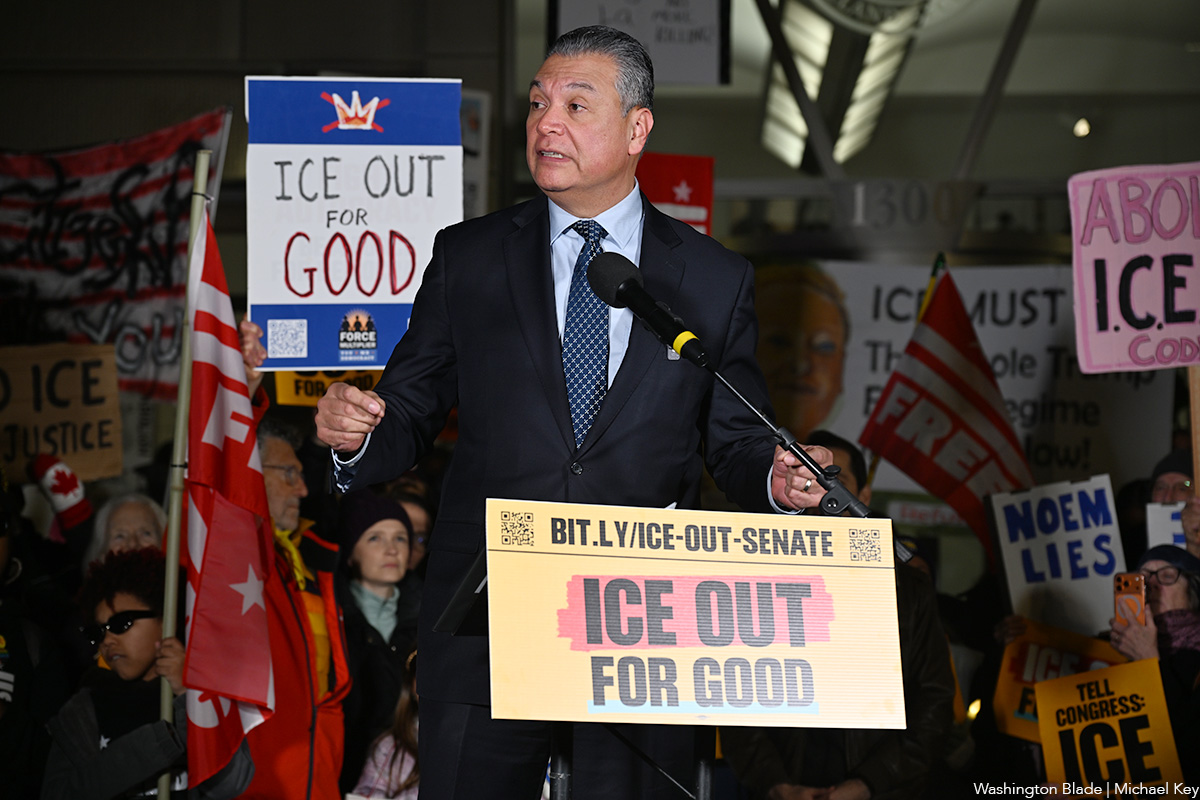
U.S. Sen. Alex Padilla (D-Md.) is among those who spoke at an “ICE Out for Good” protest that took place outside U.S. Customs and Border Protection’s headquarters in D.C. on Tuesday.
The protest took place six days after a U.S. Immigration and Customs Enforcement agent shot and killed Renee Nicole Good, a 37-year-old woman in Minneapolis.
Good left behind her wife and three children.
(Video by Michael K. Lavers)
Politics
LGBTQ Democrats say they’re ready to fight to win in 2026
Queer leaders warn Democrats not to abandon trans people
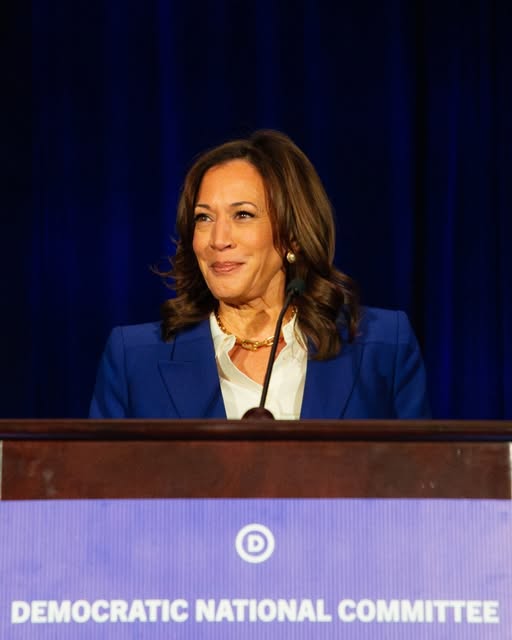
The Democratic National Committee held its annual winter meetings in Downtown Los Angeles over the weekend, and queer Democrats showed up with a clear message for the national organization: Don’t abandon queer and trans people.
Following last year’s disastrous presidential and congressional elections, many influential pundits and some powerful lawmakers called on Democrats to distance the party from unpopular positions on trans rights, in order to win swing districts by wooing more conservative voters.
But members of the DNC’s LGBTQ Caucus say that’s actually a losing strategy.
“There are still parts of our party saying we need to abandon trans people in order to win elections, which is just not provable, actually. It’s just some feelings from some old consultants in DC,” LGBTQ Caucus Chair Sean Meloy says.
Some national Democrats are already backtracking from suggestions that they walk back on trans rights.
California Governor Gavin Newsom grabbed national attention in March when he suggested that it was “deeply unfair” for trans girls to play in women’s sports. But last week, he doubled down on support for trans rights, claiming to have signed more trans-rights legislation than any governor in the country, and entering into feuds on X with Elon Musk and Nicki Minaj over his support for trans kids.
Democrats are also clearly feeling the wind in their sails recently after major election victories in Virginia and New Jersey last month, as well as victories in dozens of local and state legislative elections across the country in 2025.
“[Abigail] Spanberger in Virginia didn’t win by dodging the trans question. She won by attacking it, confronting it, and that’s how she got ahead,” says Vivian Smotherman, trans activist and at-large member of the DNC’s LGBTQ Caucus.
“Trans people are not a problem. We are a resource,” Smotherman says. “For my community, surviving into adulthood is not a guarantee, it’s an accomplishment. You don’t walk through a survival gauntlet without learning things… I’m not begging the DNC to protect my community. I’m here to remind you that we are the warriors tempered by fire, and we are fully capable of helping this party win.”
At its own meeting on Friday, the LGBTQ Caucus announced several new initiatives to ensure that queer and trans issues stay top of mind for the DNC as it gears up for the midterm elections next year.
One plan is to formalize the DNC’s Trans Advisory Board as distinct from the LGBTQ Caucus, to help introduce candidates across the country to trans people and trans issues.
“One in three people in this country know a trans person. Two-thirds of Americans don’t think they do,” Smotherman says. “So the real problem is not being trans, it’s that you don’t know us. You cannot authentically support a trans person if you’ve never met one.
“That’s why my first goal with this Trans Advisory Board is to host a monthly Meet a Trans Person webinar. Not as a spectacle, as a debate, but as a human connection, and I will be charging every state chair with asking every one of their candidates up and down the board if they know a trans person. And if that person doesn’t know a trans person, I’m gonna have that state chair put them on that webinar.”
The LGBTQ caucus is also opening up associate membership to allies who do not identify as LGBTQ, in order to broaden support and connections over queer issues.
It’s also preparing for the inevitable attacks Republicans will throw at queer candidates and supporters of LGBTQ issues.
“These attacks are going to come. You have to budget money proactively. You have to be ready to fight,” Meloy says. “There are some local party chairs who don’t want to recruit LGBTQ candidates to run because these issues might come up, right? That’s an absolutely ludicrous statement, but there are still people who need support in how to be ready and how to respond to these things that inevitably come.”
“The oldest joke is that Democrats don’t have a spine. And when they come after us, and we do not reply, we play right into that.”
Meloy also alluded to anti-LGBTQ tropes that queer people are out to harm children, and said that Democrats should be prepared to make the case that it’s actually Republicans who are protecting child abusers – for example, by suppressing the Epstein files.
“They are weak on this issue. Take the fight, empower your parties to say, ‘These people have nothing to stand on,’” Meloy says.
Politics
George Santos speaks out on prison, Trump pardon, and more
Not interested in political comeback: ‘I made so many poor choices’
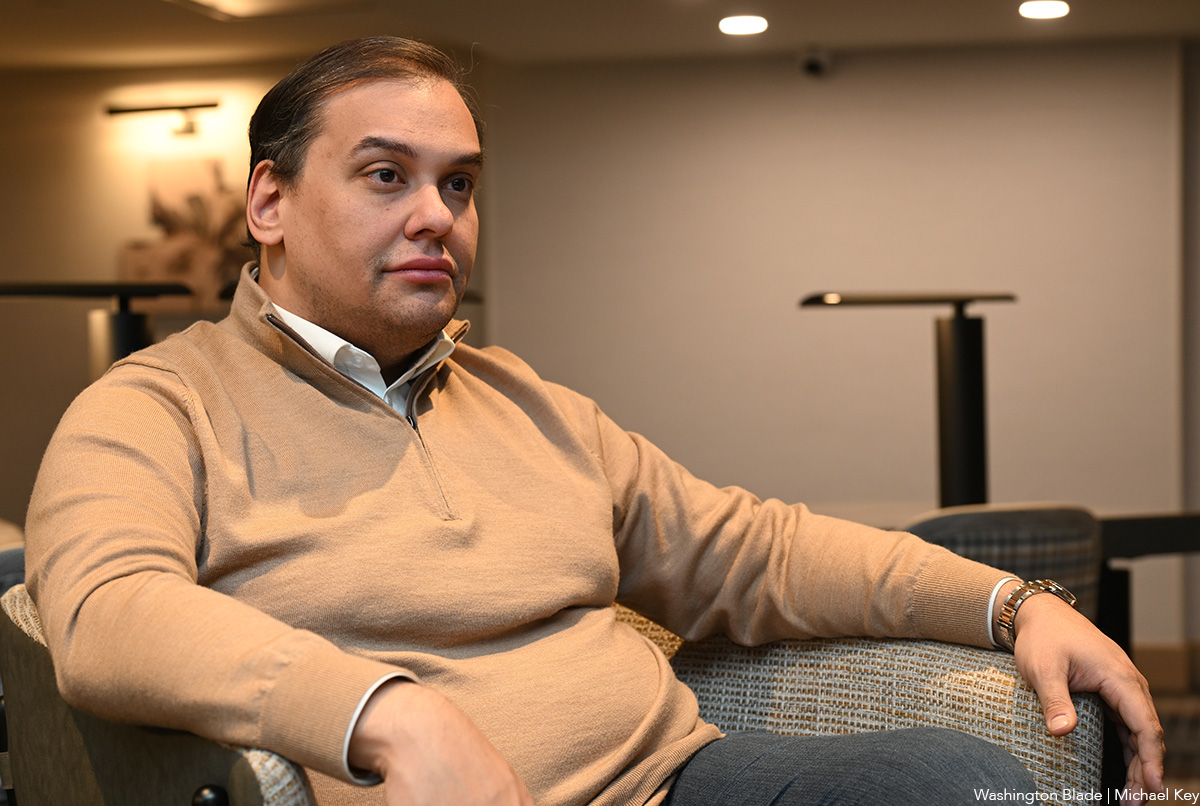
It has been just over two years since George Santos — the disgraced politician who once represented New York’s Third District — was expelled from Congress. Now, Santos is breaking his silence about his expulsion, imprisonment, subsequent pardon, what he believes he did wrong, and allegations regarding immigration fraud.
In 2022, Santos was elected to represent the Long Island communities of North Hempstead, Glen Cove, and Oyster Bay, one of the wealthiest congressional districts in the United States. This week, he sat in the lobby of the Hyatt Capitol Hill, just blocks from his former office in the Cannon House Office Building, to speak with the Washington Blade about how he became the center of one of the most outrageous political scandals in modern U.S. history. Despite the media scrutiny surrounding his lies, criminal convictions, and eventual pardon by President Donald Trump, Santos appeared relaxed during the interview, speaking freely about his experiences, admissions, and grievances.
Scope of Santos’s misconduct
Many journalists have struggled to verify George Santos’s personal history and professional resume. Numerous claims he made during his campaigns have been debunked or walked back, particularly regarding his personal and professional history since 2020.
Santos gained media attention for claiming Jewish heritage despite being raised Catholic and identifying as Catholic. He said his maternal grandfather grew up Jewish, converted to Catholicism before the Holocaust, and raised his children Catholic. Investigations, however, show his maternal grandparents were born in Brazil, not Ukraine or Belgium. Santos described himself variously as “Jew-ish,” “half Jewish,” a non-observant Jew, a “proud American Jew,” and a “Latino Jew.”
He also misrepresented his mother’s professional history, claiming she was “the first female executive at a major financial institution.” Records, including her 2003 visa application, show she had not been in the U.S. since 1999 and listed her occupation as a domestic worker.
Santos further fabricated his educational history, claiming a bachelor’s degree in finance and economics from Baruch College, where he said he graduated near the top of his class. Investigations revealed he never graduated. He also falsely claimed an MBA from New York University on official campaign documents — a misrepresentation that later became grounds for his expulsion. Santos later blamed the lies on a local Republican Party staffer.
His professional claims were also fraudulent. Santos called himself a “seasoned Wall Street financier and investor” and claimed to have worked for Citigroup and Goldman Sachs. Both companies reported no record of his employment. When pressed, Santos admitted he had used a “poor choice of words,” eventually describing his experience as “limited partnerships.” He also falsely claimed to have lost four employees in the 2016 Pulse nightclub shooting in Orlando; no victims had any connection to companies listed in his biography.
Santos misrepresented his residences during his 2020 campaign. He listed an Elmhurst, Queens, address outside the district he sought to represent, later moving with his partner to a Whitestone rowhouse. He was registered to vote at the Whitestone address but did not live there.
When asked about his lies, Santos told the Blade he wishes he did everything differently.
“Everything, everything, everything,” Santos told the Blade. “I made so many poor choices that I think it would be redundant to not say everything.”
He did not fully take responsibility, describing the scandals as a mix of personal ambition and what he called a “sensational political assassination.”
“Ambition is a toxic trait, and unfortunately, I was consumed by that. I forewent everyone else’s [considerations]… I had no consideration for anything around me other than myself, and that’s awful,” he added.
In addition to personal history fabrications, Santos made numerous false claims the Department of Justice later treated as campaign finance fraud. He solicited donations through a fake political entity, diverted funds into an LLC he controlled, and disguised personal expenditures as legitimate political expenses, using donations for luxury purchases.
Santos denied wrongdoing, stating, “I didn’t steal people’s credit cards… I didn’t go shopping at Hermes and Onlyfans. It’s not true either.”
He defended some purchases as campaign-related, singling out House Ethics Committee Chairman Michael Guest.
“The only two luxury brands that you’ll see of purchases in my campaign were Ferragamo and Tiffany. [I got] Ferragamo for the [male members of the] Republican steering committee when I was lobbying for my seat committee and three Tiffany pens for the females … That’s where those are legal expenses. They’re very legal.”
The House Ethics Committee found “substantial evidence” of lawbreaking, stating Santos “fraudulently exploited every aspect of his House candidacy,” using campaign funds for luxury shopping, cosmetic procedures, travel, and rent.
“I had a choice to not straw donate to my campaign, and I chose to, yeah, that was a poor choice,” Santos admitted. “Of course, I’m guilty for that. Was I forthcoming in the GOP with the party? No, I was not. I was very dishonest with the GOP, and for that I regret, and I also regret that the GOP in New York created an environment that made somebody like me feel it was needed to do that. But I regret not being forthcoming and honest about it.”
Santos also collected pandemic unemployment payments of approximately $24,000 while employed.
He was charged with multiple federal offenses, including conspiracy to commit offenses against the United States, wire fraud, making materially false statements to the FEC, falsifying records, aggravated identity theft, access device fraud, money laundering, and theft of public funds. Santos pleaded guilty to wire fraud and aggravated identity theft and was sentenced to 87 months in prison in April 2025, ordered to pay hundreds of thousands in restitution and forfeiture. He was released from the Federal Correctional Institution in Fairton, N. J., following Trump’s pardon in October.
Immigration fraud allegations
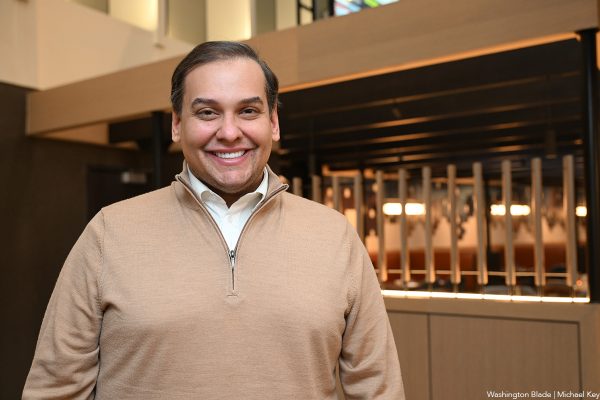
In addition to the professional and personal claims Santos has made that have been proven false, he also addressed allegations of immigration fraud raised by the Washington Blade. A source familiar with Santos’s history with U.S. immigration proceedings described several alarming allegations, most notably a reportedly fraudulent marriage to his former wife, Uadla Viera, to help her obtain U.S. immigration status. Santos has adamantly denied wrongdoing.
According to the source, who spoke to the Blade on condition of anonymity, Santos married Viera in a civil ceremony in Manhattan in 2012, despite neither living in the city. There are no known photos, announcements, or records of a wedding celebration, engagement, bridal party, shower, or honeymoon. This unusual lack of documentation stands out for Santos, whose life and actions are typically geared toward media attention.
While the source questioned the motive behind the marriage, Santos insisted it was legal and not done for any nefarious purpose.
“I married a person who was legally in this country, and all in all, what I did was kind of skip the line for her. And we were married, and there was no financial benefit [for me]. We were married. We had bills together. There’s no proof or evidence of a financial benefit other than jaded people again, anonymously, lying saying ‘He got paid. He offered me money.’ First of all, I don’t even have the wherewithal for that. Second of all, we went through a very rigorous — fucking rigorous — immigration litmus test, house interviews, multiple layers of interviews, a consummate marriage that was very obvious for anybody who was around us, and then I ended up cheating for now, obvious reasons.”
In 2013, the source said Santos dated Leandro Bis, a Brazilian tourist, while still married to Vieira. Santos denies this, framing the period as tumultuous and asserting that he was merely helping someone in need who now falsely alleges more. Bis told ABC News in a 2023 interview that Santos had “promised the world” to him while they dated.
“I’ve never dated a Leandro,” Santos told the Blade. “I can’t believe that six months of my life are common stories in the New York Times. This lunatic is going on TV and putting himself out there…I look so much better than him, and I’m much older than him. I mean life does numbers on people, because hate is a virus.”
The source further recounted Santos’s interactions with Greg Morey-Parker, a former roommate of Santos’s who told CNN that he was suspicious of Santos’s academic resume and stories of family wealth.
“Greg Morey-Parker is not a boyfriend– nowhere near a boyfriend,” Santos told the Blade. “He was actually a homeless Starbucks barista that I felt bad for. Let him crash in my living room. … He accused me of stealing his Burberry scarf. You’re homeless and you have a Burberry scarf? Bro, make up your fucking mind.”
In 2014, Santos met Pedro Vilarva, 18, on Tinder and dated him for a year while still married to Viera. According to the source, the trio socialized frequently: Santos and Vilarva with other gay men, Viera with heterosexuals. That same year, Santos filed a family-based immigration petition for Viera, who was granted conditional permanent residency. Santos publicly celebrated his engagement to Vilarva in a Facebook post at La Bonne Soupe, a Manhattan restaurant, though the relationship eventually ended. That Facebook post has since been deleted.
Santos maintains he was honest with both immigration authorities and his spouse.
“I was honest with immigration authorities, 100% above board. I was honest with my spouse, as far as my relationship with him and with my ex-wife, so much I’m the one who told her, I’m sorry we can’t do this anymore. I’m seeing Pedro. And she knew Pedro, it was a shit show. Okay? I’m gonna leave it at that, out of respect to both her and Pedro … I cheated on my first wife, and that was a whole story on its own.”
Later in 2014, Santos met Morey-Parker, who told the Daily Beast that Santos advised him to marry an immigrant woman from Brazil to make money. Santos denied that claim to the Blade.
“That is Gregory again making more shit up and there’s no proof or evidence or anything that you can point to,” Santos said.
Viera became a permanent resident in 2017, according to previous media reports, and in 2018 gave birth to a daughter. Santos did not claim paternity or seek custody. Santos and Viera were granted an uncontested divorce in 2019. Viera became a U.S. citizen in 2022 and purchased a $750,000 home in New Jersey, according to the Blade’s source and to the official deed of the property.
Santos did not mention that he had been married or divorced during his congressional campaigns until an internal vulnerability study commissioned by the campaign identified it as a potential issue for voters.
Santos downplayed all of this, saying it was a running joke among his staff. “I would be a joke. I would allude to it [and say] ‘Ladies, look, I love you guys, but there’s a reason that I don’t date women anymore, and I’m divorced from my first wife.’ It was like a running joke, making light of it and self-deprecating humor, which is my favorite kind of humor.”
He claimed that the New York Times story was the reason he became more sensitive with posts related to his ex-wife.
“The reason it’s not [visible] today is because I pulled it all off because of privacy issues. It was all archived for my Instagram, but if you had access to my Instagram prior to the New York Times story, you would see I never deleted my pictures with her…They were all over my Instagram, going to the beach, like everything. It’s like our entire life was documented together.”
On Trump, politics, and public office
Santos was tight lipped when the Blade questioned him about his conversations with President Trump.
“You never, ever share a lick of a word you exchange with the sitting president of the United States, no matter who that person is… I’ve seen it backfire for people who did it with Biden, with Trump, with Obama. I’m not about to make that mistake. Yeah, my conversations with the president are private.”
He did say that he was humbled by Trump’s pardon but regrets ever entering politics.
“I had such a good life, and to have to be at the place I am today is indicative of, you know, politics is really for the elites…I’m so uninterested in politics these days…I want to get involved in policy change, but not politicking.”
He said he is not interested in a position in the Trump administration.
“I would respectfully decline [any government job], I would say thank you from the bottom of my heart, and say ‘I’m probably not best suited for a job in government.’ I want nothing to do with the government or public office.”
Trans and LGBTQ issues
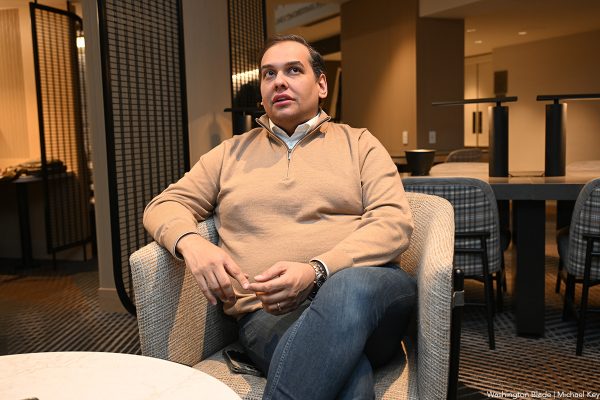
Santos also spoke on his experience as both a member of the LGBTQ community and a Republican legislator. Most notably, he doesn’t think there is any barrier for gay people to join the Republican Party, citing his ascent into Republican leadership as an example.
He defended his record as a gay Republican, noting the continued election and reelection of LGBTQ members of Congress and emphasizing that he disproved stereotypes about Republicans.
“There’s no bigotry in the Republican Party. It’s a matter of how you present yourself…I’m not saying there’s no anti-gay sentiment, I’m pretty sure there is, but I never experienced it.”
He continued, explaining how far-right figures gaining prominence within Republican circles sets off some tension.
“I know it exists… I mean Nick Fuentes exists, right? His followers go on my social media, and either call me a Jew or a homo all day long. But I’m proud of it. I’m proud that I was the first who didn’t conceal the fact that he’s gay, and still got elected by a constituency of Republicans in a landslide victory.”
It is important to note that Santos is the first openly LGBTQ non-incumbent Republican to be elected to Congress, not the first openly LGBTQ Republican to win an office. Santos won his seat with 53% of his district’s vote while his opponent, Robert Zimmerman, got 46%.
Santos spoke on his experience as a gay man, echoing other LGB Republicans who have distanced themselves from transgender rights.
“This is very controversial for me, but I don’t loop my issues in with the trans community issues. I’m a gay man. I’m gender conforming. I’m he/him/sir.”
He continued, saying all he can speak on is his experience as a gay man, which doesn’t inherently lend him to being a champion for transgender rights, unlike many other LGB elected officials have done.
“I’ve never walked in the shoes of a trans person, so I can’t speak for them.” Santos framed his stance on gender-affirming care carefully: “I believe those people deserve the right to treatment, and that’s fair. I don’t believe in a mass agenda of pushing children towards that. I think we need to have a sensible conversation of, let’s allow kids to get to a certain age, right? Let’s allow adults to make those decisions, not children…for permanent decisions like hormone blockers and puberty blockers…that should be with adults.”
This is despite general medical consensus that views gender-affirming care as medically necessary, appropriate, and potentially life-saving for trans youth. The American Medical Association, the largest medical association in the country, opposes state laws that interfere with or ban gender-affirming care, calling such actions harmful and contrary to medical evidence.
Prison experience
Santos also spoke explicitly about what he says are dehumanizing conditions at FCI Fairton, something that has given him a new passion following his release from the facility.
“It’s punitive and dehumanizing,” he said when describing the situation he was in.
“Black mold bubbling all over the ceiling. Rat infestations… Listeria and ringworm outbreaks. Expired food… Underwear with skid marks… either wear that or don’t wear underwear.”
He continued, emphasizing the dehumanizing treatment he says he received, and hoping it will lead to prison reform.
“Solitary confinement for 41 days. Three showers a week. One 15-minute phone call every 30 days. [The warden] an absolute vicious human being. … We need to rehabilitate people. Just make it humane.”
Santos hinted at a future in media and activism, particularly related to prison reform, signaling that while he has stepped away from public office, he may still seek to influence policy and public discourse.
Despite his dramatic fall from political grace, Santos remains unapologetically in the public eye. From allegations of fraud to his prison experience and ongoing controversies, he presents a portrait of a man both shaped by — and defiant of — the consequences of his actions. Whether the public views him as a cautionary tale, a redeemed figure, or something in between, Santos’s story continues to provoke debate about accountability, ambition, and the limits of political power in America.
Politics
Honoring Stonewall: A conversation with Senator Toni Atkins on the past, present, and future of Pride
As we commemorate the 50th anniversary of the Stonewall Uprising, the Stonewall Democratic Club honors leaders like Senator Toni Atkins, whose lifelong commitment to equality and public service reflects the enduring legacy and ongoing promise of Stonewall
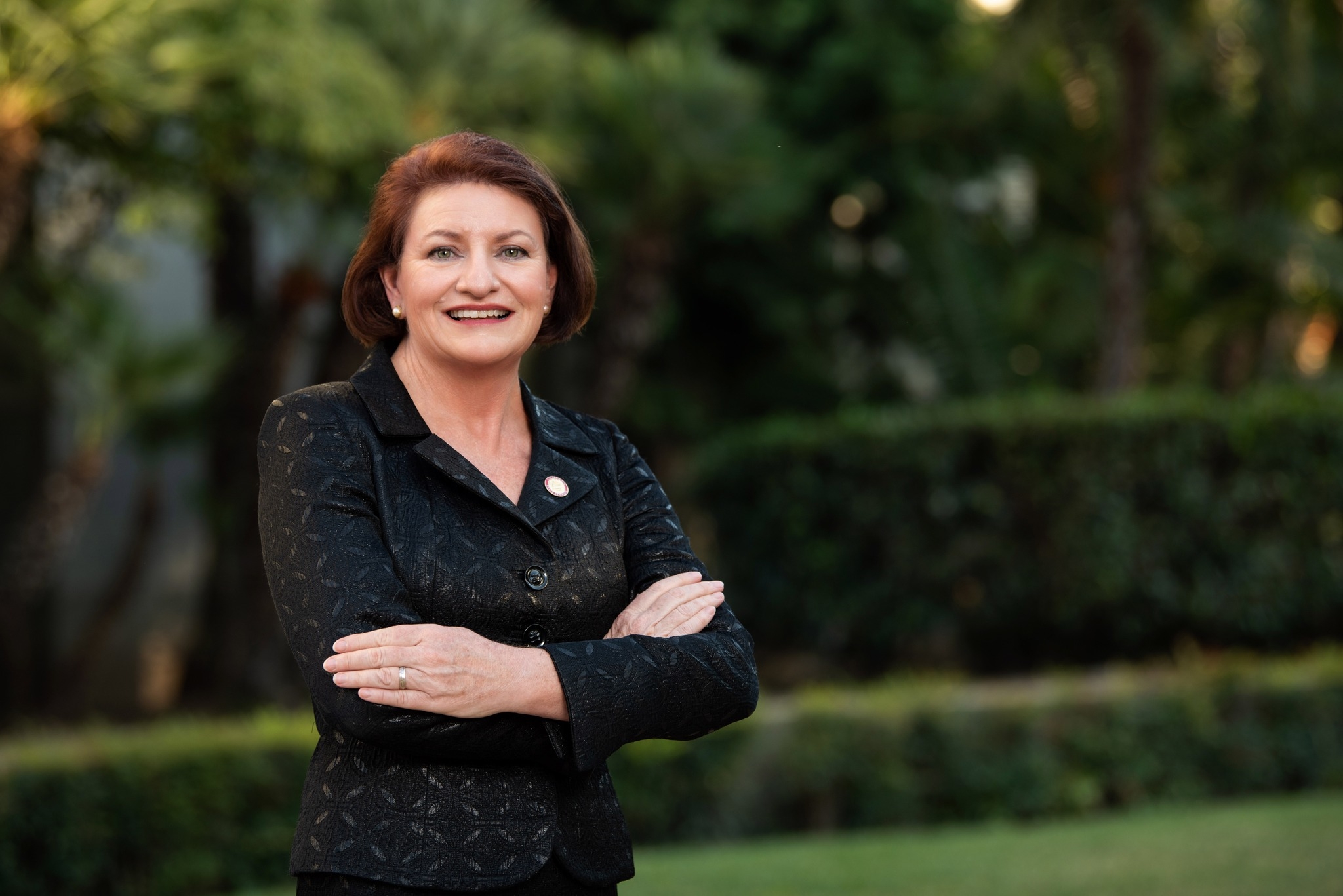
As we rapidly approach the 50th anniversary of the Stonewall Uprising – an inarguably paramount moment that fueled a national movement for LGBTQ civil rights – the Stonewall Democratic Club continues to carry into the future the spirit of that rebellion through advocacy and political action. This milestone also provides our community with an opportunity to reflect on the leaders who have carried that spirit forward, including Senator Toni Atkins, whose decades of public service have been shaped by a resounding commitment to equality and representation of marginalized communities. Her journey, from growing up in rural poverty to becoming one of California’s most impactful legislative leaders, embodies the progress made since Stonewall and the work that still lies ahead for us.
As our community and our country approach the 50th anniversary of the Stonewall Uprising, how does that milestone resonate with you personally, politically, or otherwise?
Personally, I came out at age 17 in a very conservative rural community. I didn’t see other people like me, and I didn’t believe society was built for someone like me. So I am simply grateful to have been part of our movement for civil rights for my LGBTQ+ community. Politically, we have made tremendous gains, and we now face a very intentional and serious backlash. Our work and political engagement are more important than ever.
In your opinion, what do you believe was the most significant achievement that came from Stonewall? What unfinished business do we still have to work on?
The most significant achievement was visibility – seeing our collective strength for the first time.
Today, we must fight to regain the ability to serve openly in the military, protect marriage equality, and hold our hard-won ground. We must continue educating allies and families about the lives and experiences of nonbinary and transgender community members. In many ways, we are refighting some of the same battles.
We also have to work in partnership with other marginalized communities on issues beyond civil rights – income inequality, access to healthcare (including gender-affirming care), educational opportunities, and affordability. The struggle for justice is interconnected.
How do you view the connection between the activism of that time in our country and the modern policy work of the California Legislature?
Activism and organizing were essential then, and they remain essential today. We still have to strategize, organize, and take action. That hasn’t changed.
You have had a long and devoted career in public service in California. What first inspired you to get into politics? How have your own experiences as a queer woman shaped your journey along the way?
Our stories – every one of them – matter. My history has shaped every policy issue I’ve worked on. I grew up in a working-poor family. My parents, three siblings, and I lived in a four-room house with no indoor plumbing. We carried water from a nearby spring to drink, cook with, and bathe. We lacked consistent healthcare. My father was a lead miner; my mother worked as a seamstress in a factory.
Coming out as a lesbian at a young age was another defining part of my story. All of this influenced my work on housing, healthcare, LGBTQ rights, the environment, and labor protections. I saw firsthand how the mines destroyed the environment, how little safety, benefits, or protections my father had, and how families like mine struggled. Much of my political work has been about empowerment – for myself, my family, and others facing similar obstacles.
I entered politics by helping my mentor, Christine Kehoe, get elected to the San Diego City Council in 1993 – the first openly LGBTQ candidate elected to that body. Working with her at City Hall showed me the difference we could make when we had a seat at the table. That was my motivation – not only for the LGBTQ community but for all marginalized communities, working families, and women. I am forever grateful to Chris for giving me a chance to serve.
What moments in your legislative or leadership roles shine brightest in your mind as being most impactful to you?
So many- the Gender Recognition Act, Proposition 1, which I authored to enshrine abortion and contraception into the California Constitution, and Proposition 3, which did the same for marriage equality. The Earned Income Tax Credit (EITC) for working individuals and families. Creating a permanent source of funds for affordable housing. The California Dream For All downpayment assistance loan for people to buy their first home. Support for funding Prep and for community clinics and Planned Parenthood. Increased funding for childcare for working families and increased paid family leave! So many issues and so much good can be done through public policy and budget actions. That is the importance of the political work of the LGBTQ community and our allies!
As the former Speaker and as President ProTem – I have had the ability not just to sit at that table but to actually set the agenda. I’m grateful and honored for the opportunity.
Over the years you have spent in politics, how has your sense of “why I do this work” evolved, particularly in relation to our queer community and broader social justice aims?
I have seen how strategy, organizing, fundraising, and activism empower us to influence policy and budget decisions rooted in shared values. Relationships also matter – the ones we build, the conversations we have, and the listening we do. Those connections make us better and more effective.
Decades ago, we relied heavily on allies because we didn’t have seats at the table ourselves. We must never forget that. There is no shortcut for the crucial, ongoing conversations needed to continue advancing equality.
How would you describe the state of queer rights and representation in California today?
California’s values – in the public and in the Legislature – largely reflect strong support for our community. Still, especially regarding trans rights, we must keep engaging allies and others about who we are as nonbinary and transgender individuals. That is the next frontier of our civil-rights journey.
And our LGBTQ Caucus has never been larger or more effective. Many members, as I once was, are now in positions of real power and influence, moving forward policies that support our community.

President Donald Trump on Wednesday signed a bill that reopens the federal government.
Six Democrats — U.S. Reps. Jared Golden (D-Maine), Marie Gluesenkamp Perez (D-Wash.), Adam Gray (D-Calif.), Don Davis (D-N.C.), Henry Cuellar (D-Texas), and Tom Suozzi (D-N.Y.) — voted for the funding bill that passed in the U.S. House of Representatives. Two Republicans — Thomas Massie (R-Ky.) and Greg Steube (R-Fla.) — opposed it.
The 43-day shutdown is over after eight Democratic senators gave in to Republicans’ push to roll back parts of the Affordable Care Act. According to CNBC, the average ACA recipient could see premiums more than double in 2026, and about one in 10 enrollees could lose a premium tax credit altogether.
These eight senators — U.S. Sens. Catherine Cortez Masto (D-Nev.), Dick Durbin (D-Ill.), John Fetterman (D-Pa.), Maggie Hassan (D-N.H.), Tim Kaine (D-Va.), Angus King (I-Maine), Jacky Rosen (D-Nev.), and Jeanne Shaheen (D-N.H.) — sided with Republicans to pass legislation reopening the government for a set number of days. They emphasized that their primary goal was to reopen the government, with discussions about ACA tax credits to continue afterward.
None of the senators who supported the deal are up for reelection.
King said on Sunday night that the Senate deal represents “a victory” because it gives Democrats “an opportunity” to extend ACA tax credits, now that Senate Republican leaders have agreed to hold a vote on the issue in December. (The House has not made any similar commitment.)
The government’s reopening also brought a win for Democrats’ other priorities: Arizona Congresswoman Adelita Grijalva was sworn in after a record-breaking delay in swearing in, eventually becoming the 218th signer of a discharge petition to release the Epstein files.
This story is being updated as more information becomes available.

Wagons ho! High-class, head-turning haulers

Catherine McCafferty is ‘Pretty Gay’

When “election integrity” becomes voter suppression

‘The Pitt’ stars Noah Wyle and Taylor Dearden on what season 2 gets right about queer representation

Trailblazing trans Brazilian lawmaker refuses to set foot in Trump’s America
‘The Pitt’ stars Noah Wyle and Taylor Dearden on what season 2 gets right about queer representation

Reclaiming and uplifting queer Arab stories: Elias Jahshan unveils his new anthology, ‘This Queer Arab Family’

Inside the LGBTQ+ records of Todd Blanche and Markwayne Mullin

There’s never been a drag show like ‘Pageant Queens’
Trailblazing trans Brazilian lawmaker refuses to set foot in Trump’s America
-
 Television3 days ago
‘The Pitt’ stars Noah Wyle and Taylor Dearden on what season 2 gets right about queer representation
-
 Books4 days ago
Reclaiming and uplifting queer Arab stories: Elias Jahshan unveils his new anthology, ‘This Queer Arab Family’
-
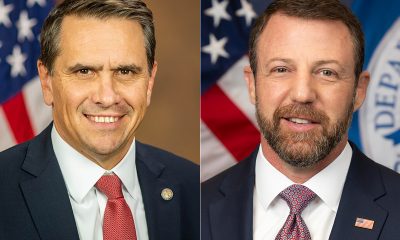 Federal Government4 days ago
Inside the LGBTQ+ records of Todd Blanche and Markwayne Mullin
-
 Television4 days ago
There’s never been a drag show like ‘Pageant Queens’
-
 Brazil3 days ago
Trailblazing trans Brazilian lawmaker refuses to set foot in Trump’s America
-

 Lebanon4 days ago
Lebanese LGBTQ+ group responds to latest war
-
 a&e features1 day ago
Catherine McCafferty is ‘Pretty Gay’
-
 Commentary2 days ago
When “election integrity” becomes voter suppression
-
 Autos6 hours ago
Wagons ho! High-class, head-turning haulers