
Health
New HHS division slammed as tool for anti-LGBT discrimination
Medical practitioners allowed to deny abortion-related services and treatment to LGBT people on religious grounds
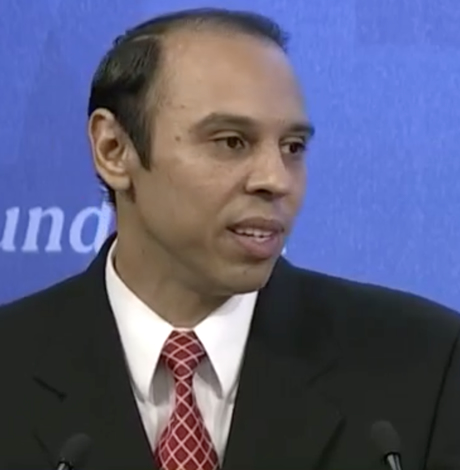
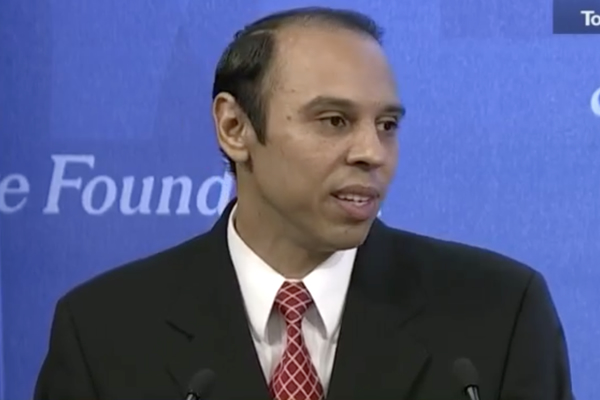
Roger Severino hailed the creation of a conscience division at HHS. (Image courtesy C-Span)
Consistent with media reports indicating the move was coming, the Department of Health & Human Services on Thursday formally established a conscience division that critics say will allow medical practitioners to deny abortion-related services and treatment to LGBT people on religious grounds.
Roger Severino, a former Heritage Foundation scholar and now director of the HHS Office for Civil Rights, said in a statement the new agency — called the Conscience & Religious Freedom Division — will help enforcement of laws designed to protect religious freedom.
“Laws protecting religious freedom and conscience rights are just empty words on paper if they aren’t enforced,” Severino said. “No one should be forced to choose between helping sick people and living by one’s deepest moral or religious convictions, and the new division will help guarantee that victims of unlawful discrimination find justice.”
As a Heritage Foundation scholar, Severino expressed anti-transgender views, such as opposition to allowing transgender people in the U.S. military and the Obama administration’s litigation against North Carolina’s anti-trans bathroom law House Bill 2.
Acting Secretary of Health & Human Services Eric Hargan echoed Severino’s praise for the new division in a statement.
“President Trump promised the American people that his administration would vigorously uphold the rights of conscience and religious freedom,” Hargan said. “That promise is being kept today. The Founding Fathers knew that a nation that respects conscience rights is more diverse and more free, and OCR’s new division will help make that vision a reality.”
The new division was unveiled Thursday at HHS in an event with both Hargan and Severino as well as members of Congress who have anti-LGBT records, including House Majority Leader Kevin McCarthy (R-Calif.), Rep. Vicky Hartzler (R-Mo.) and Sen. James Lankford (R-Okla.).
But LGBT groups decried the establishment of the Conscience & Religious Freedom Division on the basis that it would enable religious objectors to refuse to treat transgender people or provide abortion-related services.
Rea Carey, executive director of the National LGBTQ Task Force, said in a statement the new division is a wolf in sheep’s clothing.
“We are not fooled: The new office announced this morning is meant to make it easier for people to discriminate, not to protect people of faith,” Carey said. “Health professionals have a duty to care for all their patients regardless of one’s gender identity, sexual orientation, faith, creed, race, political views, gender or disability, and no one should be denied care for being who they are.”
Creation of the division was first reported on Wednesday by Politico in an article indicating HHS would establish the agency as part of a proposed new rule enabling religious exemptions for medical providers. Although the new agency was created, no new rule has been published in the Federal Register.
HHS hasn’t responded to repeated inquiries from the Washington Blade on the nature of the new division or whether a new rule would be forthcoming.
Gregory Angelo, president of the Log Cabin Republicans, was among the LGBT groups that criticized the new division as means to enable anti-LGBT discrimination.
“It’s amazing how the same people who regularly deride the LGBT community for seeking special rights are now reveling in the creation of special rights for themselves,” Angelo said. “Log Cabin Republicans is proud to support both religious liberty and LGBT equality, but the Conscience & Religious Freedom Division at HHS seems primed to tip the scales in favor of overly broad, vague, and frivolous complaints that disproportionately impact the LGBT community in matters — quite literally — that could mean life and death.”
Jason Lemieux, director of government affairs for the Center for Inquiry, said in a statement the new division is at odds with ensuring access to health care.
“The Department of Health & Human Services should have as its sole priority the health and well-being of every American, pursuing policies based in facts and evidence, regardless of any person’s religious beliefs or lack thereof,” Lemieux said. “This grossly misnamed division represents the opposite. It is an abdication of the department’s vital responsibility to the health of all Americans, placing the dogmatic beliefs of a few above the health and lives of the people they serve.”
Cheering the creation of the division as means to protect religious freedom, on the other hand, was Tony Perkins, president of the anti-LGBT Family Research Council.
“Health care providers and others protected under federal conscience laws should be greatly encouraged that HHS will address any government actions taken against those who have objections to participating in an abortion or purchasing health insurance that includes abortion,” Perkins said. “Americans should not be forced to choose between their faith and their desire to help patients.”
In contrast to the Trump administration, the Obama administration issued a rule interpreting the provision barring sex discrimination under Obamacare to bar medical providers from discriminating against transgender patients or women who have had abortions. After a legal challenge, however, HHS was enjoined from enforcing that rule as a result of a court order issued by U.S. District Judge Reed O’Connor in Texas.
The Center for American Progress published a report on the same day the HHS division was created indicating a significant minority of LGBT people have faced denial of services in the medical sector. The report, titled “Discrimination Prevents LGBTQ People from Accessing Health Care,” is based on a 2017 survey conducted by the organization.
Among the findings was 29 percent of transgender people surveyed said a doctor or health care provider refused to see them because of their gender identity. Another 12 percent said a health care provider refused to provide them transition-related care.
For individuals who identified as lesbian, gay, bisexual or queer, the survey found eight percent said a doctor or other health care provider refused to see them because of their sexual orientation. Another six percent said a doctor or other health care provider refused to give them health care related to being lesbian, gay, bisexual or queer.
Shabab Mirza, an LGBT research assistant at the Center of American Progress and co-author of the report, said in a statement the conscience division “is the latest in the harms the Trump administration has enacted on this community.”
“These data show the breadth of the discrimination that LGBTQ people, and especially transgender people, experience in health care settings,” Mirza said. “From avoiding doctor’s offices out of fear of discrimination, to hearing demeaning language, to being denied care outright, it is no wonder that LGBTQ people report poorer health than their peers.”
Conscience & Religious Freedom Division is created days before the anti-abortion rights March for Life rally in D.C., which President Trump is set to address via a video message. Trump may address the creation of the new division in remarks to the crowd.
Commentary
Requiem for patriotism
Journalist Karen Ocamb remembers her military family for Memorial Day and how her sense of patriotism can never be distinguished.
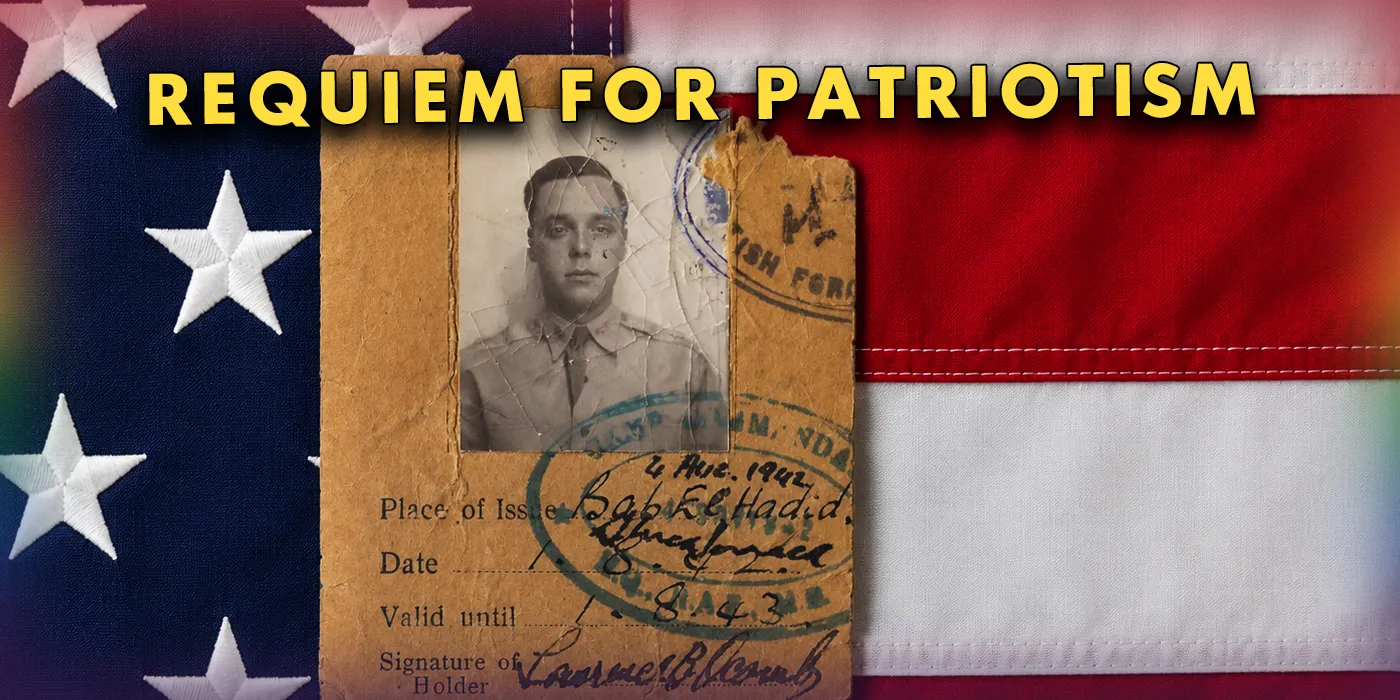
Tears trickled down my cheeks listening to the mournful “Taps” trumpeted at the wreath laying ceremony at Arlington National Cemetery on Memorial Day. I still hear the echo of Taps from decades ago when my father was buried at Arlington, another American hero no one knows about but who deserved his spot in those hallowed grounds.
Col. Lawrence B. Ocamb Jr. was a young reporter on the Kansas City Star newspaper – moonlighting as a big band leader – when he told his parents and large Junction City farming family that he was leaving to go fight fascism in Europe. He assured them that the US would be forced to join the war between Britain and Germany soon, but the evil was strong and spreading, and morally, he couldn’t wait.
The personal risk was great. His journalism salary helped feed and clothe his 11 younger siblings. America had turned inward after World War 1 and the Wall Street crash of 1929, which precipitated the Great Depression and unrelenting poverty. In the mid-1930s, Congress passed three Neutrality Acts, making it a crime to serve in another country’s military with penalties of a $20,000 fine, 10 years in prison, and loss of US citizenship. Even with pleas from the new British Prime Minister Winston Churchill, President Franklin D. Roosevelt was stymied by the country’s isolationism.
But FDR couldn’t abide watching Nazi dictator Adolf Hitler’s war machine brutally gobble up country after country since Sept. 1939 – Czechoslovakia, Hungary, Austria, Denmark, the Netherlands, Belgium, Norway, and then even France after the Battle of Dunkirk in May 1940. Hitler salivated over conquering Great Britain.
Churchill was defiant in a June 4, 1940, speech to rally his country: “We shall not flag or fail. We shall go on to the end… we shall defend our island, whatever the cost may be.”
And the cost was dear. The mighty German Luftwaffe air force hail-bombed London, and German U-boats relished sinking British ships in the Atlantic Ocean. Britain stood alone.
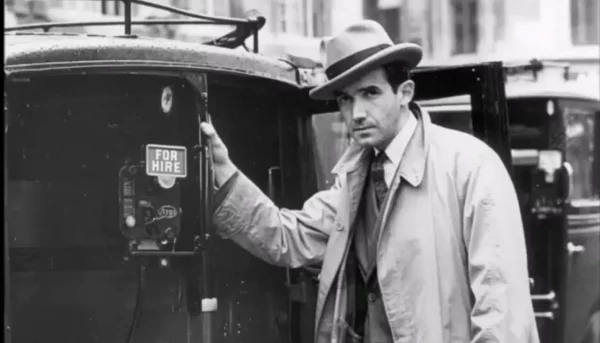
Many Americans learned about the war from 32-year-old CBS News Radio reporter Edward R. Murrow, who painted “word pictures” broadcasting “live” on the Sept. 21, 1940 bombing Blitz from his perch on a London rooftop.
Murrow was on a mission, too. “Three successive CBS offices were destroyed by German bombs. Broadcasting House was bombed several times during the war, including at least one time while Murrow was broadcasting. One bomb didn’t explode right away. Experts were working on it when it ultimately exploded, killing seven people and destroying the BBC’s program library,” Bob Edwards wrote in an essay for Murrow’s archive in the National Registry. “ He ended his reports with ‘Goodnight and good luck.’ That was a phrase Londoners used to end their conversations when they were not certain they’d be able to see each other the next day.”
FDR framed his radio “fireside chats” to pitch America’s assistance as necessary to prevent the Nazi war machine from reaching US shores.
“This is not a fireside chat on war. It is a talk about national security,” FDR said. “If Great Britain goes down, the Axis powers will be in a position to bring enormous military and naval resources against this hemisphere. We are the Arsenal of Democracy. Our national policy is to keep war away from this country.”
FDR and Churchill created a Lend-Lease program in March 1941 to give massive amounts of ships, planes, and military supplies to Great Britain. Some of those supplies went to battles in North Africa, where Hitler was propping up Italian dictator Benito Mussolini, whose untrained soldiers failed to take Cairo, Egypt, and the critical British-controlled Suez Canal.
My father was there. He was among hundreds of freedom-loving American citizens who defied the Neutrality Acts from June 1940 to December 7, 1941, when Japan attacked Pearl Harbor and America officially joined World War II. In Canada, he trained to become a pilot with the British Royal Air Force (RAF) before being shipped to England for more training and deployment with the British Eighth Army.
Official RAF records show only seven Americans served with Fighter Command in the summer of 1940, using fake Canadian names to circumvent the Neutrality Acts. “Other Americans undoubtedly served in Fighter Command as well. The only traces they left are their nicknames: Uncle Sam, America, or Tex,” David Alan Johnson wrote in “Yanks in the RAF,” a 2004 essay for Warfare History Network.
RAF pilots had nicknamed my father “Tex” because they knew nothing about Kansas but loved Texas.

Tex met my mother, Lisette, in Cairo. Her father had been the Dutch Ambassador to Egypt, and after he died, my mother went to work for British Intelligence. Their long love story included furiously burning Intelligence files as Field Marshal Erwin Rommel, who commanded the German Afrika Korps and repeatedly outflanked the British Eighth Army, pushed his tank warfare across the vast Sahara Desert towards Cairo.
On July 1, 1942, Rommel “the Desert Fox” was stalled by constant Allied harassment and disruption of fuel and reinforcements, beginning the First Battle of El Alamein. Five months later, FDR declared war on Japan, and American service members like Tex started transferring to the US Army Air Corps. However, most stayed with British General Bernard Montgomery to defeat a depleted Rommel in the Second Battle of El Alamein that started on October 23, 1942.
The world felt the shift after that decisive victory. “It marked in fact the turning of ‘the Hinge of Fate,’” Churchill wrote. “It may almost be said, ‘Before Alamein, we never had a victory. After Alamein, we never had a defeat.’”
The following month, Operation Torch began with Americans and British fighting side by side in the Tunisia Campaign under the leadership of Montgomery and US Generals Dwight D. Eisenhower and George S. Patton.
After the Allies won World War II, America emerged from its myopic isolation and started learning how to be the world’s newest Super Power.
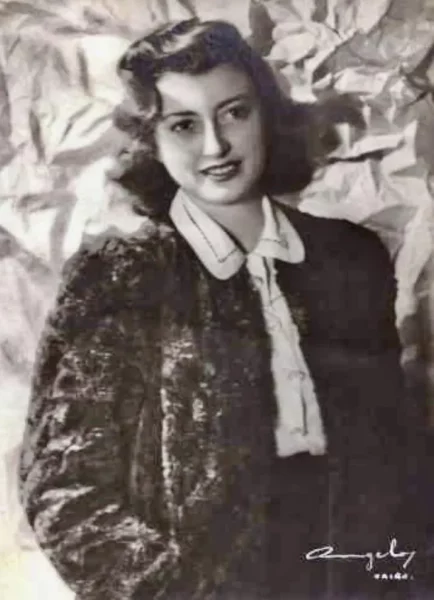
Tex came home with lots of medals, including the Silver Star, the Legion of Merit, the Distinguished Flying Cross, and the Air Medal. But bringing Lisette to America was a different issue. Having been born in Alexandria, Egypt, to a long-dead Dutch father and a French mother, and despite her British associations, Lisette was still subject to the race-based quota restrictions of the 1945 “War Brides Act.” But love couldn’t wait for the post-war bureaucracy, so Lisette was smuggled to America in a Greek trawler, which arrived at the wrong port in South Carolina. Tex sped to her rescue, and the couple quickly married at “The Little Church Around the Corner” in New York City.
Instead of returning to journalism, Tex went to the Air War College in Alabama – I was born on Maxwell Air Force Base in 1950. He was subsequently stationed at the Pentagon, Wright-Patterson AFB in Ohio (where my brother Larry was born in 1954), Tachikawa AFB in Japan, Hickam AFB in Hawaii, Mitchell AFB in New York, and Norton AFB in San Bernardino, CA, the latter as a full Colonel focused on Strategic Air Command during the Cold War.
Offered a promotion to General, my father decided instead to retire and work for Stratford, Connecticut-based Avco-Lycoming, part of the military industrial complex during the Vietnam War. We moved to Westport, where I became immersed in the counterculture movement. Our kitchen table clashes over the war were extremely difficult since my friends were being drafted by a government I vehemently believed was lying to us.
Tex and I reconciled in 1968 after Sen. Bobby Kennedy’s assassination the night before my high school graduation. Though Tex was still grounded in the military principles he long fought for – he, too, had come to see that America needed to get out of Vietnam. He thought Kennedy had the best plan, and I gravitated over from the left to meet him in the middle.
It was the first time I saw my father cry. And as I hugged and cried with him, watching the tragedy unfold on TV, we both knew we were crying not just for the Kennedy family but for the fate of our country.
As he had with the Neutrality Acts and the War Bride Act, Tex was defying the political position men of his age, status, and political party held as axiomatic: he was choosing the fundamental idealistic principles of our country over the war-mongering insistence on being a “good soldier” and following orders he knew to be fatally absurd.
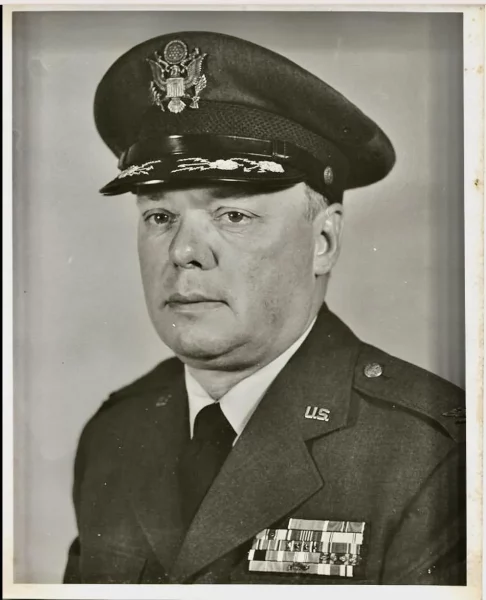
My father was a true patriot. He believed in and fought for an America that is a great but flawed country, constitutionally intent on becoming “a more perfect union.” He died in 1973, happy knowing I had just been hired as a desk assistant at CBS News in New York City.
Anchor Walter Cronkite later told me that he remembered Tex’s byline at the Kansas City Star when he worked in Kansas City for United Press in 1937 before covering Operation Torch off the coast of North Africa aboard the USS Texas.
I don’t think Edward R. Murrow or Walter Cronkite or any of the other hundreds of civilians who reported on or served in the war to save the world from fascism ever heard “Taps” when they died. But they died with the respect of many grateful nations.
Watching sleepy, performative draft-dodger Donald Trump touch the treasured wreath honoring the dead at Arlington, I mourned for the loss of our history, the loss of our principles, the loss of what “patriotism” really means to those willing to die for that high ideal.
For Trump, patriotism is simply utter fealty to him – and I reject that. I am no patriot in Trump’s America.
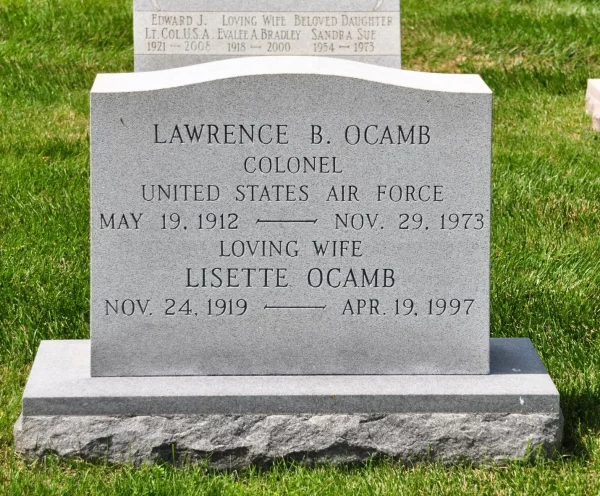
But I am loyal to the US Constitution, to the democratic principle that no person is above the law, to the promissory note of equality and the opportunity to fulfill my authentic humanity. I stand with the patriots buried in Arlington and with all those making “good trouble” to achieve a more perfect union.
In that, I am a patriot who will hear “Taps” in my heart when I die.
Commentary
When impunity meets history
Raúl Castro indicted for alleged role in shooting down Brothers to the Rescue aircraft
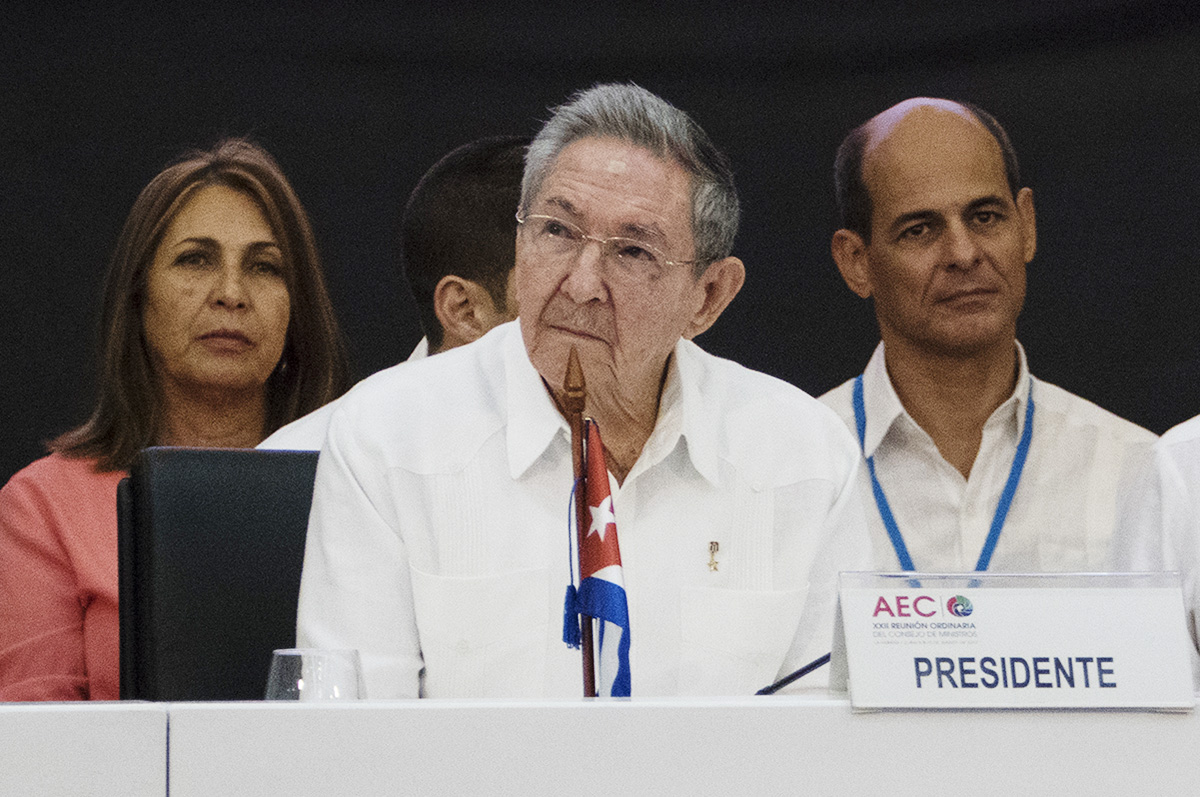
The scene would have seemed impossible only a few years ago.
The name of Raúl Castro Ruz appearing formally inside a United States federal criminal indictment. Cuba’s former general of the Army, for decades one of the most powerful figures inside the Havana regime, accused in connection with the shootdown of the Brothers to the Rescue aircraft and the deaths of American citizens in 1996. And all of it unfolding in Miami, inside the Freedom Tower, on May 20.
That detail matters.
Because this indictment arrives at one of the most fragile and politically tense moments in recent relations between Washington and Havana. It comes as Cuba faces deep economic collapse, growing political exhaustion, mass migration, blackouts, and increasing public frustration both inside and outside the island. It also arrives on a date carrying enormous symbolic weight for Cuban exiles — the anniversary of the founding of the Cuban Republic in 1902.
But the true significance of this moment goes far beyond symbolism.
What happened in Miami represents something much larger: the collapse of the idea that certain men would never face accountability.
For decades, Raúl Castro embodied the permanence of revolutionary power in Cuba. Defense minister. Military strategist. The man who oversaw the armed forces for generations. One of the central architects of the Cuban political and security apparatus built alongside Fidel Castro. A figure many believed would leave this world untouched by any court, shielded forever by power, time, and history itself.
Today the image is very different.
Today his name appears inside the language of American criminal prosecution.
And that changes the historical dimension of this case completely.
Because this is no longer simply a political accusation voiced by the Cuban exile community. It is now a formal federal criminal indictment publicly announced by the United States government against one of the highest-ranking figures in the history of the Cuban regime.
The setting itself carried enormous meaning.
The Freedom Tower is not just another building in Miami. For generations of Cuban exiles it represents memory, displacement, survival, and the beginning of a new life after fleeing Cuba. Thousands of Cubans passed through those doors after escaping the revolution. Families arrived carrying fear, uncertainty, grief, and hope all at once. Announcing these charges from that location transformed the moment into something far deeper than a legal proceeding.
And the people witnessing it were not only members of the exile community.
Among those present were relatives of the young men killed nearly 30 years ago. Families who spent decades waiting to hear words they feared might never come. Families who carried the weight of loss while believing the men responsible would never be formally accused by any court.
That emotional weight still surrounds this case.
On Feb. 24, 1996, two civilian aircraft operated by Brothers to the Rescue were shot down over the Florida Straits by Cuban military jets. Armando Alejandre Jr., Carlos Costa, Mario de la Peña, and Pablo Morales were killed. The flights were connected to humanitarian rescue efforts searching for Cubans attempting to flee the island during the migration crisis of the 1990s.
Those aircraft were not military bombers.
They were not attacking Cuba.
They were civilian planes associated with rescue operations involving Cubans risking their lives at sea.
That reality has always shaped how this tragedy lives inside the memory of the Cuban exile community.
For many, this was never viewed simply as a geopolitical conflict between hostile governments. It was seen as the use of military force against civilians connected to humanitarian missions during one of the darkest chapters in modern Cuban migration history.
But for many Cubans, the indictment reaches far beyond the Brothers to the Rescue case itself.
It touches decades of unresolved pain tied to one of the central figures behind Cuba’s military and political system.
It reaches mothers who buried sons lost in compulsory military service or in distant wars they never chose to fight. Families who spent years believing promises that were never fulfilled. Political prisoners who disappeared into silence. Relatives who watched loved ones die trying to flee the island.
And for many LGBTQ Cubans, the moment carries another layer of historical weight.
Long before official campaigns promoting tolerance and inclusion emerged from within the Cuban government, there were years of persecution, fear, forced silence, and humiliation carried out under the revolutionary system itself.
The UMAP labor camps remain one of the deepest scars in modern Cuban history. Gay men, pastors, religious believers, artists, and others considered incompatible with the revolutionary ideal were sent away under the language of “re-education” and forced labor.
In recent decades, public gestures toward LGBTQ inclusion promoted by figures close to the Cuban leadership attempted to project an image of progress and openness to the international community. But for many survivors, and for many Cuban LGBTQ people, those gestures never erased the trauma or the historical responsibility tied to the same structures of power that once persecuted them.
For many, acknowledgment without accountability still feels painfully incomplete.
That is why this indictment resonates so deeply today.
Because it arrives while Cuba once again faces profound national crisis. The island is losing entire generations through migration. Public frustration continues to grow. Economic collapse shapes daily life. And the revolutionary narrative that once projected permanence and control appears increasingly eroded by reality itself.
Against that backdrop, the image emerging from Miami becomes even more striking.
A man once viewed as untouchable by history now formally accused by the United States government and legally transformed into a fugitive wanted by American justice.
History moves slowly until suddenly it does not.
And for many Cubans, both on the island and throughout the diaspora, what happened today inside the Freedom Tower felt like witnessing something they once believed they would never live long enough to see.
As a Cuban, as an immigrant, and as someone who has lived close to that pain, one thought keeps returning tonight:
Justice takes time.
But when it finally arrives, it arrives with history behind it.
Commentary
Are straight girls giving back to gay bars?
Are the besties and bachelorettes doing more harm than good?
Straight women love gay bars. Whether it’s the ambient testosterone, hot men, or the physical safety, there is a lure for cis-het ladies to gay bars. While there are true allies and well-behaved guests that help turn the party and keep the vibe high, there are also women who come to gawk, act like frat bros, and don’t even get me started on the bridal parties.
Like any conversation in our community, there is nuance and room for an intersectional perspective. It can’t be ignored that queer spaces are safe spaces. But with the economy impacting queer nightlife, are these guests making our spaces less safe? The West Hollywood bar scene has a huge female presence, which should be a financial boon, but is this straight influx causing queer people to avoid going out?
With queer women, it’s widely known that the lesbian community struggles to make brick-and-mortar venues work with the younger generation, opting for revolving parties to preserve safety and financial viability. The large number of female patrons in West Hollywood is also drawing in straight men, creating an environment where straights are starting to outnumber LGBTQ folks.
Currently, there are young straight GenZers doing poppers to straight women touching dancers without consent, to older straight couples dancing like they’re at a wedding. The LGBTQ community is like the Olive Garden; when you’re here, you’re family. But, when you’re not, are you acting like family? While we all tolerate the bachelorette parties, are the straight girls who come as guests giving back to the community?
We all have the occasional friend and coworker we want to bring to the bars. If everyone does this soon, it attracts more straight folks and can make queer people feel unsafe, unwelcome, or simply no longer in the mood to party. It’s not surprising that, like the lesbian community, many gay men are opting for revolving warehouse parties and raves to preserve some of what made gay bars gay bars: men, dancing, and cruising.
Let’s put the fundamental issue of gay male misogyny aside for a second. Yes, that is an issue, but not relevant to this issue because the fundamental question is: Are the straight women who patronize queer spaces giving back? Whether it’s bumming cigarettes or screaming and woo-hooing at dancers, or pushing their way through the dance floor, there is the overall question: are the tourists a little too comfortable? Are they trashing our spaces?
The number of fights, ambulance sightings, and vomit puddles is rising. What does it mean when people come to spaces with privilege and then throw their weight around? While no community is a monolith, I’ve seen women slap a go-go dancer’s behind without even tipping them. I’ve had women feel me up, and when I point out that they should know about consent, they continue.
The freedom to get so drunk you’re incoherent is not what Martha P. Johnson threw a brick for. Queer people are under threat of violence, bullying, and a butt-clenching sense of anxiety in straight spaces. Gay bars are meant to be a respite from a world that fears and hates us. While times may have changed a bit, this was the genesis of the gay bar.
I often joke in my stand-up that the vibe changes with females in all-male spaces. There’s suddenly an “ambient Jessica energy,” and guys begin acting like mean girls with catty clapbacks, stank faces, or an overall bitchy attitude.
There are some queer men who feel more comfortable, so they travel with their girls in tow. Is it the responsibility of queer people to educate their friends on how to behave in our spaces? Are we all meant to just entertain straights using gay bars as a mini Vegas moment without the drive, or do we try to maintain some semblance of queer safety and stability?
Prime example, Precinct DTLA is embroiled in a lawsuit after hiring a cis-het white woman. After finding she wasn’t a fit, she’s suing for discrimination and wrongful termination. Turnover in nightlife is common; while there is nuance in this case, the bar itself is at risk and crowdfunding to keep its doors open.
There was a time when The Abbey was one of West Hollywood’s preeminent gay bars.
Then there was this mass influx of straight women. Like with gentrification, there was a second wave of creepy guys who wanted to hit on drunk women. Fast forward to multiple accusations of drugging drinks. Luckily, the bar is under new ownership, and hopefully, there will be a change, but now the bar does seem to officially be a mixed venue.
The current political climate has shown us that you can be a cis-het woman with a queer fanbase and vote against us, take our money and not respect us, and even get booked on Pride events. I say this all as a collective call to arms to “Check your girl.” If we remind our friends and fellows that they are guests in queer spaces and protect the vibe, maybe we all can have a fun time.
As the economy struggles and these spaces need to survive, it begs the question: What’s next? I’ve talked to multiple friends who won’t go out in West Hollywood on a Saturday because it’s far too straight. There are also queer men who have sworn off Boys Town entirely. We need allies, but can guests in our spaces act like guests rather than using the freedom that comes with being in queer spaces to drink in excess, get sloppy, and puke all over the street? I am all for inclusivity, but it shouldn’t come at the expense of the whole reason we created these spaces in the first place.
Commentary
Why fans ‘complete’ the Storrie: The psychology behind RPF & fandom narratives
Fans’ projections and invented narratives can blur the line between perception and reality. This constant scripting can compound emotional strain and stress, influencing celebs’ sense of self and mental well-being.

There comes a moment in modern fame when admiration is no longer a simple applause or the overly enthusiastic fan page. No longer satisfied with merely watching and reading about celebs, fans today narrate them, reinterpret them, and renovate them like HGTV contractors with unaddressed attachment issues. Enter “real person fiction” (RPF), where our hottest reigning celebs are transformed into protagonists in elaborate romantic epics written by nameless fans with Tumblr accounts and suspiciously elevated emotional vocabularies.
Queue Heated Rivalry stars Hudson Williams and Connor Storrie, two guys who have discovered that success no longer means simple invites to the (decaying) Met Gala. It means becoming narratively available. These two repeatedly find themselves pulled into the far too familiar fandom dynamic that is born from perceived contrast in personality and charisma. Fans tend not just to observe these relationships but to “complete” them by filling in narrative gaps with their own projections.
Freud, who would have had the time of his life on fan fiction platforms like Archive of Our Own, would likely argue that RPF is fundamentally wish fulfillment disguised as storytelling. In The Interpretation of Dreams, he suggests that fantasies give way to the safe expression of otherwise repressed desires. Fanfiction functions in a similar fashion in that it creates a socially sanctioned dream space where readers and writers can explore longing, intimacy, conflict, identity, vulnerability, and power, all while pretending this is somehow about hockey players or actors and not, say, one’s inability to emotionally communicate after yet another situationship gone south.
The allure of celebrity culture is that it provides emotionally resonant raw material without requiring reciprocal intimacy. Fans “know” just enough to feel attached, but not enough to shake the fantasy. Williams smiles in interviews. Storrie touches his shoulder at a premiere. The human brain, tragically devoted to pattern recognition, immediately starts drafting narrative fantasy.
Parasocial attachment, the one-sided emotional bond audiences form with public figures, has existed for eons. But social media has amped it up into something approaching communal mythmaking. Fans are no longer consuming celebs passively. They collaborate in interpreting them. TikTok vids, Reddit reads, Twitter threads with forensic-level scrutiny of a mere side-glance, modern fandom looks less like a fan club and more like a writers’ room on Adderall.
Traditional romance narratives involve imagined characters. RPF holds the yummy illusion of possibility. Even when readers know intellectually that stories are fictionalized, the existence of real bodies beneath the fantasy creates additional emotional charge. It feels equal parts forbidden and authentic. Freud would likely call this the eroticization of proximity and taboo. The online community calls it ‘shipping.
But dismissing RPF entirely as “crazy fandom behavior” misses the point. Most of those who indulge in it understand boundaries perfectly well. Most know the stories are fantasy constructions. Most are neither delusional nor malicious. They are engaging in a fundamentally human activity of storytelling as emotional management. That said, and this is where things become ethically blurred, healthy projection can drift into possessiveness before we realize it.
The internet promotes excess. Casual recognition turns into “stanning.” Stanning becomes stalking. Every celebrity interaction becomes evidence. Fans begin to experience emotional entitlement toward people they do not actually know. The line between “I dig this dynamic” and “I demand this dynamic validate my emotional investment” grows thin. For celebrities like Williams and Storrie, the psychological burden of this must be deeply strange because, unlike fictional characters, they do not have the option of stepping away from the narrative.
There is likely a destabilizing dissociation that perhaps inevitably develops with such an experience. One may become hyper-aware of their performative self. Every interaction is perceived as being at risk of symbolic overinterpretation. Public identity could potentially fracture (leave Britney alone!) The actual self, the media self, the fandom self, and the fanfiction self. Celebs increasingly live beside fictional doubles birthed from collective desire.
So, how can public figures cope with this healthily? For starters, implement boundaries without contempt. Celebs don’t owe fans unrestricted emotional access, but publicly putting down fandom doesn’t quite work either. Mockery often increases attachment because fans experience criticism as an invalidation of community. Perhaps more effective methods involve calm boundary-setting like refusing to respond to invasive questions, limiting social media exposure, and nourishing strong offline identities rooted in relationships untouched by public consumption. Public figures need protected spaces of non-performance.
Williams and Storrie, hypothetically speaking, would likely benefit from recognizing that most fan projection is not actually about them personally but rather what they represent. Once you understand yourself as an archetype in public consciousness rather than merely an individual, fandom behavior becomes less uniquely cringe and more anthropologically inevitable.
As for our fan girlies, perhaps the healthier future of fandom lies not in less enthusiasm but in more differentiation. One can appreciate lens-fogging chemistry without the demand for portraying the illusion off-camera. It is possible to write fiction inspired by public figures while remembering that those same figures have private lives that you are in no way, shape, or form entitled to.
Freud believed civilization itself relies on sublimation: transforming raw desire into socially productive expression. In this sense, fandom, at its best, is sublimation in action, repurposing loneliness and desire into creativity and community. At its worst, however, sublimation collapses back into good ol’ overconsumption.
The challenge, then, for modern fandom is not throwing out fantasy entirely. Human beings will always fantasize. We are storytelling primates with attachment disorders and Wi-Fi. The challenge is retaining enough humility to remember that behind every projection screen stands an actual person who did not consent to becoming the main character in your collective unconscious, no matter how swoon-worthy they are in a jockstrap.
Ghana
Intersex lives, constitutional freedom, and the dangerous future of Ghana’s Human Sexual Rights and Family Values Bill
Lawmakers continue to consider draconian measure

There is a dangerous silence surrounding intersex lives in Ghana — a silence shaped by fear, misinformation, cultural misunderstanding, and institutional neglect. Today, amid discussions around the possible passage of the Human Sexual Rights and Family Values Bill, 2025, that silence risks becoming law, reinforcing exclusion and deepening the marginalization of already invisible lives.
Much of the national debate surrounding the bill has focused on LGBTQ+ identities. Yet buried within it are implications for intersex persons that many Ghanaians do not fully understand because intersex realities remain largely invisible.
Intersex persons are born with natural variations in chromosomes, hormones, reproductive anatomy, and/or genital characteristics that do not fit typical definitions of male or female bodies. Intersex is not a sexual orientation or gender identity. It is a biological reality. Ghana’s Commission on Human Rights and Administrative Justice (CHRAJ) has clearly acknowledged this distinction.
Despite this distinction, the bill mistakenly collapses intersex realities into a legal framework linked to LGBTQ+ criminalization.
Although the bill contains only limited references to intersex persons, under certain medical exceptions, these references do not amount to recognition or protection. Instead, they frame intersex bodies as abnormalities requiring regulation, correction, and institutional management. This approach is inconsistent not only with Ghana’s constitutional guarantees of dignity, equality, privacy, and liberty, but also with emerging African and international human rights standards. The African Commission on Human and Peoples’ Rights Resolution on the Promotion and Protection of the Rights of Intersex Persons in Africa – ACHPR/Res.552 (LXXIV) 2023 affirms protections relating to bodily integrity, dignity, freedom from discrimination, and against harmful medical practices. Additionally, the United Nations has repeatedly condemned medically unnecessary and non-consensual interventions on intersex children. Rather than affirming the humanity and autonomy of intersex persons, the bill risks legitimizing systems of surveillance, coercion, violence, and institutional erasure.
This is not protection.
It is managed erasure.
A child born intersex in Ghana already enters a society shaped by secrecy and stigma. Families are often pressured to hide intersex children or seek “correction” to make their bodies conform to social expectations.
The bill risks intensifying this pressure.
Clause 17 creates space for “approved service providers” to support interventions relating to intersex persons, yet offers little protection around informed consent, bodily autonomy, confidentiality, or coercive treatment. Under the language of “correction” or “support,” harmful interventions may become normalized.
The intersex community has documented painful lived experiences of intersex Ghanaians that reveal the devastating consequences of stigma and invisibility.
One heartbreaking case involved intersex twins born in Ghana’s Eastern Region in 1993, who were repeatedly forced to move from village to village because of rejection and ridicule. After losing their father, their main source of protection and support, they became even more vulnerable and reportedly experienced severe emotional distress, including suicidal thoughts linked to years of stigma and exclusion. This is what invisibility looks like in practice.
Another painful example is the story of Ativor Holali, whose lived experience exposed the cruel realities intersex persons face in sports and public life. Ativor Holali endured invasive scrutiny, public humiliation, and social suspicion because her body did not conform to rigid expectations of femininity. Rather than being protected as a Ghanaian athlete deserving dignity and privacy, she became the subject of speculation, gossip, and institutional discomfort.
Her experience reflects a broader social crisis: when society insists that every body must fit a narrow binary definition, intersex people are forced to defend their humanity in spaces where dignity should already be guaranteed.
Intersex Persons Society Of Ghana (IPSOG)’s Ŋusẽdodo research further revealed that approximately 70 percent of intersex respondents reported depression, anxiety, trauma, or severe emotional distress linked to medical mistreatment, family rejection, bullying, and social exclusion.
The bill risks transforming these existing prejudices into institutional policy. Several provisions risk deepening surveillance, restricting advocacy, weakening confidentiality, and discouraging public education around intersex realities. Intersex-led organizations providing healthcare guidance, legal referrals, psychosocial support, and community services may face serious challenges.
This places IPSOG and other intersex-led organizations in Ghana at serious risk.
For many intersex Ghanaians, these spaces are not political luxuries.
They are survival mechanisms.
Governments derive legitimacy by protecting the natural rights of all persons, including dignity, liberty, bodily autonomy, and freedom from arbitrary interference. The bill raises concerns because it risks weakening these protections for intersex persons through surveillance, coercive interventions, and restrictions on advocacy.
Ghana’s Constitution declares that “the dignity of all persons shall be inviolable.” Articles 15, 17, 18, and 21 specifically protect dignity, equality, privacy, expression, and freedom of association. These protections should apply equally to intersex persons.
Intersex persons are not threats to Ghanaian culture.
Intersex children are not moral dangers.
Intersex bodies are not political weapons.
They are human beings deserving dignity, healthcare, safety, and constitutional protection.
The true measure of a democracy is how it protects those most vulnerable to exclusion. At this moment, Ghana faces a choice: deepen fear and silence, or uphold dignity, bodily autonomy, and constitutional freedom for intersex persons.
History will remember the choice we make.
Fafali Delight Akortsu is the founder and president of the Intersex Persons Society of Ghana (IPSOG).
AIDS and HIV
SB 1023 takes aim at the invisible insurance barriers to HIV prevention
While injectable PrEP represents a major leap forward in HIV prevention, outdated insurance systems are keeping it out of reach for the people who need it most.
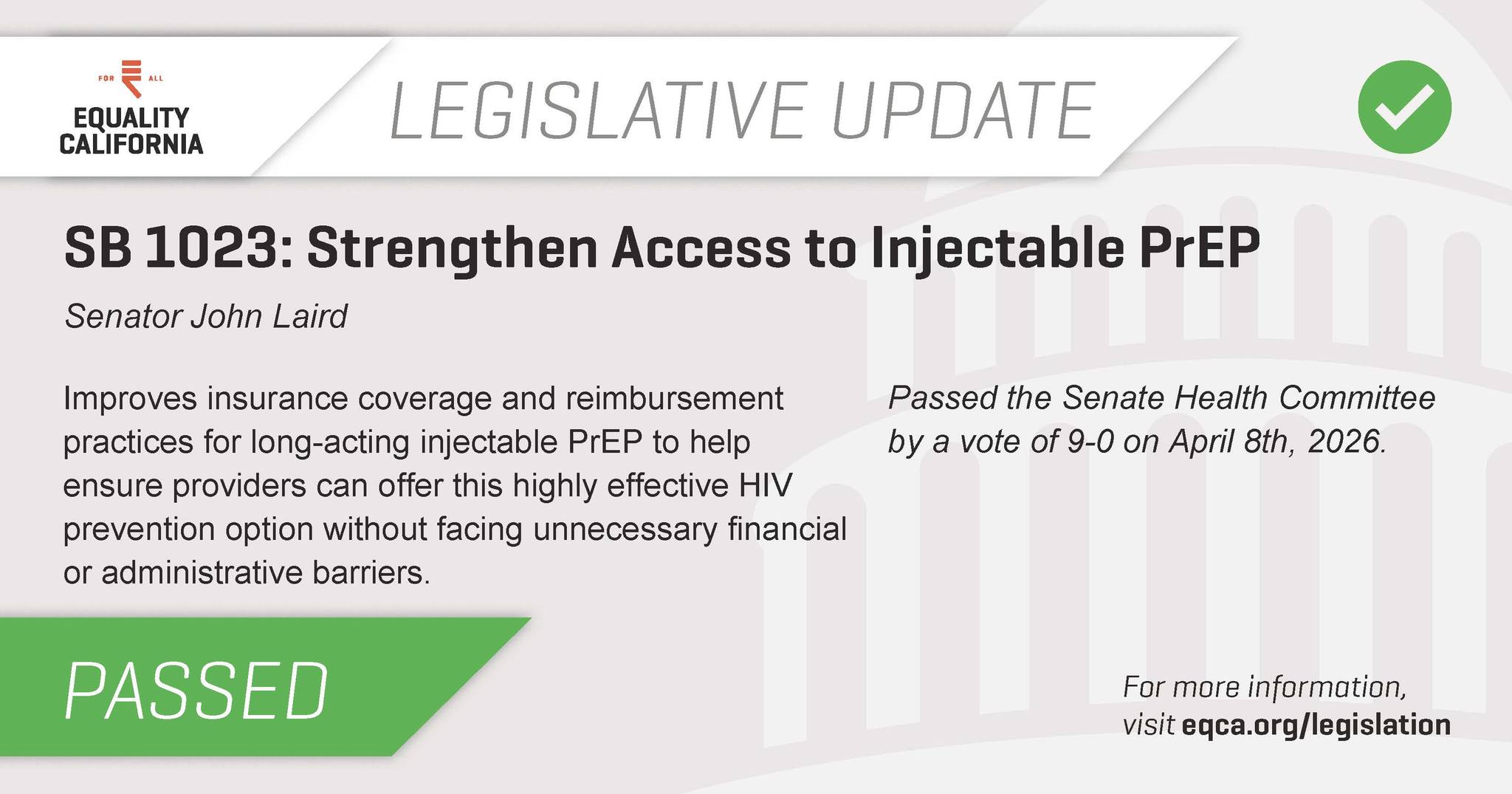
Some bills pass through Sacramento with the kind of pizazz you’d likely expect from a Heidi Klum Halloween party, while others tip-toe it as quietly as a mouse. More often than not, it’s the latter that carries more weight. SB 1023, recently advanced by the Senate Appropriations Committee and authored by Senator John Laird, falls into this second category. On paper, it’s about insurance billing codes and reimbursement pathways for injectable PrEP. In real life, it’s about whether prevention is actually accessible, or just theoretically available if you know the right pharmacy, the right paperwork, and the right brand of patience.
Let’s put this one in real talk. Injectable PrEP is one of the most promising tools we have in regard to HIV prevention at the moment. It’s long-acting, clinically effective, and designed to reduce the hassle of daily adherence that comes with its pill-form predecessor. The issue SB 1023 is looking at is not medical but bureaucratic. Some health plans cover injectable PrEP, but then funnel it through pharmacy benefits that don’t actually work for outpatient clinics trying to actually administer it. The result is a kind of administrative purgatory. The medication is there, the science is too, the patients are eligible and ready to go, and yet access gets stuck in the pipelines of insurance systems that were never designed for prevention as care. It appears that, when it comes to real care, they simply don’t.
Now, more than ever, even with the oral daily PrEP that we all know, love, and pop, this matters because prevention only works when it is accessible to the public that needs it, policy documents aside. When talking about PrEP and HIV prevention, we fall into the formulaic thinking of pop a pill, reduce the risk, and avoid the worst. Period. But anyone who has actually lived inside this system knows it’s more complicated than that. Prevention is impacted by income, stigma, clinic hours, insurance literacy, access to pharmacy, and whether you feel comfortable enough in a medical setting to keep trying. It’s shaped by whether your provider understands queer health without making you feel like a statistic instead of a person.
And for LGBTQ+ communities (especially queer and trans folks, Black and Brown communities, and sex-working communities), “usable” is the whole game. At face value, this is a policy fix. Realistically, it’s the recognition that HIV prevention still doesn’t distribute itself evenly across populations or communities.
There’s also something psychologically significant that’s happening here. Prevention is an emotional issue just as much as it is a medical issue. When access is accessible and stigma-free, folks can actually plan their lives without constantly negotiating fear and apprehension along the way. When unaddressed, you get something else entirely. Anxiety dressed up as responsibility. That specific flavor of anxiety that says, “You should be doing more,” while quietly making it harder to get up, get out, and do anything worthwhile.
I‘d be hard-pressed to harp on this topic without speaking on my own experience. I take Descovy every day. Not out of simple mindless routine, but as a practice of self-care. Like brushing my teeth, except with a much heavier historical and cultural context behind it. Some days it feels empowering, while other days it feels more like a reminder that prevention in queer life has never at all been passive. It is something we actively maintain in a world that has not always been necessarily interested in maintaining us.
And occasionally (and I say this with no shame), I also use doxycycline as I see fit in the context of post-exposure prevention practices. That, too, is part of a much broader shift in how we think about HIV prevention. It is less about singular solutions and more about layered strategies that meet people where they actually are, not where public health PowerPoints imagine them to be.
But the most real part about all of this is that, even when you are doing everything “right,” there is still an underlying buzz of vigilance. The medical history doesn’t lie. The knowledge that access can always tighten, loosen, or straight up disappear depending on politics, funding, or the latest moral panic.
That’s why SB 1023 matters. More than injectable PrEP, it’s about whether the systems around HIV prevention are evolving toward coherence or continuing to rely on the assumption that individual folks will simply absorb the friction. For our queer community, this bill sits inside a larger tension. We are simultaneously in an era of unprecedented biomedical capability and persistent structural inequity. We can prevent HIV with remarkable effectiveness, yet still struggle to make prevention consistently available across all the places it needs to be.
This gap has consequences for both physical and mental health. Physically, inconsistent access means preventable infections still occur. This is not only because tools don’t exist but because systems don’t deliver them cleanly. Mentally, it produces a quieter, more chronic strain: the stress of managing prevention as a personal project rather than a collective guarantee. It’s the difference between “I am protected” and “I hope I’ve done enough.”
This particular difference lives in the body. It shows up as vigilance fatigue. As decision exhaustion. As the low-level cognitive load of always tracking when prescriptions need refilling, when appointments need scheduling, and when insurance requires prior authorization that no one warned you about until you were already at the pharmacy window. And for communities already navigating stigma in healthcare settings, that burden is not evenly distributed.
So what do we do with a bill like SB 1023? On an individual level, we continue to use the tools and resources available to us, and we talk about them without shame. We normalize prevention not as a moral achievement, but as routine care. We share information in ways that don’t assume everyone has equal access to providers who understand queer health without hesitation or bias. We check in on each other not just about risk, but about access: “Are you actually able to get what you were prescribed?” We also resist the idea that prevention should feel isolating. No one should have to individually solve what is fundamentally a systems problem.
On a macro level, SB 1023 is a reminder that policy details are not details at all, aside from the difference between access and obstruction. It points toward a far more reaching need for healthcare systems designed around continuity rather than fragmentation. Systems that don’t require patients and clinics to constantly translate between medical intention and insurance interpretation.
It also raises the bigger question: if we already know how to prevent HIV, what exactly are we waiting for to make prevention universally frictionless? The science is not lagging. The barrier is administrative will. And administrative will is, in its own way, a form of public health intervention.
If we get it right, prevention becomes quieter. Not invisible, but integrated. Something you don’t have to fight for every month. Something that doesn’t require you to constantly re-prove your eligibility for safety. If we get it wrong, we continue to rely on individuals absorbing the inefficiencies of systems that were never built with us in mind.
I don’t think this bill is the end of anything. But it is a signal, small, specific, and important, that the conversation is shifting from “Do we have the tools?” to “Why are the tools still so hard to reach?”
For those of us who live inside that gap between availability and access, that shift is not in the least bit abstract. It’s very real, very personal, and long overdue. But that’s just one very gay man’s opinion.
Commentary
LGBTQ+ Angelenos need to vote in June – and choose ‘Yes’ on Measure ER
Measure ER would backfill the cuts to HIV and gender affirming care, as well as fund the Planned Parenthood clinics, community health centers, public hospitals, and emergency rooms that many of us depend on.
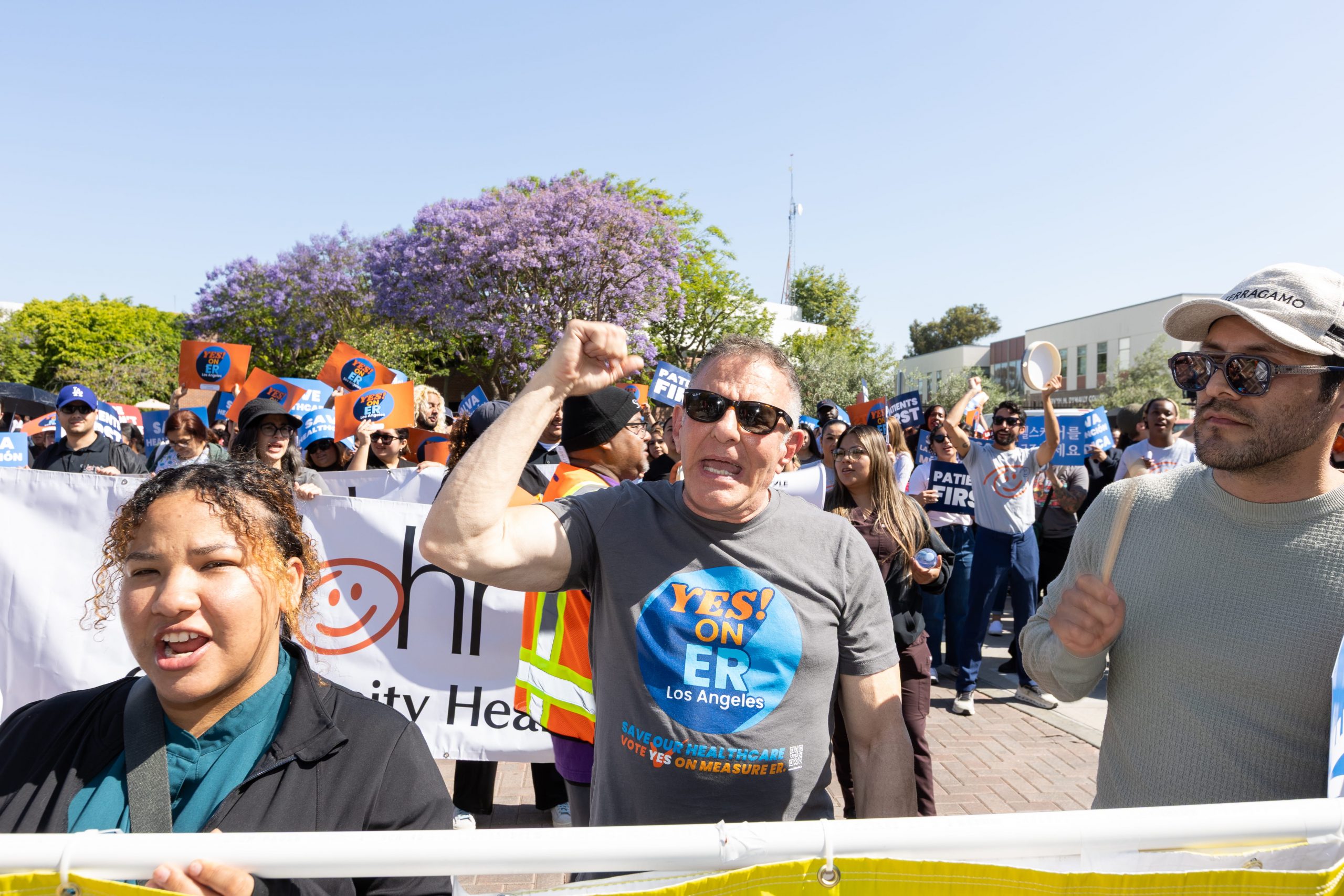
By Jim Mangia, president and CEO of St. John’s Community Health
As someone who has spent more than twenty-five years working in public health, I’ve seen the devastating impact of people being denied basic medical care because of politics, stigma, or indifference. And as a gay man who came of age in Greenwich Village during the AIDS crisis, I deeply understand what happens when institutions decide certain communities are expendable.
I watched friend after friend die from AIDS while the federal government did nothing, and while much of heterosexual society looked away – or even applauded our suffering. The mass death of LGBTQ+ people was treated as acceptable collateral damage. That era taught me a lesson I have carried throughout my career: when public health systems are weakened, marginalized communities suffer first and worst.
That is why I am deeply alarmed by what is happening in Los Angeles County today.
Because of the Trump administration’s cuts through H.R. 1 — the big, ugly bill — Los Angeles County is projected to lose $2.4 billion in health care revenue over the next three years. Those cuts are already destabilizing the public health infrastructure that millions of Angelenos rely on every day. Additionally, the Trump administration has already slashed federal grant funding for HIV testing and treatment, gender affirming health care, and many other programs critical to the LGBTQ+ community.
But voters have a chance to stop the bleeding.
This June, Los Angeles County voters can pass Measure ER, a temporary funding measure that would generate approximately $1 billion annually to stabilize our health care system. For LGBTQ+ Angelenos in particular, the stakes could not be higher. Measure ER would backfill the cuts to HIV and gender affirming care, as well as fund the Planned Parenthood clinics, community health centers, public hospitals, and emergency rooms that many of us depend on.
The destabilization is already happening. Earlier this year, seven of the Los Angeles County Department of Public Health’s thirteen clinics were forced to close because of severe funding shortfalls. Those clinics provided free or low-cost STI testing and treatment, vaccinations, HIV prevention services, and other essential care. And 200,000 Angelenos have already been disenrolled from Medi-Cal, with at least a million more expected to lose coverage if we don’t act now.
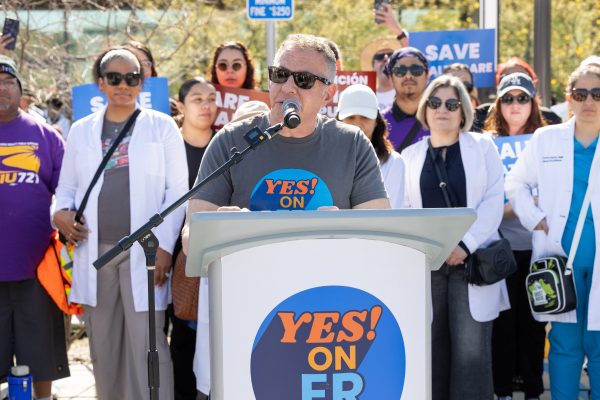
We know what happens when access to preventive care disappears. HIV infections rise. STIs spread more rapidly. Preventable illnesses become emergencies. People delay treatment until they are critically sick, simply because they cannot afford to go to the doctor.
The danger is especially acute for transgender Angelenos. Across the country, the Trump administration and Republican-led states have launched relentless attacks on transgender people. Even here in California, some hospitals and health systems began scaling back gender-affirming services at the first sign of federal scrutiny.
Meanwhile, the Trump administration continues attempting to collect private information related to gender-affirming care nationwide. Luckily, California officials are refusing to give in to this alarming overstep. We must join them in fighting federal attacks on our lives.
If our public health system collapses, transgender folks, low-income people, undocumented communities, seniors, and LGBTQ+ youth will all face even greater barriers to care. And when medical care becomes inaccessible, desperate people often turn to dangerous alternatives. We cannot allow that to happen.
Now, I understand the hesitation some feel when they hear the word “tax.” Frankly, I share some of that frustration myself. Californians already pay a great deal in taxes, and many people are struggling.
But health care is a huge affordability issue. If people lose Medi-Cal and can’t manage their chronic conditions, they can’t work. Then, they can’t pay their rent. Then, more people are forced onto the streets.
Plus, if uninsured people delay treatment and end up in the hospital for a preventable illness, the cost to taxpayers down the line is far greater than the temporary half-penny Measure ER asks for. If we don’t prevent the collapse of our county’s health care infrastructure, people with private insurance will see significantly higher premiums and reduced benefits. That’s because when health providers take on more unpaid care by treating uninsured people, those costs shift to commercial insurers, who then pass the costs onto consumers. All while wait times become longer, appointment times become shorter, and specialized care becomes harder to find.
In my view, half a penny is a reasonable response to the largest health care cuts in the history of the United States – especially given that groceries, prescriptions, and medical equipment are all exempt from the extra half cent.
Measure ER was well planned. It includes a sunset provision, meaning the tax automatically expires after five years. The funding has also already been designated for specific purposes: community clinics, public hospitals, emergency medical services, and providers like Planned Parenthood. Oversight provisions and an advisory committee are also built in to help ensure the money goes exactly where it is supposed to.
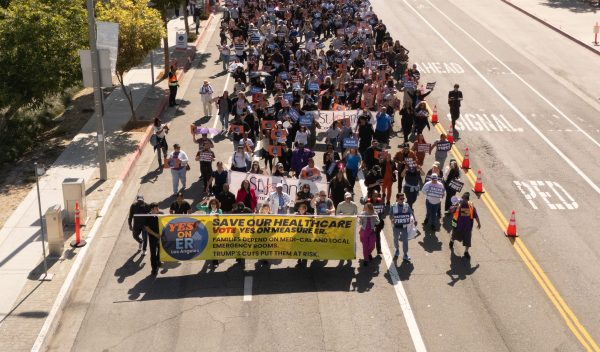
For decades, LGBTQ+ communities have fought to be treated with dignity by our health care system. We organized when the government ignored AIDS. We built networks of care when doctors refused to treat transgender patients. We demanded visibility, funding, research, treatment, and compassion because our lives depended on it.
As my friends died all around me during the AIDS pandemic, I advocated in the streets, with tens of thousands of my sisters and brothers, for lifesaving funding. Now, we are once again being asked to defend the public infrastructure that keeps our communities healthy and alive.
We must ask ourselves: Will we allow federal attacks on public health to dismantle decades of hard-fought progress in LA County? Or will we fight back, like we always have?
LGBTQ+ Angelenos have both an opportunity and a responsibility this June. I urge voters across Los Angeles County to organize their families, friends, neighbors, and communities to vote yes on Measure ER.
Our health care system — and countless lives — depend on it.
Health
California Love, California Strong event celebrates Mental Health Awareness Day
First Partner Jennifer Siebel Newsom gathers community and mental health partners to combat loneliness
For many queer folks growing up, the best our schools had to offer us was having lunch or gym class in the library or a knowing glance from your favorite teacher. Decades later, we are still healing wounds that began in childhood. It may be trying to avoid that extra drink at the bar or spending less time on the apps, but the wounds of loneliness, alienation, and struggles with mental health impact us all.
The mass culling of social programs, especially those benefiting LGBTQ youth are startling. The elimination of specialized LGBTQ support from the suicide prevention hotline, with queer folk the most at risk, combined with all the cuts to DEI efforts, can seem like personal attacks that only add to the alienation of our not-quite-United States.
Luckily for Californians, this support is not dead. To commemorate May’s Mental Health Awareness month, California Love, California Strong (CLCS), and The Office of Community Partnerships and Strategic Communications (OCPSC) held an event to celebrate California’s commitment to youth well-being.
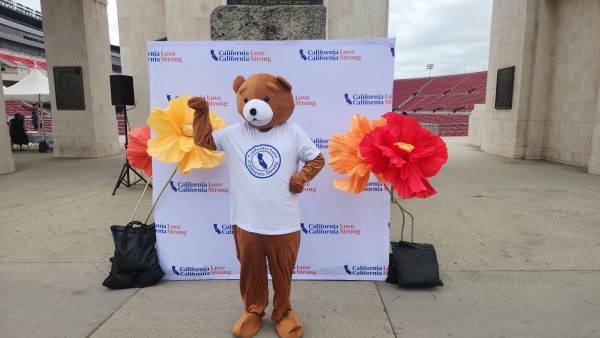
Uniting with the formed Exposition Park Foundation, the Los Angeles Memorial Coliseum was converted into a community space to showcase some amazing resources and its successes. There was live music, processing stations to write, talk about, and move through feelings, and space for guests and families to play basketball.
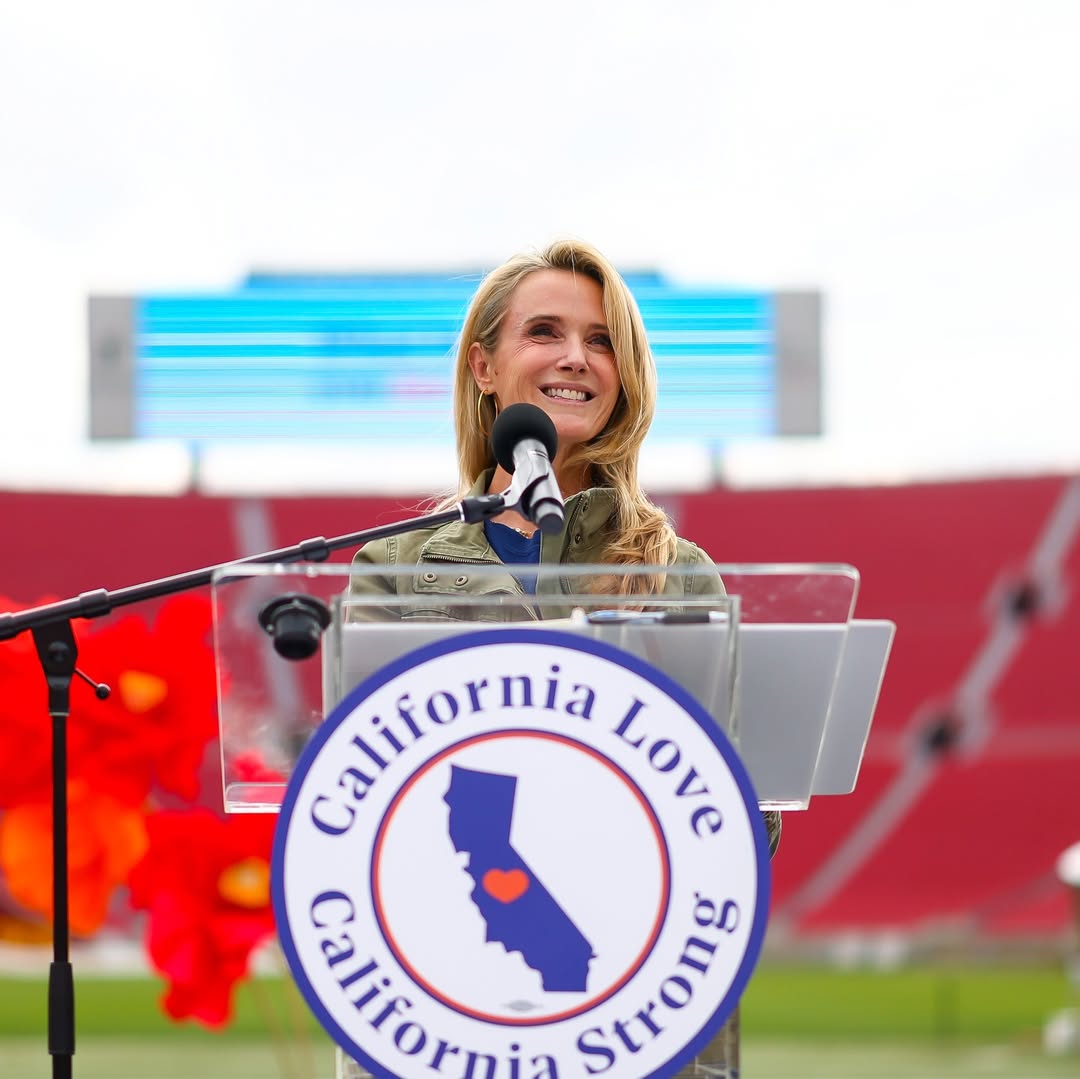
CLCS’s motto, “This is California Love, And Together, We Are California Strong,” highlights how the initiative is about bridging the community. This initiative by First Partner Jennifer Siebel Newsom was started to combat loneliness, strengthen social connections, and promote community resilience. The event featured a robust fair of resources available to families and young adults, all in the interest of mental health.

Find Your Anchor was on hand, allowing visitors to put together blue boxes. This grassroots movement combats suicides by creating blue boxes that are filled with resources and tangible objects to help people suffering from suicidal ideation find their anchor. It was nice to see what people are doing for the community.
Los Angeles is a huge city with a diverse population of specific needs, not to mention how different the entire state is. Seeing various organizations all committed to mental health was inspiring. The health fair featured The Warm Line (855-600-WARM), offering non-crisis emotional support across California, provided by the Mental Health Association of San Francisco. The Child Mind Institute’s Youth Mental Health Academy is committed to helping underrepresented groups enter the mental health field. It boasts 26% of its participants as LGBTQ.
While therapy is becoming ubiquitous and everyone is talking about trauma and narcissism all over social media, how we actually address mental health is evolving. Much of the conversation of the day addressed Adverse Childhood Experiences (ACEs). These are the potentially traumatic events occurring before the age of 18. These can include divorce, abuse, neglect, and household dysfunction. They lead to specific mental health needs for young people, and it’s nice to see that support was there. This highlights the need for intervention for the preservation of the mental health of young people.
Given these stressful times, and a generation raised post-Pandemic and pre-whatever is next, children and young people need support. To address this need, there are opportunities to become a certified wellness coach to help support California Children and youth with their physical and emotional well-being.
Newsom addressed the crowd, saying, “Given what’s going on in our country right now, what we’re doing together now in California is more important than ever.” She adds, “No matter what any of us are going through, because we’re all going through something right now, we are not alone. Every single person here has shown up for ourselves today and is showing up for each other.”
In addition to CLCS, there was also a focus on the Children Youth Behavioral Health Initiative (CYBHI). Many of the organizations present have been funded by or partner with the CYBHI.
Soluna, a confidential mental health app for California youth and young adults, funded by the state, targets young people ages 13-25. It offers 1:1 coaching, interactive tools, and community support. Summer Nguyen shared her experiences as a youth ambassador for the app. She directly called out the “apathy epidemic” and spoke about how becoming an ambassador and thanks to help from the app, she’s been able to get over her shyness and introversion.
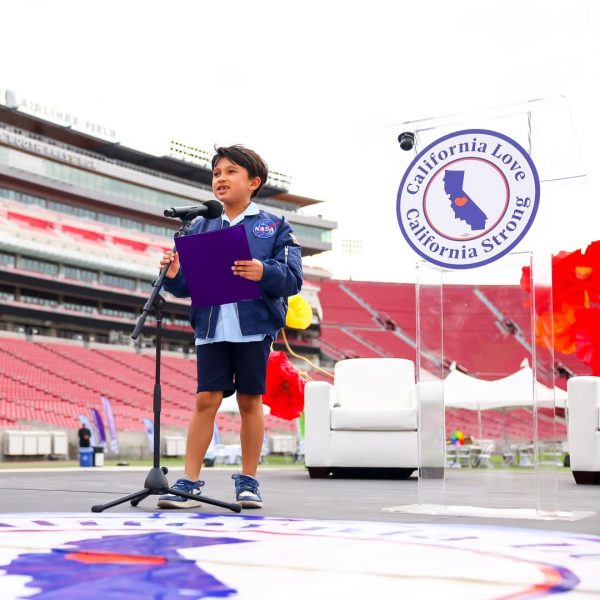
Khoa-Nathan Ngo offered the opening address, sharing his experiences dealing with being unhoused and the challenges of being a queer youth of color. Thanks to various services through CYBHI and the many organizations present helped on his path to becoming a mental health care professional.
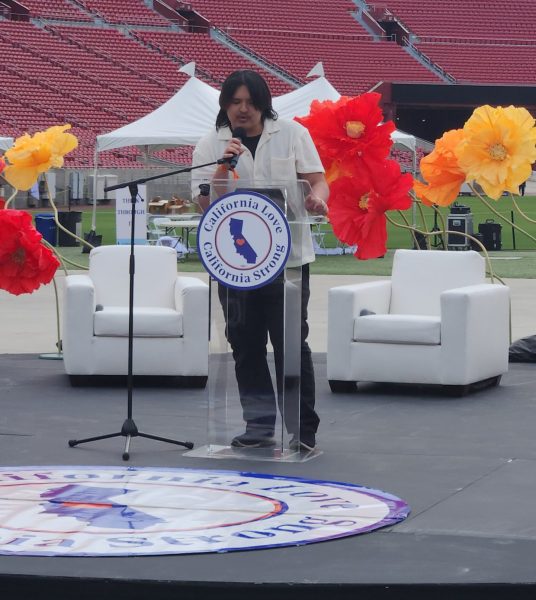
While DEI has become a polarizing phrase nationally, the fair addressed the need for intersectionality. The ability for these organizations to acknowledge both our similar needs and cultural differences offers the nuanced care for the best possible help.
Jeanine Gaines, of The Social Changery, shares, “I think it is so important to support the mental health of the LGBTQ community, especially at a time like this, when you literally have people in power who are questioning their humanity. It is important to remember that LGBTQ people are not a monolith and that the diversity seen throughout California also exists within the community.”
She continues, “That is why the work of the CYBHI is so important. The initiative recognizes that intersectionality exists and that the needs of a Latinx, transgender youth from a rural area differ from those of a white, bisexual youth from San Francisco. One-size-fits-all approaches will no longer work, and the young people and community organizations doing the work should be centered and leading the way.”

Ngo took a moment to speak with the Blade and offered some encouraging words, but also an important call to action. He shares, “Our community has always had to fight for our rights, and part of that fight is equitable access to behavioral health services. Currently, funding for those services is in jeopardy, especially at the federal level. These services, when co-created by and for LGBTQ+ folk, are critical and life-saving. I know I wouldn’t be here today without them.”
“With everything going on, I think it is of the utmost importance that local, state, and federal behavioral health services engage in partnership with LGBTQ+ storytellers, youth, community organizations, and mutual aid groups. So much trust has been broken between queer people and the institutions meant to represent us. We have the lived experience and expertise to make those services effective, but institutional support is critical if we are to make those services accessible and sustained.”
For more information, head to www.calovecastrong.org
Commentary
‘Live Your Pride’ is much more than a slogan
Waves Ahead forced to cancel May 17 event in Puerto Rico
On May 5, I spoke by phone with Wilfred Labiosa, executive director of Waves Ahead, a Puerto Rico-based LGBTQ+ community organization that for years has provided mental health services, support programs, and safe spaces for vulnerable communities across the island. During our conversation, Labiosa confirmed every concern described in the organization’s public statement announcing the cancellation of “Live Your Pride,” an event scheduled for Sunday in the northwestern municipality of Isabela. But beyond the financial struggles and organizational challenges, what stayed with me most was the emotional weight behind his words. There was pain in his voice while describing what it means to watch spaces like these slowly disappear.
This was not simply the cancellation of a community event.
“Live Your Pride” had been envisioned as a celebration and affirming gathering for LGBTQ+ older adults and their allies in Puerto Rico. In a society where many LGBTQ+ elders spent decades hiding parts of themselves in order to survive, spaces like this carry enormous emotional and social significance. They become places where people can finally exist openly, without fear, apology, or shame.
That is why this cancellation matters far beyond Isabela.
What is happening in Puerto Rico cannot be separated from the broader political climate unfolding across the U.S. and its territories, where programs connected to diversity, inclusion, education, mental health, and LGBTQ+ visibility increasingly find themselves under political attack. These changes do not always arrive through dramatic announcements. More often, they happen quietly. Funding disappears. Community organizations weaken. Safe spaces become harder to sustain. Eventually, the absence itself begins to feel normal.
That normalization is dangerous.
For years, organizations like Waves Ahead have stepped into gaps left behind by institutions and governments, particularly in communities where LGBTQ+ people continue facing discrimination, social isolation, economic instability, and mental health struggles. Their work has never been limited to organizing events. It has involved accompanying people through loneliness, trauma, rejection, depression, aging, and survival itself.
“Live Your Pride” represented much more than entertainment. It represented visibility for LGBTQ+ older adults, many of whom survived decades of family rejection, religious exclusion, workplace discrimination, violence, and silence. These are individuals who came of age during years when living openly could cost someone employment, housing, relationships, or personal safety. Many learned to survive by making themselves invisible.
When spaces like this disappear, something deeply human is lost.
A gathering is canceled, yes, but so is an opportunity for healing, connection, recognition, and dignity. For many LGBTQ+ older adults, especially in smaller municipalities across Puerto Rico, these events are not secondary luxuries. They are reminders that their lives still matter in a society that too often treats aging and queer existence as disposable.
There are still political and religious sectors that portray the rainbow as some kind of ideological threat. But the rainbow does not erase anyone. It illuminates people and stories that society has often tried to ignore. It reflects the lives of young people forced out of their homes, transgender individuals targeted by violence, older adults aging in silence, and families that spent years defending their right to exist openly.
Perhaps that is precisely why the rainbow unsettles some people so deeply.
Its colors expose abandonment, hypocrisy, inequality, and fear. They force societies to confront realities that are easier to ignore than to address honestly. They reveal how fragile human dignity becomes when political agendas decide that certain communities are no longer worthy of protection, funding, or visibility.
The greatest concern here is not solely the cancellation of one event in one Puerto Rican town. The deeper concern is the message quietly taking shape behind decisions like these — the idea that some communities can wait, that some lives deserve fewer resources, and that safe spaces for vulnerable people are expendable during moments of political tension.
History has shown repeatedly how social regression begins. Rarely with one dramatic act. More often through exhaustion, silence, budget cuts, and the slow dismantling of organizations doing essential community work.
Even so, Waves Ahead made one thing clear in its statement. Although “Live Your Pride” has been canceled, the organization will continue providing mental health and community support services through its centers across Puerto Rico. That commitment matters because people do not survive on slogans alone. They survive because somewhere there are still open doors, trained professionals, supportive communities, and people willing to remain present when the world becomes colder and more hostile.
Puerto Rico should pay close attention to what this moment represents. No healthy society is built by weakening the organizations that care for vulnerable people. No government should feel comfortable watching community groups struggle to survive while attempting to provide services and compassion that public institutions themselves often fail to offer.
The rainbow has never been the problem.
The real problem is the discomfort created when its colors force society to confront the wounds, inequalities, and human realities that too many people would rather keep hidden.
Commentary
He is 16 and sitting in a Cuban prison
Jonathan David Muir Burgos arrested after participating in anti-government protests
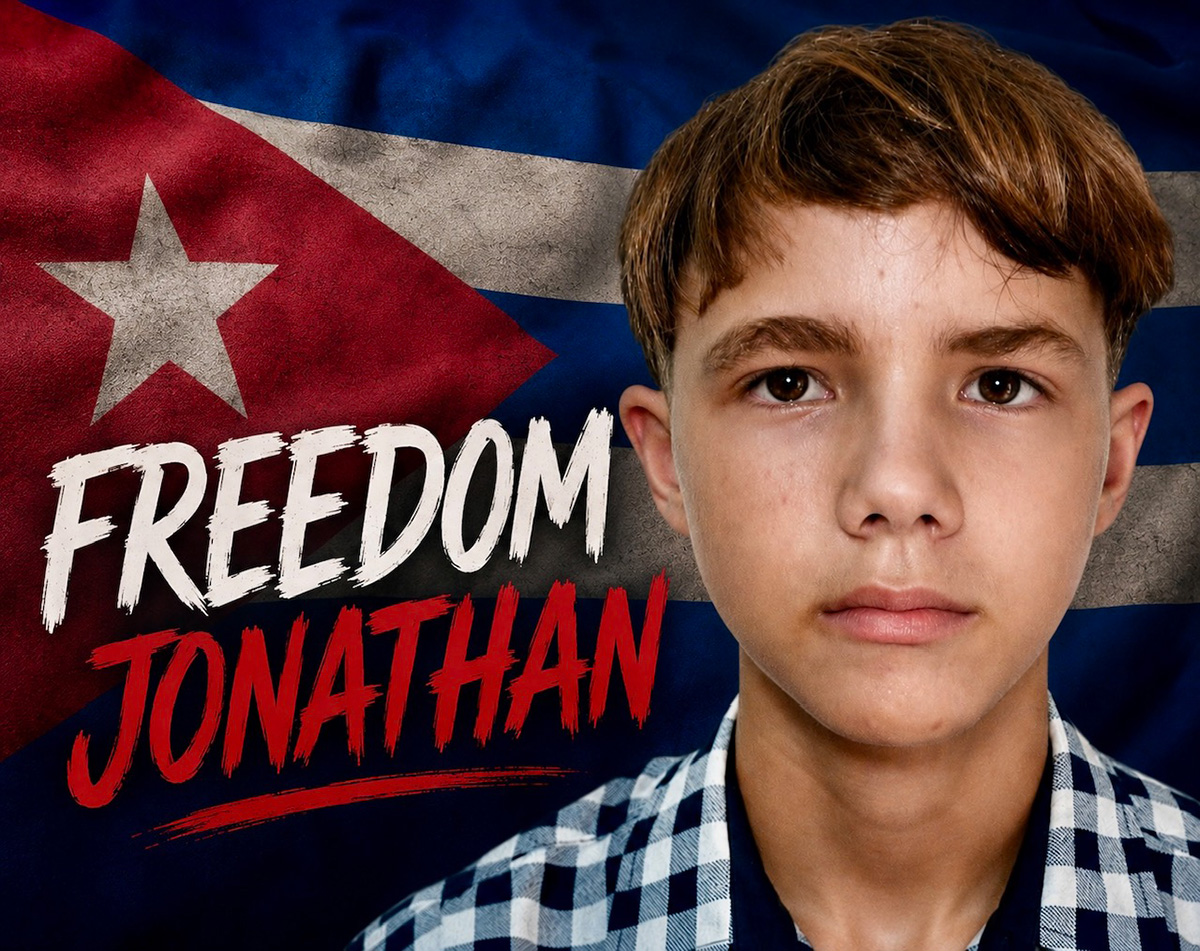
Jonathan David Muir Burgos is 16-years-old, and that fact alone should force the world to stop and pay attention. He is not an armed criminal, nor a violent extremist, nor someone accused of harming others. He is a Cuban teenager who ended up behind bars after joining recent protests in the city of Morón, in the province of Ciego de Ávila, demonstrations born out of exhaustion, desperation, and the growing collapse of daily life across the island.
Those protests did not emerge from privilege or political theater. They erupted after prolonged blackouts, food shortages, lack of drinking water, unbearable heat, and a level of public frustration that continues to deepen inside Cuba. People took to the streets because ordinary life itself has become increasingly unbearable. Families are surviving for hours and sometimes days without electricity. Parents struggle to find food. Entire communities live trapped between scarcity and silence.
Jonathan became part of that reality.
And today, he is sitting inside a Cuban prison.
The World Health Organization defines adolescence as the stage between approximately 10 and 19 years of age, a period marked by emotional, psychological, and physical development. That matters deeply here because Jonathan is not simply a “young protester.” He is a minor. A teenager still navigating the fragile years in which identity, emotional stability, and personal growth are being formed.
Yet the Cuban government chose to place him inside a high-security prison alongside adults.
There is something profoundly disturbing about a political system willing to expose a 16-year-old boy to the psychological brutality of prison life simply because he exercised the right to protest. A prison is never only walls and bars. It is fear, humiliation, emotional pressure, intimidation, and uncertainty. For a teenager surrounded by adult inmates, those dangers become even more alarming.
The situation becomes even more serious because Jonathan reportedly suffers from severe dyshidrosis and has previously experienced dangerous bacterial infections affecting his health. His condition requires proper medical care, hygiene, and adequate treatment, precisely the kind of stability that is difficult to guarantee inside the Cuban prison system.
Behind this story there is also a family living through a kind of pain impossible to fully describe.
Jonathan is the son of a Cuban evangelical pastor. Behind the headlines there is a mother wondering how her child is sleeping at night inside a prison cell. There is a father trying to hold onto faith while imagining the emotional and physical risks his teenage son may be facing behind bars. Faith does not erase fear. Faith does not prevent parents from trembling when their child is imprisoned.
And this is where another painful contradiction emerges.
While a Cuban pastor watches his son remain incarcerated, there are still political and religious voices outside Cuba romanticizing the Cuban regime from a safe distance. There are people who speak passionately about justice while remaining silent about political prisoners, repression, censorship, and now even the imprisonment of adolescents.
That silence matters.
Because silence protects systems that normalize abuse.
For too long, parts of the international community have spoken about Cuba through ideological nostalgia while refusing to confront the human cost paid by ordinary Cubans. The reality is not romantic. The reality is families surviving in darkness, young people fleeing the country in massive numbers, parents struggling to feed their children, and now a 16-year-old boy sitting inside a prison after joining a protest born from desperation.
No government has the moral right to destroy the emotional and psychological well-being of a teenager for exercising freedom of expression. No ideology should stand above human dignity. And no institution that claims to defend justice should remain indifferent while a child becomes a political prisoner.
Jonathan David Muir Burgos should not be in prison.
A 16-year-old boy should not have to pay for protest with his freedom.

Requiem for patriotism

Los Angeles LGBTQ+ organizers condemn ‘harmful anti-LGBTQ+ tropes’ in ads targeting John Erickson’s Senate race

The 2026 Gayming Awards finally gives LGBTQ+ gamers the spotlight

Still marching: Rev. Troy Perry and the ongoing fight for liberation

The Artist Tree dispensary set to kick off Pride on June 4th with Studio 420 art exhibition

Are straight girls giving back to gay bars?

Set in West Hollywood, ‘The Last Guest of the Holloway Motel’ tells Tony Powell’s story

When impunity meets history

Scott Wiener seems headed to run without Pelosi’s endorsement

Kenyan High Court issues landmark transgender rights ruling
-
 Commentary4 days ago
Are straight girls giving back to gay bars?
-
 Movies2 days ago
Set in West Hollywood, ‘The Last Guest of the Holloway Motel’ tells Tony Powell’s story
-
 Commentary2 days ago
When impunity meets history
-
 Politics4 days ago
Scott Wiener seems headed to run without Pelosi’s endorsement
-
 Kenya2 days ago
Kenyan High Court issues landmark transgender rights ruling
-
 Celebrity News2 days ago
Peppermint made her mark on ‘Drag Race.’ Now, her advocacy is front and center
-
 California Politics4 hours ago
Los Angeles LGBTQ+ organizers condemn ‘harmful anti-LGBTQ+ tropes’ in ads targeting John Erickson’s Senate race
-
 Gaming1 day ago
The 2026 Gayming Awards finally gives LGBTQ+ gamers the spotlight
-
 China1 day ago
China’s top court acknowledges anti-LGBTQ+ discrimination
-
 Events1 day ago
The Artist Tree dispensary set to kick off Pride on June 4th with Studio 420 art exhibition