LA Pride Celebration
The subliminal beauty of LGBT unity

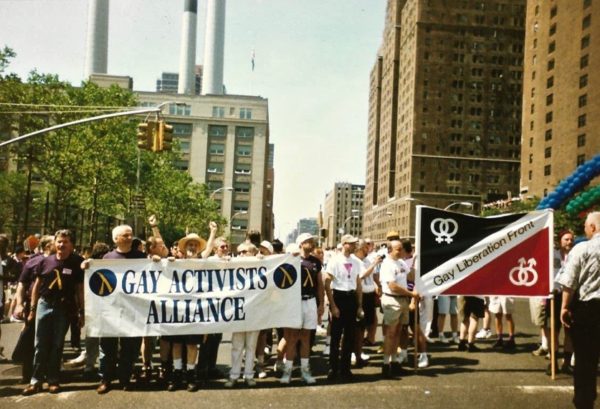
Members of the original Gay Activists Alliance and Gay Liberation Front in NY for the 25th anniversary of Stonewall (Photo by Karen Ocamb)
Each year since 1970, LGBT people and their allies pause to celebrate the spontaneous uprising at the Stonewall Inn the year before. Like the match struck at the beginning of Mission Impossible, the two nights of unbridled protests by society’s most marginalized on June 28 and June 29, 1969 ignited a flashpoint for the launch of the modern day LGBT movement.
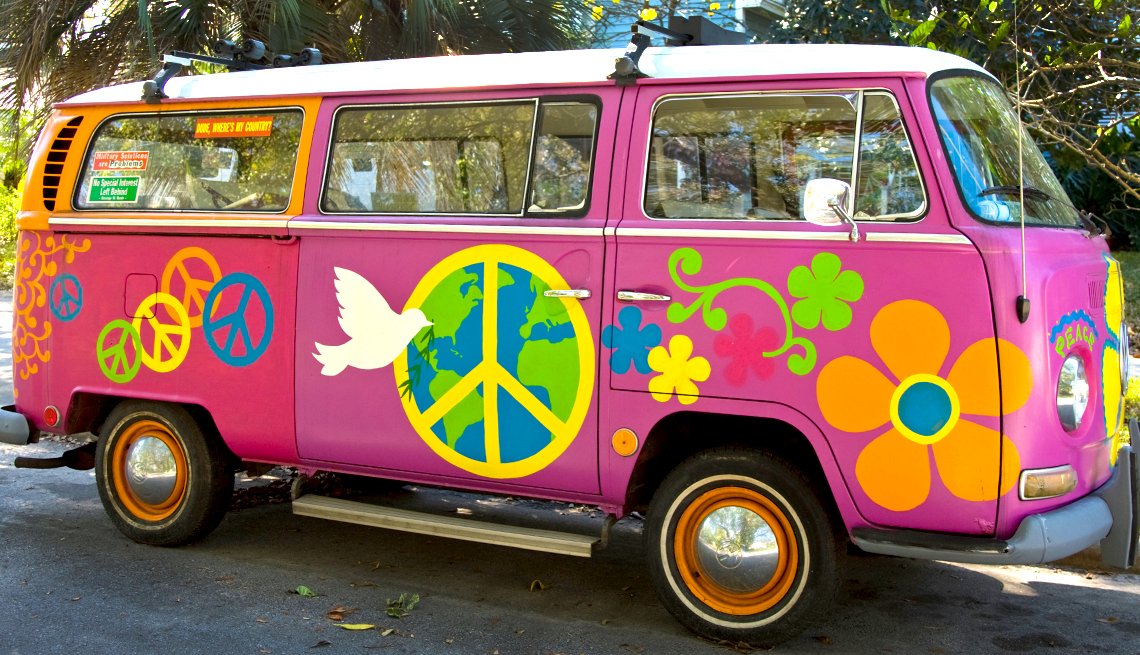
But Stonewall did not happen in a political or cultural vacuum. And it was not the first gay rebellion against police raids— the 1959 Cooper Do-nuts Riot and the 1966 Compton’s Cafeteria riot, the Feb. 11, 1967 demonstration at the Black Cat Tavern in Silver Lake protesting violent LAPD harassment on New Year’s Eve, for instance, brought out 200 courageous gays and lesbians who knew what to expect from the armed anti-gay police just months before the hippy Flower Power love fest known as the Summer of Love kicked in. And in August 1968, Lee Glaze, owner and manager of The Patch on Pacific Coast Highway, took the protest to the police.

Consider the context of the times. Street and college protests against the ugly Vietnam War were growing, with terrified straight and gay 18 year olds sometimes pretending to be gay to escape military service—though often potentially dying in the jungles of Southeast Asia seemed preferable to the crushing and dangerous stigma of being labeled “homosexual” at home.
The world profoundly changed in 1968 and the anti-war protests and counter-culture movement became training grounds for resistance, empowering oppressed minorities, including gays and lesbians, to refuse to bow to the daily normalized violent harassment from police and the dominant white conformist society.
These moments happened in 1968: Jan 30 – the North Vietnamese Tet Offensive exposes the lies told by President Johnson’s administration that the U.S. is winning the war. For the first time, Americans grasp that they cannot automatically trust their president. Feb. 29 – the Kerner Commission studying America’s race riots determines that the country is “moving toward two societies, one black, one white — separate and unequal.” The first week in March in Los Angeles – an estimated 15,000 Latino high school students stage a walk out demanding better education. April 4 – Rev. Dr. Martin Luther King Jr. is assassinated in Memphis by white supremacist James Earl Ray, prompting riots in over 100 cities, leaving 39 people dead, 2,600 injured and an untold number emotionally and psychologically devastated. April 23 – students protesting their university’s ties to the military industrial complex take over five buildings at prestigious Columbia University, prompting similar takeovers at colleges and universities around the country. May 6 – more than 5,000 students riot in Paris, resulting in sympathy strikes. June 4 – Democratic anti-war presidential candidate Robert F. Kennedy is assassinated at the Ambassador Hotel in Los Angeles after winning the California primary. Aug. 5-8 – Republican “law and order” presidential candidate Richard M. Nixon is nominated at the Republican National Convention.
It is against this backdrop that “The Blond Darling” Lee Glaze finally stood up to the noxious under-cover LAPD vice squad. After yet another raid and several arrests, Glaze got on his drag stage and promising to pay for legal bills, rallied his patrons into action. They marched up to a flower shop up the street, bought all the flowers (except pansies, apparently) and took their flower power to the Harbor Division Police Station, demanding bail and the release of those arrested during the raid. The Patch raid and successful protest had profound effects, including inspiring Rev. Troy Perry to found the Metropolitan Community Church—”a church for all of us who are outcasts”—after his boyfriend Tony Valdez was arrested.
One year after The Patch raid, Los Angeles reeled from the Manson murders (Aug, 9-10, 1969), more than 500,000 peace and love-seeking, sexually liberated hippies showed up at Max Yasgur’s farm in Bethal, New York for three days of the rock ‘n roll Woodstock Festival (Aug. 15-18), and the Democratic National Convention in Chicago erupted in a police riot live on TV (Aug. 28) with bleeding antiwar protesters screaming: “The Whole World Is Watching!” But by the end of 1969, a Rolling Stones concert guarded by Hells Angels at Altamont Speedway in California where one man was murdered. Woodstock and the Age of Aquarius seemed over.
In the meantime, on July 20, Astronaut Neil Armstrong stepped on the Moon and declared, “That’s one small step for man, one giant leap for mankind” in the Moon landing televised live around the world.
And on Nov. 15, the Vietnam Moratorium Committee, organized by then-closeted politico David Mixner and three friends, created the largest antiwar protest in U.S. history when roughly 250,000-500,00 people showed up for a non-violent civil disobedience protest in Washington, D.C. Just four months after Stonewall, a contingent of out and proud radical Gay Liberation demonstrators turned up, too, dancing in pink tutus and veils through the Key Bridge campsite’s food line on Sunday, and transforming into fierce protesters when the action got underway, as witnessed by this reporter.
Stonewall took on legendary status in 1970 after demonstrators from New York contacted well-known antiwar gay activist Morris Kight in Los Angeles to commemorate the June 28 uprising with a parade. Radical activists created the Gay Liberation Front and the less-radical, more organized Gay Activists Alliance immediately after Stonewall, with Kight, Don Kilhefner and other members of the Gay Liberation Front of Los Angeles founding such lasting projects as the LA Gay Community Services Center, the precursor to the Los Angeles LGBT Center of today.

Masha P. Johnson and Sylvia Rivera.
While passionate conflicts within and between organizations sometimes ruined efforts to provide much needed services to LGBT people—“oppression sickness,” Kight called it—there is an undercurrent of connectivity, of conscious and unconscious awareness in which LGBT people are aware of each other—aware of the need for secrecy when called for, aware of the need for a hug when others declare LGBT person untouchable. LGBT people are still officially second-class citizens, an unrecognized minority that has created community across numerous boundaries, including internal roadblocks.
“It took many years of vomiting up all the filth I’d been taught about myself, and half-believed, before I was able to walk in the earth as though I had a right to be here,” gay author James Baldwin once wrote.
It is precisely that shared experience that LGBT people recognize within themselves and each other. That sense of community may be “a useful fiction,” as AIDS activist Michael Callen once said, but it a community that also embraces all others. Racism, sexism, xenophobia exit—Jewel Thais-Williams created Catch One Disco in response to the racism at West Hollywood’s Studio One and other discos.
But ironically, the LGBT community in many ways exemplifies the complex “peace and love” legacy of the Age of Aquarius better than other minorities. During the AIDS crisis, when government, society, and families disavowed their AIDS-infected and dying loved ones, LGBT people came out and took care of each other, often with help from soulful straight allies.
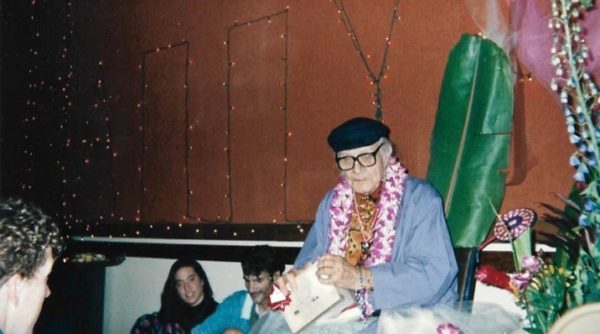
Harry Hay’s 80th birthday in WeHo with Keiko Lane, 17, and Robert Nemchik, who died of AIDS a few months later (Photo by Karen Ocamb)
Empathy and inclusivity are at the core of LGBT unity. Mattachine Society founder Harry Hay celebrated his 80th birthday at West Hollywood’s Plummer Park in October 1992 surrounded by his beloved young community from Queer Nation, ACT UP and the Radical Faeries. Non-assimilationists, especially effeminate men, led the way in gender expression.
While ideology may yank some LGBT politicos from their community mooring, the respect for those fighting for LGBT freedom and civil rights earns respect and connection regardless of electoral politics. Jim Mangia, now president & CEO of St. John’s Well Child and Family Center, providing healthcare to predominately low-income Latinos, African Americans and transgender folk in South LA, was once the unanimously elected national Secretary of the Reform Party in 1997, with a proven record of working to establish a third party in California and the nation. In 2000, he publically fought anti-LGBT Patrick Buchanan for control of the party. Mangia is also an admirer of early gay Democratic Party icon Jose Sarria, founder of the Imperial Court System and the first openly gay candidate who sought public office when in 1961, he ran for the San Francisco Board of Supervisors.
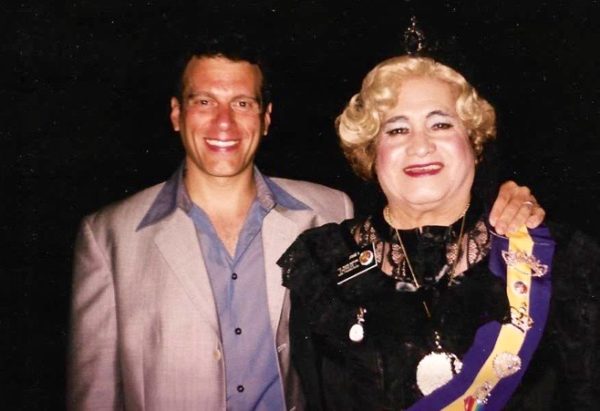
Jim Mangia and Jose Sarria (Photo by Karen Ocamb)
Perhaps one of the best examples of LGBT unity and connectivity occurred after the LA Riots in 1992. As Los Angeles burned, much of the attention was on the perceived warfare between the Black and Asian communities. But Rev. Carl Bean called a community meeting at his Unity Fellowship Church in South LA and invited one of LGBT nation’s best known Asian leaders, Paul Kawata, executive director of the National Minority AIDS Council, to demonstrate the unity within the LGBT community. After the meeting, the attendees helped clean up the charred streets of Los Angeles.
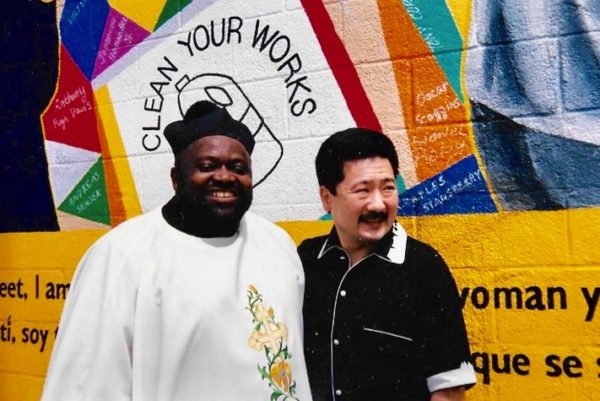
Rev. Carl Bean and Paul Kawata (Photo by Karen Ocamb)
And prime example of LGBT connectivity and unity is the quieter, constant behind the scenes action of Transsexual Menace Shirley Bushnell who fiercely advocated for transgender rights before the Trans Lives Matter movement. Bushnell, with backing from ally lawyers and activists, badgered the LAPD and the LA Sheriff’s Department for better treatment and respect. Her constant activism paved the way for trans activists such as Karina Samala and Mason Davis to secure actual policy changes in law enforcement.
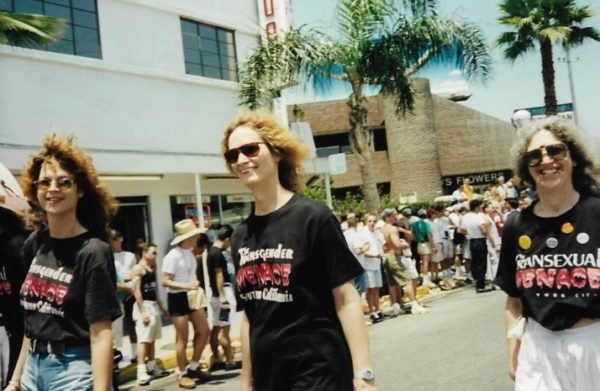
Transsexual Menace Shirley Bushnell (center) (Photo by Karen Ocamb)
It’s 2019 and America is under attack from within. That is our historical context today. LGBT people and other minorities are facing equality rollbacks and brazen injustices that feel as if the pursuit of freedom hasn’t progressed much in the 50 years since Stonewall. But it has, including in the quiet and loud collective insistence on unity whenever the LGBT tribe is attacked. White supremacy will never tear asunder that shared bond of pain and the beautiful connection of an outsider’s love for each other.

Pride Special
Pride In Dallas was a weekend of unabashed joy for Texas’ queer community
This city came together to uplift its historic LGBTQ+ population
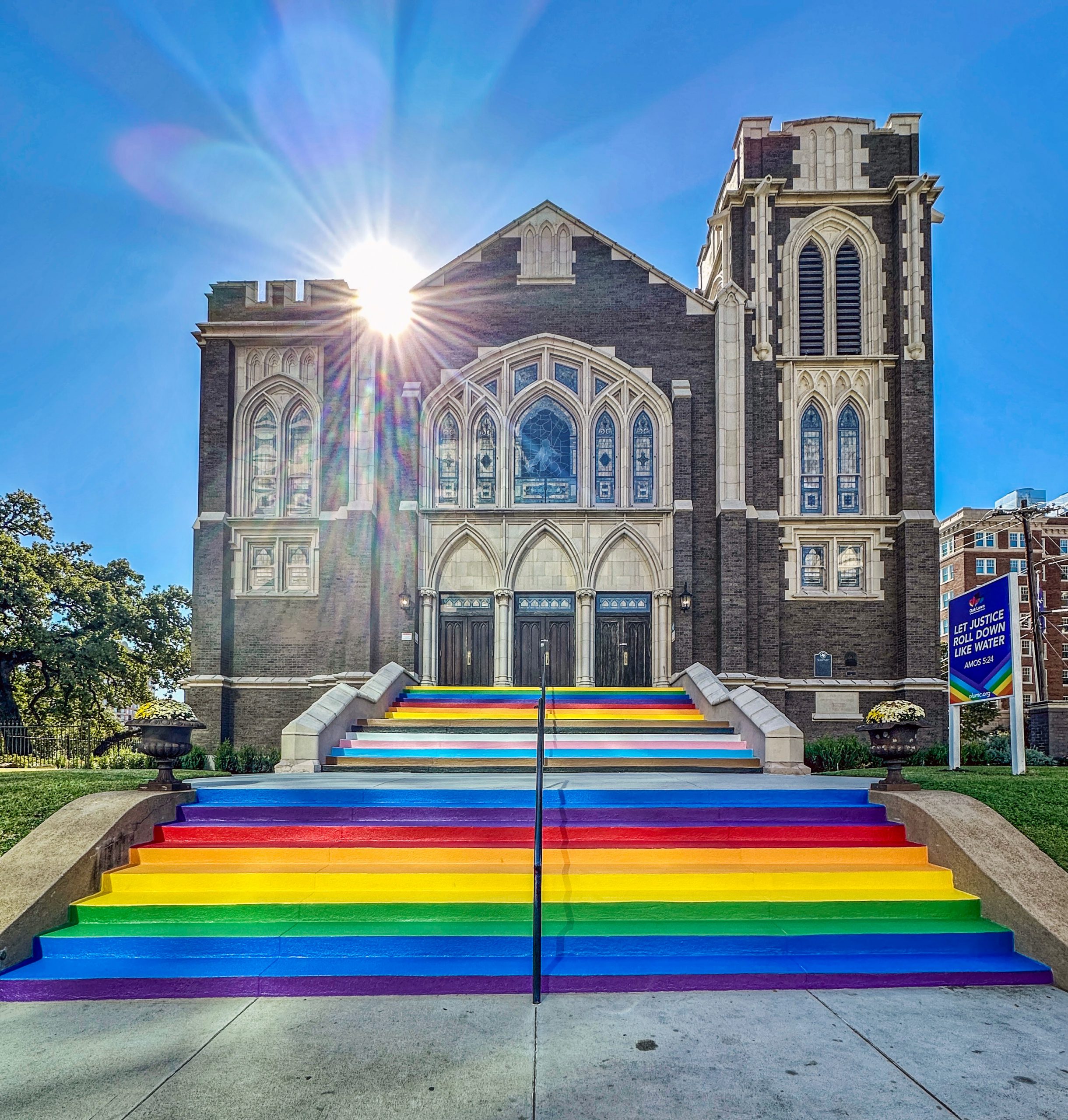
Pride arrived for a second time this year in Dallas, Texas, with the local community coming together for a few more days to uplift their LGBTQ+ neighbors.
It was a weekend of fun inclusivity that this city is no stranger to; Dallas currently boasts the sixth-largest population of LGBTQ+ individuals in the U.S. While Texas at large has dealt with many discriminatory attacks, this city hasn’t faltered in showing off its unabashed pride. It isn’t without battle scars, of course, but this was a chance to remind not only residents, but the entire country: we are still here. Dallas’ LGBTQ+ population is currently louder and prouder than ever. And, as any of the many attendees will tell you, they plan to only get stronger — and so much more queer — every single day.
While the weekend was stacked with a myriad of activities, ranging from charity drag shows to mural unveilings, the true highlight of the weekend was Oak Lawn Live. Inspired by Market Days — an annual Chicago festival where a chunk of the city becomes a queer street fair— the Cedar Springs Merchant Association developed this event as a sprawling sign of support for the local LGBTQ+ population. Hosted in the ‘gayborhood’ of Oak Lawn, it featured multiple streets of vendors, special deals from the area’s many eateries, and performances from pop stars like Daya. Even under the day’s intense heat, these streets were filled with attendees excited to flaunt their pride, with Volunteer Organizer Peter Pepper emphasizing, “This event brings the community together and reminds people: [Oak Lawn] is not just a bunch of bars. This gay neighborhood exists as a place where people can feel safe. And so, above anything else, this event is meant to remind people that we exist as a gayborhood, and that we are here for people. It’s entertainment, it’s safety, it’s community, and it’s diversity.”
It was a mission that showed in every moment of Oak Lawn Live, whether you were fighting the heat while dancing at its many stages or keeping cool with friends at one of the participating restaurants. It was those restaurants, in fact, that revealed one of the best parts of this Pride In Dallas: how amazing it was for the local economy. Because while other celebrations would have nearby establishments shut down for the day, all the ones around Oak Lawn joined in on the LGBTQ+-themed festivities with fun deals and activations. This was by design, said Lee Daugherty, owner of the Oak Lawn bar ‘Alexandre’s’ and member of the Cedar Springs Merchant Association. He explained, “The merchant association is designed to encourage economic impact.”
“Not only to promote economic activity, but to make sure that businesses are promoted,” the man continued. “So they can reinvest in the community and stay here. Because a vacant storefront helps no one.” He detailed how queer residents have always shaped Dallas’ economy, one that the Association works to make inclusive and sustainable for all. It was a fact that made the entire celebration all the more meaningful, with folks understanding how the fun of this weekend would translate into better finances for queer people across the city.
All of this combined to make the Saturday of Pride In Dallas a bright day for the countless LGBTQ+ folks in attendance. It was so exuberant, in fact, that even out-of-towners could feel it, with one of those being the iconic podcast host herself, TS Madison. Pride In Dallas power partner Unleashed LGBTQ+, run by Wesley Smoot, arranged this fun podcast taping.
The trans actress and RuPaul’s Drag Race judge stopped by the celebration for a live taping of her renowned podcast, Outlaws, where she interviewed many of Dallas’ drag royalty. Known for her cutting honesty, it didn’t take long for TS to call out the elephant in the room — namely, how Texas has seen numerous attacks against the LGBTQ+ community in recent months.
For non-locals, it may seem strange to have so many folks partying while there were active fights against their rights happening across the state. But Madison understood the importance of moments like these even amidst hardship, stressing, “There’s been so much going on, but we’re still here, celebrating pride…that means a lot to me, because what it lets me know is: our fight will never stop. We will never stop resisting. In the face of this political climate, in the face of turmoil, we will never, ever stop existing.”
With those words, she aptly characterized the joyous strength that came out in full force for Sunday’s Cedar Springs Pride Parade. While it only took up two streets — there was a larger parade hosted earlier this year — these blocks were packed with LGBTQ+ and allied locals alike. They all gathered behind the barricades, whooping in joy and stretching out their hands to the cavalcade of groups rolling by only a few feet away from them, with this parade perfectly encapsulating the communal joy of this city’s vibrant LGBTQ+ community.
Suffice it to say, this past Pride In Dallas was one of the city’s best LGBTQ+ celebrations yet. It was a weekend of fun, of laughter, and an important reminder of the strength that happens when we join together. Because Dallas knows that things aren’t easy right now. But as long as we take the time for moments like this and remind ourselves why we continue to fight, this city, and the historic queerness it holds, will always be here — standing Texas strong.
Special thanks to Virgin Hotel Dallas for the perfect stay. From check-in to check-out, it was true style!
Pride Special
Can I get a witness!: Rusty Rose on Stonewall, Pride, and the fight that never ended
Stonewall veteran Rusty Rose reflects on Pride’s origins, chosen family, LGBTQ+ history, and why the fight for equality is far from over
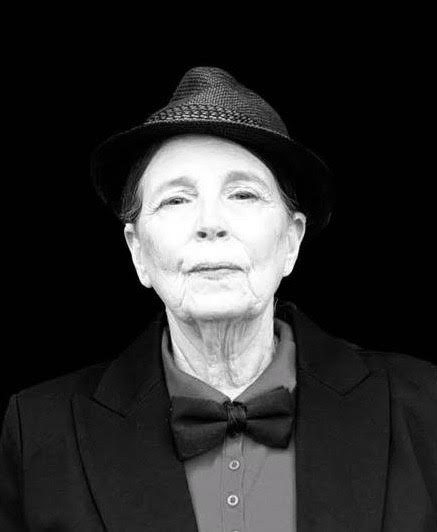
Few folks these days can say they witnessed history – quite literally – front and center. Even fewer have spent decades ensuring that history is recalled and recounted with accuracy. Revered by generations of LGBTQ+ people as an unwavering advocate, poet, and Mother to us all, Rusty Rose has dedicated her life to preserving the stories behind the movement while reminding us that the fight for equality is far from over. Her reflections are a mix of hard-earned wisdom with a dash of humor, offering a generous glimpse into both the triumphs and unfinished business of queer liberation.
As Pride celebrations unfold across the country, Rose remains steadfast in her belief that Pride is still a civil rights movement rooted in courage and collective action. In our talk, Rose shares her memories of Stonewall, her friendship with her fellow activists, her thoughts on the state of LGBTQ+ rights today, and why younger generations must continue carrying the torch.
As someone who has often been described as a witness to history, what do you think
people get right, and also still misunderstand when discussing Stonewall today?
What they get right is that our LGBTQ+ community stood our ground; rebelled against fear,
prejudice, and police brutality. What’s misunderstood are the myths about bricks, first punches, and that it was a member of our Transgender community who led the fray, sparked the rebellion.
The biggest disappointment is that a few deceased are honored, not living trailblazers. To be clear, the Stonewall Rebellion was, overall, a concerted effort. Inside, we were rebelling;
outside, it was a protest bordering on a riot. Many younger LGBTQ+ folks know Pride as a celebration.
What did Pride mean in its early years, and what do you hope today’s generation never forgets about its roots?
Pride began as a civil march. On a personal level, at the time, finding kids like myself strengthened my resolve that I and others were not as the DSM (Psychiatric Manual) suggested: mentally ill/crazy!
Today’s generations must recognize that PRIDE is and always will be a civil rights march first. It is wonderful that we celebrate how far we’ve come in America, but PRIDE is a fight for civil freedoms, and the struggle continues. Generations today must be aware of the atrocities taking place around the globe in real time, 2026. Many LGBTQ+ people around the world are struggling to take a stand. It is frightening how many countries still penalize us. The penalty is harsh: imprisonment or death!
Today’s American political climate has influenced the world and has added to the fire of hate!
Until all LGBTQ+ people are free around the globe, we are not truly free. It is only an illusion. To my friends in Africa and elsewhere, Mum says, “Aluta Continua!”
You’ve lived through extraordinary changes in queer life. What feels radically better
today than it was fifty years ago? What feels disappointingly unchanged?
What feels better today is one’s freedom of expression, both socially and in the arts, and our established recognition. What disappoints me is how the progress we strived for, in the name of civil rights, is being challenged again by the current administration. The hateful campaign coming from those in office harkens back to the Civil War. It disparages and demonizes us in public, provokes gullible citizens to act on fear, which results in harm, and most disheartening is the defunding of Federal programs.
As someone who has been called “the mother of the movement” by many in our community, what does chosen family mean to you, and how has that definition changed or evolved over the years?
It is a deep honor to have earned our community’s respect. It warms my heart to be chosen as Mum/Mother around the globe, too. It is a lifelong role, one in which I promise to do my best to live up to. Important is that not only will I guide my community, but also lead by example in showing that PRIDE is courage, dignity, resiliency, and love. I want to remind everyone that together, we are unbendable!
Evolution of Mother… No one called me Mother of Stonewall at first. It was coined decades after the riot. As time went on and as I became older. Whether on the parade route, when I was shaking hands as kids ran up to cars to say ‘thank you’, or whenever I got up to read poetry to a younger crowd, they called me this… “There she is, the mother of Stonewall.”
It is refreshing to know that younger generations appreciate and truly want to know history. I am living history. I am also proud of how smart this generation is – how they refuse to be pigeonholed by those shaping history to their liking. So much of this is going on. Is our story about Stonewall being altered for economic gain? I don’t know.
I am proud of millennials who want to celebrate all of us, living and dead, who have contributed. We are their history, and they not only want to read about it, but would like to meet us in person! For this, I thank my chosen family, and until God takes me, I will be present for them; teach them about the sacrifices every one of us made to get to this point, whether telling our oral history or through poetry.
Of course, a movement is a collective act that’s built on and fosters community and solidarity. Can you share with us what it was like for you to advocate alongside your friend Sylvia Rivera, as well as others you’ve grown connected with over the years?
Never in my wildest dreams, and knowing Sylvia, I think it is fair to say that we never thought about the long-lasting impact of our contributions. You just do not see so far ahead when you are a teen and busy living in a teen world. In looking back, I would imagine our focus was to survive the difficulties life tossed at our young lives; be it facing bullies, fighting homophobic slurs, trying to gain acceptance from family and friends, finding a next meal or housing; whatever the angst of youth, our response was spontaneous.
Back then, and when we reconnected later on as adults, our friendship was based on
mutual respect and how we could work to help others.
When you think of Sylvia Rivera today, what is the first story, memory, or image that
comes to mind?
Me performing, shaking my tambourine in a Greenwich Village park, and laughing
while Sylvia tries to sing along with me to my music.
Your friendship with Christy H. Jenkins connects two people who have helped preserve
some of the most authentic accounts of Stonewall and the Civil Rights Movement. What does it mean to share that responsibility together, and how has that influenced your friendship?
The responsibility we have in preserving history is that we keep it real. We speak about the only night we were there – the first night of the Stonewall Rebellion. We tell it truthfully, and are mindful of those who have recounted their stories too. Also, our friendship is a sisterhood; we have unconditional loyalty and respect for one another. Our bond is deep. We go back decades, having survived the positive and negative in our lives. Today, when continuing on life’s journey, we laugh, love, sing, and read to one another; we keep on keeping on. In life, we continue to thrive.
The organization Street Transvestite Action Revolutionaries addressed housing, food, and survival. Do you think modern activism sometimes focuses more on visibility than material support?
Being visible is paramount. But I do think today, it is more about ‘corporate’ visibility (CRINGE), which targets gay youths to buy products, than the offering of material support.
Support is out there, more than in my time, but corporate sponsorship is an opportunity to sell; it has hijacked Pride. Pride has been pink-washed, changing the meaning to that of a ‘brand.’ The shift has gone from marching for human rights to showcasing. Many important grassroots organizations cannot compete; they are suffering financially due to not having funding to reel the kids back into true causes.
In my opinion, when speaking about modern activism, we as a group have lost focus. Pride has
become a hyped event. It is corporate pride—visibility for profit—PREPOSTEROUS! Overall, I am not saying corporations are bad; many do have good programs, but do you see commercials touting this help? No! It’s like an inside secret, if you know; you know. If corps truly care about our rights, they would use their visibility to promote our plight via commercials and advertising.
Bone of contention: In parade line-ups, corporations are first. Activists and grassroots organizations are last. This must stop! I am tired of seeing trailblazers and our backbone
grassroots orgs taking a back seat to corporate pride.
Also, with the recent political negativity breathing down corporate necks, they are already pulling support from events. And, when they leave, guess who will be there as always with full
support—grassroots! I ask: please support LGBTQ causes and businesses.
Your poetry has always seemed to balance beauty with truth. How has writing poetry helped ground you throughout the many experiences, challenges, and historic moments you’ve lived through? Has it also served as a means of processing things like grief, trauma, or healing?
Poetry has always served as an anchoring mechanism in my life. It has allowed me to capture and leave in writing my deepest personal human experiences. My poems bear witness to history I lived, prejudices, how I have coped with personal tragedies, the pain of disenchantment, and the beauty of love. I am in the process of editing a new book of poetry, Before I Leave.
At the moment, I am in search of a special LGBTQ publisher who is interested in my work; one who I trust will preserve my collection for future generations. Guess you can say, because I am nearing the end of my life, this is important. And yes, poetry is cathartic.
As Long Island’s first LGBTQ+ Poet Laureate, do you feel poetry can still change minds in an age dominated by algorithms, outrage, and short attention spans?
Yes, poetry allows us quiet time to sit with ourselves in a favorite place to read. It offers escape from the bustle. If you write poetry—even better. Whether with a pen/pencil and paper, on a keyboard, or writing mobile poetry, you are focused on your contribution to humanity. Poetry is Zen.
Places matter in queer history. What role has Fire Island played in LGBTQ+ life, culture,
and liberation, and how do you think its meaning has changed across generations?
Fire Island has always been a place I could escape the prying eyes and insults of the
straight world. I could be myself there, openly, without prejudice. For the record, I have many
supportive straight friends, but for the most part, I am talking about gay haters. Back when, Fire Island sheltered us from this.
Friends and I used to bring picnic baskets, guitars, light a campfire, and sing on the beach. We stayed all night, slept on the dunes, on the sand without incident. It was magical. Today, of course, dunes are protected, but the meaning is different than yesteryear. For this generation, it is another place for fun. Yesterday, Fire Island was a safe haven. Today, with rightful restrictions in place to protect certain areas, younger generations cannot experience Fire Island as we once had – we were free, one with nature.
Do you worry that as queer history becomes more accepted, some of its rougher, more
radical, and more complicated stories get polished away and perhaps forgotten by the
masses?
Acceptance by society is good, but it is up to us to leave written accounts and teach future generations about our collective history. It must reflect on centuries/decades of a time we were
jailed, ridiculed, and not allowed to fit in. Never should we forget or erase the bigotry and trauma thrust on us before Stonewall, at Stonewall, and afterwards, and the shunning of our community brought on by the AIDS epidemic. This cannot be lost.
A lot of younger activists talk about “showing up.” What does real advocacy look like to you on a macro level, not just for individuals, but for governments, institutions, and communities?
Showing up. Being emotionally and physically present is important. It is about sharing the work of activism; handing out pamphlets, standing on roadsides asking for cars to honk if they agree we should have rights (visibility), it’s about marching together, standing on the steps of the legislature, and more. Making ourselves seen and our voices heard at all levels, especially government levels, is a lifetime sponsorship/commitment to what you believe.
What issue affecting LGBTQ+ folks today do you believe deserves far more attention
than it’s currently receiving?
I am passionate about Africa and countries like South America, where our LGBTQ+ children are murdered, raped, tortured, and beaten. Personally, I have reached out to an American president and VP about this and received a curt letter. I have reached out to the media and television personalities and was ignored. I have phoned the African consulate and was hung up on!
If we want change, we must work together to secure our family’s rights in Africa, Venezuela,
and around the world. Remember, together, we are unbendable! As a member of the AQRDP, Federation Board National, an LGBTQ organization working to better these horrendous conditions in other countries, I implore our global community to get involved.
I also believe homelessness, mental health issues, and global human rights violations need
more attention. Our community must speak out, march in solidarity, not just in June. We must advocate all year round for change!
When people gather fifty years from now to celebrate Pride Month, what do you hope
they will remember about Rusty Rose?
That I was a poet, and a fierce lesbian trailblazer who stood her ground, took action to
advocate, and fought for herself and their civil rights.
“Reunited”
By Rusty Rose / For Chris Thompson
Youthful years passed
Since Christy and Rusty
Partied hearty
In Washington Square Park
And onto the Stonewall Inn—
She—with her puffed Afro
Silver Afrikan Queen bangles
And ‘Black Power’ buttons
Me—with Hippie threads
Fringed moccasins, and pin-on
‘Make love not war’ buttons
Who would have thought—
From a serendipitous meet
A friendship would blossom…
I was shaking a tambourine
Belting out tunes
Between arch and fountain
When Christy sang along
Vinny toe-tapped
Marsha danced
And Sylvia
Dropped spare change
Into my felt hat
That very night
Marsha went uptown
Sylvia sat at a ‘tranny’ bar
Off the square
I, Vinny, and Christy
Got down at the bar—
We were there when it
Devolved into chaos!
Since then
Springtime
Went wayside
Yielded into autumn
Fortunately
PRIDE
Sought and brought
Us together
Nowadays,
Old friends
Are no longer,
Yet, Christy and I
Remain tight;
We jingle tambourines
While singing
Nostalgic tunes—
Often, we muse
About the bittersweet
Past; our shared history
Gone by.
Pride Special
Pride without prejudice: LGBTQ+ pioneer Christy H. Jenkins shares her story on Stonewall and then some
Queer pioneer Christy H. Jenkins takes the mic to share on her lived experiences on the Stonewall Riots, the Civil Rights Movement, Pride then and now, and what changes she’d still like to see in our LGBTQ+ community
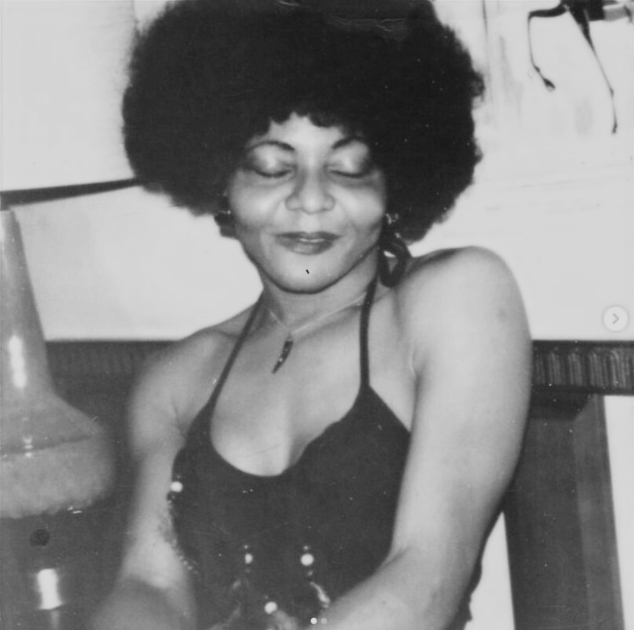
While history under the palm of capitalism tends to warp authentic narratives into rainbow-stamped marketing agendas, Christy H. Jenkins is here to remind us it was once lived in real time by people who are still very much here and more than happy to correct the record. A living and thriving pioneer with a long memory and a sharper insistence on nuance, Jenkins doesn’t treat Stonewall as some lore of yesteryear but as a lived, complicated moment flush with friends, losses, and stories she believes haven’t always been told as authentically as they could be.
In our interview with Jenkins, she moves with effortless grace between then and now: Stonewall-era New York, the Black Panther and civil rights movements, and today’s conversation on identity and visibility, all while unveiling the through-lines about solidarity and survival. At times blunt, at times reflective, and always unwavering in her perspective, Jenkins makes one thing crystal clear: she isn’t interested in polishing history, but she is damn sure that the living witnesses still get a place in it.
Can you tell us how you came to be at Stonewall that night and what that experience was like for you?
We were at the first night with Rusty Rose, who was a great poet in New York, and she was with me at Stonewall. Yvonne Ritter and Nova were also there. The reason I bring them up is that I actually went to Stonewall because of Yvonne Ritter celebrating her 18th birthday there. I was friends with her, so that’s how I wound up at Stonewall.
There’ve been so many people who have given their version of it, and I like to correct what I know about Stonewall and who I know was actually there. This is not to slight anyone or discredit anyone. It’s just to tell my version of the story that I know to be true.
I don’t know why people have slighted Rusty Rose and me because we were one of the original pioneers there, the very first night. Everybody wants to talk about Marsha P. Johnson and Sylvia, and I love them dearly; they are my closest friends, but they always hype them up and forget about the ones who are still living. We’re still living pioneers, and no one wants to talk to us.
I don’t understand that.
Do you feel like your story has been left out of the Stonewall narrative?
Recently, people haven’t wanted to talk to me, so I’m coming out with my story. I’m very happy you have decided to take my story because it is very much needed and should be clarified.
I have to be very honest with you. I have received death threats before if I came forward with the truth about Stonewall, because so many people have twisted it and made a lot of money off it. I never tried to make money off Stonewall. In fact, I stayed away from it because I didn’t want to be associated with it in that way. I tried to live a more low-profile life and didn’t come forward much because of my husband at the time.
What do you believe has been misrepresented about Stonewall?
Stonewall has not become history; it has become a money maker. Whoever can flip a story and make money has done so. I believe they left Rusty Rose and me out purposely because we do know the truth of it. We were there the very first night.
I have things to back up my truth. I have my police record. I’m also known as Chris Thompson, the gay prisoner of Bellevue. That article talks about Marsha, me, and Sylvia. There’s no reason for me to make anything up. Stonewall has become marketing, not history. And those who don’t comply with what people want are not recognized or interviewed.
Can you tell us more about what the first night at Stonewall was like?
I originally went there to meet Marsha and Sylvia because of Yvonne Ritter’s birthday. Most of the trans girls – they didn’t call them trans girls then, that’s a newer term. Back then, you would say drag or just gay.
The experience for me was very shocking. The real reason Stonewall was raided is that they did not have a liquor license and were selling liquor to minors. They were already targeted. Mayor Lindsay wanted to clean up New York at the time. He wanted it to look more “Christian” and remove what they considered undesirable.
And it wasn’t just Stonewall. Many clubs were being raided, even house parties. Stonewall just happened to fight back that night. Only 13 people were arrested the first night. Most were released. I was not released because I had warrants from previous prostitution charges. I was a street kid hustling like Marsha and Sylvia.
My mother did not want me back home either. That was very traumatic. She thought jail would change me into what they called “normal.” But I don’t know what normal means. Normal to me is who I am.
What do you think are the biggest differences between the trans community then and now?
I see some progress, but not much. Now, with the current administration, trans people are being targeted again and labeled in harmful ways. One person does something, and they lump all of us together. That is very unfair.
Even back in 1969, the gay community did not always support trans women. They would say, “We’re not trans, we’re gay.” But I always said, your fight is my fight. If they discriminate against me, they will discriminate against you.
Do you think there is still division within the LGBTQ community?
Yes. I still see it. Even today, some gay people don’t support drag queens or trans people. We are prejudiced toward each other inside our own community. How can we expect others to accept us if we don’t accept each other? You can’t clean somebody else’s house if your own house is not clean. We need to start at home first and come together as a family.
And I think that’s something I learned a long time ago through other movements I was around, including my experience being affiliated with the Black Panther movement and also looking at the Civil Rights movement and figures like Dr. King. Those movements understood something very clearly: you don’t move forward by fragmenting yourselves. You move forward by organizing, by standing together, and by protecting one another as a collective.
When I was around the Black Panther community, it was very much about working together as a family and taking care of each other. That left a real impression on me. It wasn’t about waiting for the system to fix things for you. It was about supporting each other, building strength internally, and showing up as a unified front.
I think the LGBTQ community could learn from that. Because at the end of the day, if we’re divided internally – between gay, trans, drag, Black, white, rich, poor—then we weaken ourselves. But if we come together the way those movements did, we have a much better chance of real progress.
What can the LGBTQ community learn from the Black Panther movement or civil rights movement?
I was affiliated with the Black Panthers. I was known as Larry’s girl. They supported each other like a family. They didn’t ask the government for everything. They supported one another, and that is what I think is important to understand. That is what we need.
The Black Panther movement and the Dr. Martin Luther King Jr. movement are both examples of unity and collective strength. Those movements showed what can happen when people organize, stay connected, and refuse to be divided against themselves.
We have to group together. All of us. Not just gay or straight. If you attack one group, the next group will be attacked. That’s always how it works. Even within the Black community, there are people who don’t want to identify as Black because they feel they won’t prosper, and that shows how deep some of those divisions go. So we have to fix our own house first. If we don’t come together internally, then we weaken ourselves before we even face anything outside.
Why do you think certain populations of people tend to disengage from politics?
Because they have money. When you have money in this country, you are a piece of gold. You don’t have to worry about other people. You can take care of yourself, and you can even leave the country if you want to. So it becomes not their fight.
Money is a big reason this country is the way it is. It creates a kind of insulation where people can shut the world out, and we forget about the people who are actually struggling.
Do you think privilege plays a role in that as well?
Yes. Money and privilege. I know a trans friend who is very wealthy. When the bathroom issue came up, she said, “Oh, honey, I can just pay for my own private bathroom.”
So that’s the mindset. You have to understand the mentality of it. When you have money in this country, it puts you in a completely different position. It’s power. And when you’re in that position, discrimination doesn’t affect you in the same way, because you can buy your way around it.
How did your partner impact your activism?
He admired my Stonewall history and the fact that I was part of that era, but he also wanted a very private life. He didn’t want me to expose anything or put myself back into the spotlight in that way. He feared for my safety, and he truly believed he was protecting me.
But in my gut, I never felt fully comfortable staying silent. My sisters and brothers are suffering, and I suffered myself. I felt a responsibility to speak out and tell my story, even if it created tension between us or went against what he wanted for my life at the time.
What do you want people to take away from your story?
I want interviewers like you to seek out pioneers who are still living. People like Rusty Rose and I are still here, and I think our stories should be included and heard while we’re still able to tell them. I also want to be very clear that this is not about discrediting anyone else or taking anything away from anyone’s history. This is just my truth and what I know from my own experience.
What matters to me is that living pioneers don’t get overlooked while the story is being told. Time moves quickly, and a lot of voices from that era are already gone. That’s why I think it’s important to document those of us who are still here now, while we can still speak for ourselves and share what we lived through. This is not to discredit anyone else. This is just my truth.
Pride Special
Your quick guide to West Hollywood Pride 2026
The City of West Hollywood will celebrate WeHo Pride Weekend on Friday, June 5, 2026; Saturday, June 6, 2026; and Sunday, June 7, 2026, with a packed schedule of events and festivities in and around West Hollywood Park
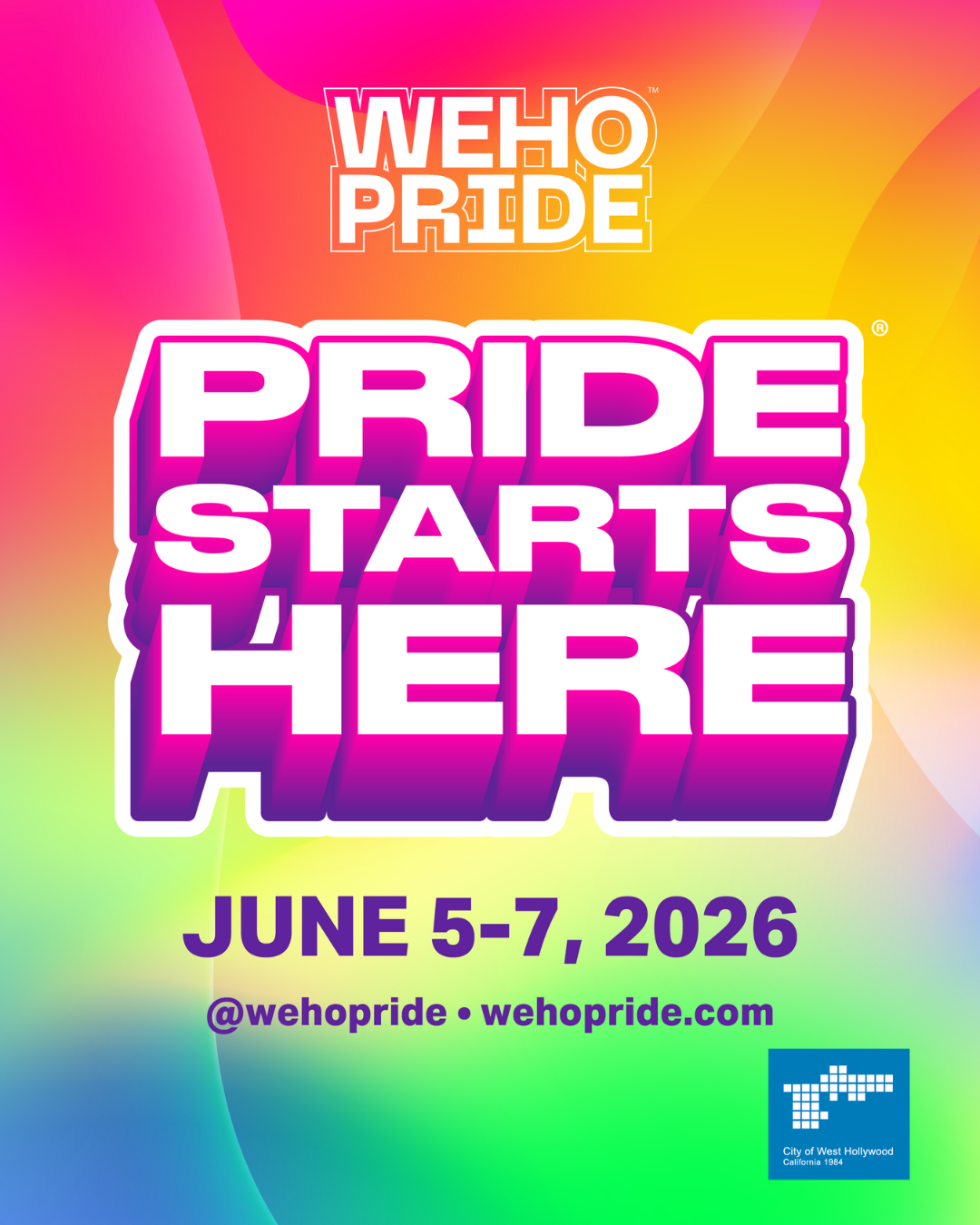
Pride Starts Here! The City of West Hollywood will celebrate WeHo Pride Weekend on Friday, June 5, 2026; Saturday, June 6, 2026; and Sunday, June 7, 2026 with a packed schedule of events and festivities in and around West Hollywood Park, located at 647 N. San Vicente Boulevard, and Santa Monica Boulevard.
Initial street closures will begin taking effect on Thursday, June 4. Starting on Friday, June 5 at 12 p.m., Santa Monica Boulevard will be closed in both directions from N. Doheny Drive to N. La Cienega Boulevard (through Monday, June 8, at 7 a.m.).
For all the latest #WeHoPride information, visit www.wehopride.com and follow @wehopride on Instagram, Facebook,and TikTok.
· Free! WeHo Pride Presents Friday Night at OUTLOUD will take place on Friday, June 5 beginningat 6 p.m. at West Hollywood Park. Advance free-with-RSVP registration for WeHo Pride Presents Friday Night at OUTLOUD. This event is currently at capacity.
· Free! WeHo Pride Street Fair, Women’s Freedom Festival, and live performances on the Rainbow and Celebration Stages on Santa Monica Boulevard will begin on Saturday, June 6 at 12 p.m. with theannual Dyke March beginning at 6 p.m. directly following the conclusion of the Women’s Freedom Festival at the Celebration Stage. The Street Fair will feature vendors, booths, and community organizations located along Santa Monica Boulevard between N. Robertson and La Cienega Boulevards. The Women’s Freedom Festival will take place at the Celebration Stage at La Peer Drive featuring emerging LGBTQ+, BIPOC, and non-binary musicians, comedians, poets, and activists. The WeHo Pride Street Fair will continue Sunday, June 7. For additional details and information, please visit www.wehopride.com.
· OUTLOUD Music Festival at WeHo Pride, the flagship music festival and concert experience of WeHo Pride Weekend, produced by JJLA, will take place on Saturday, June 6 and Sunday, June 7 featuring a star-studded, high-energy line-up.
· Summertramp will burn brightly from the sunny shores of OUTLOUD Music Festival at WeHo Pride all weekend long with hot-and-heavy headliners along with DJ sets, and dancing. Full artist lineup, event, and ticket information is available at www.outloudmusicfestival.com/weho.
· Free! Thousands of people will gather in West Hollywood for the annual WeHo Pride Parade on Sunday, June 7. The Parade will kick-off at 12 p.m. from N. Crescent Heights Boulevard, making its way west along Santa Monica Boulevard to N. San Vicente Boulevard in the City’s Rainbow District. The WeHo Pride Parade is an imaginative and colorful tradition that embraces LGBTQ+ representation, inclusion, and progress. Full of music, dancing, festive floats, vibrant marching contingents, and creative flair, the WeHo Pride Parade celebrates LGBTQ+ people and contributions to community and culture. KTLA 5 is the official broadcast partner of the WeHo Pride Parade. Stream on KTLA+, KTLA’s mobile app, or KTLA.com.
· New this year! Camp OUT! A Sober Pride Celebration will take place on Sunday, June 7, 2026 from 3 p.m. to 7 p.m. in the parking lot adjacent to the West Hollywood Recovery Center Log Cabin, located at 617 N. Robertson Boulevard. Camp OUT! is a drug- and alcohol-free event open to all, where guests will enjoy an energetic afternoon of camp-inspired activities and community celebration immediately following the WeHo Pride Parade.
For more than four decades, the City of West Hollywood has been home to one of the largest Pride celebrations in the nation. Hundreds of thousands of LGBTQ+ people and allies from around the world traditionally make West Hollywood their regular destination during Pride season. Since its incorporation in 1984, the City of West Hollywood has become one of the most influential cities in the nation for its outspoken advocacy on LGBTQ+ issues. No other city of its size has had a greater impact on the national public policy discourse on fairness and inclusiveness for LGBTQ+ people.
Home to the Rainbow District along Santa Monica Boulevard, which features a concentration of historic LGBTQ clubs, restaurants, and retail shops, the City of West Hollywood consistently tops lists of “most LGBTQ friendly cities” in the nation. More than 40 percent of residents in West Hollywood identify as LGBTQ+ and four of the five members of the West Hollywood City Council are openly gay. The City has advocated for four decades for measures that support LGBTQ+ individuals and the City is in the vanguard of efforts to gain and protect equality for all people on a state, national, and international level. #WeHoPride @WeHoCity
For more information about WeHo Pride Weekend, please contact the City of West Hollywood’s Event Services Division at [email protected]. For people who are Deaf or hard of hearing dial 711 or 1-800-735-2929 (TTY) or 1-800-735-2922 (voice) for California Relay Service (CRS) assistance.
For up-to-date news and events, follow the City of West Hollywood @wehocity on social media, sign up for news updates at www.weho.org/email, read news and feature articles at www.hellowweho.com, and visit the City’s calendar of meetings and events at www.weho.org/calendar.
Pride Special
Kathy Hilton out as Weho Pride’s Grand Marshal, title to remain empty this year
Hilton reiterated her support of the LGBTQ community in her joint statement
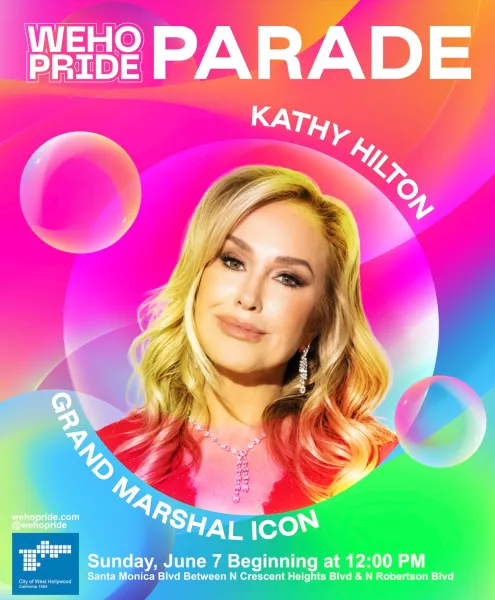
As we reported earlier this week, there was a lot of backlash to the announcement that Kathy Hilton was to serve as this year’s Weho Pride’s Grand Marshal. While Hilton has been a supporter of LGBTQ causes, her MAGA support and use of the f-word was called into question.
Yesterday, the City of West Hollywood issued a joint statement with Hilton and Weho Pride announcing, “After thoughtful discussions, the City of West Hollywood, the WeHo Pride production team, and Kathy Hilton have determined that the 2026 WeHo Pride Parade will not designate a Grand Marshal Icon honoree.”
No Grand Marshal this year? With the overwhelming number of activists and queer celebrities in the local community, surely there could have been another choice?
Hilton’s response in the statement reads, “I am honored to have been considered for this recognition and appreciative of the support I have received from members of the community throughout the years,” Hilton said. “My reason for wanting to be involved in this year’s WeHo Pride weekend was simple: to celebrate, support, and share in the joy of a community that means a great deal to so many people.”
She went on to clarify her support of the LGBTQ community, “I respect the thoughtful conversations that have taken place and remain deeply committed to supporting LGBTQ+ causes and visibility, including through my participation in GLAAD initiatives and events, and longstanding support of organizations such as the Elton John AIDS Foundation, the Elizabeth Taylor AIDS Foundation since its inception, Dr. Mathilde Krim, God’s Love We Deliver, and Project Angel Food. My support for the community and WeHo Pride is unwavering. This monumentally important event has always had a special place in my heart, and I will always cherish the experience I had acting as Grand Marshal of the LA Pride parade with my daughter in 2005. Thank you to everyone who works so hard to make it happen, and I wish the community nothing but love, joy, and a fantastic WeHo Pride weekend.”
The backlash to Hilton’s presence as Grand Marshal escalated this week as Indigenous Pride LA took to Instagram and announced that they were canceling their presence at this weekend’s Pride Parade, stating, “Many within our Two-Spirit, Indigiqueer, and Indigenous LGBTQPAI+ circles feel this year’s Grand Marshal choice does not align with the values, lived experiences, and spirit of Pride we seek to uplift.”
Podcaster Tyler Oakley posted on X to his 4.2 million followers, “great choice for trailblazer icons! i’m curious why kathy hilton was chosen considering the last i heard about her she was attending trump’s parties & calling a dj ‘faggot'”
The Blade was on the scene last night at Beaches Tropicana in West Hollywood for this year’s Pride kickoff. The event was packed and full of good energy, undaunted by the Hilton debacle.
The City of West Hollywood thanked the community for its “thoughtful dialogue.” The City went on to state, “The City of West Hollywood and WeHo Pride Parade organizers thank Kathy Hilton for her grace and her continued support of the LGBTQ+ community. Pride has always been strongest when it genuinely reflects the community. WeHo Pride is strengthened by open dialogue, mutual respect, and a shared commitment to inclusion.”
The Blade will be on the scene at this year’s Pride Parade along with the LA LGBTQ Commission and Lindsey Horvath’s office. See you there!
Pride Special
Controversy looms as Kathy Hilton is named West Hollywood Pride Grand Marshal
Her possible MAGA ties make the philanthropist a questionable choice
Pride is here, and we’re only 6 months into 2026. Yet for many LGBTQIA people, it’s felt like a decade. Homophobia on the rise, an active political mission by this administration to defund queer organizations, and we are getting close to the brick-throwing spirit that inspired pride in the first place. So the choice to name someone who’s partied at Mar-a-Lago as Grand Marshal of Weho Pride is a strange choice.
“The City of West Hollywood and WeHo Pride producer JJLA announce that legendary television personality and philanthropist Kathy Hilton has been selected as the WeHo Pride Parade Grand Marshal Icon for her commitment to the LGBTQ+ community, allyship in the entertainment industry, and unwavering support across pop culture,” says the City’s announcement. It goes on to say, “Hilton will also be celebrated as one of the 2026 WeHo Pride Parade Icons.”
Hilton joins honorees, the Los Angeles Rams Cheerleaders, and the NFL’s first male cheerleaders, Napoleon Jinnies and Quinton Peron. It’s worth noting that Hilton was also Grand Marshal with her daughter, Paris Hilton, at the 2005 Pride Parade. But then again, Kelly and Sharon Osbourne also had that honor in 2010.
It’s not unheard of for women with big gay followings to be grand marshals. Elizabeth Montgomery, Carol Channing, Jennifer Tilly, and Kathy Griffin have all had that honor. But as queer visibility is needed now more than ever, was this a smart choice?
Is Mama Hilton MAGA?
Ironically, the choice to award Hilton this title invokes all the drama and hearsay of her show. It’s a bit strange that since Lisa Vanderpump decided to open her restaurant in boy’s town, you can’t escape the Bravo of it all.
Part of the controversy involves accusations by two of her castmates. It has been widely circulated that in 2022, Hilton skipped filming a finale party for Real Housewives to attend Donald Trump’s Super Bowl party at Mar-a-Lago. This caused her castmate Lisa Rinna to post to her Instagram stories.
There’s also the lingering accusation from another past OutLoud performer, Erika Jayne, who accused Hilton of using the f-slur about a DJ. Bravo launched an investigation and could neither confirm nor deny Jayne’s claims. Hilton has also formally endorsed Spencer Pratt for LA Mayor.
It is important to note that Hilton does partner with LGBTQ organizations and charities. She hosted a party at her estate to commemorate GLAAD receiving the Governors Award by the TV Academy and hosted the Children’s Hospital of Los Angeles toy drive at The Abbey. So is this just a case of a socialite attending the wrong party, or has West Hollywood selected to honor someone a little to the right of center?
It doesn’t help that the Saturday headliner, The Pussycat Dolls, are also in the same MAGA-ish grey area. Nicole Scherzinger, amidst her career-defining run of Sunset Blvd on Broadway, faced some blowback when she commented, “Where do I get that hat?” on a photo of Russell Brand wearing a red “Make Jesus First Again” hat… on Election Day. She did make a statement that the comment was not aligned with her politics or how she voted, but there was some goodwill lost.
The Real House Prides of Los Angeles
Meanwhile, LA Pride, yes, there are two prides, has elected Emmy-winner Jeff Hiller as their Celebrity Grand Marshal. They also named Mia Yamaoto as Community Grand Marshal and posthumously named Shirley Raines as Icon Grand Marshal.
Like dueling housewives, Christopher Street West, the non-profit that facilitates Pride, famously separated from the City of West Hollywood in 2020 on the eve of the 50th anniversary of Pride. It offered to hold a parade in conjunction with Black Lives Matter, then later deferred to BLM to lead it. That has become the LA Pride Parade, which will be held on Sunday, June 14th.
Meanwhile, the City of West Hollywood has expanded its Pride programming to include its OutLoud Music Festival, which is clearly going for a mini-Coachella vibe. This shift in values and politics cannot be ignored. Also, since its inception, the new LA Pride has consistently named Grand Marshals who are LGBTQIA, including Leslie Jordan, Niecy Nash, and Hacks star Mark Indelicato.
Comments on social media have come out on both sides, with obvious fans of Hilton happy she’ll be in attendance, while the official account of @theaidsmemorial commented, “Melania Trump not available?”
It does beg the question, why are Bravolebrities constantly booked for Pride? While Hilton’s position is honorary and unpaid, Erika Jayne, Meredith Marks, and Countess Lu-Ann have all appeared on Bravo and are being paid to perform at the musical festival.
While there are many LGBTQIA fans of Bravo, Pride has always been political. It was a literal response to the Stonewall Riots and commemorates the day queer people stood up for their rights. Similarly, West Hollywood incorporated as a response to police brutality. While our community does value inclusivity and hopefully Hilton’s role does bring some much-needed visibility and goodwill to the LGBTQIA community, it does bring up an important question.
Given our current political climate, was there a more qualified candidate? While back in the day, having celebrities with gay fanbases lending their visibility to Pride was a boon. But with the state of LGBTQIA politics, can we afford to have anyone with even potential MAGA ties taking LGBTQIA money, prominence, and political goodwill?
As LA faces an election that could change the tone of the City, it’s strange to see that both our Prides are feeling like they have drawn stark political lines in the sand. Time will tell as Pride begins in West Hollywood this weekend.
Regarding Hilton’s presence as Grand Marshal, the City of West Hollywood told the Blade:
“The City of West Hollywood recognizes that the selection of Kathy Hilton as Grand Marshal Icon for the 2026 WeHo Pride Parade has generated a range of opinions and emotions within our community. We understand that Pride is deeply personal and meaningful, and we respect the diverse perspectives that have been expressed.
WeHo Pride Parade Icons are selected in recognition of their visibility, allyship, and support for the LGBTQ+ community. Kathy Hilton has publicly supported LGBTQ+ causes and visibility, including through her participation in GLAAD events and initiatives. At the same time, we acknowledge that concerns raised by West Hollywood residents, stakeholders, and LGBTQ+ community members are important and deserve to be heard.
We are listening. We believe that WeHo Pride is strengthened by open dialogue, mutual respect, and a shared commitment to equality and inclusion.
The City of West Hollywood remains committed to ensuring that WeHo Pride is a celebration rooted in visibility, inclusion, and respect, and we welcome respectful conversations that help WeHo Pride and our community continue to grow and evolve.”
Pride Special
Beyond celebration: Pride as a commitment to care, equity, and inclusion
Jeffrey Deguia, LA Regional Policy Advocate at Asian Americans Advancing Justice SoCal, reflects on Pride from an AAPI activist point of view.
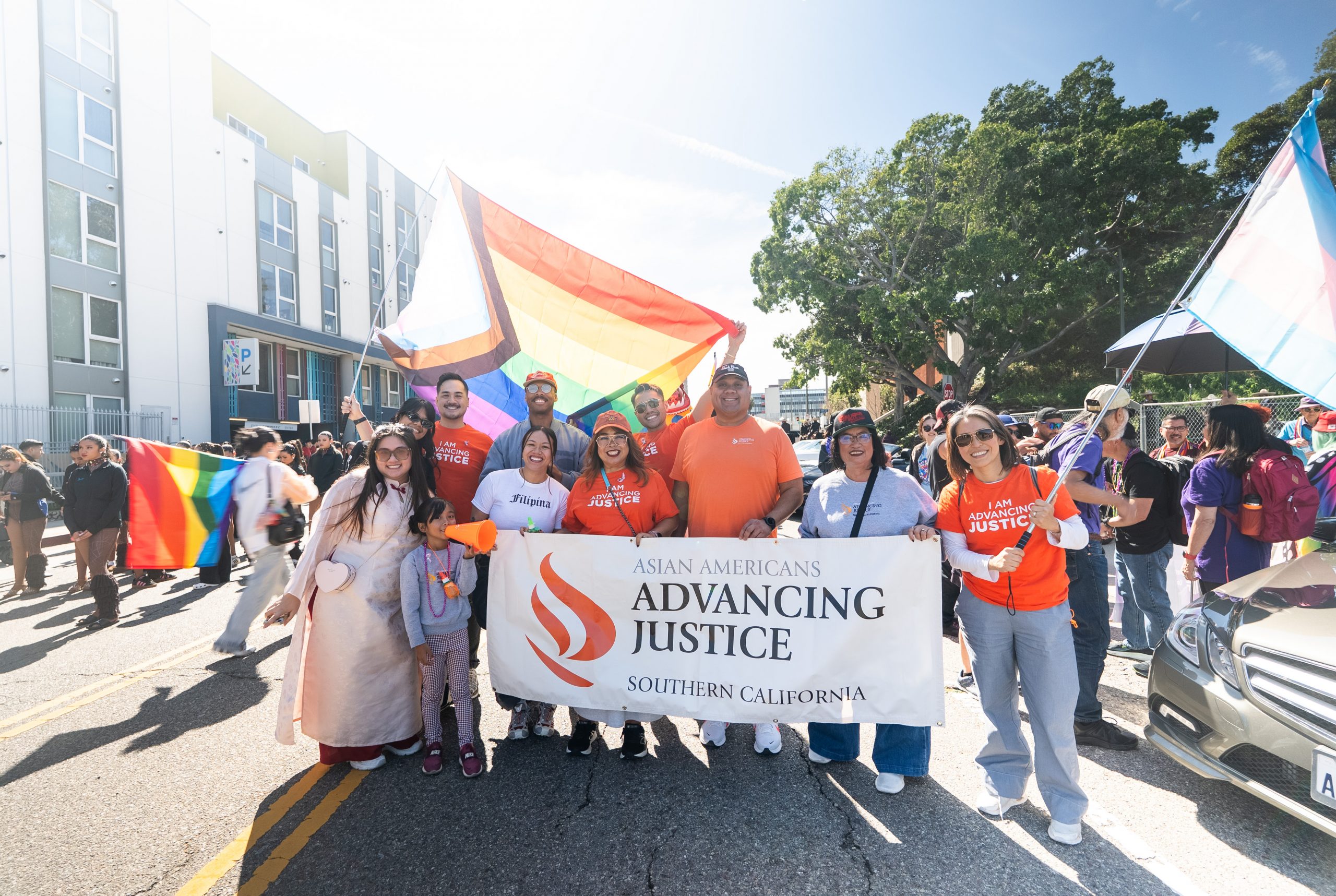
As we begin Pride month, I have a range of emotions. At the front of my mind is that I’m exhausted (and I say this with some humor). As policy and community advocates can relate, it’s felt like a nonstop barrage of actions in both response to anti-LGBTQ+ rhetoric and policies, but also, we’ve led and supported proactive action to ensure we’re protecting our community.
The second feeling is pride; I’m really proud of myself and my community. I know it sounds quite corny or at least obvious that one would feel pride during this month, but it doesn’t always come so easily. And I don’t think that, as advocates, we always have the time to reflect unless we’re scheduling it into our packed calendars. It is also my birthday month, and in recent years, I’ve come to realize how special (and maybe even chaotic) it might be to have AANHPI Heritage Month in May and then have Pride Month follow. It’s awesome, I get the permission to celebrate both major parts of my identity for eight weeks straight, but it also comes with a lot of work since I work at an AAPI civil rights organization. To be honest, it feels quite serendipitous to be in this position.
At my organization, I’m overseeing our first-ever official LGBTQ+ portfolio, and I am truly grateful to be able to be part of a long history of queer and trans resistance and community work, all while growing and learning more about my queer identity and how it can blend so beautifully with my Filipino heritage.
Our LGBTQ+ portfolio at Asian Americans Advancing Justice Southern California (AJSOCAL) was established officially in 2024, but the organization has been a strong ally for the LGBTQ+ community since its founding in 1983, including longtime support for same sex marriage. The portfolio started in 2024 after seeing a gap in representation of the queer, trans Asian Pacific Islander (QTAPI) community in statewide advocacy. My team knew there were numerous QTAPI organizations in California, many of which do local advocacy, and others that were historically involved in federal advocacy. We knew that the exclusion of QTAPI experiences had to change, and we started with our AAPI Queer Joy coalition.
Our AAPI Queer Joy coalition is AJSOCAL’s initiative to become more inclusive by recognizing the intersectionality of being both AAPI and LGBTQ+. It’s a partnership with QTAPI-serving organizations across the state. Together, we identify and highlight the specific needs of the QTAPI community; we advocate for inclusive policies that empower the QTAPI community and allow all in the larger LGBTQ community to thrive. My current partners in the coalition are Hmong Innovating Politics, Lavender Phoenix, Search to Involve Pilipino Americans, and Viet Rainbow of Orange County.
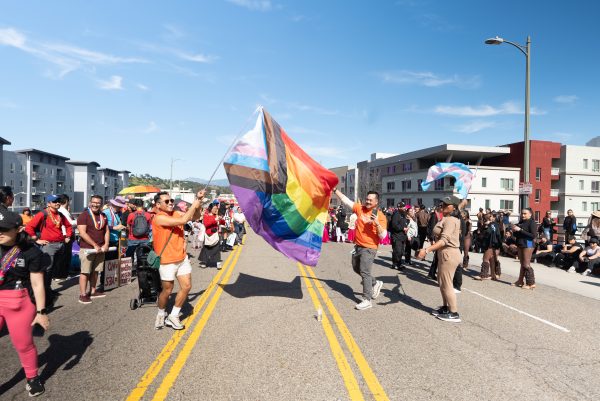
I feel so honored to do this work on behalf of my QTAPI and larger LGBTQ+ community. When I joined the policy team in 2023, I had no idea I’d be leading our LGBTQ+ portfolio shortly after joining. It feels like the timing was just right to have been between teams and have this opportunity. This opportunity to learn so much about my community, myself, and our long fight for equity and eventual liberation has truly changed my life.
One major highlight this year was our AAPI Queer Joy Coalition’s presence in Sacramento for Equality California (EQCA)’s LGBTQ+ Advocacy Day. To represent the QTAPI community as a group of 14 at the largest LGBTQ+ Advocacy Day in California felt incredible. EQCA’s lobby day is notable because of the leadership role their organization takes in co-sponsoring bills, working with the LGBTQ caucus members, and keeping all the LGBTQ+ and allied organizations up to date with all the bills and actions. I knew that by bringing a larger group of the AAPI community members to this day of action and communicating with their staff about my plans (and the staff happily accommodating and supporting us), they would continue to understand why it’s important to continue to be intentional about reaching out to different communities within the larger LGBTQ+ community and building power and relationships with them (and us).
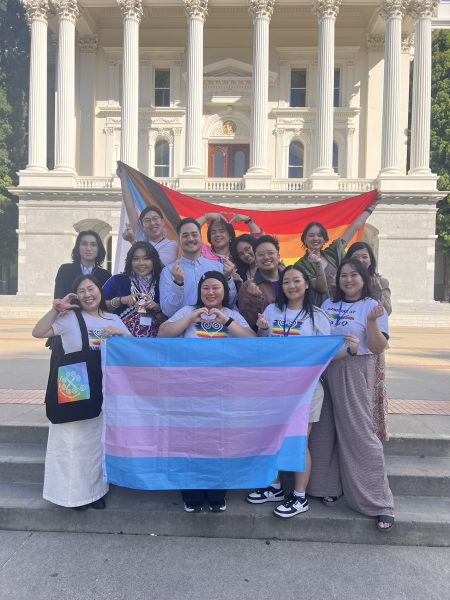
These advocacy days, community events, rallies, and townhalls remind me how important visibility and participation are, especially as QTAPI community members. We have experiences that bond us with the larger LGBTQ+ community, but also have our own unique set of challenges as AAPIs, many of us are children of immigrants, which means there may be language barriers, especially for certain LGBTQ+ terminology.
If we don’t show up and share those stories with other advocates and also members of the legislature, then they can’t work with us to make our lives better. It’s a reminder that all our stories are different and though we might share a common thread, it’s a moment to learn how our differences allow us to expand what the LGBTQ+ experience.
As I’ve worked with LGBTQ+ partners in Los Angeles and Orange County, I’ve learned so much, and I’ve been able to share a lot of data and stories with our partners who might not have experience with our QTAPI community. I’ve learned so much about our QTAPI community and the type of courageous history we have here in Southern California that spans back decades. I’ve met elders who were community organizers during the AIDS epidemic who worked together with Black and Latine communities to ensure that AIDS advocacy and education were inclusive.
I’ve heard stories of the queer and trans Vietnamese community leaders in Orange County claiming their rightful stake to march in their city’s and community’s annual Tet Festival in the 2010’s. And the list goes on. AAPIs have long been part of the fight for LGBTQ+ equality and equity, and oftentimes, our work and community are invisible. I’m hopeful that in my role, I can help to uplift this history and these brave community leaders and trailblazers. That I can foster even stronger cross-community solidarity. And that I can encourage the younger QTAPI generation to engage in these times to continue and lead the fight for progress.
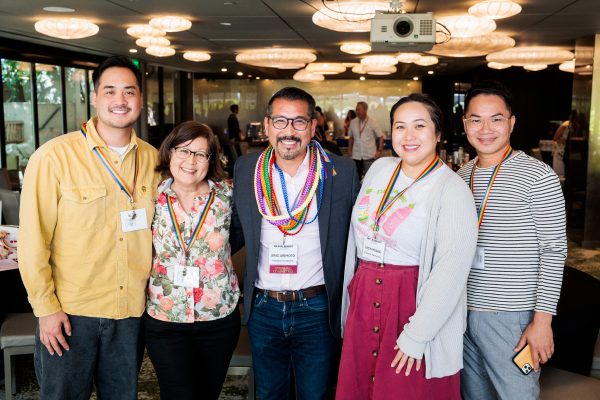
The work we do has truly felt nonstop; it has asked so many of us advocates to dig deep and lock in. Life has required a lot of balancing, asking ourselves, “how much more can I really give?” and I know for many of us the answer is usually, “I can give a little bit more, I need to push a little more.” In my own practice of balance and centering myself after I feel anger, disappointment, sadness, exhaustion, or some combination of all four, I remind myself that rest and joy are essential. It’s a response. It’s an act of resistance. Rest allows us to reflect, breathe, and slow down so we can come back to our coalitions and partners with new ideas, knowing that someone can fill in for you when you need to take a step back.
Joy is an act of resistance. It is what I have reminded myself of since the first Trump presidency. That the goal of the opposition is for us to feel bogged down, to give up, to not feel like life is worth living, but that’s the reason we fight and resist. We fight because we know the type of life we deserve; we know that we deserve to celebrate our survival, existence, and especially our futures. We celebrate our resilience, our ingenuity, our community care, and our commitment to change.
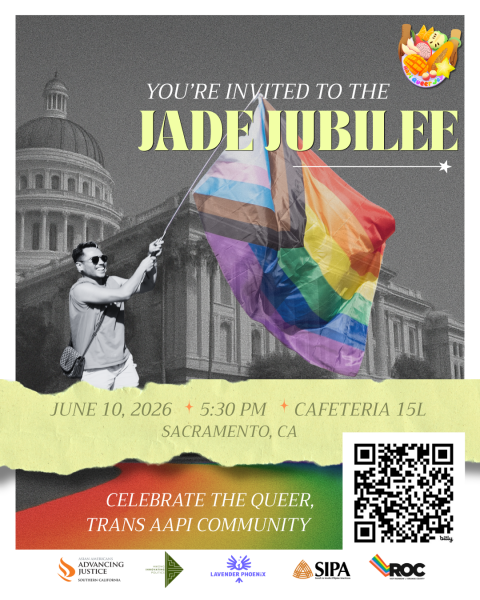
In the spirit of this, and uplifting my QTAPI identity, community, and my AAPI Queer Joy coalition partners. I want to formally invite you (yes, you, the reader) to our coalition’s 3rd Jade Jubilee, a celebration of our state’s beautifully diverse QTAPI community. My partners are fierce, creative, loud, and brave, and we’re here with our 2026 bill priorities, fighting for our LGBTQ+ community’s future. Our Jade Jubilee will be hosted on June 10, at Cafeteria 15L in Sacramento at 5:30 PM. It’s a FREE event, and there will be free food and non-alcoholic beverages. We’ll be honoring Assemblymember Chris Ward, the Chair of the LGBTQ Caucus, and Shai Chang, co-founder of Queer Hmong Intersectional Pride in Fresno, and there will be performances from two QTAPI and some of Sacramento’s best drag queens, PrincessB and LOTUS.
At the beginning of this article, I mentioned that I was feeling exhausted. But I’m also excited and looking forward to so many things while leading this LGBTQ+ portfolio. I feel honored to do this work, to work with my community partners, and see them and connect with them in person and at their events. In so many ways, it can feel lonely, especially as I do this work with only one other openly queer person on my team. With my community partners, I feel seen, understood, comforted, and strong. I feel blessed to be able to learn from them. As small as our community may be in relation to the state’s population, it doesn’t mean we have to do it alone, either as AAPI or LGBTQ+.
This pride season, I remind the community to engage even with how scary and daunting it feels, to remember that pride is for everyone and that inclusivity is a choice, and we should always ensure that we are listening to everyone in our beautifully diverse LGBTQ+ community – and not just during the month, but throughout the year as we build our movements.
By Jeffrey Deguia, LA Regional Policy Advocate at Asian Americans Advancing Justice SoCal
Pride Special
Marching in LA’s Pride Parade? Gay clothes that do the most
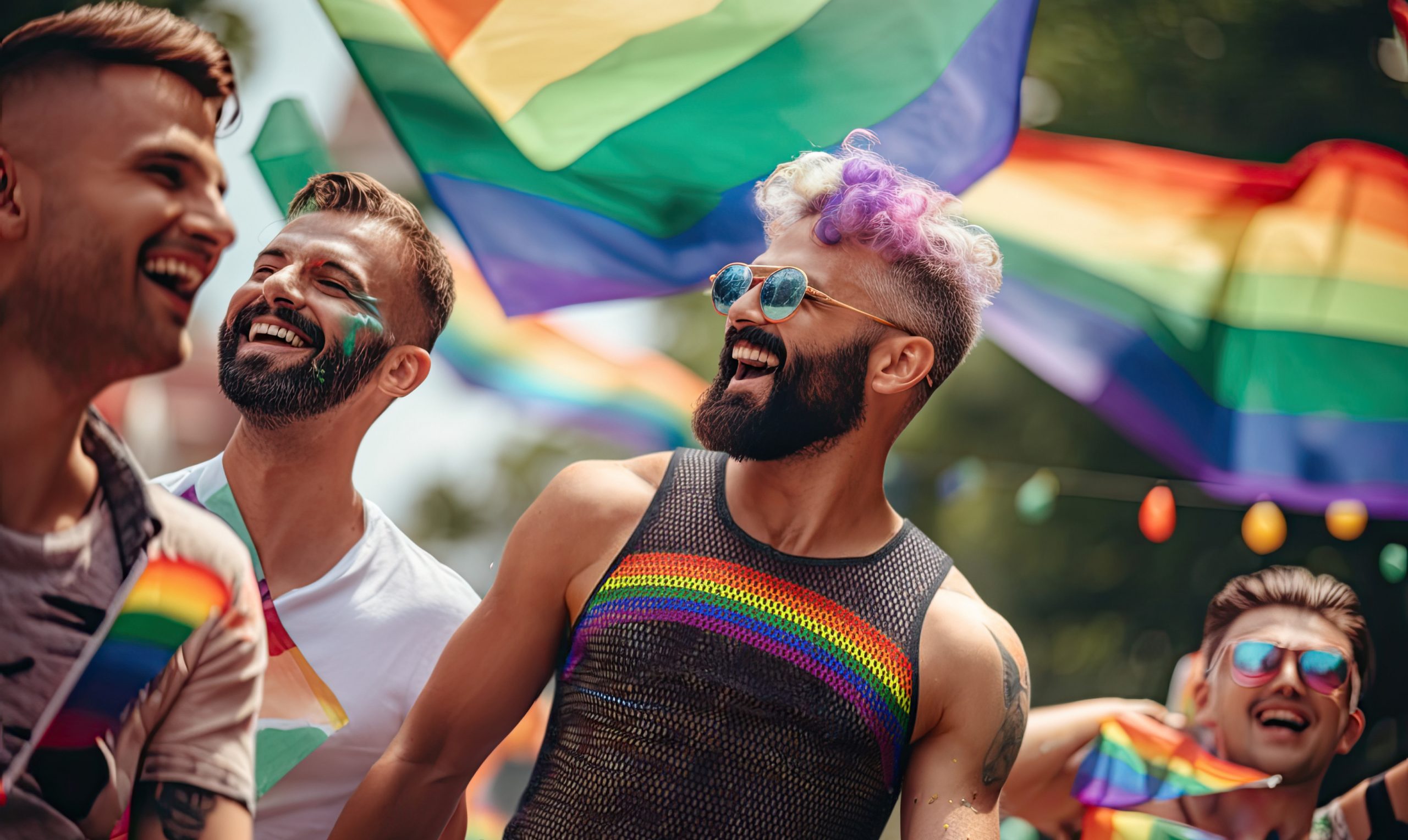
“What should I wear to Pride?” As June approaches, this question is filling search engines, Reddit forums, gay blogs, and TikTok reels. Gay clothes have become such an integral part of Pride Month, so much so that the annual blast of rainbow logos and “Love is Love” campaigns is hard to miss.
This year, LA Pride is anticipating over 100,000 attendees, and 5,000 of those participating are estimated to be marchers. From vendors to celebrities to allies, walking down Hollywood Boulevard means being seen by thousands of bystanders, making it all the more exciting but also stressful. This brings us back to square one: what pride outfits will you be wearing this year?
Gay fashion is a diverse representation of the LGBTQIA+ community itself, complex and intensely personal. Finding pieces that speak the same language requires looking beyond the mainstream, which is why we turned to Differio, a trendy online destination known for challenging the typical, one-size-fits-all menswear mold. From gay clothes to rave outfits to gala statements, the brand offers event-driven men’s clothing styles perfect for year-round parties, dinners, concerts, holidays, and beyond.
Scroll on to discover Differio’s style guide on how to take your pride parade outfits from standard to standout.
Parade Outfit Basics: What to Know Before You March
Any experienced parade-goer will tell you there are a few things to keep in mind before hitting the march. Personal style is important, but never at the expense of comfort. Before you start building your look, keep these tips in mind to make sure your pride outfit works as hard as you do on parade day.
Safety First: Check the parade’s official website for its list of prohibited items, so you know what you can and can’t bring.
Prep Your Feet: The LA Pride march is roughly 1.5 miles, so comfortable shoes are a must. If you’re ordering new shoes, give yourself enough time to buy them in advance so you know they fit properly for parade day.
Weatherproof Your Fit: Choose gay apparel with June’s forecast in mind. Keep yourself cool with summer-friendly items, like hats, bandanas, headbands, sweatbands, sunglasses, and hand fans.
Stay Hands-Free: Bring a small bag to keep essentials on you, like your ID and phone. You can also look for gay clothes with functional details, like cargo pockets and keyrings.
Dress Light: Don’t let heavy items slow you down. Consider lightweight, walking-friendly styles like micro shorts, cotton tops, and activewear leggings.
Top Pride Outfit Ideas for Mainstage Marchers
Marching in the parade? Your outfit might be begging for something more exciting than your average graphic tee. Check out these pride outfit ideas to help you style a look that’s more expressive and elevated this year.
The Unexpected Pride Outfit: Reimagining the Rainbow
Pride outfits might feel incomplete without a rainbow, but don’t feel boxed in by rigid stripes either. You can still rep the iconic pride flag colors with unexpected treatments.
As an alternative to the traditional rainbow, try gay clothes in iridescent or holographic tones for futuristic, multicolored shine. For something softer, look for an ombré rainbow that’ll lend more of a gradient, high-fashion effect. Tie-dye gay clothing is also a great way to play around with rainbow shades while paying tribute to Pride’s beginnings in the late 60s.
The Squad Pride Outfit: Coordinate for Impact
Celebrating with your friends? They say there’s power in numbers, and this definitely applies to gay clothes.
Make the most of your group’s size by dressing as your favorite queer pop culture icons, like The Golden Girls or The Village People. You can rep the pride flag by having each person wear a different color or play off of each person’s unique identity. Don’t forget, you can always enhance the look with face paint, body glitter, and other makeup items for added impact.
The Kinetic Pride Outfit: Find Movement
Ever find yourself drawn to all the streamers and flags at the parade? We’re wired to prioritize moving shapes over static objects (like the way inflatable tube men catch our attention). The same kinetic concept can work with gay outfits.
Simply look for any garment or fabric that naturally sways with the wind or movement. Try gay clothes in airy, loose styles, like fringe pants, tassel earrings, pride capes, or rainbow kilts. You’ll also want to avoid skintight clothing if you want to maximize this motion effect.
The Altitude Pride Outfit: Create Height
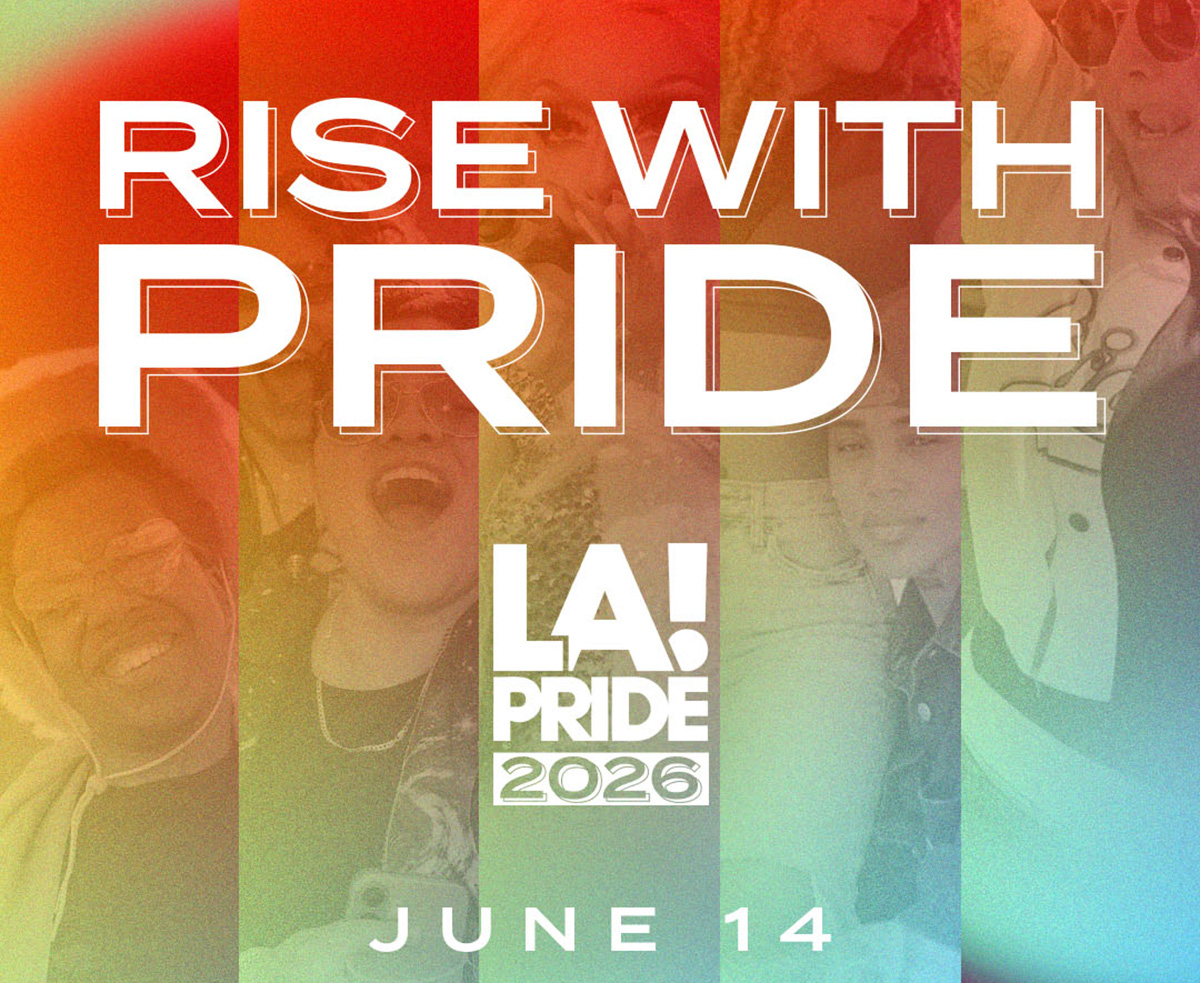
Height is something you might not think about, but it’s a great way for your gay clothes to be seen from all angles, even spectators beyond the barricades. Plus, it’s right in line with LA Pride’s theme this year: Rise with Pride!
Start from the ground up with platform shoes, such as platform boots or chunky sneakers, to add a few inches to your height. You can layer more height with towering headpieces, such as flower crowns, spiked hats, feather headdresses, and similar items.
The Hybrid Pride Outfit: Wear It on Repeat
On a budget? Don’t limit yourself to wearing your gay clothes only once a year. When you dress with intention, pride outfits can be recycled for post-parade events, such as after parties, concerts, raves, pool parties, and much more.
As long as you find pieces that can be worn for more than one occasion, you’re on the right track. For example, harnesses are a win-win because they can be styled as lingerie staples, nightlife tops, or even fashion-forward accessories. You can also look for garments labeled as “2-in-1” or “hybrid” for more styling options.
LA Pride Celebration
LA Pride will “Rise with Pride” for 56th year of celebrating queer resilience
The Blade spoke with Christopher Street West board president Lawrence Carroll to learn about this year’s LA Pride Parade, and the vision it sets for year-round advocacy.
Every June, Hollywood Boulevard is transformed into a portal of queer joy as over 100,000 Angelenos gather for the LA Pride Parade. The county’s streets are adorned with rainbow flags, awash with the vibrancy of its local LGBTQ+ communities. Queer locals band together with friends and allies to march in a proud, unified display of their joy and existence, resisting the disapproval and hostility of the federal administration.
In three months, LA Pride will return for its 56th year of celebrating queer visibility and advocacy. The parade takes place on Sunday, June 14, under the bold theme: “Rise with Pride.” Organized by Christopher Street West (CSW), a nonprofit that created the first-ever sanctioned gay parade in 1970, the LA Pride Parade is Southern California’s most historic and long-standing Pride celebration.
This June, the parade will feature over 130 groups composed of bands, dancers, floats, and special guests who embody the spirit of fearless queer liberation. The parade will also honor three grand marshals: people who have defied repression and discrimination through proud, open advocacy, expression, and community service.
Emmy-winning actor and comedian Jeff Hiller will serve as LA Pride’s celebrity grand marshal, prominent transgender criminal defense attorney and LGBTQ+ rights activist Mia Yamamoto will serve as community grand marshal, and the late and beloved humanitarian Shirley “Ms. Shirley” Raines, who transformed and documented L.A.’s unhoused communities, will be recognized as the legacy grand marshal.
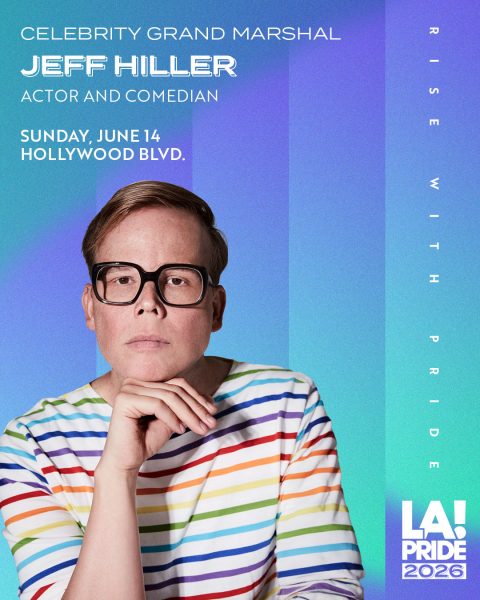
LA Pride mirrors the evolution of queer history, progress, and protest in the county. The festivities culminate on one long-awaited day, but its mission is ever-present. It uplifts joy but also contends with the complicated realities LGBTQ+ Angelenos face. Queer immigrants and transgender community members, especially, face high rates of violence and persecution. CSW board president Lawrence Carroll hopes “Rise with Pride” can affirm and support their well-being.
“For a lot of people right now, especially those in our most vulnerable communities, just existing openly can feel like resistance. This theme is about honoring that and making it clear that they are not alone in it,” Carroll wrote to the Blade.
“At the same time, I want it to feel grounded. Not just something we say, but something people can see in how we move. That means creating accessible spaces, programming that reflects real experiences, and partnerships that actually extend resources into the community,” Carroll continued. “If someone walks away feeling seen, supported, and a little less isolated in their experience, then we’re doing what we’re supposed to do.”
“Rise with Pride” is a guide for how CSW intends to show up: not just in June, but year-round. Carroll explained that the organization is building out “Pride 365” programming that holds community needs at its core. Other events include the upcoming “Trans Self Care Sunday” on Mar. 29, the “Salon Series” conversations, as well as “Pride Makes a Difference,” which emphasizes direct services for LGBTQ+ community members.
Other long-term investments include CSW’s Youth Advisory Board, which will support emerging queer voices and youth perspectives in future Pride celebrations. “The goal is to make sure LA Pride isn’t just a moment people show up to, but something that actually shows up for people throughout the year.”
For more information about LA Pride, visit the organization’s website.
Kristie Song is a California Local News Fellow placed with the Los Angeles Blade. The California Local News Fellowship is a state-funded initiative to support and strengthen local news reporting. Learn more about it at fellowships.journalism.berkeley.edu/cafellows.
Arts & Entertainment
Make Your Voice Heard at WeHo Pride: Join the Women’s Freedom Festival and Dyke March
FREE! FREE! FREE! Come celebrate Pride in West Hollywood with these free events
WeHo Pride is now fully underway with an arts festival happening now, leading up to a weekend-long worth of events celebrating the kick-off of Pride season.
On Friday, May 31, the Women’s Freedom Festival will take over the Celebration Stage, celebrating women’s rights — and wrongs. The event is co-sponsored and produced by the L-Project, featuring emerging and local artists from the LGBTQ and QTBIPOC identities, including activists, musicians, poets and comedians.
The exciting lineup of events features an arts festival that is currently hitting the streets of West Hollywood, the historic Dyke March featuring Dykes on Bikes and Pride Riders L.A. — an organization for queer and lesbian women motorcycle riders — and much, much more.
Katrina Vinson is the founder of Pride Riders L.A., working hard over the last few years to bring much-needed visibility to dykes, women who love women and nonbinary people who identify as sapphics.
Her application to start the first Dykes on Bikes Los Angeles chapter is about more than branding. It’s about connection to a legacy of activism — dating back to the group’s 1976 founding in San Francisco, when leather-clad lesbians led the Pride parade in defiance of the police force and society’s patriarchal norms.
“It’s not just about riding,” Vinson says. “It’s about showing up for each other and reminding the world that we’re still here, still loud, still proud — and still riding.”
Pride Riders LA will feature an all-women and nonbinary people lineup of motorcycle bike riders, revving their engines all up and down West Hollywood. Pride Riders LA will roll in following the Women’s Freedom Festival, creating a transition from stage to street. The call for riders is already underway—with an emphasis on inclusivity and outreach to younger riders, trans and nonbinary folks, and LGBTQ+ bikers of color.
Jackie Steele is a multi-faceted community organizer and longtime activist who has built a reputation in queer and sapphic spaces. She is the Los Angeles District Attorney LGBTQ+ Advisory Board Chair, LA County Sheriff Robert Luna LGBTQ+ Advisory Board Member, and was previously the Public Safety Commissioner for the City of West Hollywood, Co-Chair of the LGBTQ+ Advisory Board of the City of West Hollywood and a self-proclaimed militant queer.
“Chris Baldwin runs the L-project and what they’ve put together is a concert and an event that is a true celebration of intersectional queer identities,” said Jackie Steele. “We worked really hard to work with the city to create a space that was accessible for everybody, where folks can just come out, enjoy the street fair and enjoy themselves.”
This year, they are expecting around 50 bikes to roll through for the Dyke March, so if you’ve never been, this will be a moment to remember, some might even call it a canon event.
“If you’ve never been, Dyke March is a celebration of dykes and what lesbians have done in the community — which is often under-celebrated,” said Steele. “There’s going to be bikes everywhere, engines roaring, a live program on stage and we will be fists in the air, standing together.”
WeHo Pride will take over Santa Monica Blvd., over the weekend. Check the West Hollywood Pride events page to keep up with street closures, parking information and full lineup of performers and events.
Immunology gave HIV survivors the chance to grow old, Proposition 38 is the next step

Common Sense Isn’t Political

‘WOOF’ worthy: Christopher Schellenger shares the unique challenges of playing a dog

Here’s your Palm Springs look at the weekend: Oct 23 – 25, 2026

Latin queer and trans history along the U.S.- Mexico border on display at UC Riverside event

Meet the voice of Palm Springs: an interview with KGAY 103.1’s John Taylor

Fortune Feimster has always taken representation through comedy seriously

EXCLUSIVE: Democrats seek answers on EEOC settlement affecting LGBTQ+ workers

A quick visitor’s guide to Palm Springs before the winter

VIDEO: Interview with executive director of VoteLGBT (Institute for Full Citizenship) in Brazil
-
 Palm Springs5 days ago
Meet the voice of Palm Springs: an interview with KGAY 103.1’s John Taylor
-
 a&e features5 days ago
Fortune Feimster has always taken representation through comedy seriously
-
 Federal Government4 days ago
EXCLUSIVE: Democrats seek answers on EEOC settlement affecting LGBTQ+ workers
-
 Palm Springs5 days ago
A quick visitor’s guide to Palm Springs before the winter
-
 Brazil4 days ago
VIDEO: Interview with executive director of VoteLGBT (Institute for Full Citizenship) in Brazil
-
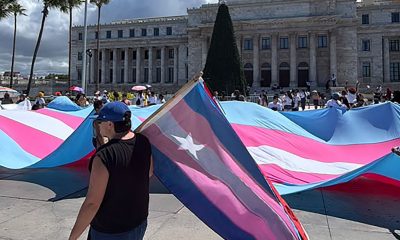
 Puerto Rico4 days ago
Annual National Trans Visibility March takes place in Puerto Rico
-
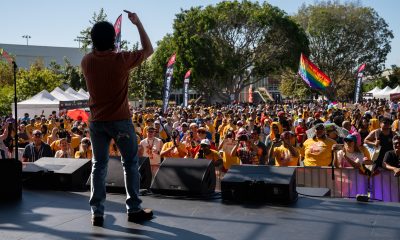
 AIDS and HIV4 days ago
AIDS Walk Los Angeles takes to the streets in West Hollywood while raising money for HIV/AIDS Care
-

 Television5 days ago
New ‘Carrie’ attempts to reinvent a classic for new generation
-
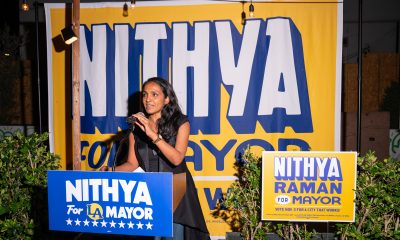
 California3 days ago
Nithya Raman makes her case for LGBTQ voters in the race for LA Mayor
-
 Commentary3 days ago
Those dreadful ballot propositions are important