
Features
Harry Belafonte, ‘King of Calypso’ & LGBTQ+ ally passes at 96
He used his fame and fortune for the public good throughout his extraordinary career. He became a powerful ally for those less fortunate
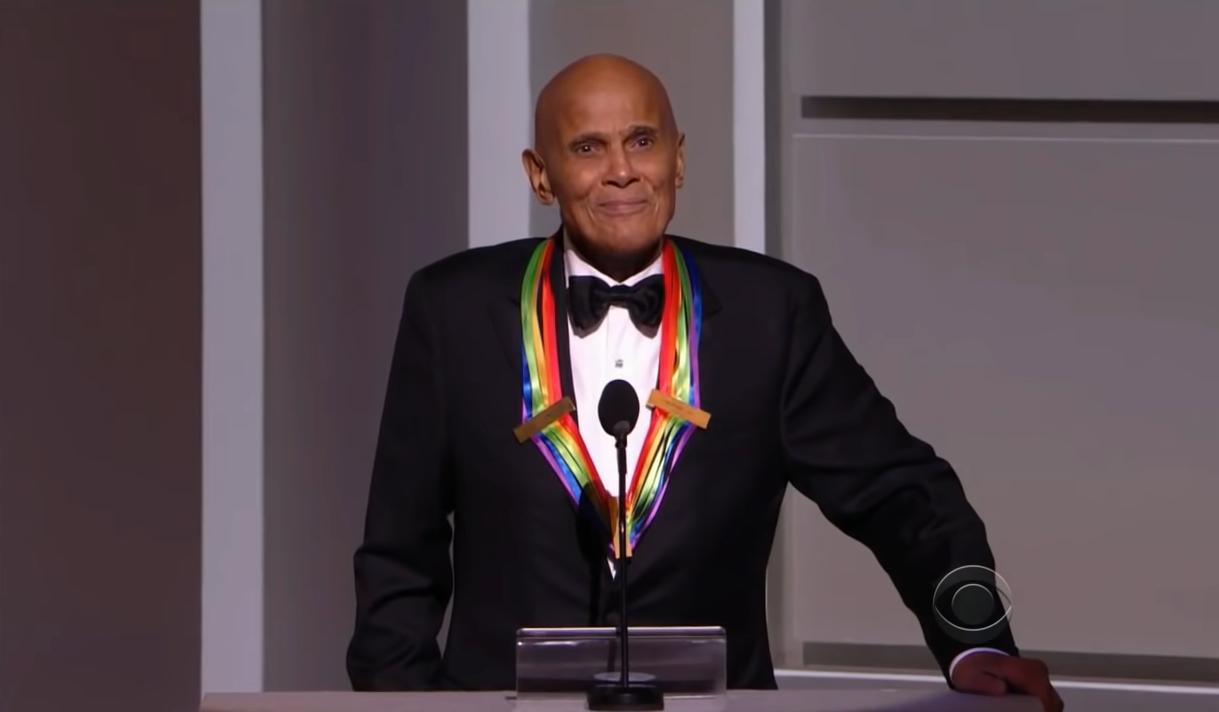
LOS ANGELES – A rainbow banner slung over his right shoulder proudly proclaimed the spry octogenarian a ‘Grand Marshal 2013’ of the New York City LGBT Pride March, joining another vibrant octogenarian, Edith “Edie” Windsor, who was also a ‘Grand Marshal 2013,’ that bright sunny June day.
Between the two of them, the honor was an acknowledgement of a long journey not only for LGBTQ rights, but for Harry Belafonte, the beloved African American actor, singer, humanitarian, and the acknowledged “King of Calypso” especially, an honored recognition of his decades of accomplishments and commitment to the civil rights movement and allyship to the LGBTQ+ community.
Thank you, Mr. B, for all of your years of mentorship, guidance, & lifetime of activism fighting for a better future for all of us. You will be missed by many, but your memory & impact live on. Rest in Power.
— Colin Kaepernick (@Kaepernick7) April 25, 2023
“Movements don't die, because struggle doesn't die.”
-Harry Belafonte pic.twitter.com/bCArTOtCC2
Born March 1, 1927 in New York, Belafonte was the son of Caribbean-born immigrants, and, growing up, he split his time between Harlem and Jamaica. Dropping out of high school in New York City to enlist in the U.S. Navy, he went on to contribute to the war effort from 1944 to 1945.
At the time, the military services were segregated. Belafonte, a Jamaican American, was assigned to Port Chicago, California, 35 miles from San Francisco.
During World War II, Black service members were not normally assigned to frontline fighting units. Rather, they were assigned mostly to supporting specialties. His job was to load military ships bound for the Pacific theater.
Just before Belafonte arrived in Port Chicago, California, a massive explosion took place, involving military ships loaded with ammunition. About 320 people were killed — two-thirds of them Black sailors.
“It was the worst homefront disaster of World War II, but almost no one knows about it or what followed,” he said.
Discharged in 1945, Belafonte returned home to New York City. He used his GI Bill benefits to pay for his acting classes at Erwin Piscator’s The New School Dramatic Workshop, alongside future actors Marlon Brando, Rod Steiger, Walter Matthau, and what was to develop into lifelong friendship, actor Sidney Poitier.
He performed with the American Negro Theater while studying at the Dramatic Workshop. It was a singing role that resulted in a series of cabaret engagements, and eventually, Belafonte even opened his own club. In 1949, he launched his recording career on the Jubilee label, and in 1953, he made his debut at the legendary jazz club, the Village Vanguard.
He also appeared on Broadway in the 1953 “John Murray Anderson’s Almanac,” a performance that won him a Tony Award.
Belafonte’s first widely released single, which became his signature audience participation song in virtually all of his live performances, was “Matilda,” recorded on April 27, 1953.
With a lead role in the film adaptation of Oscar Hammerstein’s Carmen Jones, Belafonte shot to stardom. After signing to the RCA label, he released Mark Twain and Other Folk Favorites, which reached the number three slot on the Billboard charts.
His breakthrough third studio album “Calypso” (RCA Victor-1956) became the first long-playing record in the world to sell over 1 million copies within a year. The album introduced American audiences to calypso music and Belafonte was dubbed the King of Calypso.
Besides calypso, he also recorded blues, folk, gospel, show tunes and American standards from “The Great American Songbook‘ as it is known that included works from George Gershwin, Irving Berlin and Cole Porter.
During the late 1950’s he performed during the so-called Rat Pack-era in Las Vegas. He and pianist Liberace, musician and singer Ray Vasquez, and singer Sammy Davis Jr. were featured at the Sands Hotel and Casino and the Dunes Hotel.
Belafonte also became television’s first African-American producer, and his special “Tonight with Harry Belafonte” won an Emmy award in 1960. It was during this time period that he became proactively engaged in the civil rights movement in the 1950s and 1960s including the1963 Freedom March in Washington, D.C..
Belafonte befriended the leader of the movement, Dr. Martin Luther King Jr., with whom he maintained close ties until King’s assassination in Memphis, Tennessee on April 4, 1968.
When I was a child, #HarryBelafonte showed up for my family in very compassionate ways.
— Be A King (@BerniceKing) April 25, 2023
In fact, he paid for the babysitter for me and my siblings.
Here he is mourning with my mother at the funeral service for my father at Morehouse College.
I won’t forget…Rest well, sir. pic.twitter.com/31OC1Ajc0V
He was also friends with New York Senator Robert F. Kennedy, often spending time with Kennedy during the latter’s run for the U.S. Senate and also during the 1968 presidential campaign, which ended tragically after Kennedy was shot in the kitchen pantry area at the Los Angeles Ambassador Hotel on June 5, 1968. Kennedy died the next day on June 6, 1968, at Good Samaritan Hospital.
Prior to RFK’s assassination, on April 24, 1968, Belafonte interviewed Kennedy while guest hosting for Johnny Carson on the Tonight Show.
During the 1970s and 1980s, Belafonte refocused his efforts toward humanitarian causes, including joining with famed producer Quincy Jones and singer Michael Jackson on the USA for Africa’s “We Are the World,” project on March 7th, 1985. Rolling Stone magazine wryly noted in its article about the recording and humanitarian fundraiser, that the 46 star vocalists who showed up may have formed the ultimate musical supergroup of all time.
First Lady Barbara Bush, standing in for her husband President George Herbert Walker Bush, presented the 12th Annual Kennedy Center Honors to Belafonte, along with his fellow honorees actress Mary Martin, dancer Alexandra Danilova, actress Claudette Colbert and composer William Schuman during a White House East Room ceremony on December 3, 1989.
Two years previously, in 1987, he was appointed as a UNICEF Goodwill Ambassador, replacing Danny Kaye as UNICEF’s Goodwill Ambassador. His appointment as Goodwill Ambassador came 27 years after then President John F. Kennedy appointed Belafonte the first member of the entertainment industry to serve as cultural advisor to the Peace Corps.
In 1994, he received the National Medal of the Arts from President Bill Clinton. He has also been awarded the Ronald McDonald House Charities’ Award of Excellence in recognition of his humanitarian work and the Audrey Hepburn Humanitarian Award for 25 years of service to UNICEF.
In October of 2017 he was awarded the Franklin D. Roosevelt Freedom Medal by the Roosevelt Institute in New York, the citation reading in part:
“In the decades since, you have been involved in campaigns to fight apartheid and bring relief to the world’s poorest. You founded We Are the World, which brought together some of the
greatest talents in music to draw attention to and take on the scourge of famine in Africa. You
have always used your platform to call out injustice and violence and make sure we never
stopped believing that a more just, beautiful world was possible. Your voice—your life—has
been a beacon of hope, comfort, and inspiration to generations.”
Belafonte also served on the board of Americans for the Arts (formerly known as the American Council for the Arts) for many years. He has four children — Shari, Adrienne, Gina and David — and three grandchildren — Rachel, Brian and Maria. He lived with his wife photographer Pamela Frank who he had married in 2008.
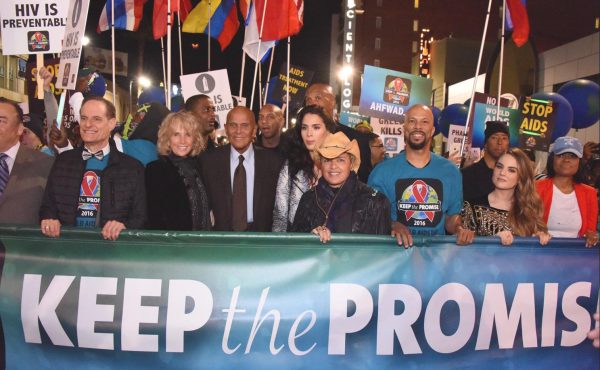
(Photo Courtesy of AHF)
“The world is a little dimmer today in losing such a legendary entertainer as Harry Belafonte but so much richer for having had such a tireless, lifelong humanitarian and activist for so many years. Rest easy, kind sir, after a job well done,” said Michael Weinstein, President of the AIDS Healthcare Foundation.
“Belafonte leveraged his considerable and deserved celebrity for a myriad of causes over his lifetime, including the fight against HIV and AIDS. It was both humbling and a privilege for AHF to thank and honor him in person for his lifetime of activism and compassion.”
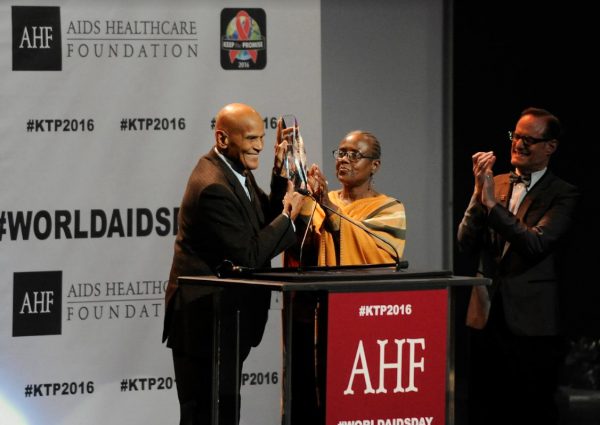
In 2016, AHF honored Belafonte with its Lifetime Achievement Award during its “Keep the Promise” World AIDS Day Concert and March in Hollywood, CA.
Ever the activist, Belafonte, then 89, joined marchers for a brief but poignant portion of the march down Hollywood Boulevard.
The march commemorated the millions who have died of AIDS while also serving as a reminder to the world that of the then 36.7 million people living with AIDS worldwide, only 17 million had access to lifesaving antiretroviral treatment.
Belafonte received the AHF award during the concert that followed at the Dolby Theater featuring Patti LaBelle, Common, and others who also paid tribute to the humanitarian icon.
Harry Belafonte was a barrier-breaking legend who used his platform to lift others up. He lived a good life – transforming the arts while also standing up for civil rights. And he did it all with his signature smile and style. Michelle and I send our love to his wife, kids, and… pic.twitter.com/g77XCr9U5b
— Barack Obama (@BarackObama) April 25, 2023
The White House issued a statement from President Joe Biden on Belafonte’s death:
“Jill and I are saddened by the passing of a groundbreaking American who used his talent, his fame, and his voice to help redeem the soul of our Nation.
Harry Belafonte was born to Caribbean parents in Harlem, New York on March 1, 1927, when segregation was the order of American society. To our Nation’s benefit, Harry never accepted those false narratives and unjust boundaries. He dedicated his entire life to breaking barriers and bridging divides.
As a young man motivated to find his purpose, he became mesmerized by theater when he saw a performance of the American Negro Theater in Manhattan. As one of America’s original breakthrough singers and performers, he would go on to garner a storehouse of firsts—the first Black matinee idol, the first recording artist to sell over a million records, the first Black male Broadway actor to win a Tony award, the first Black producer to win an Emmy award, and one of the highest paid entertainers of his time, among other accolades.
But he used his fame and fortune for the public good throughout his extraordinary career. He became a powerful ally of Dr. Martin Luther King Jr. and other giants of the Civil Rights Movement. He raised money and donated resources to post bail for activists jailed for acts of civil disobedience. He provided the critical funds to launch the Freedom Rides.
He lobbied against apartheid in South Africa, for the release of Nelson Mandela, and was one of the visionaries behind “We Are the World,” an innovative record released to raise millions of dollars to support humanitarian aid in Sudan and Ethiopia. For these and other humanitarian and artistic efforts he was conferred with a Kennedy Center Honor, the National Medal of the Arts, and a Grammy lifetime achievement award.
Harry Belafonte’s accomplishments are legendary and his legacy of outspoken advocacy, compassion, and respect for human dignity will endure. He will be remembered as a great American.
We send our deepest condolences to his family and legions of admirers across the country and the world.”
Harry Belafonte was one of our favorite guest stars on The Muppet Show and a great friend to The Muppets. In his work on and off the stage, he helped us all to see one another clearly and truly turned the world around. We will never forget you, Harry! pic.twitter.com/euMQFDpvJj
— The Muppets (@TheMuppets) April 25, 2023
******************************************************************************************
Additional research and materials from the U.S. Department of Defense, The Kennedy Center Honors, UNICEF, the John F. Kennedy Library, the George Bush Library, the William J. Clinton Library, the George W. Bush Library, the Barack Obama Library, RCA Records, AFI, and The Recording Academy.




Features
LGBTQ+ pioneer Rev. Troy Perry to young people: ‘Don’t be afraid’
From abused runaway teen to global icon, Troy Perry found the courage to shake fear and fight for liberation
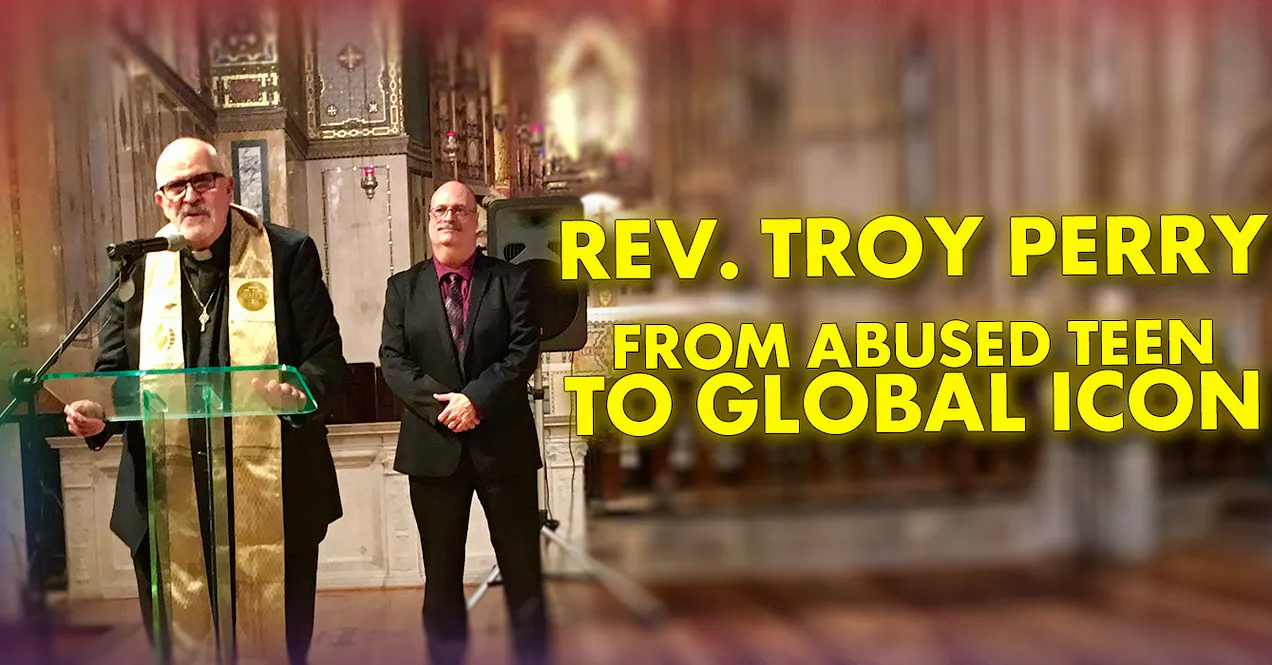
Thursday, Oct. 23. Sixteen days after the 58th anniversary of the founding of the Metropolitan Community Church in Rev. Troy Perry’s living room in Huntington Park, California. Troy’s not feeling well today, but he’s determined to convey to LGBTQ+ folks the importance of using their vote as their voice in a hallowed chorus hollering for freedom, lest we lose it.
Troy is brimming with stories of what it took to get to that historic moment on October 6, 1968, when 12 people responded to his small ad in the new gay newspaper, The Los Angeles Advocate. That first congregation included a Jew with his Gentile lover, a person of color, and a heterosexual couple who came with their gay brother and her gay brother-in-law.
Troy preached that “God loves me, so God has to love all of you, too,” Troy told August Bernadicou of the LGBTQ History Project.
It is a belief Troy hopes LGBTQ+ people – trans people, in particular – will hear at a time when Donald Trump espouses such hate.
I met Troy Perry in the late 1980s at the McCadden Place home of longtime anti-Vietnam War activist Morris Kight. I was interviewing the co-founders of Christopher Street West about the upcoming Pride Parade for Frontiers Magazine. What I got was a Master Class in gay history explaining why the June 28, 1969 Stonewall Riots happened and why it was important to celebrate that burst of gay liberation every year thereafter.
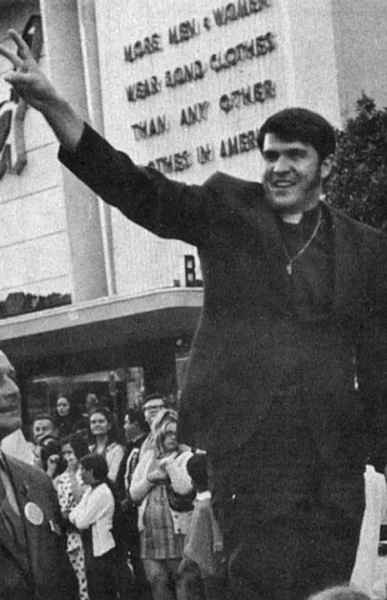
The two gay activists regaled me with stories about founding CSW, the dedicated mission of the Gay Liberation Front/LA, and the horrors regularly faced by gay people at the hands of the Los Angeles Police Department, whose tacit blanket immunity enabled them to violently go after gays and lesbians through bar raids, entrapment, and selective enforcement. Later, we learned the LAPD code for gays was “NHI,” no human involved.
But it was the police murder of Howard Efland that radicalized Rev. Troy Perry.
Just after midnight on March 9, 1969, LAPD vice officers raided the bathhouse-style Dover Hotel at 525 S. Main Street in downtown L.A., looking for “faggots.” Hearing “a loud ruckus” on the second floor, hotel patrons rushed to investigate. They witnessed Efland being kicked and stomped by five LAPD officers.
Efland, a 37-year-old, married, slightly-framed male nurse, was handcuffed as he was being beaten. The officers, who claimed Efland had groped them, arrested him and dragged his naked, bleeding body by his feet down a flight of stairs as he screamed for help. On the street, the officers knee-dropped him onto his stomach and beat him as they dragged him to a police car. Witnesses heard Efland scream from the back seat, “Help me! My God—someone help me!”
The LAPD finally took Efland to LA County Hospital at 1:30 am; he was declared dead 30 minutes later. Police told his parents he died of a heart attack. The coroner later ruled his death an “excusable homicide.”
Ignored by the mainstream press, The Los Angeles Advocate kept Efland’s story on the front page, demanding public accountability. First, Efland’s body couldn’t be found because he was registered at the Dover under a pseudonym. But the pressure forced authorities to finally locate Efland’s mutilated body, which prompted a coroner’s inquest on April 4, 1969 to determine the actual cause of death while in LAPD custody.
All 50 seats in the inquest hearing room were filled by witnesses and those seeking justice for Efland, including Rev. Troy Perry. The seven-man jury heard questions from a City Attorney, who reportedly favored the police. The LAPD contended that one of the officers had “fallen” on Efland, rupturing his spleen, and that the broken bones and cuts were a result of him having fallen out of the squad car.
“There were two eyewitnesses,” Troy said later. “The City Attorney asked the first one, a drag queen wearing female clothes, ‘Are you a homosexual?’ She answered, ‘Yes,’ and the eyes of the jurors closed. They didn’t want to hear any more.”
The jury ruled Efland died from a massive hemorrhage caused by a ruptured pancreas, confirming the coroner’s ruling of “excusable homicide.”
“The only good fag was a dead fag,” Gay Liberation Front/LA co-founder Don Kilhefner later wrote decisively in the LA Progressive about Efland and anti-gay violence before Stonewall.
Troy was furious. “In my church, I had members who would come to me and tell me horror stories that had just happened to them,” Troy recalls. “I said, ‘I have to fight for my rights, and everybody’s around me. I’d rather die fighting than to not fight this battle.’”
Efland’s murder was a lightning bolt, a thunderclap waking up a younger West Coast generation already attuned to the counter-cultural, anti-war, and non-violent social liberation revolutions happening around them.
With his Pentecostal Southern Baptist background, Troy delivered fiery rhetorical sermons about the grievous injustices faced by gay people and went on hunger strikes and led passionate marches, emulating his civil rights hero, Rev. Martin Luther King Jr.
And like King – and later, his friend South African Archbishop Desmond Tutu – Troy Perry also felt spiritually driven to deliver a God-given message of love, compassion, empathy, and outreach to friend and stranger alike.
Larry Turner, a Black gay drag queen, was also killed by police in 1969. His murder did not get the same attention as Efland’s, but Troy cared. “When they murdered him, I went to his church, and they asked me to speak – and I did,” Troy recalls. “I invited his mother and family, and they came to MCC the next week, and I introduced them to our church.”
A year later, on March 9, 1970, Troy asked his new church members to muster up the courage and join him to commemorate Efland’s death. He led 120 marchers to the Dover in DTLA.
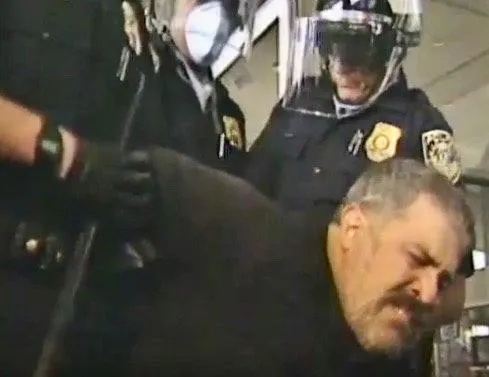
Troy has marched, protested, preached, prayed, and tried to heal dispirited souls – including the darkest days of AIDS, when the LAPD hurt him during a protest.
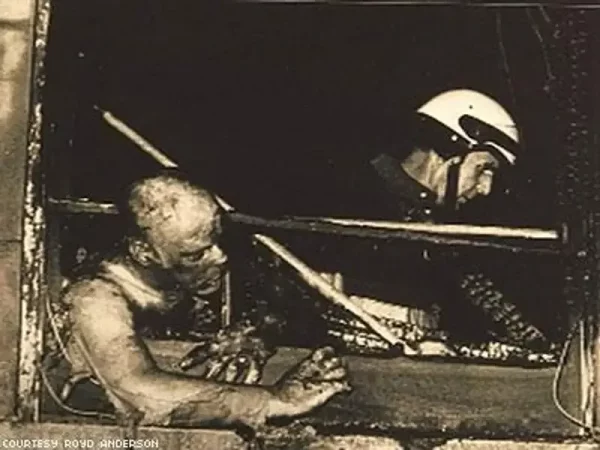
Troy has seen at least 21 MCC churches burned down and desecrated and has lost six pastors to murder. MCC Rev. Bill Larson couldn’t squeeze through the bars and burned to death in full view of onlookers below during the devastating fire on June 24, 1973, at the UpStairs Lounge in New Orleans, where MCC was holding a fundraiser for the local Crippled Children’s Hospital.
32 people died that night, and none of the local politicians, the mayor, or religious and civic leaders would recognize the tragedy and help Troy and Morris find a church to hold funeral services. “One local radio jockey joked, ‘What will they bury the ashes of queers in? Fruit jars,’” The Advocate later reported.
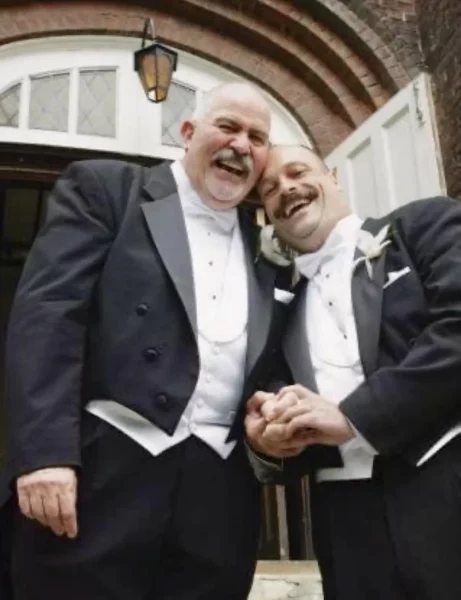
Troy has also been invited to the White House by three presidents; long pushed for and finally helped win full marriage equality with his husband Phillip De Blieck and their friends Robin Tyler and Diane Olson through a lawsuit brought by famed feminist attorney Gloria Allred; and he’s used his initial personal struggles reconciling his deep faith and his sexuality – including a suicide attempt – as a truth buoying his oratory – his voice – to share the gift of God’s love he’s been given.
Now, at age 86, Troy tells me he’s looking back on history and forward, as well, celebrating the MCC Church’s new Steps to Liberation.
Looking back takes a more casual, intimate turn – like two old friends reminiscing over tall glasses of iced tea.
And in telling me about his early life, Troy reveals that after his father died and his mother remarried – the man who lived with his mother detested him so much that he brought another man – supposedly his brother – into their house and had him sleep in Troy’s bed. That man raped the teenage boy that night – after which Troy ran away.
This is only the second time in his long life that Troy has revealed this haunting secret. But he folds it into a gritty story of a young boy making his way, having several women he suspects were lesbian support him and tell him God has a plan for him. He also explains how being drafted into the Vietnam War helped him learn to stand up for himself.
Troy also shares how he met Philip in a leather bar when they were both with other gay dates. But they couldn’t stay apart and eventually went to Canada to marry and returned to the US to fight for legal gay and lesbian marriages in other states and countries to be recognized in California.
Now, Troy says he is focusing on encouraging young people to become activists.
“I want to encourage young people – that’s a big thing with me,” Troy says. “I don’t understand elders who say we have all the answers. Well, we had all the answers back then. But now we’ve got to tell young people, ‘you have to come to terms with what’s happening around you.’
“Look at what’s happening with the trans community! My God! I never thought I would live to see it the way it is. It is so awful when we have a government that tries to tell the trans community, ‘You can’t do this! We’re not gonna let you have medicine! We’re gonna cut you off from Social Security.’ I mean – we had it bad, but the trans community right now, I think, is having it just as bad as I did 58 years ago when I founded Metropolitan Community Church and became involved, really involved, in not only church, but what we called then ‘Gay Liberation.’
“I knew right off the bat when I founded Metropolitan Community Church,” Troy continues, “that we had to get out… We could win this fight if we could just all come out of the closet. We need to let people see us….Young people have to be willing to do that.
“Now, they’re going to do it differently,” Troy says. But “when they go to the demonstrations for No Kings, they need to carry the flags from our community, the people who represent all of us, and try to march together, be creative…and don’t take ‘no’ for an answer.
And “If you have to be the one first, do it and don’t be afraid. Don’t be afraid. Keep those steps going to liberation. Keep those feet moving.”
Rev. Troy Perry still tears up when talking about Howard Efland. He is also thrilled that Liberation is still in the hearts and minds of LGBTQ+ people and our allies. But that is only possible if we speak up, come out, and VOTE for a democracy in which our diverse liberation is a positive community value.
Check out the full conversation with Rev Troy.
This is a cross-post from Karen’s LGBTQ+ Freedom Fighters Substack.
Features
Drag queens go from Send Noodz straight to the polls
Miss Shu Mai and Bibi Discoteca to host Advancing Justice SoCal & Blade voting event
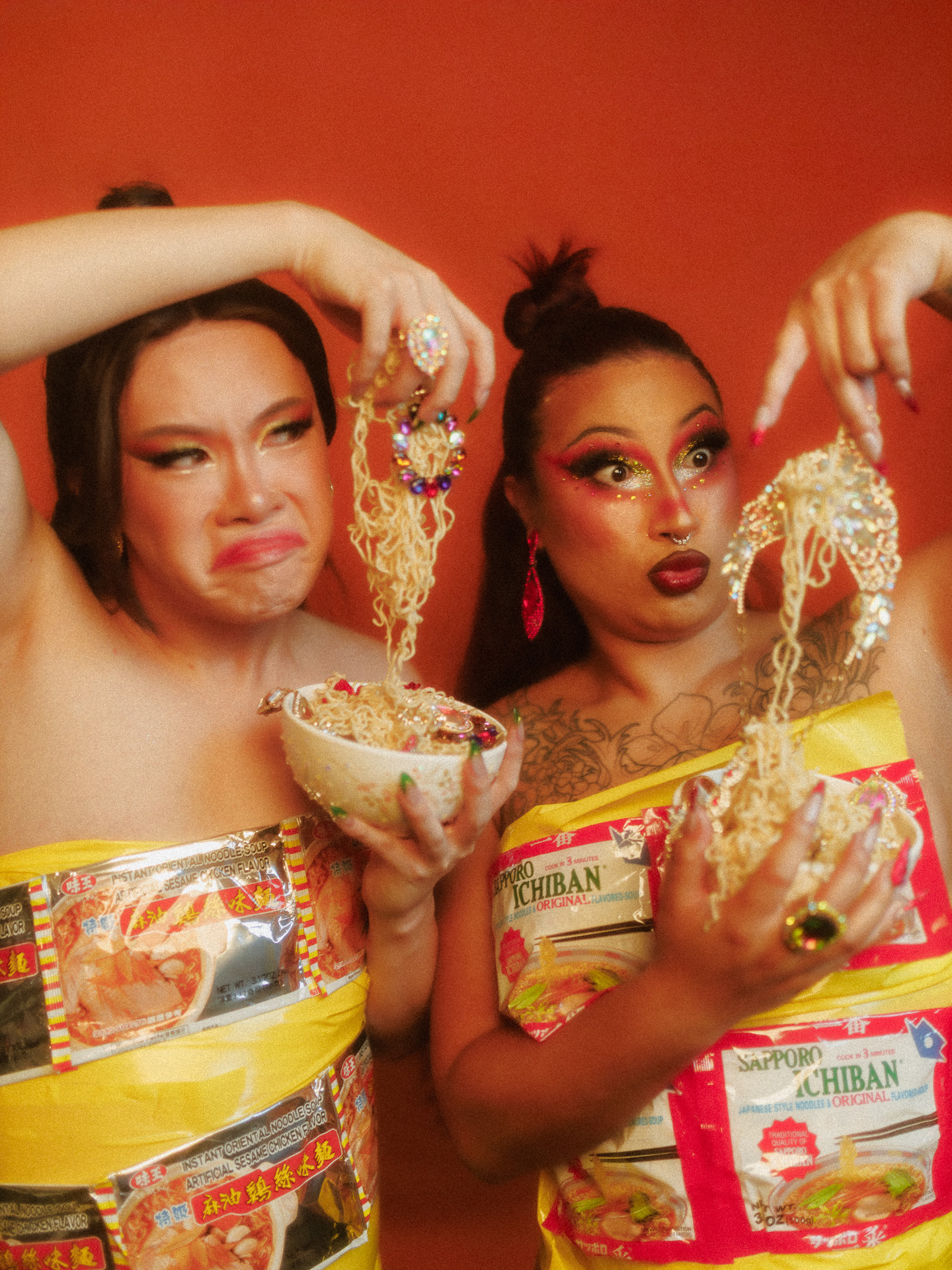
Drag is inherently political. Whether it’s bucking gender norms or a scapegoat to rally conservatives, the art form is a powerful political tool. Donning a heel and a lash is an act of resistance and slowly, but surely, it’s helping bring us to a more intersectional place.
There are drag queens of all races, experiences, and cultural backgrounds, and we are looking beyond gender. Asian drag queens Miss Shu Mai and Bibi Discoteca are lending their star power to host Drag Me To the Polls. In conjunction with Asian Americans Advancing Justice Southern California (AJSOCAL), Center for Asian Americans United for Self-Empowerment (CAUSE), Search to Involve Pilipino Americans (SIPA), Translatin@ Coalition, and the Los Angeles Blade, they’ll be hosting a happy hour voting event.
The event is a chance to help voters understand issues and uplift the voices and votes of the queer, trans Asian Pacific Islander (QTAPI) community and LGBTQ+ community as a whole.
Attendees can bring their vote-by-mail (VBM) ballots and get the skinny on all of the candidates, propositions, and laws on the ballot while having a cocktail at Mattie’s WeHo. The event will include a march to the nearest dropbox to submit their ballots as a show of solidarity.
AJSOCAL is the leading civil rights advocate for the Asian American and Pacific Islander (AAPI) community. Hosts Miss Shu Mai and Bibi Discoteca equally highlight their AAPI identities in drag. They have a popular show, Send Noodz, that highlights AAPI performers.
The two gals caught up with The Blade to chat about drag, politics, and the unique experiences of being queer, AAPI in our current political climate.
What can you tell me about Drag Me to the Polls?
Shu Mai: Drag Me to the Polls is an event put on by Asian Americans Advancing Justice Southern California to bring together our community and inspire civic action through a night of celebration and drag! We are bringing our ballots and marching to the ballot box together to drop them off. Then once we bring the audience back to Mattie’s, we’re giving them a drag show as a post-vote treat!
How did you get involved?
Shu Mai: We are honored that AJSOCAL reached out to us to be part of the event as emcees and performers. As we both have experience working with community-based organizations both professionally and in our drag careers, we are so stoked to get involved and contribute our art in a way that galvanizes voters this election season.
What is one of the most pressing social issues you think is affecting society today?
Shu Mai: There are far too many issues to pick just one, between the mass state violence by ICE terrorizing our communities, unregulated and nonconsensual AI integration everywhere we look, unchecked wealth hoarding by the billionaire class, and the rights of LGBTQ folks constantly under attack by laws/bills. There are too many! The root of it all is capitalism!
What do you think is the most important political issue on the ballot this year?
Shu Mai: We believe Prop 40 is one of the most important issues on the ballot this year as it is one way we can actually properly and fairly tax the wealthy class at a time where those most economically disadvantaged continue to struggle.
What is your message to potential voters out there? To unregistered voters?
Bibi: We all must exercise our right to vote! We acknowledge that progress and change don’t start and end with voting; however, we must use every tool in our tool belt to get closer to where we want to be as a society. Voting shows the power of the collective and passion we all have within us to want better for our communities. Politics and voting affect our lives whether we vote or not, so let’s make sure we are putting in our little 2 cents at least. The “future you” will be proud that the “past you” voted.
What are your thoughts on the current state of drag? How about nightlife? Have you observed any changes?
Bibi: With both of us doing drag over the past 10 years, we have seen the rollercoaster of changes! With every low, there’s a high and vice versa. The drag scene experiences the full spectrum of emotion during any societal phenomenon. We are social commentators in performance.
During turmoil, we punch up, fight back, and still get silly with it somehow. During prosperity, we celebrate one another and keep advocating for more because the most vulnerable of us are still far from what we deserve. There was a moment where drag performers were getting more sustainable booking opportunities, but with the political state, many companies and businesses have reverted back to more conservative views, not wanting to be associated with queerness or drag.
You like celebrating your AAPI identity with drag; how is your experience being LGBTQ and Asian different in drag vs. out of drag?
Shu Mai: For us, drag has been a huge way we have been able to connect with our Asian identities more. For many queer asians, our families and cultures are not the most easily accepting of queerness. Even when coming out, it can feel as though our queerness must be at odds with our culture and traditions. Drag has given us a way to rewrite that narrative and celebrate the intersection of all of our identities on stage!
What do you wish the community at large knew about the AAPI queer experience?
Shu Mai: I think the community at large could learn that we are not all one monolith or stereotype. While yes, certain aspects are commonly celebrated among our community, we are more than just K-pop and boba!
I have to ask, what is the origin of your drag names?
Bibi Discoteca: I thought Bibi sounded cute! And Discoteca means a dance nightclub party in Spanish, and I have a huge connection to the way we use dance as a form of healing. As well as the historical significance of nightclubs as a channel of freedom for our queer community. Whenever someone hears my name, I want to make sure they know we are in for a good time and party.
Miss Shu Mai: I wanted my drag name to be a celebration of my heritage while also sounding like it could just be a feminine name. While I do claim my identity as Taiwanese American, my family’s roots are Cantonese, which is where Dim Sum comes from. I was in rehearsal for one of my first performances with some dancers, and I remember saying, “ I still need to think of a drag name. I kind of want a name like Kim Chi. What if I was Shu Mai?” And the rest is herstory!
Can you tell me about your show Send Noodz?
Shu Mai: We are LA’s longest-running queer and trans API drag extravaganza! We have been running shows regularly since 2019. At the time, we both were often booked at shows where we were either the token Asian or the only person of color. At the same time, the queer AAPI nights that did exist were focused on partying, not performances, and/or were more catered to cis gay men.
We wanted to create a space where performers could share their stories and celebrate their heritage to an audience that would feel seen being at the show, and also inspire audience members to get involved in their own communities and advocate for other marginalized communities as well!
You can check out Drag Me To the Polls Tuesday, October 27, 6 PM – 9 PM at Mattie’s WeHo. You can book your ticket here. You can also find Miss Shu Mai (@Missshumai) and Bibi Discoteca (@bibidiscoteca) on Instagram.
Features
Lu Corporan on designing the darkroom
Inside the nightlife production designer’s work creating darkrooms for L.A.’s queer underground
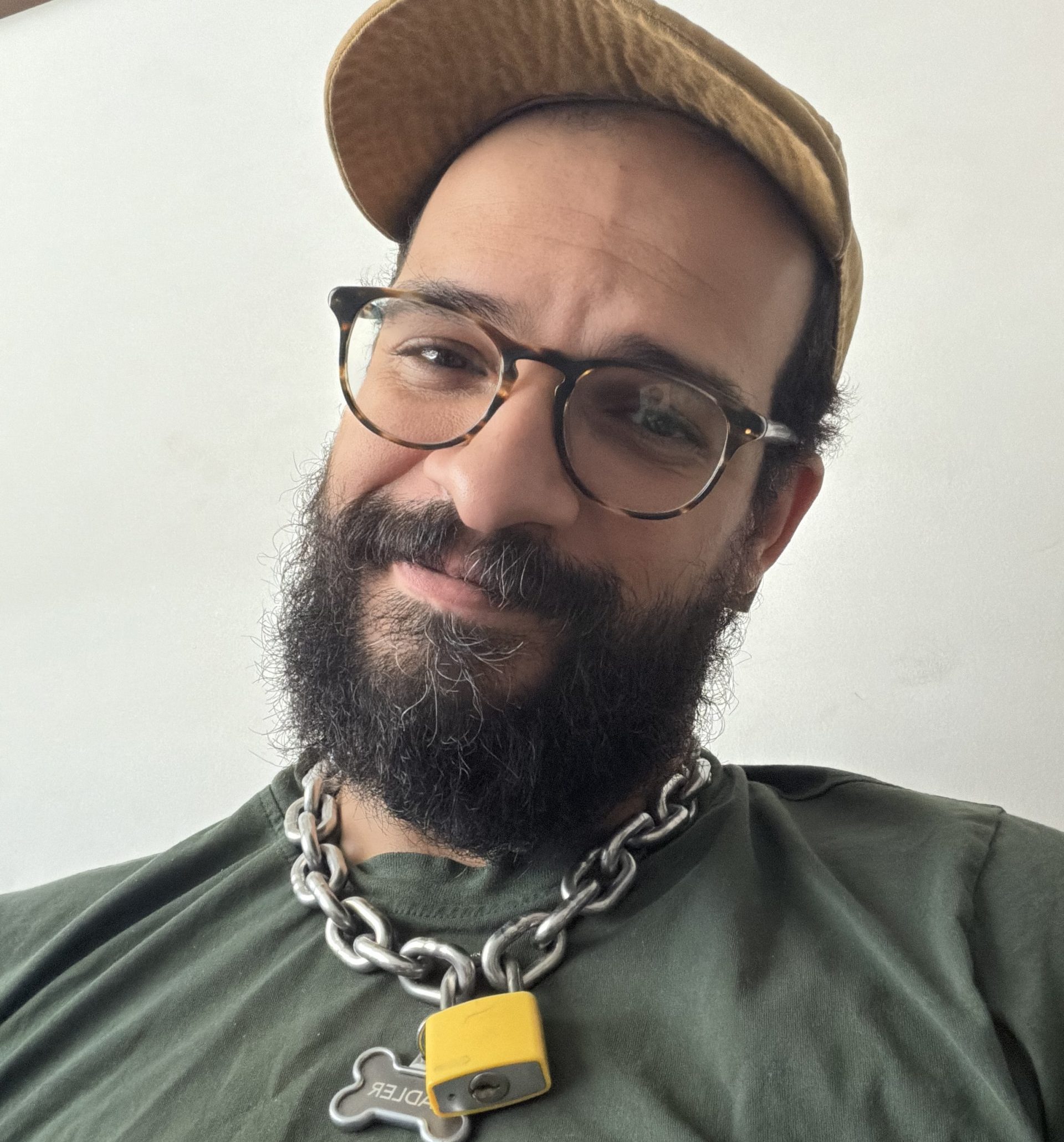
Designing a darkroom is more than hanging black plastic and turning down the lights.
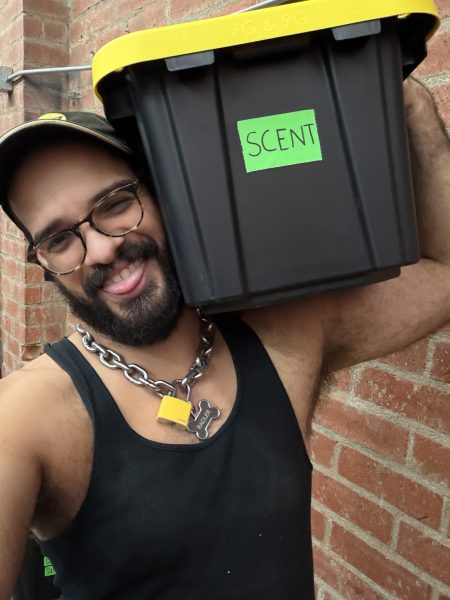
Lu Corporan knows this firsthand. A former college theater technician, he got his start in Los Angeles’ queer underground working with the production team behind Ostbahnhof. He’s since lent his production skills to the darkrooms at parties including Bears In Space x Horse Meat Disco, Por Detroit, Signal Underground and Grotto.
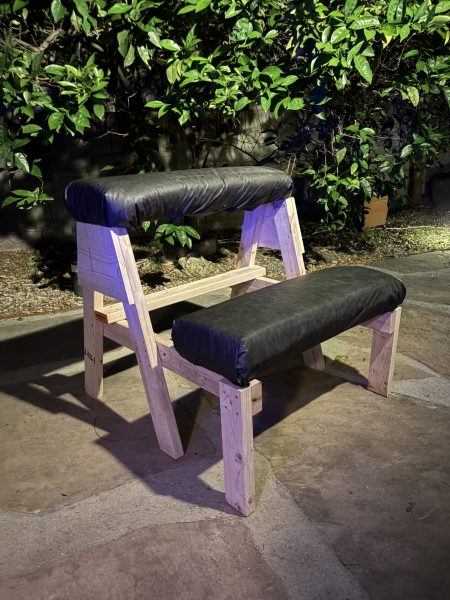
Corporan uses design elements such as lighting and custom centerpieces, including a handmade fuck bench, to transport partygoers somewhere new. He spoke with the Los Angeles Blade about keeping darkrooms fun, leaving his ego out of the design and creating spaces for queer people to cruise and connect.
How did you first get involved in queer nightlife?
I used to be a theater kid, a big techie in college. I was on this team that produced all the student theater on campus. And when I moved to L.A., I started getting more into the parties here and was like, “Hey, I have a particular set of skills.” I got introduced to Brandon Loyd, who used to be the creative lead for Ostbahnhof. They needed extra hands to strike one morning, so I stuck around after the party and helped out. I guess they liked my “go and get ‘em” attitude. They kept hiring me. From there, it started growing. People talk about “the butch queen who can.”
How did you design your first darkroom? Did you seek it out, or did someone approach you?
Somebody definitely approached me. I got my darkroom education working at Ostbahnhof with Brandon Loyd and Cory Fisher, whom I always think of as my party production dads. There’s this darkroom we did for a holiday-adjacent Ostbahnhof. We put all of these Christmas trees in a narrow dead-end hallway we had crafted, filled the hallway with wood chips, and put up a giant printed version of the “No Cruising” signs that are all over Elysian Park. It was just so fun. It reminded me that it doesn’t have to be a “sex is very serious” darkroom. Like, nah, it’s a space for you to go and be somewhere else for a moment.
What does a good darkroom look like on a technical level?
Straight lines. Working with these ratchet straps or all of this dangling black plastic and trying to make it look cute, so it’s not just droopy ugliness. Spray painting stuff well or frosting something and not doing it too heavily. Getting the lights right. Choosing a door in a location that’s accessible. Even just making it visible. People need to know it’s there.
How much can a darkroom’s physical design influence what people do once they enter?
It’s all about the light you choose to put in there. Light is the biggest influencer on whether and how people use it. If it’s too bright, people are not going to want to use it, or they will just turn off your light. Your design is not the most important thing. It is not about your little art gallery, and it is not about your ego. It is about whether or not the girls are going to fuck in here. They have the ultimate say on what works.
Why are third spaces for sex, such as darkrooms, important for queer people?
Having sex with a person is tantamount to having a conversation with them or going on a date with them. Sex is just as important, just as meaningful, just as effective a way of building intimacy. It’s important we have spaces where we can get to know one another that way. Sex has been an important part of our history as queer people. There’s something really beautiful about being able to engage in sex in a third space. Also, it’s hot being in this collective sexual energy. Here’s the thing: if you don’t have a darkroom, the girls are gonna fuck anyway.
What do you hope someone feels when they step out of a darkroom you’ve designed?
I hope people feel satisfied. I hope you had a good time, girl. I hope you came. I’m not making a darkroom because I want you to see my artistic vision. I’m creating a space for you to experience this thing. It’s the way I think about ambient music. It is a setting. It is a backdrop. If you walk out of one of my darkrooms and you’re not thinking about the darkroom itself, I’ve probably succeeded.
This interview has been edited for length and clarity.
Features
Diane Anderson-Minshall’s coming out evolution as a mixed white/Indigenous American, bisexual, lesbian, queer, married to a trans man
Coming out is still an act of political courage
Diane Anderson-Minshall pops on Zoom with a ‘60s Pop Art background that makes everything instantly fun. “I’m trying to do a lot of color in my life to, like, bring up the happiness quotient,” the longtime award-winning LGBTQ+ journalist says, grinning behind her polka-dot glasses.
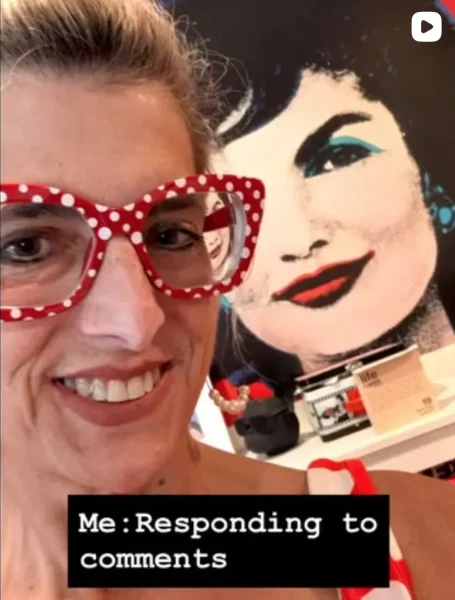
At this moment, Diane embodies the joy she is seeking. She is a Pop Art poster for the First Amendment and Freedom of Expression. She is never too nervous to explore intersectionality, with an eye on authenticity.

During her time at the lesbian publication Curve, Diane told OutNW, “I did a fellowship feature on Native American lesbians, on the reservation and off. I was nervous to write about the subject since I am mixed-race Native American but raised by a white-identifying family. I was still trying to figure out why public records like the Dawes Rolls and private accounts didn’t match up, and I felt very inauthentic and vulnerable as a white-passing Indigenous woman.
“But talking with other Native queer women changed a lot of that, and it was a good experience personally, even if I was talking about how hard it was on all these women in my story. I don’t read it now and think, oh great work of journalism; but the feeling the experience gave me lingers,” she said.
Identity matters. In fact, identity can be a joyful resting space for one’s true, authentic self, or it can be an imposed cage – or a creative temporary description on the way to individual liberation.
Identity can also be dangerous. Even though intersectional LGBTQ+ people are still not considered an official demographic, the Trump administration’s Project 2025 calls for the “cultural wars” total erasure of sexual orientation and gender identity. Stonewall was not just about sexual liberation – it was about the individual’s right to decide who they are or who they want to be at any given time. Without that reality, “individual freedom” is just a pipe dream.
But homosexuality – just like similar discriminatory effects of political, ideological, and biblical training about race, gender, and non-Christian religions – has been inculcated as a “sexual deviation” in society through generations since the McCarthy witch hunts of the 1950s.
In 1952, the American Psychiatric Association (APA) classified homosexuality as a “sociopathic personality disturbance“ in the same category as “transvestism, pedophilia, fetishism, and sexual sadism.” In 1968, the APA expanded “sexual deviation” to a mental disorder.
After Stonewall, gay and lesbian activists disrupted APA meetings, protesting the supposedly “scientific” basis for that diagnosis when existing research by Alfred Kinsey and Evelyn Hooker indicated otherwise – that homosexuality is normal and non-pathological. In 1973, the APA voted to remove homosexuality from its list of mental disorders, substituting instead “Sexual Orientation Disturbance.”
Two years later, the APA issued a statement saying, “Homosexuality per se implies no impairment in judgment, stability, reliability, or general social and vocational capabilities,” and urged civil rights legislation and repeal of all discriminatory legislation.
But America didn’t shift with the APA. Diane Anderson-Minshall’s description of the French Quarter community’s reaction to the devastating fire at the UpStairs Lounge in New Orleans in 1973 is painful.
In her June 24, 2013 story for The Advocate, “Remembering the Worst Mass Killing of LGBT People in U.S. History,” Diane wrote that in “the swelteringly humid last day of gay pride in the South’s most tolerant city,” the gay bar on the second floor was hosting a two-hour beer bust. When that ended, remaining patrons joined members of the Metropolitan Community Church after a sizable MCC service to discuss a fundraiser for the Crippled Children’s Hospital.
Nobody noticed an ejected troublemaker who vowed revenge by burning down the bar.
The downstairs buzzer sounded at 7:52 p.m., and patron Luther Boggs opened the door to hell – the front staircase was engulfed in flames. Bartender Buddy Rasmussen rushed about 20 people out the back exit to the roof, but everyone else was trapped inside. MCC Rev. Bill Larson couldn’t squeeze through the bars and burned to death in full view of onlookers below.
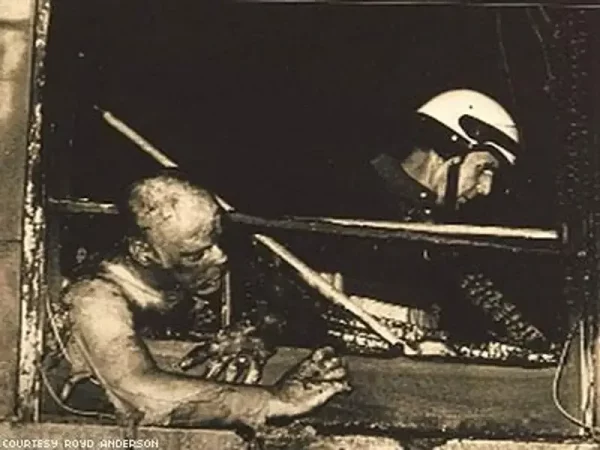
The New York Times finally published the pastor’s obituary in 2019 and cited a Times article published the day after the fire in the “lavish homosexual bar.” Larson “lay like a mannequin” for four hours “in view of the spectators in the narrow street below, his arm resting on the window ledge and his mouth open in what must have been a scream.”
Firefighters “discovered 28 dead bodies piled up in grotesque mounds atop each other at the bathroom door, the fire escape door, and the windows- any place they could have hoped to escape. Four more people would die either en route to or at the hospital. In all, 32 people were killed that day, including two straight people,” Diane reported.
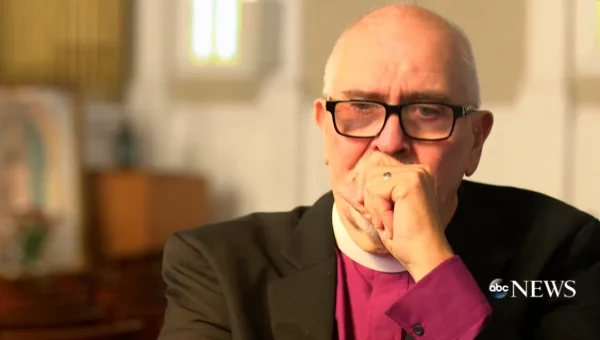
MCC Founder Rev. Troy Perry and his CSW Pride Parade co-founder Morris Kight “searched for a church to hold services for the 32 victims; the LGBT community looked to local politicians, the mayor, religious officials, and civic leaders to at least recognize the tragedy. None did,” Diane reported.
“The early 1970s were dripping with homophobia,” Royd Anderson, filmmaker of the documentary The UpStairs Lounge Fire, told Diane, noting that Louisiana passed a Crime Against Nature statute in 1974, making sexual acts between gay couples illegal.
Media reports were quick or cruel. “One local radio jockey joked, ‘What will they bury the ashes of queers in? Fruit jars.’ The joke was retold countless times around ‘respectable’ offices in the city. The newspapers printed quotes from ordinary citizens riddled with homophobia, including ‘I hope the fire burned their dress off,’ and ‘The Lord had something to do with this,’” Diane wrote.
“Every little detail about the setting stays with me (that the dead were lined up on the sidewalk, nobody claimed some of them, and they went to unmarked paupers’ graves, while churches refused to do their memorial services and some funeral homes refused to do their burials,” Diane wrote in The Advocate, a publication she would eventually run.
And what of the unknown victims – closeted gay men with fake IDs whose families still think they’ve been missing all these years?
Even today, coming out may take an act of courage not to be erased.
Diane Anderson-Minshall says she’s had “a thousand coming outs, because each time there’s some new coming out.”
Born in Southern California in 1968, she was raised in Payette, Idaho, by her grandmother, who was a Democrat. At the time, Diane preferred Republicans because they had all the money.
“I want to go back and apologize to so many old people at this point, because I’m like, oh, I get it now!” Diane says during our interview.
Diane fell in love with print magazines “really, really early,” causing fights between her mother and her stepfather. “We’re Jehovah’s Witnesses,” Diane says, “so I wasn’t supposed to have magazines. But my mom would just park me in front of the magazine section at the grocery store, and I just loved the smell of newsprint.”
When she was 12, she moved in with her grandmother and her aunt in Payette. She tried to volunteer at a local printing press, but they didn’t take girls. The local newspaper did, however, launching her journalism career in newsrooms full of men.
Diane came out in the mid-80s when friends were dying of AIDS. “We had to navigate a lot,” she says. “It took two years to come out. That was two closeted years in which my girlfriend and I went on double dates with men.”
That led to fights. “We didn’t like the word ‘lesbian.’ It didn’t feel like us…women who didn’t shave, crunchy girls…I thought that you had to be butch…. I hadn’t met any femmes yet, and so I think we, at that point, were like, oh, we’re just two girls who fell in love.”
Diane, her girlfriend, and her best friend moved to New York City, joined ACT UP, and became a family. She was worried that coming out would impact her budding journalism career – until she wasn’t worried.
“So many friends were dying, and I discovered LGBTQ media at the same time and was like, fuck that. I don’t need the New York Times. Like, I literally had a job interview at the New York Times, and they told me, we’re okay with you being gay, but you just can’t be out.”
The family moved to Los Angeles and joined ACT UP LA, Women’s ACT UP LA, and Queer Nation. In the late ‘80s, she was freelancing for everyone before segueing into being an editor-in-chief and, much later, a CEO.
“You’re trying to put out news in a world where you’re still hated, where the president won’t recognize what you’re going through, and you’re fighting just to have your occupations and your colleagues are dying one at a time in front of you,” Diane recalls.
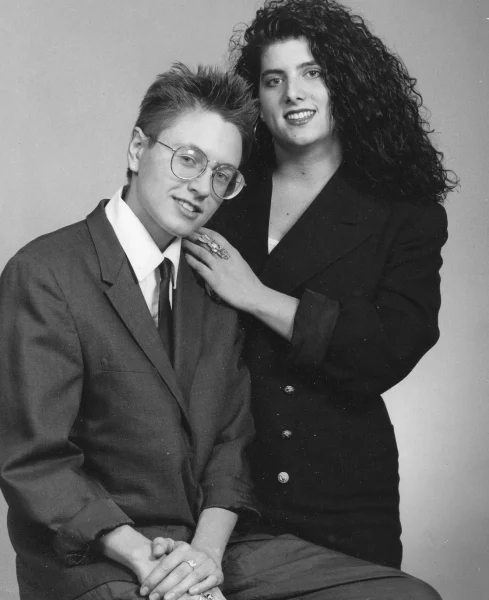
“Jacob and I met when we were both little baby dykes,” Diane says. “After I came out, I cut all my hair off.… I tried to be butch for a hot minute, and then I was in the process of refemining when we met.”
Jacob – who was still female-identified in public – moved in with Diane, her now ex-“wife,” and her best friend. “That was quite a fun ride.”
The couple then engaged in a series of domestic partnerships in different locales, including West Hollywood, and participated with other same sex couples in a virtual marriage ceremony officiated by San Francisco Mayor Willie Brown. They officially wed again after Prop 8 passed, only to have that marriage invalidated.
“The last time we married, after we’d been together 16 years as a lesbian couple, Jake came out as transgender, transitioned, and this time we could legally marry as a husband and wife,” Diane says.
While Diane focused on her career, Jacob focused on finding himself. The couple had already identified as Butch and Femme, but now, at 21, they were living out of a VW bus with their dogs and cats in San Francisco. Diane had a job in the Castro at On Our Backs and, knowing only one trans man, they struggled with not being inadvertently transphobic.
“We both essentially identified as queer,” Diane says.
Diane grew impatient with Jacob’s impending transition. Finally, “I was like, ‘Hey, if this is happening, I need it to happen. I can’t stay in this middle space.” They started having long conversations, “because that’s what lesbians do.”
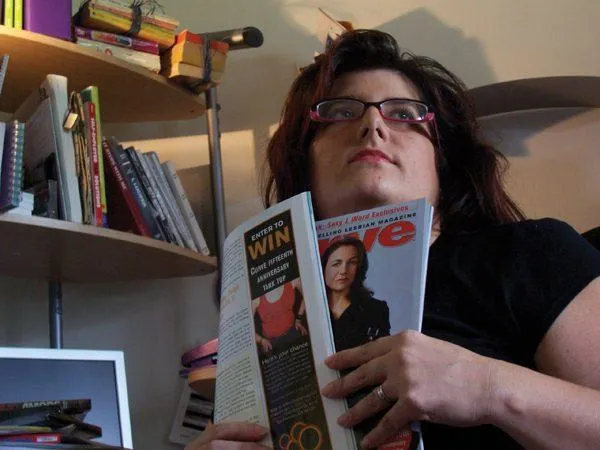
They worried about their jobs. By then, Diane was editing Curve magazine, and Jacob, who had co-founded Girlfriends magazine with her, was now a park ranger – plus they had a three-book deal with a publisher. But they found acceptance.
Perhaps their biggest adjustment was within themselves. “When we got together,” Diane says, Jacob “was practically a lesbian separatist, so he had to reconcile a lot more things in his head than I had to.”
For her part, “I was certainly not a gold star lesbian,” Diane says. “Most lesbians have been with a man at some point.”
But there was a struggle. A month after Jacob came out, Diane peppered him with all her anxieties. While shopping for new clothes, she’d point out men and say, “Not that, not that.”
“He got just so fed up one day, and he was like, ‘Oh, for God’s sake, then who can I be?’” she recalls. “I was trying to think of the most metrosexual man in my mind, so I said, ‘Ryan Seacrest.’ And he goes, ‘Okay, I can do that.’
“So we literally bought clothes from Ryan Seacrest’s own fashion label and the other clothes that looked like Ryan Seacrest would wear,” she says. “Until he found out who he was, it was this gap moment where I was like, ‘That would not be too much for me.’”
They were anxious – until they weren’t.
“I was at the grocery store, and the woman clerk said, ‘Oh, I love your blouse.’ And I said, ‘Thank you. It was a gift from my husband. Well, he used to be my wife. He’s transgender. But I’m a lesbian.’ And then she was like, ‘Okay.’”
But that triggered another wave of identification analysis.
“If I still identified as lesbian, then I didn’t respect Jacob as a man. I wasn’t seeing him as an actual man.”
Jacob wanted Diane to identify however she wanted. Diane asked why his transition would change her identity. “My identity is my core identity.”
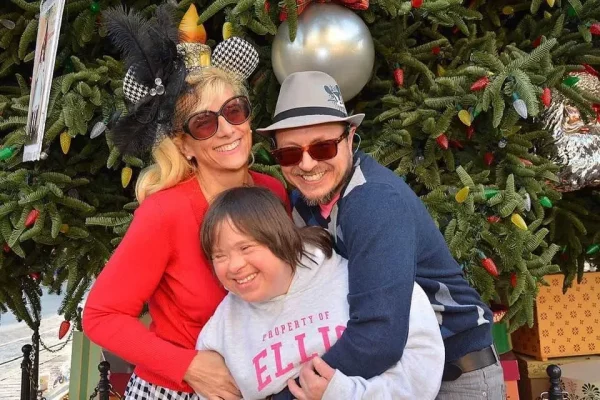
Finally, they stopped platforming people who were “selling us the story that this requires a breakup, especially when you’ve been married so long. I mean, we’re 35 years in, so I don’t think I have to justify anything anymore.”
Now, Diane comes out saying, “Well, you can choose. I’m either a lesbian identified bisexual or a bisexual-identified lesbian, or I’m queer.”
And Diane Anderson-Minshall also still identifies as a white-passing mixed-Indigenous woman — brave and personally free enough to be who she wants to be.
Please check out our full conversation in which we discuss LGBTQ+ media, Diane and Jacob’s acceptance of one another, and more.
This is a cross-post from Karen’s LGBTQ+ Freedom Fighters Substack.
Features
Carolyn Weathers: From mild-mannered to kick-ass lesbian activist in the L.A. gay liberation front
Weathers also gave voice to other LGBTQ+ people as a publisher and librarian
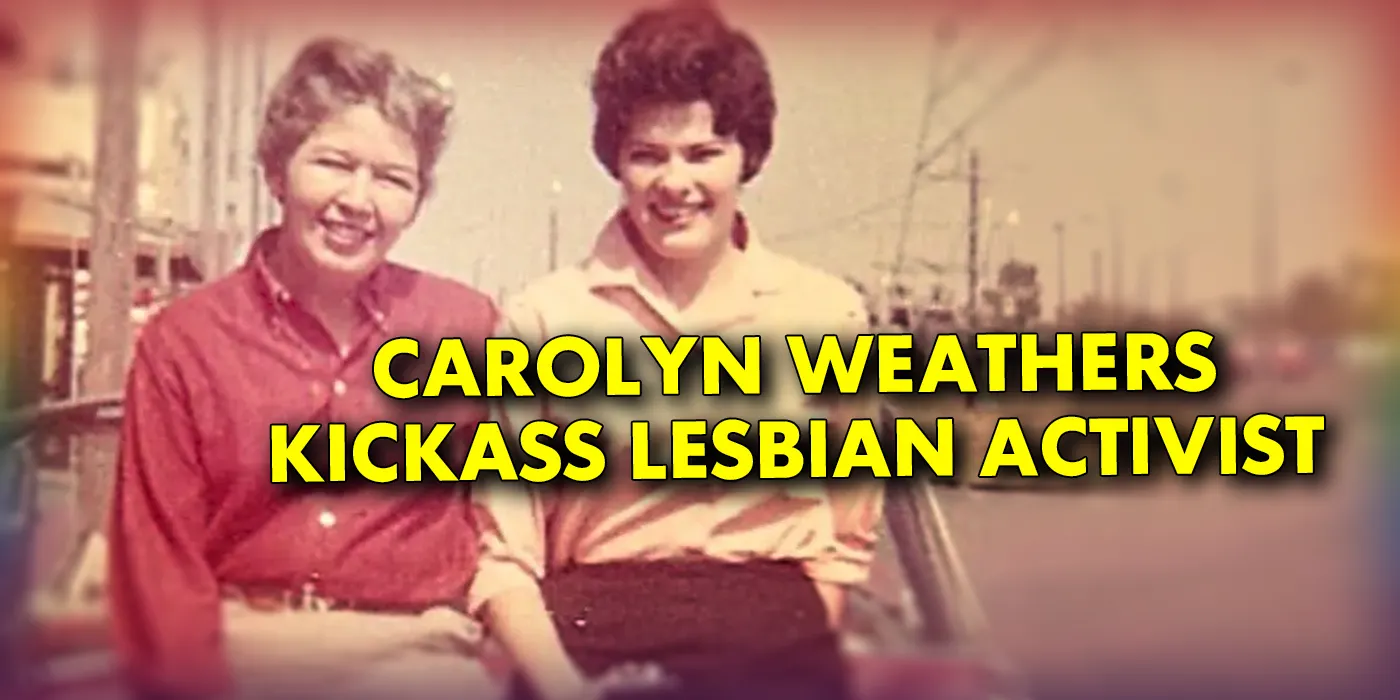
Renowned LGBTQ+ rights advocate Carolyn Weathers is known for many things—perhaps most famously for, as a member of the Gay Liberation Front, disrupting a 1970 American Psychiatric Association meeting to protest the APA’s view that homosexuality was a mental illness.
She’ll talk about that action Friday night, Oct. 9, in West Hollywood as part of the Circa: Queer Histories Festival, presented by the One Institute.
But the event that set her on the activist path came more than a decade earlier.
It was 1957, and Carolyn’s older sister, Brenda, age 20, was expelled from Texas Woman’s University for “moral turpitude,” that is, being a lesbian. Brenda was handcuffed and jailed. She was told she could return to the university if she repudiated her lesbianism, but she refused.
“That was what helped set me off; how courageous it was to do that!” Carolyn told LGBTQ+ Freedom Fighters.
Brenda moved to California a few years later and became a prominent activist. “And she said, ‘Carolyn, you need to come out to California. You don’t belong in Texas,’” Carolyn recalled.
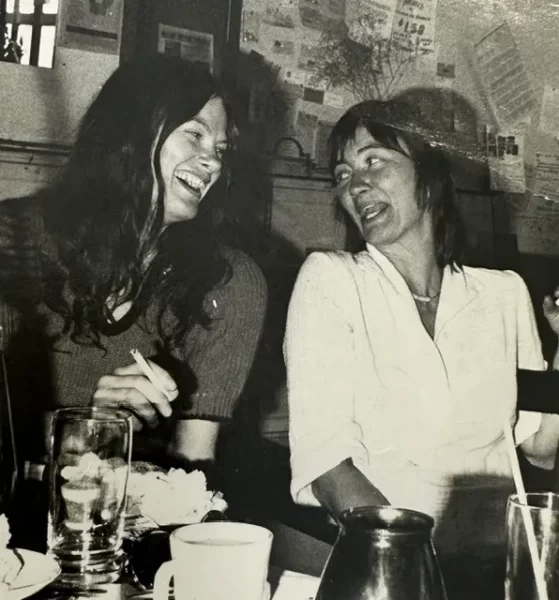
“And the burgeoning counterculture was going on,” she continued. “It was wonderful to come out here and take part in all this. It was all around, you know. It started with the great civil rights movement, and then all the others began to start: feminism, farm workers, all of it, and then the gay and lesbian movement. To be thrown into this, it just kind of sparked what was inside me and what I’d grown up with.”
The Weathers sisters grew up all over Texas and spent time in a few other states during their father’s service in World War II. In civilian life, their father was a Southern Baptist minister—but don’t jump to any conclusions about that, Carolyn Weathers warned.
Her father and mother “were very, very progressive,” she noted. “They always taught us to stand up for our principles, and they supported us always when they found out we were lesbian.” Carolyn and Brenda were their only offspring.
“We always wished we had had another sibling—sister, brother, didn’t matter—who was heterosexual and settled down in the suburbs and had grandchildren,” Carolyn said. “Our parents deserved that. We always wished there had been, but no, it was just us, and we were both lesbian, and both became activists.”
In 1970, Brenda and her then-partner, Sharon Lilly, joined the Los Angeles Gay Liberation Front (GLF). Carolyn went to a meeting, but she said, “I was this little airy-fairy type,” and the other members found her naïve.
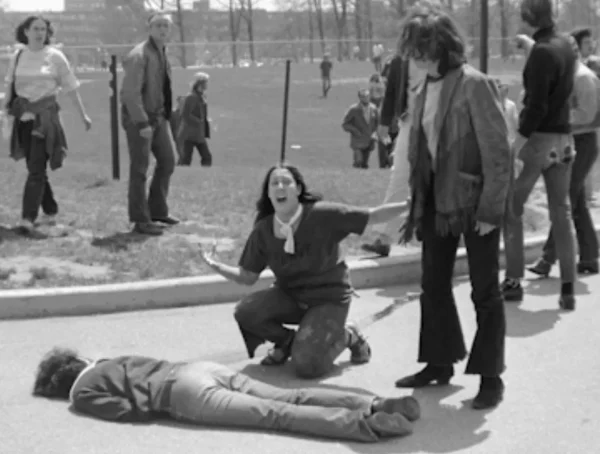
But in May of that year came the shootings at Kent State University in Ohio, in which the National Guard fired at students protesting the U.S. invasion of Cambodia, an action that widened the Vietnam War. Four protesters were killed and nine wounded. That was another “a-ha moment” in Carolyn’s activist life.
“I went back to GLF, and that did it. That just really did it. Kent State,” she said.
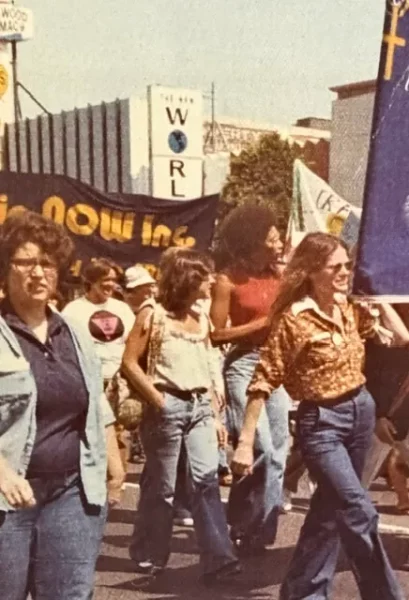
Carolyn went to L.A.’s first Christopher Street West Pride parade in June of 1970, and in October she became the first out lesbian to appear on a Los Angeles talk show, joining Morris Kight—a gay man and another legendary activist—on a program hosted by Regis Philbin.
Shortly thereafter came the first-ever action challenging the American Psychiatric Association during the group’s annual convention at downtown L.A.’s luxurious Biltmore Hotel. The action was later dubbed “the Biltmore invasion.”
GLF members heard that psychiatrist Philip Feldman would give a presentation showing how he could “cure” homosexuality with electroshock therapy.
They knew they had to take action. About 30 of them entered the ballroom where the meeting was being held, just a few at a time, and dispersed themselves among the psychiatrists. Feldman started showing a film in which a shock would be delivered to a gay man viewing a picture of a man or a lesbian viewing a picture of a woman.
“We’re not talking little buzzes,” Carolyn remembered. “This was true, big electric shocks. So one of our members stood up and said, ‘Are we going to stand for this shit?’ And we all stood up and said, ‘Hell, no!’
“So we ran up to the stage and took over the stage. There were like three lines of us, and Dr. Feldman didn’t know what to think, and he did not want to leave the podium and give up the mic.”
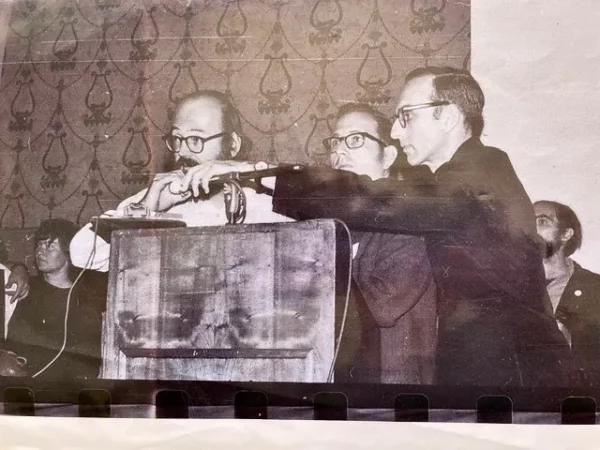
GLF’s Don Kilhefner eventually got control of the mic, and he and the other members made Feldman sit on a chair at the end of the stage. The activists said it was their turn to speak, and the psychiatrists would have to listen.
“The tension was enormous,” Carolyn recalled.
The psychiatrists started yelling, and the GLF members responded by stomping their feet. That finally got the yelling to stop.
“So we kind of did a successful, I guess, behavior modification on them,” Carolyn said. “They had to listen now. So we told them what we wanted was for them to meet with us in a dialogue.”
The GLF activists came off the stage and met with the psychiatrists in small groups.
“This was the first such dialogue that had taken place within these two groups,” she said. “We had not expected such a rapid reaction and such a good one. By the end of this dialogue, they had warmed up. One psychiatrist said to me, ‘You know, I’ve never seen a happy homosexual before.’ It was just amazing!”
Many gay and lesbian psychiatrists came out after that, and the APA began to work with the gays and lesbians in their group.
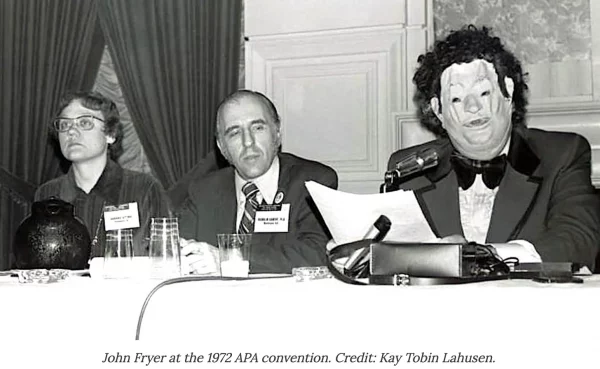
In 1971, Frank Kameny and Barbara Gittings confronted APA members at that year’s convention, and in 1972 they received permission to hold a panel at the convention—along with gay psychiatrist John Fryer, his face hidden by a mask. Then in 1973, the APA decided to no longer classify homosexuality as a mental illness.
“Three years [after the Biltmore invasion], it was a tremendous thing,” Carolyn said. “Had no idea it would have such a positive effect, and it did. It was amazing. Three years later. And the APA, as far as I know, is the only national organization that made a public apology to our community.”
More than 40 years later, in 2015, the Los Angeles city government presented a Heritage Award to Carolyn for her work on behalf of the LGBTQ+ community.
“I lived in Long Beach by now, and I decided I didn’t want to drive back to Long Beach,” she said. “I decided I would stay at the Biltmore Hotel that night, and I did. Nice. It was amazing. The irony, the irony. Here I was, this nicely dressed older woman, and before I’d been this lesbian hippie activist, taking over a meeting, a convention, and now I’m this paying guest, dinner on silver platters, having gin martinis, Art Deco bar. It was just that delicious irony. It’s like it had come full circle. It was just stunning.”
But much happened in the years in between. In 1985, Carolyn and partner Jenny Wrenn, an artist, founded Clothespin Fever Press, a small lesbian publishing company in L.A.
“The publishing world had blossomed for small presses,” Carolyn recalled. “Wonderful. We got to be in on the heyday of the independent bookstore and the small press publisher. Gay, lesbian, lesbians of color presses.”
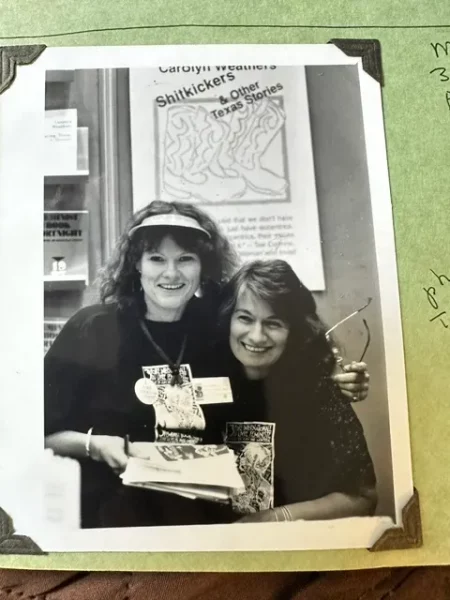
Carolyn had written a short memoir, Leaving Texas, and it had been accepted by another company for publication in an anthology. But the women who ran that company were fighting over which writers to include—the best or the best-known—so they didn’t publish Carolyn’s memoir. [A used paperback version now sells for $174.93 on Amazon.]
“Jenny saw the manuscript,” Carolyn remembered. “She said, ‘I can’t believe this hasn’t been published. I’m going to publish it.” Wrenn printed and illustrated 100 copies, and Clothespin Fever Press was born. The press went on to publish Wrenn and other authors, and the founders “got to join this wonderful small press community.”
Carolyn also inaugurated the Lesbian Writers Series with series founder Ann Bradley at A Different Light Books in Silver Lake with a reading from Leaving Texas.
The small press heyday didn’t last; an economic downturn and the rise of digital publishing were among the causes. A major distributor of small presses’ books went out of business, and presses did, as well. Clothespin Fever Press closed in 1996.
But, as with “the Biltmore invasion,” there’s an epilogue.
About 10 years ago, Carolyn went by the building where she and Wrenn lived and ran their company in a loft above businesses in L.A.’s Highland Park neighborhood. She went into one of the businesses there now—a hearing aid company—and asked if she could have a look at her former home and workspace.
The workers asked, “Are you one of those women?” “Yes,” she recalled saying. “This whole mythos had been created. These people didn’t know us, but that this community of women and lesbian artists had lived there and worked there. It was sweet, very sweet.”
She and Wrenn also worked as librarians, Carolyn for the L.A. city library system, Wrenn for L.A. County. Carolyn refers to them as “lesbrarians.”
Library District photo cap for 2025: “National Pride Month honors the 1969 Stonewall Uprising in Manhattan and supports LGBTQIA+ communities across the country….You will also find staff-recommended LGBTQIA+ titles to check out from our collection, plus educational online resources, opens a new window that you can access 24/7 on TheLibraryDistrict.org using your library card! If you don’t have your FREE library card yet, it only takes a minute to #GetCarded on our website, opens a new window. You will get instant access to a world of discovery that will help you learn more about National Pride Month.”
“As a lesbian librarian, I would work as a liaison between the LGBT community and the library and staffing programs,” she said. “I set up the first LGBTQ reading at the L.A. Central Library, and they’ve continued that kind of activity.” She and Wrenn both advocated for LGBTQ+ books to be included in library collections.
Carolyn retired from the library system in 2010, but five years later, she was named “Grand Lesbrarian” in the L.A. Pride parade, and she marched with the library contingent, wearing a glittery sash.
“People think librarians are such fuddy-duddies,” she said. “They’ve got that wrong.” Along the parade route, “I would shush the crowd, and it was hilarious,” she noted.
She and Wrenn are no longer a couple but are close friends.
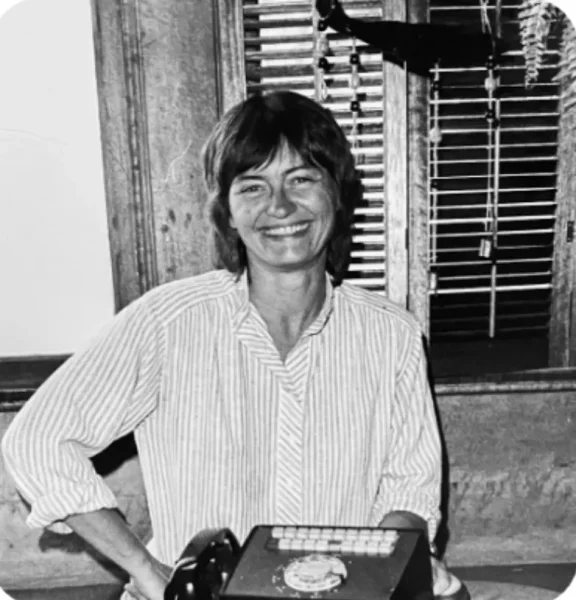
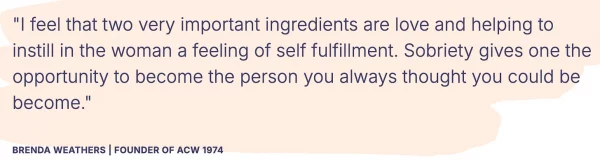
Brenda Weathers died in 2005 after having a storied career herself. She founded the Alcoholism Center for Women in Los Angeles in 1974 and was its first executive director; it was believed to be the first such center in the nation that primarily served lesbians. She later ran recovery programs in San Francisco and Seattle, then animal rights groups, and at the time of her death, her most recent post was executive director of Long Beach–based WomenShelter, which housed survivors of abuse.
In 2012, the West Hollywood City Council awarded Carolyn and Brenda (posthumously) the Rainbow Key for their activism. “That’s not bad for a 20-year-old handcuffed in a Texas jail,” Carolyn said of her sister’s accomplishments. “She did OK.”
Today, the LGBTQ+ community’s progress is under threat from right-wing politicians and activists, with transgender people particularly targeted.
“It’s just hideous,” Carolyn said. “Who knew? And God, I just never thought we’d go backwards on abortion. All of that. We have to be really careful now.”
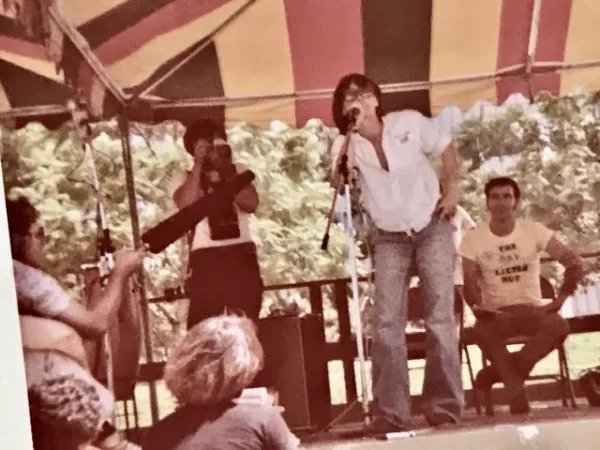
But Carolyn Weathers still believes in the power of activism.
“A lot of times, younger people come up to me, and they thank me, saying they’re standing on my shoulders. I thank them and say, someday when you’re older, somebody who’s younger, maybe not even born yet, is going to come up and thank you because they’re standing on your shoulders,” she said.
“I’m standing on somebody else’s [shoulders], and we really have to do that now because there’s such pushback. We have to push back. And I want them to know that I’m holding them close. But if we keep building shoulder upon shoulder, we can fight back.”
Carolyn will be in conversation with Sara Angevine, associate professor of political science at Whittier College, from 7 to 8:30 p.m. on Oct. 9 at One Gallery in West Hollywood. Tickets are available here.
The Circa series will continue through Oct. 31. Events include a screening of Sally!, a film about activist Sally Gearhart; a Zoom presentation chronicling the uprising against police harassment at Cooper Do-nuts in 1959; events highlighting Black, trans, Asian, Jewish, and other communities; and the series culminates with a Halloween screening of The Rocky Horror Picture Show with a shadow cast performing onstage. Find the full schedule here.
Karen Ocamb contributed to this report.
This is a cross-post from Karen’s LGBTQ+ Freedom Fighters Substack.
Features
The survivors we don’t talk about: October is Domestic Violence Awareness Month
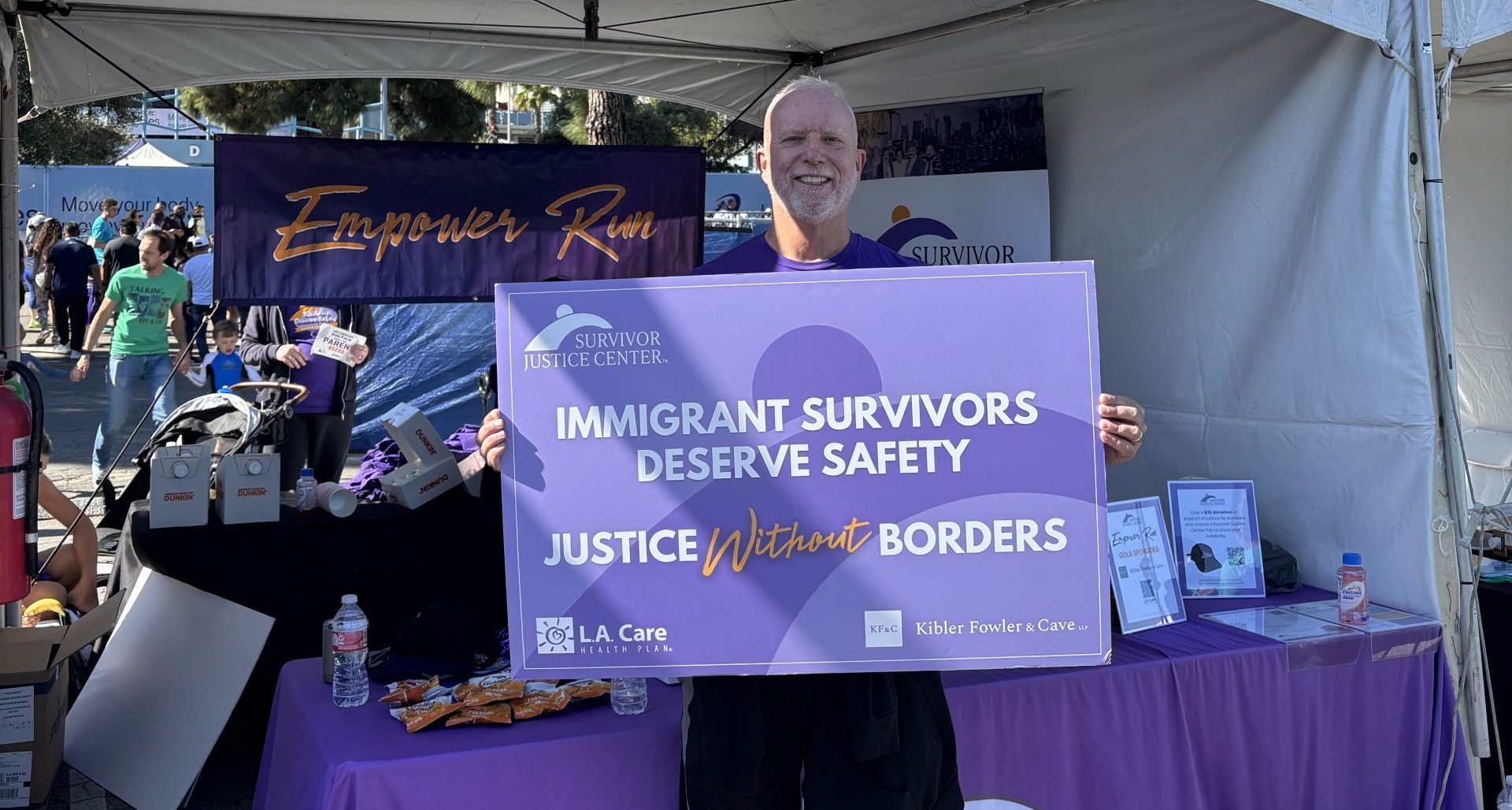
by Dan Hanley, Community Investment Officer at Survivor Justice Center
Several years ago, I attended a vigil and march organized by the Trans Latin@ Coalition. We walked to a burned-out apartment, the former home of a trans sister who had been murdered by an intimate partner. After killing her, he torched her home. I knew the story and showed up not only to honor her but also to speak out against violence. But seeing what remained of her home significantly impacted me. Witnessing the charred remains of her home hit me close to mine.
While October is often thought of as National Coming Out Day, October is also Domestic Violence Awareness Month (DVAM).
In my capacity as Community Investment Officer for an East LA-based nonprofit that serves survivors through free legal aid and support both in and out of the courtroom, I spend much of my time talking about domestic violence, sexual assault, and trafficking. Most of the people who walk through our doors are women. Many are immigrants navigating myriad additional challenges, such as language barriers, immigration concerns, and a legal system that often feels stacked against them. This work has taught me how abuse can remain hidden, how shame can silence survivors, and how difficult it can be to ask for help, even when help is available.
It makes me think about the survivors we do not see. Who isn’t walking through our doors to ask for help? In particular, I think about the LGBTQ+ survivors of domestic violence and sexual assault.
Within LGBTQ+ spaces, this is a subject we do not discuss nearly enough. Pride events, community organizations, and even everyday conversations understandably tend to focus on external threats, of which there are many: discrimination, hate crimes, and political attacks, to name a few. Far less often do we talk about the harm that is perpetrated within our own relationships and our own community.
Yet research shows LGBTQ+ people experience domestic violence and sexual assault at rates equal to or higher than straight, cisgender people. This violence affects our community. Our reluctance to talk about it makes it easier for the abuse to remain hidden.
Current data on domestic violence or intimate partner abuse within our LGBTQ+ communities can be difficult to find, and much of the available research is more than a decade old. And much of what I know comes from personal conversations with my LGBTQ+ siblings who have experienced violence themselves. I talk about consent so often that people in my circles have jokingly dubbed me the “Consent Queen.” But behind the nickname is a serious concern about how often consent, abuse, and intimate partner violence go unspoken in our communities.
The data we do have about our LGBTQ+ community and domestic violence is troubling.
Federal crime victimization data found that domestic violence was eight times as high among bisexual people (32.3 victimizations per 1,000 people) and more than twice as high among lesbian and gay people (10.3 per 1,000) compared to straight people (4.2 per 1,000). Other national research reports that 44% of lesbian women, 61% of bisexual women, 26% of gay men, and 37% of bisexual men report experiencing domestic violence in their lifetime, along with 54% of transgender and nonbinary people. A 2024 KFF survey found that a third of LGBT women reported experiencing intimate partner violence within the previous five years, twice the rate reported by non-LGBT women.
California’s 2023 Violence Experiences Survey similarly found that a substantial share of transgender men and women, along with nonbinary Californians, reported experiencing physical or sexual violence within the previous year, at rates significantly higher than those reported by cisgender women in the same survey.
Sexual violence follows a similar pattern, although the statistics vary by gender. Nearly half of transgender people are estimated to experience sexual assault during their lifetimes, and one in five transgender survivors reports that the person who assaulted them was an intimate partner. Roughly four in ten gay men and nearly half of bisexual men report experiencing sexual violence other than rape — a distinction that matters. Historically, some surveys have defined “rape” primarily centered around penetration of the victim, potentially undercounting another form of male sexual victimization: being forced or coerced into penetrating someone else. While that may sound like a technical distinction, its consequences are very real. It is one reason male survivors, including gay and bisexual men, have sometimes struggled to see their own experiences reflected in the data, in public conversations about sexual violence, or in services developed around a different model of victimhood.
Through my work, I see many reasons survivors do not report abuse: fear, financial dependence, love for the person hurting them, immigration status, distrust of law enforcement, and concern for their children. Every one of those barriers affects LGBTQ+ survivors as well. But some LGBTQ+ survivors face additional, less obvious obstacles that deserve to be acknowledged.
Most survivors of abuse carry some baseline of shame and self-blame, regardless of identity. LGBTQ+ survivors often describe an additional burden: fear that disclosing abuse will reinforce harmful stereotypes about queer relationships or provide ammunition to those already hostile to the community. For some, acknowledging abuse can even feel like a betrayal of the community itself, as though speaking honestly about violence from within somehow validates the prejudice of others. That’s an enormous burden to carry while also trying to confront the reality of being by someone you love.
LGBTQ+ survivors frequently describe internalizing the belief that they aren’t an “eligible” victim — that abuse doesn’t register the same way when it happens between two women, two men, or within a relationship that already sits outside the model most people, including some service providers, have historically been trained to recognize. Survivors who physically resist their abusers may face an additional challenge when outsiders focus on that resistance rather than the broader pattern of coercion, control, or violence. “Boys being boys” comes to mind when thinking about potential comments after sharing that one has been hit.
For survivors who are not out to their families, employers, or broader communities, disclosing abuse may also mean disclosing their LGBTQ+ identity on someone else’s timeline rather than their own. Abusive partners can and do exploit this vulnerability, using the threat of outing as another means of control. As a result, leaving or reporting the abuse may feel as though it carries consequences far beyond the relationship itself.
So what can we do? Here are a few things that genuinely move the needle at the individual and community level:
We can begin by talking about domestic violence and sexual assault within LGBTQ+ spaces with the same openness we increasingly bring to conversations about mental health, coming out, and discrimination. Normalizing these conversations before someone reaches a crisis can help survivors recognize what they are experiencing and make it easier to seek help sooner.
We can also make sure survivors know that LGBTQ+-affirming resources exist. In Southern California, the Los Angeles LGBT Center’s STOP Violence Program and Legal Advocacy Project for Survivors, and the San Diego LGBT Community Center’s domestic violence program, offer trauma-informed support built specifically for LGBTQ+ survivors, including assistance with restraining orders, safety planning, and counseling. Survivors do not have to begin with a mainstream hotline if an LGBTQ+-specific resource feels safer. And of course, Survivor Justice Center is also available. Although it is not LGBTQ+ specific, it is an amazing resource for survivors from all communities seeking free legal aid.
Perhaps most importantly, we can believe people when they tell us they have been harmed and make sure they know we believe them. One of the most protective things a friend, family member, or fellow community member can do is respond to a disclosure with compassion and belief rather than surprise or doubt. Comments such as “but you’re bigger than him” or “I didn’t think that happened between women” can reinforce the very isolation that keeps survivors silent. That reaction alone can be the difference between someone seeking help and someone remaining silent for years.
If you’re reading this and something in it sounds familiar, what you experienced counts. It does not matter if your partner was the same gender as you, a different gender, or whether your relationship fits the image that comes to mind when someone says “domestic violence.” It doesn’t matter whether you fought back or didn’t. It doesn’t matter whether you’re not uncertain that anyone will believe you or afraid that speaking up could mean coming out before you’re ready.
At nonprofits like Survivor Justice Center, we’re continually working to reach and serve more members of our communities — building services and training so the door remains open to everyone who needs help, not only those survivors whose experience the model around which the system was built.
We have not talked about this enough, either within the LGBTQ+ community or within the broader conversation about domestic violence. That needs to change. Silence does not protect survivors. You don’t have to start with us; just start somewhere.
This piece is my attempt to say, directly, to LGBTQ+ readers: you are not alone, violence in our community happens more than anyone acknowledges, and the silence hiding it is not your fault.
For more information, visit SurvivorJusticeCenter.org.
California
‘Embracing your identity can be a form of resistance’: Councilmember Byers highlights Bisexual Awareness Week
Councilmember Byers discusses the importance of the celebratory week
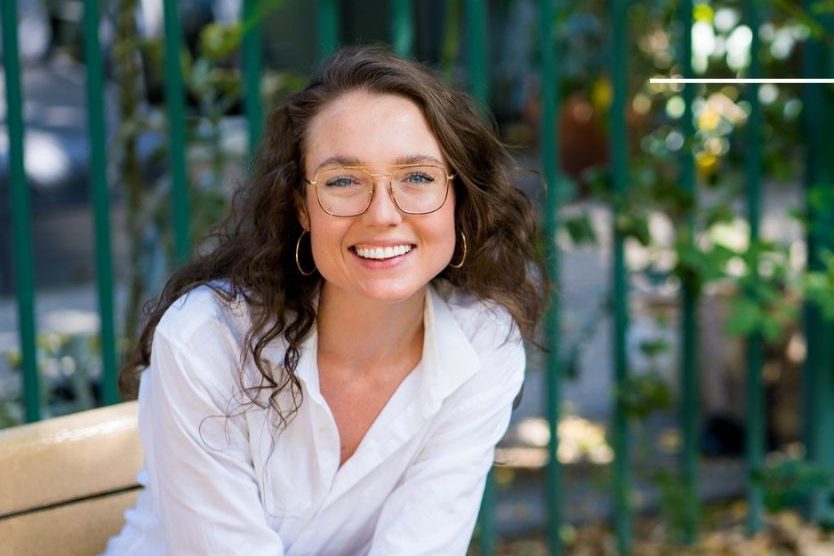
As Bisexual Awareness Week comes to a close this Wednesday, the Los Angeles Blade sat down with West Hollywood Councilmember Chelsea Byers to talk about how the city celebrated. Byers, a Councilmember since 2022 and an openly bisexual woman, discussed the importance of the celebratory week, challenges facing the bi community, and how living openly can be a form of resistance.
“Every year the city recognizes Bisexual Awareness Week as a week of action,” Byers said. The city coordinates special events to mark the occasion, this year featuring a workshop from Rewrite the BiLine, a group that aims to improve bisexual representation in media, and programming from the Los Angeles Bi+ Task Force, a nonprofit that promotes education and meetups for the bisexual community.
Byers believes that being a bisexual representative has allowed her to “feel a sense of connection” to these organizations and consequently make better programming. “I think that sort of goes to show that when you have more representation in these elected offices, the policies truly do follow,” she said.
Byers also talked about challenges that impact bisexuals even from within the LGBTQ community. “I can say, in my own personal experience as a bi woman who has been dating a man for more than a decade now, many people make the assumption that I’m a straight woman,” she said, adding, “I feel that and experience that even within the queer community.”
This can create a feeling of imposter syndrome, or a sense that deep down a bisexual person really just wants to swing one way or the other. “It can get exhausting having to constantly reinforce who you are, even if at times it’s not how you’re passing or understood in community. … and I hear [bisexual] people express that often,” Byers said.
However, there is data to show that acceptance of bisexuality is on the rise. According to polling from the HRC, 31% of young people between the ages of 18 and 24 identify as LGBTQ. People identifying as bisexual make up the largest portion of that increase when compared to other age groups. A 2023 poll from Gallup shows that 15% of Gen Z is bisexual, in comparison to the 5.6% who are gay or lesbian.
This trend of younger generations being more comfortable to explore and be open about their sexual identities is incredibly inspiring for Byers. “It’s so moving and encouraging to know that people are feeling a greater sense of safety, … that there are more people who will accept them, that there is more awareness and even more pushback to the hate that LGBTQ queer people have been experiencing,” she said.
“Embracing your identity can be a form of resistance,” Byers said, continuing, “People can find a lot of joy in that feeling of self-expression. And I think there’s a sense of empowerment that comes from just saying, ‘you know, this is something I can do. I can take care of who I am.’”
Features
25 years after 9/11, Windows on the World workers join one another in solidarity
Survivors honor 73 restaurant workers who passed away in the 9/11 attacks while renewing their fight for a living wage

MANHATTAN –
The day after the Sept. 11 attacks, Magdi Labib searched hospitals across New York City, hoping to find the coworkers he considered family.
“We were trying to help families find their lost loved ones,” said Labib, who worked as a captain at Windows on the World, the restaurant atop the World Trade Center’s North Tower.
Twenty-five years later, Labib and other surviving employees gathered at Hide Rooftop at the Artezen Hotel in Lower Manhattan to honor their deceased colleagues and continue the workers’ rights movement formed in their memory.
Asmat Ali, another former Windows on the World captain, called the tragedy a loss of his “second family.”
“It was heartbreaking,” Ali told the Blade. Many Windows on the World employees were immigrants who had come to New York from countries across the globe. Although they represented different continents and religious traditions, Ali said they worked together as one community.
At the Windows on the World 25th Anniversary of 9/11 event, the names of 73 loved ones – all restaurant workers who passed away in the attacks – were read aloud. Public commemorations of Sept. 11 often center on other groups of victims and first responders; the immigrant restaurant workers who died that day have too often been overlooked.
While individuals were telling stories, playing music, and shedding tears about that fateful day, James Benson, who was working in the North Tower on 9/11, held up his former employee identification card for a photograph. That ID reminds him that the memory of the restaurant workers is still alive.

The memorial did more than preserve personal stories. It connected the deaths of immigrant restaurant workers on Sept. 11 with One Fair Wage’s continuing campaign for economic security in an industry sustained heavily by immigrant labor. The national organization advocates for eliminating the subminimum wage and requiring employers to pay workers a full minimum wage – with tips on top.
For Fekkak Mamdouh, a former Windows on the World server and co-founder of One Fair Wage, remembering his colleagues also means continuing the movement that surviving workers built after the attacks. “The mission was clear: fight for a system where every worker can earn a living wage,” Mamdouh said.
One Fair Wage President Saru Jayaraman argued that the problems facing restaurant workers are rooted in a history of racial and gender inequality. She explained that low wages disproportionately affect women and workers of color – leaving many workers juggling multiple jobs to survive.
Jayaraman also connected economic insecurity to democracy, arguing that people struggling constantly to support their families have little time to participate in civic engagement. “Every restaurant worker’s life matters,” she said, highlighting her commitment to ensuring that workers are remembered, respected, and paid fairly.
Sally Greenberg, CEO of the National Consumers League and a member of the LGBTQ+ community, said her organization has worked with One Fair Wage to advance protections for restaurant workers. Greenberg, who waited tables while saving money for law school, feels sympathetic to the cause, as she understood the economic difficulties faced by people in the restaurant industry. Reflecting on the commemoration, Greenberg posed a pointed question: “This is an amazing experience – who else has honored the restaurant workers?”
Braden Crooks, president of the New York Sustainable Business Council, told the Blade that supporting workers and running a successful business are not opposite goals. “Fair business practices are good for business,” Crooks said, emphasizing that fair wages and health care benefit workers and employers.
Alongside workers and labor advocates, several elected officials attended the commemoration to express their support and solidarity. Julie Su, New York City’s deputy mayor for economic justice, spoke powerfully about the necessity of engaging in politics. She made clear to everyone that New York City is listening: “On behalf of Mayor Mamdani’s administration, you are seen,” Su said.
Other elected officials in attendance included New York Assemblymembers Claire Valdez and Steven Raga, along with Brad Lander, the Democratic nominee for New York’s 10th Congressional District. “It is an honor to be in this room with so many remarkable people,” Lander said, describing it as a “powerful feeling of solidarity.”

Lander remembered Manuel O. Asitimbay, an Ecuadorian Windows on the World employee whose death placed a burden on his family. Not only did his family lose a loved one, but they also lost their financial security. Lander recalled community efforts to help the family secure a home in Sunset Park. He also warned against holding entire communities responsible for the acts of individuals, urging attendees to reject scapegoating and instead come together in solidarity.
If one word captured the event, it would be “solidarity”. Twenty floors above Lower Manhattan, surviving workers, grieving families, and supporters of a living wage came together across nationalities, religions, and backgrounds. They did more than remember the restaurant workers whose lives were lost on Sept. 11: They affirmed that the community those workers created – and the struggle carried forward in their names – has endured.
Features
Caleb Kaufman joins the Los Angeles Blade through the California Local News Fellowship
The Ithaca College graduate brings experience reporting on gender-affirming care, queer rodeos, and the people running the political circus

Caleb Kaufman understands that the landscape of journalism has drastically changed.
Artificial intelligence companies are repackaging the work of journalists, local newsrooms are counting pennies, and public trust in media is on the decline. But for Kaufman, these challenges make journalism
“I think that is a reason to do more of it, not to run away from it,” Kaufman told the Blade. “It’s really important for civic engagement and democracy that people are able to know the truth about what’s going on in the world around them.”
Kaufman, a recent graduate of Ithaca College in upstate New York, is joining the Los Angeles Blade through the California Local News Fellowship, a state-funded program administered by UC Berkeley’s Graduate School of Journalism. The program selects competitive candidates from across the country to join various newsrooms throughout California for two years. Acceptance into this program is both rare and exciting, giving fellows an opportunity to report full-time.
For Kaufman, the fellowship requires a move across the country. Although he had previously spent a semester in the city, this is his first time calling Los Angeles home – and his first introduction to the Los Angeles Blade.
“I was really impressed by all the work that the Blade was doing,” he said, discussing the Blade’s versatility, ranging from in-depth policy reporting to arts and entertainment coverage. “It seemed to be a really great newsroom.”
Although Kaufman graduated with a degree in photography and film rather than journalism, photojournalism was the entryway into his interest in journalism. Editors would ask whether he could write something to accompany his photographs. Initially hesitant, he accepted the challenge.
“I started doing writing more, and I began enjoying the reporting aspect of it a lot as well,” he stated.
By the time he graduated, Kaufman had pursued journalism through internships and freelance assignments despite not majoring in journalism. He described becoming “hooked” and slightly obsessive in his pursuit of stories to cover.
“There are limits to what you can do in photojournalism if you are not also writing, because the context surrounding a photograph is equally important,” he explained. “You can have a great photo, but if you have writing that is misrepresenting what’s happening, it doesn’t really matter.”
His approach to photography and journalism guided one of his most meaningful assignments. While interning at the Pittsburgh nonprofit newsroom PublicSource, Kaufman reported on a 17-year-old transgender student who lost access to gender-affirming care.
Kaufman met the teenager and his mother at a protest and followed them for a month as they searched for another provider. The teenager had graduated from high school early and should have been enjoying his final summer before college. Instead, the sudden loss of medical care introduced a profound source of stress.
The family eventually found care through a nearby private practice, but Kaufman said the experience demonstrated that typical reporting might leave out the lived experiences of the people involved.
“The standard story would be: ‘This is happening at this hospital. Here are some experts criticizing it.’ And that was the story,” he explained. “Most articles did not have someone who was actually being impacted.”
Covering LGBTQ+ communities is not new for Kaufman. He grew up in a suburban community near New York City among a friend group that included many LGBTQ+ people. His town, like many places, was not always welcoming.
That experience made queer issues personal. At a moment when the federal government is targeting members of the LGBTQ+ community, Kaufman believes reporting must reach the communities directly affected and those who remain unaware of what is happening.
“There’s a lot of very important reporting to be done,” he told the Blade. “I think we’d probably be surprised by how many people don’t know about what is happening right now.”
Still, Kaufman does not want his work to be limited to politics. One of his favorite assignments took him to Palm Springs for four days to photograph the Palm Springs Hot Rodeo for Mother Jones. Sleeping in the rodeo’s medical trailer, he covered one of the country’s oldest gay rodeos.
“There are a lot of pockets of queer culture that people overlook,” he said, including the wild tradition of LGBTQ+ Western and cowboy culture. “It was so much fun.”
For the next two years, Kaufman will report on the LGBTQ+ community in one of the best cities in the world. Los Angeles will give him no shortage of policies to scrutinize, eclectic people to meet, or overlooked subcultures to document.
Kaufman ends on a positive note: “I’m really excited to have an opportunity to do it full time coming out of school.”
Features
Building a very queer future: StartOut’s Michael Meo on LGBTQ+ entrepreneurship
Build Momentum founder Michael Meo shares on why LGBTQ+ founders have a unique upper hand and why Los Angeles could be the perfect spot to cultivate what comes next
As the founder of Build Momentum, Michael Meo has made it his unwavering mission to assist ambitious and often overlooked founders in turning their ideas into ventures. With an appropriate focus on our LGBTQ+ community as well as women and folks later in their careers, Build Momentum works to build connections and support that can help them in transforming inspiration into action. Through his work, Meo has proven himself to be a passionate advocate, ensuring that founders of marginalized communities do not have to venture out on their own.
Drawing from his own experience as a gay entrepreneur, Meo sees queerness not as a barrier but as a genuine source of creativity and resilience. From creating spaces like QueerTechIRL to his mentorship for burgeoning founders, Meo is helping to cultivate a more connected and inclusive startup landscape in LA. We had the opportunity to sit with Meo and discuss the inspiration behind Build Momentum, the unquestionably unique power that queer founders hold, the undeniable challenges they continue to face, and why he believes that the next generation of LGBTQ+ entrepreneurs has so much to build and that much more to be excited about.
For readers who may not be familiar with Build Momentum, what inspired you to create it, and what issue were you looking to address with Build Momentum?
I’m passionate about venture because it’s world-making. It’s about creating better futures that don’t yet exist by bringing together the right talent, capital, and ideas to build something unexpected.
I’ve spent the past 10 years working in startups, with a real passion for both venture and social impact. Build Momentum partners with some of the brightest founders out there—people with deep expertise who are closely connected to a pressing problem and want to solve it through technology. They bring their domain expertise, and we bring the venture-building muscle: the ability to build companies, digital products, and technology from scratch.
A lot of our work is with what I call unexpected and underrepresented founders: LGBTQ+ founders, women founders, and later-career founders coming out of established industries. Ultimately, the issue we’re trying to address is creating more inroads into venture and helping more people discover and unlock their inner founder.
Looking back at your journey with Build Momentum, have there been any stand-out moments or stories that capture the reason why you do this work?
One standout story is Christina Karaba, a founder I’ve been working with over the past year. She’s an absolutely brilliant, seasoned creative leader who came from the corporate world. I met her when she had just the idea for a company, and one of my proudest moments was when she told me that I was the first person she had ever called herself a founder to. I’ve been able to support her through that journey, and now she’s moved beyond corporate and is about to launch her AI fashion app. And she is an Expert in Residence within Build Momentum supporting other founders on their journey.
More broadly, I’ve somehow put myself in a position where people come up to me—sometimes multiple times a day—and tell me their wildest dreams, what they’re trying to build, and the challenges they’re facing. I do everything I can to point them in the right direction, connect them with the right people, and get them the resources they need. Christina’s story is a perfect example of why I do this work.
Much of your work focuses on bringing founders, investors, and startup leaders together. How does Build Momentum help create these connections that entrepreneurs may struggle to find on their own?
Nobody should build alone. Being an entrepreneur, especially a solopreneur, can be an incredibly isolating experience. We’ve done a lot of work to create community spaces for founders through events, workshops, panels, and dinners, including programming during Tech Week in New York, San Francisco, and Los Angeles.
We focus on gatherings that are genuinely valuable, bringing together some of the best startup and corporate leaders, investors, and builders and putting them in the room with early-stage founders. We want to create warm inroads into venture capital and connect entrepreneurs with people they might otherwise struggle to reach.
We also host people in our studio and mentor founders regularly. We have a street-level office with a real open-door policy. It’s not uncommon for a founder or friend of the studio to walk by, knock on the window, and come in. We’ve also launched QueerTech IRL specifically to bring LGBTQ+ founders and investors together and create a kind of home away from home for queer entrepreneurs.
What makes the Los Angeles startup community unique compared to other major innovation hubs?
What I absolutely love about Los Angeles is, first, the diversity of its people and industries. New York is known for finance, San Francisco for AI, Miami for real estate tech. The beauty of LA is that there are so many strong, diverse industries here: AI, logistics, fashion, media, wellness, health tech. It’s not a monoculture city, so we find ourselves working across all kinds of verticals.
The other thing I love about Los Angeles is that it has this anything-is-possible, shoot-for-the-stars energy. People here are wildly aspirational and optimistic. At the same time, it can be a city where community is hard to stumble upon, so when you create intentional community, people really gravitate toward it.
LA also has this incredible creative energy that’s true to its roots: telling stories and imagining worlds that haven’t existed before. Historically, that was done through media. Now, technology gives us new ways to actually build those worlds. LA has a really deep history of world-making.
Beyond having a great idea or product, what qualities consistently stand out to you in founders who are able to build lasting companies?
The founders who build lasting companies tend to have an obsession with the problem and the user, more than with the specific idea or solution they’re building today. Solutions and ideas evolve over time. But founders who remain obsessed with the problem—who are insatiably curious and disciplined about connecting with the people they’re trying to serve, understanding them, and getting into their world—are the founders I bet on.
I also look for founders who are able to maintain a balanced life. I push back against the idea that founders have to be mercenary about the work, because that leads to burnout. I’m very bullish on founders who spend time in their communities, have interests outside the company, sleep, exercise, and take care of their health. I think of this as the 360-degree founder: someone who can treat building a company as a marathon, not a sprint.
Have you noticed any patterns or trends among today’s queer founders that give you optimism about the future of LGBTQ+ entrepreneurship in Los Angeles?
I am so bullish on LGBTQ+ founders. Queer people have this unique ability to do unprecedented things.
I think about my own journey as a gay person and a gay entrepreneur. One of the first and biggest unprecedented things I had to build was my own identity. I didn’t have LGBTQ+ role models or examples. I didn’t have anything to emulate. Understanding my true self and building my own identity was kind of my first major project.
Because of experiences like that, I think LGBTQ+ founders are uniquely equipped to push forward through uncertainty, feel comfortable with ambiguity, and handle risk. Those are our superpowers. We’re also wildly creative. We’re world-makers.
Beyond that, a lot of LGBTQ+ founders I meet live service-driven lives. They want to create an outsized impact and leave the world better than they found it. They’re building companies that, at scale, can have a genuinely positive impact on the world. There’s often a sense of responsibility driving the work.
What do you believe are the most significant obstacles that still persist for LGBTQ+ founders in LA today?
One of the biggest obstacles is cultural. The venture capital and fundraising spaces can still feel very heteronormative and male-dominated. The same is true of many of the industries queer founders are trying to disrupt. As a result, LGBTQ+ entrepreneurs may not see themselves represented or feel that they have natural inroads into those spaces.
I can identify with that from building and scaling a real estate technology company. Throughout that four-year journey, I often felt like a cultural outsider. There were times when I didn’t feel comfortable showing my full, multidimensional self and was quieter about my queerness. That changed over time, but I definitely found myself code-switching to fit in with investors and enterprise clients in the real estate industry.
Where have you seen the most progress for LGBTQ+ founders over the past few years, and what role has StartOut played in that?
LGBTQ+ founders are everywhere. We now have organizations like Gaingels, StartOut, HeyFamm, and QueerTech IRL creating more spaces, connections, and visibility for queer entrepreneurs.
I also think LGBTQ+ people have this incredible ability to network, make warm introductions, and let the rising tide lift all boats. There’s a real willingness to open doors for one another. We also have far more precedent for impactful, scaled companies built by LGBTQ+ founders, so the next generation can see that there’s a path for them.
For LGBTQ+ entrepreneurs who are hoping to build their first company, what value do you think they gain from becoming part of the StartOut community?
Having mentored within the StartOut community, I think one of the biggest benefits is access to seasoned LGBTQ+ innovators and founders who can provide support, mentorship, introductions, and connections. Building a company can be incredibly isolating, so having people around you who understand both the entrepreneurial journey and the experience of being LGBTQ+ is extremely valuable.
Community is often talked about as a business asset, but it also has a personal side. How has creating Build Momentum impacted you on a personal level?
Never before have I felt more in my flow. I’ve never felt this much purpose or impact through my work, and I have this insatiable hunger to scale that impact.
Through Build Momentum, I’ve put myself in this unique position where I get to unlock people’s creativity, fuel their dreams, and help them build their companies and products. It’s immensely rewarding. There’s something deeply satisfying about playing such an intimate and impactful role in a founder’s journey.
Where do you see the greatest opportunities for innovation emerging over the next few years?
I’m very, very bullish on the domain-expert founder. Our thesis is built around serving the unexpected founder: people coming from deep within a particular industry. Think scientists from NASA, or a VP from a major bank or media company—people with decades of experience and a deep understanding of their field.
I see a major opportunity for these people to branch out and create companies of their own, especially as uncertainty within traditional corporate environments continues to grow. I really advocate for them to consider how their expertise could become a company.
I also see an enormous opportunity within established and legacy companies. A lot of them are understandably focused on AI enablement and transforming existing processes. But I think entirely new ventures, products, experiences, and technologies will also be born from within those companies. Like domain experts, established companies possess deep knowledge, assets, and unfair advantages that make them incredible starting points for building new solutions. That’s an area where we plan to play an important role through our corporate venture-building work.
This series celebrates founders who are helping shape the Los Angeles startup community. What responsibility do successful LGBTQ+ entrepreneurs have to give back and help the next generation?
For me, the first responsibility is mentorship: sharing your insights, learnings, and support with other founders, whether that’s one-on-one or through groups, workshops, and panels. That’s an incredible way to give back.
I also think there’s real value in living loudly and proudly. Simply existing as a successful LGBTQ+ founder and being true to your identity matters. That representation is especially important for younger entrepreneurs. They need to see themselves reflected in the successful people around them and know that this path is possible for them too.
If you could offer one piece of advice to someone launching their first company in Los Angeles today, what would it be?
First, get as close as possible to the people you’re trying to serve. Have multiple conversations a day—at least 10 a week. Get into their headspace and understand how they see the world. Be unreasonably close to your users.
Second, find your tribe. Join communities, go to events, and connect with groups like QueerTech IRL, Build Momentum, and StartOut. Find peers and mentors who can support you, challenge you, and give you honest feedback. Don’t try to do it alone.
Lastly, less is more. Don’t get too precious about your product. Put imperfect things into the world, see how people respond, and learn from them.
Looking at the future, what’s next for Build Momentum?
We have a few things cooking at Build Momentum. We’re exploring the launch of a West Hollywood-based venture accelerator for founders building in health tech, wellness, media, social, and AI. We envision a physical space with desks, community activations, mentorship, workshops, and funding opportunities.
We’ve also just launched our corporate venture-building practice. We want to work with some of the most influential established companies to build entirely new ventures that can unlock growth and push them into the future.
And finally, we want to scale the impact of QueerTech IRL through more activations, community events, and opportunities for LGBTQ+ founders and investors to connect.
For more information, head to BuildMomentum.dev.

LGBTQ+ pioneer Rev. Troy Perry to young people: ‘Don’t be afraid’

With exquisite 4K restoration, ‘The Devils’ finally gets its due

Drag queens go from Send Noodz straight to the polls
Immunology gave HIV survivors the chance to grow old, Proposition 38 is the next step

Common Sense Isn’t Political

Here’s your Palm Springs look at the weekend: Oct 23 – 25, 2026

Those dreadful ballot propositions are important

How anti-trans backlash to James Talarico spread like wildfire

Supreme Court blocks White House anti-trans prison policy

New Zealand High Court strikes down puberty blocker ban
-
 Palm Springs2 days ago
Here’s your Palm Springs look at the weekend: Oct 23 – 25, 2026
-
 Commentary4 days ago
Those dreadful ballot propositions are important
-
 Texas4 days ago
How anti-trans backlash to James Talarico spread like wildfire
-
 U.S. Supreme Court4 days ago
Supreme Court blocks White House anti-trans prison policy
-
 New Zealand3 days ago
New Zealand High Court strikes down puberty blocker ban
-
 Movies4 days ago
40 years later, AFI Fest continues to offer a robust selection of queer and international films
-
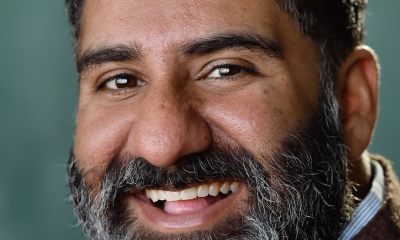
 a&e features3 days ago
A Parvesh perspective: Actor Parvesh Cheena talks his roles in ‘Wives’
-
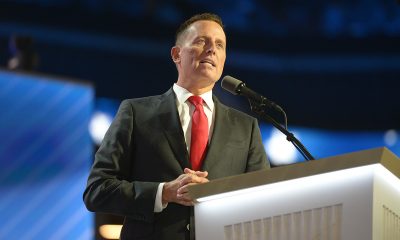
 White House3 days ago
Allegations involving Ric Grenell raise questions about pay-for-play in White House
-
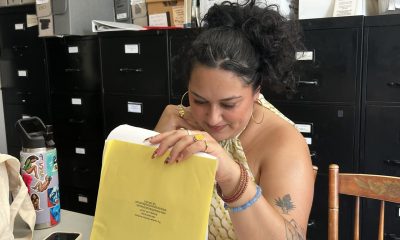
 Transgender3 days ago
Latin queer and trans history along the U.S.- Mexico border on display at UC Riverside event
-
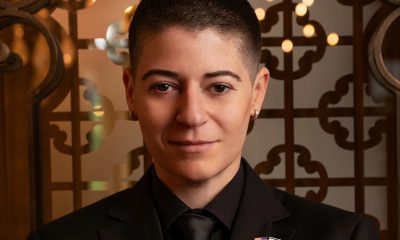 opinions2 days ago
Common Sense Isn’t Political