
San Diego
Federal probe into former backer of Prop 8 in ‘pay or play’ scheme
Manchester said he was offered the Bahamas post the day after Trump was sworn in

WASHINGTON – A Federal grand jury is issuing subpoenas in a criminal investigation into the nomination of a wealthy San Diego real estate and longtime business developer and the past chairman and publisher of The San Diego Union-Tribune, Douglas Frederick Manchester, as U.S. Ambassador to the Bahamas by former President Trump.
Manchester was an early supporter of Trump. The San Diego Union-Tribune is reporting that the case appears to focus on the Republican National Committee and its two senior leaders, and possibly members of Congress.
Manchester has long had deep financial ties to the Republican Party as a major donor and to GOP elected officials and candidates. He was first nominated to become the U.S. ambassador to the Bahamas in May 2017, just months into the Trump administration.
But the nomination stalled in the U.S. Senate, prompting Trump to re-nominate Manchester to the post early in 2018. That nomination also was held up from Senate approval. Manchester withdrew his nomination in October 2019, saying that he was removing his name from consideration due to threats to his family, the paper reported Saturday.
The Union-Tribune is reporting that focus of the subpoenas is in emailed or other communications involving communications between Manchester, his former wife, the Republican National Committee, (RNC) and RNC Chairwoman Ronna McDaniel and Co-Chair Tommy Hicks.
In November of 2019 CBS News chief investigative correspondent Jim Axelrod reported that Manchester, was asked by the RNC to donate half a million dollars as his confirmation in the Senate hung in the balance. A Trump supporter, Manchester donated $1 million to the former president’s inauguration fund. According to Axelrod, Manchester said he was offered the Bahamas post the day after Trump was sworn in.
Trump tweeted his nomination of Manchester after which, according to emails obtained by CBS News, RNC Chairwoman Ronna McDaniel hit up Manchester for a donation. It was no small sum. In an email, obtained exclusively by CBS News, she asked Manchester, “Would you consider putting together $500,000 worth of contributions from your family to ensure we hit our ambitious fundraising goal?”
Axelrod reported, “He wrote back to McDaniel’s request for $500,000, “As you know I am not supposed to do any, but my wife is sending a contribution for $100,000. Assuming I get voted out of the [Foreign Relations Committee] on Wednesday to the floor we need you to have the majority leader bring it to a majority vote … Once confirmed, I our [sic] family will respond!””
It was that email the Union-Tribune and CBS both reported that is the heart of the potential “pay or play” scheme. Justice Department officials did not respond to requests for statements outside of confirming that the Federal probe began during the final year of the Trump administration.
Manchester, 78, a native Californian was born in Los Angeles and raised in San Diego and is known for his real estate and business empire. He was responsible for construction and development of some of San Diego’s premier properties including the First National Bank Center, and the San Diego Marriott Marquis & Marina. In the 1990s, he constructed the Manchester Grand Hyatt Hotel San Diego.
In 2011, he purchased The San Diego Union-Tribune and a year later in 2012, he bought the North County Times and merged it and its subsidiary, The Californian, into the Union-Tribune. He also bought eight local weeklies in the San Diego region, which continue to be published as separate papers. In 2015, he sold The San Diego Union-Tribune to the Tribune Publishing Company.
During the national debate and politicking over the issue of same-sex marriage Manchester was an opponent. Georgetown Law notes; “Among the advocates for Prop 8 were religious organizations, most notably the Roman Catholic church and the Church of Jesus Christ of Latter Day Saints.”
Manchester, who was appearing before the Senate Foreign Relations Committee during his 2017 Senate confirmation hearing for his nomination as U.S. Ambassador to the Bahamas, responding to a line of questioning from Senator Bob Menendez, (D-New Jersey), acknowledged that he had donated $125,000 to support Proposition 8, the 2008 ballot measure that prohibited same-sex marriage in California that passed with 52 percent of the vote.
“I was asked by the Catholic bishop of San Diego, and I am Catholic, to contribute and I did. And my family was opposed to it,” Manchester said. “And I want to clarify the issue: that was a huge mistake and I have more than done everything to rectify that mistake.”
Prop 8 was later overturned in the 2013 ruling by the U.S. Supreme Court in the case of Hollingsworth v. Perry.
He told the Senators that he has had thousands of employees, including those who are gay and lesbian. He then pointed out that he’s contributed a like amount of money to LGBTQ causes, adding he is“ totally 100 percent for human rights all across the board.”
Manchester then told the Committee; “I certainly support gay and lesbian marriage, for the record,” he said.



Local
Todd Gloria elected US Conference of Mayors president
Gay San Diego mayor spoke with the Blade in D.C.
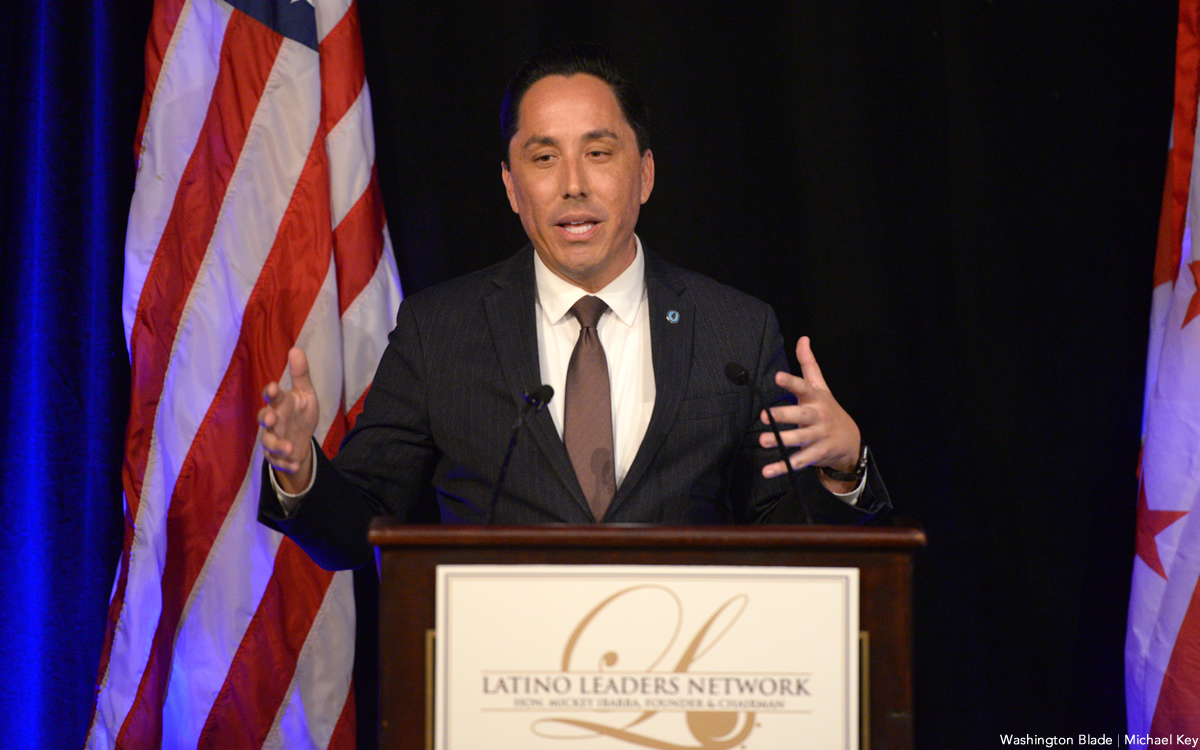
Todd Gloria has had a whirlwind two decades as a public servant.
Beginning with his successful 2008 San Diego City Council election, followed up by his second successful campaign in 2012 — this time as president of the San Diego City Council — Gloria has been strapped to a rocket headed to public servant fame that would make Leslie Knope’s head spin, with no signs of slowing down.
Just one year into his tenure as president of the San Diego City Council, Bob Filner, the then-mayor of the city, resigned from his role following multiple allegations of sexual harassment. In that moment of political uncertainty, Gloria stepped up, becoming the interim mayor of San Diego, and the leader of one of the largest cities in the U.S. .
While his term as interim mayor — lasting from August 2013 to March 2014 — was not long, it was a sign to the people of San Diego — and to himself — that Gloria could do good things for San Diego. When the newly elected Mayor Kevin Faulconer was sworn in in March 2014, Gloria continued working hard to keep the city he grew up in in caring hands.
Gloria started to look past “America’s Finest City” and began looking toward Sacramento. It was there that some of the state’s most capable minds were attempting to tackle problems that the entire Golden State faced. In 2016, he ran for the California State Assembly’s 78th District seat, representing San Diego, where he won with an impressive margin and started championing the city’s climate action plan. Shortly after assuming office, he was chosen to become a member of the Democratic leadership — as assistant majority whip — where he helped pass his and the Democratic Party’s legislative goals in the most populous state in the nation.
It should be no surprise that, with a growing reputation as someone bent on making his city better for the more than 400,000 residents who live within the 78th District, Gloria won re-election in 2018 with more than 70 percent of the vote in both the primary and general elections. There, he was tapped once again to be an integral part of the Democratic Party’s legislative mission and was, in January 2018, made majority whip.
In 2019, Gloria announced he would no longer seek the 78th District seat when his term was up, but would return from Sacramento to San Diego — this time as mayor. He ran his campaign on issues that San Diegans faced: the housing crisis, affordability, public transportation, and climate change.
In November 2020, Gloria was elected mayor of the city he grew up in, where he broke barriers — his win also made him the first Native American and the first Filipino American to hold this position in a U.S. city with more than a million people, becoming San Diego’s first mayor of color. He was also the city’s first openly gay mayor.
The Los Angeles Blade sat down with Gloria when he visited Washington earlier this month for the U.S. Conference of Mayors, where he was elected president of the organization. The presidency lasts for one year and alternates between political parties to ensure bipartisanship.
Gloria, has served as mayor of San Diego since 2020, will lead the nearly century-old bipartisan organization as a proud out gay man at a time when many LGBTQ+ Americans are concerned about the future of their rights and protections.
“Well, a lot. I think the first thing that comes to mind is that this time that we’re all living in, the stakes feel particularly high, and I think number one, I’d want your readers to understand that this is a conference of bipartisan mayors from all across the country who supported me to lead the organization that’s nearly 100 years old,” he explained.
“I think at a time when we definitely wonder, as queer people, where we sit in our nation and in our society, that my fellow mayors of all different political stripes are willing to allow me to be their voice as leader of this organization. I hope it somehow validates the notion that we are still making progress, that particularly the political process is still possible.”
Gloria framed his election as evidence that progress remains possible, even amid growing political polarization. He noted that the U.S. Conference of Mayors was founded during the Great Depression, another period when local leaders stepped forward to address challenges they felt were not being adequately addressed at the federal level.
Throughout the interview, Gloria repeatedly emphasized the unique role cities can play in advancing LGBTQ+ equality. He pointed to the U.S. Conference of Mayors’ long history of supporting civil rights, HIV/AIDS advocacy, and LGBTQ+ inclusion, and his belief that mayors often find common ground on issues where Washington remains divided as a clear thesis to his presidency.
“It’s building on the history. It’s one of the reasons I’m very proud of this organization. Why I’ve been an active member for years now is that it has this storied history of speaking up and helping to advance change in this country. Everything from direct aid to cities in the Great Depression to civil rights in the 1960s to equality, HIV/AIDS advocacy during a time of great stigma and shame,” Gloria said. “This conference, again a bipartisan organization, has been willing to sort of be able to find a common ground that maybe isn’t always possible in Washington.”
Gloria also highlighted San Diego’s own LGBTQ+ political history, noting that the city has maintained continuous LGBTQ+ representation on its City Council since the early 1990s. He credited generations of local activists for helping create a political environment where LGBTQ+ elected officials have been able to thrive.
With Pride Month unfolding amid continued battles over LGBTQ+ rights nationwide, Gloria argued that cities remain important centers of progress and power, even when state and federal politics become more hostile.
“We have quite a bit [of power] because we can often do things within our own communities, but also we can band together and lend our voices to try and either stop bad things from happening or help advance good things that we’d like to see come to pass.”
He added that cities provide opportunities to continue advancing equality — even when, at a national level, conditions seem unfavorable.
“Cities provide avenues to say ‘No, we can actually make progress, maybe not at the scale, maybe not as broad as we would like, but it can still happen.’”
While Gloria has championed LGBTQ+ rights throughout his political career, he said housing affordability has emerged as the defining civil rights challenge facing many communities, including LGBTQ+ residents.
“The biggest civil rights issue right now is housing,” Gloria said.
He argued that many LGBTQ+ people can now legally live and work openly in places like San Diego, but increasingly struggle to remain in those communities because of rising housing costs.
“You know, we are a very affirming city. We have a gay mayor. 1/3 of our city council is LGBT. We have all of the protections that you would hope a city would provide in a state that provides those same protections, but we’re horrifically expensive, and our housing costs are unattainable to so many people of all walks of life.”
As president of the U.S. Conference of Mayors, Gloria said he hopes to elevate housing affordability as a national issue and encourage local leaders to adopt policies that increase housing production and reduce costs.
On LGBTQ+-specific initiatives, Gloria pointed to his work co-chairing the organization’s LGBTQ Alliance alongside Madison, Wis., Mayor Satya Rhodes-Conway. Under their leadership, the alliance created a municipal toolkit designed to help mayors implement LGBTQ+-inclusive policies, ranging from Pride Month proclamations to nondiscrimination protections and fair housing measures.
“We have a lot of allies and come to our meetings, we meet four times a year, and you want to be supportive of the community. This is what this looks like.”
Beyond policy, Gloria described the alliance as an important support network for LGBTQ+ elected officials navigating increasingly hostile political rhetoric.
“When the attacks on trans people, specifically trans children start happening, that was an issue that we discussed at length in the alliance.”
Despite his optimism, Gloria acknowledged that recent years under the current federal leadership have challenged assumptions many LGBTQ+ Americans once held about the inevitability of continued progress — and the idea that rights gained were forever.
“I think for someone who you know came up in the movement in the 90s and early 2000s you know, I’ve seen marriage equality, I’ve seen the progress with HIV and AIDS, you know, ability to work and live where you want, you know, all that stuff. It kind of felt like, for me, it felt like it was inevitable that we would keep ascending to greater and greater equality,” he said. “Obviously, recent years have made you not only stop some of that progress, but really question if we’re not going to start falling backwards.”
Still, Gloria urged LGBTQ+ Americans not to retreat from civic engagement or get quiet about the problems they face, given the constant barrage of attacks — both executive and cultural — that leaves some feeling as if the battle for equality is waning.
“This is not a time to back away. This is not a time to fold inward. We have to truly double down and continue forward doing the work. Leaning forward will mean that the progress may be less than what we want, but still progress will be made.”
Gloria also said he has noticed a change in the tone of political discourse directed at elected officials, including LGBTQ+ leaders. While he said hostile rhetoric has increased, he views his position as an opportunity to model resilience for younger LGBTQ+ people.
“You can either absorb it the way I did in middle school and feel kind of crummy and maybe a little bit sorry for myself, or you can realize that every time I’m called that, there’s a young person in a school who does not have the perspective I have, and they’re counting on me to figure out some way forward.”
As he begins his year leading the U.S. Conference of Mayors, Gloria said his priorities will focus on housing affordability, public safety, and economic issues affecting cities nationwide — issues he is familiar with. Success, he said, will ultimately be measured not by political messaging or narratives spun, but instead by tangible results.
Results that matter — even if they aren’t seen as glamorous. These are results that show the city is being effectively run for its citizens, he explained.
“The question is, did the garbage get picked up? Did the road get paved? Did the homeless person find housing?”
Addressing the relationship between cities and the Trump-Vance administration, Gloria said local leaders have had to navigate a political environment defined by unpredictability.
“The only thing that’s certain about this administration is the uncertainty,” he said, though he was clear that such uncertainty does not give the administration a pass to act unjustly. “My city has sued the Trump administration, I believe, eight times at this point, and we’ll continue to do that when it’s necessary or appropriate.”
Even so, Gloria maintained that mayors are uniquely positioned to cut through political rhetoric because residents judge them on day-to-day outcomes rather than partisan talking points.
“I think we are a bit more pragmatic, I think, a bit more focused on making sure that what we’re doing is improving people’s lives, not harming it.”
For Gloria, that practical focus — and the willingness of mayors from across the political spectrum to work together — offers reason for optimism despite the challenges ahead.
When asked what he thinks about the future of not only San Diego, but of the country given the increasingly hostile political climate, he provided a chance to peer into his mind: the mind of a public servant who is determined to make his place better than the day before, even if it does boil down to ensuring trash is collected and housing is affordable for all.
“Being an elected official is in itself an act of optimism. It’s a belief that you can help make things better, and it’s difficult to be in this line of work and be pessimistic.”
That goes hand-in-hand with making every city a better place for those who will enjoy the fruits of the labor sewn well after the mayors at this year’s conference have come and gone. That is why Gloria is doing what he is doing.
“I think for every kid, wherever they are, they’re wondering if they can be their full selves.It’s incumbent on us to do, because every one of these terrible headlines that we see may be frustrating to those of us that have seen some of that progress,” he said. “I think it could be devastating for these young people who have not known anything different, and we owe it to them to find better headlines to give them, both in the short and long term.”
San Diego
LGBTQ+ clubs targeted in San Diego pellet gun attacks
SDPD are investigating the multiple incidences from Saturday morning & also cannot yet confirm whether this was motivated by anti-LGBTQ hate

SAN DIEGO, Calif. – A spokesperson for the San Diego Police Department said that multiple establishments in the Hillcrest and North Park neighborhoods that serve LGBTQ+ patrons were targeted by an unknown suspect or suspects in a dark-colored sedan early Saturday morning.
According to the San Diego Police Dept., they received reports of a pellet gun being fired out of a vehicle just after 1 a.m. Saturday morning. As of Sunday evening, the locations police could confirm were shot by the assailant were Rich’s, The Rail, #1 on Fifth Avenue and PECS in the Hillcrest and North Park neighborhoods.
SDPD confirmed that one of these incidents struck three people outside Rich’s Nightclub and hospitalized one.
Witnesses told San Diego CBS affiliate KFMB-TV8 it appeared to be a BMW, but police have not released an official suspect or vehicle description.
In an interview with CBS 8, Eddie Reynoso, a host at Rich’s said that he was standing outside and turned when he heard someone yelling expletives at the patrons outside the bar. Reynoso saw what he believed to be an AK-47 and hear myriad rounds being shot off.
He tried to crouch but it was too late.
“I get hit directly in the eye,” he said. ” I feel something kinda like explode almost like something popped. And by then I was already falling to the ground. In my mind, I thought I just got shot through the eye and my eye just flew out.”
He said it wasn’t the first time Rich has been the target of a crime like this. And he’s confident it won’t be the last.
A man named Abel was also hit with at least five pellets at Rich’s. He said he’s glad everyone is safe.
“It was still scary,” he said. “It was traumatic.”
At The Rail in Hillcrest, Donny Hurry, a security guard told CBS 8 he saw someone shooting out of the car’s back window. The suspect started shooting at him, and he ducked into the building before he realized it wasn’t a real gun.
Hurry had been hit in the arms and back multiple times but tried to run back out to get a description of the suspect of the vehicle.
SDPD are investigating the multiple incidences from Saturday morning, but are not specifying whether the non-lethal rounds were pellets or paintballs.
Police also cannot yet confirm whether this was motivated by anti-LGBTQ hate.
San Diego
‘Christmas Bags of Hope’ event to support homeless kids
“Christmas Bags of Hope” – These bags will be filled with essential items including toys, hygiene kits, books, and food items
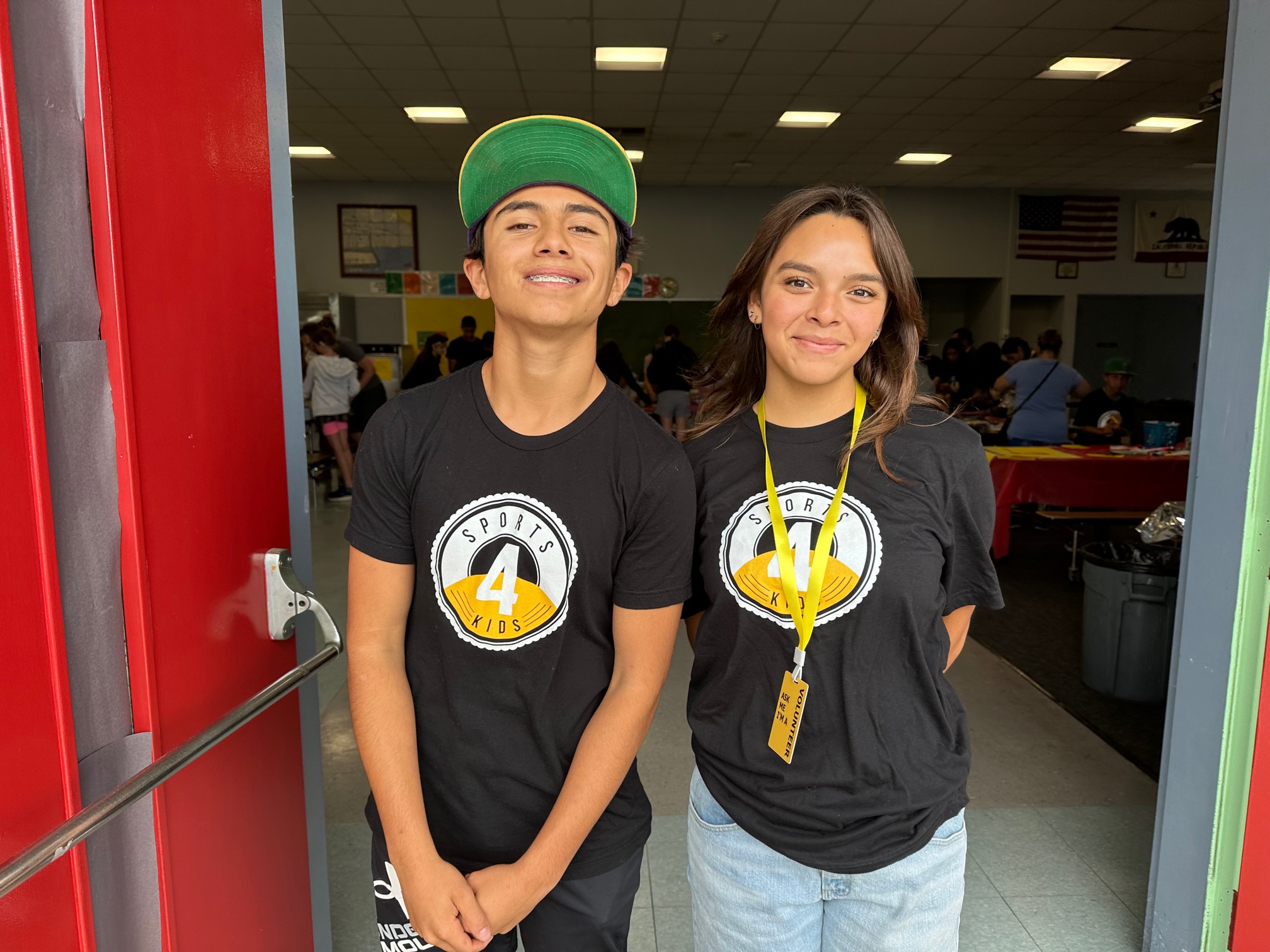
SAN DIEGO – The 14-year-old founder and CEO of San Diego-based non-profit Sports4kids, Arden Pala and his volunteers are kicking off this holiday season to support and make a difference in the lives of homeless kids with the annual 1000 “Christmas Bags of Hope” campaign.
The volunteers will be assembled for area local homeless kids. These bags will be filled with essential items including toys, hygiene kits, books, and food items. More than 10,000 people in San Diego are facing homelessness- 20 percent being kids. According to a study published by Point-in-Time Count homelessness in our region increased by at least 14% this year and kids are especially vulnerable.
Event Details:
· Date: Saturday, December 9th
· Time: 10:00 AM – 11:30 AM
· Location: Perkins Elementary School, 1770 Main St, San Diego, CA 92113
Hundreds of volunteers (both youth and adults) will be assembling “Christmas Bags of Hope” for low income and homeless families in San Diego. Volunteers will decorate and then fill bags with essentials to include nutrition items, toys, books, and goodies.
Sports4Kids was founded by Arden Pala 3 years ago and is a San Diego-based nonprofit that supports individuals and youth who are facing homelessness. The organization does this by providing volunteer opportunities for kids of all ages.
Over the past three years, the organization has raised over $140,000 to help over 7500 needy people. Its youth volunteers have spent a combined amount of 6500 volunteer hours serving our homeless population.
San Diego
Apparent arson attack against San Diego queer women’s bar
Later in the day, around 1:45 p.m., the suspect, identified as 38-year-old Ryan Habrel, was spotted near the scene and taken into custody
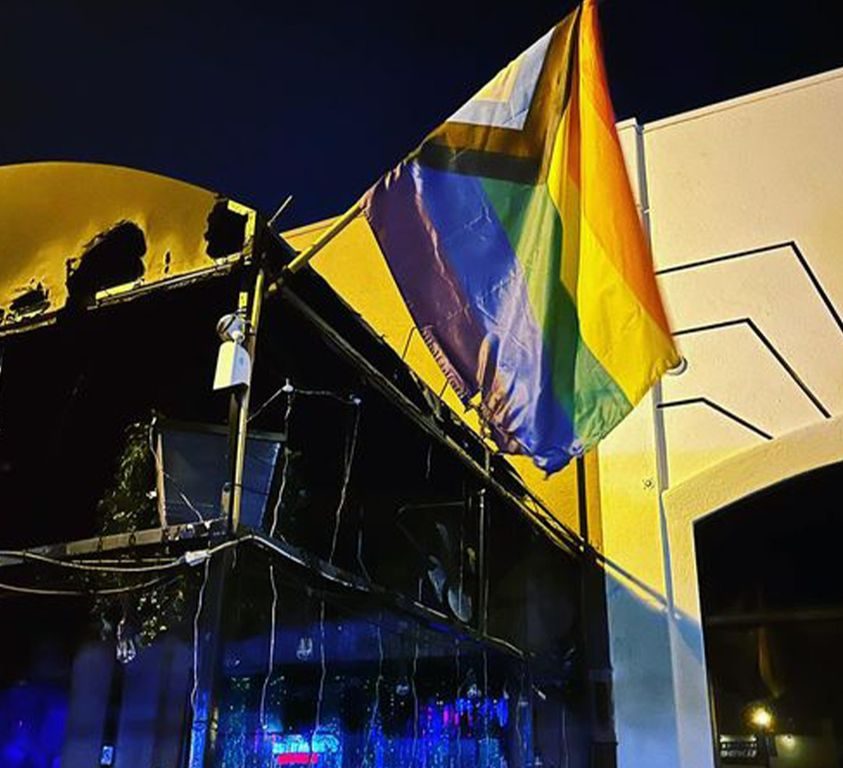
SAN DIEGO, Calif. – San Diego’s Gossip Grill, one of the last remaining Queer Women’s bars in the U.S. was targeted in an apparent arson attack Friday, October 20, at about 12:30am. Both front patios were set on fire.
San Diego Fire Department (SFFD) and police responded to the bar located at 1220 University Avenue and the flames were quickly extinguished. According to a spokesperson for the SDFD no structural damage was sustained and nobody was hurt.
Later in the day, around 1:45 p.m., the suspect, identified as 38-year-old Ryan Habrel, was spotted near the scene and taken into custody, SDPD Lt. Adam T. Sharki said in a statement. “Habrel was arrested and booked into jail for arson to a commercial structure and the use of an accelerant,” Sharki said.
Habrel was identified by the San Diego Police Department as a suspect in the arson. The restaurant’s security cameras, which are placed throughout the premises, were operational and captured footage of the arsonist.
Habrel is allegedly a former employee of Gossip Grill sister restaurant Urban MO’s. Staff and local residents who know Habrel speculate that mental health and homelessness issues might have contributed to the incident. Habrel is a recognized transient who has been living homeless on the streets of Hillcrest for several years.
The bar will continue to operate its normal hours from 2pm-2am. In a message on its Facebook Page the bar noted: “We hope you will stop by for a meal or a round of drinks to show the staff your support.”
Related:
San Diego
San Diego LGBT Center marks 50 Years with anniversary gala
Region’s largest LGBTQ+ center ushers in new era of dreaming big, fighting hard and loving fiercely at October 14 anniversary gala
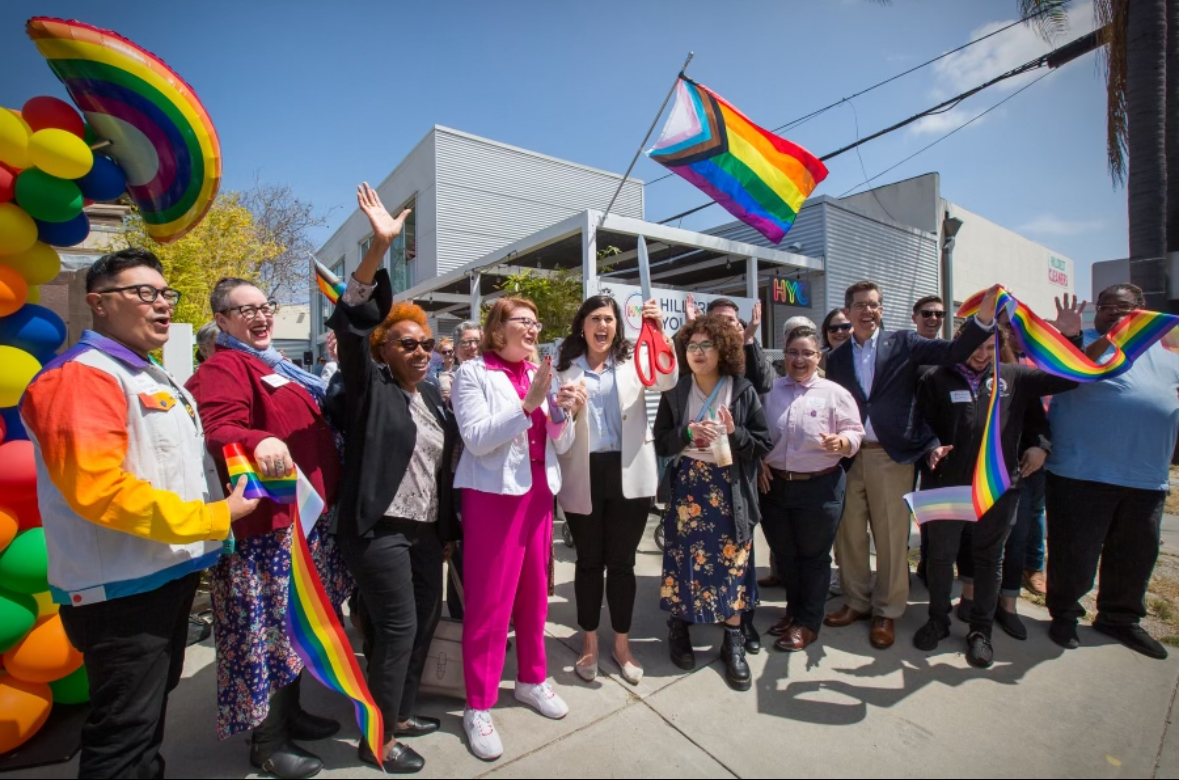
SAN DIEGO, Calif. – The San Diego LGBT Center will celebrate its 50th year with a gala at the Hilton San Diego Bayfront Saturday.
The center’s Deputy CEO, Kim Fountain, said she is most proud of the combined $4.2 million in funding the center secured this year for their “Safe STAY” facilities and programs.
The LGBTQ Safe STAY Wellness Center provides up to 21 non-congregate beds and supportive services to unhoused persons ages 18-24 years old in the City of San Diego. LGBTQ-empowering staff and case managers provide access to resources and referrals, with a focus on helping young people connect with more permanent housing opportunities. Additional services include, but are not limited to: meals, peer support, showers, laundry services, and linkages to community resources.
“Approximately 20-40% of unhoused youth are queer,” Fountain told The Balde. “There is still a stigma, so you have a lot of parents throwing their kids out of their homes.”
Fountain said that LGBTQ+ youth are also seven times more likely to be assaulted on the street when unhoused.
Risk of LGBTQ+ homelessness is further threatened by new outing policies sweeping school districts across California.
“The places where youth are supposed to learn and grow and thrive are becoming places fraught with danger and obstacles,” said Fountain. “You are talking about endangering the lives of LGBTQ+ youth.”
The celebration this weekend marks 50 years of making an impact on and creating safe spaces for LGBTQ+ people in the San Diego region. The event will include a cocktail reception, dinner, a drag show with DJ Taj Altaji, and live music by Sue Palmer and her Motel Swing Orchestra.
The Gala offers a chance for supporters of the organization to see how, through their support, they and The San Diego LGBT Community Center can join forces to create a world where everyone belongs and thrives, regardless of background, sexuality, or gender identity.
WHERE & WHEN:
- Saturday, October 14, 2023
- 5-6 p.m. – Guests arrive; media window
- 6 p.m. – Cocktail reception on the terrace
- 7 p.m. – Dinner & program
- Hilton San Diego Bayfront
- Indigo Ballroom + Terrace
- 1 Park Blvd, San Diego, CA 92101
San Diego
Grieving San Diego mom blames bullying for 14-yr-old son’s suicide
Salvador Rios was relentlessly bullied online and at two schools then ending up taking his life in August according to his mother
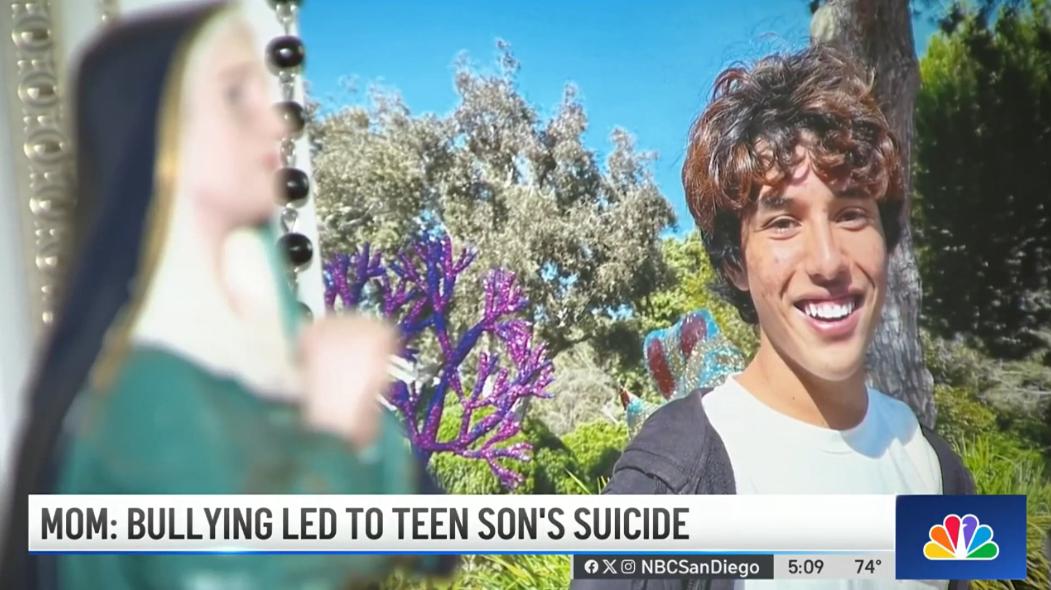
SAN DIEGO, Calif. – Salvador Rios was relentlessly bullied online and at two schools then ending up taking his life in August. According to his grieving mother, Eunice Rios, he died by suicide because he was bullied for being gay.
In a TikTok post last month, holding a photo of her her 14-year-old son, she said: “I support the gay community, always. Always. Love is love. But as a mom, it was not easy to accept that my son was going to be exposed, go through all these ordeals because the world is so mean,” the mother said. “My son, he experienced embarrassment, humiliation, pain.”
In an interview with KNSD-NBC 7 San Diego, Rios told the station that the night of her son’s death, he had called her out of the blue.
“‘Are you sure you’re OK? Are you hungry?’” Rios said, recounting her final conversation with her 14 year-old. “And he said, ‘No, I love you.’ And that was all,” she continued.
She told NBC 7 that she had not read the online hate-filled messages of those who bullied her son. “I don’t want to know because I don’t want to read the messages, and I will never read the messages because this is the reason I think he took his life,” she said.
Fernando Lopez with San Diego Pride also spoke with NBC 7 San Diego. “What the research is saying is that our LGBT kids are not having an OK time right now. They’re having disproportionate impacts to their mental health, and so in these moments, we want to make sure that parents, teachers and youth are fully aware of the breadth of resources available to them in this region,” Lopez said noting to NBC 7 a hyperpolarized political climate can be echoed anywhere in the community.
“The most important thing that we need to instill in folks is knowing that there are people out there that love you, people out there that are going to have your back and support you and make sure that you’re safe. And that’s, I think, the most important.” Lopez added.
Rios said that she had reached out to the San Diego Unified School District and filed a police report after her son’s death. District officials however, did not respond to NBC 7 when asked for comment.
Rios said that while she has buried her child, her life now will be committed to honoring his legacy and creating awareness of the bullying that took his live and endangers countless other LGBTQ+ youth.
Related:
San Diego
San Diego to open 45 bed LGBTQ youth homeless shelter
Snell from the Housing Commission said they hope to have those two interim locations up and running within the next 60 days
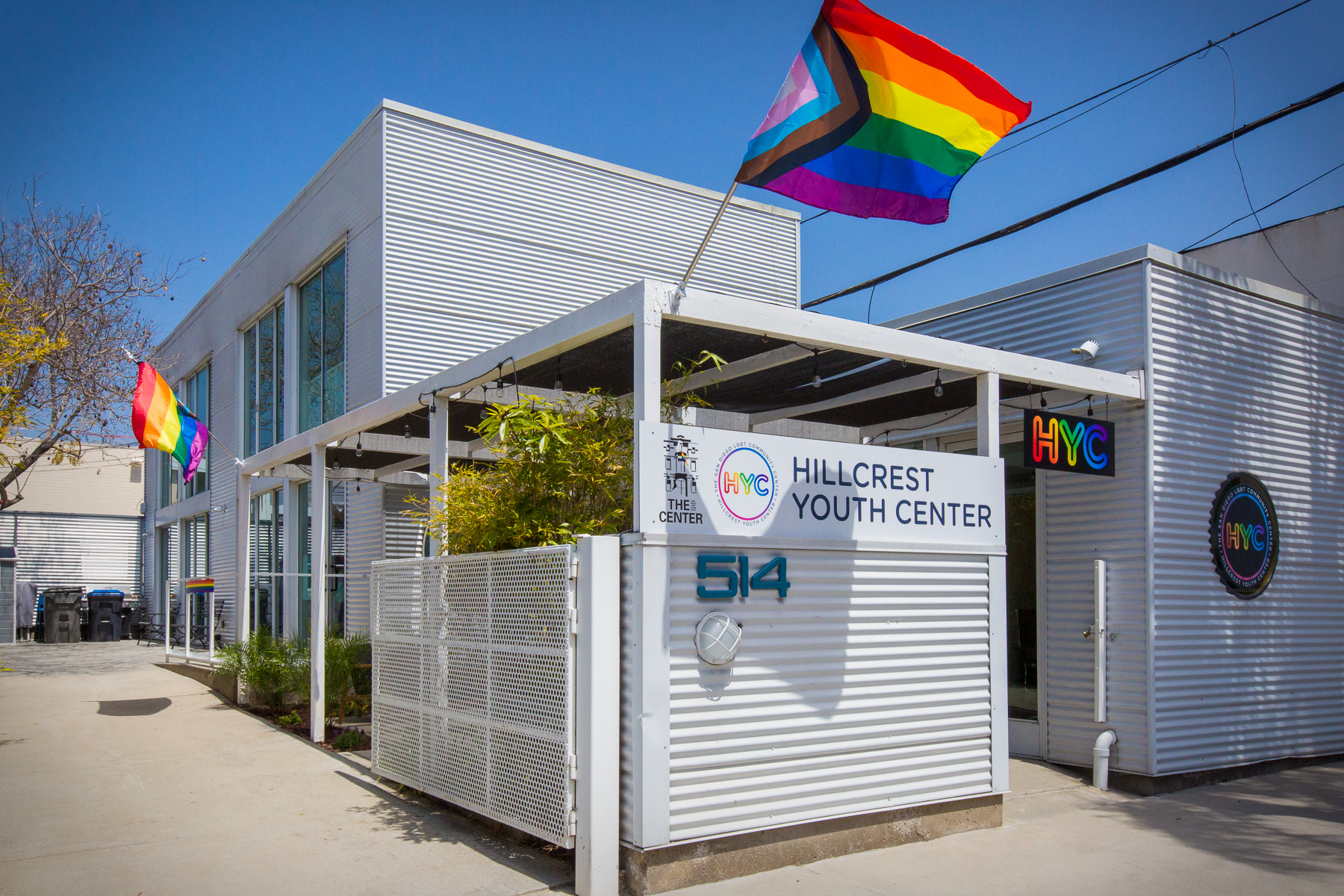
SAN DIEGO – The San Diego Housing Commission has awarded a contract to San Diego’s LGBT Center to operate an LGBTQ+ youth shelter for young people who are experiencing homelessness.
“It’s a first for our city. We’re very, very excited,” Casey Snell, VP of Admin. Homeless Initiatives San Diego Housing Commission told KGTV ABC News 10 reporter Ryan Hill. “We know that LGBTQ+ experience homeless many at a rate almost 40 percent higher than their non-LGBTQ+ plus peer. So, it’s extremely critical we target services for this population.”
According to Snell, $1.5 million for the new shelter was allocated in the city’s 2023 budget. While a search has been launched to find a permanent location for the 45 bed facility, Snell tells ABC 10 that two interim locations in Clairemont and Point Loma will have 21 beds.
Victor Esquivel, the Director of Housing & Youth Homeless Services for the LGBT Center noted “Oftentimes, when it comes to LGTBQ+ youth, they have been rejected by their own families. These types of programs are a real lifeline, right? They instill that hope in them, and we’re going to be excited to see them on that first night when they come to us.”
With homophobia, bullying, harassment, and extremist hate on the rise, both from the government and civilians alike, queer youth of today are facing a torrent of obstacles leading to a devastating increase in mental health crises.
Even more devastating is the number of queer youth who are facing these challenges while homeless. Kicked out of their homes and living on park benches and truck stops, these kids face a terrifying reality of discrimination, isolation, and violence.
LGBTQ youth are overrepresented among young people experiencing homelessness and housing instability in the United States. This elevated risk of homelessness and housing instability has detrimental effects on LGBTQ youths’ mental health.
A research report released in February 2022 by the Trevor Project revealed that 28% of LGBTQ+ youth reported experiencing homelessness or housing instability at some point in their lives — and those who did had two to four times the odds of reporting depression, anxiety, self-harm, considering suicide, and attempting suicide compared to those with stable housing.
In Los Angeles, Lisa Phillips, Director of Youth Services at the Los Angeles LGBT Center, said:
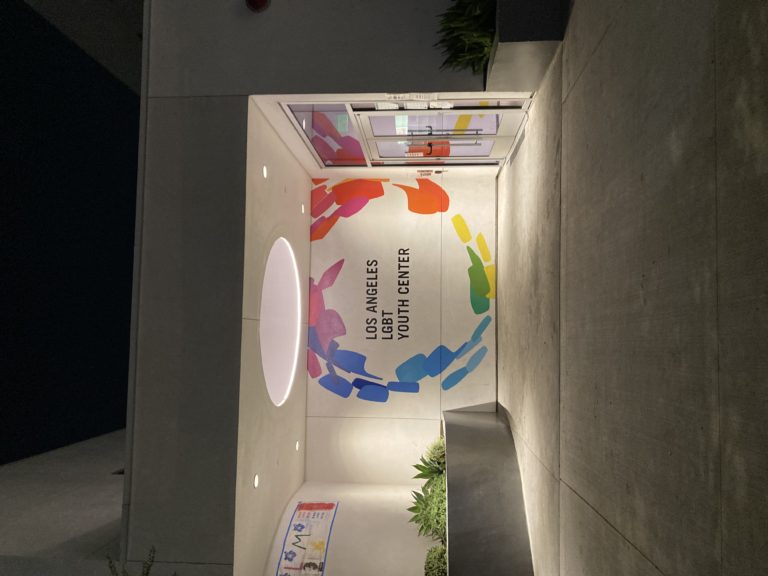
(Blade photo by Noah Christiansen)
“The Los Angeles LGBT Center has always had a high demand for youth-oriented services, including emergency, transitional, and permanent housing—and we have not seen that demand falter. Unfortunately, as political attacks on our community escalate throughout all corners of the United States, we also don’t expect to see that demand go down anytime soon.
We understand that, like any other issue affecting the LGBTQ+ community, a holistic approach that caters to the dignity of the individual is urgent and necessary. That’s why the Center doesn’t just offer a place to sleep but also provides health and mental health care, substance use and recovery efforts, legal services, housing and job navigation, and, most importantly, community. We do not take our responsibility to LGBTQ+ youth lightly, and we are always proud to be leaders in the fight for a more equitable world for queer and trans people.”
True Colors United, a national initiative co-founded over a decade ago by Cyndi Lauper, Lisa Barbaris, Jonny Podell, and Gregory Lewis, reported that according to a recent study from Chapin Hall at the University of Chicago, LGBTQ young people are 120% more likely to experience homelessness than non-LGBTQ youth.
“Right off the bat, these young people are presented with an uneven playing field. True Colors United is working to level that field so that LGBTQ youth are no more likely to experience homelessness than anyone else. We’ve seen this higher risk reflected in our own research. It’s estimated that about 7% of youth in the United States are LGBTQ, while 40% of youth experiencing homelessness are LGBTQ.”
Snell from the Housing Commission told ABC 10 they hope to have those two interim locations up and running within the next 60 days.
San Diego
The San Diego Union-Tribune: Tijuana Gay Men’s Chorus
The group is one of only two active gay men’s choruses in all of Mexico, where the LGBTQ+ community still faces stigma & discrimination
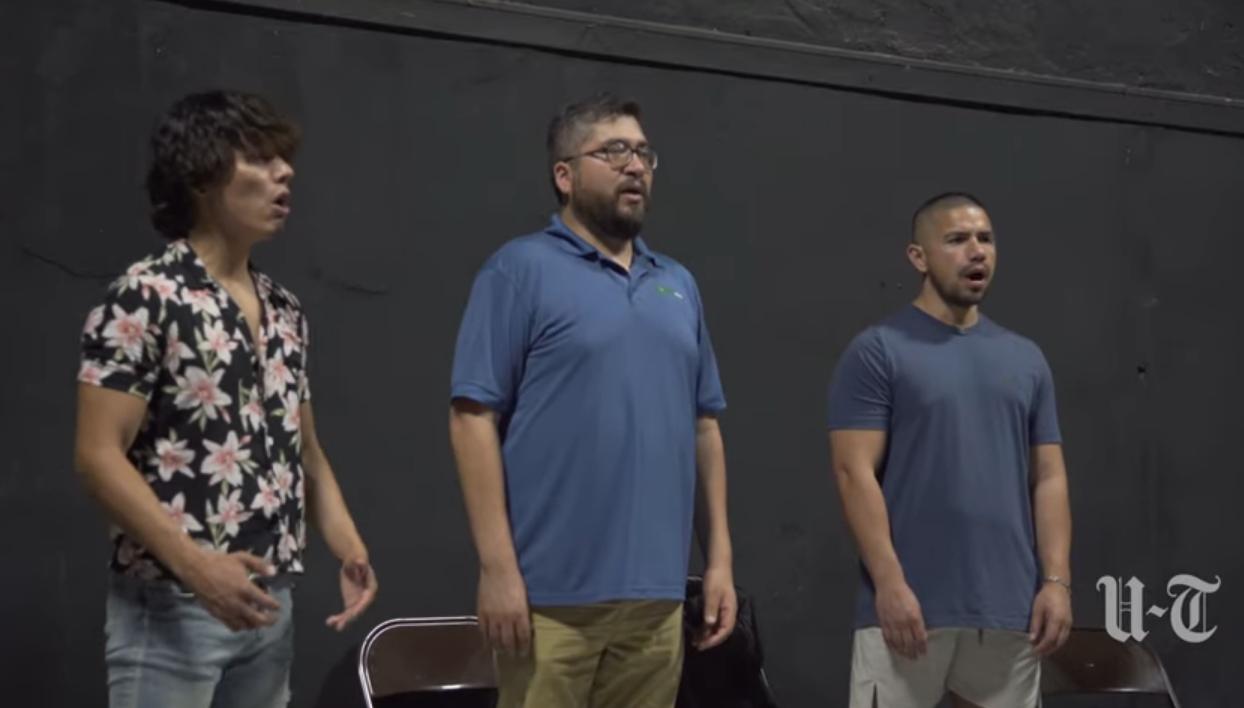

TIJUANA, Mexico – San Diego Union-Tribune journalist Wendy Fry takes readers on journey through the power of music in an unlikely place to find a gay men’s chorus, the rough and tumble world of the raucous border city of Tijuana.
Fry writes about the importance of the presence of the chorus, especially in elevating the visibility of the LGBTQ+ community in Baja as well as beyond.
Story excerpt below read the full story here: [Link]
The group is one of only two active gay men’s choruses in all of Mexico, where like in other parts of the world the LGBT community still faces stigma and discrimination
The chords and notes from the Tijuana Gay Men’s Chorus spilled out from the basement of the red brick Casa de la Cultura and into the still night.
The immense border city was quieter than usual at this hour, following a recent wave of arson and cartel threats that had forced residents into hiding on a recent weekend night. But not on this block, where the 11-member vocal group belted out harmonies as part of their Wednesday night vocal technique class.
Tijuana's Gay Men's Chorus harnessing the power of music to make LGBT community more visible https://t.co/K33Us84dHR
— The San Diego Union-Tribune (@sdut) September 4, 2022
One of only two active gay men’s choruses in all of Mexico, the group aims to create a safe space for the artistic development of Tijuana’s gay and transgender community.
“This type of project in this city was more than necessary,” said Edgar Gheno, the director of the chorus. “Because we know that — or rather in my personal experience — not being who you are and not being able to express yourself generates problems
But there is also a larger mission: to raise the profile of the LGBT community at a time when there have been advances and set-backs.
“What better way than through music to promote a message of respect, non-discrimination and tolerance,” explained Gheno.
“Power of Music”: Tijuana’s Gay Men’s Chorus:
San Diego
San Diego County man charged with a hate crime after homophobic attack
“Anyone considering committing a hate crime should think again as they will be investigated, prosecuted and held accountable under the law”

CHULA VISTA – A dispute between neighbors that escalated to physical assault which included homophobic slurs has landed a South Bay man in court charged with a hate crime.
Robert Frank Wilson, 40, is accused of directing slurs at his neighbor in a Nov. 10 altercation in the victim’s driveway. According to the San Diego County District Attorney’s Office, Wilson blocked the neighbor’s driveway, yelled homophobic slurs, then reached into the victim’s vehicle and struck him in the face, KFMB-TV, CBS 8 reported.
Wilson, who is currently out of jail on bond, appeared Monday in-person in a Chula Vista courtroom and pleaded not guilty to a felony count of battery, plus a hate crime allegation.
“This case and these events demonstrate that those who are motivated by prejudice often spread their hate around to various groups, attacking our neighbors on the basis of race, religion, sexual orientation or other grounds,” San Diego County District Attorney Summer Stephan said.
“Hate against one group is a threat to everyone and we won’t tolerate these crimes in our community. Anyone considering committing a hate crime should think again as they will be investigated, prosecuted and held accountable under the law.”
In an non-related case, Wilson and several others were charged by the San Diego County District Attorney for hanging “a large anti-Semitic poster on the fence of an Interstate 805 overpass” on Dec. 18, in violation of the San Diego City Municipal Code.
In a statement released Monday, the DA’s office noted that although hate speech in and of itself may not always rise to the level of criminal activity, [it] “is relevant as it could escalate to criminal behavior. Hate crimes are often preceded by hate speech.”
The DA’s full statement on the incident:
San Diego County District Attorney Summer Stephan announced criminal charges today against a man who attacked his neighbor on November 10 while yelling anti-gay slurs. Robert Frank Wilson, 40, is charged with one count of felony battery and a hate crime allegation. He was arraigned today in San Diego Superior Court in the South Bay and pleaded not guilty. Prosecutors say Wilson blocked his neighbor’s driveway, got out of his vehicle and started yelling homophobic slurs at the victim. At one point, Wilson reached into the window of the victim’s vehicle and struck him in the face.
About five weeks after the incident, on December 18, Wilson was cited by the San Diego Police Department for working with a group of people to hang a large anti-Semitic poster on the fence of an Interstate 805 overpass in violation of the San Diego City Municipal Code. The DA is including the code violation as part of the charges it filed against Wilson. If convicted, he faces up to three years, six months in prison.
“This case and these events demonstrate that those who are motivated by prejudice often spread their hate around to various groups, attacking our neighbors on the basis of race, religion, sexual orientation or other grounds,” DA Summer Stephan said. “Hate against one group is a threat to everyone and we won’t tolerate these crimes in our community. Anyone considering committing a hate crime should think again as they will be investigated, prosecuted and held accountable under the law.”
Prosecuting hate crimes is a priority for the San Diego County District Attorney’s Office. The DA has nearly tripled the number of hate crime cases it has prosecuted in recent years, filing 21 cases in 2020 and 30 such cases in 2021.
Last year, in response to reports of hate-related incidents aimed at the Asian community across the nation in the wake of the COVID-19 pandemic, the District Attorney’s Office announced a new online form and hotline where the public can report suspected hate incidents and hate crimes they’ve been a victim or witness to in San Diego County. The online reporting form can be found on the District Attorney’s website here. The Hate Crimes Hotline number is 619-515-8805.
Individuals submitting information about a suspected hate crime will be contacted with information about the DA’s review of the report and any action that may be taken. The public is reminded that hate speech in and of itself often does not rise to the level of a hate crime but is relevant as it could escalate to criminal behavior Hate crimes are often preceded by hate speech. By law, a hate crime is a criminal act committed against another person that is motivated by prejudice against that person’s race, ethnicity, religion, sexual orientation, gender identity or disability.
San Diego
Trans woman ‘viciously attacked’ in men’s jail cell lawsuit says
“Hopefully the sheriff’s department takes this incident serious and makes the changes necessary to ensure people in their care are kept safe”

SAN DIEGO — Kristina Frost, a trans woman, was “viciously attacked” after being placed in a men’s holding cell by the San Diego Sheriff’s Department, according to court documents.
Frost was a book-and-release detainee at the San Diego Central Jail in November of 2020. After informing the jail staff that she is a trans woman, she was placed in a holding cell alone. Frost’s DMV records and driver’s license state her gender is female, according to a civil complaint filed in the U.S. District Court for the Southern District of California.
But she was later moved to a “minimally monitored” cell with three men “without any reasonable justification,” according to the lawsuit.
“No reasonable deputy would have put Ms. Frost in a minimally monitored cell with three men,” her lawyers wrote. “She was forced into the cell anyway.”
Frost eventually fell asleep in the cell but awoke to one of the men striking her head with closed fist punches, resulting in a broken jaw that has required two surgeries.
The lawsuit alleges that deputies observed the assault but didn’t immediately intervene. Frost said one or more deputies paused before they entered the cell and removed the assailant.
Frost then had to wait upwards of 12 hours without medical care before she was released, according to the complaint.
San Diego Sheriff’s Department Deputy Mason Cassidy, who is named as one of the defendants in the case, is believed to be the one who placed Frost in the men’s cell. The lawsuit states that Cassidy “was deliberately indifferent to Ms. Frost’s safety risks and needs as a pretrial detainee.”
The County of San Diego, San Diego County Sheriff William Gore and other unknown San Diego Sheriff’s Department personnel are also named as defendants in the case.
The San Diego County Sheriff’s Department told the Los Angeles Blade that they “are committed to an inclusive environment within our agency and the communities we serve.”
“The incident occurred in November 2020 in a temporary holding cell during the Intake process, not a housing unit,” the department said. “It was in the Intake area of the facility, where people are waiting to complete the booking process or pending release. Miss Kristina Frost was temporarily placed in a holding cell with other individuals who were also identified as being in protective custody status. The person who allegedly assaulted Miss Frost stated he was assaulted by Miss Frost first and stated he acted in self-defense. Additionally, Miss Frost declined to press charges.”
The Blade attempted to reach the County of San Diego for comment but did not receive a response by the time of publishing this article.
The complaint also alleges that the incident involving Frost was “foreseeable” as department personnel have shown a pattern of failing to keep people in custody safe.
“The mortality rate in San Diego County jails is the highest among California’s largest counties,” Frost’s attorneys wrote. “At least 140 people died in County custody from 2009 to 2019.”
Frost’s lawyers did not respond to a request for comment, but one of Frost’s lawyers, Brody McBride, told ABC 10 News San Diego that he hopes some good comes out of the case.
“Hopefully the sheriff’s department takes this incident serious and makes the changes necessary to ensure people in their care are kept safe and treated with dignity,” McBride said.
According to a 2020 NBC News report, trans people are often housed according to their sex assigned at birth, not their gender identity. Out of 4,890 trans prisoners across the U.S., NBC News could only confirm 15 cases in which a trans prisoner was housed according to their lived gender.
California Gov. Gavin Newsom (D) signed a law this past September requiring prisons in the state to house trans people according to their gender identity.

Ahead of the midterms, Meta has paid at least 29 anti-LGBTQ+ accounts for their posts

‘Come Out for the Games’ gets Los Angeles excited for the 2028 Olympics

JD Vance takes swipe at James Talarico’s sexuality during Texas rally

Hungarian lawmakers approve bill to remove anti-LGBTQ+ provisions from ‘child protection’ law

Exposing the realities of influencer culture with Bran Flakezz

On Republican Long Island, gay Democrat Chris Gallant bets on public service over politics

Report: LGBTQ+ exclusion costs Japanese economy billions a year

Through the blaze: Author Deborah Samuel talks about survival, healing, and ‘Grace Through Fire’

Horror genre has evolved into space to explore queer identity

Annie Andrews denounces trans athletes after Trump targets her
-
 Politics2 days ago
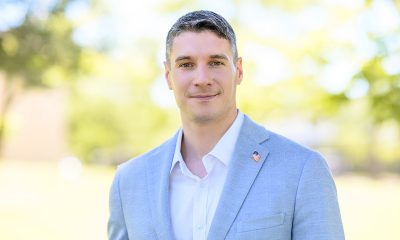
On Republican Long Island, gay Democrat Chris Gallant bets on public service over politics
-
 Japan2 days ago
Report: LGBTQ+ exclusion costs Japanese economy billions a year
-
 Books2 days ago
Through the blaze: Author Deborah Samuel talks about survival, healing, and ‘Grace Through Fire’
-
 Arts & Entertainment1 day ago
Horror genre has evolved into space to explore queer identity
-
 Congress2 days ago
Annie Andrews denounces trans athletes after Trump targets her
-

 Movies4 days ago
Essential queer horror classics for Halloween
-

 a&e features4 days ago
LA writer/director gets a little ‘Psycho Baby’
-

 Books3 days ago
In ‘The Lost Brontë,’ a complicated lie can lead to danger
-

 Turkey1 day ago
‘Governments that attack LGBTQ+ rights learn from each other’
-

 Features2 days ago
Diane Anderson-Minshall’s coming out evolution as a mixed white/Indigenous American, bisexual, lesbian, queer, married to a trans man